The cry of recovery: Inside a rehabilitation center for veterans
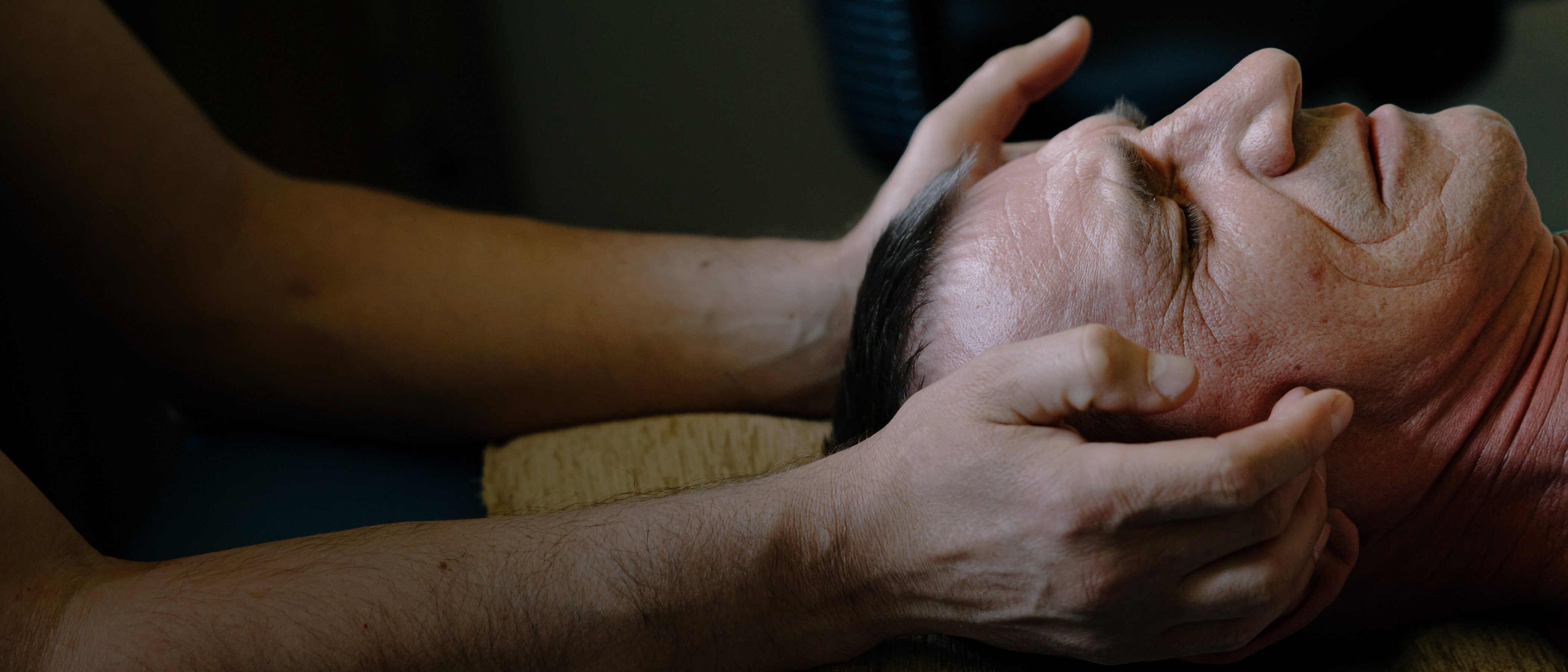
Veteran Viktor “Chornyi” Kostiuk screams and twists in pain on the massage table. At every rehabilitation session, he is joined by his comrades, Ruslan Novalkivskyi, call sign “Mer.” Once they shared the hardships of war and watched each other's backs in the trenches. Today, they help each other through rehabilitation. Frontliner reporters visited the Novi Kryla (New Wings) rehabilitation center in Ivano-Frankivsk, where Russian-Ukrainian war veteran Ihor Dilnyi, who helps soldiers free of charge, was seeing patients.
Last year, while serving on the Zaporizhzhia front, 51-year-old Viktor Kostiuk was hit in the head by an FPV drone. The explosion completely paralyzed the right side of his body. Today, he jokes that he has a “direct line to space” thanks to several stitched wounds and a hearing aid. At first, he was treated at a hospital in Lviv. Just two months after his injury, he took his first steps, and six months later, he started walking again.

It was the veteran’s persistence that carried him through. While other patients returned to their rooms by elevator after their daily walks, Viktor chose the stairs, slowly climbing all the way to the fourth floor. He turned to the Novi Kryla center this year and is now attending his fifth session.
“Okay, should I make you suffer a bit?” rehabilitation therapist Ihor Dilnyi says with a smile as he lifts Viktor’s right arm.
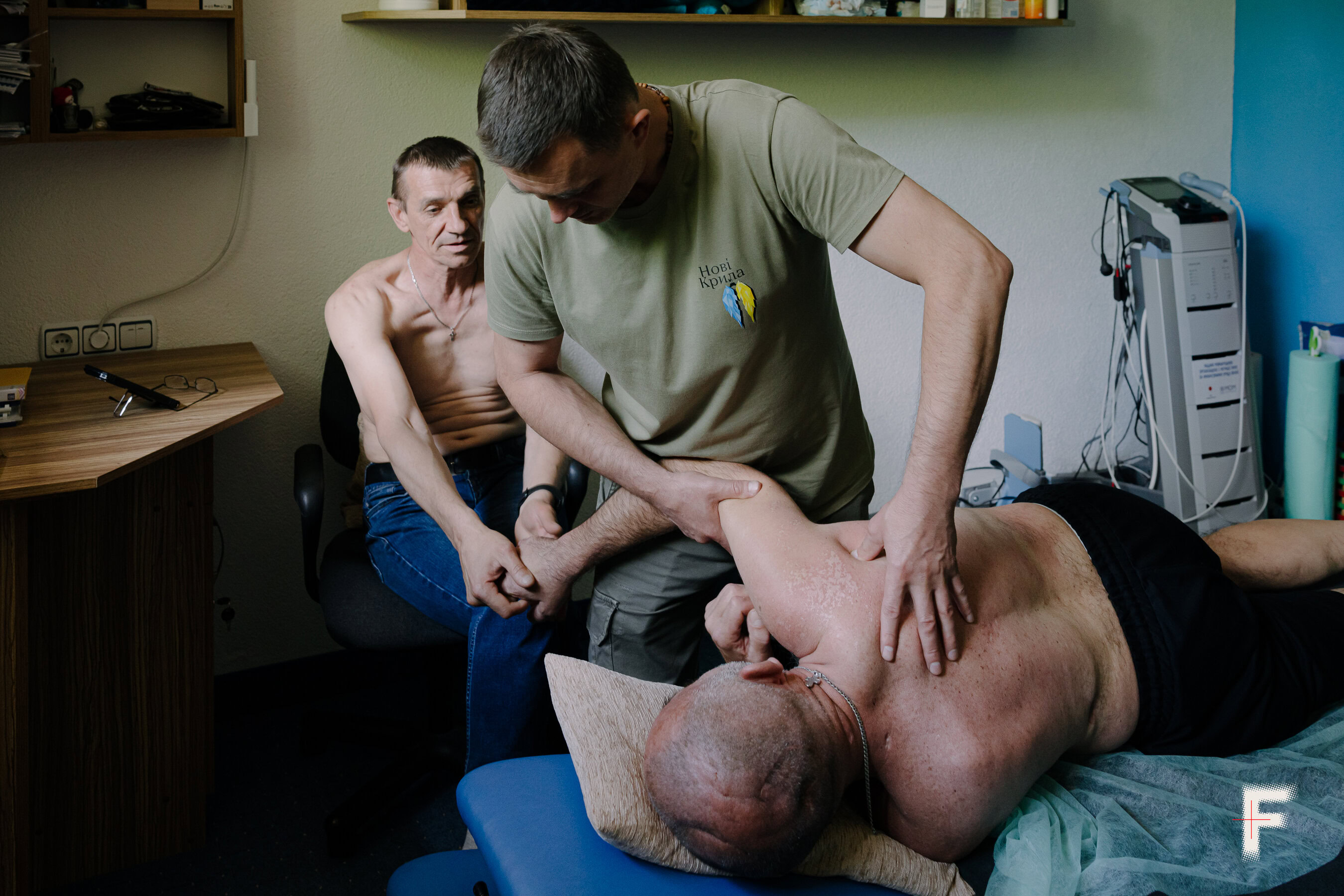
Viktor Kostiuk yelps, then bursts into laughter between waves of sharp pain in his shoulder as he pushes through the exercises.
You’ll get his arm working again, but what good will that do?
He’s always been all thumbs. Still, if Vitia (shortened version of Viktor)
reaches the top rung of the wall bars, drinks are on me.
Jokingly, Viktor suggests that Ihor Dilnyi should give Ruslan the acupuncture treatment today, starting with his tongue.
“My arm and leg still don’t always do what I want them to, but they’ve come a long way. Recovery depends a lot on determination. I wanted this badly enough, so I’m ready to put up with whatever pain the therapy brings,” says Viktor Kostiuk.

To maintain their progress, veterans are expected to continue exercising at home. The routine focuses on stretches for the pectoralis minor muscles, exercises to reduce calf muscle spasticity, stabilize the cervical spine, and strengthen the gluteal muscles.
“Next time, I’ll see if they’ve been doing anything for their condition and if there’s any improvement. If they haven’t been working out at home, then I’ll make it hurt. I want to see the results just as much as the guys do,” says Ihor Dilnyi.
After today’s therapy, Viktor can once again lift his arm behind his head: a small victory that makes him smile. He is especially happy that he can scratch his own back without anyone’s help. It is still painful, as three fragments of shrapnel remain lodged in his forearm. The goal is to bring Viktor’s right arm as close as possible to the function of his left and keep the muscles active throughout his recovery.
We often hear remarks questioning
why we survived.

He began helping veterans after his first return from the war
Ruslan Novalkivskyi attended rehabilitation sessions last year. When he started feeling better, he decided to take a break. He admits that at the time, he was simply too lazy to keep working on it.
“Some people say that if your injuries aren’t visible, then you don’t have any. But that’s simply stupid. We often hear remarks questioning why we survived. Maybe some people assume we were hiding somewhere far from the fighting,” Ruslan says jokingly.
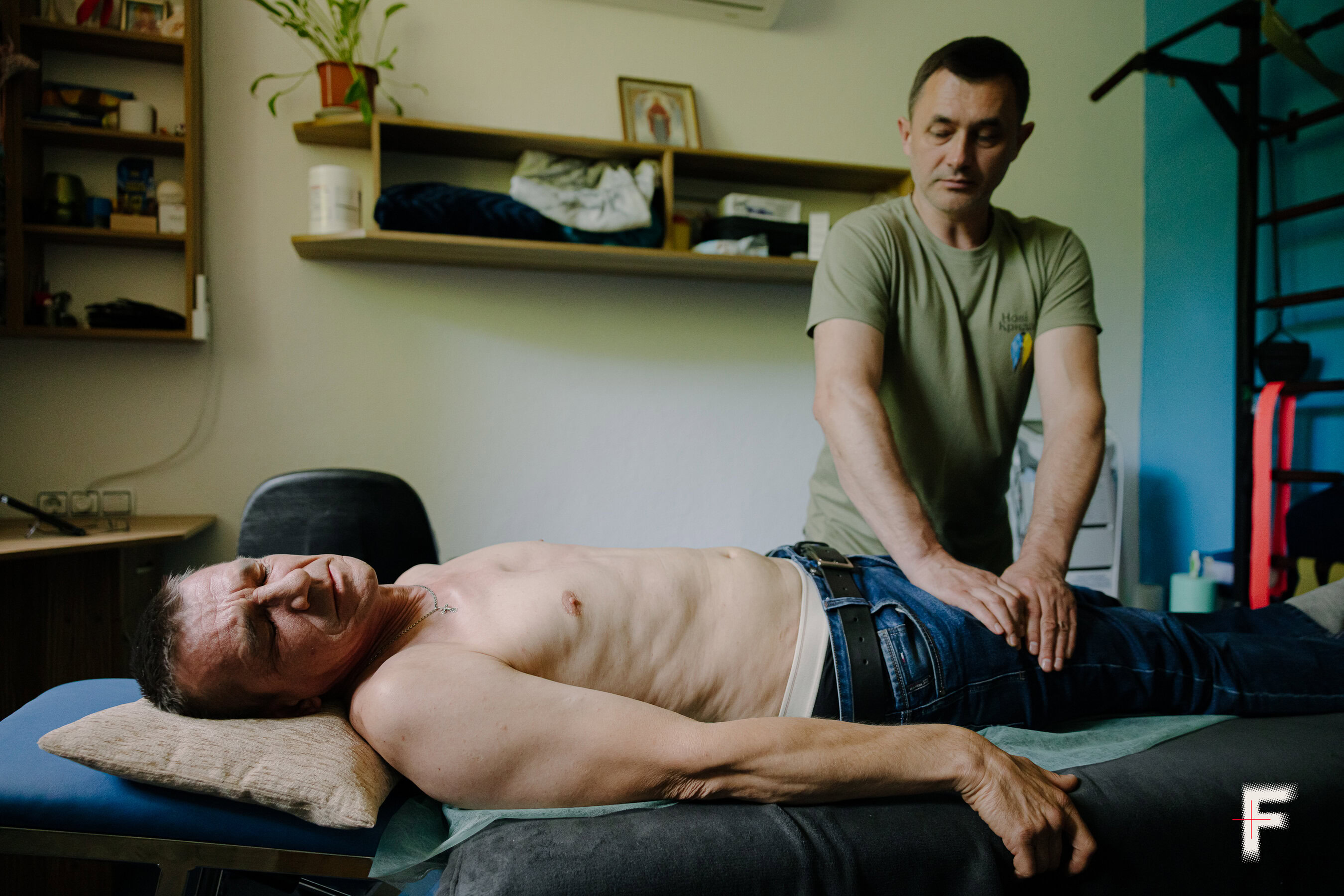
When it is Ruslan’s turn on the massage table after Viktor, his enthusiasm quickly fades. It is not nearly as funny anymore when he is the one lying there instead of his comrade. Ruslan has three concussions, joint problems, and issues with his right leg following his injury. When Viktor started attending rehabilitation, Ruslan decided to return to his own recovery too.
During the session, the therapist applies pressure to his chest to help restore muscle tone. At home, Ruslan still finds it difficult to bend over, and long walks leave his right leg aching. The pain often lasts throughout the day after therapy, but he says seeing the progress makes it worth it. With a smile, he calls his therapist a “sadist” who ignores everyone else’s pain. But he says he has learned to live with it.
The guys scream from the pain, but if I allow myself
to focus on that, I won’t achieve the progress we are aiming for.
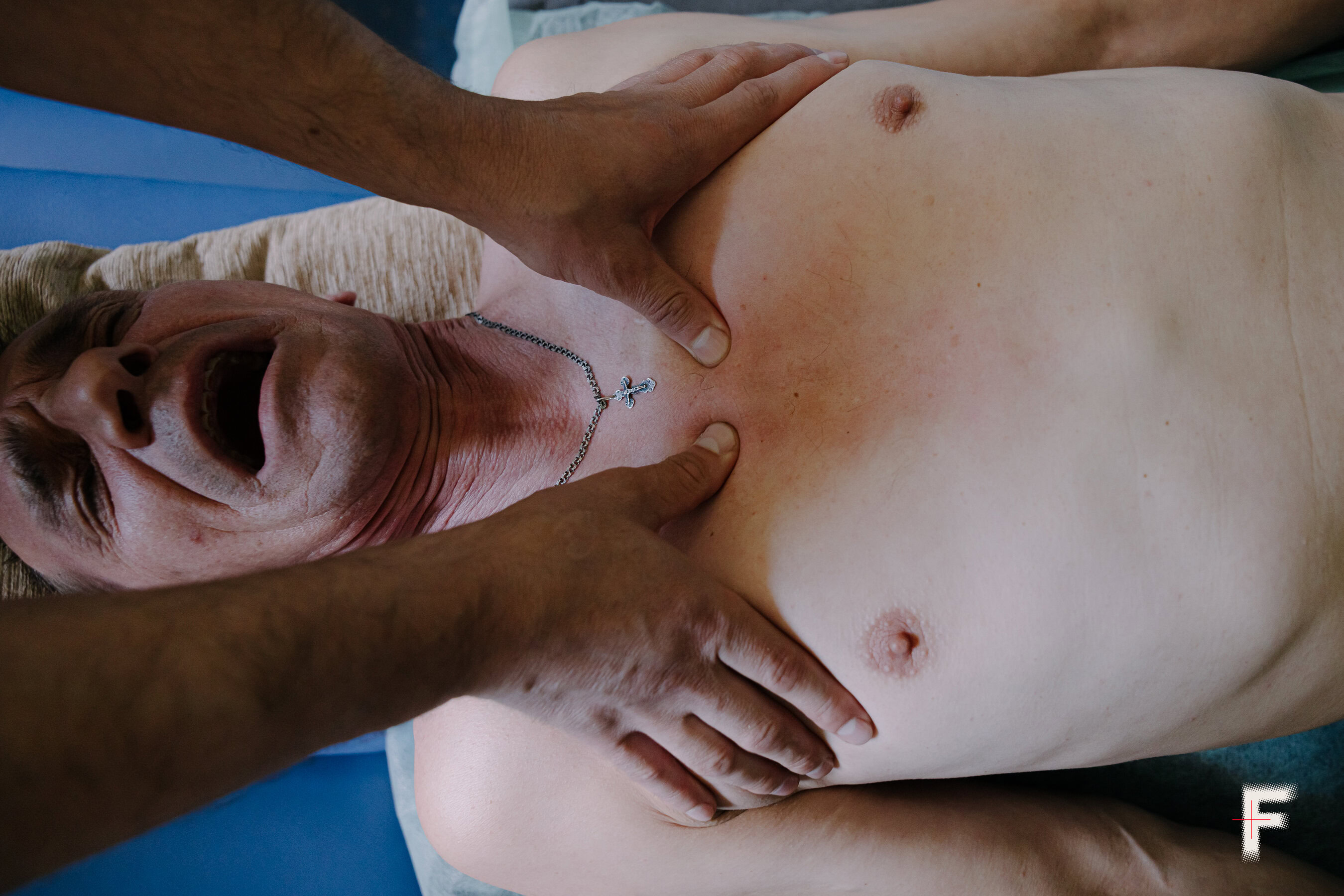
“We know where the injuries are. The next step is to find the body’s points of strength: the areas that need stimulation to help restore muscle tone. In Ruslan’s case, it is a point in his chest area that we can work on to improve the stability of his leg. The guys scream from the pain, but if I allow myself to focus on that, I won’t achieve the progress we are aiming for,” says Ihor Dilnyi.
He has already helped several hundred veterans feel better. When he sees the guys’ motivation, as well as the results of his work, he finds the inspiration to keep going. He says the guys refuse to give up despite the pain and lengthy rehabilitation. They are also more open to coming in for treatment and asking for help once they find out that he has been through military service himself.
I had no emotional capacity to love anyone because
all my energy went into simply surviving.
When Russia’s war against Ukraine began in 2014, Ihor, who had previously completed mandatory military service and worked as a massage therapist, volunteered to join a local battalion. He remained in service until late 2015. Later, thyroid-related health issues led to his discharge and disability recognition.
“At first, I didn’t want anything. In the hospital, I believed I was ready to return to the front. But when I came home, everything changed. The adrenaline disappeared, and I was completely drained. Loud noises outside would set me off, and I couldn’t adapt to the silence, and for more than a year I remained emotionally detached from my loved ones. I was there with them physically, but not emotionally. I had no emotional capacity to love anyone because all my energy went into simply surviving,” the veteran explains.
Physical and psychological rehabilitation should go hand in hand
In 2016, Ihor Dilnyi joined the Banderivskyi Skhron team led by veteran Ihor Chernetskyi as a massage therapist. The team provided psychological support to soldiers returning from the battlefield. Ihor believes that good psychological care cannot exist without physical rehabilitation.
“As soon as the first service members returned from the front, the conversation focused on psychological support. I argued that physical recovery had to be part of the process as well. A psychologist cannot treat the body. Recovery means taking care of the body, the mind, and the spirit. Which one should take priority depends entirely on the individual needs of each veteran,” Ihor Dilnyi says.
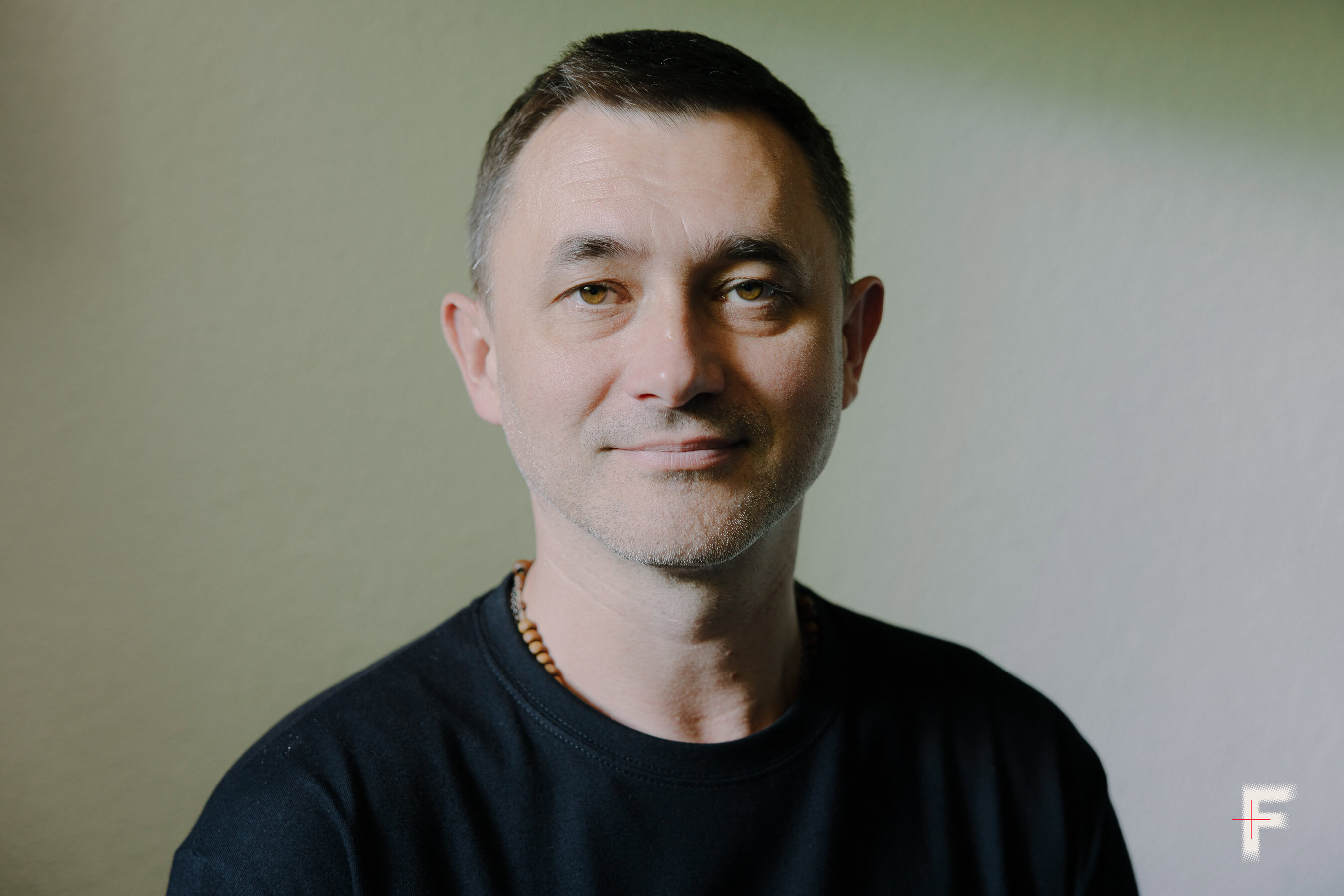
For patients with severe injuries or amputations, physical rehabilitation should be the first step. According to the therapist, many patients say that psychological counselling becomes more effective after a rehabilitation session. Releasing tension and tightness in the body helps clear the mind and makes it easier to engage in therapy. Ihor Dilnyi believes that rehabilitation specialists and psychologists should work together for the benefit of every patient.
In 2016, Ihor Dilnyi qualified as a physical therapist and began looking for a space where he could offer free rehabilitation to veterans and their families. A fellow veteran, Andrii Dolyk, helped to find the space, and the Novi Kryla center officially opened on Kozak Day, Oct. 14, 2019, which also marks Ukraine’s Defenders Day.
Editor’s Note: Kozaks were self-governing warrior people who defended Ukrainian lands, seen as a founding symbol of Ukrainian statehood and military tradition. In the 18th century, their institutions were destroyed by Russian imperial policies. Still, this heritage remains a strong influence in Ukrainian culture and military tradition to this day.
The renovation was supported by the wife of one of Ihor’s brothers in arms, who would later lose his life during the full-scale war. The first visitors were soldiers who complained of pain caused by body armor and helmets. Later, wounded soldiers joined them.

“Individual care and long-term recovery are my priorities. This is not a hospital, where patients stay for 10 days and then go home. My goal is to achieve real results, so I’ll work with a patient for however long it takes: whether that’s a week, a month, or even a year,” Ihor says.
The second return from the war was much more difficult
In 2022, the center became a volunteer base, producing camouflage suits for reconnaissance troops and snipers they knew personally. Ihor’s former wife and her friends made the ghillie suits while Ihor and his friends transported them to the Kyiv and Kharkiv regions. Because of his disability, he was unable to join the Armed Forces.
“At the end of March, I felt that I could do more, so I went straight to the military unit. I managed to stay there for another two months. Eventually, I got to the point where I couldn’t function anymore. I received treatment at a military hospital, and later I was told that I would no longer be able to fight,” the veteran says.
The transition back to civilian life took a long time: Ihor couldn’t fully recover, either physically or mentally, even though the guys returning from the front kept turning to him for help. He didn’t resume work as a rehabilitation specialist until the fall of 2023. This second return from the war was harder than the first. The first time he served, things felt more predictable. Regular rotations between combat missions helped him manage emotionally. But this time, two months of active combat as a medic exposed him to far more of the suffering and atrocities of war.
I believe God protected me during the full-scale war,
and I keep helping soldiers for as long as I have
the strength to do so.
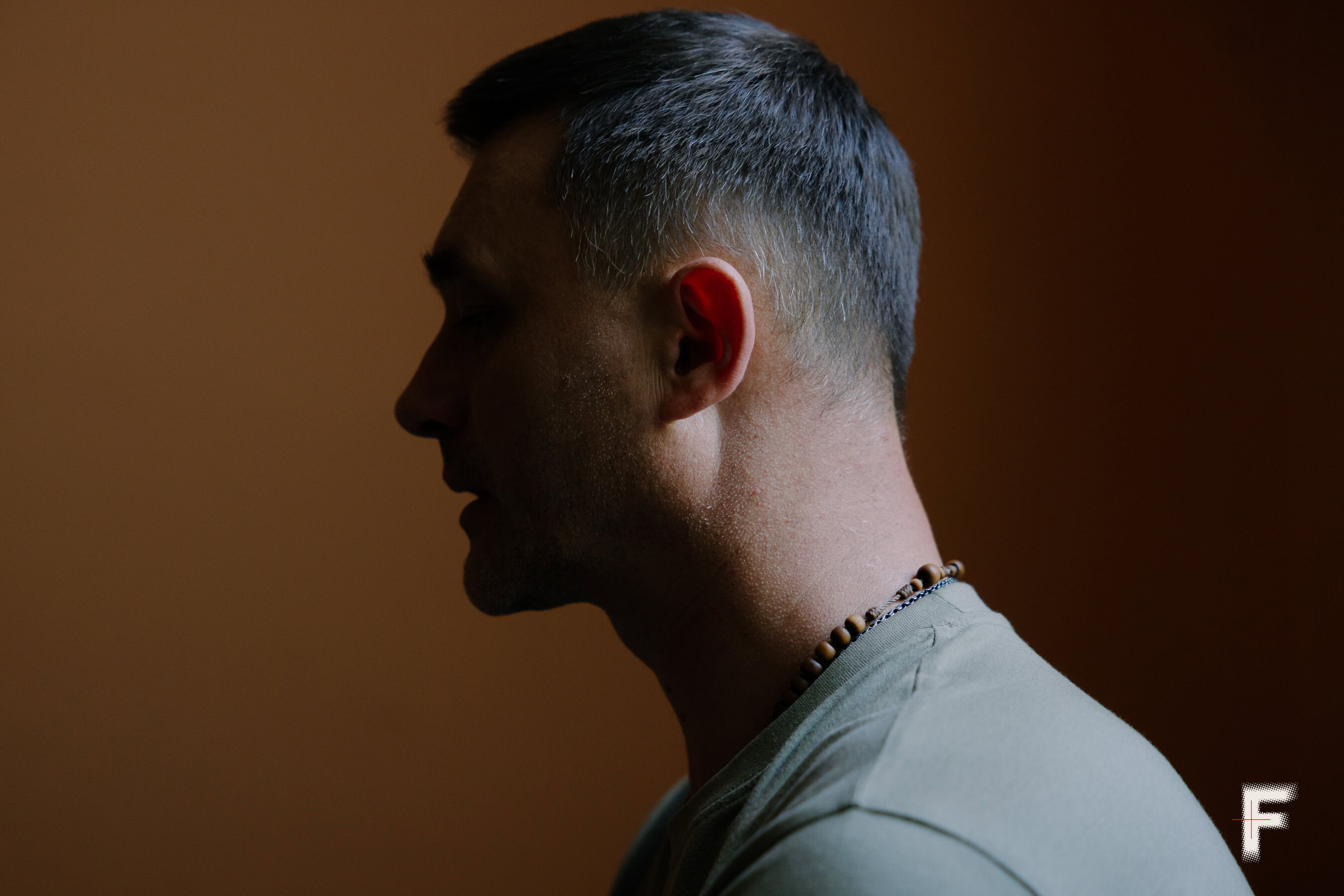
“That help is desperately needed, because the injuries we see today are different. Before, there might have been several amputations; now, Ivano-Frankivsk alone sees 60 to 70 severe cases every month. There simply are not enough rehabilitation specialists. Still, the field is developing, and we are already seeing progress.”
Veterans helping veterans
Patients turn to Ihor Dilnyi and stay with him because they know he has been through military service himself, and that experience builds trust. It is not just the “peer-to-peer” approach, but what Ihor calls “veterans helping veterans.” His team also includes veterans and their family members: people who know firsthand what war means.
Another physical therapist is the wife of a fallen service member. A former soldier is currently studying physical therapy and hopes to join the team. Veteran Stepan Savchuk provides psychological support, while veteran Serhii Halkin offers legal assistance. The center also works with ceramic artist Vitalii Lanovskyi, and project manager Mariana Kalyniak is married to a veteran.
Ihor emphasizes that he provides rehabilitation to veterans of the Russian-Ukrainian war free of charge. Many patients give him their military patches in appreciation. Soon, the center’s collection will include several hundred of such symbols of gratitude.

For service members’ families and veterans, the center offers a range of activities, including yoga, Pilates, stretching, workshops, and retreats. Many of these initiatives are started by veterans’ wives, who seek out these opportunities and encourage their loved ones to participate.
I often say that wives are the driving force in veteran families.
Guys often struggle to take the first step and don’t want
to get involved in anything, while their wives become the assault troopers :
they know what is happening and help organise everything,
The center is supported through donations and grants and has recently started receiving funding from the municipal budget. Sometimes Ihor Dilnyi also provides treatment to civilian patients who make charitable contributions that help sustain the center’s work.

“This place became my new wings. Here, we work, share coffee, and talk with our comrades. It is my source of strength and a place where I continue my own recovery. I invested my own effort into creating it so I could pass that strength on to others. And people tell me that after rehabilitation, they feel like they have grown wings themselves,” Ihor Dilnyi says.
***
Hi, we are Mariia and Anna, the authors of this article. Thank you for reading to the end.
Ihor Dilnyi from Ivano-Frankivsk is one of such veterans. A veteran who returned from war twice, he has spent more than 15 years working in physical rehabilitation and founded his own center, where he provides free care to veterans while building a team of rehabilitation specialists with military experience. Through his work, he shows that caring for the body is often the first step toward a meaningful return to civilian life.
Every story starts with your support. Join the Frontliner community so we can keep up documenting Russia’s war against Ukraine from the front line and the rear.
***