Left unheard: How war has affected people with hearing impairment
In wartime, sound signals danger. An air raid siren, the whistle of an incoming missile, or the buzz of a drone triggers an immediate instinct to seek shelter or hit the ground. However, for people with hearing loss, the sound of an incoming missile is just a vibration that, for some reason, makes the house shake. During emergencies, deaf people often feel invisible. As those around them quickly exchange information, they are left observing in confusion. Explore how people with hearing impairments adapt to danger and fight for the right to be heard in Frontliner’s report.
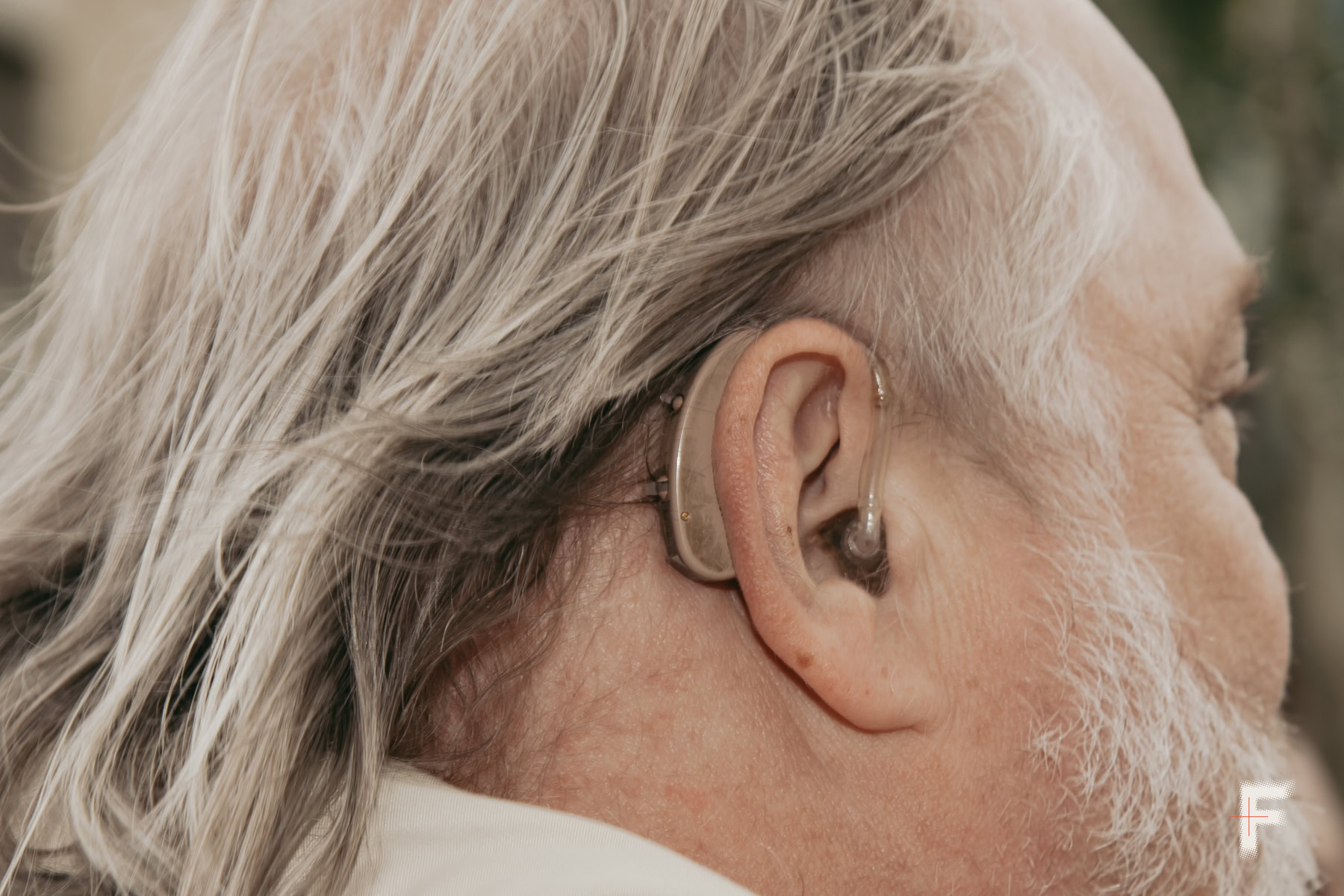
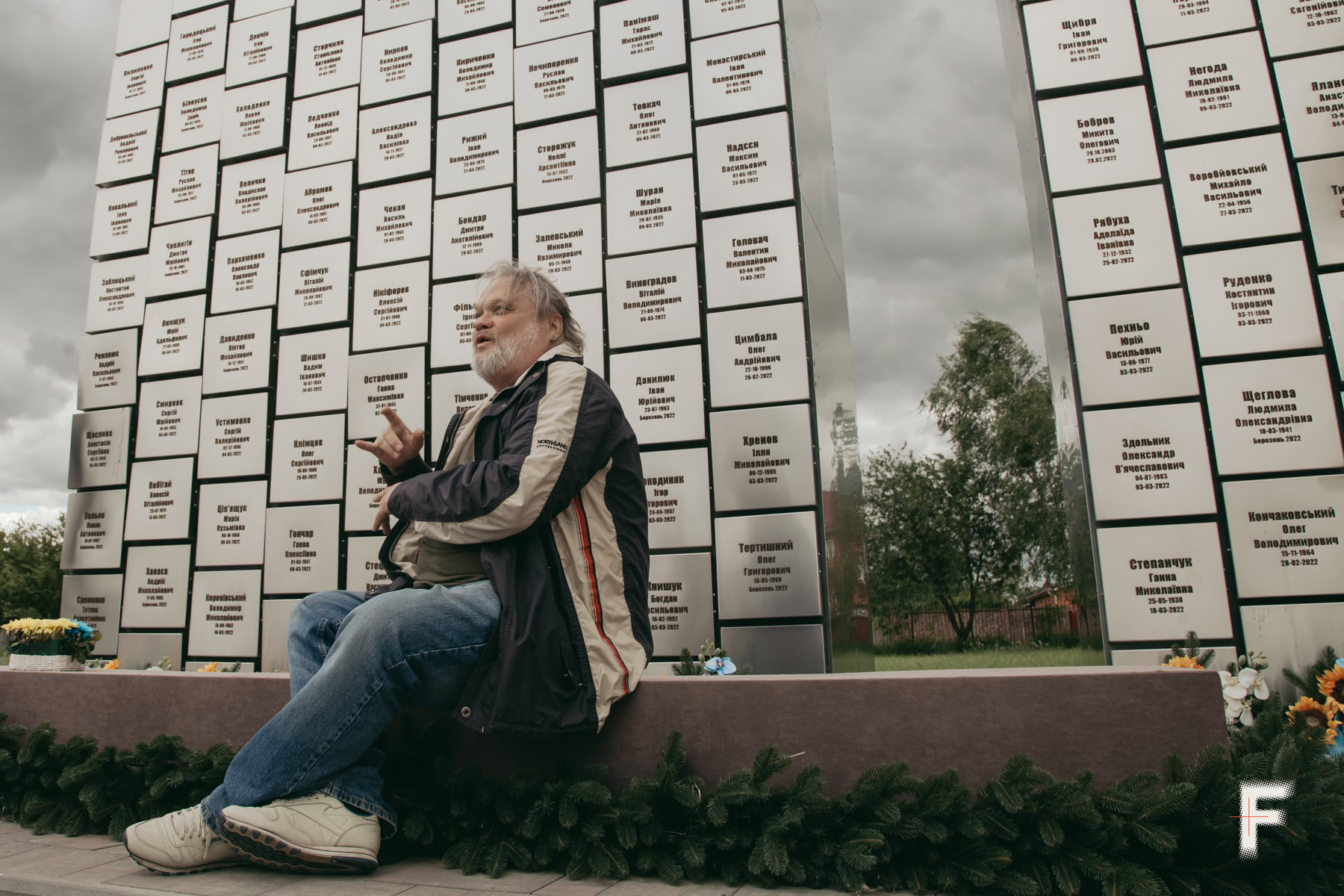
Volodymyr Netkach has had a hearing impairment since childhood and, as he grew older, could no longer hear without a hearing aid. Having learned to live and communicate with both deaf and hearing people, he turned his personal experience into a mission: since 2014, he has been translating and explaining the news for people with hearing impairments on his YouTube channel.
Many deaf people used to think
they were outside politics.
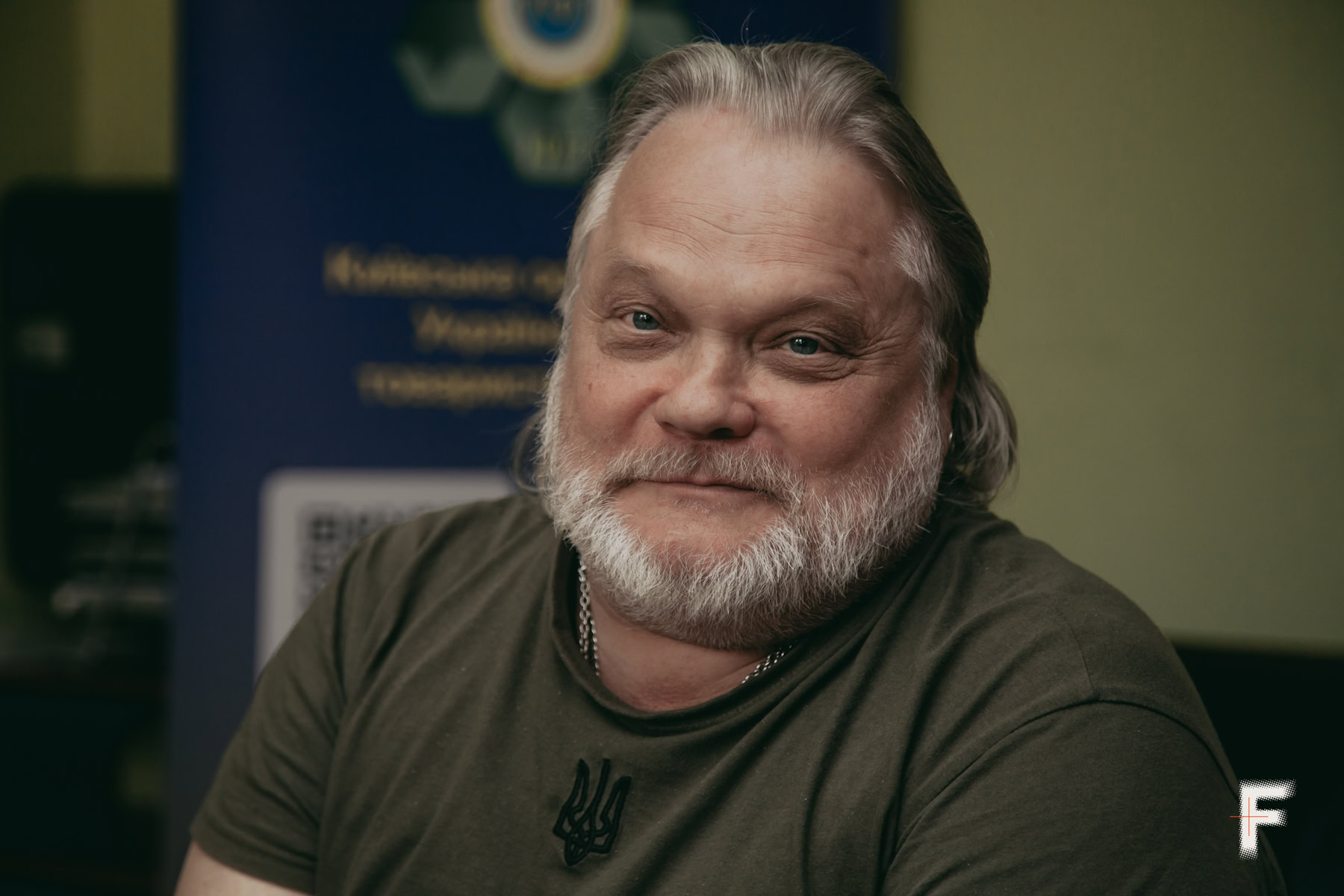
“Sometimes people ask me if this is a hobby. No. Many deaf people used to think they were outside politics and outside these events. I try to explain what is happening, and that the war is part of our lives as well. We are part of all of it,” Volodymyr says.
Under occupation: the experience of a person with a hearing impairment
Volodymyr Netkach was in Bucha when the full-scale invasion began.
My friend can’t hear at all; she could only feel
the strong shelling because the house was shaking.
He could see from the news that Russia was preparing for something, but he could not foresee the scale or the occupation of the city. Volodymyr stayed in the city with his eldest son and two deaf women: his wife and a family friend.
“My wife can only hear high frequencies, and even then only when the sound is close by; she can’t hear low frequencies, like those made by incoming missiles, only the vibrations. So I tried to explain what was happening in a way that wouldn’t scare her. My friend can’t hear at all; she could only feel the strong shelling because the house was shaking. Deaf people may feel vibrations, but they do not always understand what is happening. That’s exactly what scares them,” Volodymyr explains.

While the stores were still open, he was able to stock up on non-perishable food. He recalls keeping his hearing aid on almost all the time. He remained constantly alert, even while sleeping: he felt responsible for his wife and their friend. The Russians seemed to shell the city on a schedule. Whenever it began, he would wake the women and move them away from the windows into the corridor or the basement.
In early March, a Russian infantry fighting vehicle fired at a fifth-floor apartment in the building where Volodymyr lived, destroying two apartments and starting a fire. Power, communications, and water supplies were cut off soon after. Volodymyr had a small grill. He and his neighbors used it to cook. They had to constantly search for firewood and carry water from the well. Going outside was risky: the Russians were shooting people right on the streets.
I signaled to him that I couldn’t hear him.
But he didn’t care; he racked the bolt.
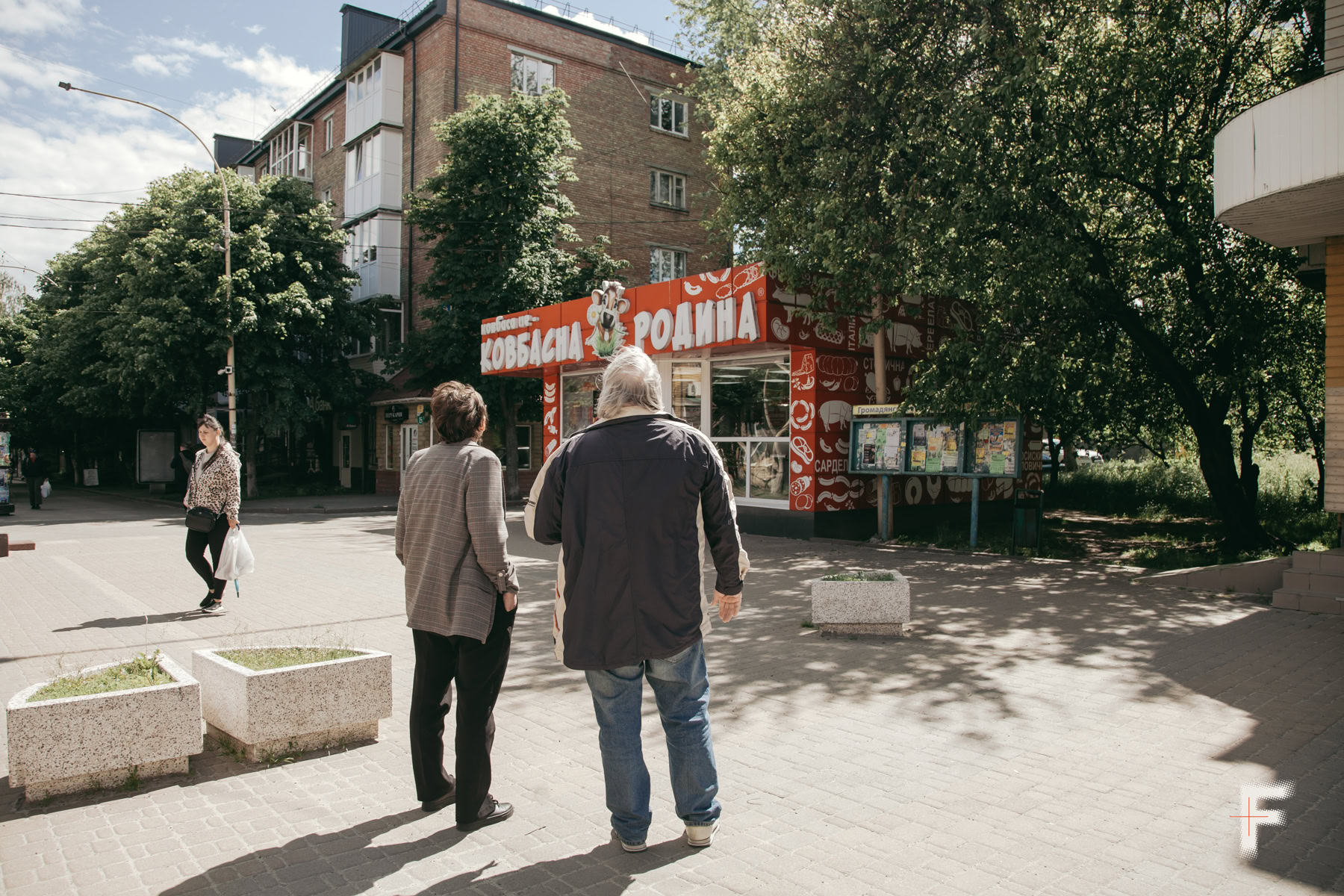
“I had to go get firewood. But my wife and her friend insisted on coming with me. In the end, I agreed. I came outside with the firewood and saw a Russian soldier standing there with a rifle. The women didn’t notice him at first. He’s standing there, shouting something. I signaled to him that I couldn’t hear him. But he didn’t care; he racked the bolt. I realized what was happening, and rushed to get the girls so we could run away. It wasn’t until later that they asked what he had wanted,” Volodymyr says.
On March 11, 2022, Volodymyr and his family were able to flee to Kyiv. They returned a month after the de-occupation.
Life for a deaf family at the start of the full-scale invasion
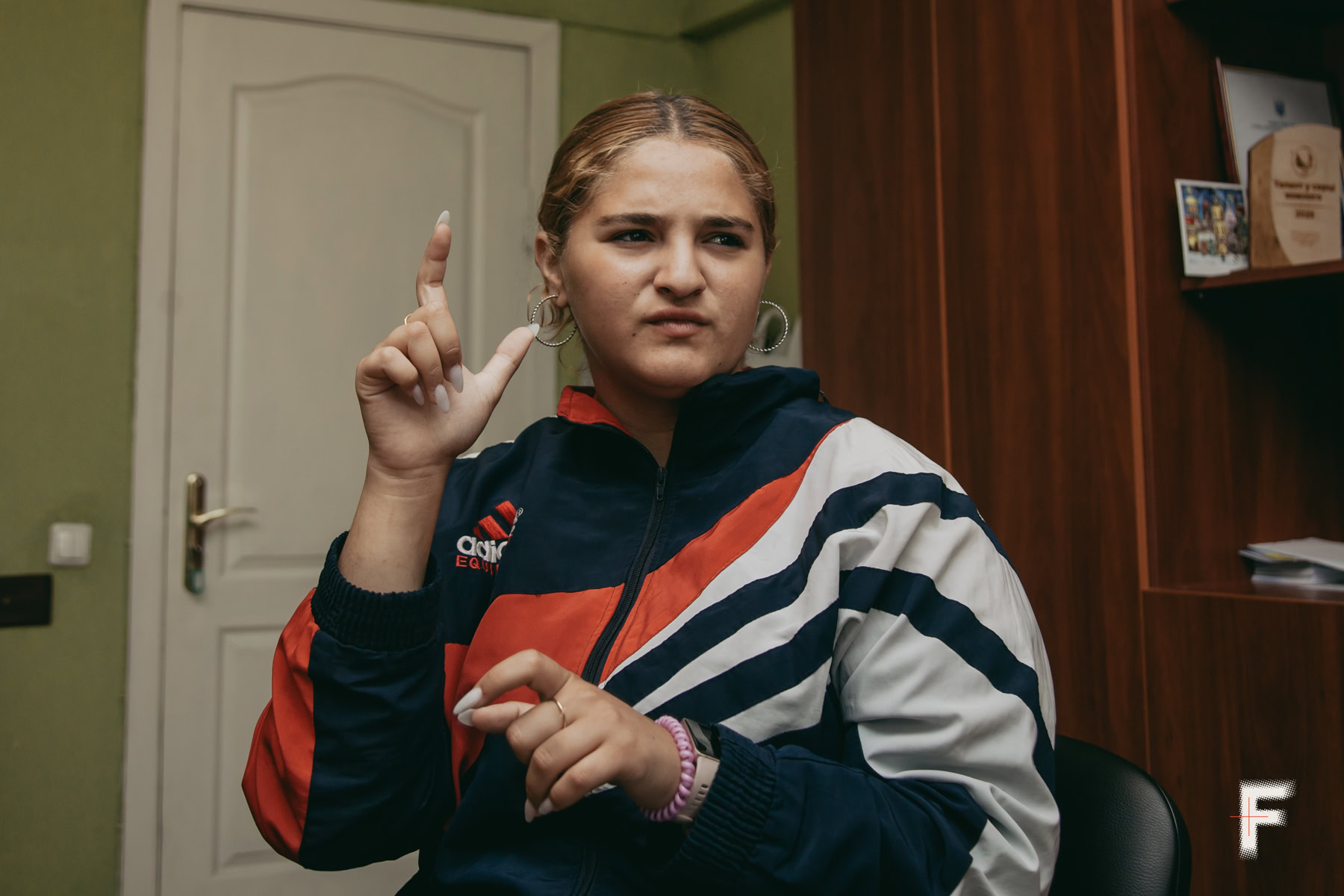
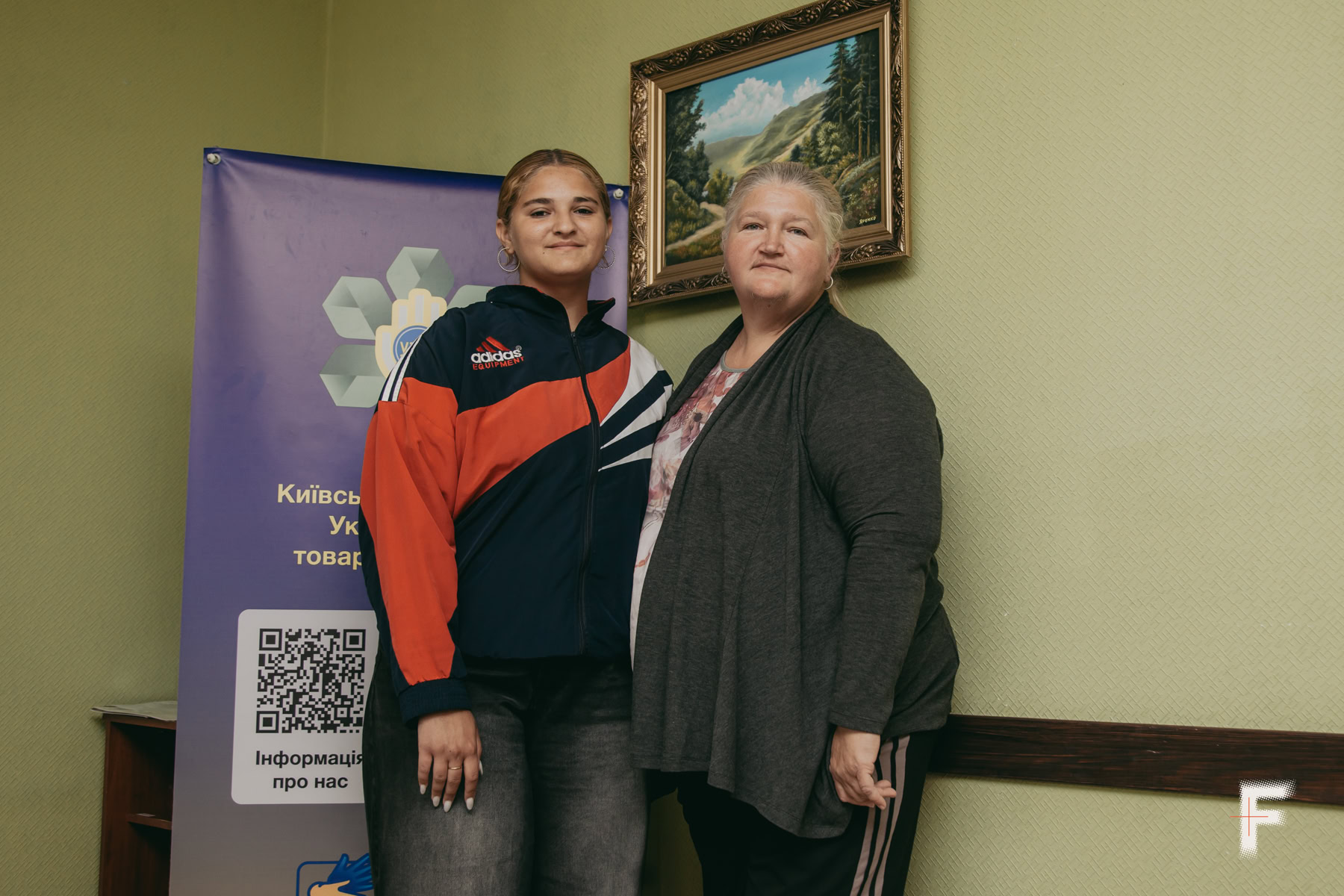
Zinaida Kozachenko has been deaf since birth. At the start of Russia’s full-scale invasion of Ukraine, the lack of information became her greatest challenge. She was living with her daughter in her sister’s apartment in the Vynogradar neighborhood of Kyiv. She remembers first hearing about the start of the war from television. After that, all their actions were coordinated with neighbors, as around 20 people with hearing impairments live in the same building.

“There was no information: no guidance on where to go or what to do. Only our neighbors helped and led us around, like a dog on a leash. My child didn’t understand at all what was happening, that it was war,” Zinaida says.
The woman says that since her daughter was only 11 years old at the time, it would have been very difficult to manage without help. It was the neighbors’ solidarity that helped them get through the first month of the invasion: some queued to buy food, also picking up supplies for Zinaida, while others kept her informed about danger. Neighbors even came over to spend the night with them. She recalls how they would go down to the basement to hide from danger and stay there for 24 hours because it wasn’t clear whether the danger had passed. Her daughter, Ryta, recalls that she figured out what was happening by watching her mother’s reaction:
“I watched my mom. If she was sitting there calmly drinking tea while explosions were going off, I would put up with it and think that’s just how it was supposed to be,” Ryta says.
Zinaida recalls that around a month after the start of the full-scale invasion, television channels began providing information in sign language. Before that, she and her daughter relied on updates from Telegram channels, including those from the Ukrainian Society of the Deaf (UTOG), where staff at the central office tried to promptly share the latest news.
How a deaf person handles the consequences of an airstrike
Zinaida faced difficulties accessing safety-critical information not only during the first months of the war. In the fall of 2025, the Russians shelled her house. She was at her summer cottage with her daughter when she found out online that their home had been hit. When they arrived, they saw a huge hole in the wall and a fire in the stairwell. The women stood near the building for a while, then went to her aunt’s apartment. There was no sign language interpreter on site, so she didn’t know what to do.


UTOG staff helped Zinaida when she encountered difficulties with the paperwork. Law enforcement officials refused to issue an official report documenting the damage to her apartment. Instead, the municipal housing authority declared the building unfit for habitation. She took that decision to government agencies, but officials insisted on seeing the damage report she had never been given and said she had applied for assistance too late. However, thanks to a sign language interpreter, Zinaida was able to explain the situation, and eventually her documents were accepted.
What about us? Nobody gave us any information or warned us.
Hearing people could quickly pass information to one another.
My child and I were left standing there in shock, just watching,
Her son was her voice: a loss that changed her life
Iryna Lisova and her daughter were evacuated from Kramatorsk in April 2022. They moved to Kyiv, where Iryna’s older son lived; he provided her with both financial and emotional support. She says she had a very close relationship with him and recalls that he always took care of her. Iryna raised her son on her own, as her husband had died when the boy was only two years old. According to the woman, her son had been her interpreter since childhood: he even accompanied her on visits to the doctor and helped explain her health complaints.
“He was a wonderful person. Everyone would say, ‘Oh, your mom is deaf.’ However, he was never ashamed of that; on the contrary, he was proud of me,” Iryna says.

Gradually, the woman began to settle into her new surroundings: she applied for IDP benefits for herself and her daughter, and with the help of UTOG found a job at a supermarket. Eventually, Iryna was able to rent her own apartment and send her daughter to school. Meanwhile, her son became a father, and in 2025 he was conscripted.
“He served in the 71st Separate Ranger Brigade of the Airborne Assault Forces of the Armed Forces of Ukraine. First, he underwent training, and then there were combat deployments: the first, the second, the third. And on the fourth, he was killed in the Pokrovsk sector,” says Iryna.
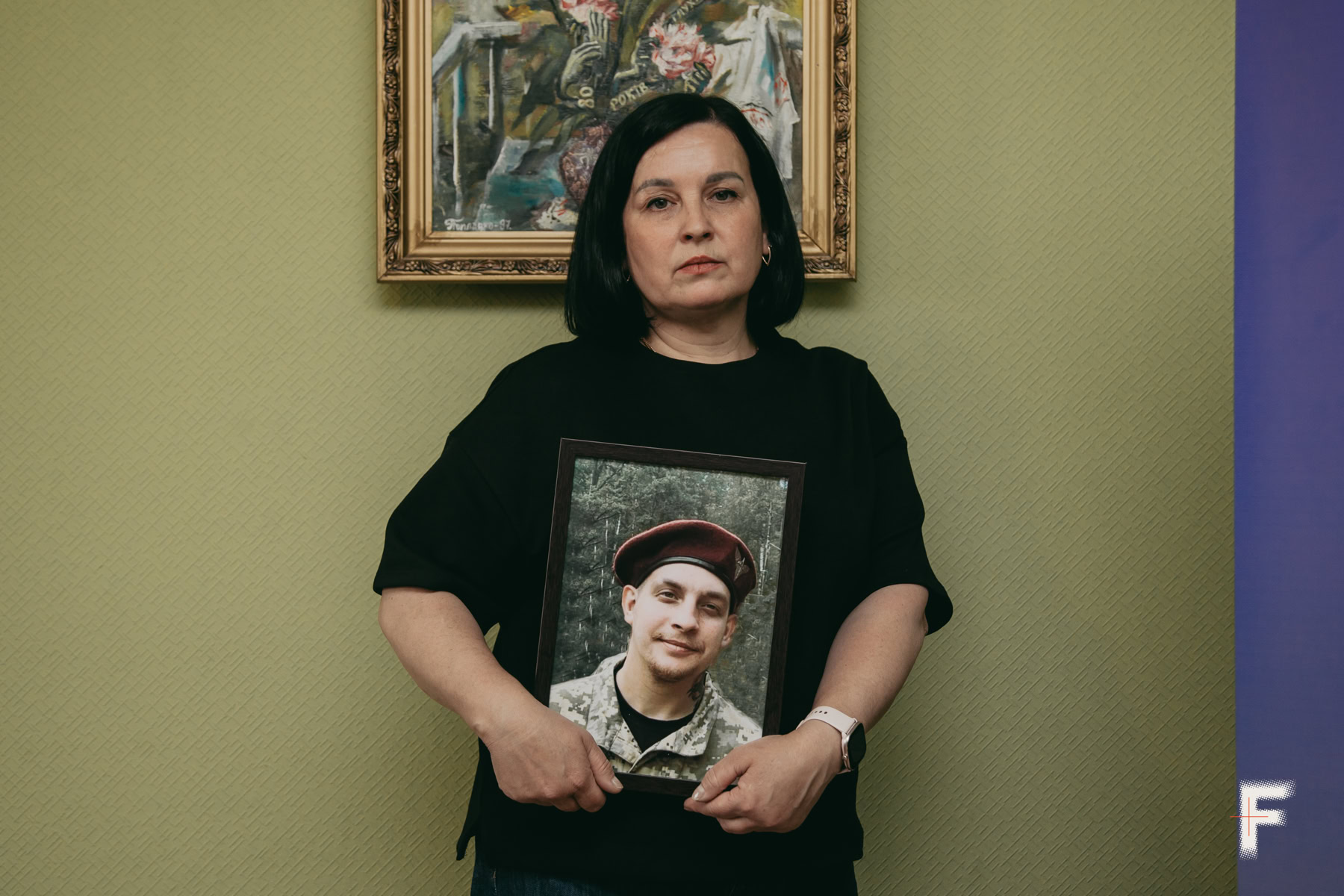
After her son’s death, she had to handle the paperwork for his posthumous documents.Iryna says she has difficulty with written communication, which made it difficult to communicate with the morgue and the Military Recruitment Offices regarding her deceased son. According to her, UTOG staff helped her fill out most of the applications, documents, and appeals. In addition, the organization provided her with the services of a sign language interpreter
Iryna dreams of returning to Kramatorsk and living in her own apartment, without the fear that the building could collapse due to a strike or that she might be forced out of rented housing.

How the deaf community fights for accessibility
Currently, the community of people with hearing impairments learns about the threat of shelling mainly through text messages, official alerts, and television broadcasts with subtitles. They often rely on hearing relatives or social media posts from local communities created by UTOG.
Tetiana Korniienko, acting chair of the Kyiv branch of UTOG, explains that text-based instructions are insufficient in crisis situations. People who have been deaf since childhood can understand individual words, but it is difficult for them to grasp the overall meaning of long and complex texts. For most people with total hearing loss, sign language is their primary means of communication. It differs from spoken Ukrainian in vocabulary, syntax, grammar, and the way information is conveyed and perceived.

To facilitate communication between hearing and deaf people, UTOG has created a service that allows people to contact an interpreter via video 24 hours a day and ask for help. However, Tetiana Korniienko points out that not everyone is aware of these opportunities. Some deaf people deliberately avoid community involvement and live relatively isolated lives, while others, because of their age, simply lack the skills to use modern digital devices. Still, even the most advanced digital tools cannot fully substitute for personal support, let alone face-to-face human interaction.
Electronic devices are even less reliable during blackouts. In emergency situations, a deaf person needs clear instructions in sign language: how to act, where to run, and where to seek help. In moments of panic and stress, it is important to have someone by your side who can answer your questions right away or simply be there for you. Sometimes, all a person needs is the opportunity to talk and share what they are going through. In such moments, having an interpreter nearby serves as a bridge for communication and a source of support. In addition, in-person interpretation support is also essential during court proceedings and when dealing with notarial and legal matters. It is equally important in situations where people have the basic right to privacy and independence, rather than having to rely on a hearing family member or friend, for example, during a doctor’s appointment.

Tetiana Korniienko says that UTOG has only three interpreters in Kyiv. In the surrounding region, in-person interpreting is largely unavailable, with most local communities offering only online services. The hearing impaired community needs comprehensive solutions and government support, both in terms of funding and in training new interpreters.
***
Hi, I am Oleksandra, the author of this article. Thank you for reading to the end.
Once, I had headphones on and missed both the air-raid alert and the sound of an explosion. I only understood what had happened when I felt the ground shake beneath me. It took me by surprise and left me disoriented; I failed to react in time. It made me realize that I had no real understanding of how people with hearing impairments navigate war, where sound is a critical warning signal. Having spoken with members of their community, however, I realized that their experience of war is much more complex than I could have imagined.
Every story starts with your support. Join the Frontliner community so we can keep up documenting Russia’s war against Ukraine from the front line and the rear.
***