
Underground operation on the approaches to Kupiansk: How Ukraine’s Defense Forces foiled Russian occupiers’ plans in October
Ukrainian assault troops advanced through more than 15 kilometers of underground gas pipeline to strike Russian positions near Kupiansk. Meanwhile, on other parts of the front, Russian occupiers attacked in pairs, launched motorcycle assaults on Ukrainian positions in the fog, and tried to cut off Ukrainian supply routes. Defense Forces of Ukraine responded with counterattacks, strikes on enemy logistics and the use of unmanned ground vehicles. Frontliner reports on how Ukrainian troops held the line in October.
One of the month’s most significant developments near Kupiansk was the Ukrainian military’s operation to destroy a concealed underground route used by Russian occupiers. For a long time, Russian troops had been using the dry pipe of a mothballed trunk gas pipeline as a tunnel several kilometers long.
The underground passage enabled Russian infantry to move without being detected by Ukrainian reconnaissance drones and reach the wooded areas north of the city. From there, they tried to infiltrate the rear of Ukrainian strongpoints .
Blocking the tunnel’s exits from the air alone proved difficult, as Russian forces were constantly creating new ones. The Ukrainian command therefore decided to strike from inside the pipe. On October 22, the 2nd Corps of the National Guard of Ukraine, Khartiia, announced the completion of Operation Veles.
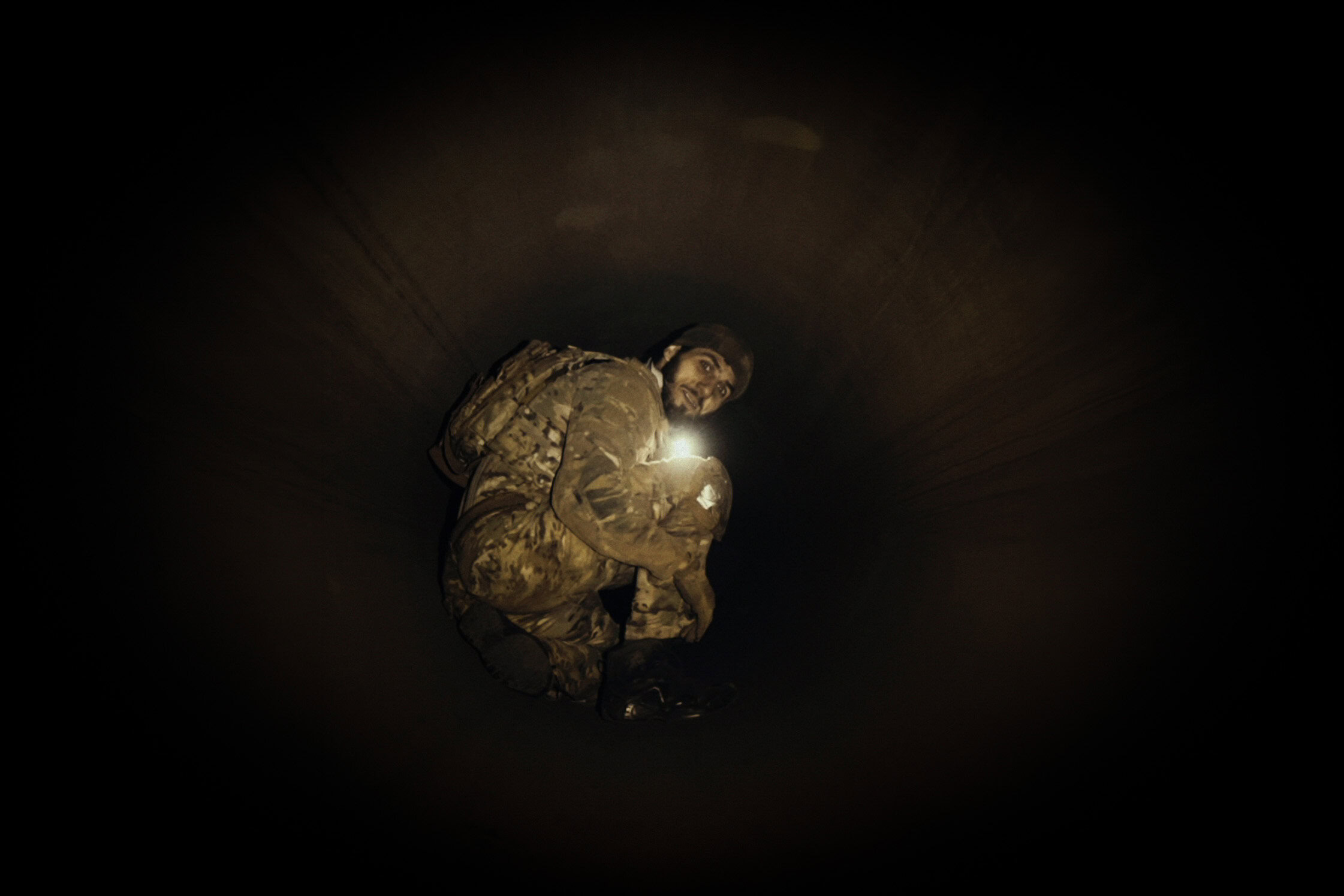
Ukrainian assault troops covered more than 15 kilometers underground and timed their exit to coincide with a ground offensive and first-person-view (FPV) drone strikes on Russian positions, said Brigadier General Ihor Obolienskyi, commander of the 2nd Corps Khartiia:
“Russian forces planned to use the gas pipeline as a concealed route to bypass Ukrainian defenses. Ukrainian troops studied this tactic and used it against the enemy. The operation allowed us to strike Russian positions from several directions at once and clear the occupiers out of the underground facilities.”
According to the unit, Ukrainian forces killed more than 100 Russian troops during the operation and captured another 30.
According to the corps, the operation deprived Russian forces of the ability to use the pipeline to infiltrate the rear of Ukrainian positions near Kupiansk.
Kostiantynivka front: Battles on the approaches to the city
Kostiantynivka remains one of the key logistics hubs in the northern part of the Donetsk region. Russian forces sought to approach the city and outflank it by advancing through nearby villages.

On October 25, DeepState analysts reported Russian advances in the area. Ukrainian troops blocked the sector with crossfire and minefields, preventing Russian occupiers from gaining a foothold in the built-up areas.
The Institute for the Study of War (ISW) analysts noted that Russian forces were attempting to cut off the main routes around the city but had encountered a prepared Ukrainian defense.
Alongside infantry assaults, Russian forces are persistently trying to disrupt Ukrainian logistics. Russian drones hunt down vehicles carrying ammunition, water and food to Ukrainian troops, as well as those evacuating the wounded. Ukrainian drone operators help hold back the Russian advance by detecting Russian infantry as it approaches Ukrainian positions.
Pokrovsk and Dobropillia fronts: Intense assaults and the fight for logistics
The Pokrovsk and Dobropillia fronts remained among the most intense areas of the front in October. Russian troops continued to launch assaults in small infantry groups, trying to gain ground near Dobropillia, Rodynske, Serhiivka and neighboring settlements.
At the same time, Russian forces sustained significant losses, according to data from the Unmanned Systems Forces (USF). The USF commander, Robert “Madyar” Brovdi, reported that Ukrainian units confirmed 1,268 hits on Russian personnel on the Dobropillia and Pokrovsk front during the first five days of the month. That was 43% more than in the same period in September.
Despite these losses, Russian forces continued to advance in some areas. On October 26, DeepState reported Russian gains near Svitle in Donetsk region. Even under Ukrainian strikes on logistics and heavy infantry losses, Russian troops kept looking for ways to expand the area they control.

Oleksandrivka front: Countering Russian infantry teams
Combat activity on the Oleksandrivka front is lower than on the neighboring Pokrovsk sector. Ukrainian troops are combining defense of the positions with local counterattacks and gradual advances.
For their part, Russian troops have focused on infiltration tactics, sending small groups of two or three infantrymen forward without armored vehicle support. Roman Pysarenko, head of communications for the 79th Air Assault Brigade, said there was no indication that Russia was preparing a major offensive in the area:
“The enemy is conducting assault operations, trying to win back lost ground. But we are seeing no preparations for mechanized assaults involving large numbers of armored vehicles or a massive deployment of personnel.”
According to Pysarenko, Russian infiltration attempts have had limited success thanks to Ukrainian aerial reconnaissance, which detects Russian infantry before it reaches the front line.
“Artillery, strike drones and crew-served weapons are used against them. Those who do manage to reach our positions are engaged directly by the air assault troops stationed there. Small-arms firefights also take place,” Pysarenko says.

The number of such attacks ranges from two or three to as many as ten a day, depending on how many replacements reach Russian units. Accounts from Russian troops captured by soldiers of the 79th Air Assault Brigade point to problems supplying Russian occupiers at forward positions. According to the prisoners of war, food and water are delivered to them by drone only sporadically, and bottles dropped from above often break on impact.
Seasonal changes are affecting combat operations on both sides. Falling leaves make concealment in tree belts more difficult, while muddy autumn conditions hinder infantry advances and the movement of wheeled and tracked unmanned ground vehicles (UGVs).
Rain and fog also reduce the effectiveness of fiber-optic drones, so troop movements and rotations take place only when weather conditions are favorable. According to the press officer, the enemy deploys glide bombs relatively rarely in this area, from a few to around ten a day:
“They try to use glide bombs to hit targets in the rear. But in practice, around 90% of them hit civilians, if we’re talking about settlements located far from the front line. Along the front line and near drone operators’ launch positions, however, most strikes are carried out by drones.”
Southern front: Russian reconnaissance team destroyed, counterattacks near Orikhiv
In the south, Russian forces attempted to take advantage of fog and rain to advance quickly on motorcycles and quad bikes. On October 19, the 7th Air Assault Corps reported the destruction of a Russian reconnaissance team that had attempted to infiltrate the Ukrainian rear under cover of dense fog.
At the same time, Ukrainian troops held their positions and conducted counteroffensive actions on the Orikhiv front. According to an October 6 assessment by the ISW, Defense Forces of Ukraine maintained positions southeast of Novoselivka and in the northern part of Novoandriivka, southwest of Orikhiv. Analysts also reported Ukrainian counterattacks near Novodanylivka and Mala Tokmachka, as well as northwest of Charivne.
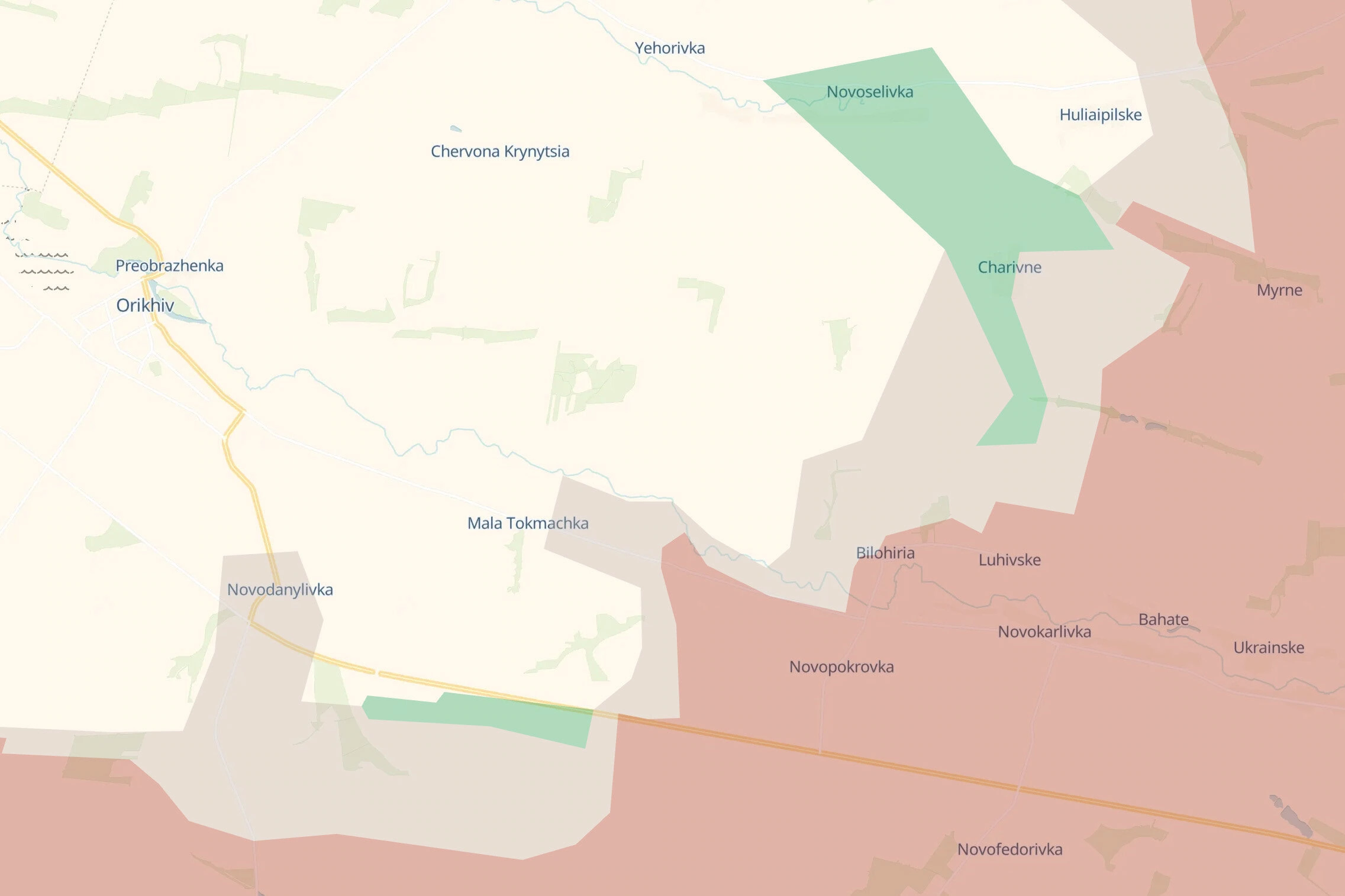
On October 19, Defense Intelligence of Ukraine (HUR) reported a counter-sabotage operation conducted by the Bratstvo Battalion on the bed of the dried-up Kakhovka Reservoir. Ukrainian intelligence officers swept the area for Russian sabotage groups. Three Russian troops were captured during the operation. Ukrainian intelligence officers also located and destroyed enemy groups.
According to the General Staff’s daily reports, the intensity of fighting varied considerably across different fronts throughout the month: from large-scale infantry assaults in the Donetsk region to isolated attempts to break through in the south.
Pokrovsk and Dobropillia fronts: assaults ranged from 18 in 24 hours at the end of the month to 40 in mid-October.
Kostiantynivka front: assaults ranged from 11 a day in early October to 33 on October 20.
Kupiansk front: the fewest assaults came at the end of the month, after the pipeline was cleared, when Russian forces made just four attempts to advance in a single day. The highest number was 26 assaults in mid-October, as Russian troops tried to break through to the Oskil River.
Oleksandrivka front: Russian activity ranged from no assaults in a 24-hour period to six attempts by small groups to advance in early October.
Orikhiv front: the number of attacks ranged from one a day to five assaults during attempts by mobile groups on quad bikes to break through Ukrainian positions.
Huliaipole front: Russian forces made no attempts to advance during a prolonged lull at the beginning of the month. Activity peaked at 18 assaults in a single day during a brief surge in Russian attacks toward the end of October.