After the evacuation: How people in Kharkiv are helping those who have left their homes because of war
People leave their homes, farms, and pets, saving themselves from Russian shelling and drones. Some leave with volunteers, while others have to cover the deadly kilometers on their own. In the Kharkiv Transit Center, evacuees get help with paperwork, basic essentials, and temporary accommodations. Frontliner visited the center to speak with people who have left their homes and the volunteers who help them to safety.
A minibus stops in front of the Relief Coordination Center in Kharkiv, which houses the transit center for evacuees. Out steps Lidiia Yerina, a 67-year-old woman from Myronivka, a village located 20 km from the border with Russia. She is limping. She is in house slippers; she left in a hurry and didn’t have time to put on proper shoes. She also left behind her walking cane, which she has difficulty moving without, and her beloved cat, Lizochka, because there is no room for her in their new accommodations.
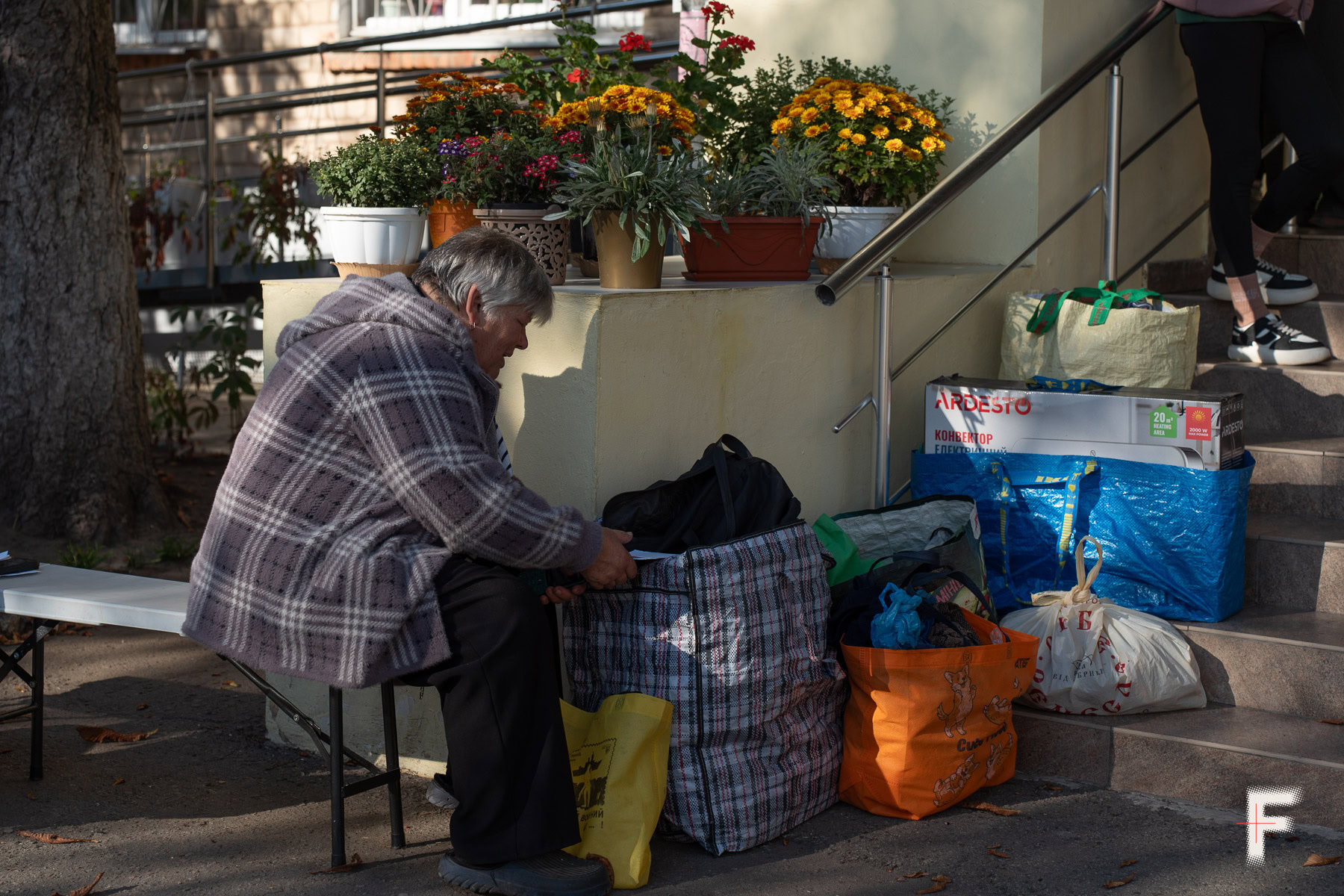
Lidiia left Myronivka at 7 a.m. and arrived at the Center at around ten. Because of the threat of drones, she had to gather her things quickly and leave the home she’d lived in for so many years. Now, she stands near the transit center without her usual support.
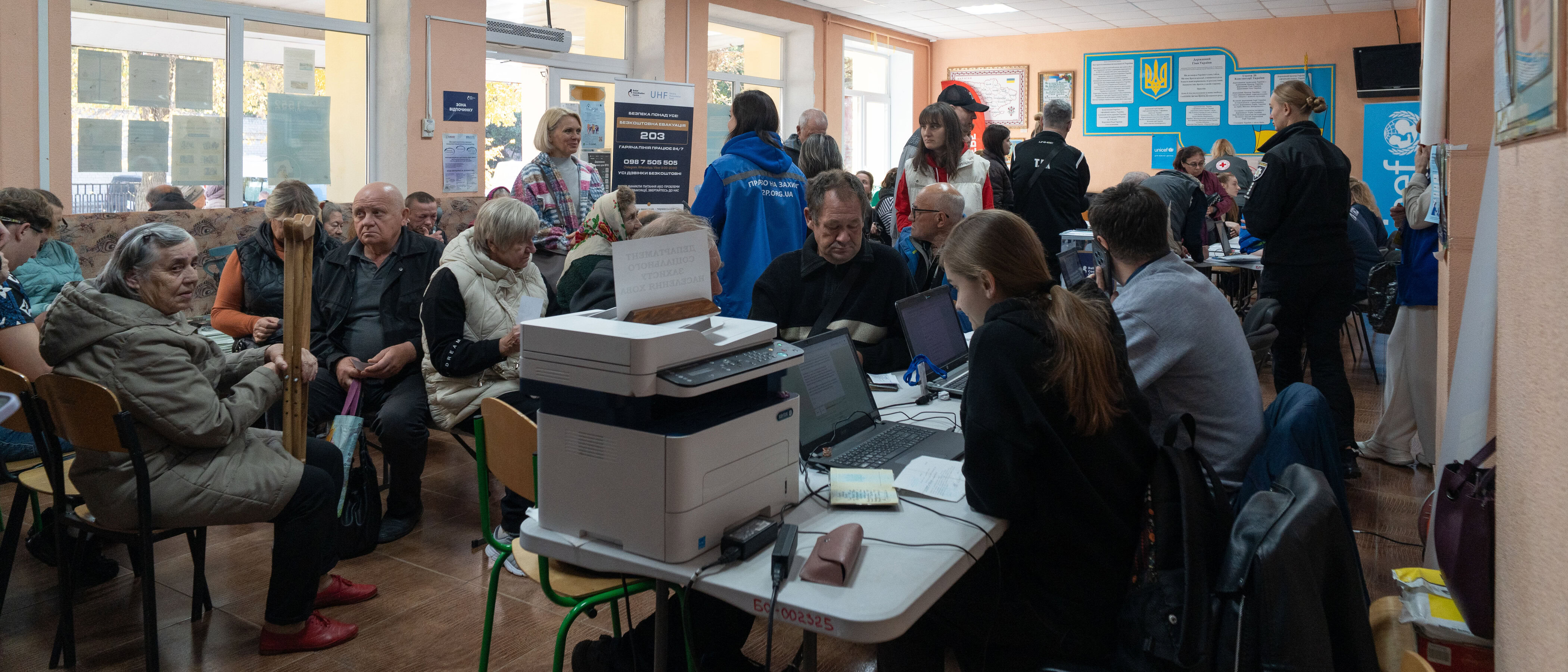
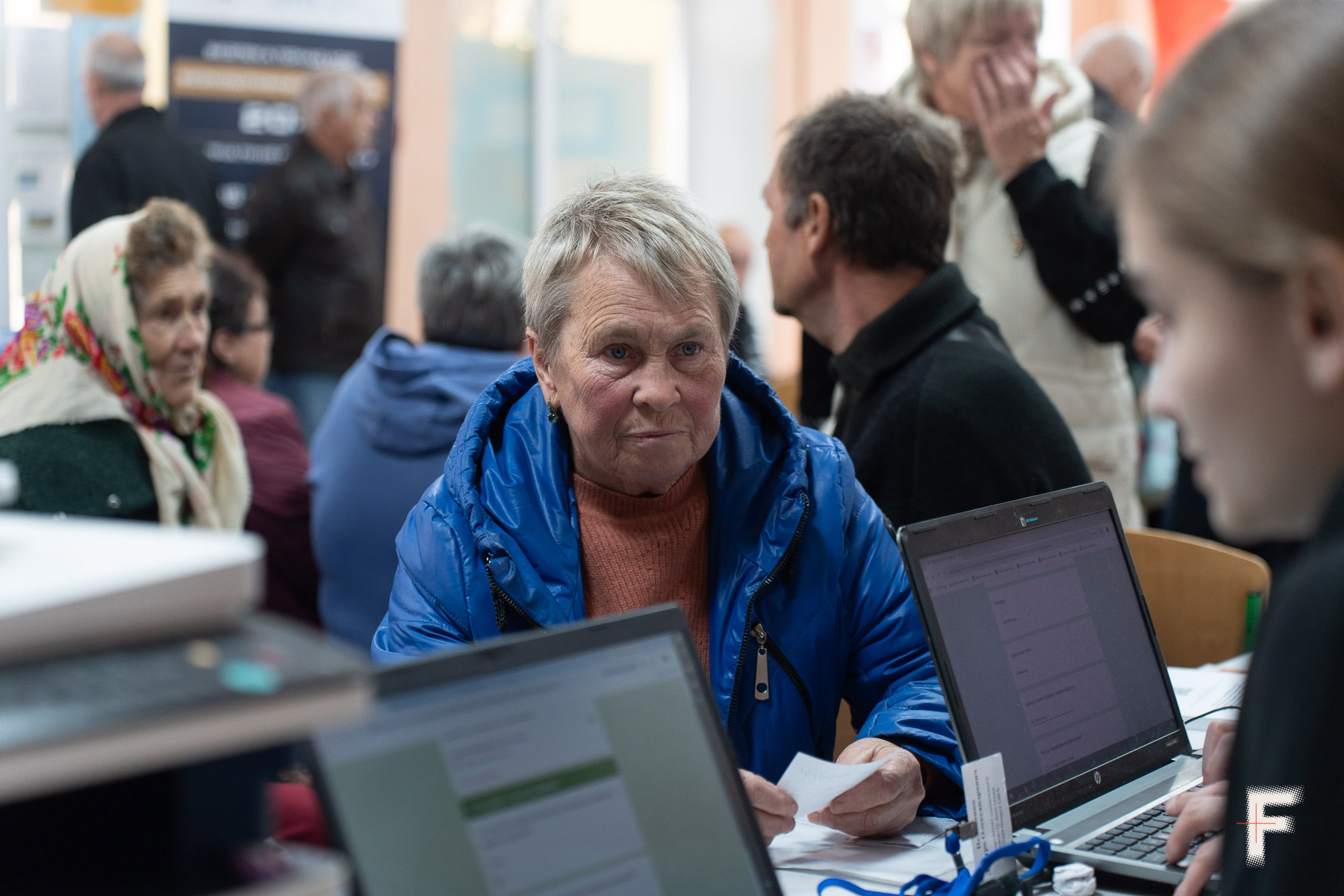
Several dozen evacuees are in the hall waiting for assistance. New arrivals from dangerous territories are processed without waiting in line. The employees help Lidiia fill out paperwork, ask her what she needs, and give her a ticket she can use to see various specialists.
The school’s hallways are filled with the sounds of computer keyboards clicking away. Center employees check documents while schoolchildren run past on their way to the IT classroom. Some of the evacuees sit with their bags; some are crying, while others are trying to figure out where to get basic essentials. There are occasional arguments when someone tries to cut in line.
Lidiia sits on a couch to rest. She speaks quickly, jumping from one subject to another. At times, she breaks into tears, remembering her granddaughter’s words: “Babusia, you’re strong.” She talks about her daughter, who she plans to move in with in Oleksiivka, a neighborhood in Kharkiv, and about the village she didn’t want to leave.

Lidiia worked for 40 years as a nursing assistant in the Zolovchiv district hospital. She held on to her native home for as long as she could but was eventually forced to move by the drones that she says fly over Myronivka from dawn to dusk. She warmly recalls the pond, river, and woods she loved so much. She says things changed in July 2026, when from those same woods drones began to fly to attack cars and buildings.
It is especially hard for Lidiia to talk about her cat, Lizochka, who would sleep with her on her chest. Her daughter isn’t able to take in an animal that is used to living outside. Lidiia doesn’t know what will happen to Lizochka now.
Ticket to the next stage
The Kharkiv transit center began working in the local school building on May 10, 2024. There, evacuees can get humanitarian, legal, and psychological help; if needed, they can also find temporary housing.

Serhii Musiienko has coordinated the Center since it opened its doors. There are around 30 representatives of 15 organizations working here every day. They help evacuees with paperwork, financial assistance, food, hygiene products and other essentials.
Different evacuees have different needs. Some arrive with several bags and already know where they are heading next. Others left practically everything behind and don’t have anywhere to stay. According to Serhii, most don’t stay at the Center for long; they end up with relatives or friends or in accommodations they find themselves. For those who have nowhere to turn, the Center’s employees help to find a place to live and organize the move.
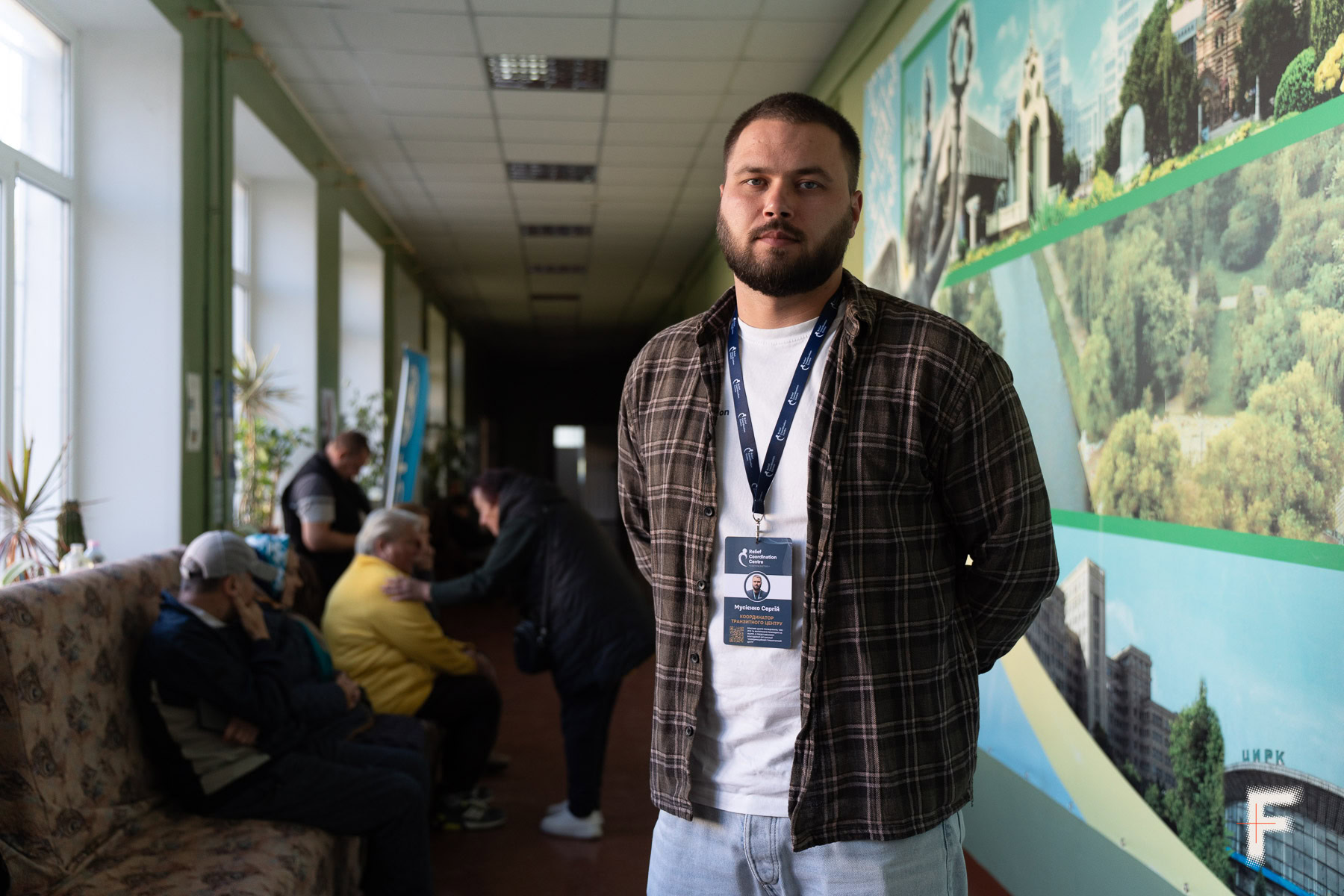
Typically, evacuees can stay at the center for up to three days or, in more complicated cases, seven. According to Serhii, they take in about 160 new people per day, around 800-900 per week. During mass evacuations, the number of new arrivals can reach 300 per day.
“Human life is the most important thing. Don’t wait until the last minute, when we can no longer reach you,” Serhii says.
Evacuation teams bring people to the Center. With the encroachment of live combat and the widening threat of drones, reaching some settlements is becoming increasingly difficult. Now, the road out of dangerous territory often begins long before the person makes it to the school building with a ticket in hand.
Evacuating under threat of drones
Lidiia Yerina was brought to the transit center by Maksym Melnyk, a volunteer on the evacuation team. He joined two years ago, when an acquaintance asked him to help with humanitarian work.
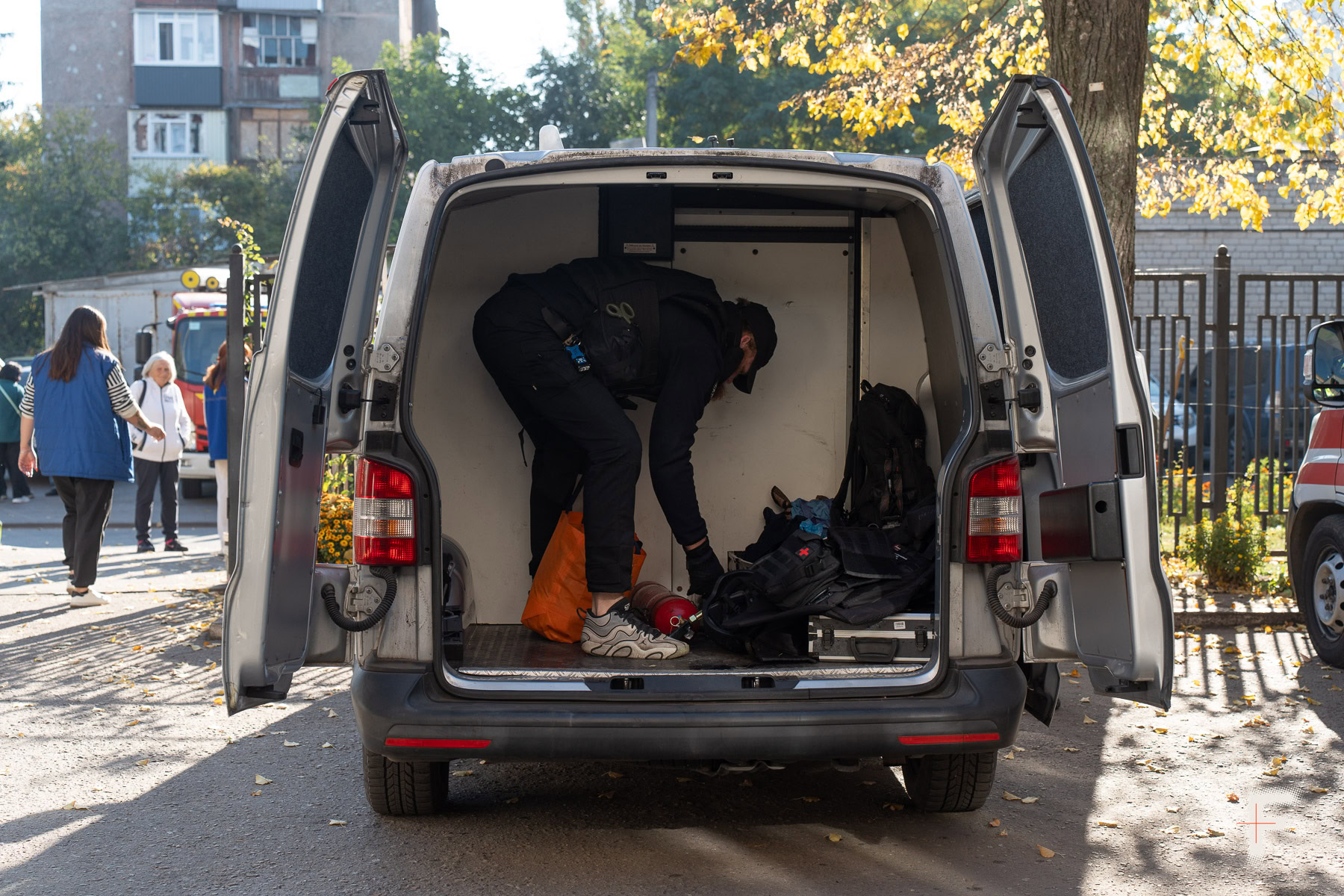
Taking off his body armor, Maksym tells us how planning for each evacuation mission starts with a review of the security situation in the settlement. If the road is too dangerous, the volunteers can’t guarantee that they’ll reach the evacuees. Because of the drone threat, even trips to settlements that are 15-20 kilometers from the frontline are now risky.
The team tries to combine several evacuation requests into each trip route so that they can get as many people out as possible. But even a short distance can end up taking an entire day. Volunteers have to hide from drones, waiting for the all clear or changing their route. When they get back, there are new requests waiting.
Maksym says that this job requires more than just being a good driver. You have to know tactical medicine, be in good physical shape, and be able to react quickly to dangerous situations. Sometimes, you have to carry people to the cars since they can’t move on their own. Volunteers frequently get insufficient sleep, but each trip requires constant vigilance.

“The people who work here are dedicated to their mission,” Maksym says.
One of the worst situations he has faced was during an evacuation mission on March 10, 2026, in Sloviansk, when the team ended up near a bombed bus. The volunteers immediately went to help the wounded, including a woman with a seriously damaged leg. They applied a tourniquet, put her on a stretcher, and sent her to the hospital.
Maksym says that the skills the team practices during tactical medicine training help them to act in such situations. They also practice what to do when there is a drone threat.
Fifteen kilometers to safety
Not all of the evacuees come to the transit center with the volunteer teams. Some make it to Kharkiv on their own and then visit the Center.
Coordinator Serhii Musiienko says that many evacuees come to the center to get one-time financial assistance of 12,300 UAH, which is available for up to 45 days after leaving any settlement that is under evacuation orders. The Center provides assistance to any and all documented IDPs. Others can be verified through the settlement they evacuated from; volunteers call local authorities to confirm that the applicant lived there and evacuated.

62-year-old Volodymyr Naryshkov came to the Center mainly for money. He evacuated from Makarove, a village in the Zolochivska community about six kilometers from the gray zone. He says that the evacuation teams were unable to reach his village, and so he, together with other residents, walked 15 km on foot before catching a ride further. They had to hide from drones along the way.
Before the full-scale invasion, Makarove had more than a hundred residents. Now, according to Volodymyr, there are about eight. He recalls how the village spent about six months under Russian occupation at the start of the full-scale invasion; they didn’t have food, but, he says, they did not suffer abuse at the hands of the Russian military.
Now, part of Makarove is in ruins, and there is no electricity. Volodymyr lived there for about 40 years and had a homestead, cattle, and land. He had to leave that all behind.
Now, he wants to go home. But most of all he wants news of his son, a soldier who went missing in action in August 2022.
“I have one task: to wait until my son gets back. I don’t care about the rest, honestly,” Volodymyr says.
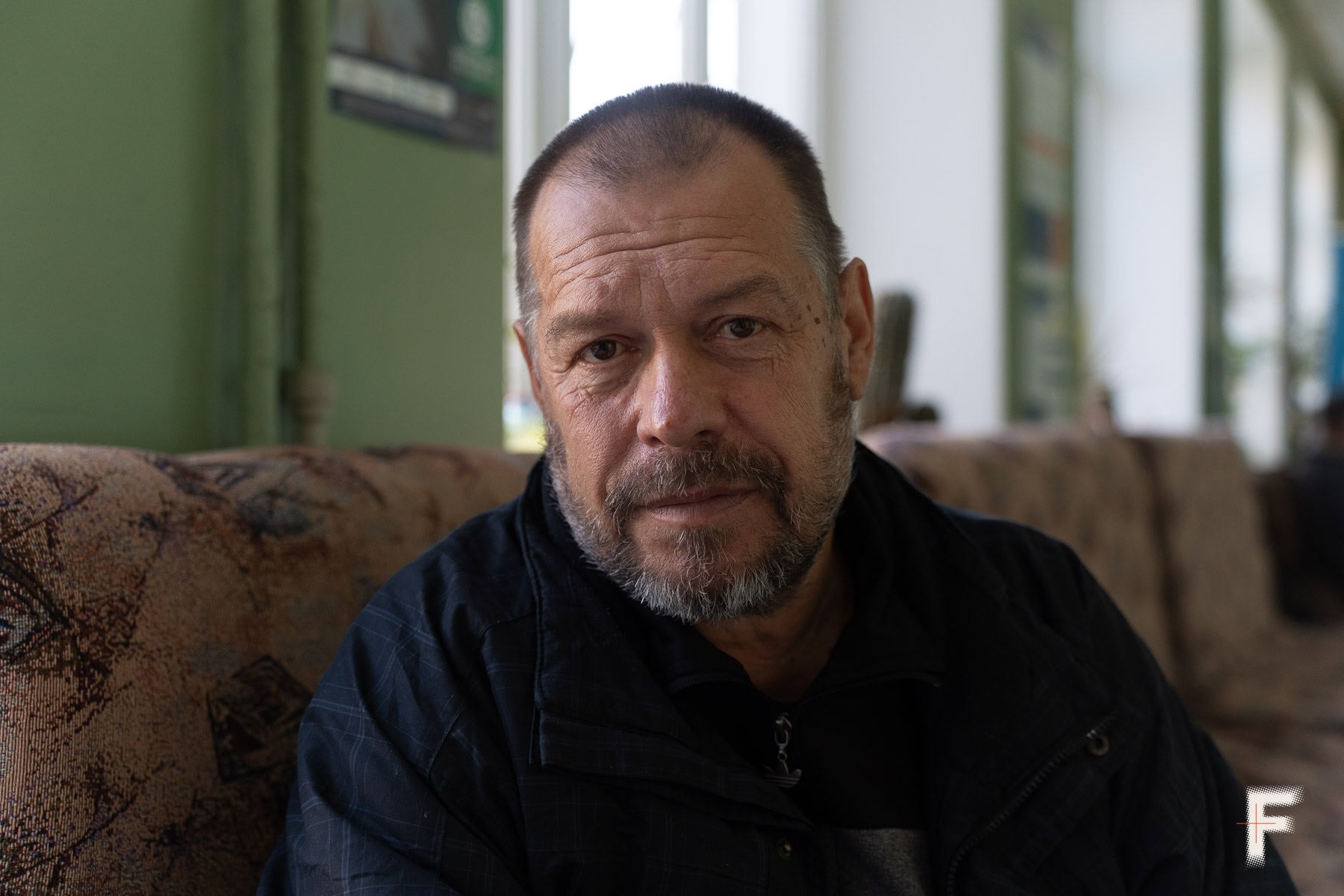
While he waits on that news, he tries to settle what affairs he can, like financial assistance. After a consultation, he visits a worker who provides psychological support. She listens to Volodymyr, tells him that there’s no shame in asking for help, and advises him to get into therapy as soon as he can.
The one-time financial assistance is one of the reasons evacuees visit the center. The employees here help them to clarify the requirements for receiving aid, check their documents, and go through any required procedures. For those who left almost everything behind, this is an opportunity to get help in buying the basic essentials.
A new cane for Lidiia
The faces in the transit center change every few hours. One group finishes with their paperwork and moves on, and a new group takes their place. On October 9, 2026, there were 182 visitors.
Lidiia Yerina has already done the required steps and gotten help. She sits on the center’s porch with her things; in her hand is a new walking cane from the center. She will have less trouble walking now.

Ahead of her is a move to her daughter’s place in Oleksiivka, Kharkiv region. Her native home, the places familiar to her since childhood, and the cat who likes to sleep on her chest are back in Myronivka. She still hasn’t decided what to do about the cat.