In the wake of the flood: How a village survives on the shore of the destroyed reservoir in the Kherson Region
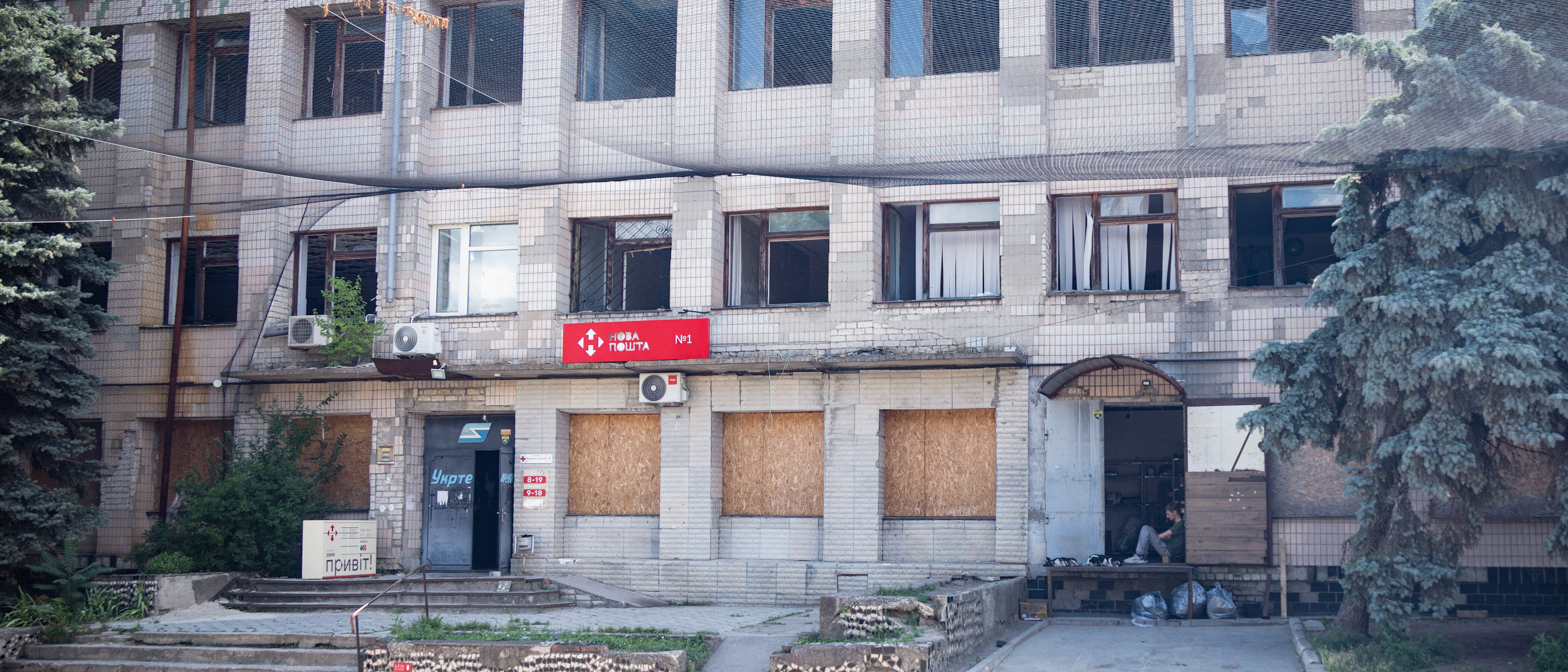
The village of Novovorontsovka in the Kherson region was lucky. It escaped occupation in 2022. A year later, it was spared the flooding when the Kakhovka Dam was blown up. However, life here is far from easy or carefree. Russian forces occupy the opposite bank of the Dnipro River, and drones constantly buzz overhead. An Alley of Glory featuring portraits of fallen heroes and recruitment posters for the Armed Forces represent two extremes of the same story.
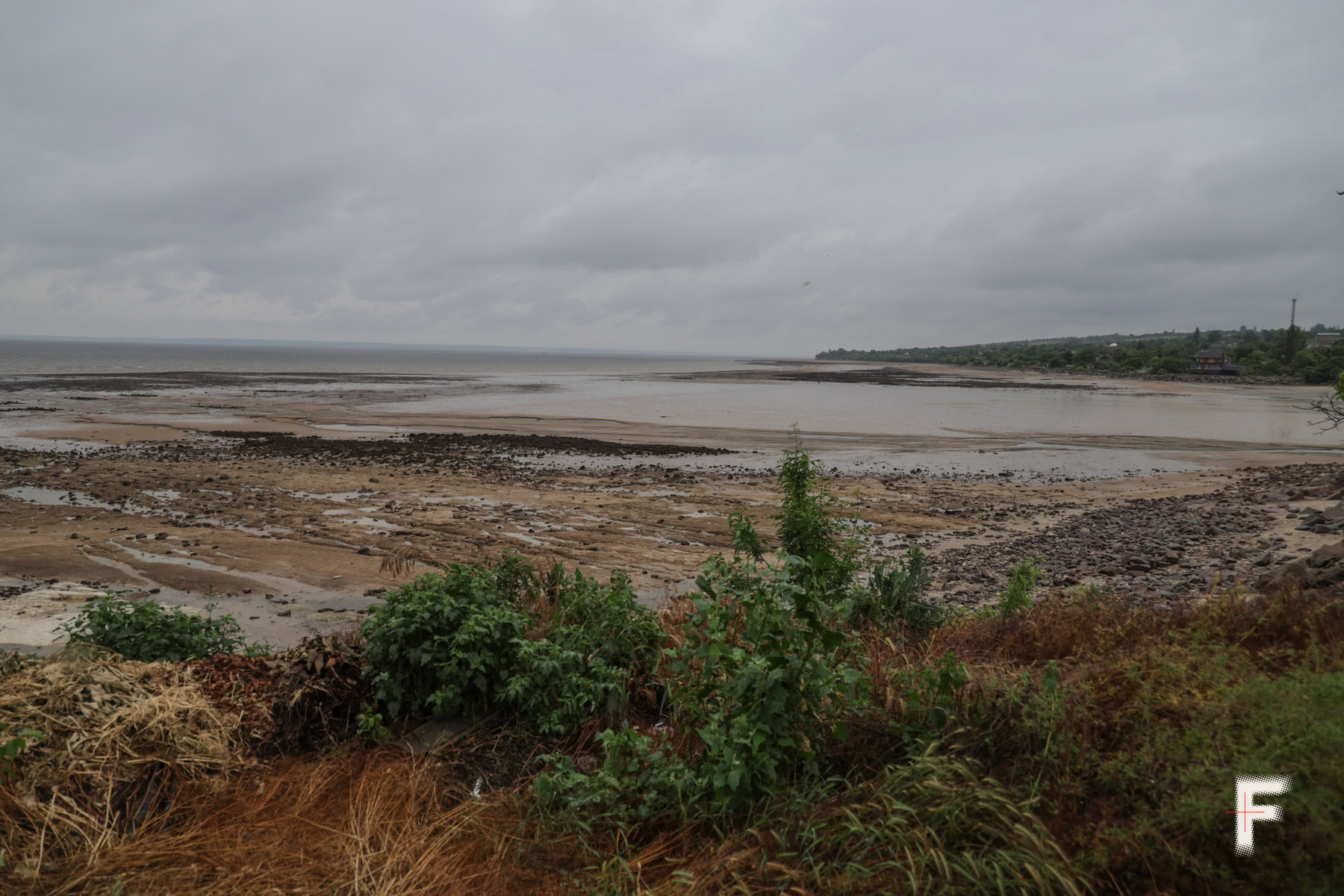
Beach mushroom-shaped canopies and changing booths on the shore of the destroyed reservoir are overgrown with bushes, turning the area into a “ghost” zone. A willow forest now stands where the water used to be, partially fenced off with barbed wire. The paths are covered with shells, and in the thickets one can find the remains of buildings, a cemetery, and shards of pottery. Streets once ran here, flooded to build the Kakhovka Reservoir. It is best to avoid entering the forest without a clear need, as no one knows exactly how many explosive hazards are hidden there.

Air raid alerts never cease here. Mobile service and mobile data simply don’t exist here, but you can freely connect to a wireless network in every shop and establishment. You can call an ambulance only through a Viber number. Navigation systems do not work either. The market, pharmacy, and hospital are covered with anti-drone nets. A no-lights rule is in effect. After sunset, drivers must keep their headlights turned off, and residents must draw their curtains tightly, since any light source is a potential target. Even shop clerks carry drone detectors. However, these devices offer no protection against drones guided by fiber optics, meaning people must constantly listen closely for sounds from above. Sprawling chestnut trees provide good cover from aerial threats, but they are unlikely to remain a safe shelter once the leaves fall.

Many buildings are destroyed, but the market is quite crowded, and teenagers are zipping along the streets on scooters. In the morning, a couple of hours before the announced distribution of humanitarian aid, people line up despite the attack.

Not everyone hides, even when FPV drones circle over the community, as locals believe drones won’t bother with pedestrians and will only hunt vehicles. However, pedestrians still suffer injuries and fatalities. Reports of such cases appear on the community’s Facebook page. In particular, on August 10, there was news that a 15-year-old was killed in a drone attack. Another teenager was wounded. The burned bus at the entrance to Novovorontsovka is an unmistakable warning.
As of July 2026, the village was home to about half the population it had before the full-scale invasion, with 6,000 residents compared to the previous figure of 13,000. Among them are about 300 children in Novovorontsovka and about 700 in the wider community. Classes are online. Yet, the local sports and art schools still meet in person. While mandatory evacuations have been ordered in several nearby villages, Novovorontsovka has managed to avoid such drastic measures for now.

The history of Novovorontsovka in the Kherson region
In better times, archaeologists working in the village discovered camps of Stone Age hunters, early pastoralist settlements, Bronze Age burial grounds, and Scythian settlements. Graffiti featuring Scythian stone babas on the walls serves as a reminder of the latter. Some of these priceless historical sites were flooded by the waters of the Kakhovka Reservoir but have now resurfaced. Before Catherine II abolished the Zaporizhian Sich, Kozak winter quarters stood here. The village itself was founded at the end of the 18th century and was called Mykolaivka. In 1821, it was purchased by Count Mikhail Vorontsov, the governor-general of Novorossiya and plenipotentiary viceroy of Bessarabia. He “humbly” renamed the village after himself. The imperial mark is still there in the name.
The entire Lower Dnipro, from Zaporizhzhia to Kakhovka,
instantly became unrecognizable.

During the creation of the Kakhovka Dam, several streets in the village sank beneath the water. The artificial reservoir flooded more than 90 villages, leaving 37,000 residents homeless. Today, only scattered bricks serve as a reminder of their existence. Oleksandr Dovzhenko also wrote about the tragedy of this so-called great construction in his Poem of the Sea:
“This nightmare becomes reality almost imperceptibly. The entire Lower Dnipro, from Zaporizhzhia to Kakhovka, instantly became unrecognizable. The Great Meadow of Zaporizhzhia was submerged under the waters of the Dnipro, and the old crosses of ancestral cemeteries sank forever. Everything that fathers and grandfathers had found beautiful for centuries since their early childhood simply vanished.”
The reservoir: pros and cons
Still, most residents mourn the destroyed reservoir and dream of its return, citing the drop in water levels and the risk of drought. Opponents of restoring the artificial body of water, at least to its former scale, argue that the lands were fertile before the reservoir existed and there were no droughts, meaning there is no threat now either. Since the destruction of the reservoir, the water level has indeed dropped, but the wells that existed before it was built still have water.
According to long-time residents, life here was peaceful and prosperous before the reservoir appeared. There were massive oak trees and willow groves. The latter are now returning following the destruction of the Kakhovka Dam. The rivers were high-water, and livestock herding was common, with shepherds leaving with their flocks in the spring and returning only in the autumn.
A different kind of colony
The legendary Falz-Fein family, a Mennonite colonists who relocated to southern Ukraine from what is now Germany, also lived and worked here. From founding small colonies, they grew to own a port and a factory, and they established the Askania-Nova biosphere reserve. They engaged in philanthropy and had many exotic hobbies. For example, Alexander Falz-Fein was fascinated by ichthyology. He built a dam that flooded part of a ravine to create a reservoir where he bred various aquatic species. His brother Friedrich founded Askania-Nova. Their mother Sofia built a seaport in Khorly on the Black Sea, which was the only one that remained ice-free all winter. Khorly boasted a cinema, a free school, and a park. The Falz-Fein family was the first to bring automobiles to southern Ukraine. They were also the first entrepreneurs to invest in the local people.
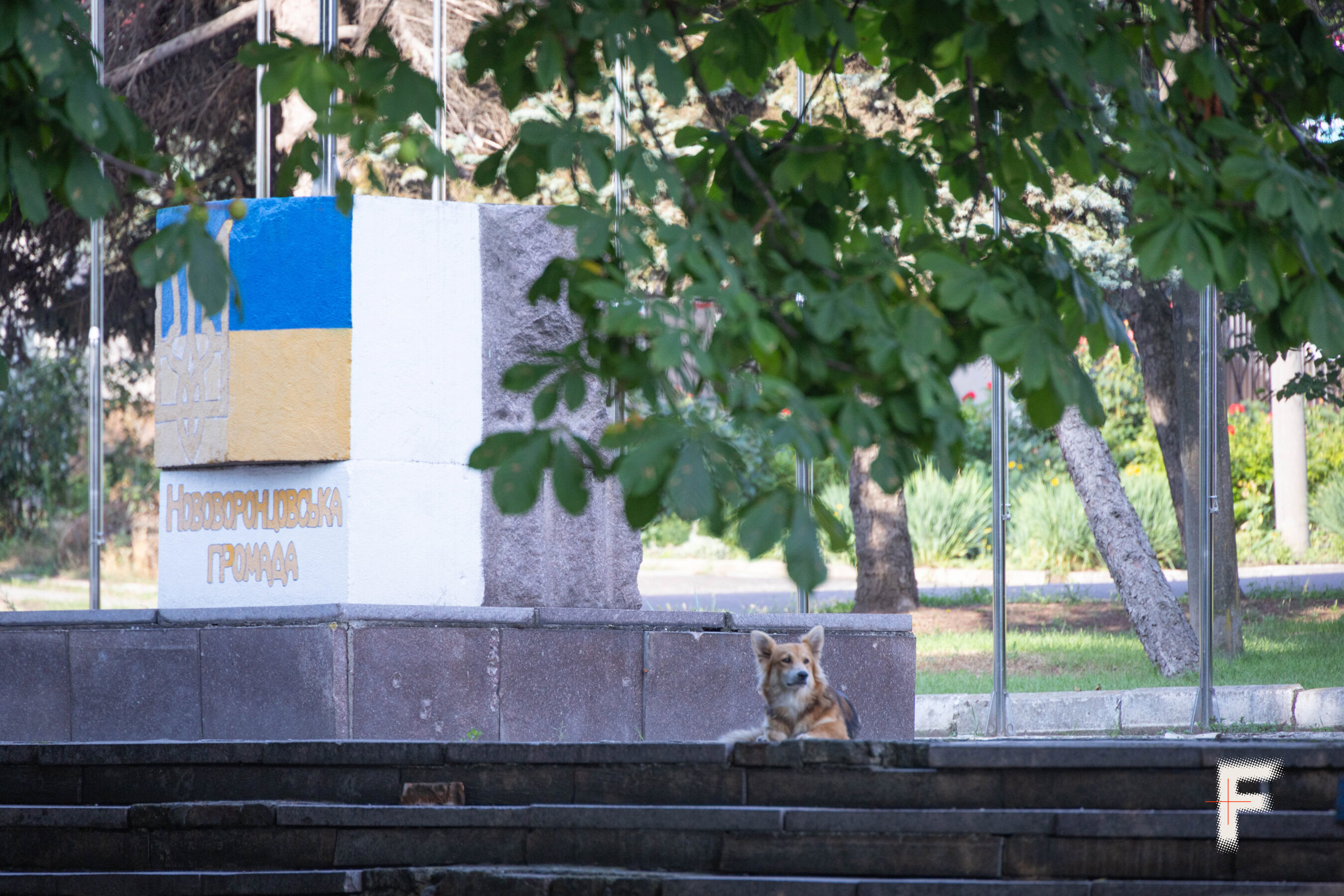
Russia’s imperial ambitions left their mark here, in the destruction of the Sich and in the village’s very name. Today they play out in FPV drone strikes, Shahed attacks and artillery fire. Both military personnel and civilians resist this, with each fighting in their own way. Many buildings feature graffiti with quotes from Ukrainian poetry. One of the concrete shelters in Novovorontsovka bears a quote by poet Lesia Ukrainka: “Those who have not lived amid the storm do not know the worth of dry land.” In this village, as across the wider Kherson region, people know that price all too well.