Odysseus of Kryvyi Rih: How a single father balances war and raising his son
The war tries to harden Yurii Yurchenko, but he stays soft-hearted, not for his own sake, but for his son's. He's raising Kyrylo on his own; the boy's mother left them years ago. When his son turned six, the father set off on his own "odyssey." In time, Kyrylo came to understand why his father keeps going back to the front, even after losing his leg. Frontliner's reporters wanted to understand it too.
Wherever the war takes him, to the Kursk front, Donetsk region, or Zaporizhzhia, Yurii Yurchenko comes back to Kryvyi Rih at least once a month. He currently serves in the 153rd Mechanized Brigade as commander of a strike drone squad.
He comes home on his days off for a good reason: he’s raising his son Kyrylo as a single dad. To make up for lost time together, they have just two days, yet some things can’t be gotten back.
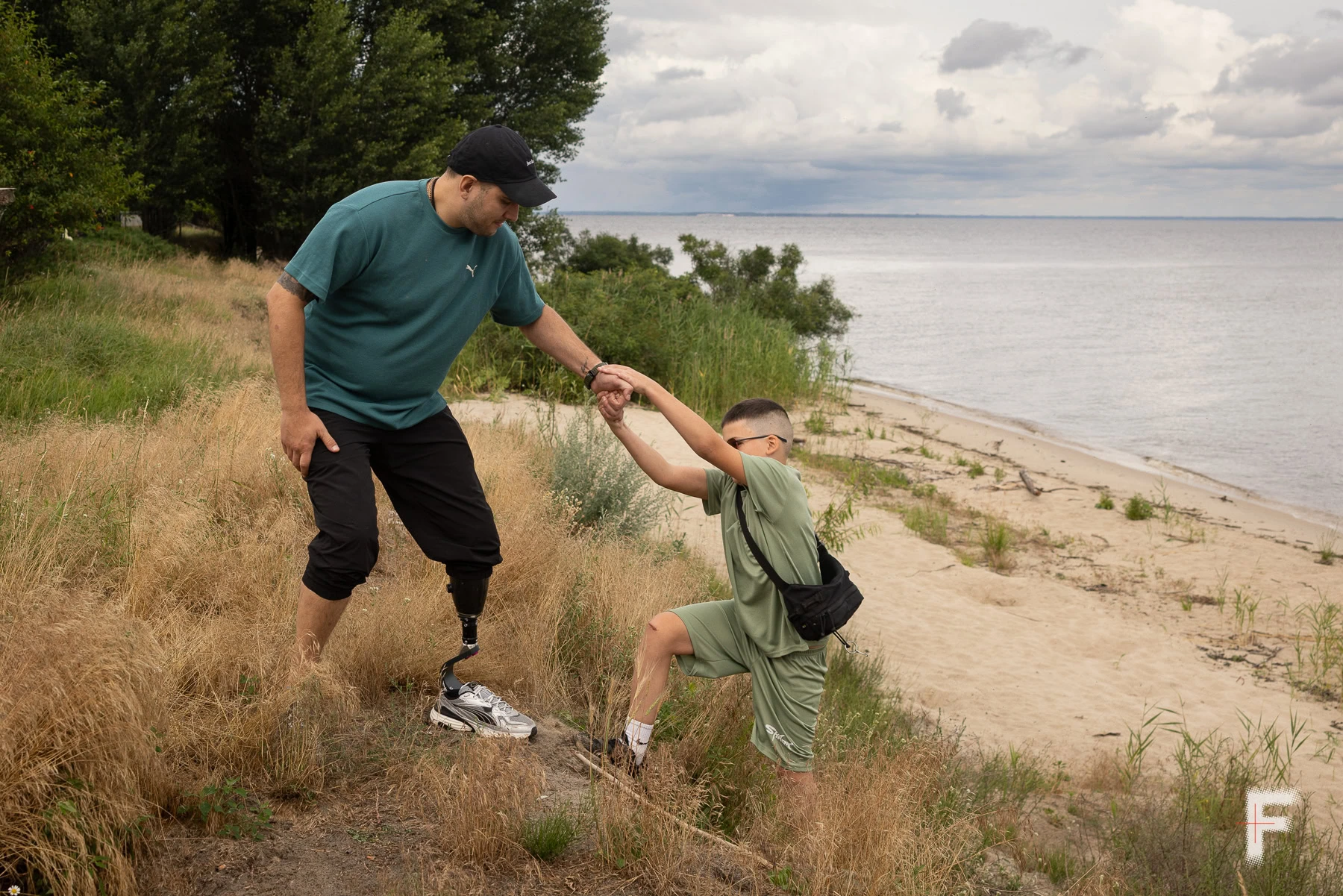
Yurii can tell how much Kyrylo has grown just from their handshake: his fingers longer now, his palm wider. When the full-scale invasion began, his son was only six, and at first Yurii didn’t try to explain what war was or why Russia had attacked Ukrainians. But eventually Kyrylo asked him outright: “Dad, why do you have to be in this war?” By then the boy was eight, and Yurii had to answer him like an adult. Kyrylo nodded along. It’s hard to know how much he actually understood, especially the part about Kyiv being called “the mother of Russian cities,” but he asked his father to come back from the war unharmed.
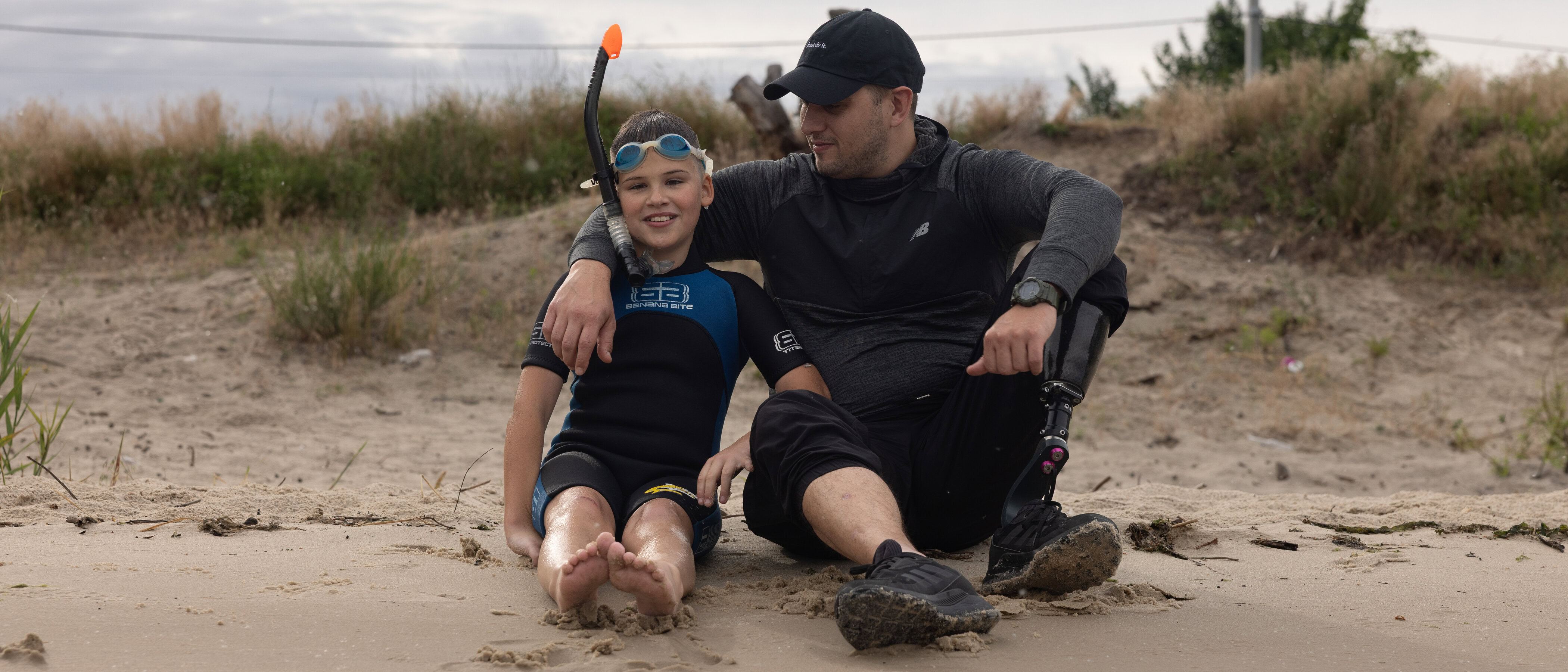
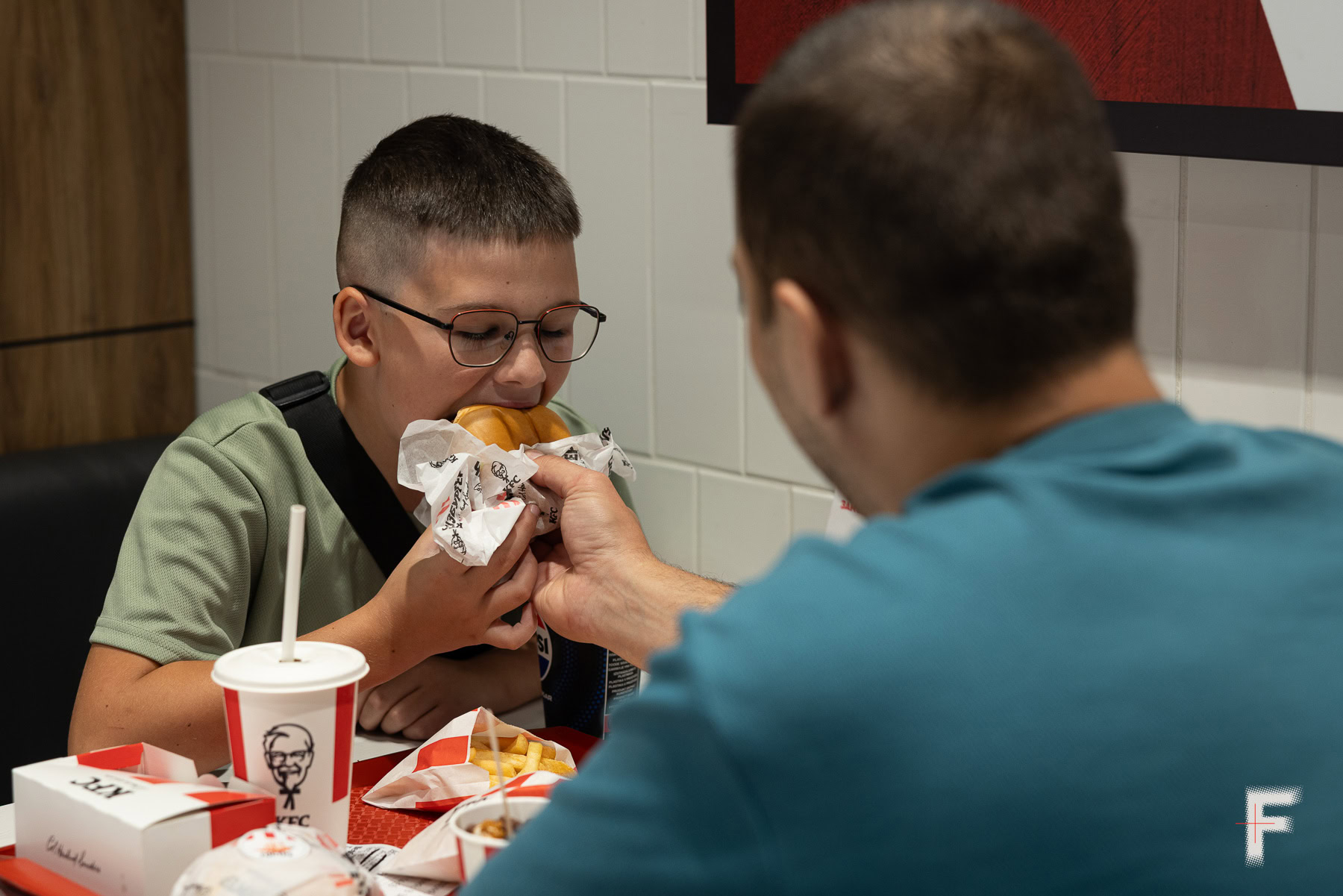
Yurii could not make that promise; no one knows what awaits him on this wartime “odyssey.” They hugged and got on with their weekend plans: a stop at the fast-food restaurant, clothes shopping, and the movies.
“I want you to always stay someone who can still find wonder in things. But right now I have to raise you differently,” his father said.
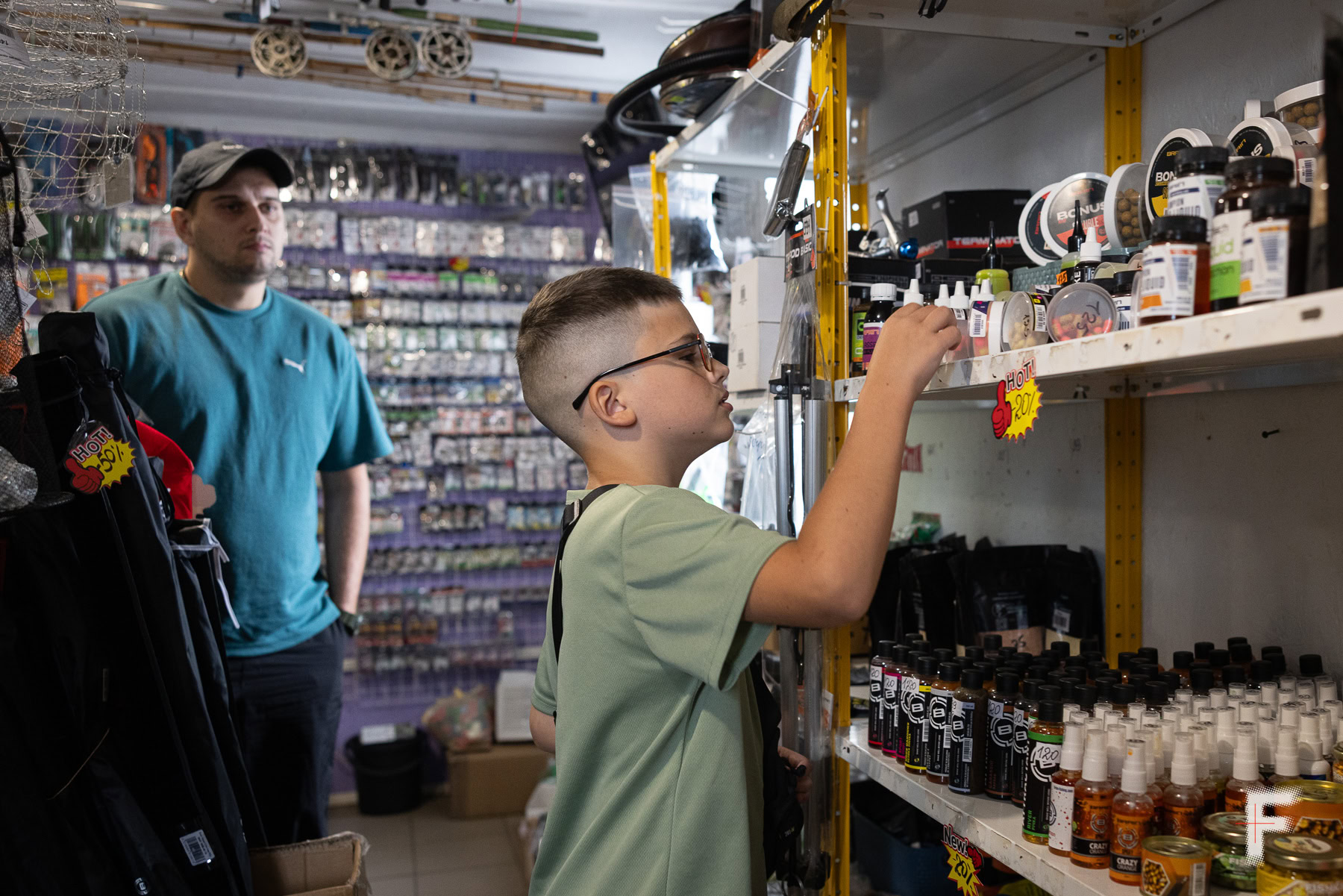
The real mission: don’t lose the warmth
Ever since his ex-wife left the family, Yurii has been Kyrylo’s only parent. All the tenderness his son gets comes from him. They miss each other and aren’t ashamed to say so, and they hug a lot. Yurii praises his son for small things, always asks, “How are you feeling?”, but at the same time tells him, “A boy shouldn’t cry.” He takes Kyrylo to the gym with him and teaches him how to manage on his own.

One time he came home and was taken aback: his son’s hair was overgrown. The grandmother Kyrylo lives with while his father is at war was planning to take him to get a haircut at some point, but Yurii decided it was time to teach his son to go to the barbershop on his own.
They scrolled through photos of kids’ haircuts online, and Kyrylo picked one out. Yurii handed him 500 hryvnias, pointed out the barbershop on the map, and said, “Go for it.” An hour later, his son came back, neat and stylish.
“That, Kyrylo, my boy, is what’s called communication. Just talk to people,” Yurii says.
Kyrylo seems to understand why his father is teaching him so many things: one day, he might not come back from the war. No one has to explain it to him; Kyrylo sees it for himself.
Yurii always takes his son to visit the graves of fallen brothers in arms. He feels he has to take him: how else will his son know who the enemy is? At the same time, he doesn’t want to raise hatred in him, not toward Russians, not toward people in general.

Yurii still hasn’t quite figured out how to talk to his son about the anger that gnaws at him from inside. So Yurii shields the boy from that dark feeling. Instead, there’s a bigger question Kyrylo will eventually have to answer: what kind of person he wants to be, and how he will see his civic responsibility. Yurii wants his son to find his own answer to that question. For himself, there’s little room left for anything but hatred for Russians.
Will you be the boy’s godfather?
There isn’t always time to visit the grave of every brother in arms at their resting places across Ukraine. But they stop by Kyrylo’s godfather’s hometown, Voznesensk, all the time. Kyrylo remembers him well: his godfather Vasyl took him on car rides and fishing trips. The boy even mounted his father’s medal, the Order For Courage, on a Ukrainian flag in his room, just like the display he’d seen at his godfather’s house.
Yurii met Vasyl at the start of the full-scale invasion, in the 129th Heavy Mechanized Brigade. Both were infantrymen, fighting side by side, with no idea that they’d end up as each other’s family in all but blood.
Over time they developed a close friendship. Yurii had never had a friend so reliable and loyal.
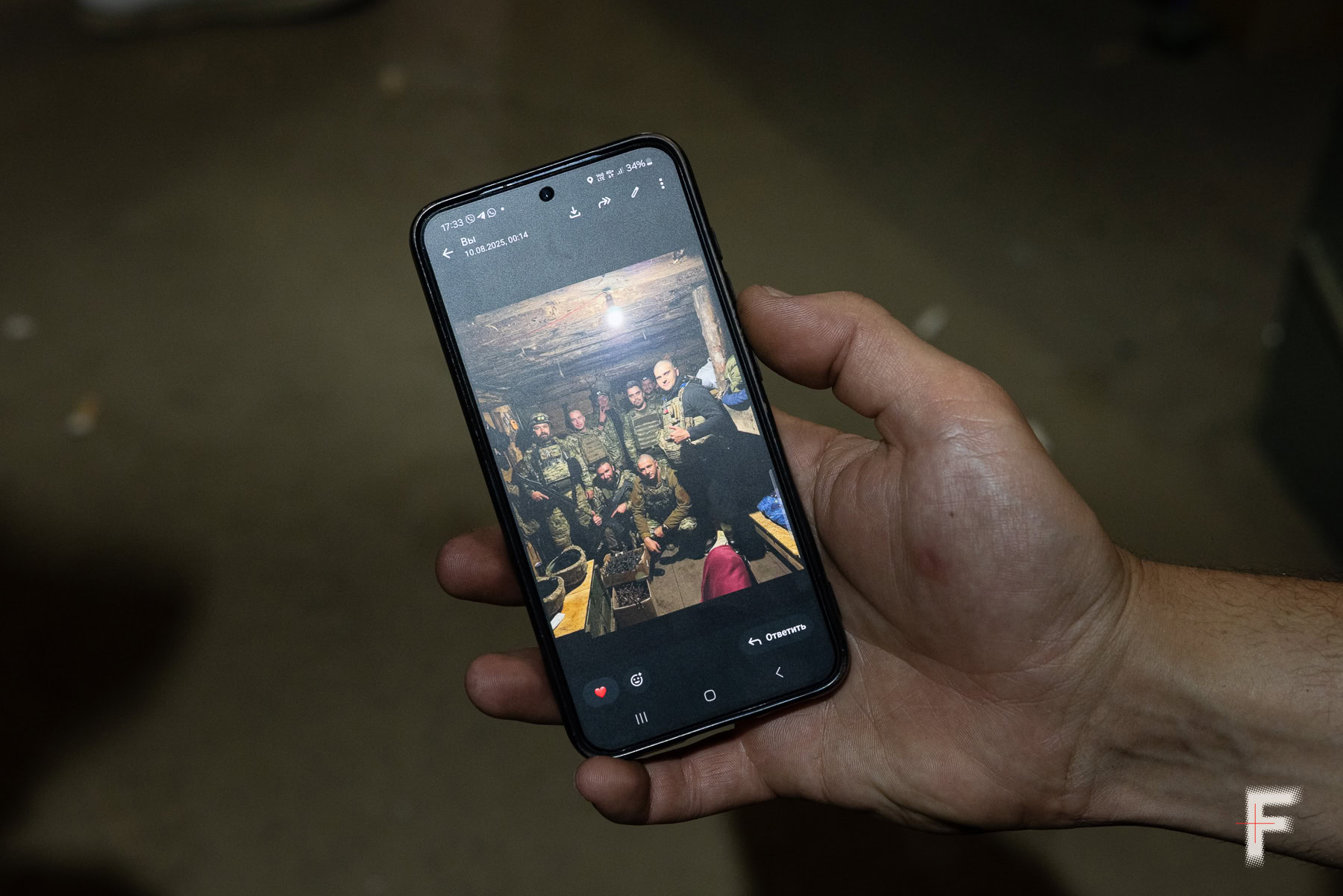
It was 2023. The counteroffensive was underway on the Zaporizhzhia front. Some of Yurii’s brothers in arms were ambushed and called for backup. Yurii and a fellow soldier set out to reach them, and while doing so, they stepped on a mine; Yurii lost his leg.
That time, Vasyl was lucky: he came out unharmed, and he was the only one able to go get the vehicle and evacuate Yurii and the other wounded soldier. At first he froze: “Guys, I’m not leaving you.” But Yurii talked him down and insisted he go.
Afterward, Yurii asked Vasyl to become his son’s godfather. He knew he could count on him.
Boys do cry
Kyrylo cried when he found out his father had lost his leg. But Yurii was ready to talk to him about it.
“I’m alive, and I can still kiss you, hold you, and protect you,” he told his son. “In six months, you won’t even notice the difference.”
Once he’d calmed down, Kyrylo asked question after question, wanting to hear the whole story from start to finish, and even gave his father a hard time about missing the mine. “How did I really not notice it,” Yurii admitted to himself.
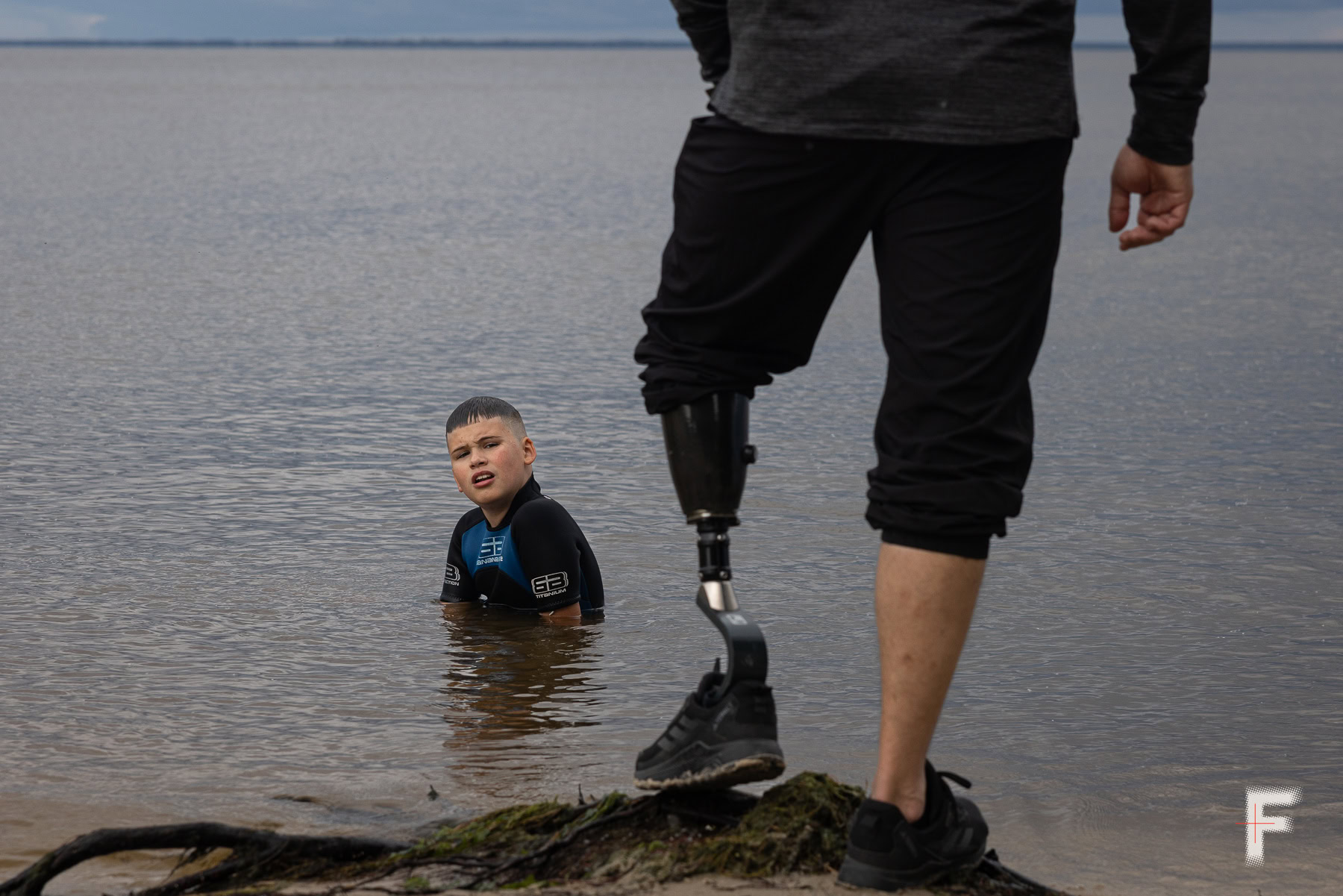
Rehabilitation took about a year. At home, Kyrylo helped massage his father’s leg. For Kyrylo, it was simply something he did to help his father.
Yurii got a prosthesis and eventually went back to the front as a driver for a drone crew, ferrying brothers in arms to their positions and hauling equipment and drones. That’s when he learned that Vasyl had been killed, shielding two other soldiers from an FPV drone. Kyrylo lost his godfather. Yurii once again had no one he could rely on the way he had relied on Vasyl.
After Vasyl’s death, Yurii took to wearing his body armor and still wears it. He and his son often talk about him. Despite the rule that “boys shouldn’t cry,” neither of them can hold back tears. It was the first time Kyrylo had lost someone close to him, but not the last. In 2025, a missile struck a friend’s house, killing him along with his entire family.
Whenever a Russian Shahed drone hits somewhere again, Kyrylo calls his father right away:
“Dad, find who’s launching them.”
“Of course, kiddo, we’ll get them back.”
Roses from Donetsk region
Yurii wanted to fly a drone himself; working only as a driver wasn’t enough for him. He asked the crew repeatedly to let him try. They turned him down at first, telling him to practice on the training range rather than during a combat mission, but eventually agreed and gave him the controller.
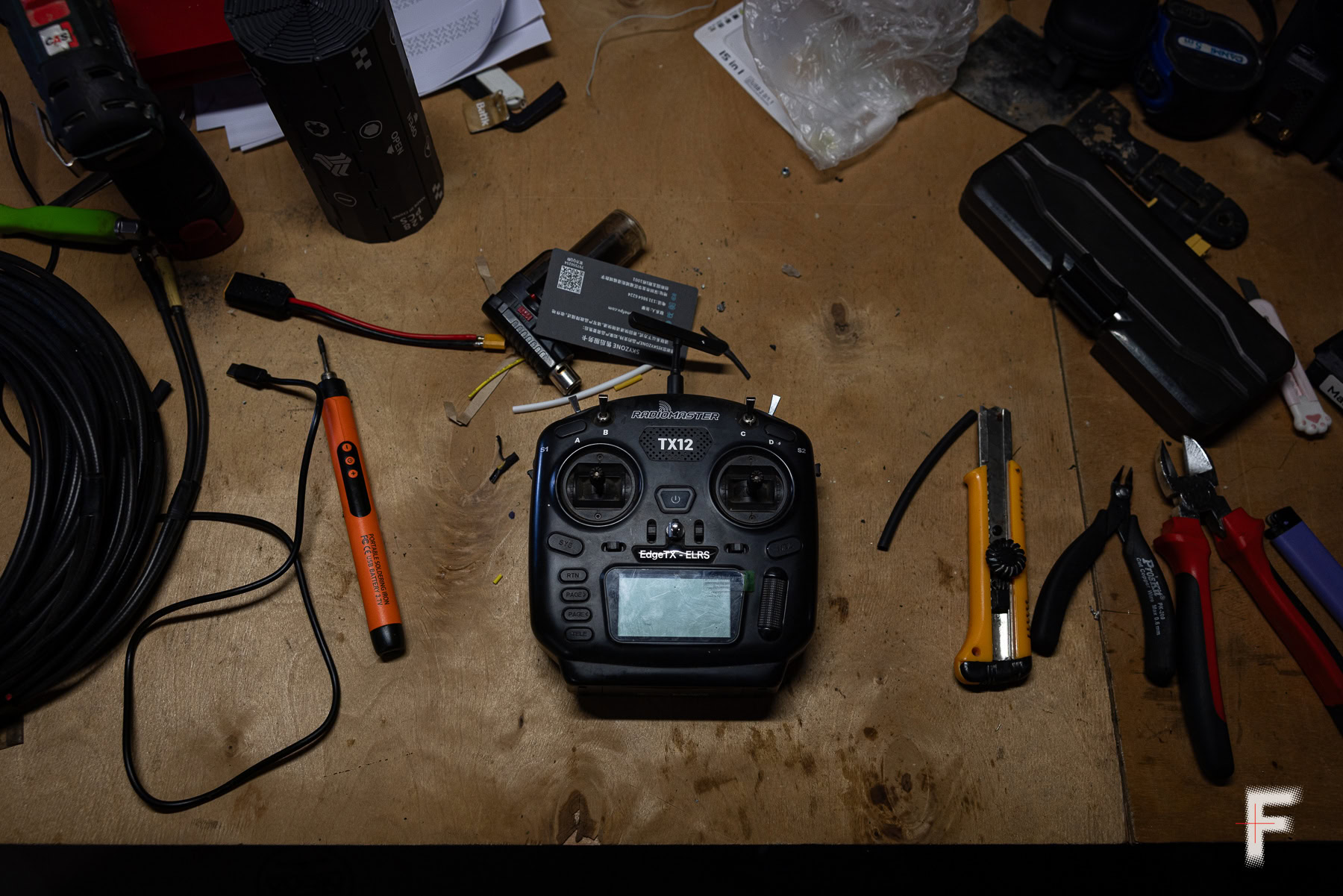
After being given a chance, Yurii threw himself into the world of drones. He went to the Kursk front as part of a crew flying the Vampire, a heavy strike bomber drone.
Wherever the war took him, it all looked like what he’d already seen many times over: trenches, fields, tree lines. From nearly every place he’s served, Yurii brings back flowers, his own souvenirs from the front.
Yurii grew flowers with his grandmother. When he grew up and earned some money, he bought a run-down cabin. He wasn’t after weekend barbecues; he wanted to try gardening, despite having no experience with it.
Now, whenever he spots a beautiful flower at a position, he digs it up and wraps it in a damp cloth. He looks after it until it makes it back to the cabin.
After the Kursk front, the 129th Brigade was redeployed to Donetsk region. In Yurii’s garden grow roses from Kostiantynivka, Pokrovsk, Velyka Novosilka, and Sloviansk. From the last of those, he also brought back a pine tree.
Yurii climbed a chalk hill with enemy FPV drones already circling overhead, scooped some chalk into a bag so the pine would take root back in Kryvyi Rih, and dug up the tree. He often calls his mother and asks for photos of the garden; the pine has already put out new shoots.
“Kyrylo, a person needs an emotional side to them,” Yurii would tell him. “You don’t just stick something in the ground; gardening needs creativity too.”

Father and son work in the garden together. Kyrylo helps his father while telling him about his relationships with his classmates. It matters to Yurii to know who his son spends his time with. But a few days aren’t enough to really get the full picture.
Each time, leaving home gets harder. Yurii wants to stay with his son and be there for moments that won’t come again. When he goes back to the front, what fills him isn’t sadness but anger, and it lasts about two weeks. During that time, he barely leaves his position, because he wants to launch as many drones at the Russians as possible. If any of his brothers in arms slack off or don’t give it their all, Yurii doesn’t hold back:
“When you guys don’t give a f*ck, there’s a kid waiting for me at home.”
A family in harm’s way
Everything around him was a reminder of his fallen brothers in arms. Yurii decided to transfer from the 129th to the 153rd Brigade. He thought that might help him escape the intrusive thoughts.
“I don’t care which brigade I serve in, as long as it has people with whom I see eye to eye,” Yurii says.
In the winter of 2026, the 153rd Brigade had just two FPV crews and one Mavic crew. In that short time, the brigade’s arsenal has grown more diverse: it now also includes Dart and Vampire drones. Yurii was appointed squad commander. Two crews now report to him.

The men Yurii serves with became pilots and engineers after being wounded as infantrymen, so he has no shortage of people who think like him. But he deliberately avoids forming close friendships; Yurii already knows that getting attached to people is dangerous in war. There’s really only one exception, and it’s one he can’t do anything about.
On the map on his phone, there are two markers: a heart and a flag. If the navigation app isn’t lying, the distance between them is about an hour’s drive. The heart marks the rented apartment of his wife, whom Yurii married two years ago, in 2024. The flag marks the house where he lives with other soldiers.
His wife also flies drones; her drones are bigger-winged “birds” that can fly up to 2,000 kilometers. They got married in a rush: each of them came straight from their own position to the registry office. They signed the papers and fell asleep, exhausted. They had no time for a honeymoon, so the next day the newlyweds went their separate ways, back to their own units.
When Yurii was wounded, his wife did everything she could to get to him and was by his side.
For the first time in four years of war, they found themselves in the same city: Zaporizhzhia. They thought they’d finally live like an ordinary family: coming home in the evenings, walking the dog, heading to work in the morning. They wanted exactly that kind of everyday, boring life. Instead, reality turned out differently: their schedules often don’t line up, and all the romance has been reduced to coffee at a gas station at 4 a.m.
For Yurii, this war is a family affair. His father serves too, and six months ago, when Yurii was transferring to his new brigade, he brought along his uncle, who was serving at the time in the 17th Tank Brigade.
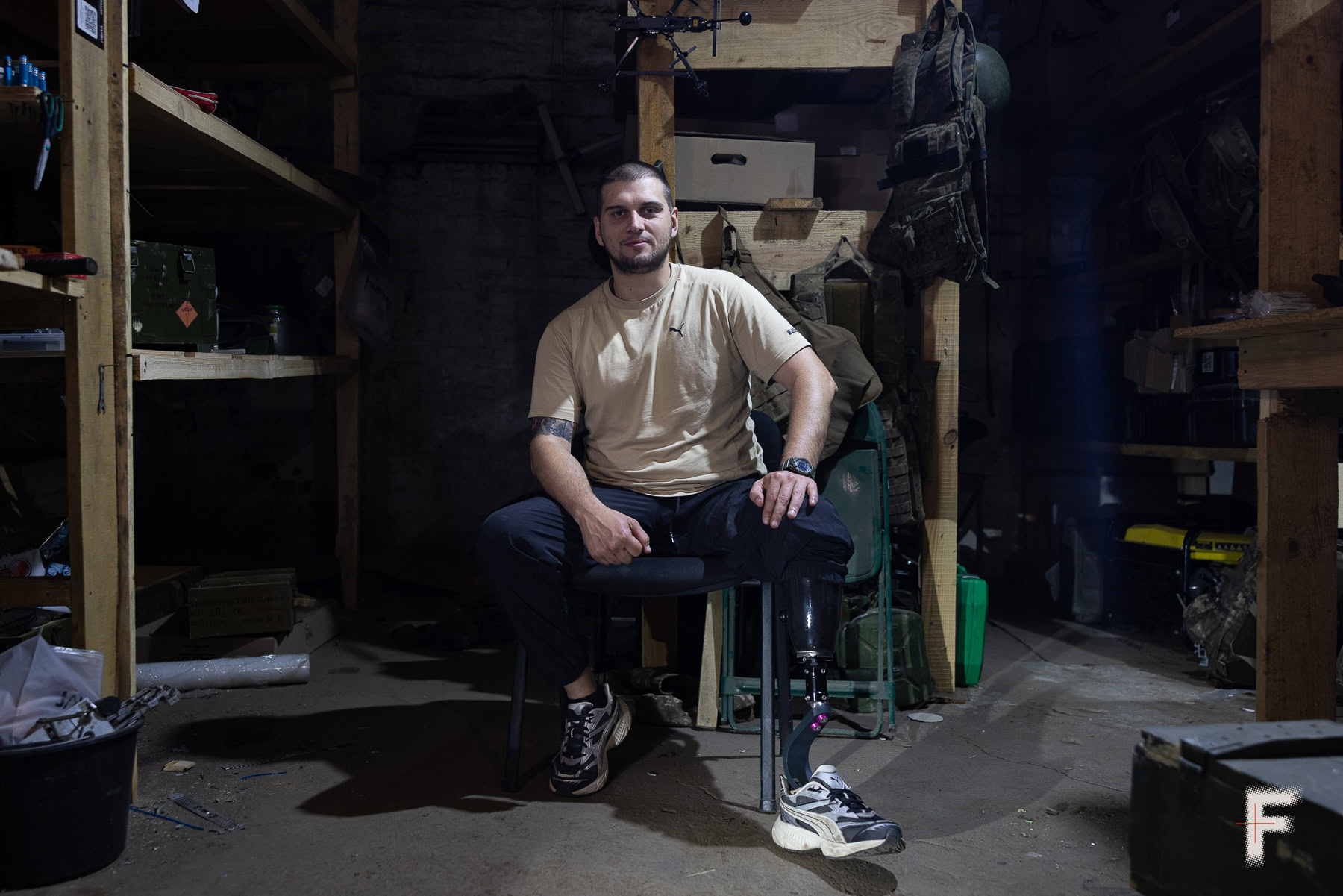
Kyrylo has already told Yurii more than once that it’s time to stop fighting. Of course, Yurii has thought about it; he does have the option of being discharged. But every time, his thoughts snag on an imagined conversation with his family:
“We flew toward Melitopol today,” his wife would say. “A lot of Russians are headed our way.”
“Be careful,” Yurii would answer. “I’ve got to go, lots to do, I’m planting strawberries at the cabin.”
He says he will step away from the war one day. He just can’t right now: his family is in the military, so he feels he has to stay close. When the men on his crew no longer need him to lead them, that’s when he’ll leave. For now, Yurii is passing on to his brothers in arms the experience he’s built up over four years of war.
“You need to leave a solid team behind you,” Yurii says.
Finding calm underwater
He’s already launched hundreds of drones, and his palms still sweat before every combat mission. The responsibility hasn’t gotten any lighter.
He doesn’t work at his position around the clock. Before combat missions, Yurii and his fellow soldiers prep the drones in the workshop: installing software, checking antennas and ground stations. In a day, they can assemble up to 16 drones.
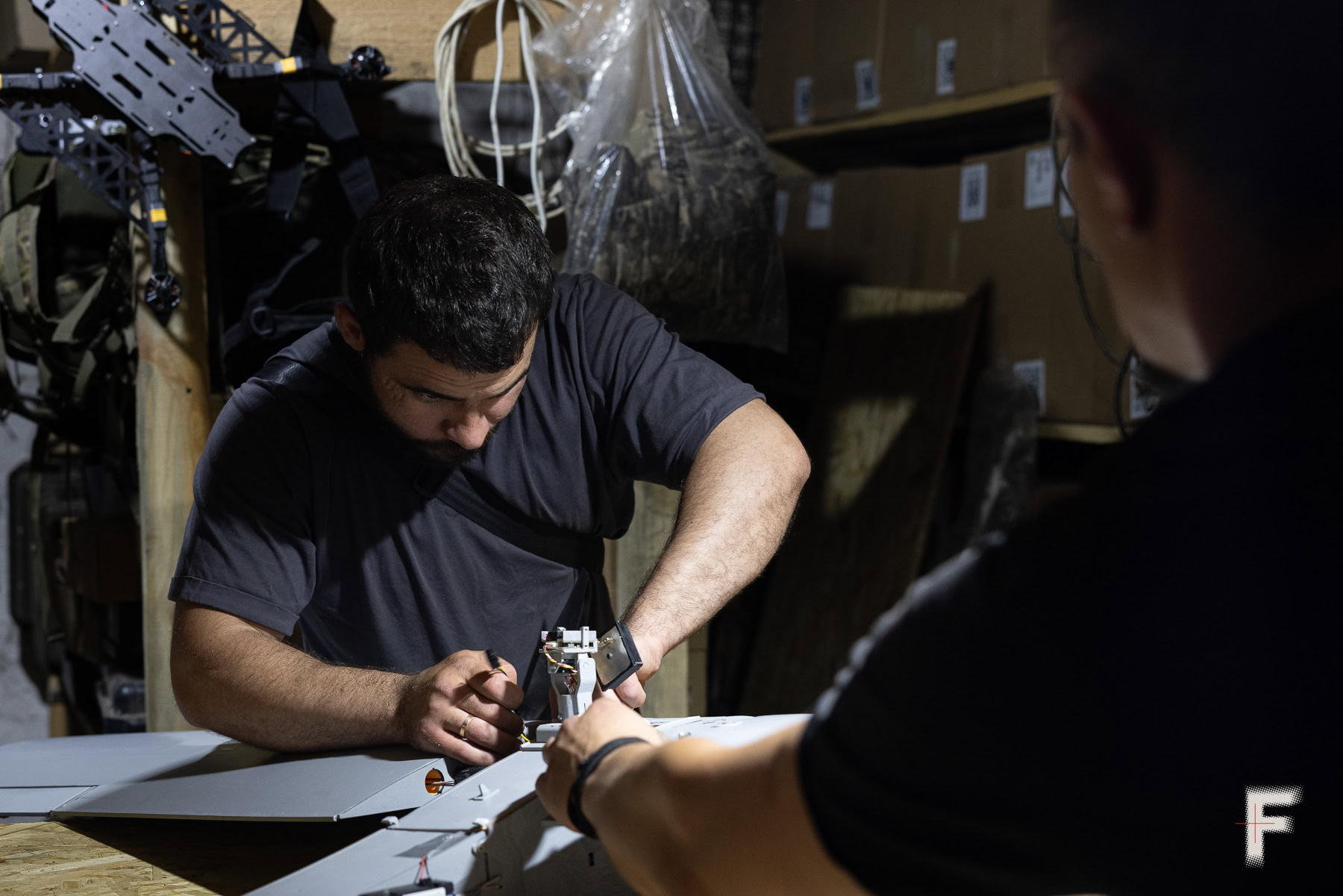
In the evenings, Yurii returns to the house he’s temporarily sharing with the other soldiers. In the yard, fish dry in a blue net, and behind the house stands a beehive left behind by the previous residents. It might seem like the war is far from here. That feeling is deceptive. The gray zone begins just 15 kilometers from where Yurii lives.
To unwind after a hard day, Yurii and his uncle grab a speargun, wetsuits, fins, and weights, and head to the river to freedive.

They’ve been passionate divers for decades now, a passion that started with his uncle, who trained as a combat diver at the Pavlo Nakhimov Naval Academy in Sevastopol.
One day, he took young Yurii fishing with him. The boy grew bored on the bank of the Inhulets River, but every time his uncle’s head surfaced, he’d call out hopefully: “Catch anything? No?” He waited a long time, until suddenly his uncle came up with a huge catfish he’d caught at a depth of 15 meters.
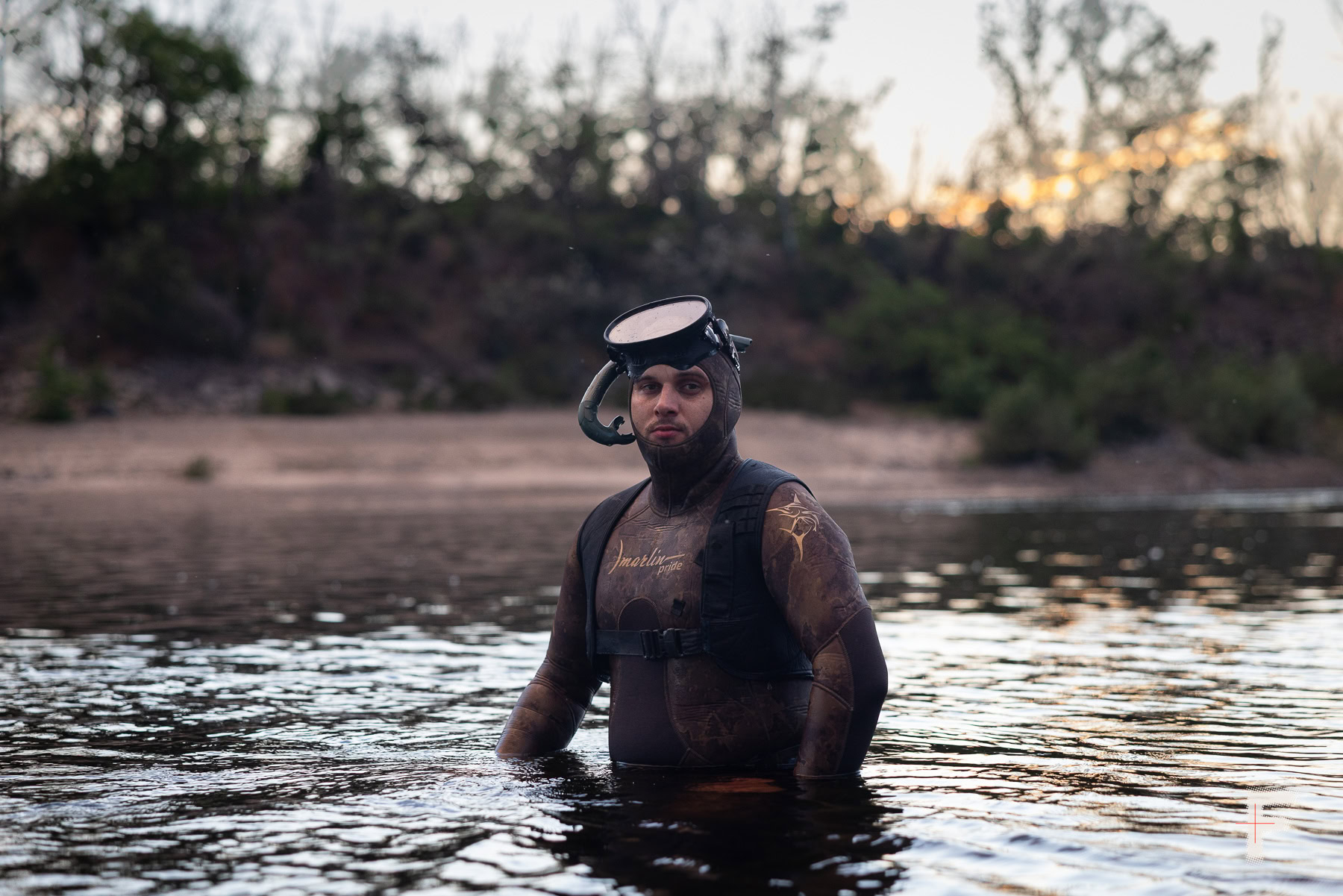
Now the roles are switched : Yurii dives, while his uncle waits for him on the bank; his health no longer allows him to dive to those depths the way he used to.
On the horizon looms the somber silhouette of the Preobrazhensky Bridge. Yurii takes off his cross, pours soapy water over himself to make the wetsuit easier to pull on, then wades slowly into the river and, a moment later, dives under.

A pebble. Seaweed. A fish. Underwater, he finds peace; his mind seems to reset. Whatever the problems, the water washes them all away. Yurii started diving with his uncle when he turned 12. Now it’s time to teach Kyrylo too.
War is no reason to put fatherhood on pause. Not for Yurii, anyway. He’s remained a father even from a distance.
Wherever this odyssey takes him, he always comes home.