War and parental burnout: How Ukrainian families can avoid exhaustion
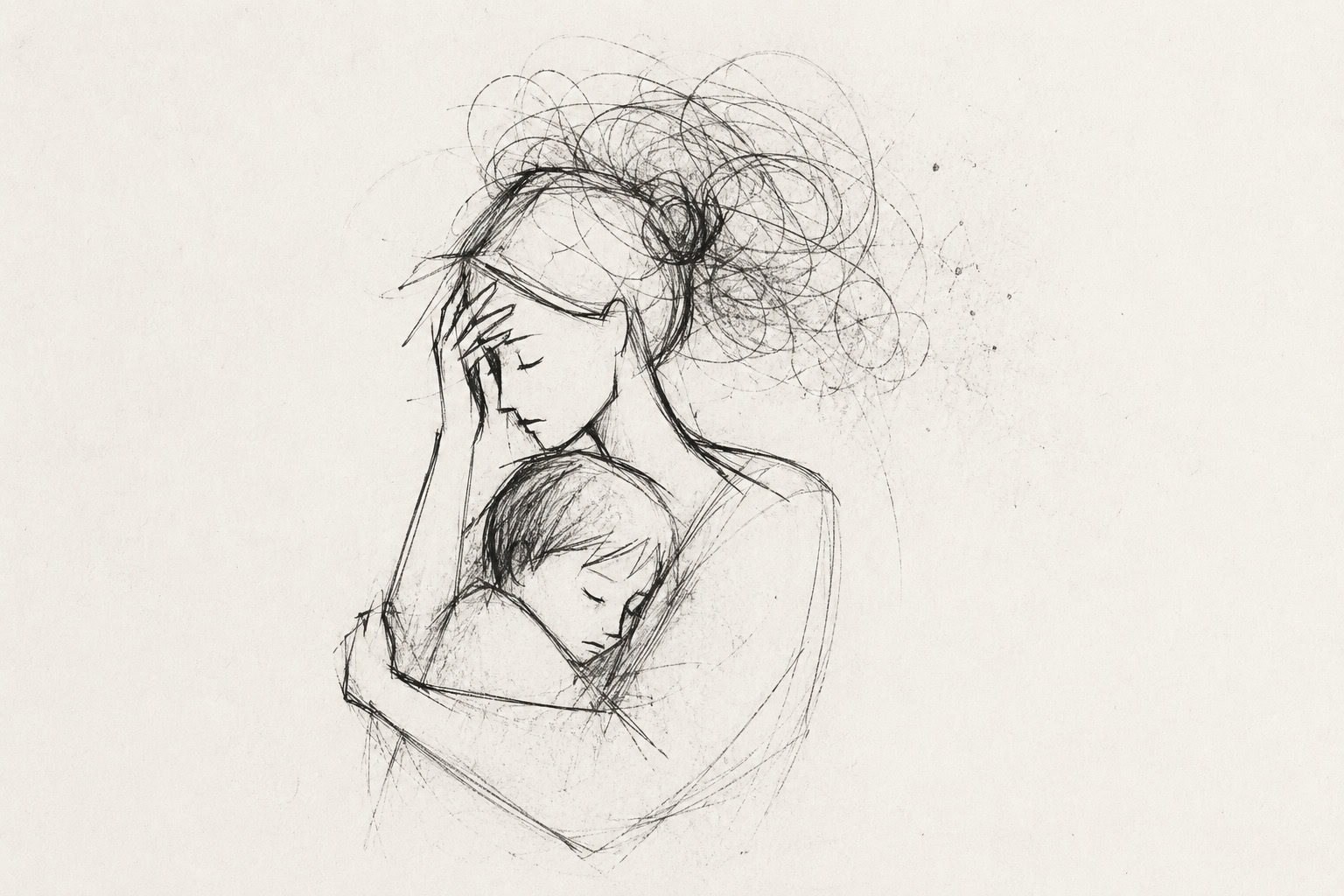
She isn't on the front line. She's at home, which is why she’s struggling. Every day, millions of Ukrainian mothers wake up anxious, grit their teeth, walk their kids to school, hold their families together, and slowly burn out. Behind this quiet exhaustion lies a systemic psychological crisis brought on by war. Frontliner explains what the consequences could be.
Parental burnout is a scientifically recognized psychological condition, distinct from depression or job-related exhaustion. It sets in when the endless demands of parenting outpace a person’s resources, especially amid financial instability, chronic stress, and a lack of social support. In Ukraine, these conditions have all converged and intensified many times over.
Parental burnout has a serious effect on a child’s development and well-being. When parents are under prolonged stress and exhaustion, it undermines the family’s psychological stability and harms how children see themselves. In other words, an exhausted parent cannot provide steady support for a child who is already dealing with fear and uncertainty.
The quiet front line inside the family
When anxiety becomes the background noise
Toxic stress is an intense, prolonged strain caused by constant threats to physical or emotional safety. When this stress never lets up, the body stays on high alert: stress hormones keep firing, the immune system weakens, and the ability to cope gradually breaks down.
During the war, parents are dealing with their own stress, such as job loss, forced relocation, constant fear for their lives, while still being expected to stay a steady presence for their children. Their role becomes a juggling act: protector, mentor, organizer, and role model, all at once, with no time to rest. This constant overload, without any break, is the main driver of burnout.
Children feel everything
When parents act unpredictably, like taking out stress on their kids, pulling away emotionally, or coping through unhealthy habits, children end up under even more stress than the threat of war alone would cause.
Nine percent of parents directly link their children’s poor mental state to the war. It shows up as mood swings, irritability, and traumatic reactions. Families of internally displaced people, who lost their homes and had to start over, feel this most acutely. A parent’s fear becomes an example for the child, who often mirrors it, only more intensely.
A special burden: wives and mothers of servicemen
The woman holding it all together
Wives of servicemen are often left to raise their children largely on their own, which inevitably leads to emotional burnout. Many feel a double sense of guilt toward children who lost their normal life, and a husband who is fighting. The weight of these responsibilities can dull a mother’s emotional sensitivity, leading to irritability or, in some cases, excessive overprotectiveness.
Wives of servicemen may experience symptoms similar to post-traumatic stress, caused by constant fear for a loved one’s life. These can include anxiety, feelings of hopelessness, sleep problems, and physical symptoms like headaches, digestive issues, and muscle tension.
Maternal burnout is not a weakness
Maternal burnout is not a sign of weakness. It’s a biological and psychological response to chronic overload, and it requires support and rest. A society that expects mothers to have endless endurance is, in effect, speeding up their breakdown. A woman who never allows herself to feel tired doesn’t stop. She simply collapses later, and harder.
How to avoid breaking down
- Let go of the idea of being a “perfect” parent, as war itself creates conditions that make normal parenting impossible.
- Share responsibilities among the adults in the family, and don’t be afraid to ask for help.
- Keep simple family routines that give children a sense of stability.
- Limit information overload, especially in the evening.
- Make time to recover, without seeing it as a weakness.
- See a psychologist if exhaustion lasts a long time, gets worse, or starts affecting family relationships.
The cost of silence
The anxiety that most people in Ukraine live with wears down social bonds and the ability to recover. When parents stay silent about their own pain out of a sense of duty, guilt, or shame, they pay a double price as individuals and as a family.
War causes visible and invisible destruction. Destroyed buildings get counted and photographed. Broken people, for the most part, stay silent. Ukrainian families have been holding the home front for years now, without a single rotation. If society doesn’t start taking parental burnout as seriously as combat losses, it risks losing the families waiting for soldiers at home.