Getting a cup of coffee in Kramatorsk: When a small routine becomes a lifeline
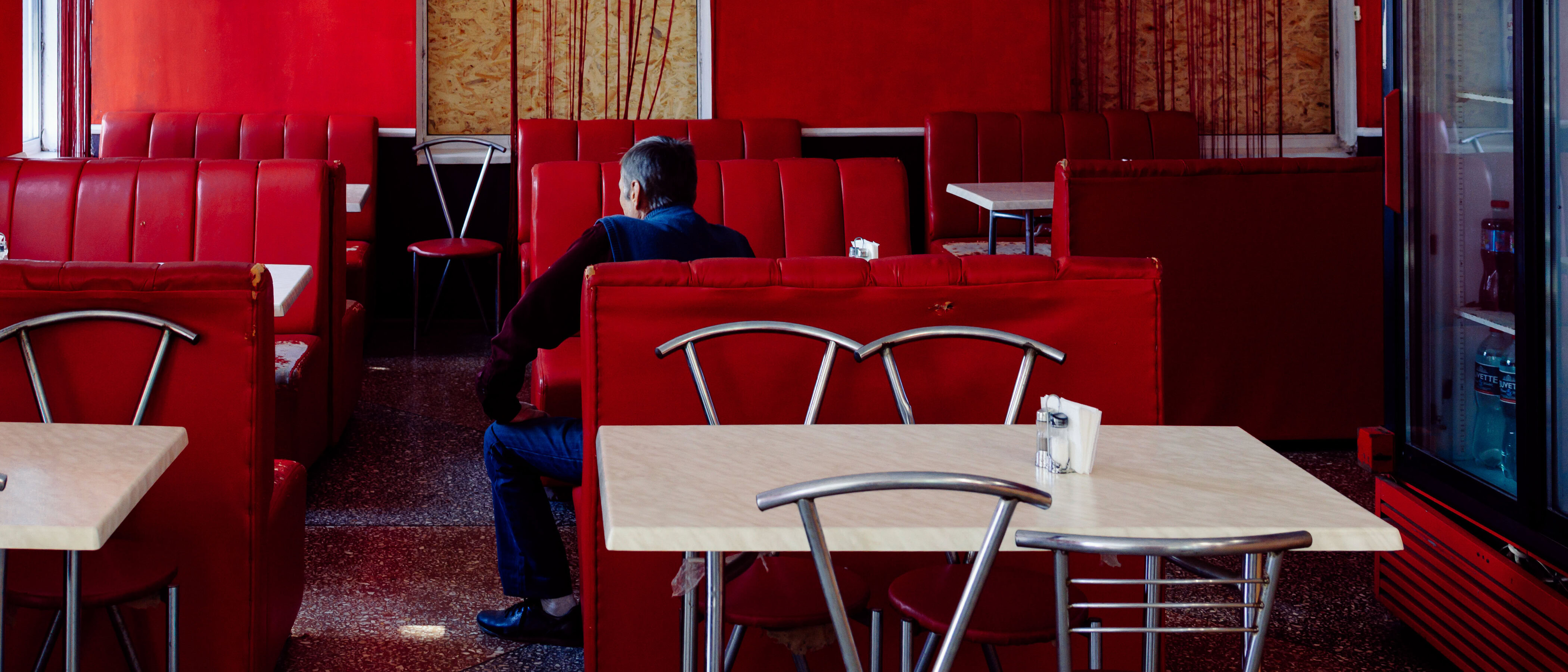
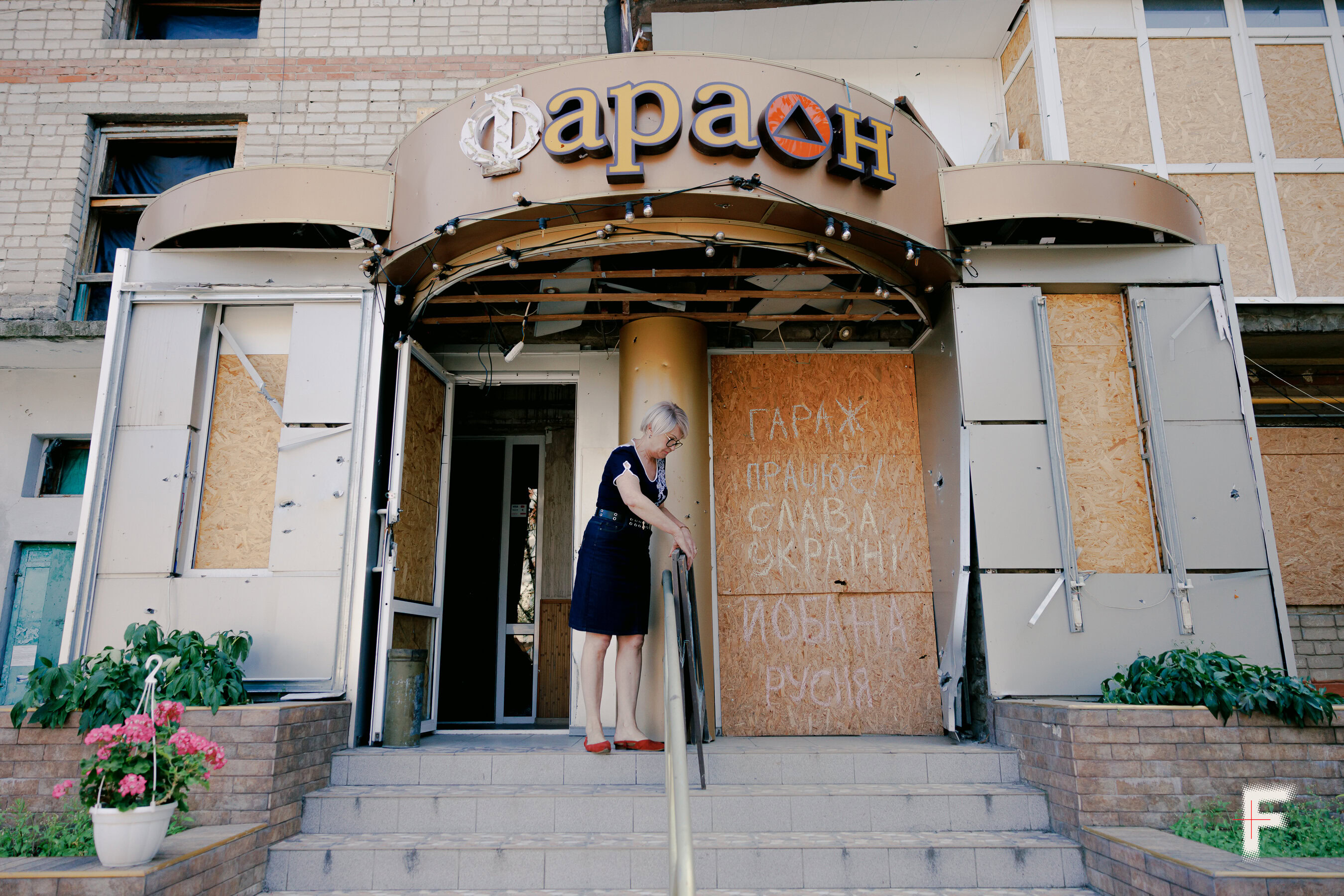
An old, battered “araon” sign has lost its “F” somewhere along the way. The building’s facade is scarred, its windows boarded over with plywood. From a distance, you could easily assume the place has been abandoned for years. But small lights glow above the entrance, a pink potted plant stands on the steps, and beside it sits a tiny table with an ashtray. Coffee shops in Kramatorsk are among the last little islands of life left in this frontline city mangled by the enemy. Frontliner stepped inside some of these places.
A menu board stands by the entrance. Above the drinks, written in chalk, is a line that reads: “Coffee should be hot, and Muscovites should be cold.” The place used to be a men’s clothing store called Pharaoh. But the old sign, missing its first letter, and the mirrored walls inside are the only reminders of that. Now it is a coffee shop called Harazh (Garage). There is almost nothing inside. The counters are nearly bare, and there are no customers. A few tables and a large coffee machine are the only clues that this is now a cafe. Beside it stands Olha Malva, the owner of Harazh, a slender woman in a skirt, her makeup neatly done.
On May 5, 2026, Olha was sitting outside Harazh with her friend and co-owner of the coffee shop, Svitlana Masiuchenko. They were soaking up the sun, drinking lattes, smoking and laughing.
Two men approached the coffee shop and ordered espressos. Olha went inside to make their coffee.Just seconds later, a blast rang out — Russian forces had dropped aerial bombs on the city center. Those few minutes spent making coffee saved Olha’s life.
“It was 5:02 p.m. Suddenly, it was as if day turned into night. Cars were on fire, exploding one after another. Trees were burning too. I fell and lost a tooth. I had a concussion,” she says.

Her friend, who had been sitting outside when the strike hit, was killed.
In the first days after the tragedy, Olha stayed in bed at home, not knowing what to do or how to move forward. Eventually, she forced herself to get up and go outside. On the way, she saw municipal workers clearing the aftermath of the strike.
“I saw them cleaning up, putting the city back the way it was, and I thought to myself: ‘Get up and get back to work,’” Olha says.
The coffee shop opened in the summer of 2023. Gradually, it became a place where volunteers, military personnel, journalists from different countries and people who had chosen to remain in Kramatorsk crossed paths. They came here for coffee, talked about work, the war and life in the city.
The coffee shop directed its profits toward supporting the Armed Forces of Ukraine.

Military unit flags hang on the walls. Olha received some of them from people her team had helped. Some of those who left their signatures on the fabric are no longer alive.
But after May 5, the center of Kramatorsk began to empty. Fewer and fewer people remained on the streets, and the number of customers fell with them.
“Since then, we’ve been operating at a loss,” Olha says.

It has been hard for her to bring herself to leave. For a long time, she convinced herself that things would change, that something would happen to stop the Russian advance. Olha says people are trying to “drag her out by the scruff of the neck,” persuading her that she could continue volunteering elsewhere and be of greater help.
When she was younger, however, Olha had wanted to leave Kramatorsk. She didn’t like the industrial city, the factories or the heavy air.
After Kramatorsk was occupied in 2014, her feelings toward the city changed. And after the full-scale invasion began, Kramatorsk became more than a place where she lived. It became something she felt responsible for.
Kramatorsk became my child, and I have to protect it:
for as long as I can, as best I can,

Olha opens the freezer, calls us over and tells us to take some ice cream. It’s packed full.
The ice cream came from a store hit by a Russian strike. The products could have spoiled, so soldiers were allowed to take them. They gave the ice cream to Olha because she had a large freezer. “Eat it yourselves, share it with others, and we’ll keep coming by,” they told her.
“Just ordinary plombir ice cream. But now I’ll remember it as something special, like the ice cream you remember from childhood, which always seems to have tasted better than it actually did,” Olha says.
Shortly after our conversation, Harazh closed its doors. Olha left for Dnipro.
Bohdan Khmelnytskyi Street runs downhill from Harazh and is regularly shelled. Local residents try to avoid using it unless necessary. Almost all the buildings along the street have been damaged or destroyed. Some apartments look as though they have been ripped open from the outside. Where walls and windows have been blown out, open wardrobes with clothes inside, refrigerators and televisions stand exposed, while curtains flutter in the wind.

The road then leads toward a busier part of the city center, where several businesses were still operating just a month ago. One of them was Zaboy a coffee shop and showroom.
Supporting through action, not slogans
By mid-August, the Zaboy showroom in Kramatorsk had only a few days left before closing.
The Donetsk brand opened the showroom in June 2025, after the start of the full-scale invasion. Over the following year, the showroom had settled into a familiar rhythm: regular customers, morning coffee, music and conversations. Now only the last few pieces remain on the clothing racks, with empty spaces between them.
The interior is bright and minimalist: clothes on open racks, a few tables and a coffee corner. At first glance, it could easily be mistaken for a showroom in Warsaw or London. But a closer look reveals a very different story.
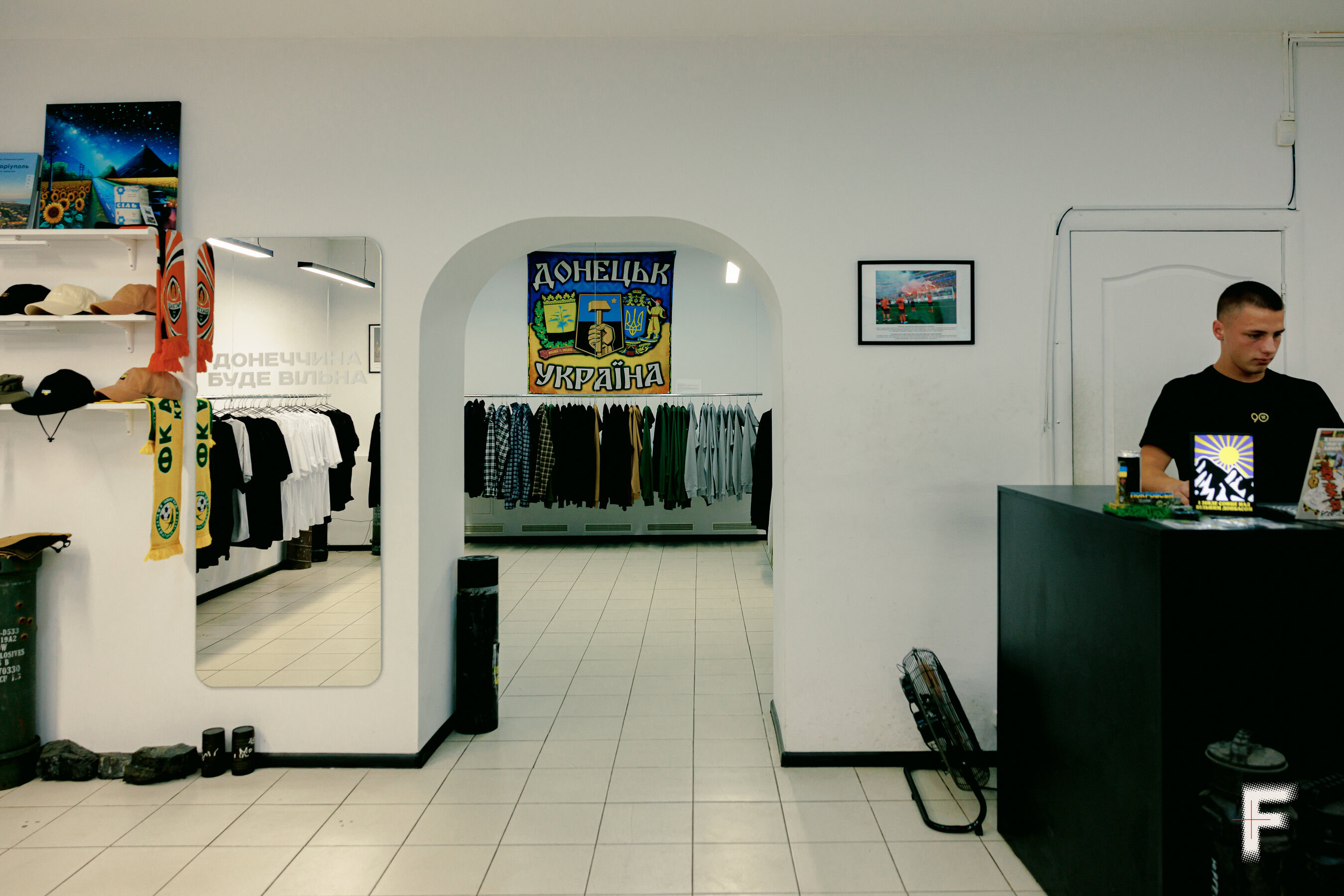
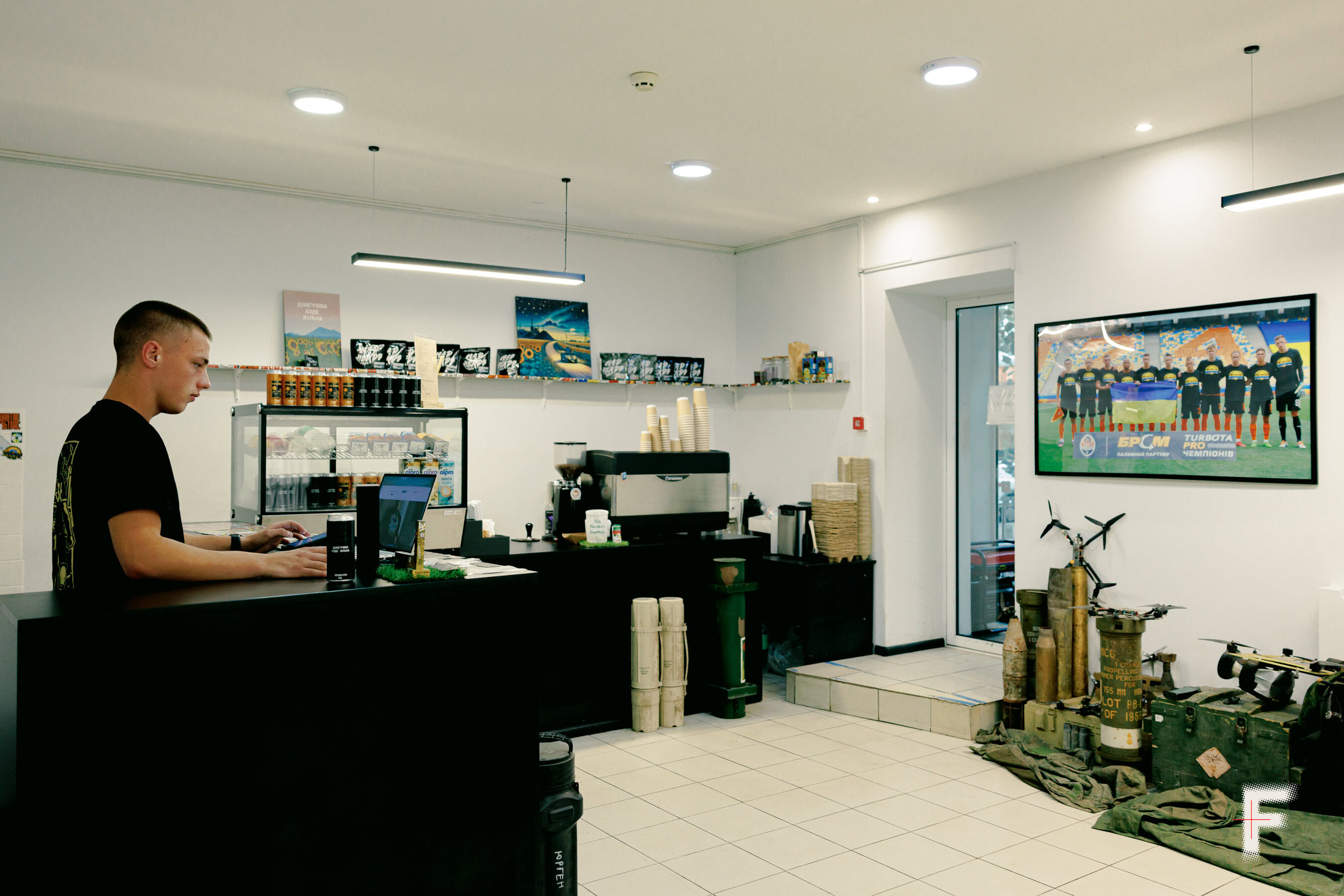
Behind the counter is a wall covered with military unit patches and insignia. The other walls are decorated with photographs of Donetsk region and football banners. One of the most prominent details is a large banner reading “Donetsk is Ukraine,” designed back in 2014 for Shakhtar Donetsk’s ultras. According to the brand’s founder, Maksym Lysenko, the banner traveled with him to numerous away games and the front line. Now it hangs in Kramatorsk, where it has become something of a relic.
The combination of clothing, coffee, photographs and military insignia gives the showroom a distinctly modern and very Donetsk. That was precisely the concept.
At the time, Maksym Lysenko said “a brand about Donetsk region should be in Donetsk region.” For him, opening a showroom in Kramatorsk was a way “to support his native region through action, not slogans.”
For Maksym, the clothing has never been simply about fashion. It works as a kind of universal language. Sometimes, a single message on a piece of clothing can give two strangers an immediate sense of shared experience. Spot someone on the street wearing a Zaboy T-shirt or hoodie, and you may recognize a kindred spirit: someone from Donetsk region, or at least someone who feels connected to it.
Now the store is closing. The security situation is deteriorating, and more and more people are leaving the city. For Zaboy, this means the end of a space that was opened with the belief that it would become a lasting part of life in Kramatorsk.
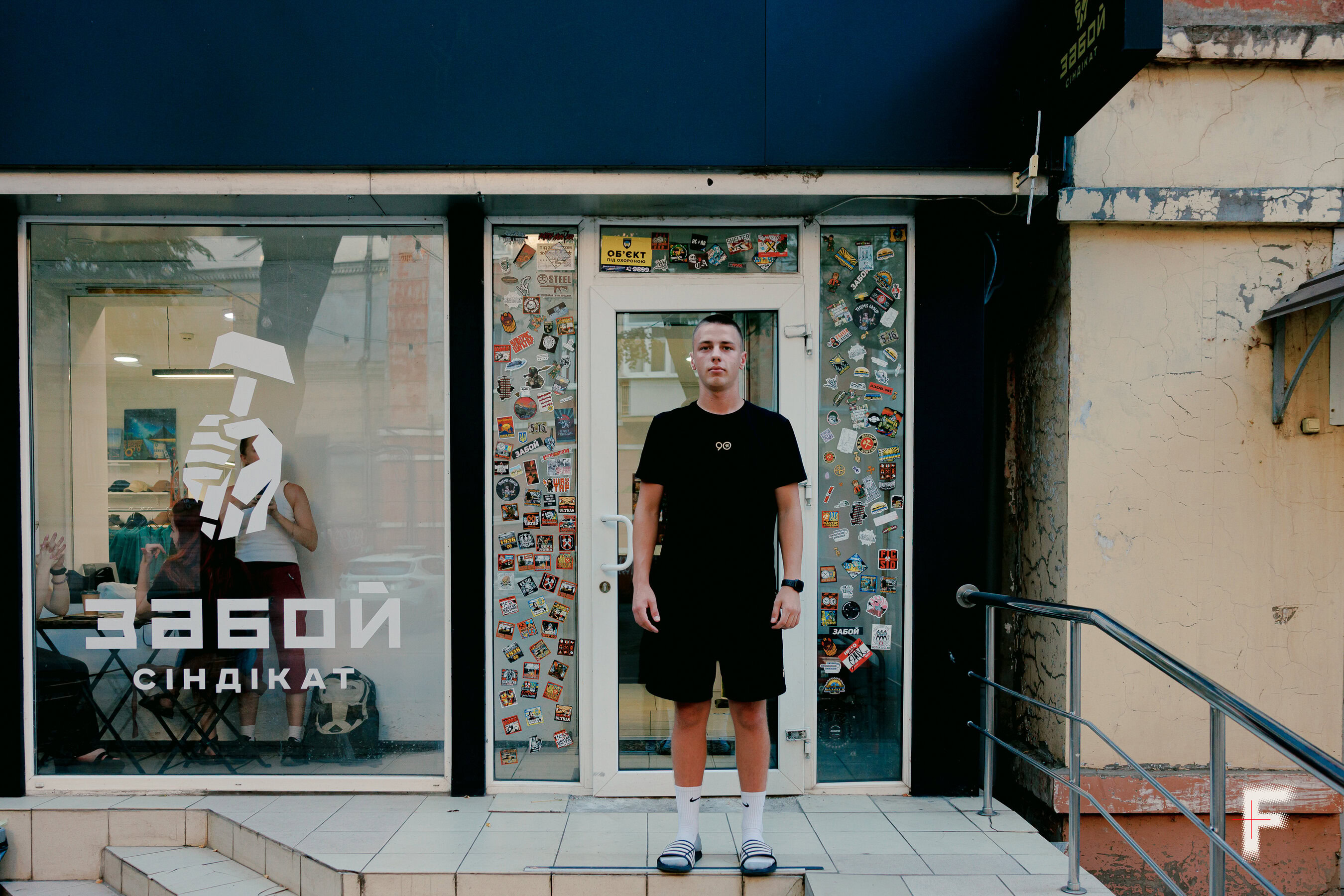
“It’s an incredibly difficult decision. It still is,” Oleksandr Myroshnychenko, a sales assistant at the showroom, says.
Oleksandr is from Kramatorsk. During his time at the showroom, he made new friends and built up a group of regular customers. In the final days before closing, people often stopped by just to say goodbye and thank him.
“We have our regular customers now. It’s become one of the city’s landmarks, one of the places you visit when you come to Kramatorsk,” he says.
Two days later, Zaboy closed its doors. Oleksandr doesn’t know whether this is a final goodbye to Kramatorsk.

I want to believe that we’re not closing
our doors for good,
Zaboy was one of the few places in central Kramatorsk where people could still have a coffee, bump into familiar faces and simply spend some time around other people.

Olena Stepanenko works at another coffee shop in central Kramatorsk, but she already knows when she will leave the city.
First real home
Olena moved to Kramatorsk from Kyiv in December 2025. Within a few months, the city had become her home. Now she is preparing to leave, with September 23 set to be her last day at work.
Olena is 26. She moved to Kramatorsk to be close to the man she loves, a soldier stationed nearby. She found a job at a local coffee shop.
She greets every customer with a smile. By now, most of them are familiar faces. Staying close to the people who continue to live and work here matters to her. While making their coffee, she exchanges jokes with them, asks how they are doing and listens to what is happening in their lives.
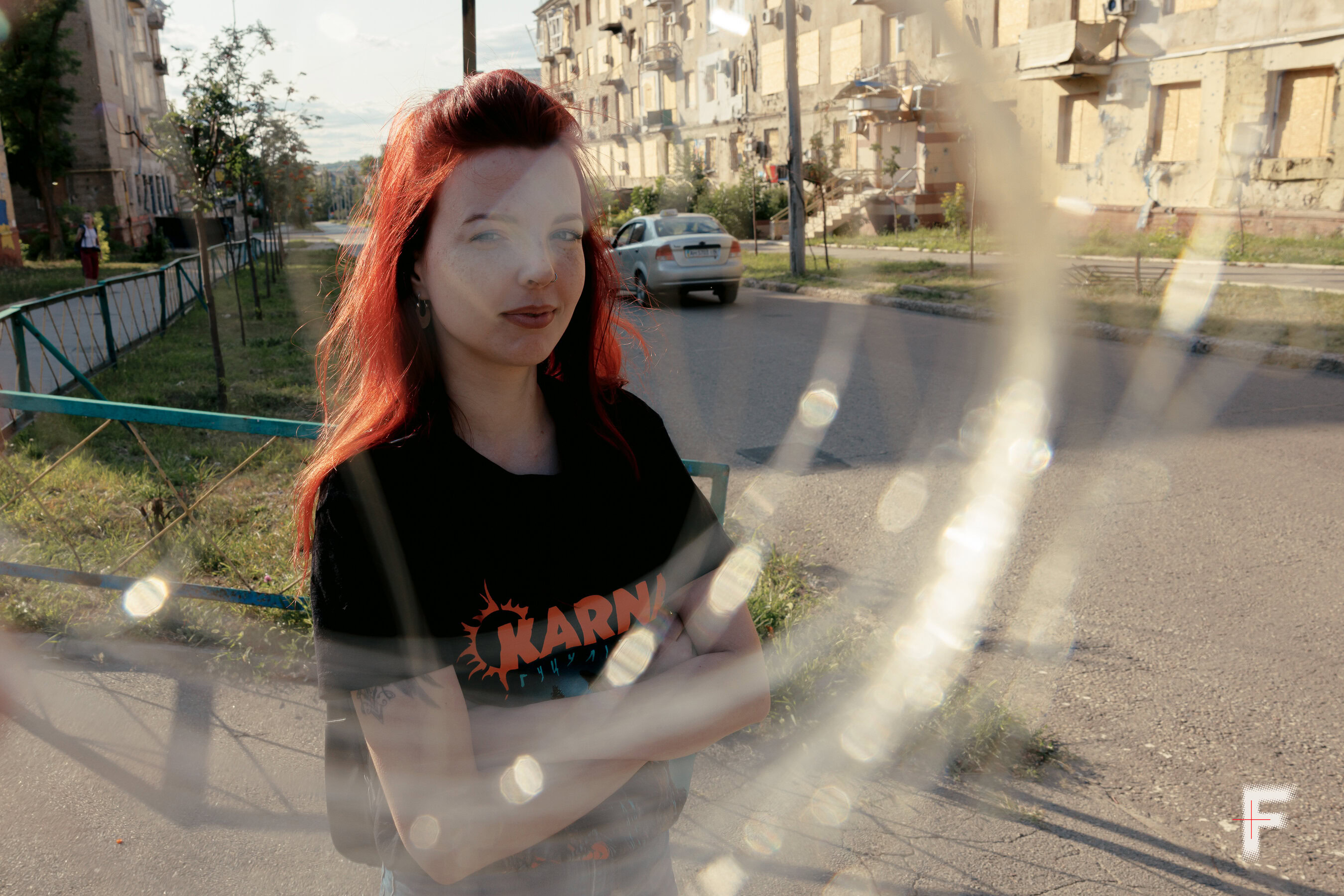
Every day, the city becomes a little less recognizable to you,
but it’s the people who keep you here. This is the land of our heroic people
and their deeds. I want to be part of it somehow, to have some connection
to what is happening here. Even if it’s just making coffee,
But it wasn’t only the coffee shop or the people that made Kramatorsk important to her. During the time she spent here, she discovered something she had never felt before: what it meant to be home. The apartment she shared with her boyfriend was nothing extraordinary, but it was there that she first felt she was in the right place.
“I’ve lived in so many different places, but I never felt at home anywhere. This place, though, is home to me. This is my fortress,” she says.
Olena says that if the city were safe and life here were normal, she could stay and build her future here.
Every day, more of the places that hold her personal memories disappear. She knows that soon, she may only be able to revisit them through her own photographs. So she tries to capture on camera everything around her that ties her to the city.
“Glide bombs are destroying our memories. You attach a memory to a particular place, and then, one day, that place no longer exists,” she says.

According to Olena, life in Kramatorsk feels different from life in cities farther from the front, where people still often spend a great deal of energy on things that, in the end, turn out not to matter all that much. She calls this feeling a sense of what is real.
“Life here doesn’t get diluted. There’s just no time for it here, no time for insincerity, for pretending,” she says.
After leaving Kramatorsk, Olena plans to move to Konotop in the Sumy region, where she hopes to open her own coffee shop. She is already looking beyond that move, imagining the life she wants to build afterward: a family, children, motherhood.
“I will have three children,” she says with a smile, but she means it completely seriously. “While the person I love is at the front, taking responsibility for what is happening there, I’m taking responsibility for what comes next.”
***
This story was made possible by the Frontliner community. Your support covers the fuel, tickets, and accommodation we rely on every day. It allows us to be on the ground as events unfold, meet the people whose stories we tell, and report on life in Ukraine during the war.
To fund our next reporting trips, we’re raising $1800 for next 4 trips and 4 stories through our “Send Frontliner on the Road” campaign.
Help bring our next stories to readers by becoming a regular supporter on Patreon or making a one-time donation through PayPal (e-mail [email protected]). Every contribution helps us continue our work as an independent reporting outlet.
***