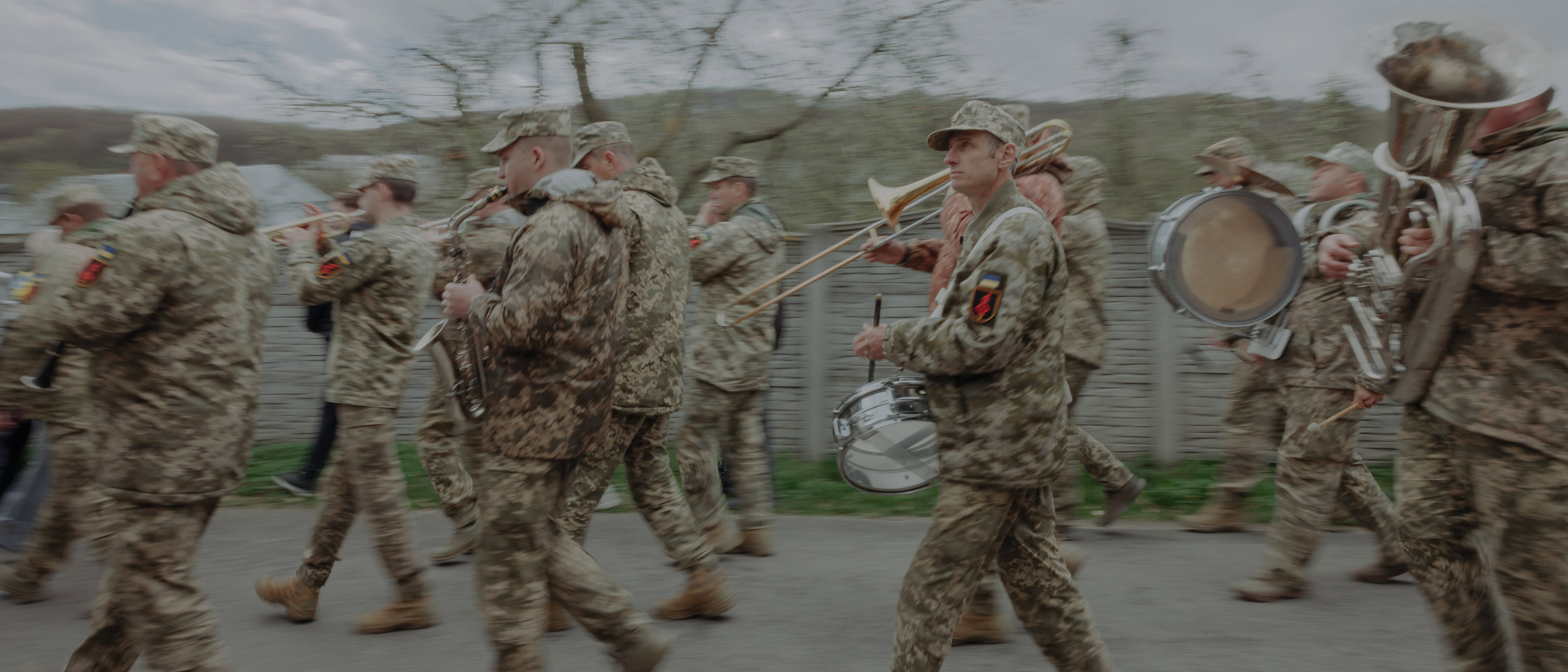
From funerals to concerts: Why a military musician’s duty is harder than it seems
In the morning, they play a mournful march and the national anthem at the cemetery, and just a few hours later, they might be performing a concert with modern tracks to mark a commemorative date. Such is the daily reality of serving in a military band. They begin their morning rehearsal ahead of a funeral service with a piece called "Vesuvius." The tune genuinely feels like an erupting volcano, sounding as though it will soon reach the high ceiling and spill out of the building. Frontliner explores the service of a military band during wartime.
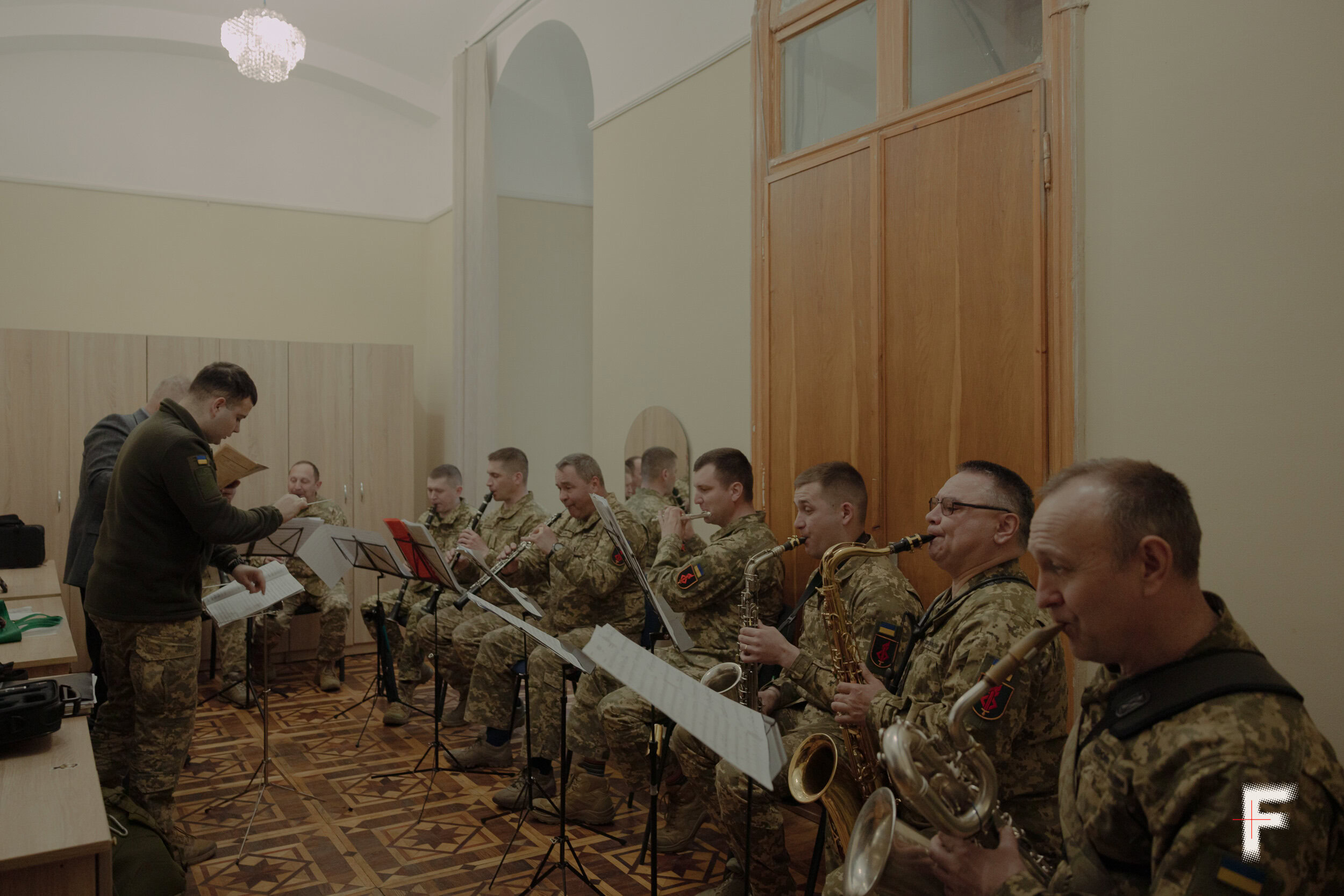
“From measure 224, softer, and at 217, crescendo,” cadet Danyil Petrenko instructs the band. He is preparing for his state exam to become a military conductor. In this hall, military musicians play brass and percussion instruments. In another room, there is a rehearsal for the woodwind and saxophone players, who are also being directed by a cadet under the supervision of his instructor.
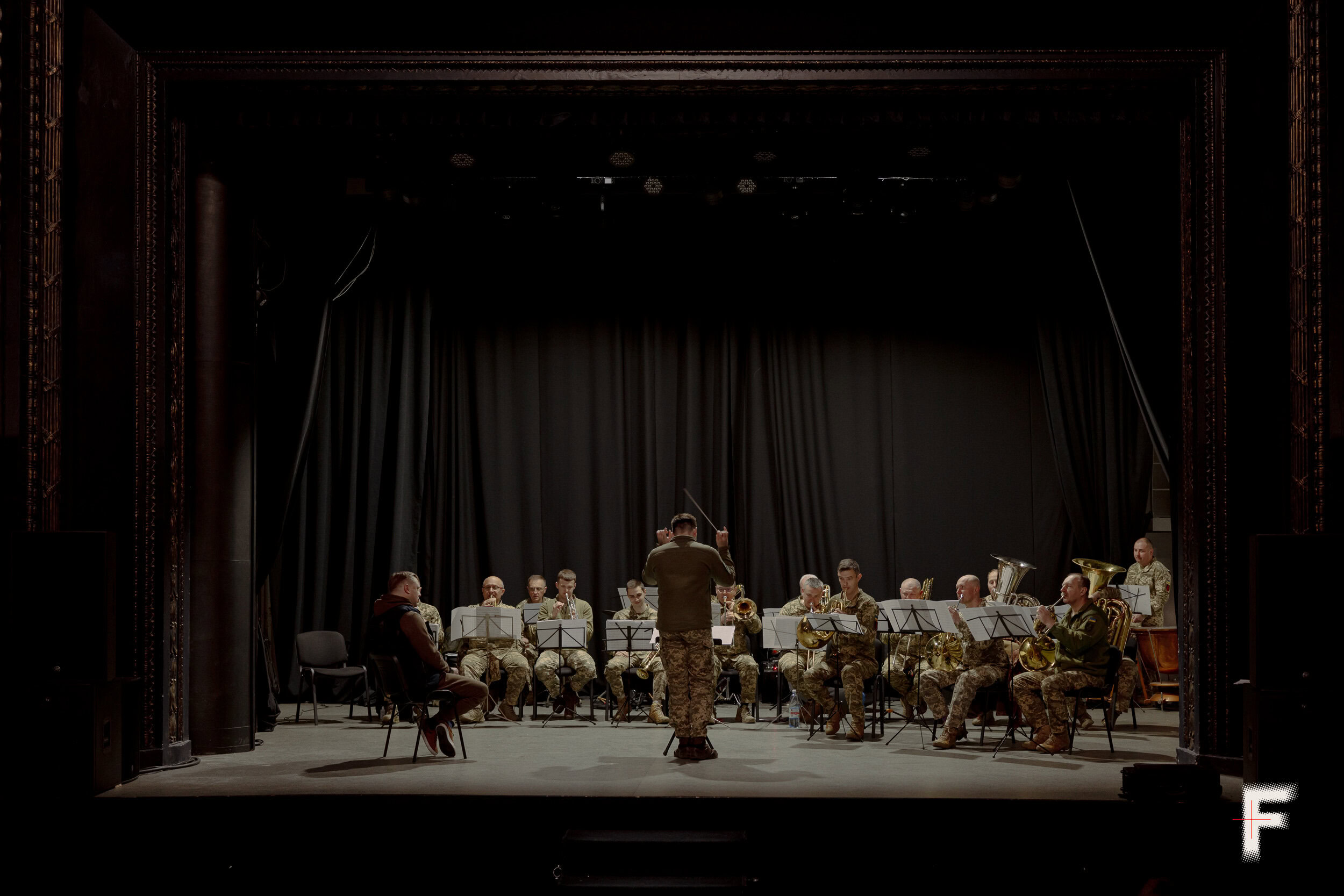
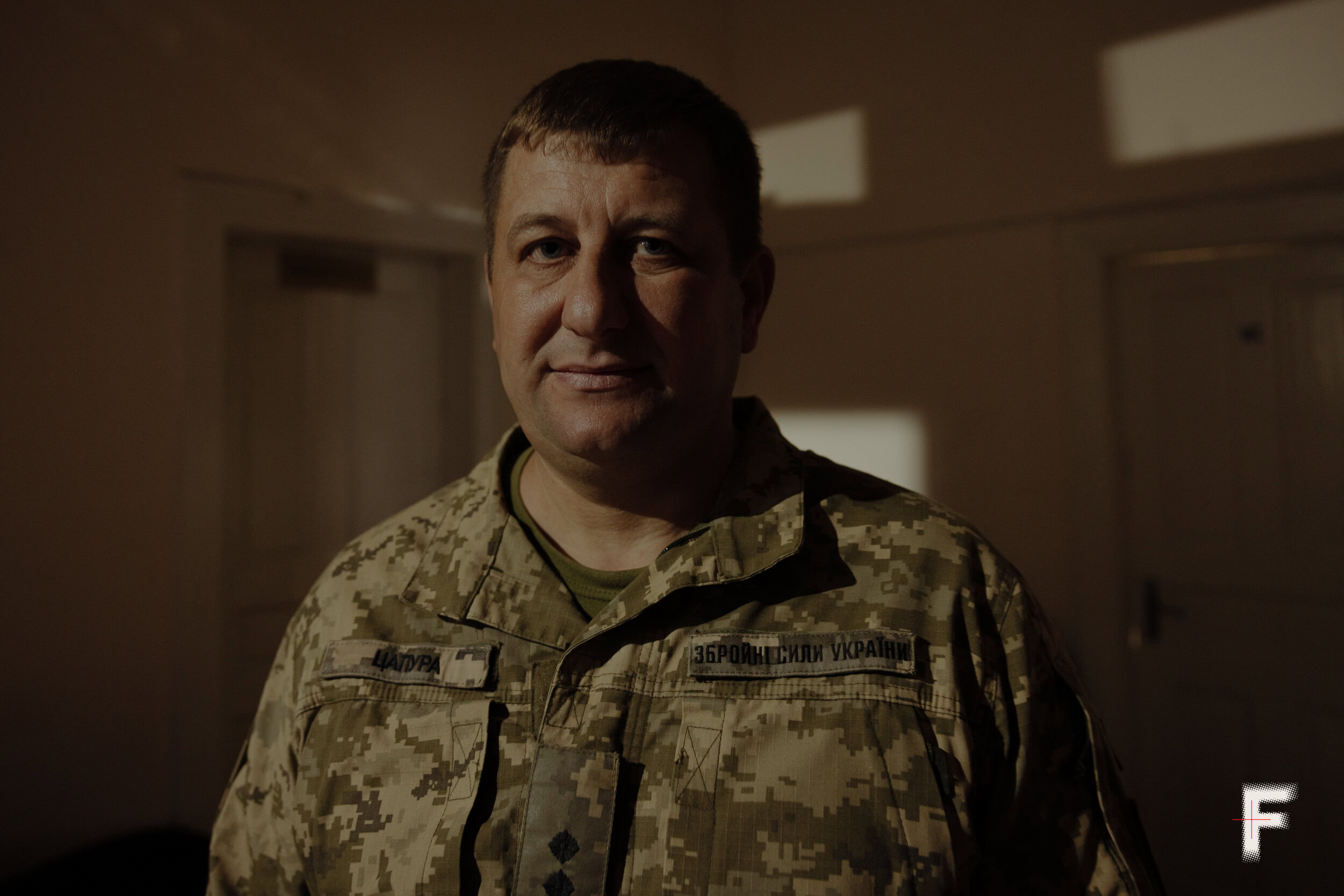
Band director Lt. Col. Viktor Tsapura observes the rehearsal. After all, one of the band’s tasks is to collaborate with the Department of Musical Art of the Institute of Psychological Support for Personnel at the Hetman Petro Sahaidachnyi National Army Academy, which is the only institution in Ukraine that trains military conductors.
Tsapura keeps a close eye on everything. He occasionally approaches his guys to offer advice or ask a question, checks their sheet music, or watches them play from the hall. As the senior ranking officer, the band director is responsible for military discipline and the execution of rituals and ceremonies.
Viktor Tsapura has served as the director of the National Army Academy’s military band since April 20, 2021. Prior to that, he spent over 14 years leading the military band of the 95th Air Assault Brigade.

Tsapura recalls that their brigade was one of the first to deploy to the East in 2014. For two years, they had to carry out combat missions entirely unrelated to music. On March 8, 2015, the band performed in the center of Sloviansk under sniper protection, at a time when people were still afraid to go outside. The city had only been liberated from Russian occupation in July 2014.
Creativity on an Army schedule
The band’s service members are on duty daily according to the academy’s general schedule from 8 a.m. to 5 p.m. However, Tsapura shares that their working hours are often irregular. Typically, there is a morning rehearsal, and at 11 a.m., the wind and percussion players leave for a funeral service while the band’s vocalists and dancers continue practicing at the academy.
-
The Hetman Petro Sahaidachnyi National Army Academy military band rehearses, Lviv, Ukraine, April 6, 2026. (Anna Zubenko/Frontliner)
-
Military band members take a break between rehearsals, Lviv, Ukraine, April 6, 2026. (Anna Zubenko/Frontliner)
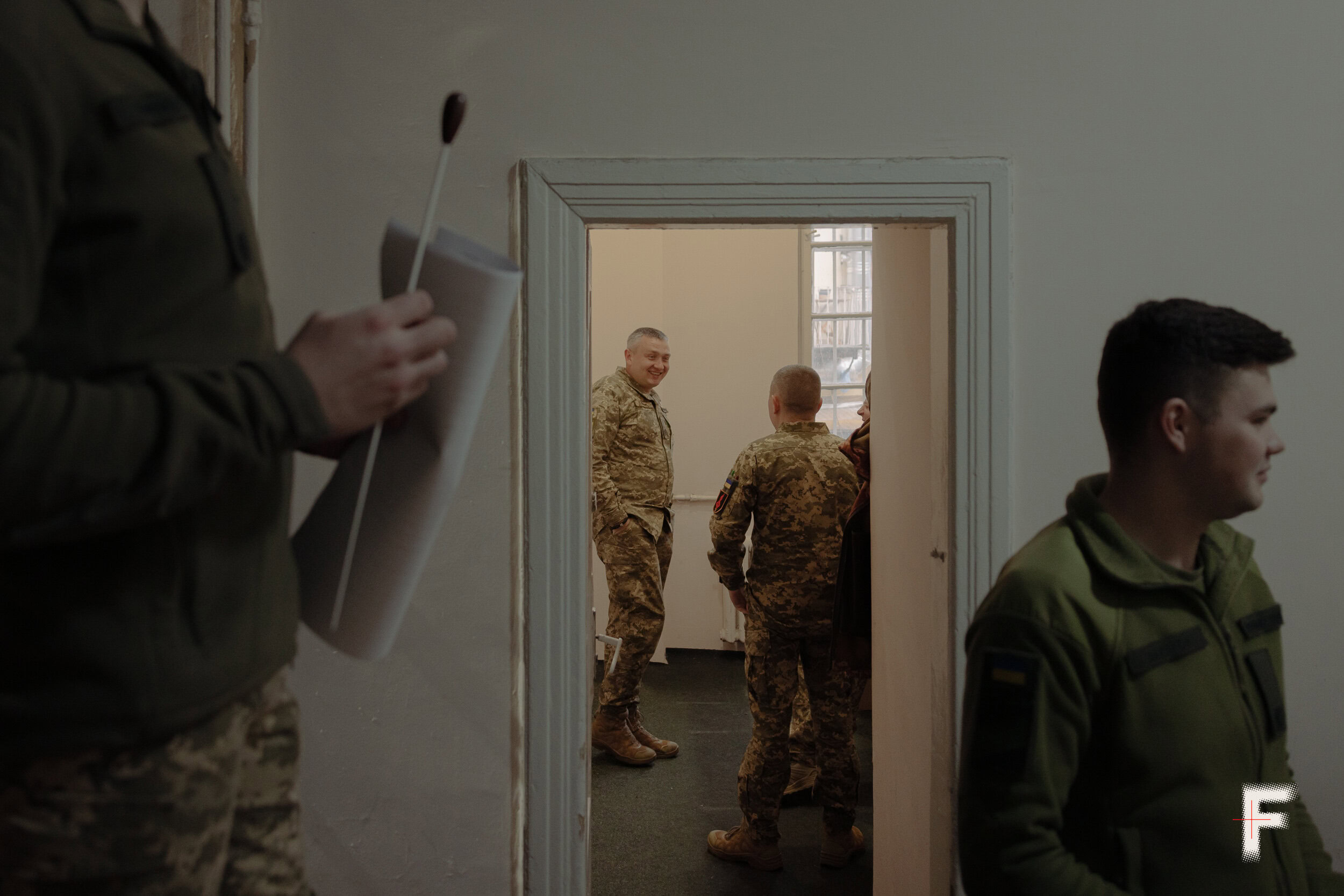
In the afternoon, rehearsals continue in various formats, either as a full band or in smaller groups. The schedule depends on funeral notifications, which the band director usually receives the evening before.
Sometimes the band travels to funerals in villages or small towns across the Lviv region. On those days, they start at 6 or 7 a.m. and finish later because of the time spent on the road. However, there are three other military bands operating in the region, which allows them to coordinate who goes where. Last year, there was a single day with a staggering 17 funerals across Lviv and the surrounding region. In such cases, the band is divided into smaller groups for the burial ceremonies, or they might send just a trumpeter and a drummer.
People wonder how we can play concerts right after a funeral.
But this is our reality,

Sometimes, the band plays at a funeral in the morning and has to perform a concert program with a completely different repertoire in the evening, featuring lively folk or modern compositions. After all, the musicians are involved in academy, garrison, and citywide events.
“Sometimes people wonder how we can play concerts right after a funeral. But this is our reality, and we have to adapt,” Lt. Col. Viktor Tsapura notes. “Everyone handles it in their own way, and shifting your mindset can be difficult for some. Still, it is our duty.”
Occasionally, the band holds a marching drill rehearsal right after a funeral. This is a visual performance where the musicians do not just play their instruments but also move in synchronized formations. It is essentially a mix of military drill, music, and a touch of choreography.
Military discipline and creativity
“We maintain the moral and psychological well-being of the service members, execute all military rituals and welcome top state officials, while also keeping up an active concert program,” Tsapura says in his typical military jargon. He laughs at the question of how they manage to balance strict military discipline with creativity. The lieutenant colonel firmly believes there is no creativity without discipline. In fact, nothing really works without it.
To join the military band, a candidate must have formal musical training, which means graduating from a music college, conservatory, or institute of culture. After that, they must pass an audition before an artistic committee that evaluates the potential musician’s skills. Only then do they move on to complete basic military training.
But right now, we can only recruit people for the band who
have been classified as unfit for the front lines and
can only serve in recruitment centers or rear units,
In addition to their artistic duties, the band’s service members occasionally train at the shooting range or the training ground. They undergo specialized military training in medicine, tactics and marksmanship.
“To join the band and become a true professional, you have to dedicate 10 to 15 years of your life. A musical education is among the most expensive in Ukraine,” Tsapura says.
The band’s repertoire is incredibly diverse. It includes the mandatory music required by military regulations, classic pieces by renowned Ukrainian composers like Volodymyr Ivasiuk and Mykola Lysenko, and popular contemporary tracks. As a result, the military band has played everything from the soundtrack of the series “Wednesday” to modern Ukrainian hits like “Smaragdove Nebo” and “Stefania.”

We travel closer to the front lines in small groups rather
than as a full band, trying to take the troops
into a different reality for just an hour,
In the summer, the band frequently performs at military hospitals. Facility directors have sometimes been skeptical about these events, concerned that the loud sounds might disturb the service members during their recovery. In these situations, however, the conductor and musicians select an appropriate repertoire and keep the volume down. Last year, they often traveled to the Ivano-Frankivsk region to perform. Following one of the concerts, a young man came up to them and gave thanks for remembering them.
“Sometimes we travel closer to the front lines in small groups rather than as a full band, trying to take the troops into a different reality for just an hour,” Tsapura says. “After our performances, they told us they were impressed by our playing. We boost the soldiers’ morale, as a soldier without motivation won’t be effective.”
Yet, any plans can be changed in a heartbeat by a notification about a service member’s funeral, where the fallen must be given a dignified final farewell.

Funerals as a daily duty
After the rehearsal, the band splits into two groups. One stays in Lviv to play at a funeral. The other group heads to a bus that will take the service members to the village of Lysynychi, just outside Lviv. They pack their instruments and board the bus, accompanied by Lviv’s steady rain. No sooner have they taken their seats than a funeral cortege drives past. The service members pause to honor the warrior being brought home for the final time.
On the way to the funeral, the military musicians chat, read the news on their phones, or sit in silence gazing out the windows. One of them, Andrii Rodych, mentions that the fallen soldier they are honoring today is the husband of a distant relative. He shares that he didn’t know the man personally and recalls other soldiers from his home village.

Andrii Rodych is a local, so he guides the bus driver to make sure they don’t get lost. However, missing the way would be difficult, as people have already gathered from the outskirts of the village to welcome the hero home. Memorial candles are already burning on both sides of the road, and clouds are gathering in the sky. The band’s bus pulls up next to the church. The service members leave their instruments behind and step out to kneel in honor of the fallen soldier. Today, the village of Lysynychi is saying its final goodbyes to warrior Vitalii Kuryvchak.

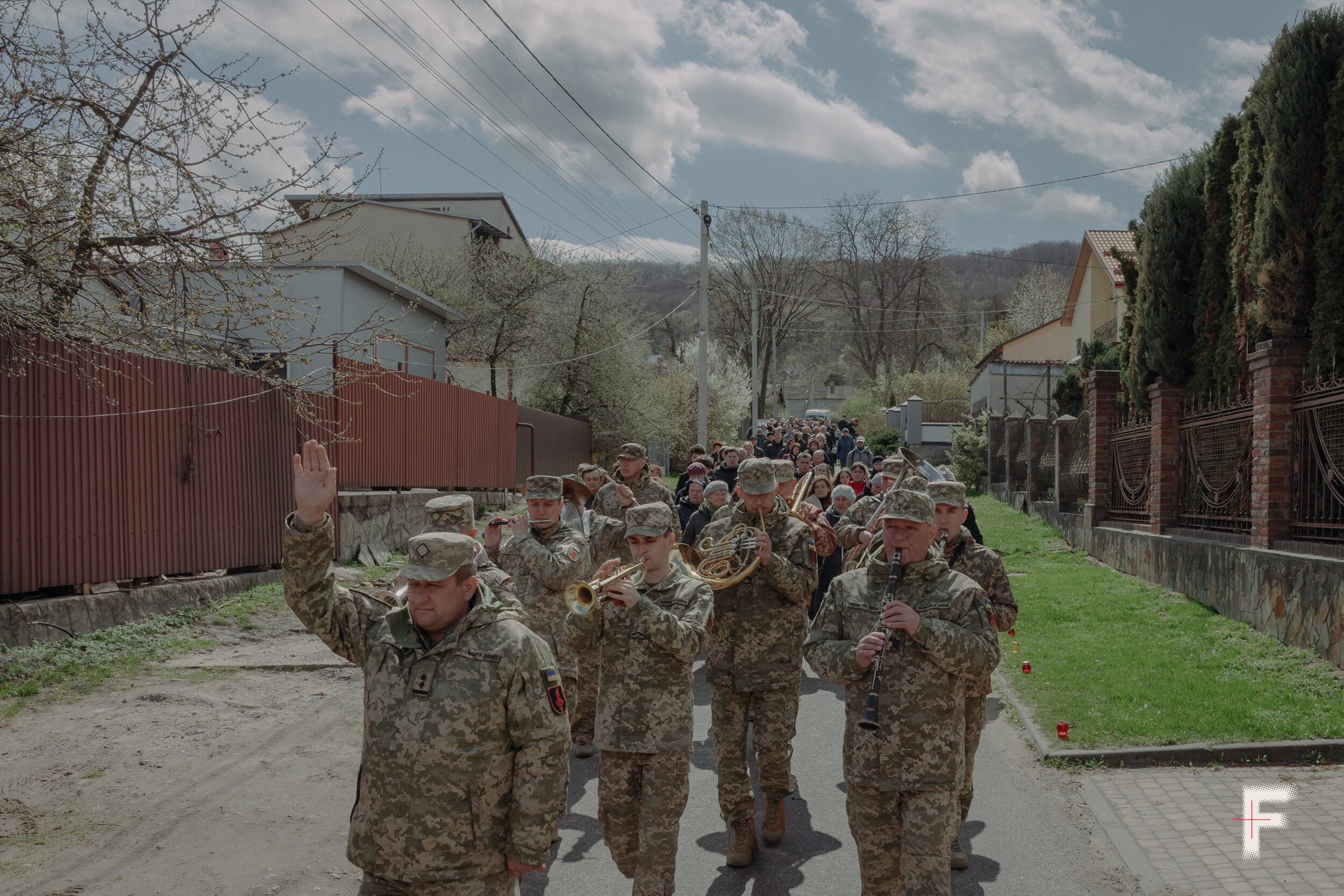
After the farewell at home, the band accompanies the funeral procession to the church by playing psalms. The conductor walks at the front and raises his arms, which serves as a signal for all the band members to pay attention. Using a hand gesture, he indicates the number of the church psalm they need to perform.
-
The military band accompanies the funeral procession to the church, Lysynychi, Ukraine, April 6, 2026. (Anna Zubenko/Frontliner)
-
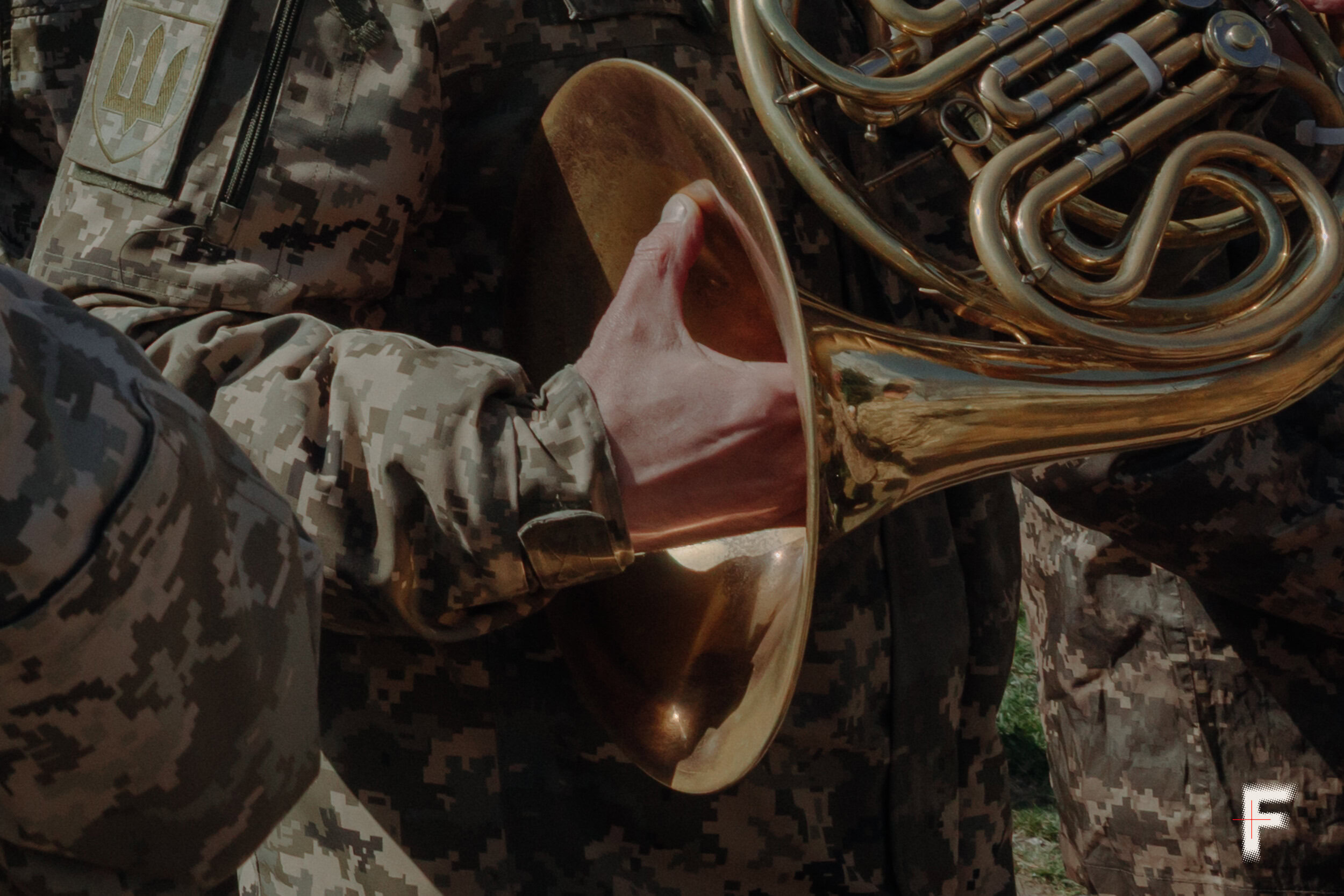
A military band member holds his instrument, Lysynychi, Ukraine, April 6, 2026. (Anna Zubenko/Frontliner)
During the funeral procession, people talk about the storks having returned home. The birds circle actively above the village, as if they too cannot fly any further without paying their respects to the warrior.
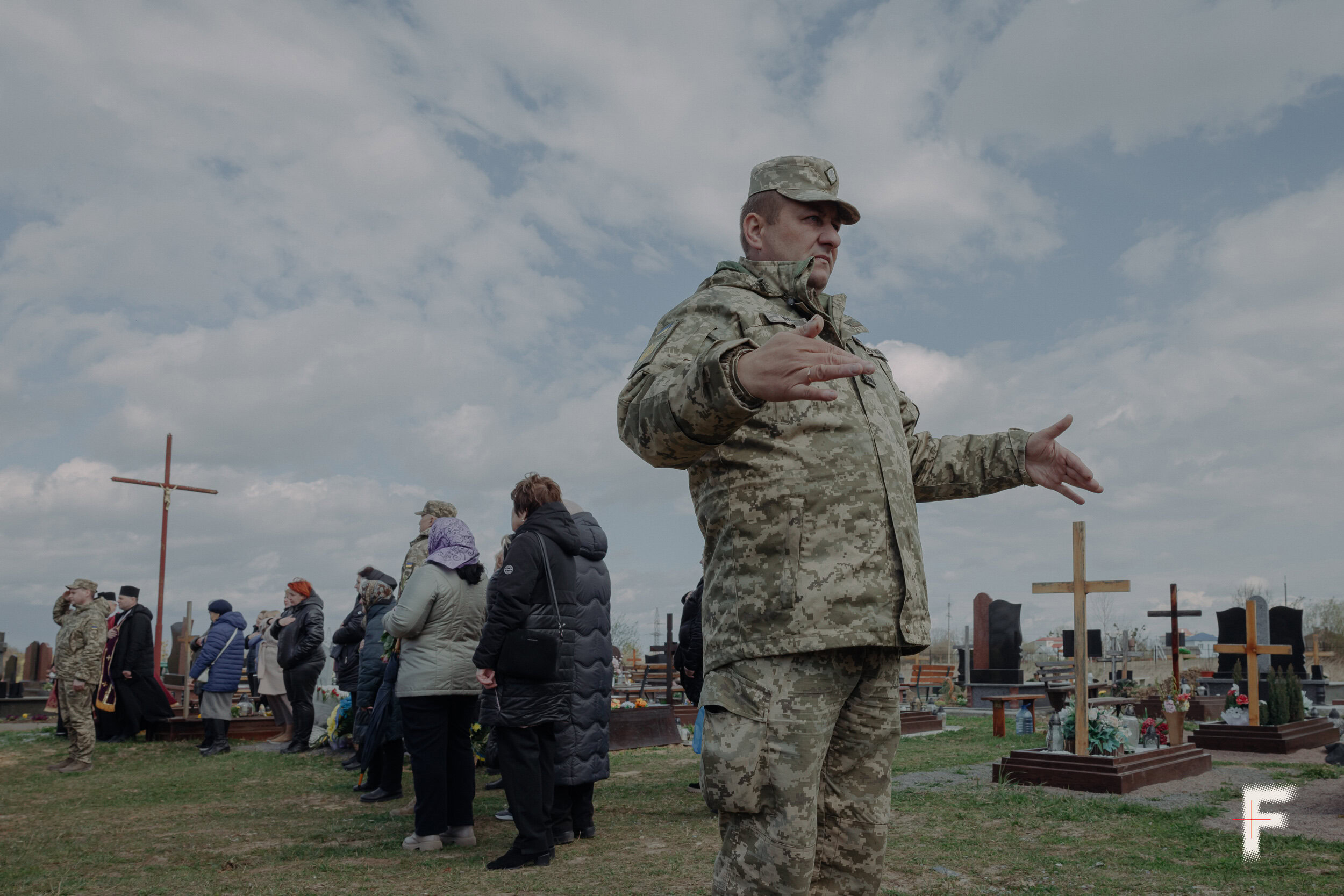
Following the memorial service at the church, the military band accompanies the funeral procession to the cemetery. The trees all around are beginning to bloom, acting as a symbol of new life. And past these trees, the military band leads the hero returning “on the shield” to his final resting place.

The military band plays the “Shana” (Honor) bugle call, immediately followed by the national anthem. The military honor guard fires a three-volley salute into the sky. The deafening sounds make everyone present flinch. The priest delivers his final words, and the warrior’s casket is lowered into the ground forever. The military band then heads back to the bus, knowing the hardest part of their duty for the day is over.
If you constantly think about what is happening,
you could lose your mind.

“We are used to what we do every day”
On the way back to Lviv, the band members try to switch to ordinary, everyday topics. They talk about the carp in a pond outside the city and what will happen to the tree blossoms if a frost hits.
“We are used to what we do every day. If you constantly think about what is happening, you could lose your mind. If we didn’t have to give soldiers their final send-off every day, this service would be wonderful,” notes serviceman Volodymyr Baziuk, who has been in the army for 27 years.
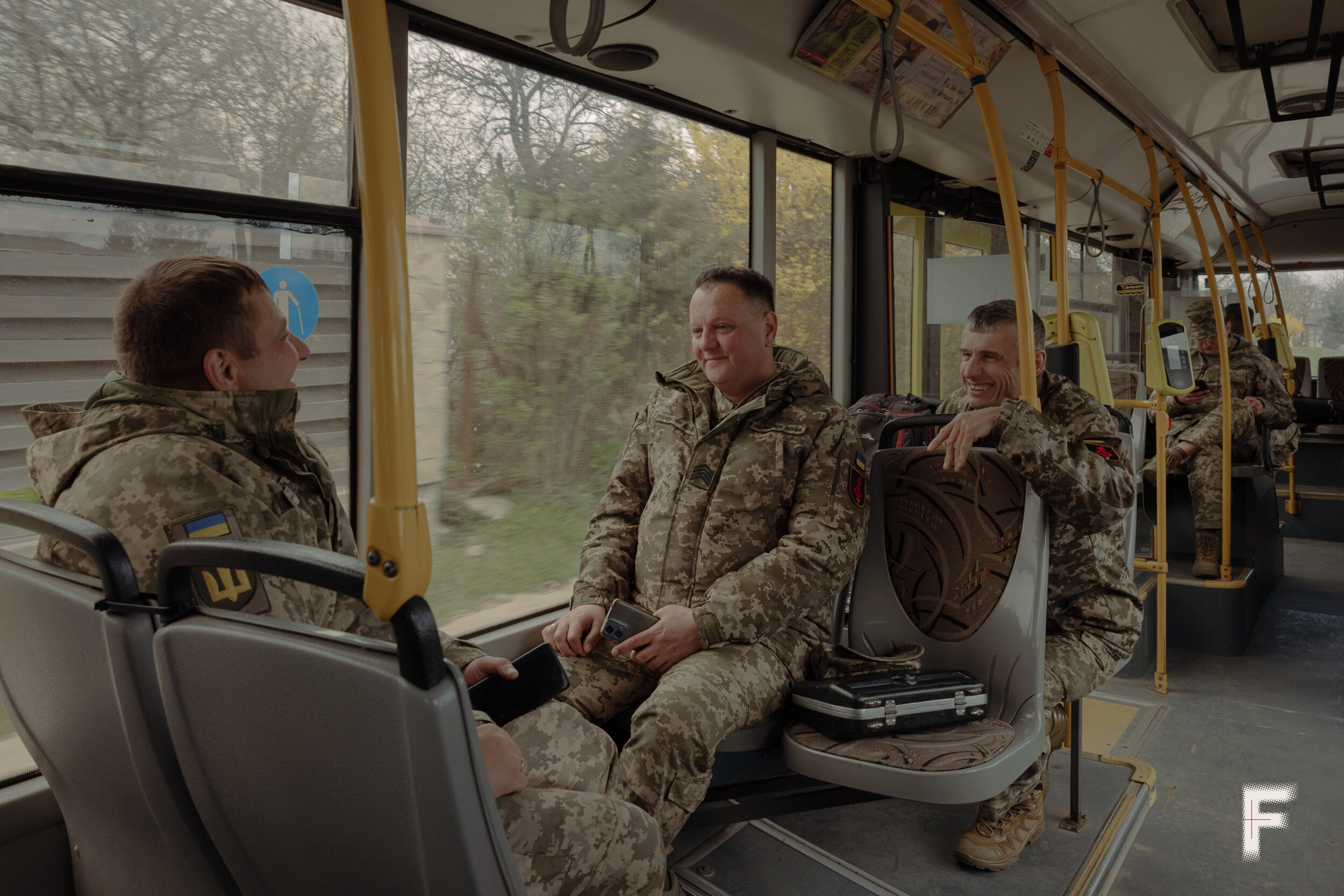
Service in the military band has become as much of a family to him as his fellow soldiers. He jokes that he always worries about accidentally hitting someone with his instrument and making sure he catches the director’s gestures on time.
Volodymyr remembers all the band’s performances, their trips abroad, and even the birthdays of each of his fellow service members. He talks about traveling to Krakow in 2002–2003, visiting Aabenraa in Denmark in 2012, and taking part in a military pilgrimage to France in 2019.
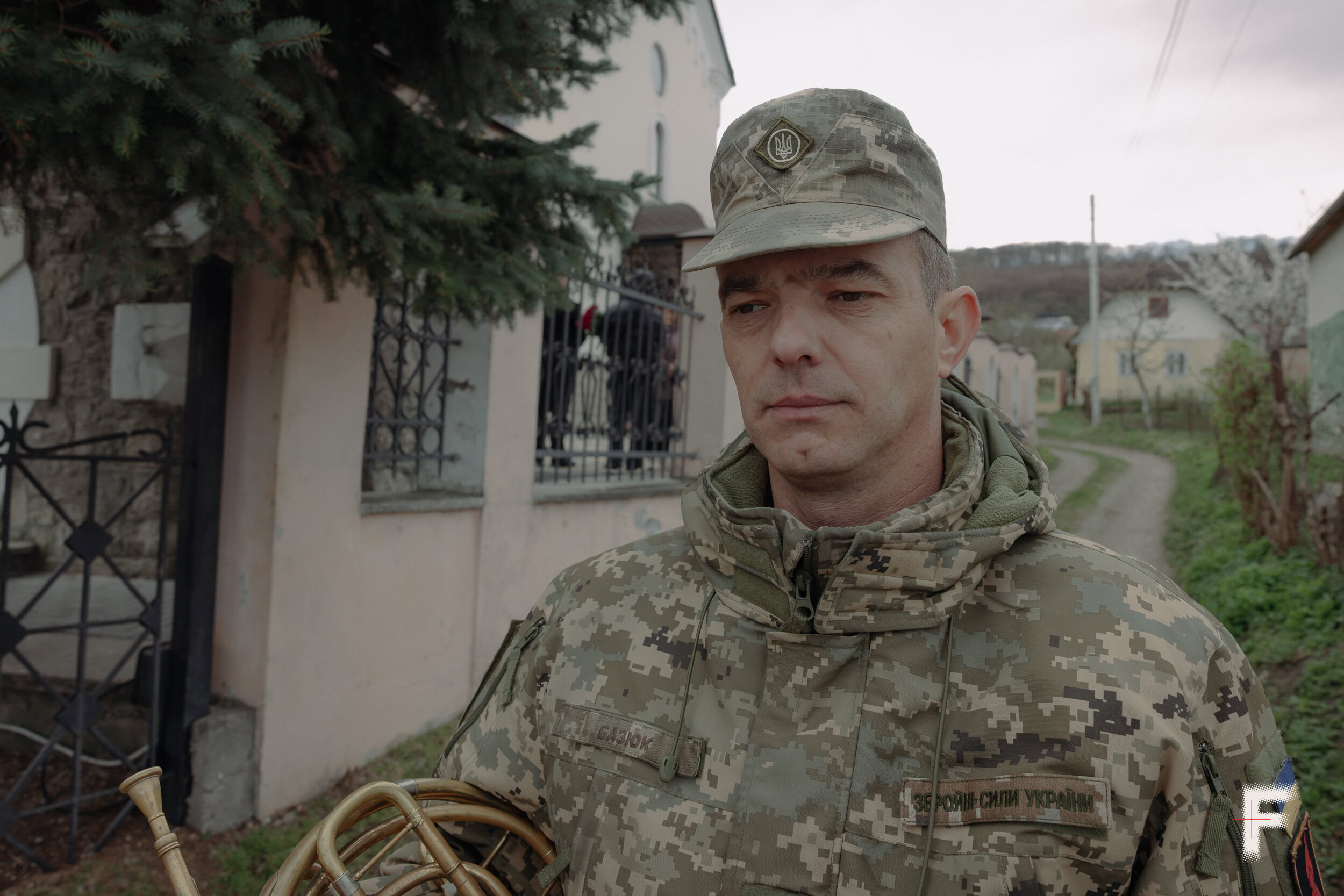
Volodymyr Baziuk, much like the rest of the band, wishes he were returning from an international tour right now, having proudly represented Ukraine and its musical culture. Instead, they are heading back to Lviv from Lysynychi. Tomorrow, they will once again play the “Shana” call and the national anthem at the cemetery. Yet they hold onto the hope that someday, the anthem will be played only in celebration of happy events.
***
Hi, we are Mariia and Anna, the authors of this article. Thank you for reading to the end.
Creativity on an army schedule. This perfectly describes the daily service of military band members. Their repertoire shifts drastically every day, ranging from mournful bugle calls and the national anthem at soldiers’ funerals to upbeat contemporary pieces for a marching drill or a commemorative concert. This report covers a single day in the life of a military band, highlighting its role during wartime.
Every story starts with your support. Join the Frontliner community so we can keep up documenting Russia’s war against Ukraine from the front line and the rear.
***