A smile needs no translation: How surgeons help patients find theirs again
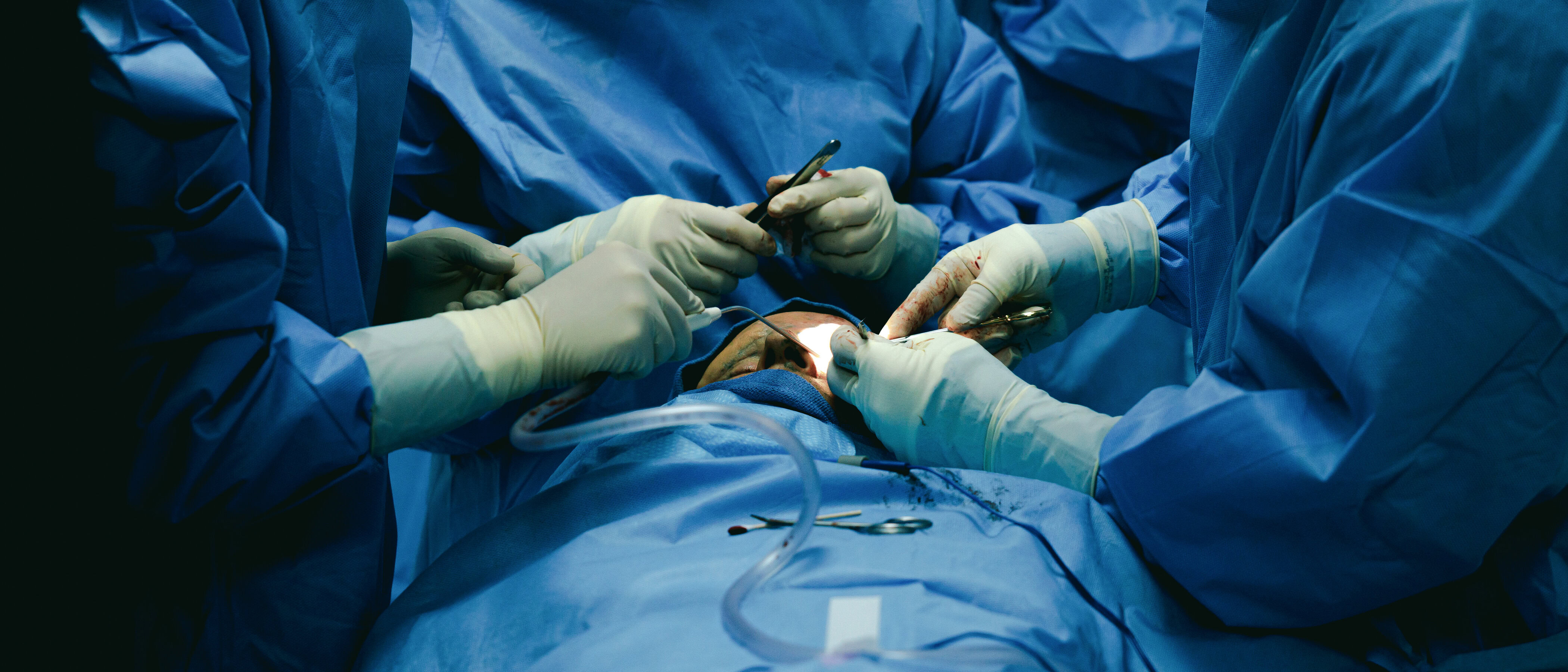
In the spacious, bustling operating room, time seemed to stop as the surgeon made the first incision with a scalpel. Then the work picked up the pace. The surgeons worked with intense focus, yet kept the mood light to ease the tension. It looked like a scene from a Hollywood movie. But Ukraine’s reality has no ready-made script. Doctors here operate on soldiers with severe facial wounds and on civilians with complex injuries. Even in these circumstances there is room for a smile: patients dream of getting theirs back, and doctors reassure them with smiles before surgery. Frontliner watched these smiles unfold at the Ivano-Frankivsk Regional Clinical Hospital.
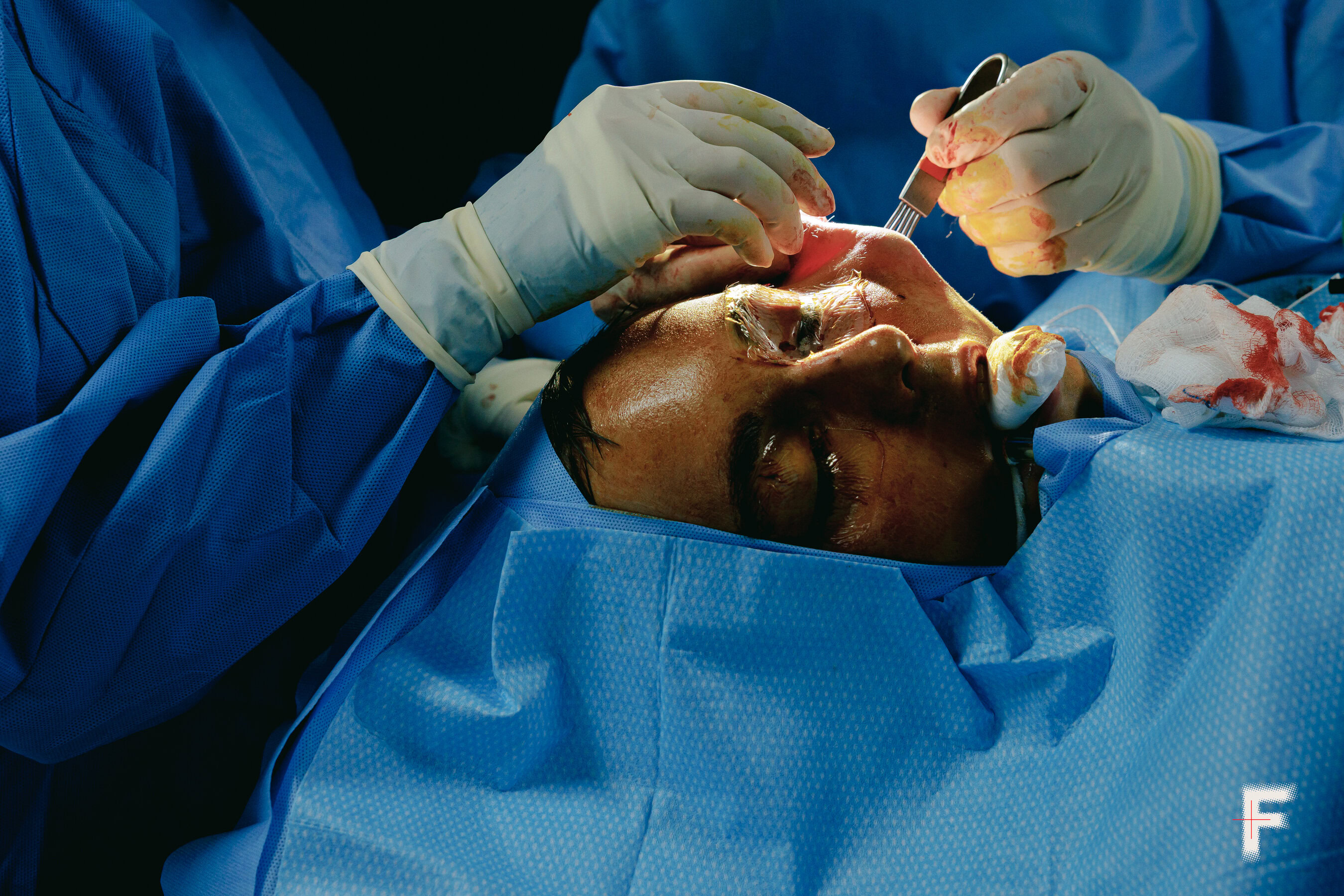
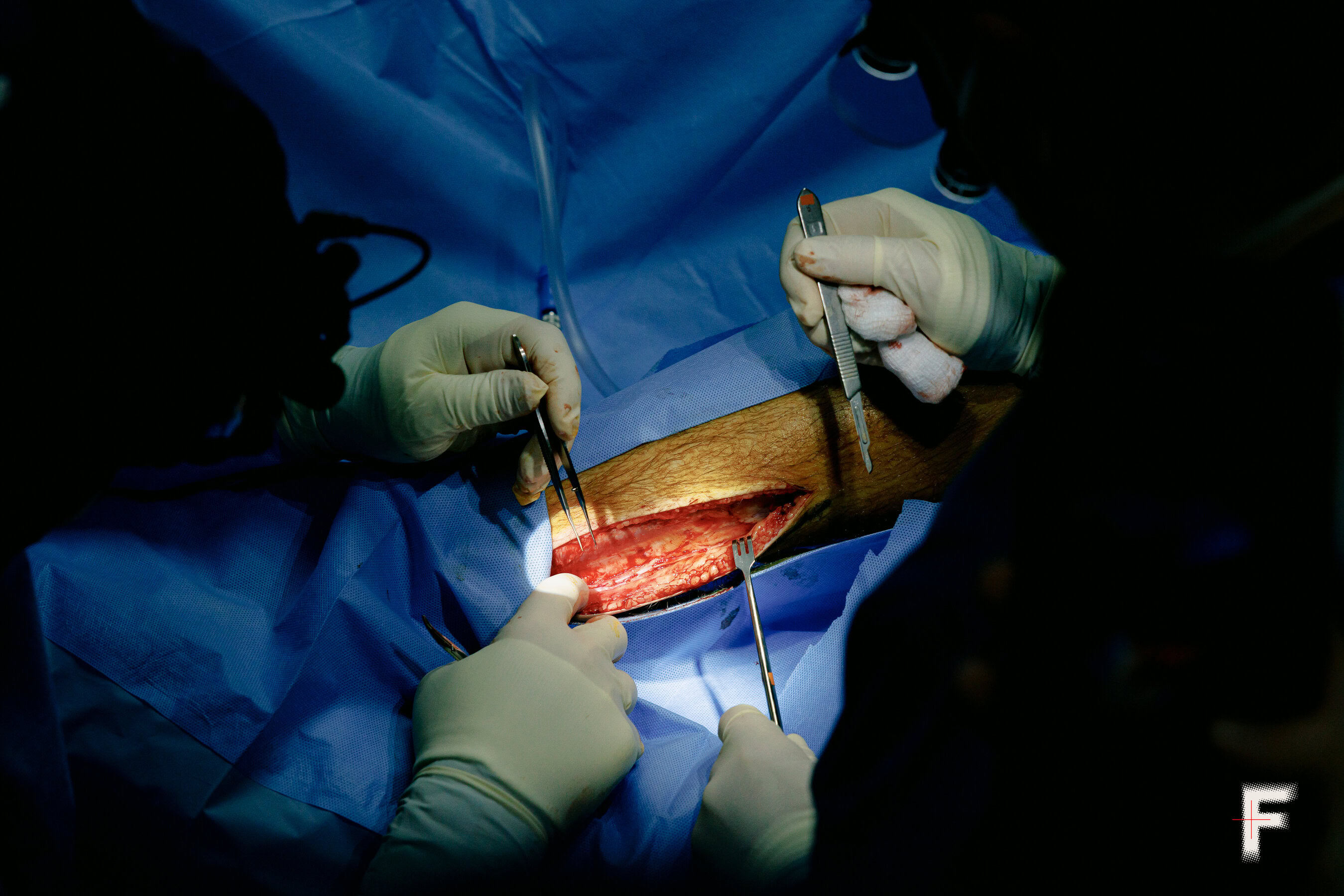
The doctors’ working day began with a complex facial surgery on 16-year-old Artem Pozharskyi. Surgeons are taking a nerve from the teenager’s leg to transplant it into his cheek. When Artem was an infant, his facial nerve began to lose function, which left his left cheek deformed. His mother dreams of him being happy and not feeling uncomfortable around other people, especially now that he has gotten into college. She wants to see him smile every day.
During the surgery, head nurse Christie Morrell from Canada comes out into the corridor from time to time. She reassures Artem’s parents and smiles at them warmly. Even the language barrier does not prevent them from understanding each other: hugs of support and smiles through tears need no interpreting.
Christie says she chose her profession because she wants to help people, just like her father, who was a career soldier. The nurse has a special warmth for Ukrainians who have suffered in the war.

I feel at home here, and I genuinely care about the people we’re treating.
The story of 16-year-old Artem really touched me. So far, we’ve only
transplanted the nerve, but next time we’ll get the muscle ‘engine’ running,
and he’ll be able to smile,
After reassuring Artem’s mother, Christie continues smiling at the other patients waiting for surgeries. A crowd of people who had been cheering him on throughout the operation has already gathered outside the ward where Artem is to be taken. When the nurses wheel him in and his parents tell him how brave he was and how well he held up, almost everyone present wipes away tears.
He can’t smile, yet he smiles at the thought of his son
A moment later, Christie goes to the next ward to prepare veteran Bohdan Slobodeniuk for surgery. His military service began in 2020, when he signed a contract with the 95th Air Assault Brigade and became a sniper. A year later he was deployed to positions near Horlivka in Donetsk region. The full-scale war then brought him to the Kharkiv region, to the village of Kamianka in the Izium district.
I just felt like my head was mush
and that I was starting to choke on my teeth,
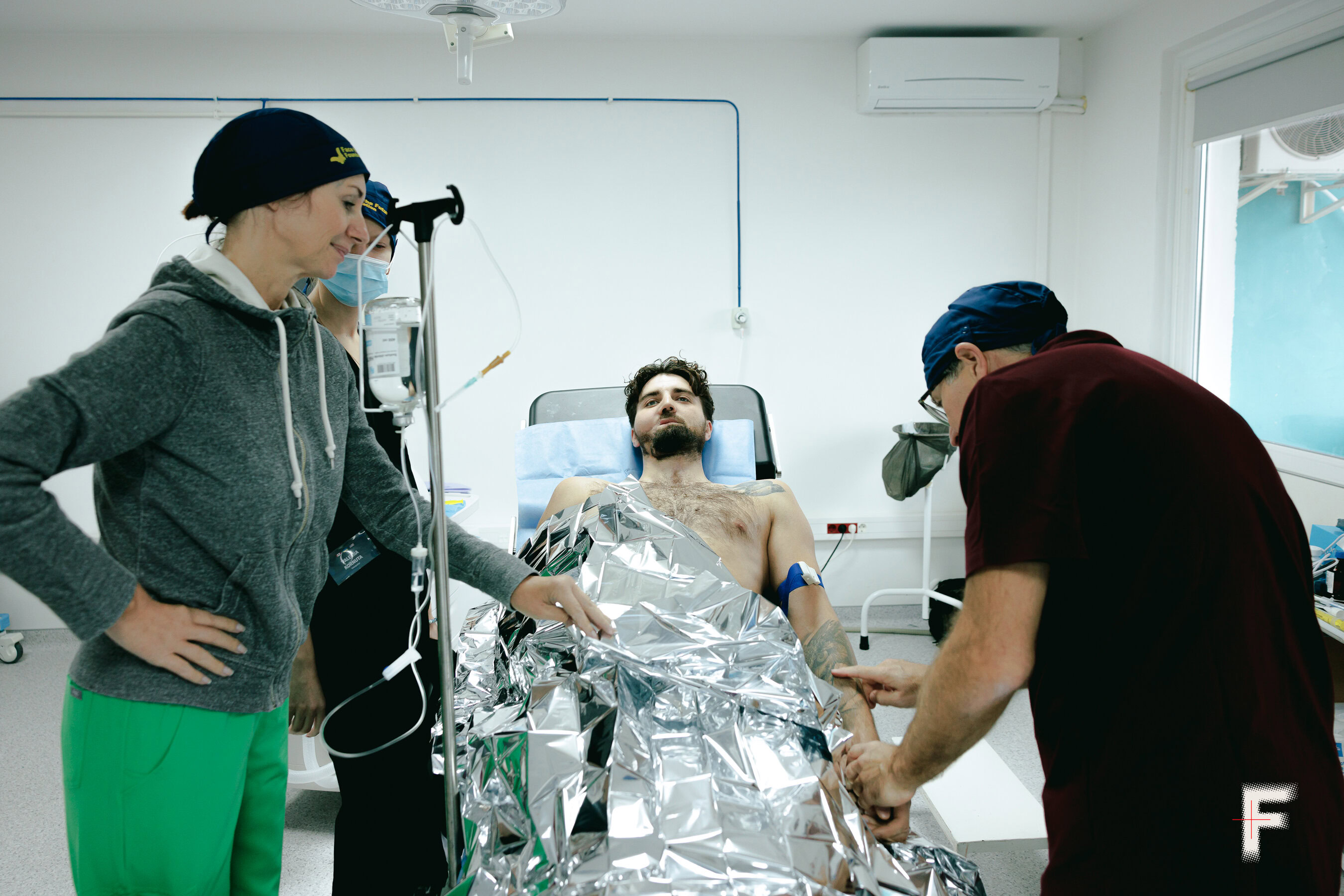
Bohdan remembers Kamianka as a village destroyed by Grad rockets and artillery. He recalls that tanks drove through the village almost nonstop for the first two weeks. It was in Kamianka, on March 24, 2022, that he was severely wounded in the face:
“We were heading to our positions, but the artillery opened fire so we ran into a cellar. Over the radio we were told to come out and take a look around. I grabbed an NLAW and went out, even though everything outside was covered in smoke. I couldn’t hear the rounds being fired, but I decided to look through the sight, and the moment I did, I heard a whistle. Something hit right next to me. I just felt like my head was mush and that I was starting to choke on my teeth. Once I’d spat them out, I started to mumble so that one of the guys would hear me. When I crawled back into the cellar, they told me half my face was gone.”
Bohdan and his brothers-in-arms immediately left their position and ran to an armored personnel carrier (APC). Inside, he took a selfie to see what his face looked like. Then he placed his helmet on his lap to collect the blood. When they reached the medics, Bohdan was given a painkiller. Later, in Kramatorsk, he underwent a tracheostomy: a tube was inserted so that he could breathe again.
“In Dnipro I was in intensive care, and the doctors said that if I made it through the first night, I’d live. I tried with all my strength to make some kind of sound, to show I was still there and so they wouldn’t forget about me,” Bohdan says with a faint smile.
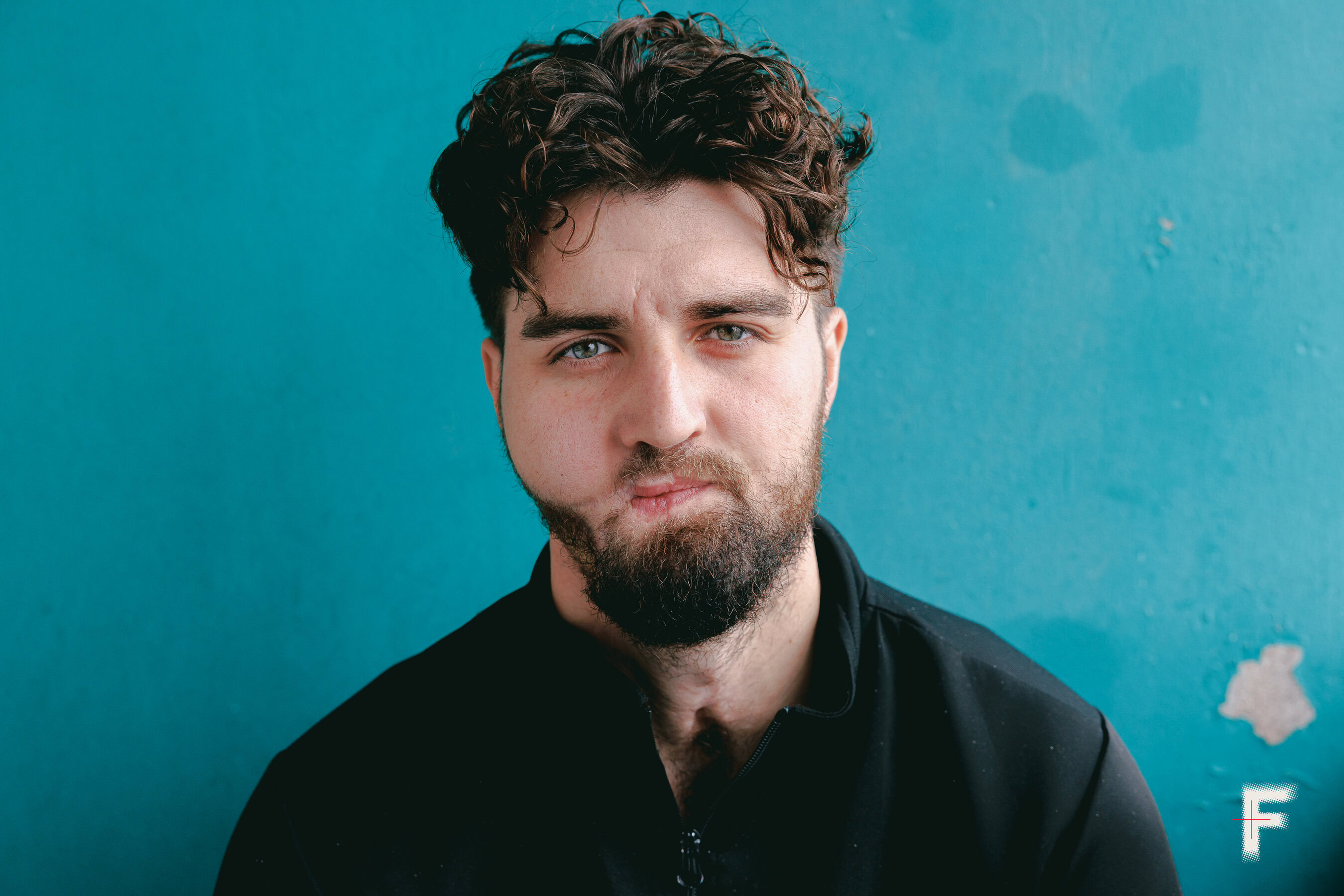
At first he wanted to get his old face back and dreamed of seeing his own smile again. But after years of surgeries in Ukraine and abroad, including reconstruction of his cheek and lips using skin from his leg, he got used to the way he looks now.
Bohdan Slobodeniuk now has several dental implants, as well as temporary teeth. Doctors from the Face the Future mission already operated on his lip during their previous visit. This time they will perform rhinoplasty to help him breathe freely. They will also reduce the scarring inside his mouth so that Bohdan can open it wider than one and a half centimeters.

But even more than this surgery, Bohdan is looking forward to the birth of his son at the end of October. And that is what the doctors ask him about just as often as how he is feeling.
Surgeries that help bring back smiles
Today, Bohdan is undergoing surgery performed by Matthew Brace, a plastic surgeon from Toronto, who is making his fourth trip to Ukraine to operate on patients. The Face the Future charitable mission began back in 2022. Doctors provide free surgeries to military personnel and civilians who have been affected by the war or sustained complex injuries. The project is organized by the Face the Future Foundation, which has been conducting medical missions since 1996, the Still Strong initiative, and the charitable foundations Razom for Ukraine and Patients of Ukraine.
After his first mission, Matthew was struck by the complexity of Ukrainian military personnel injuries. In Canada, the surgeon also reconstructs patients’ faces, but after different kinds of trauma, such as car accidents, fights, or cancer. Matthew says he had never seen injuries on such a scale and of such complexity as in Ukraine.
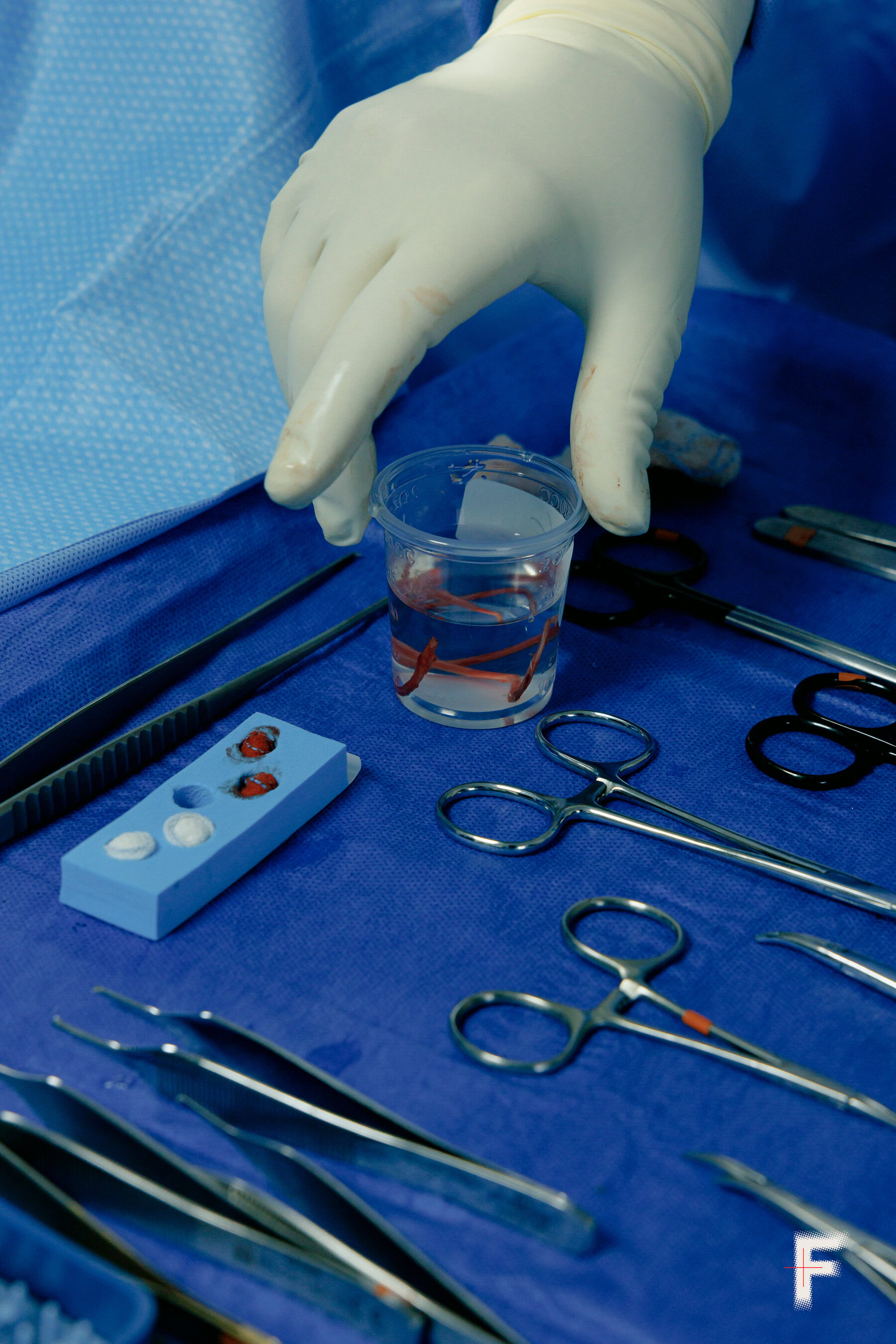
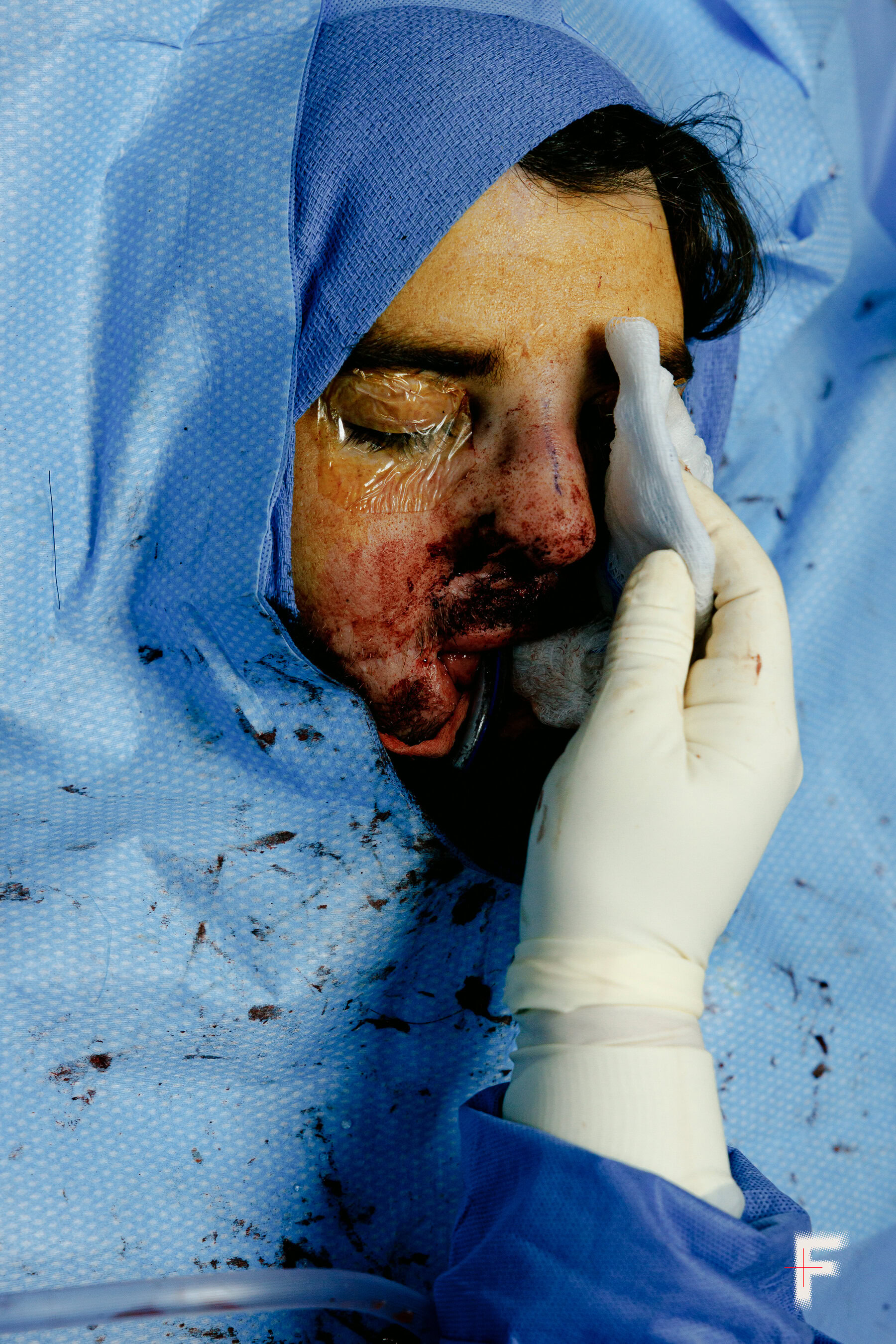
Before the surgery, Matthew talks with Bohdan, examines him once more, and asks about his wishes. It’s an exhausting day for the surgeon: that morning he had already performed a complex operation on Artem’s face, restoring the nerve in his cheek.
Yesterday, Matthew smiled a lot and eagerly showed the results of his work. Following an injury, part of a civilian woman’s face had drooped, and she could no longer raise the corners of her mouth to smile. Matthew showed a photo taken right after the surgery in which the woman is smiling. These are the initial postoperative changes, so it was too early to assess the final outcome of the treatment. The result affected the surgeon so deeply that, in his free time, he sketched her portrait in the corridor and explained in detail what had been achieved.
People communicate through smiles; they use them to express their emotions,
so even partially restoring a person’s ability to smile gives them
the chance to live. I’m inspired by results that I can see immediately,

Facial reconstruction following complex injuries may require multiple surgeries and a long recovery. Even after surgery, it is not always possible to fully restore lost functions. The stories of Artem and Bohdan also show that treatment can take years.
She became his eyes, and he became her reason to smile
Patients come to the doctors seeking more than just the ability to smile again. Mykola Shram has not seen his wife since February. But when he hears her joking and laughing beside him, he tries to keep his spirits up despite everything he is going through.
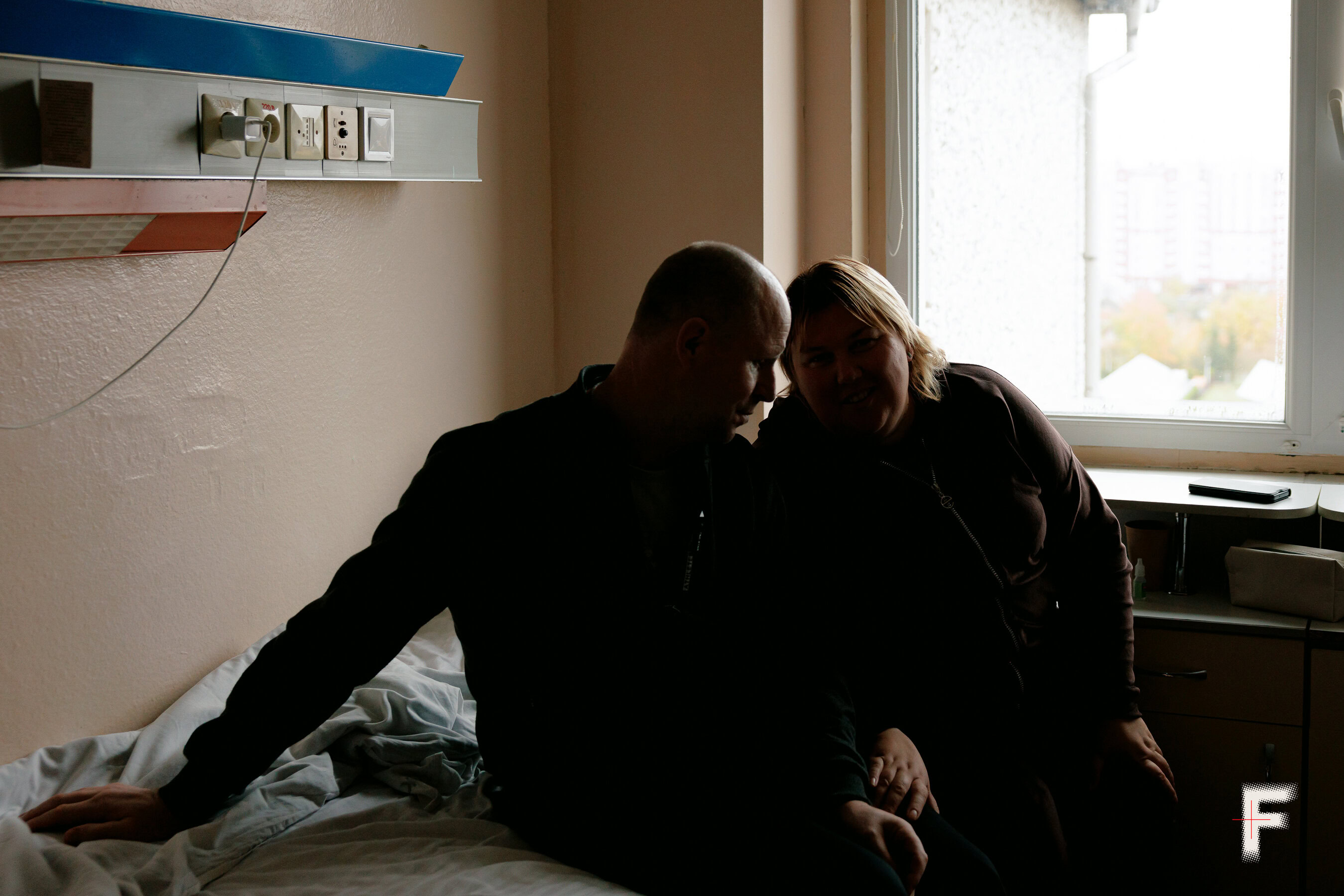
Mykola Shram is a serviceman with the 225th Assault Regiment. Initially, he shot down Shahed drones and missiles with an air defense unit, and later operated a Vampire drone. On February 7, 2026, Mykola was wounded on the Huliaipole front in the Zaporizhzhia region while riding an ATV to his position.
“My brothers-in-arms and I were using one ATV to carry everything we needed: food, ammunition, and fuel, to keep ourselves supplied at our positions. On another ATV, we were carrying stretchers to evacuate the wounded. After the first ATV had passed, a Russian FPV drone struck ours. I was wounded in the face and knee, and my brothers-in-arms were badly wounded too. If it hadn’t been for the guys on the other ATV with the stretchers who came to pick us up, we wouldn’t be alive today,” Mykola says.
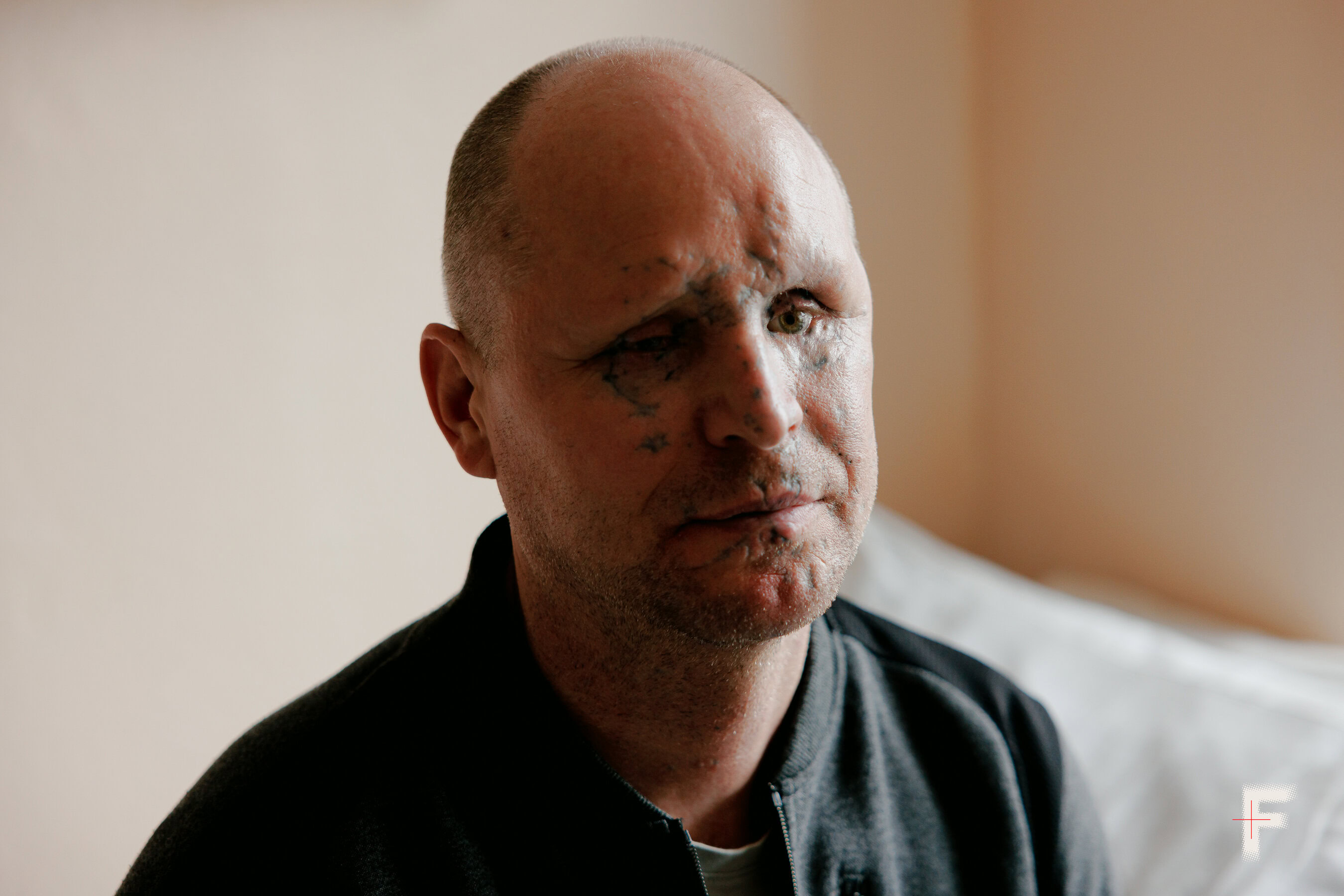
In Odesa, doctors fitted him with an ocular implant. Since then, Mykola has undergone five more eye surgeries. He speaks animatedly about his military service and his wounds, but when the conversation turns to his treatment, he asks his wife, Inna, to tell the story. It was Inna who searched for charitable foundations and doctors who could help her husband. That was how she found out about the mission.
During the mission, Mykola is going to have his lower eyelid reconstructed so that he can close the eye with the implant fitted.
“I’d really like to have at least some of my vision restored, because it’s very hard to live and see nothing when it used to be different. But I’m grateful to Inna for being by my side all the time. I couldn’t have done it without her,” Mykola says.
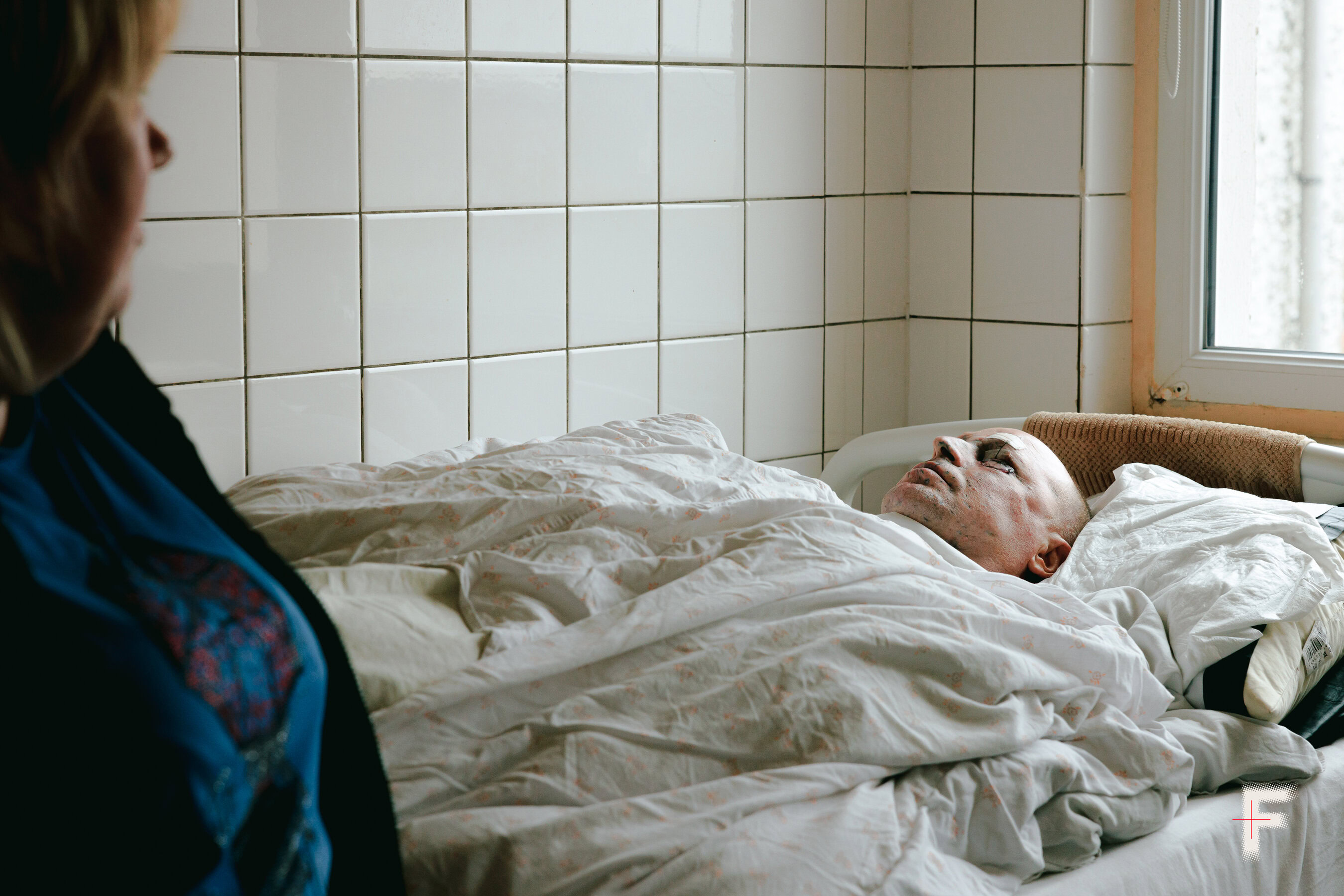
The next day, in the afternoon, Inna walks Mykola down the corridor to the operating room, holding his hand. While he is undergoing surgery, she worries about both her husband and their teenage son, who is home alone in the Zhytomyr region. Inna frequently checks the air-raid alert map, where the area around her home is marked yellow, indicating a drone threat. But she finally manages to put her worries aside and smile when the operating room doors open and Mykola is wheeled back to his room.
***
I was struck by how people stay optimistic despite the anxiety of waiting for surgery and the repeated air-raid alerts. I spoke with soldiers who have severe facial wounds and have to spend a lot of time within hospital walls. One of them tries to smile when he thinks that his first child is due to be born any day now. Another has lost his sight and says it is very hard to live when you used to be able to see everything and now can see nothing. But he smiles too, because his wife is beside him. She has become his eyes and is his greatest reason to smile. The doctors and nurses seem straight out of a Hollywood movie: they joke in the operating room, smile, and support their patients, then secretly wipe away tears.
Frontliner is independent. Our readers help fund our reporting on the war and the people living through it. Subscribe on Patreon to keep us on the road.
***