
Saving an arm from amputation: Surgery that resembles a sacred ritual
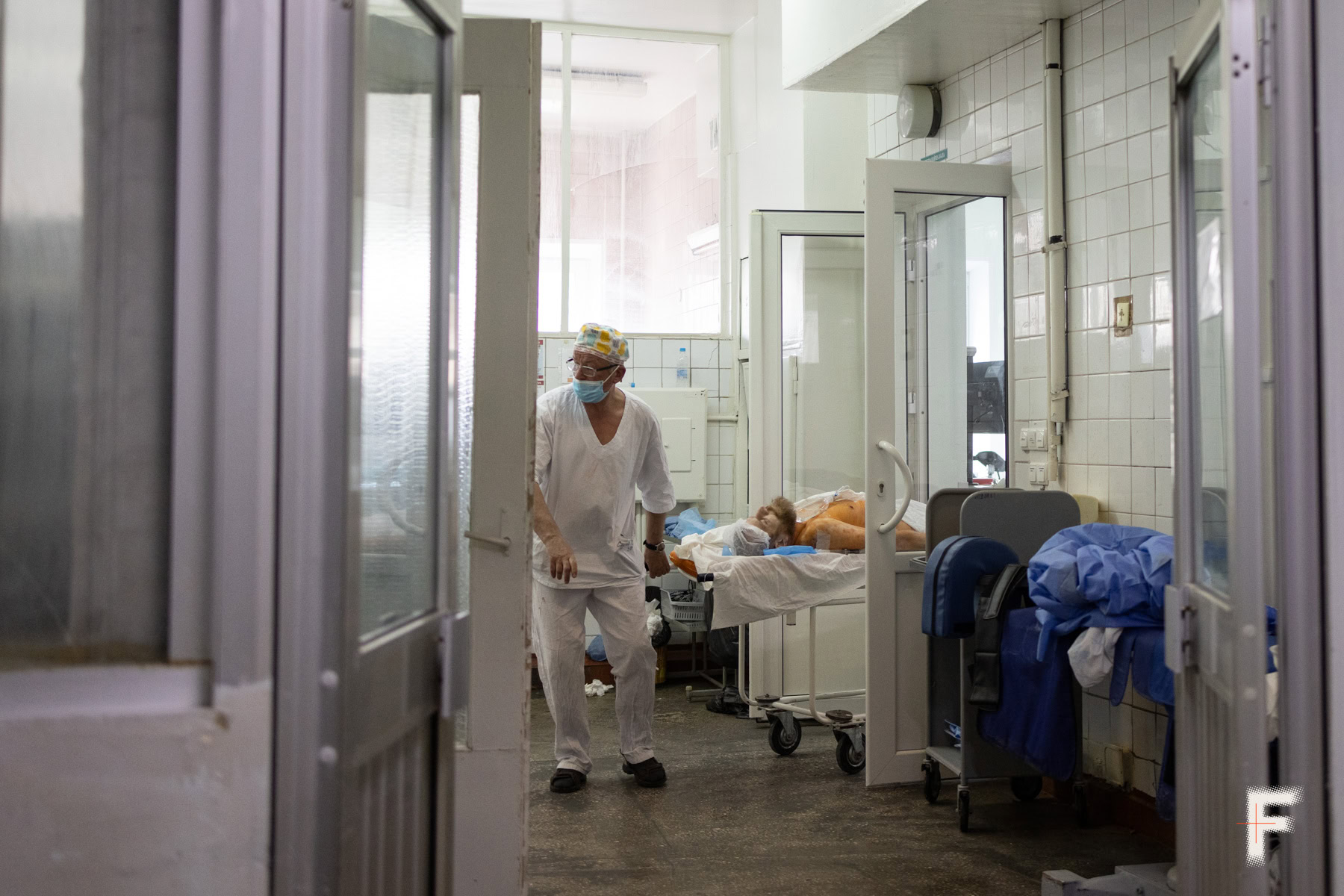
The doors of the freight elevator open, and a stretcher with a patient lying on his back emerges, followed quickly by orderlies. They make their way down a long corridor toward the operating room. A complex microsurgical procedure that could save the patient’s leg awaits him. Frontliner reports on how American and Ukrainian doctors perform such surgeries together.
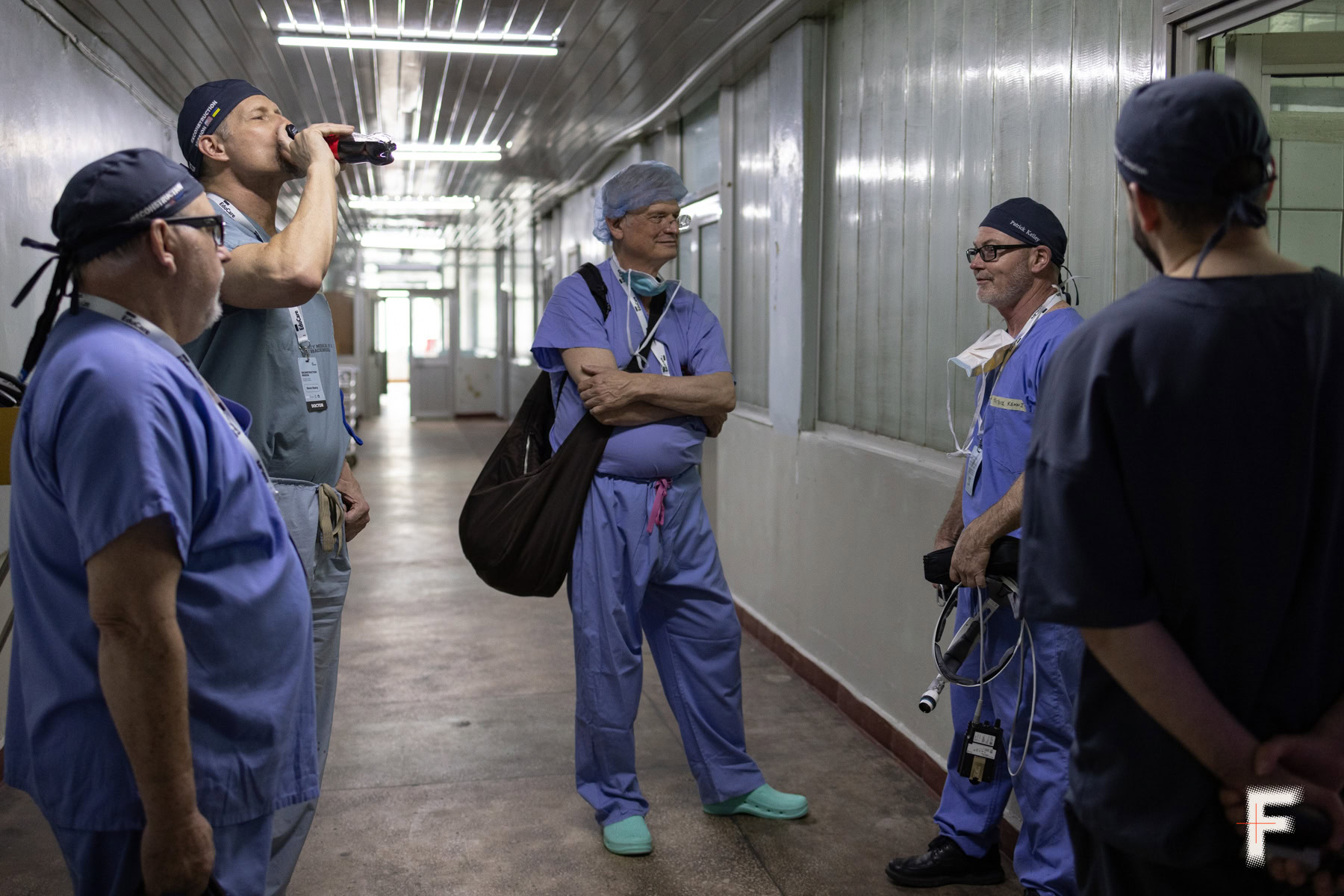
As the patient is transferred to the surgical table and administered anesthesia, surgeons gather in the hallway outside the operating room. They chat energetically and joke around, sipping coffee or soda. You would not guess that some of the doctors have known each other for only a few days. Yet the hours spent shoulder-to-shoulder in the operating room unite them.
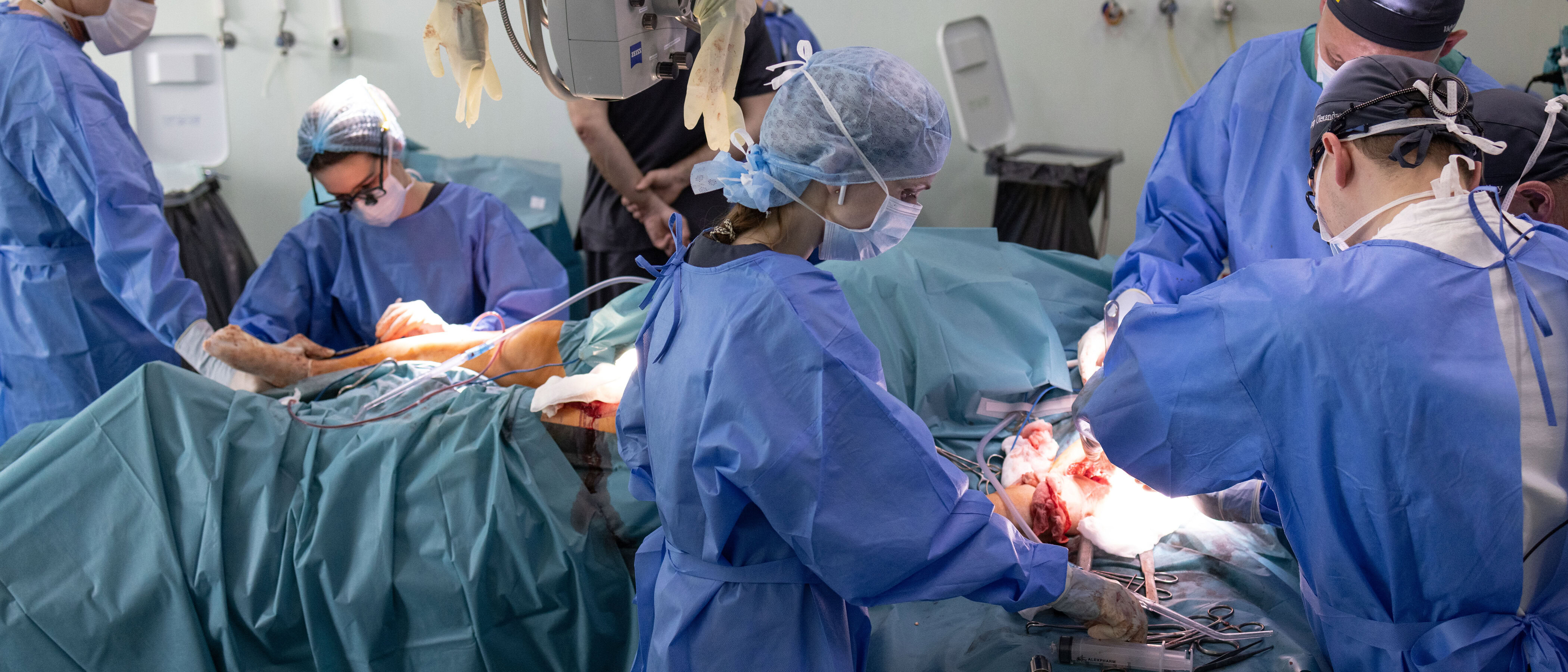
The medical team gets to work. It is difficult to count how many of them are in the operating room, as there is constant movement here. An operation like this requires at least six specialists: two surgeons, an anesthesiologist, an anesthetist, nurses, and orderlies. In addition, there are several interns in the operating room. For Ukrainian specialists, this is a unique opportunity, as they lack experience in microvascular surgery. The Americans came to share their skills as part of
the Reconstruction Mission program. At the Cherkasy Regional Hospital, it was implemented by a number of organizations: the Christian Medical Association
of Ukraine, LEAP Global Missions, Ed’s Friends, and AROMS.
The slightest mistake can lead to loss
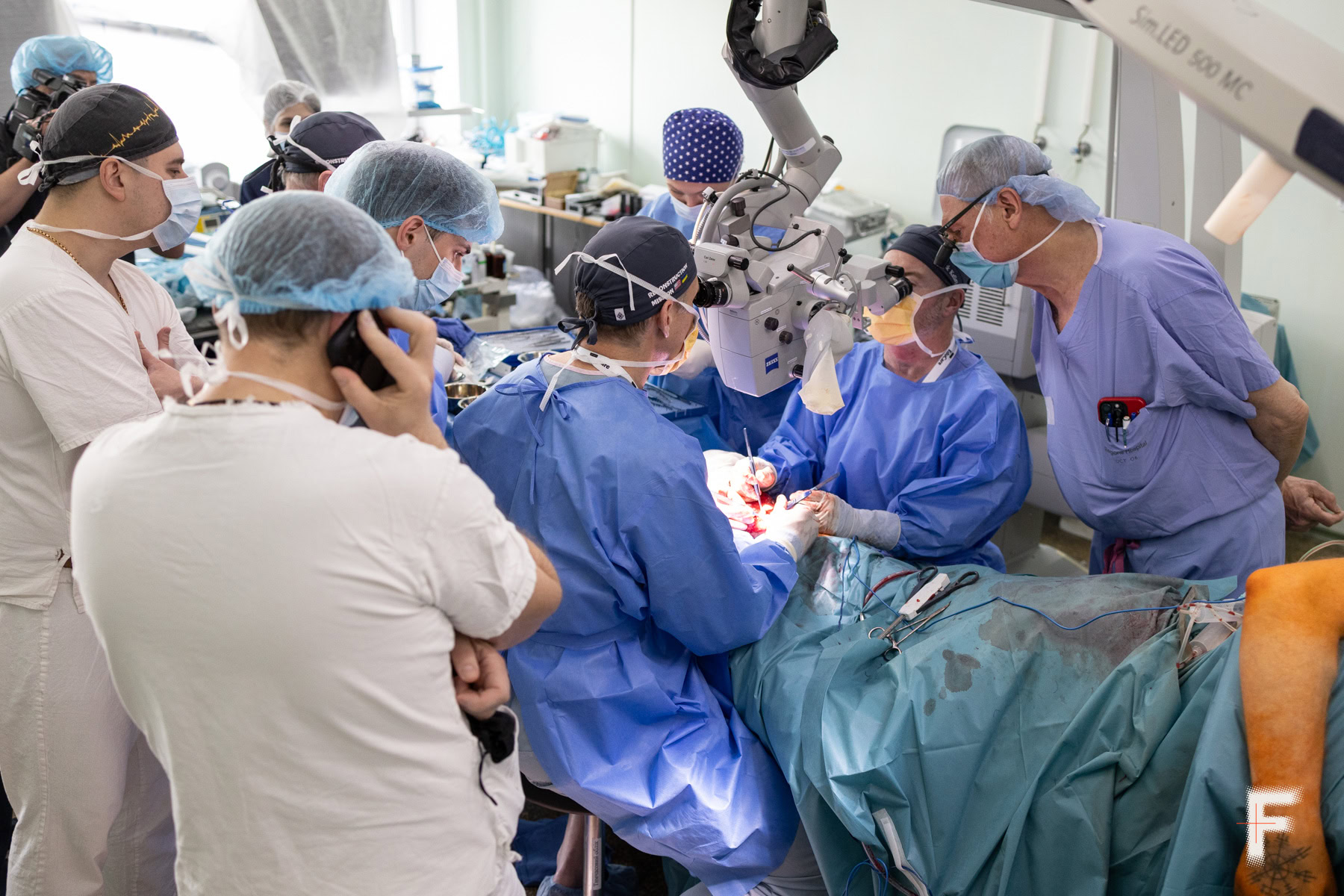
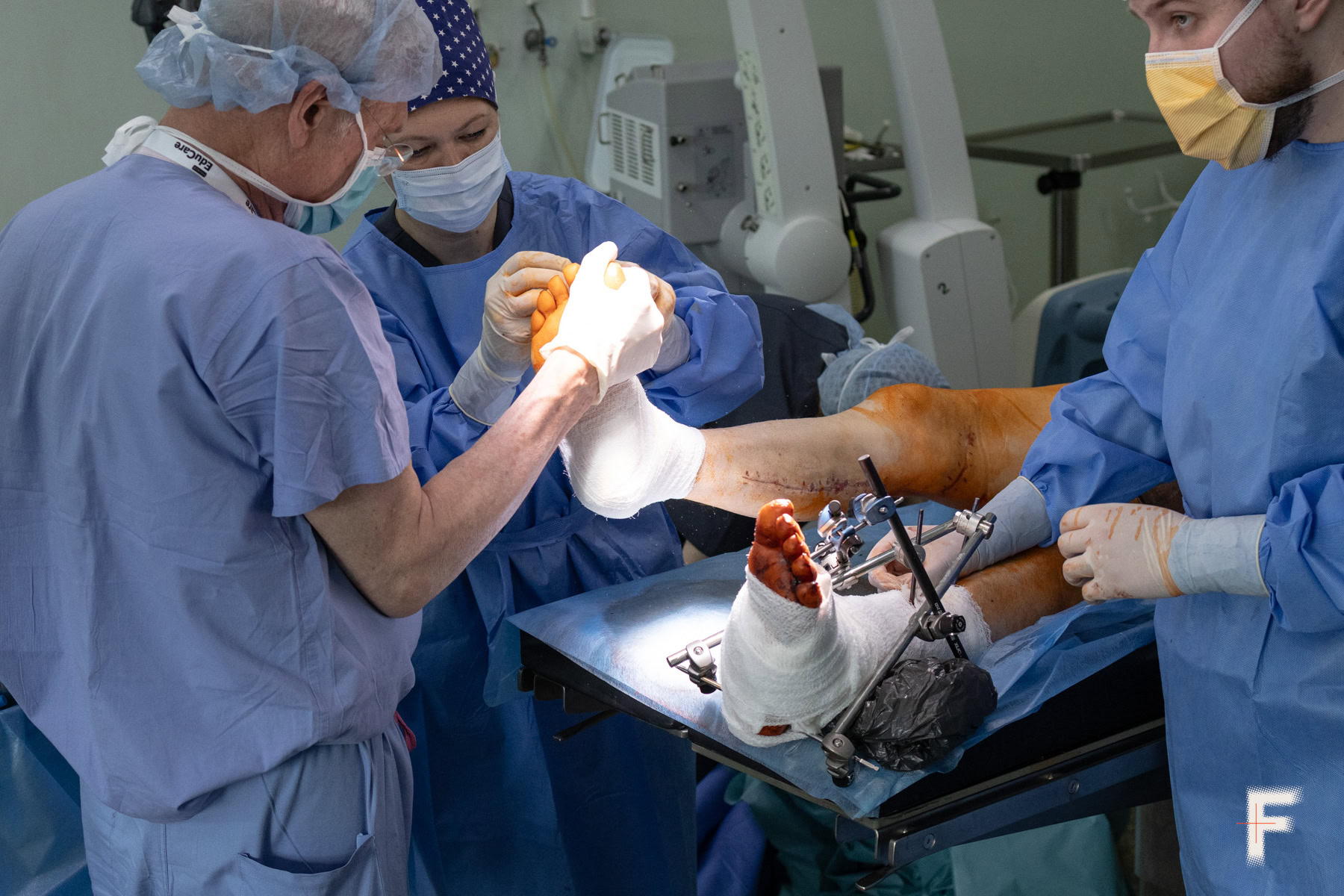
Surgery can resemble a sacred ritual, and this is especially true for microsurgical procedures. A sterile surgical drape covers the patient from head to toe. Through it, his tattooed arm is visible, marked with a Scandinavian rune. The drape is opened near the man’s injured foot. Two surgeons, Americans Patrick Kelly and Steve Henry, lean over him, peering into the operating microscope. The doctors seem almost motionless. Yet the hands in blood-stained gloves move, millimeter by millimeter. This work requires exquisite precision: the sutures are made with threads finer than a human hair.

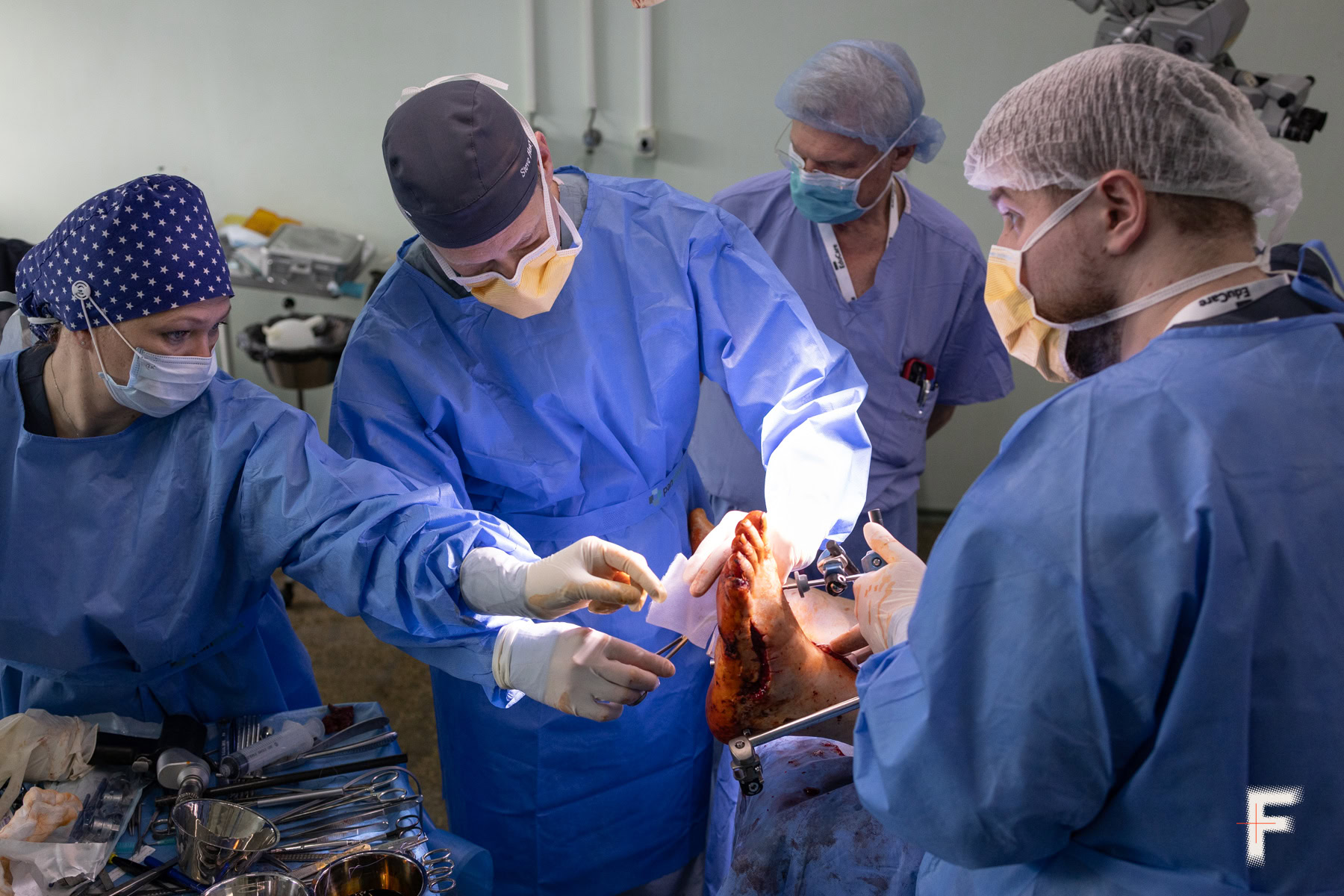
The man on the operating table is a soldier. The explosion caused a deep, extensive wound from the lower leg to the foot that cannot be closed by suturing the skin alone. They take a muscle flap from the patient’s back that retains its native circulation and connect its vessels to the vessels in the leg. These channels are so tiny that even a barely noticeable hand tremor can rupture the fragile vessel wall and immediately cut off blood flow. Without circulation, the tissue will not take and the patient will lose the limb. To keep the hand steady, the surgeon secures the hands to the patient’s body so that only the fingertips move. Proper posture isolates the instrument from the vibrations of the surgeon’s heart.
-
American and Ukrainian doctors perform microsurgery on a veteran in the operating room of the Cherkasy Regional Hospital, Cherkasy, Ukraine, April 22, 2026. (Diana Deliurman/Frontliner)
-
American and Ukrainian doctors perform microsurgery on a veteran in the operating room of the Cherkasy Regional Hospital, Cherkasy, Ukraine, April 22, 2026. (Diana Deliurman/Frontliner)
-
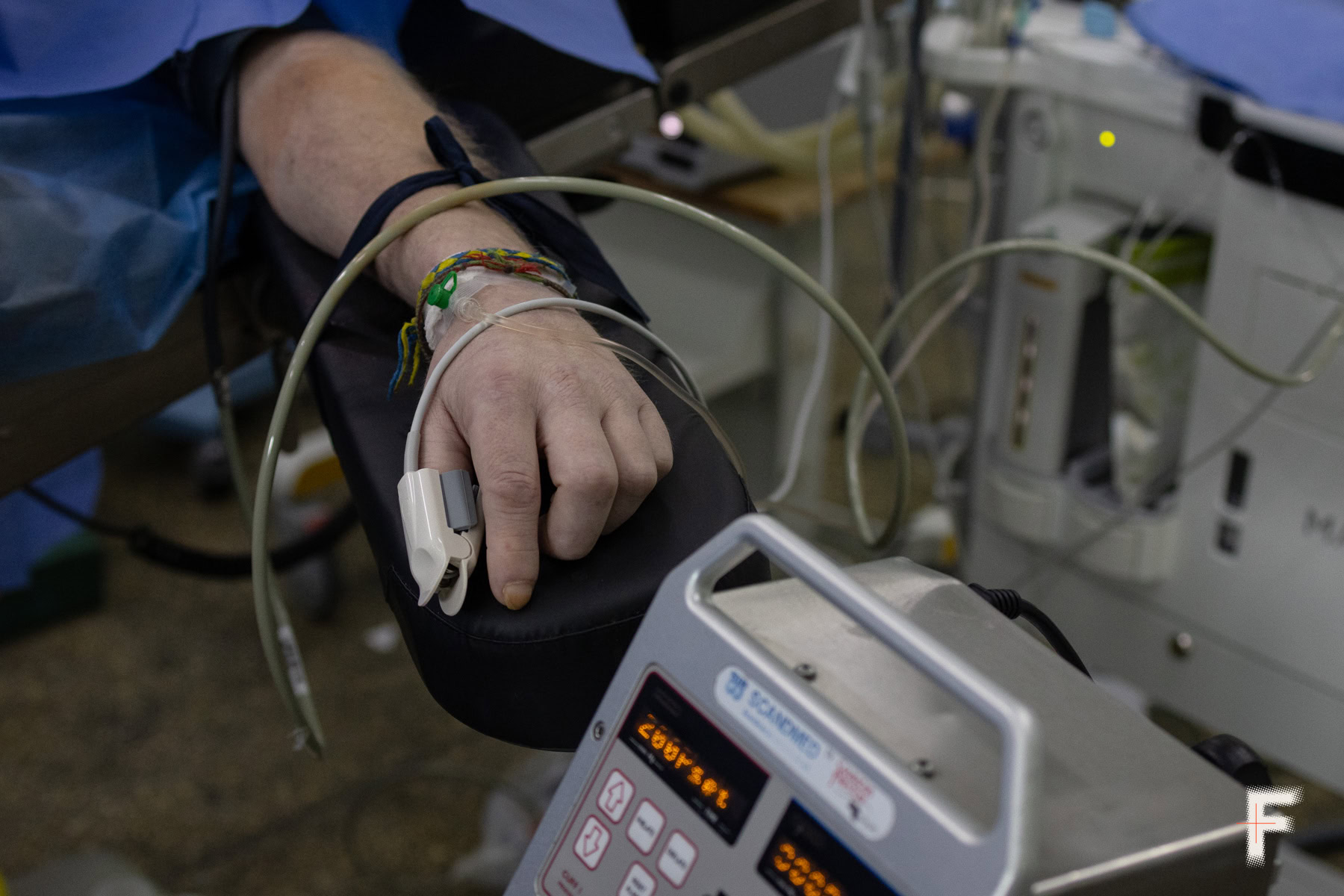
American and Ukrainian doctors perform microsurgery on a veteran in the operating room of the Cherkasy Regional Hospital, Cherkasy, Ukraine, April 22, 2026. (Diana Deliurman/Frontliner)
For six hours straight, the medical team remained on their feet, operating with intense concentration and complete self-control. As of today, this is the first and last surgery. Therefore, the medical team walks together down the operating department corridor, backpacks slung over their shoulders.
Orderlies transfer the patient from the table to a stretcher and rush him to the intensive care unit. The next few days will determine the outcome: doctors will monitor whether blood flow has been established in the transplanted vessels.
A surgeon’s workday
For surgeries like these, Vladyslav Kozanchuk, an orthopedic traumatologist and physician at the Cherkasy Regional Hospital gets up around 5:30 a.m. every day. The doctor’s eyes betray his fatigue, though he insists that he does not feel it, at least not while he’s operating. By the fifth hour of surgery, it becomes harder to concentrate, but the real fatigue sets in outside the operating room.
“After surgery, it takes me a while just to start walking,” Vladyslav says.
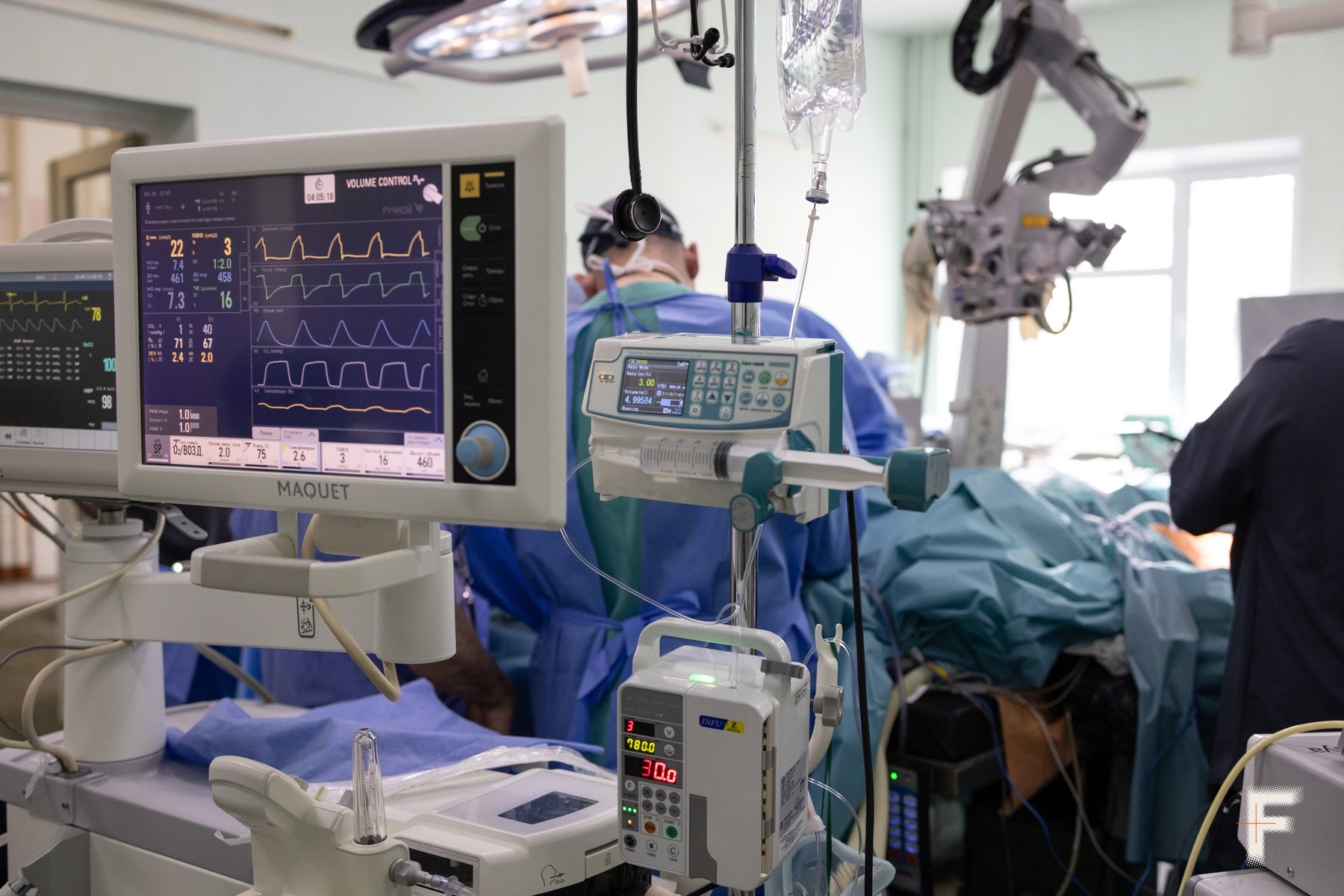
In many hospitals abroad, the approach is different: a single doctor cannot perform surgery for such a long period without a break. For Ukraine, this is a luxury, due to a shortage of specialists and a large number of patients, notes the medical director of the Cherkasy Regional Hospital.
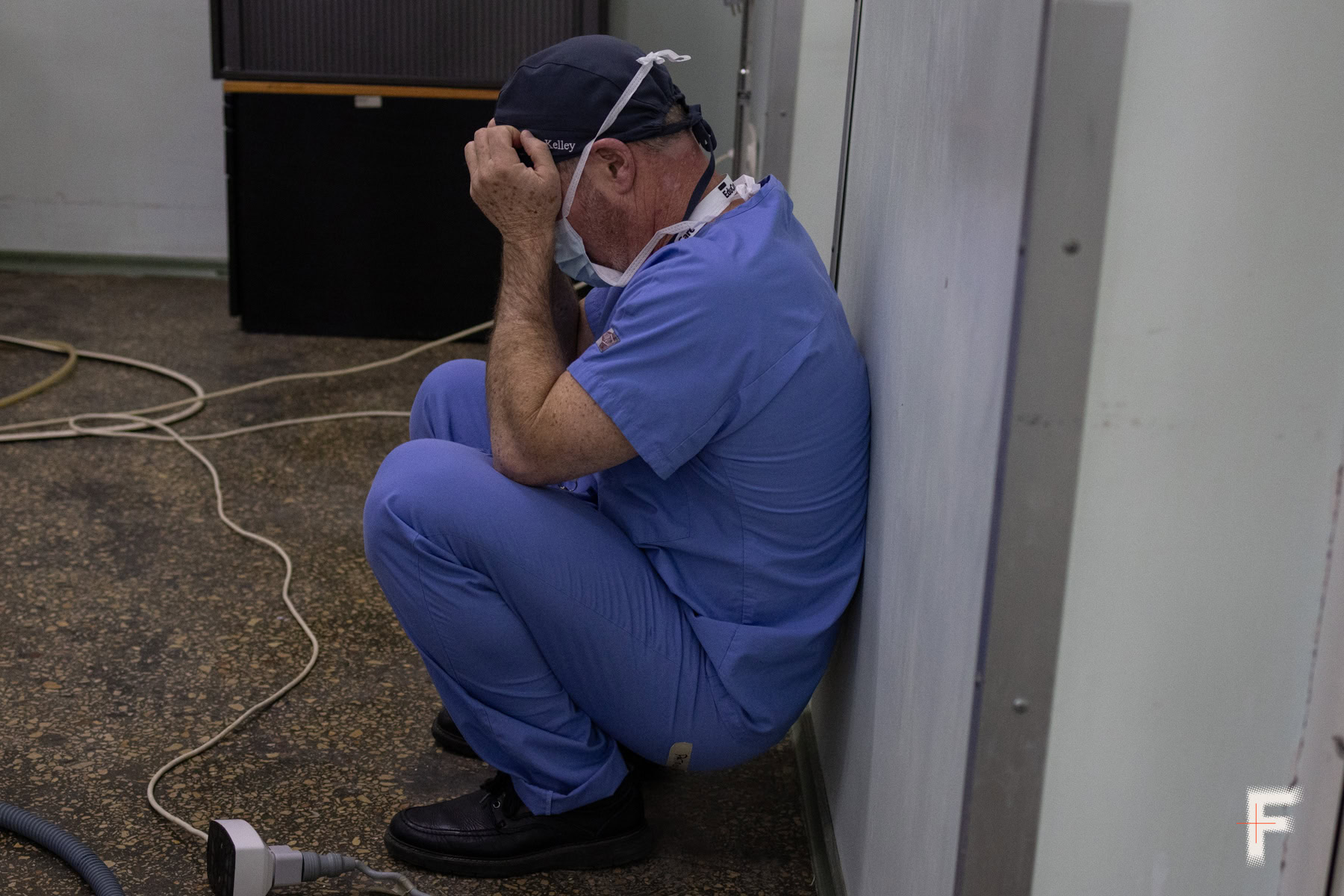
However, physical and emotional overload is only one of many challenges confronting physicians in orthopedics, traumatology, and plastic surgery. In particular, due to constant contact with blood, doctors are at risk of contracting infectious diseases.

A three-hour surgery a surgeon inhales an amount of carbon
contaminants comparable to smoking seven cigarettes,
Moreover, Ukrainian microsurgery lags behind Western standards. Vladyslav Kozanchuk believes that Ukraine needs to raise its standards, but there is a lack of resources. For example, American doctors say that a hospital in the U.S. receives $130,000 for a similar operation. A German surgeon once remarked that with Vladyslav’s level of skill, he could be performing cosmetic procedures in a private clinic, such as breast augmentation that takes no more than forty minutes, and earning four times as much.
“Inner motivation exists, but that applies in times of peace. During war, there should be no room for such doubts. We must remain at our posts, despite the signs of burnout across the entire medical team.,” Vladyslav notes.
Recovering after surgery
Four veterans are recovering in a ward. An elderly couple stands by the bed of one of them, visiting their son. On the nightstand nearby is a container of fresh strawberries.
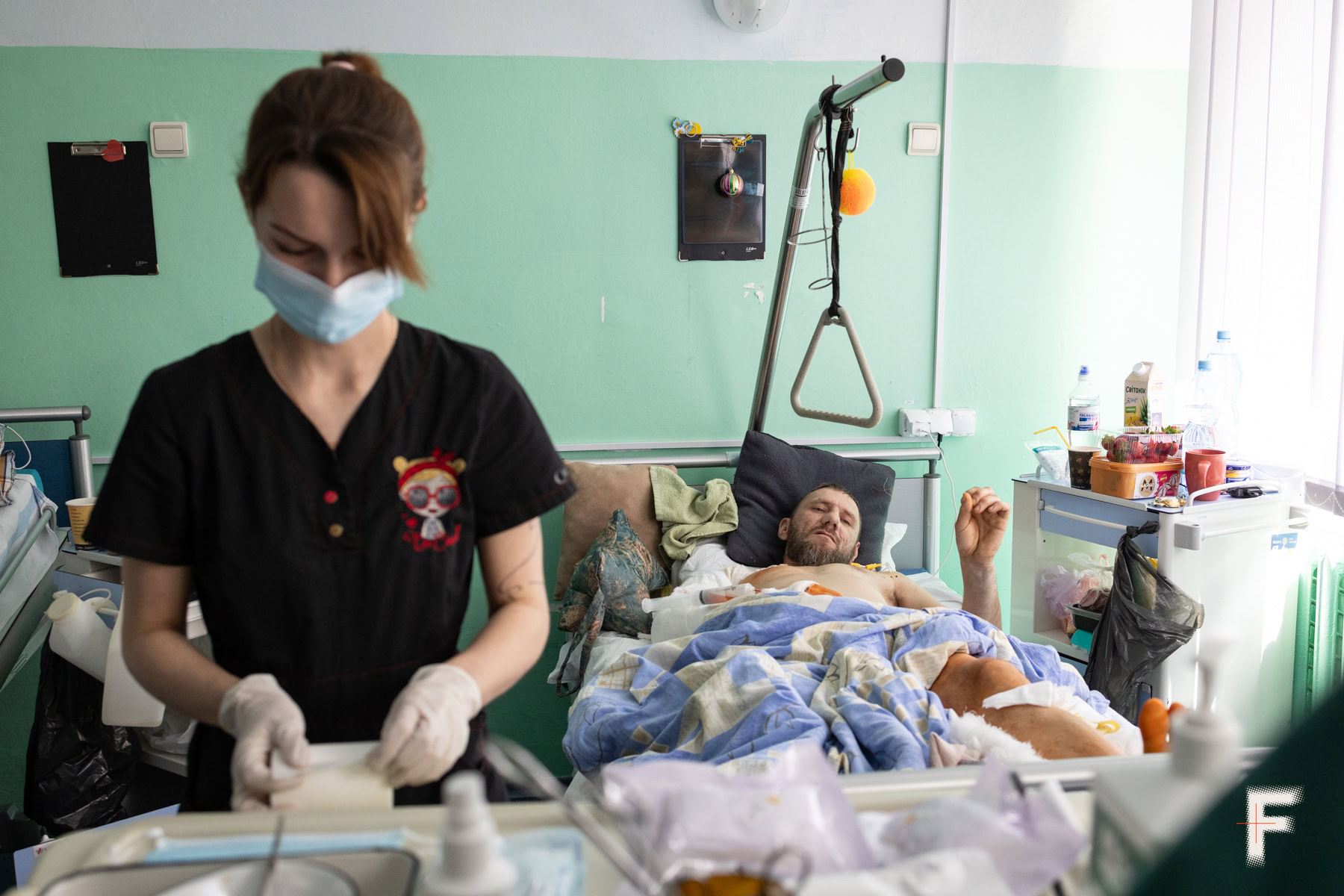
Andrii Makedon, a veteran, had complex shoulder surgery yesterday. The quiet conversation between the son and his parents is interrupted by American nurses who have entered the ward. They request an interpreter: “Ask if the family has any questions”. The veteran’s parents are modest and immediately try to leave the ward so as not to disturb the nurses. They are stopped and told that they can ask about their son’s health. The mother remains silent; the father wants to know just one thing:
“Will his arm work?” he asks.
There had been a significant risk of total amputation. Most of the bones in his arm were destroyed, although the nerves had, by some miracle, not been affected. Previous surgical attempts had failed. Doctors stated that a high amputation would be inevitable. Instead, microsurgical bone transplantation preserved Andrii’s arm.
“Everything will be fine. The bandages will be removed in a month. He needs to be active, even though it hurts,” says Jane McHatty, an experienced nurse with
wavy gray hair. She specializes in wound care.
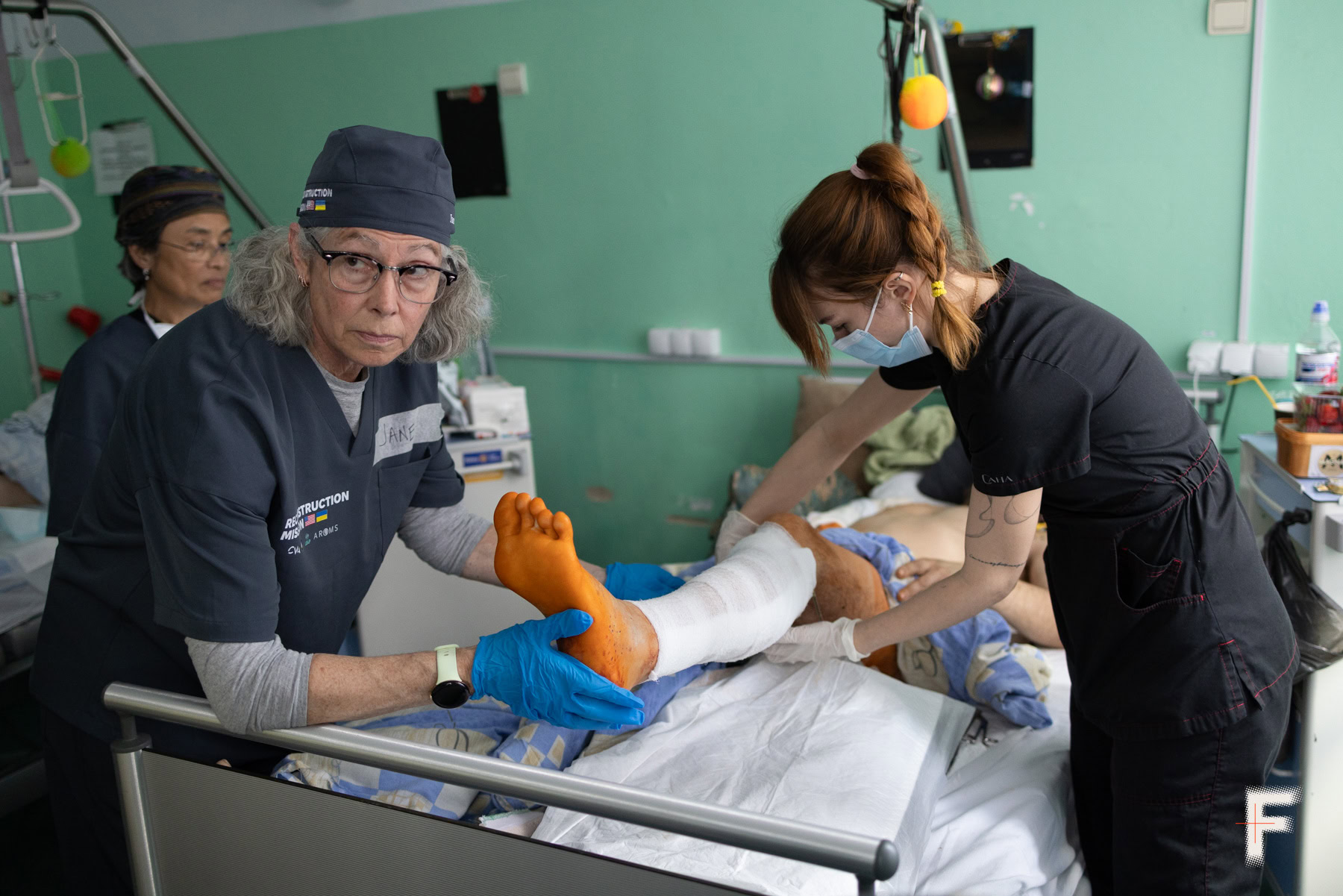
The veteran watches silently and gives no sign that he is in pain.
“Your son is very strong,” the nurse says, smiling.
“Thank you. Thank you (he adds in English),” says the father, smiling back.
Jane is right: the serviceman is truly strong. After his injury, Andrii walked 25 kilometers on his own at the end of the long, cold winter of 2026.
“We were heading out on a mission when a drone spotted us. We started to retreat, since drones were attacking us intensively. One of the drops hit right next to the dugout. Unfortunately, only two of the group of six survived,” Andrii recalls that day, lying in his hospital room.
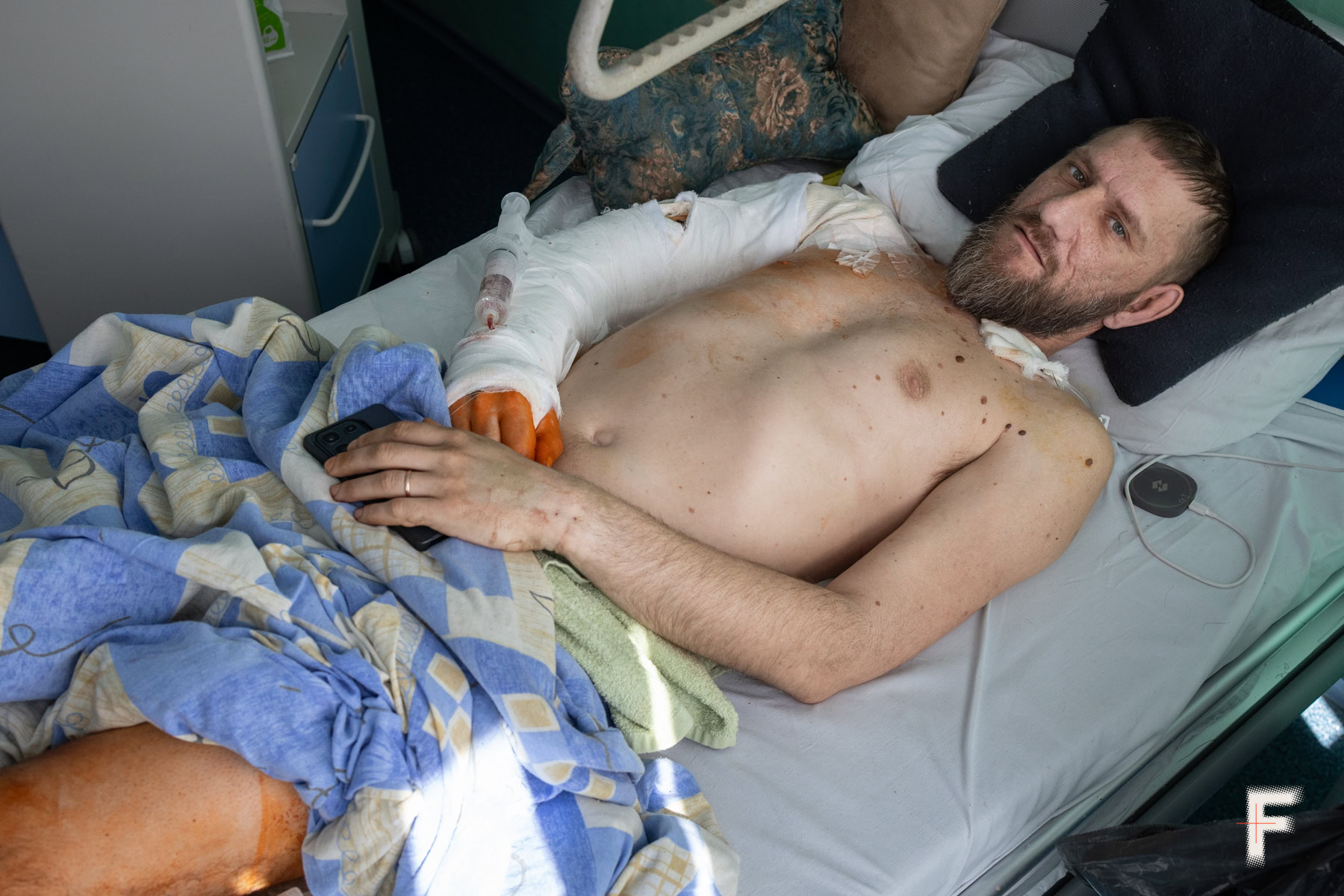
Three days after being wounded, he was evacuated from the front line. In just the first month, he underwent five surgeries. It is still too early to talk about a full recovery, but doctors explain that microsurgery can effectively substitute a whole series of ten conventional operations.
“Judging by how it feels, I’d agree,” Andrii jokes, hinting at the pain. “But they said I’m getting a bigger bicep out of it.”
Soon, even more nurses gather in the ward. They surround the patients, ask how they are feeling, dress their wounds, and change their bandages.
***
Hi, I am Diana, the author of this article. Thank you for reading to the end.
Every story starts with your support. Join the Frontliner community so we can keep up documenting Russia’s war against Ukraine from the front line and the rear.
***

