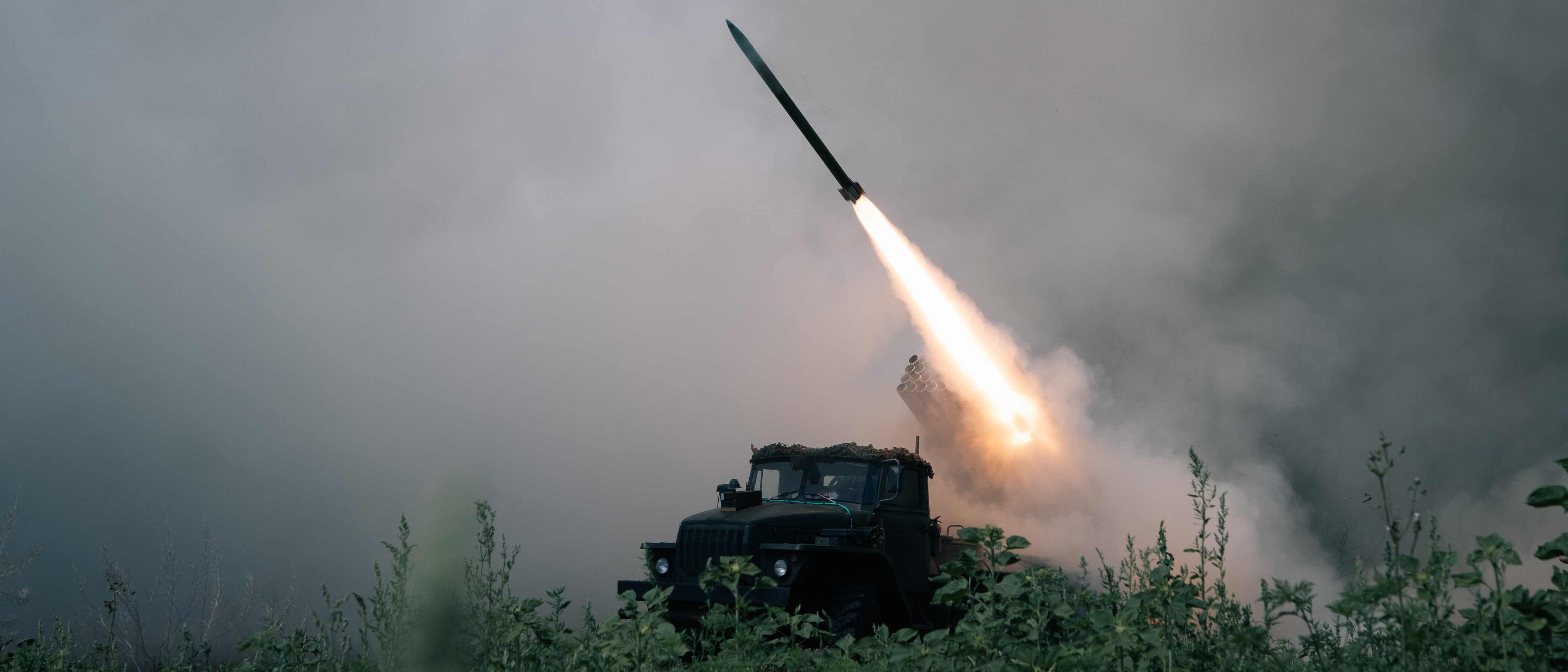
BM-21 Grad: 40 rockets, 20 seconds, and zero chance for EW
“Boys, action!” the command echoes across the house. Five soldiers quickly put on their body armor and helmets, getting into the BM-21 Grad combat vehicle. Within a minute, the driver starts the engine, and the crew speeds toward the firing position. Over the radio, they receive the target to engage. Minutes later, another alert comes in: “Caution, FPV drone nearby.” The Grad halts and is concealed under a tree. Frontliner reporters set out for the firing position alongside soldiers of the 148th Artillery Brigade.
The Grad is thoroughly concealed beneath the tree canopy. The soldiers scan the sky, listening intently. The senior battery officer, call sign “Alex,” keeps his eyes fixed on the drone detector.
“We never know how long we’ll have to wait under cover before we can continue moving to the firing position. Sometimes, it takes hours. If we’re lucky, we head out within 15 minutes,” the soldier says.

“All clear,” comes over the radio.
The road runs through the fields of Dnipropetrovsk region. Soldiers describe the Oleksandrivka front, where the 148th Artillery Brigade holds its area of responsibility, as unique due to its geography. It is the junction of three regions — Dnipropetrovsk, Donetsk, and Zaporizhzhia — essentially forming a triangle.
Since the beginning of 2026, the Defense Forces of Ukraine have been conducting counteroffensive actions on this front. During this time, Ukrainian troops have liberated roughly 480 square kilometers of territory.
“These are eight settlements in Dnipropetrovsk region and four in Zaporizhzhia region. As of now, active assault and counter-assault operations are ongoing. The Defense Forces have held the initiative on this front for six months now. The enemy is forced to respond to the actions of Ukrainian troops rather than building up its own offensive potential,” says Serhii Kolesnychenko, the brigade’s press officer.
A full salvo covers an area of up to 10 hectares
Pulling up in the field, the artillerymen quickly load the Grad. The launch tube pack elevates. Amid the roar of the engine and the sound of operating mechanisms, the words of the combat vehicle commander, call sign “Rybka,” can be heard:
“Sight 600!”

The gunner actively spins the aiming mechanism handwheel. “Alex” asks us to step back to a safe distance.
Get ready, it’s going to be very loud
and there’ll be plenty of smoke,
Within moments, the command rings out:
“Fire!”
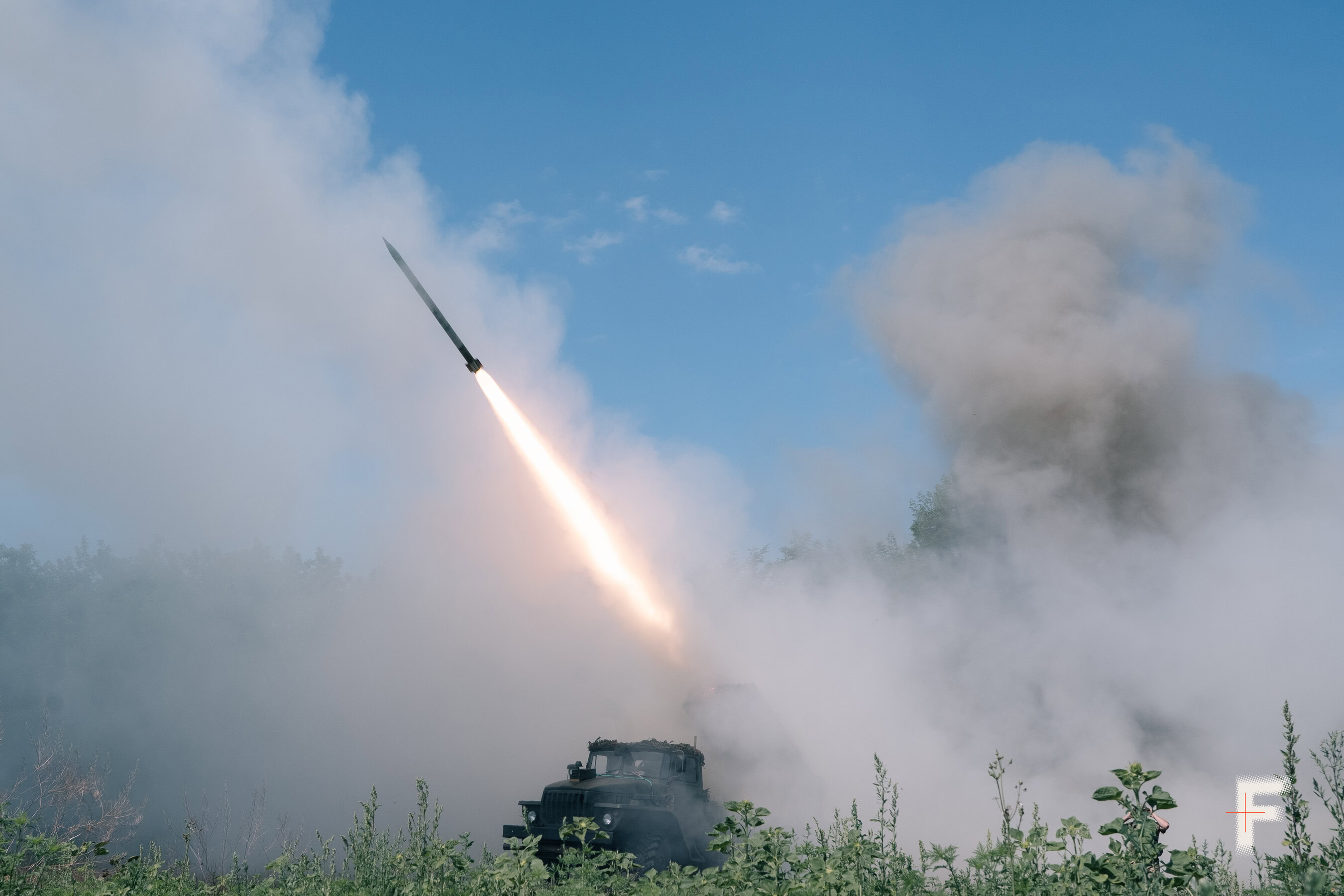
Then comes a deafening roar. The Grad fires its first five rockets, trailing white smoke. An instant later, a cloud of smoke blankets the area, so dense it becomes hard to breathe.
These rockets are unpredictable,
they land right next to you,

“It takes two minutes for a rocket to reach the target. Once the impacts are spotted, we receive corrections. We adjust and keep firing,” “Rybka” says.
More salvos ring out. The Grad fires the remaining 15 rockets continuously. In total, a full pack holds forty 122 mm rockets, which the system can fire in just 20 seconds. Each projectile weighs about 70 kilograms. According to the soldiers, a full salvo is capable of covering an area of roughly 10 hectares.
“Getting caught under Grad fire is extremely dangerous. I’ve been through it more than once. These rockets are unpredictable, they land right next to you, and you can’t always tell where they’ve hit. Then there’s the shrapnel and the blast wave, and their impact is just as devastating,” “Alex” says.
Artillery in the drone war
Until 2025, Grads were used to strike vehicle columns, artillery positions, and infantry concentrations, particularly to stop enemy advances.
Now, according to the soldiers, one of their main objectives is targeting enemy troop concentrations.
“This time, 10 Russians were advancing from the direction of Pokrovsk toward our infantry positions. We engaged them successfully,” “Rybka” reports.
In today’s reality, getting closer to the enemy is becoming increasingly difficult, as drones maintain constant surveillance over the battlefield. The so-called kill-zone on this front extends up to 20 kilometers.

That is why artillery operates in close coordination with unmanned systems units: a drone spots the target and adjusts fire, while the rocket system launches dozens of projectiles at it.
At the same time, with the rapid development of drone capabilities, there is an argument that artillery is losing its effectiveness, gradually being replaced by drones that are constantly being modernized.
“Drones definitely have the upper hand now. But to cause the scale of damage that artillery can deliver, you need about 10 drones, depending on the size of the target. Most importantly, drones can be jammed by EW [electronic warfare — ed.], they might not make it, or they can be shot down. In bad weather, they can’t fly. We, on the other hand, operate around the clock, regardless of the weather or time of day. And no EW can jam the salvos of rockets we fire. Hit is guaranteed,” “Rybka” says.
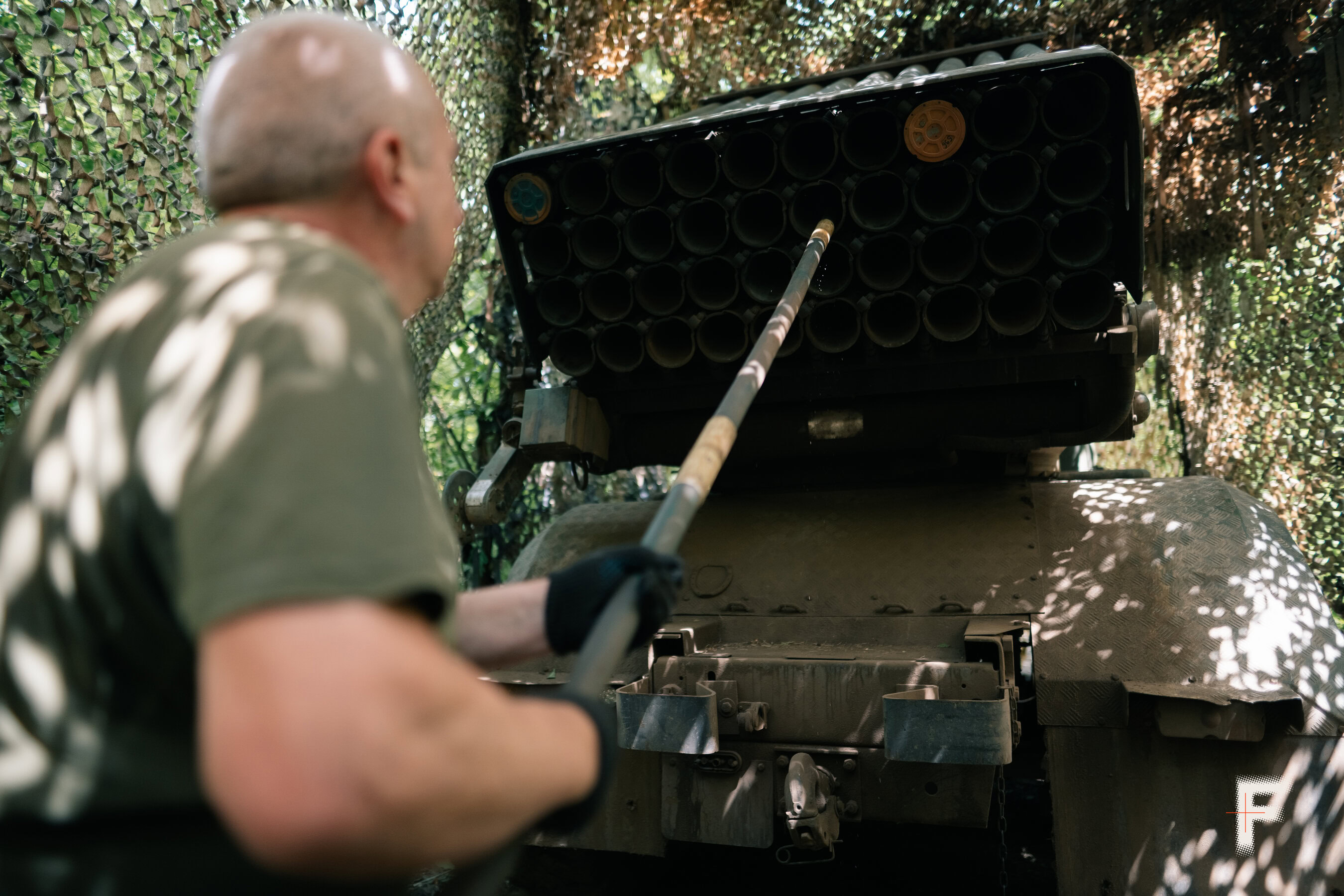
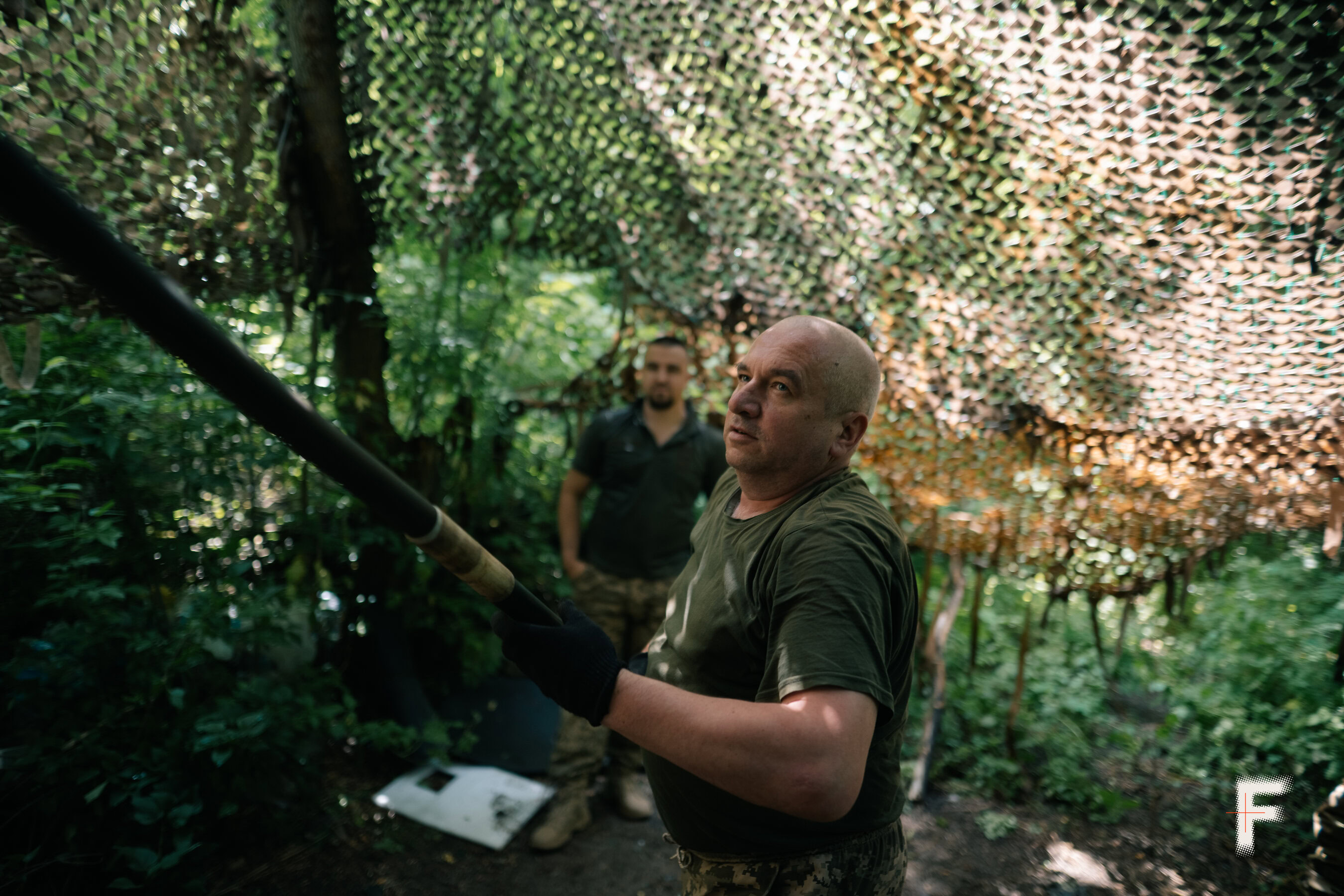
After firing, the soldiers return to their staging area. The crew consists of five members. The BM-21 Grad requires constant maintenance: checking the mechanisms, preparing it for the next mission, and cleaning the launch tubes. The crew handles all of this themselves.

An artillery surveyor with the call sign “MacCloud” is responsible for orienting the artillery system and determining the direction of fire. However, maintaining the Grad is a team effort for the entire crew.
“It must always be ready to deploy. That’s why, right after returning from a mission, we prepare it immediately. And not on our own. We don’t have a strict division of who does what. We work as a team, together: cleaning the launch tubes, checking their condition, and inspecting the rest of the launcher’s mechanisms,” the soldier shares.

An old Grad in a new war
The BM-21 Grad was developed back in the Soviet Union in the 1960s. At the same time, the Defense Forces of Ukraine now also operate modern Western artillery systems, including American HIMARS, M109 self-propelled howitzers, and others provided by partner nations.
This allows Ukrainian artillerymen to compare the Soviet-era system with modern Western equipment.
But to me,
the Grad just feels better,
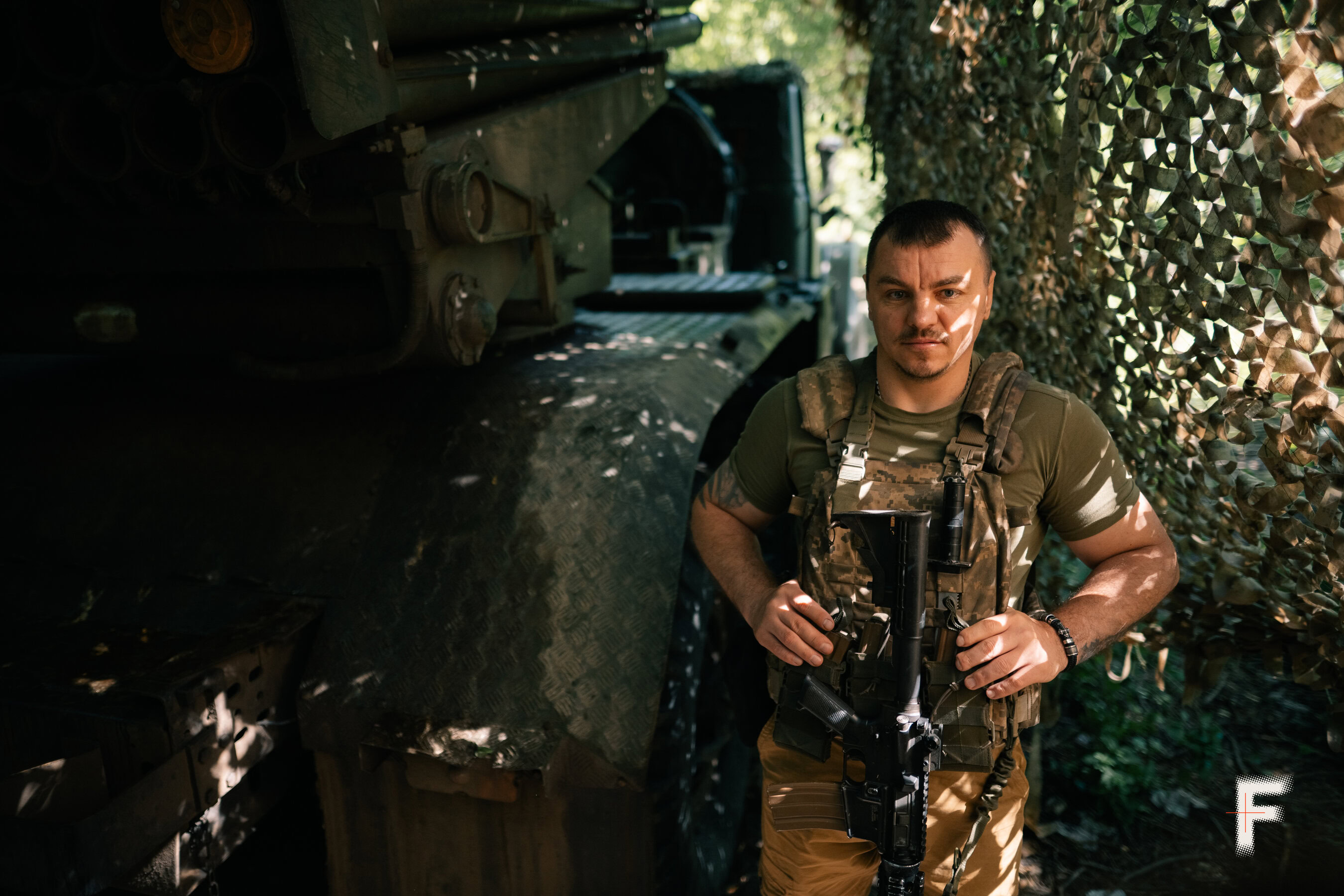
“I used to operate the Paladin, the American M109 self-propelled howitzer. But to me, the Grad just feels better: it’s maneuverable, easy to operate, and easy to maintain. I can complete an objective on it much faster. Today, everything comes down to seconds and minutes. The longer you stay at a firing position, the faster enemy spots you, and sooner incoming fire will follow,” “Alex” notes.
The Grad in the crosshairs
For Russian forces, taking out a Grad MLRS or any howitzer behind the Ukrainian lines is a top priority. The enemy actively hunts for launcher positions, attempting to destroy them with drones. Ukrainian artillery crews work fast — packing up the vehicle and leaving the firing position in a minute.
On August 2, an enemy Lancet drone struck the very same BM-21 Grad and crew that Frontliner journalists had worked with just the day before. The strike left the vehicle heavily damaged and two crew members wounded, according to Serhii Kolesnychenko, the brigade’s press officer.
“It happened on the way back from a firing position. The BM-21 Grad combat vehicle was targeted by a Lancet drone. The munition struck the right rear wheel, damaging the launcher’s electric drives and wounding two crew members. It has since been repaired, returned to service, and continues to carry out combat missions on the Oleksandrivka front,” the press officer said.