Between despair and hope: The All-Ukrainian Military Pilgrimage in wartime
On a misty Saturday morning in September, the small village of Zarvanytsia in the Ternopil region fills with pilgrims. Home to only about 300 permanent residents suddenly bustles with life. Hundreds of soldiers, their loved ones, and the families of fallen and missing soldiers unite in shared prayer to find hope and be among those who understand their pain. Frontliner reporters attended the All-Ukrainian Military Pilgrimage in Zarvanytsia to ask the pilgrims what brought them here.
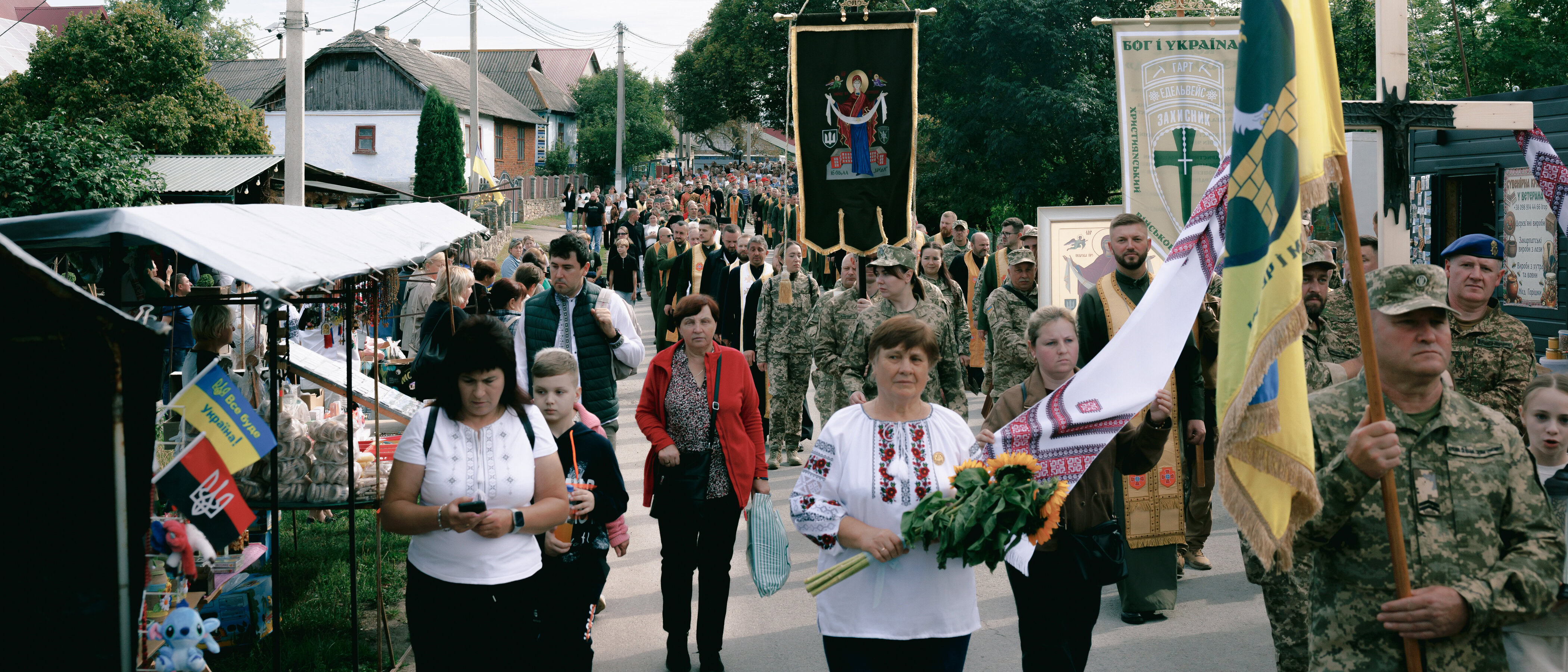
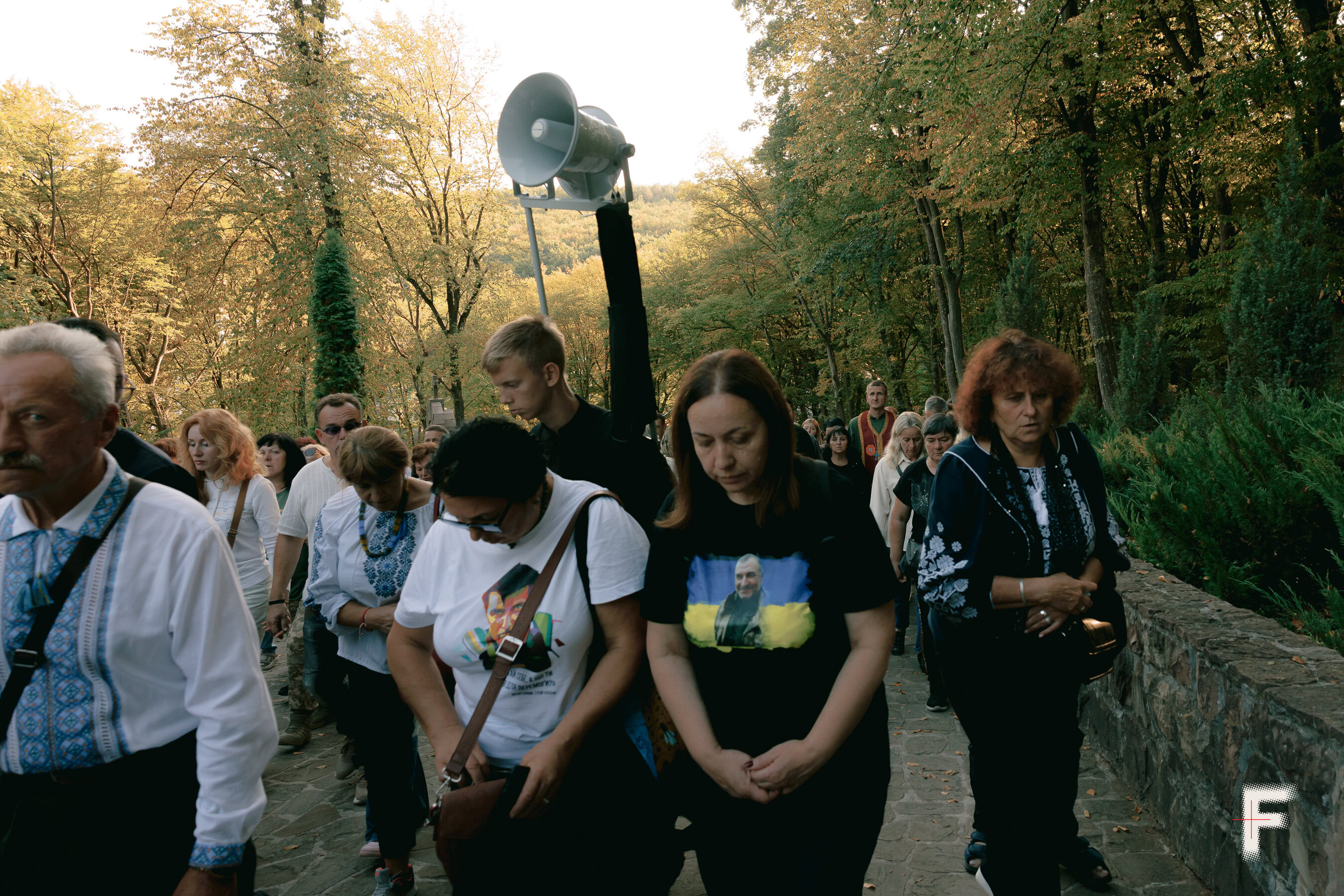
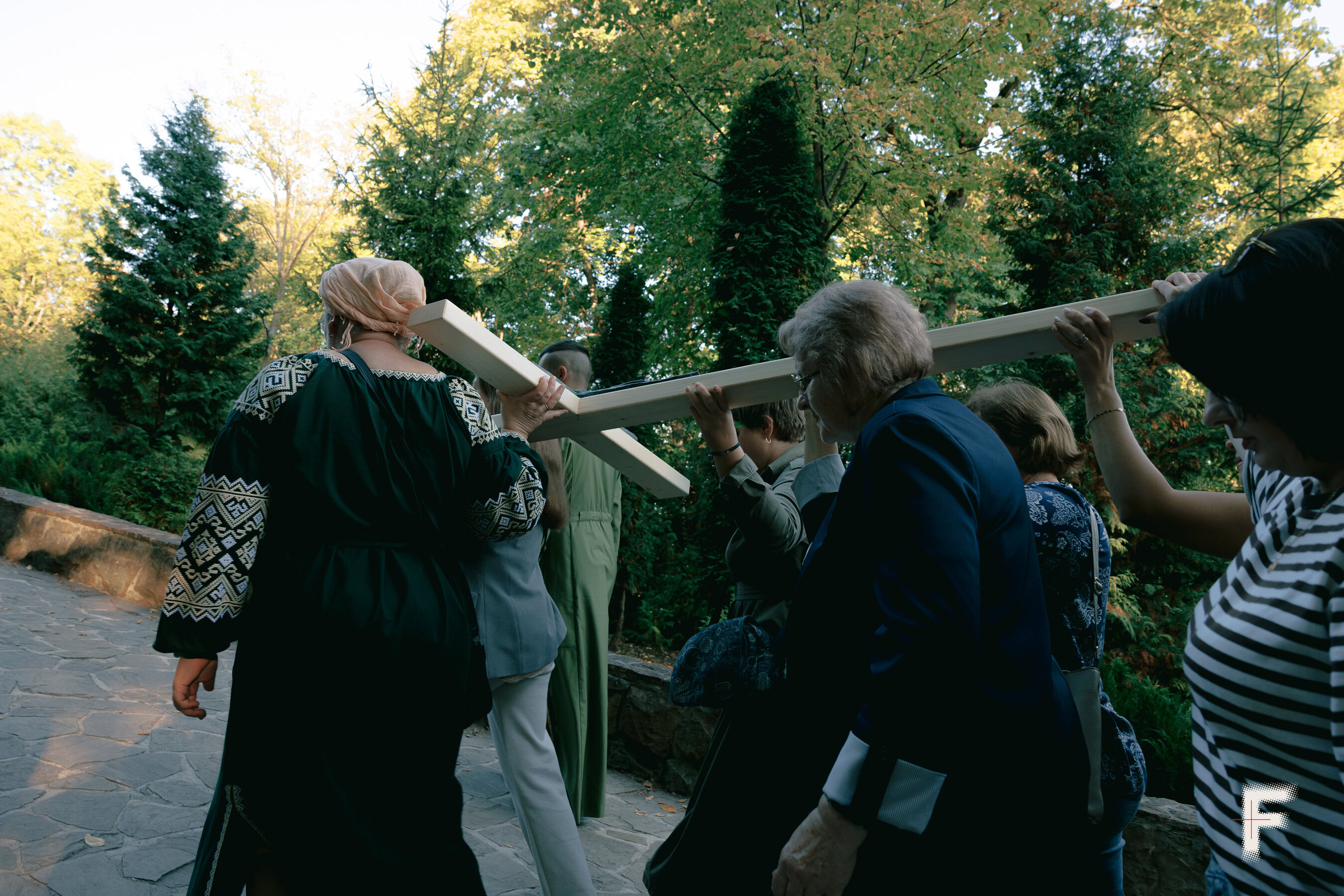
Around 11 a.m., the churchyard in the village is almost completely filled with parishioners. The defenders’ children stand in the front rows clutching vigil candles, while women who lost their sons and daughters to the war hold bouquets of sunflowers that have become a symbol of memory. Following the prayers and addresses, everyone present sets off in a long procession toward the nearby Marian Spiritual Center, accompanied by the tolling of church bells.

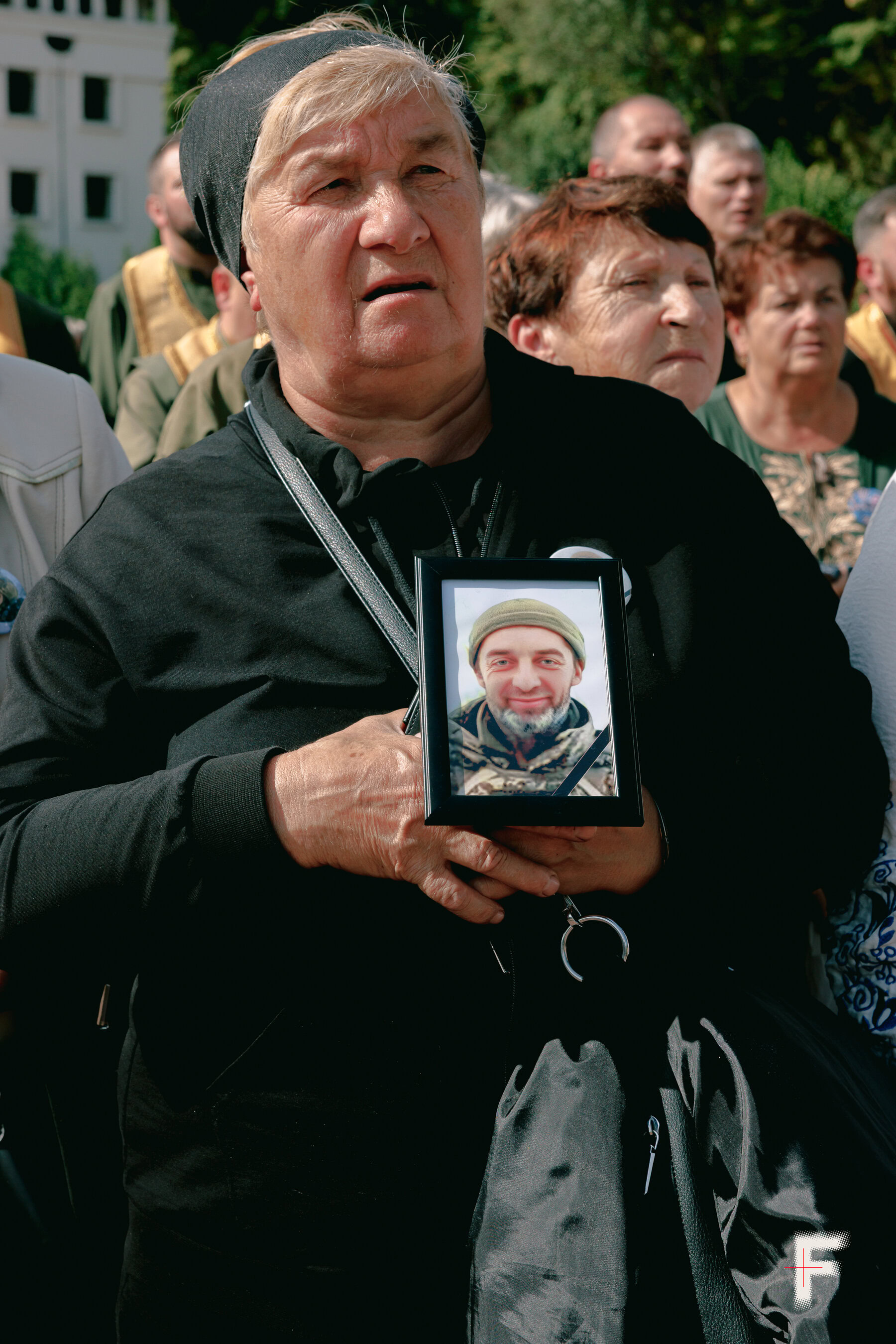
Priests sing hymns over a loudspeaker. Tearful women in black headscarves carry portraits and blue-and-yellow flags bearing images of their loved ones. Some wear small badges on their chests featuring portraits of their fallen relatives. Some portraits show burly, bearded men; others depict young men with broad smiles and kind, gentle eyes.
Locals pause their household chores and step out to their front gates to pay their respects to the soldiers who gave their lives for Ukraine. Playing the mournful Kozak song “The Cranes,” a military band drowns out the loud buzzing of a camera drone hovering above the solemn procession. Minutes later, a seemingly endless crowd fills the grounds of the Marian Spiritual Center. The opening ceremony of the 18th All-Ukrainian Military Pilgrimage themed “Courage Born of Faith” begins.

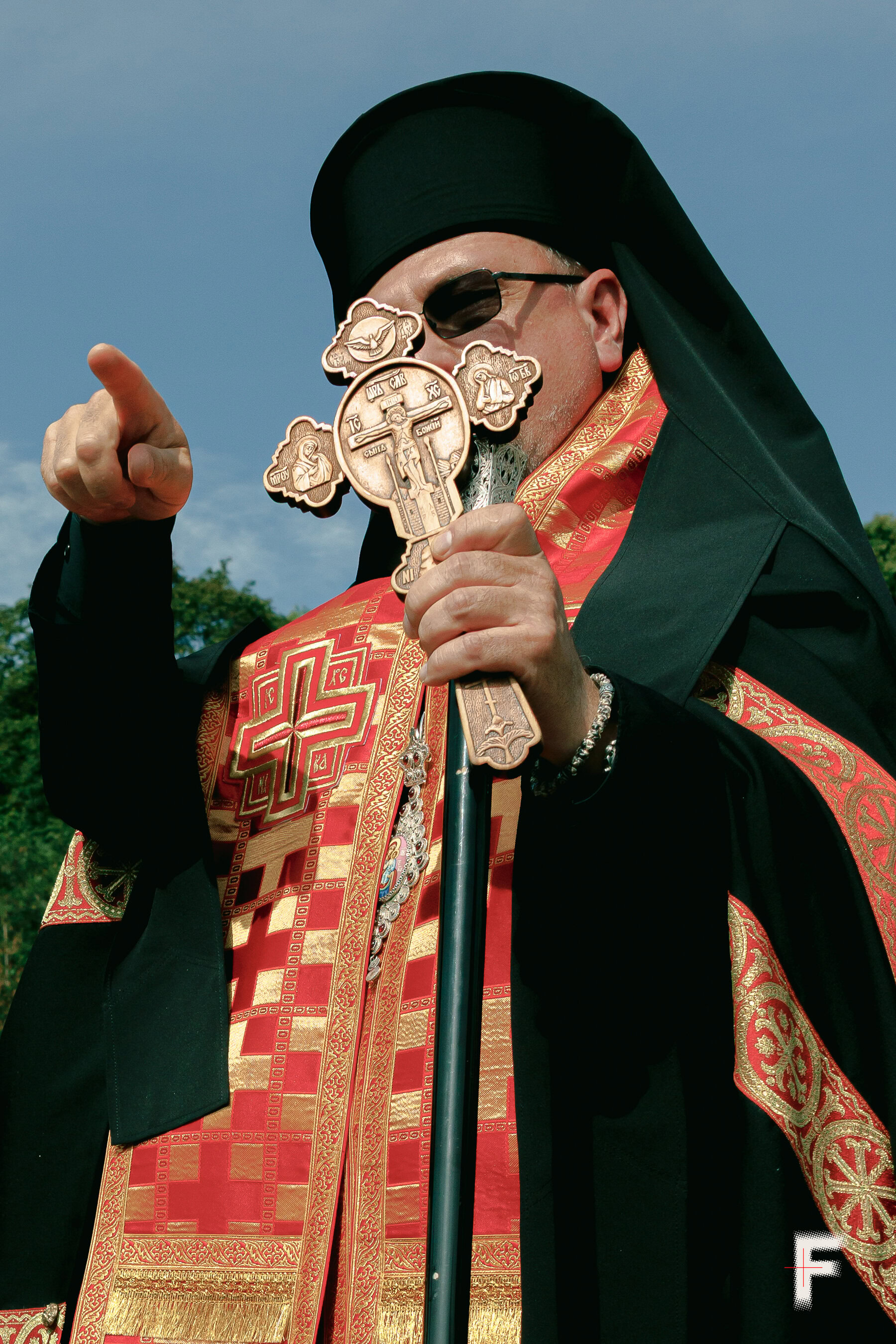
Following a welcoming address, Bishop Bohdan Manyshyn thanks the defenders of Ukraine and consecrates the icons and processional banners of various military units. All those present solemnly sing the national anthem, while women in black headscarves, clutching flags, hurriedly wipe away their tears with handkerchiefs.

Soldiers pray for victory
Moments later, the pilgrims gather in small groups, looking around for familiar faces. Many stop to greet this burly man. A career soldier, Oleksandr Vovkotecha has been serving since 2014. He was in Popasna, Luhansk region, when the full-scale invasion started, defending the town alongside his brothers-in-arms from the 24th Mechanized Brigade named after King Danylo until May 2022.
A native of the Ternopil region, he often visited Zarvanytsia as a child with his family and on school trips. But once he became a soldier, he devoted all his time to service, seeing his family only during brief leaves.
Later, Vovkotecha became head of the Military Chaplaincy Training Center. Last year, he took charge of the Military Chaplaincy Service of the Armed Forces of Ukraine, making pilgrimages an integral part of his service.
Here, people can reflect, talk and feel safe,

“I believe this pilgrimage is a shared need for all of us. It brings together soldiers, chaplains, and the families of the fallen and the missing in action. Together, we pray for Ukraine and for our victory, so that all our boys return home safe and sound. Here, people can reflect, talk and feel safe,” Vovkotecha says.
Near the church, Andrii Krysovatyi, a soldier with the 146th Maintenance Regiment, is taking a leisurely walk. The regiment’s chaplain invited him to join the pilgrimage.
“We came here to pray for the war to end sooner, so that people can finally return to a peaceful life. I feel an inner need to be here. For more than two and a half years, I served as a chaplain’s assistant in the east and saw firsthand what war is really like,” Krysovatyi says.
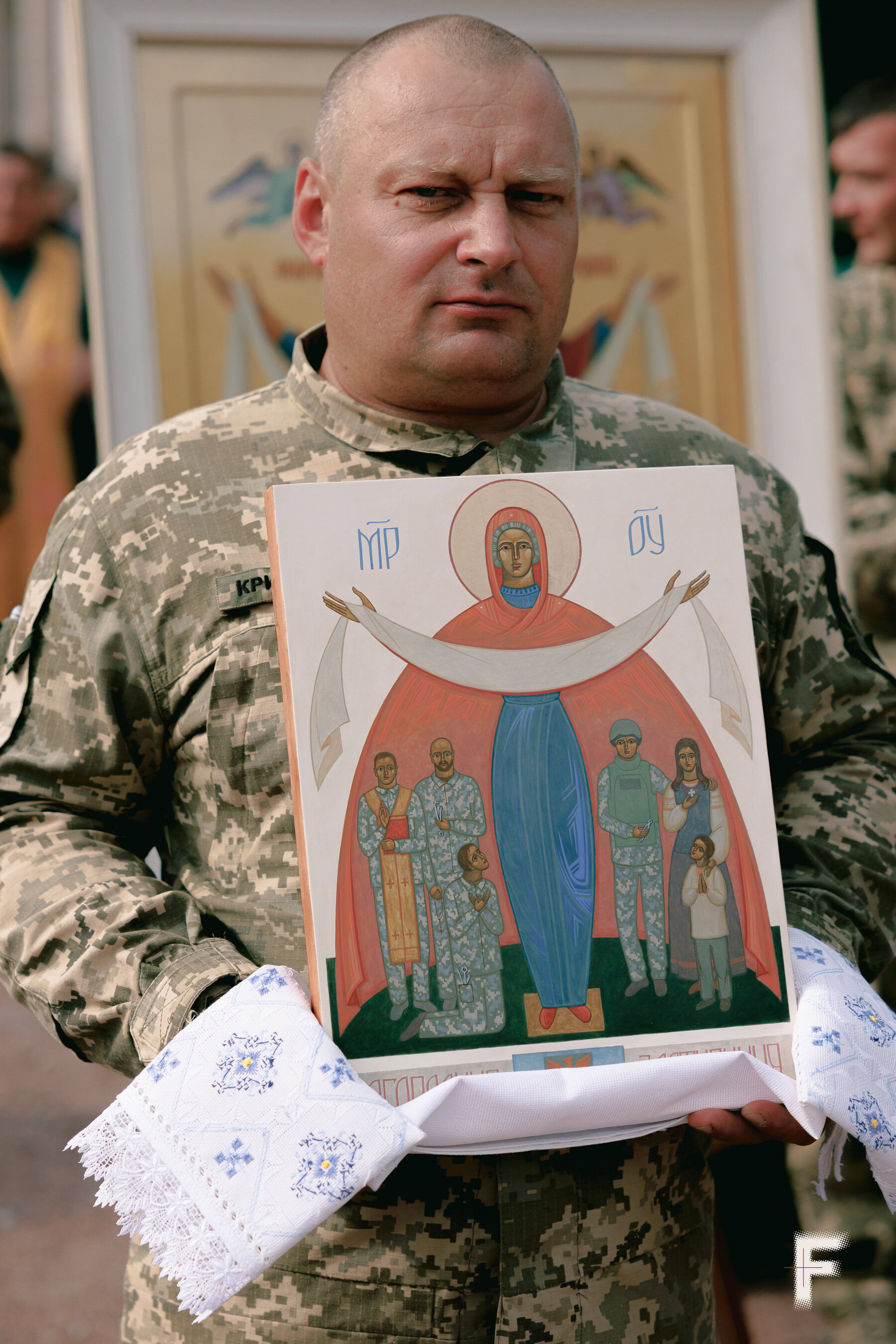
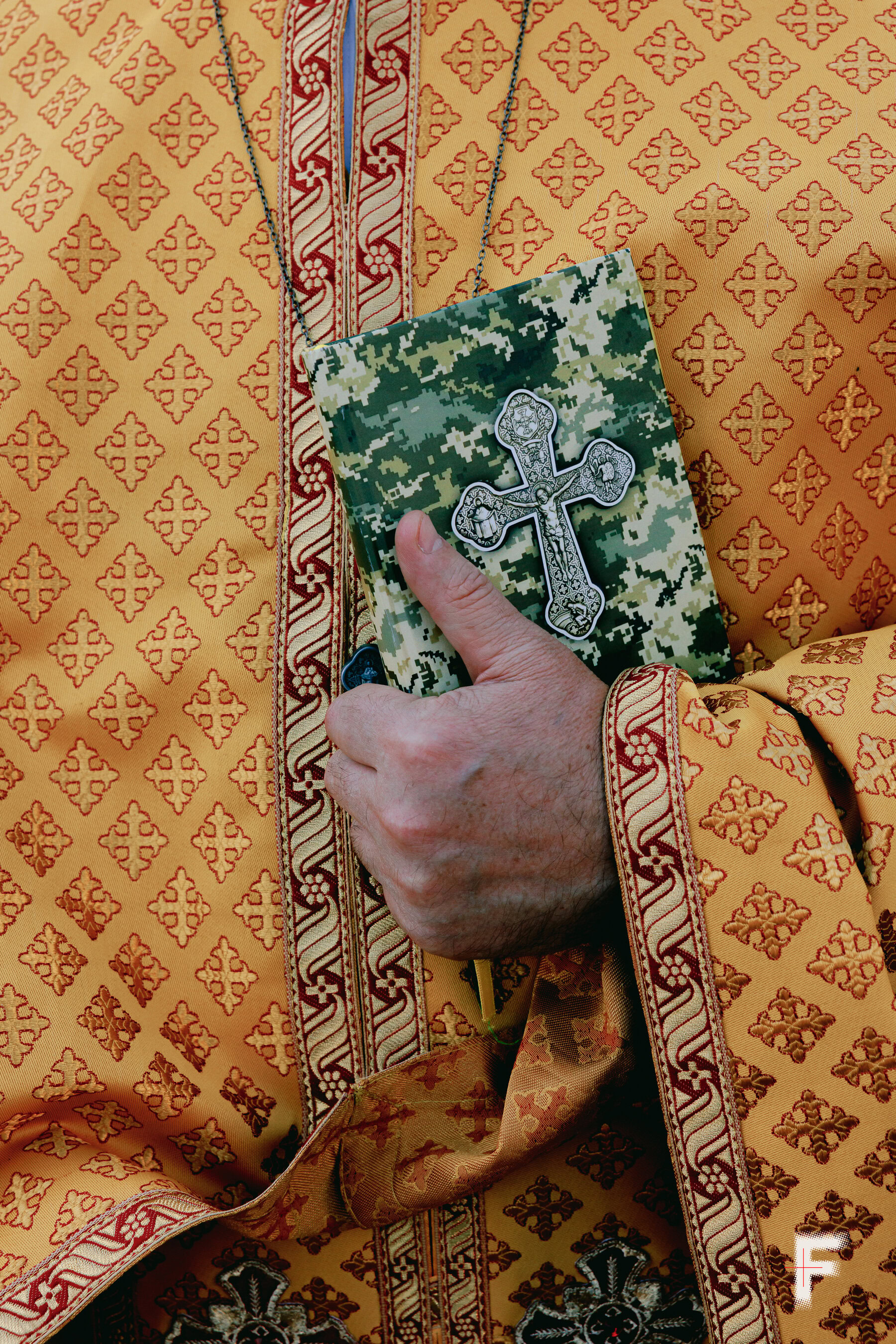
When asked why he is here today, his fellow soldier Pavlo Shmihelskyi smiles warmly and says that he is a bus driver, so he could hardly say no. He had only returned from the training ground the previous evening after driving his brothers-in-arms there. He messaged his commander to say that he was back at the unit, and instead of being wished a good night, he was told that the next morning, he would be driving the soldiers to Zarvanytsia.
Shmihelskyi had never been here before, yet he says he feels a sense of peace. He did not take part in the liturgies or communal prayers, as he spent the entire day opening and closing the bus doors so his brothers-in-arms could pick up or leave their belongings.
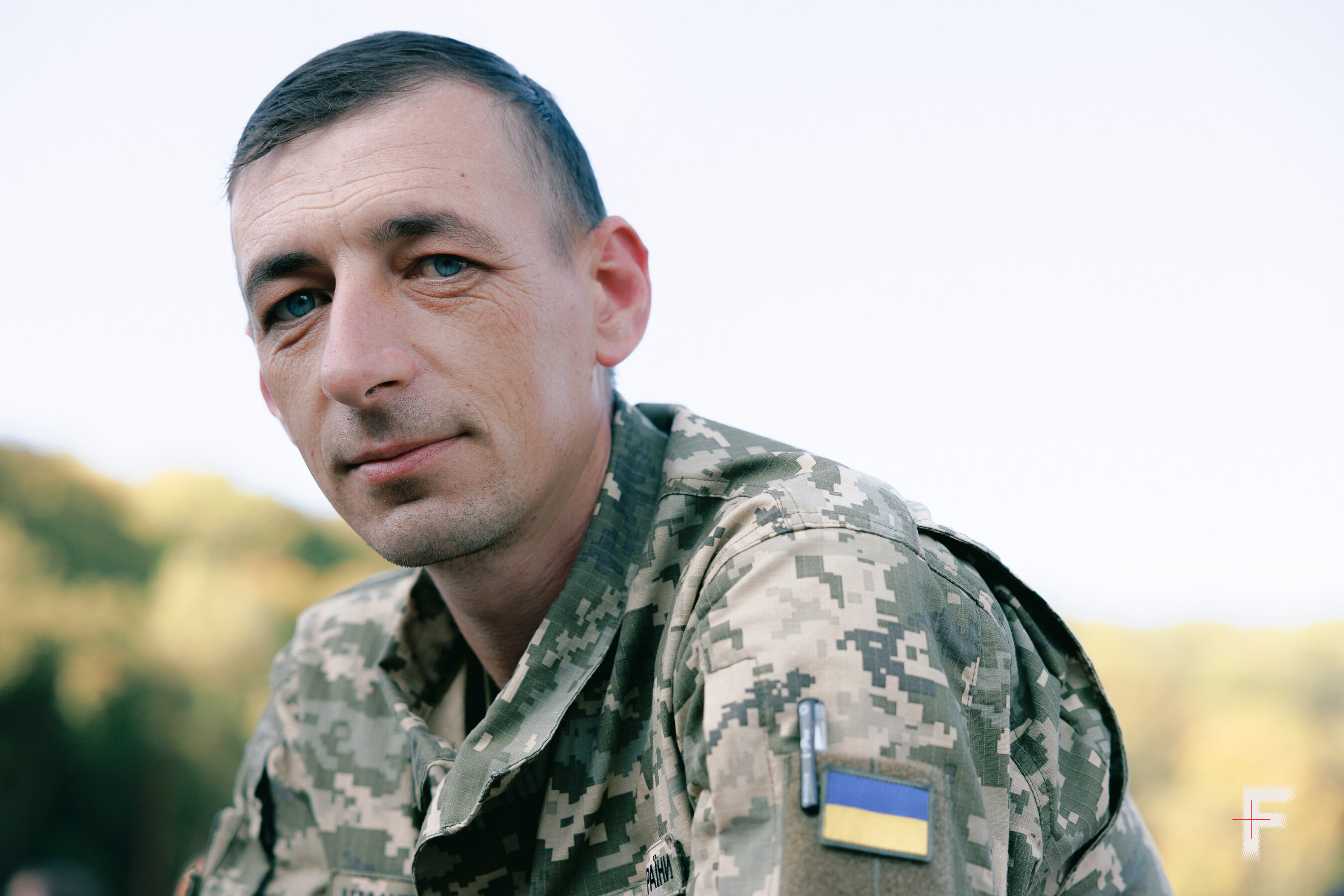
“I came for 15 minutes of the liturgy, and then the chaplain called, asking me to bring him a bag he’d left on the bus. That’s pretty much how my whole day has been today — constantly on the move,” Shmihelskyi says.
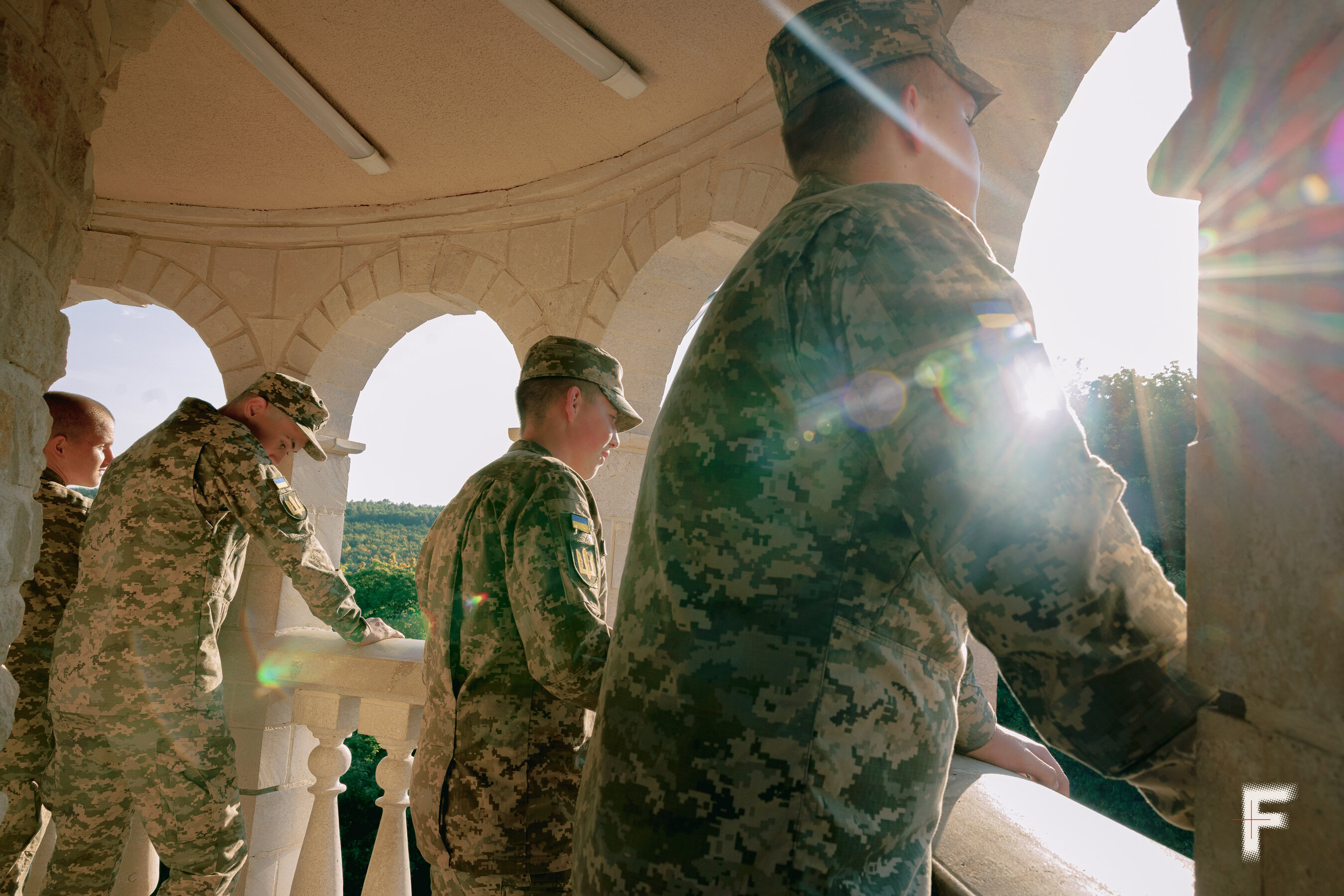
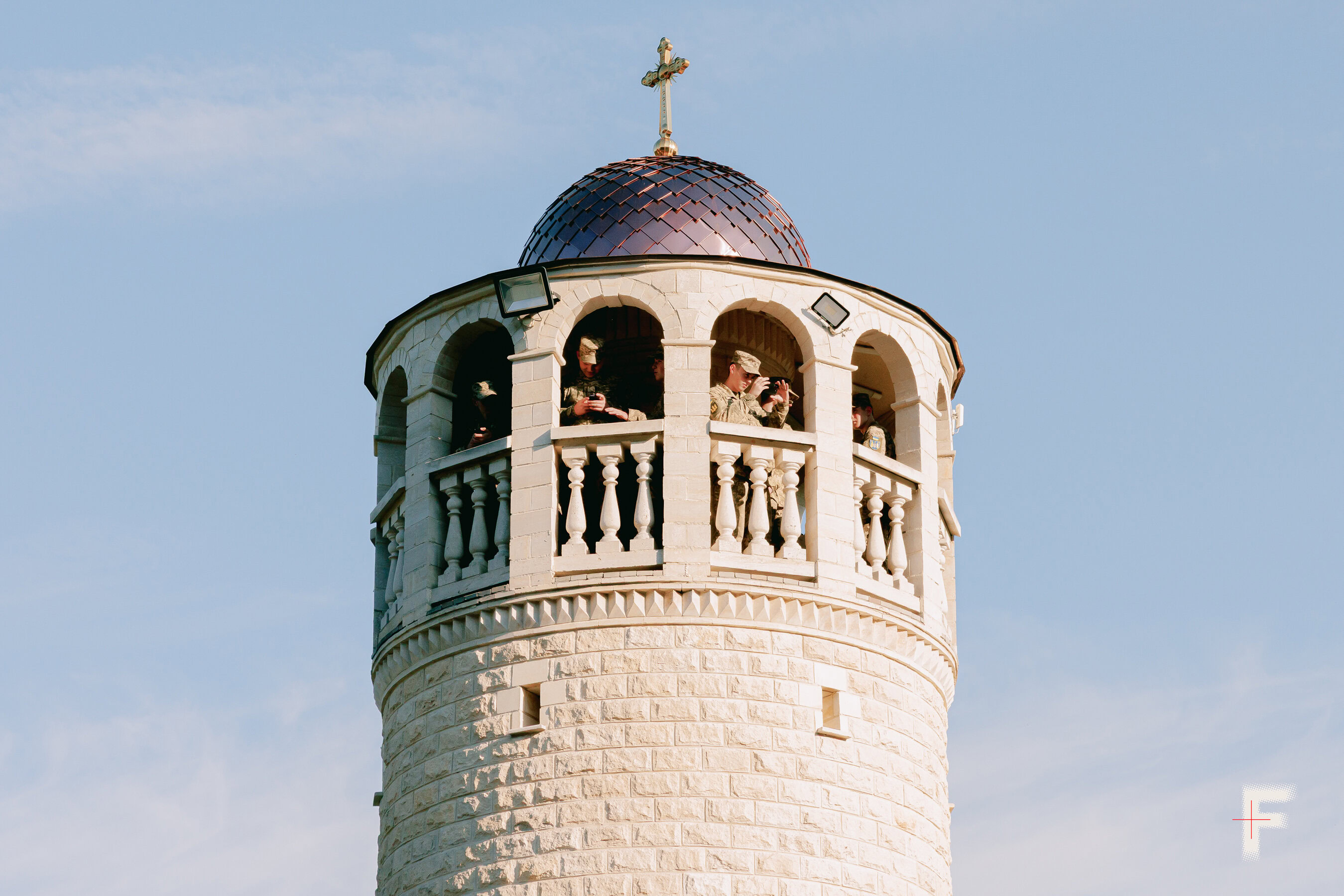
A soldier has just gifted his unit patch to one of the lyceum students who have explored nearly every corner of the grounds, lingering longest at the tower of the Ukrainian Jerusalem complex. Standing by a replica of the Holy Sepulchre, the boys pondered how sooner or later everyone ends up in the grave, and sing a song to a well-known tune: “Let my mom come, let my mom arrive, let my mom take me away from Zarvanytsia.”
If it weren’t for faith, I wouldn’t have come,
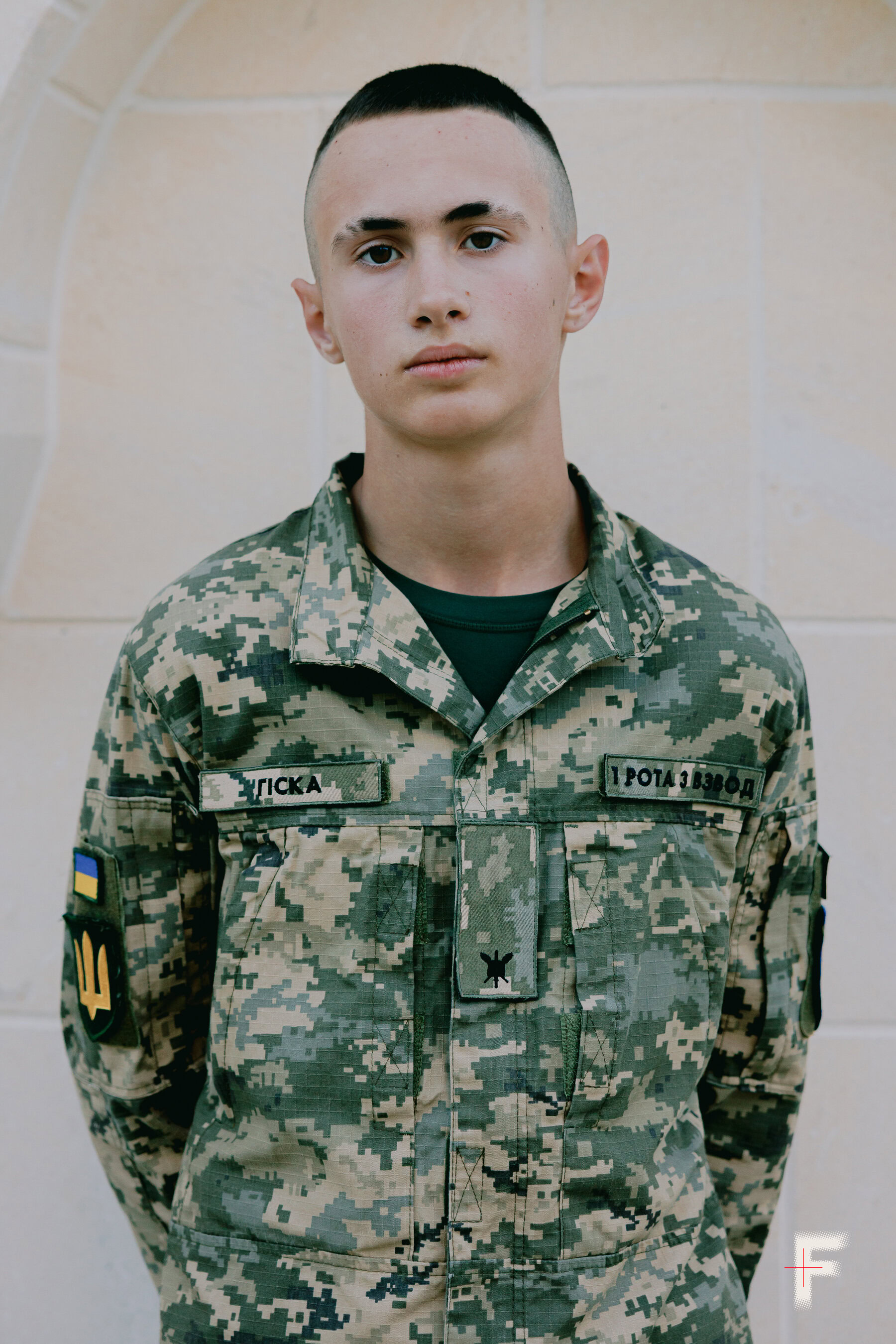
Yet when asked why they are here today, they turn serious in an instant, answering as if by the book.
“Some come here to skip classes. Others because of their faith. Some for both reasons at once. As for me, I came here because of faith. If I had stayed at the lyceum, I would have had an evening off. So if it weren’t for faith, I wouldn’t have come,” lyceum cadet Marat Hiska says.
Outside the church, Fedir and Halyna Plechii smile for a photo. Fedir jokes that he has been serving since the last millennium. He came to Zarvanytsia for the first time at the chaplain’s invitation, bringing along his wife, as she often visits such sites.
“I came here at the call of my heart. I pray for our defenders and for the children, because I have two daughters who volunteer and do so much to support our army. A mother’s prayer is the most precious thing of all, and we believe that prayer will help bring an end to this war in victory. We lost a nephew, so we pray for his soul as well,” Halyna Plechii says.

Families of the fallen seek hope
By afternoon, not a trace of the gloomy morning remains. A crowd makes its way to the church for the liturgy. Throughout the service, pilgrims fill out prayer slips: pink for the living and blue for the departed. The stack of blue slips runs out noticeably faster.
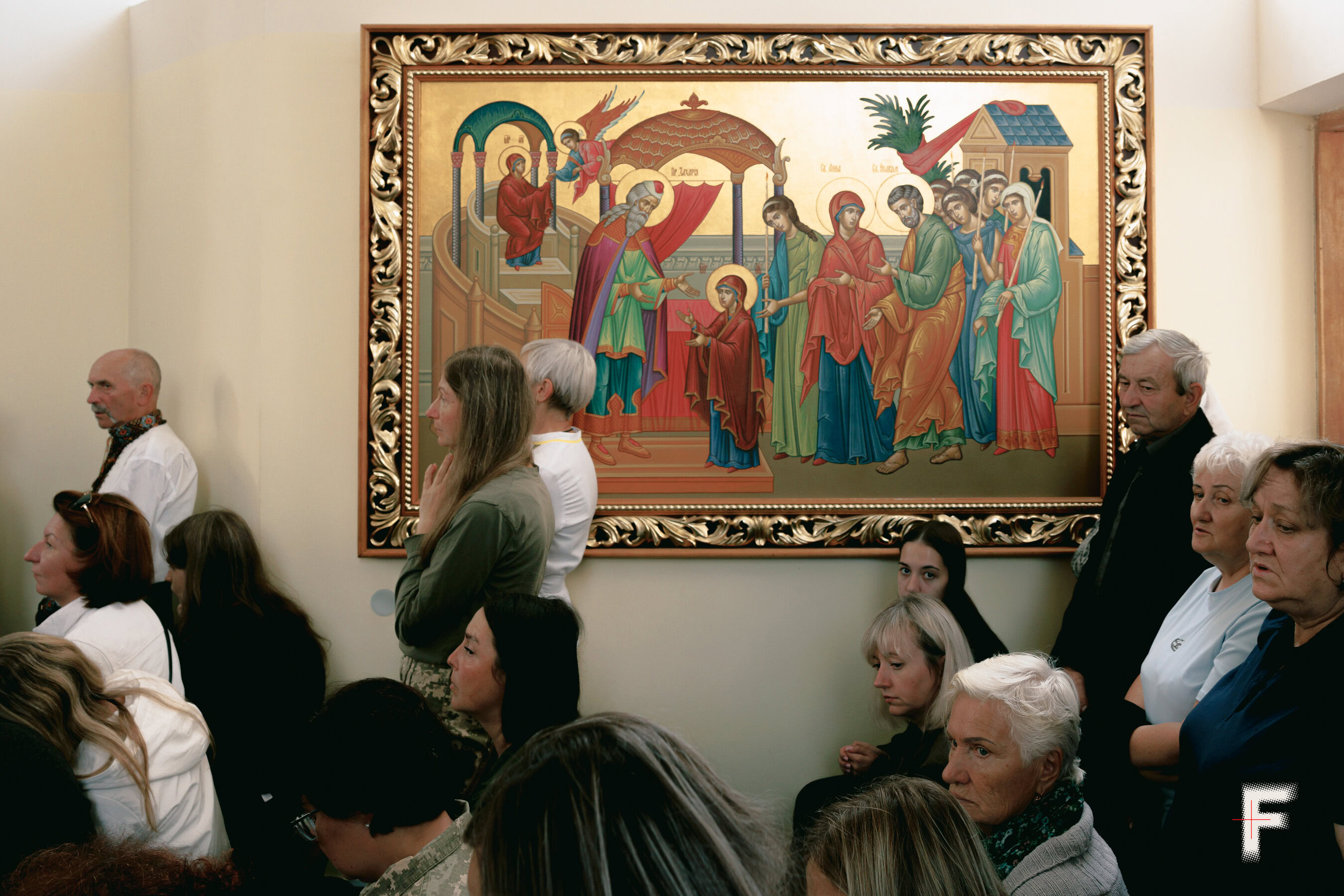
Outside the church, some pilgrims listen to the liturgy. Among them are three women who lost their loved ones to the war and later became friends during a pilgrimage to Medjugorje.
Mariia Oprysk, from the small town of Mykolaiv in Lviv Region, speaks about her son with a smile but cannot hold back her tears. Her son, Mykola was a Candidate Master of Sport in table tennis, but went to the front in the first days of the full-scale invasion. On March 24, 2023, Mykola Oprysk was killed in the Donetsk region.
The woman says that in the more than three years since her son was killed, her pain has not eased for a single moment. Yet she decided to keep living in defiance of the enemy and help however she can. Every morning, she and her husband take their son’s flag and walk to the town intersection for the nationwide minute of silence, honoring him and every other family’s fallen child, and reminding others that we must never forget those who gave everything.
She went on her first pilgrimage last year. What struck her most back then was the sight of amputee veterans heading to confession.
It means so much to me to be among the soldiers who served alongside my son.
In this atmosphere, I feel as though he is right beside me. I had pinned
such hopes on him, and now I’m fighting a hard battle as best I can,

Myroslava Ostap, from Sheptytskyi in the Lviv region, believes their loved ones brought them together for a reason.
“Now I am grounded in my faith, and I know that God never abandons his people. My husband, Ihor, was such a kind and gentle person. My child tells me I’ll never make deruny [potato pancakes] like Dad did. He loved us, fishing, dancing, picking mushrooms, and he never refused to help anyone. On Thursday, February 24, 2022, at 7:20 in the morning, he went to serve his country and never came back home,” Ostap says.
Ihor Ostap served as a medic in the 63rd Mechanized Brigade. On July 8, 2022, he was killed in the Mykolaiv region. Myroslava takes his portrait with her to pilgrimage sites because it makes her feel his presence.
Halyna Plitka first visited Zarvanytsia more than 30 years ago. Back then, she made the pilgrimage on foot with her classmates, walking more than 70 kilometers from a village in the Ivano-Frankivsk region. But after her husband, Vasyl, was killed on April 4, 2023, she lost her faith for a time. That same day, after the phone call bringing news of Vasyl’s death, his brother went missing in action. Later, Halyna began seeking support among people who had gone through similar experiences.
“I truly wish others would show solidarity with us. When people respond with indifference and contempt, it hurts a lot. That’s why we come to places like this, where people understand us,” Plitka says.
Accompanied by Skoryk’s “Melody,” pilgrims carrying candles make their way into the churchyard for a panakhyda, a memorial service for the dead. They have come to remember their loved ones and to be among people bound together by shared grief. Amid the mournful melody and the sound of an air raid alert going off from someone’s pocket, a woman in a pink blazer sits down on the steps, presses a portrait of a loved one to her chest, and breaks down in tears.

***
In dark times, people seek light in everyday joys and in the support of others. For soldiers and their families, the pilgrimage is an uplifting moment of unity, yet simultaneously a powerful concentration of people’s grief in one place. Soldiers and mothers of the fallen say that at the pilgrimage, they feel safe and among their own people, believing that prayer will see them through their trials. Whenever I think of this story, Skoryk’s “Melody” echoes in my mind, and I see the woman in the pink blazer sitting on the steps, pressing the portrait of a young man to her chest and sobbing.
Every story starts with your support. Join the Frontliner community so we can keep up documenting Russia’s war against Ukraine from the front line and the rear.
***