A taste of home before the front: Civilian family has fed 1.5 million Ukrainian soldiers for free
An evacuation convoy races down the empty Donetsk highway at over 100 kilometers per hour. Driving any slower is simply dangerous: the occupiers attack all moving targets. Evacuation vehicles, however, have no choice but to travel this route. Even seriously wounded soldiers ask the driver to stop when they see the canteen along the highway, hoping for a home-cooked meal. In a new Frontliner report, explore why this place matters so much to soldiers, and how a field canteen operates on the edge of a kill zone.
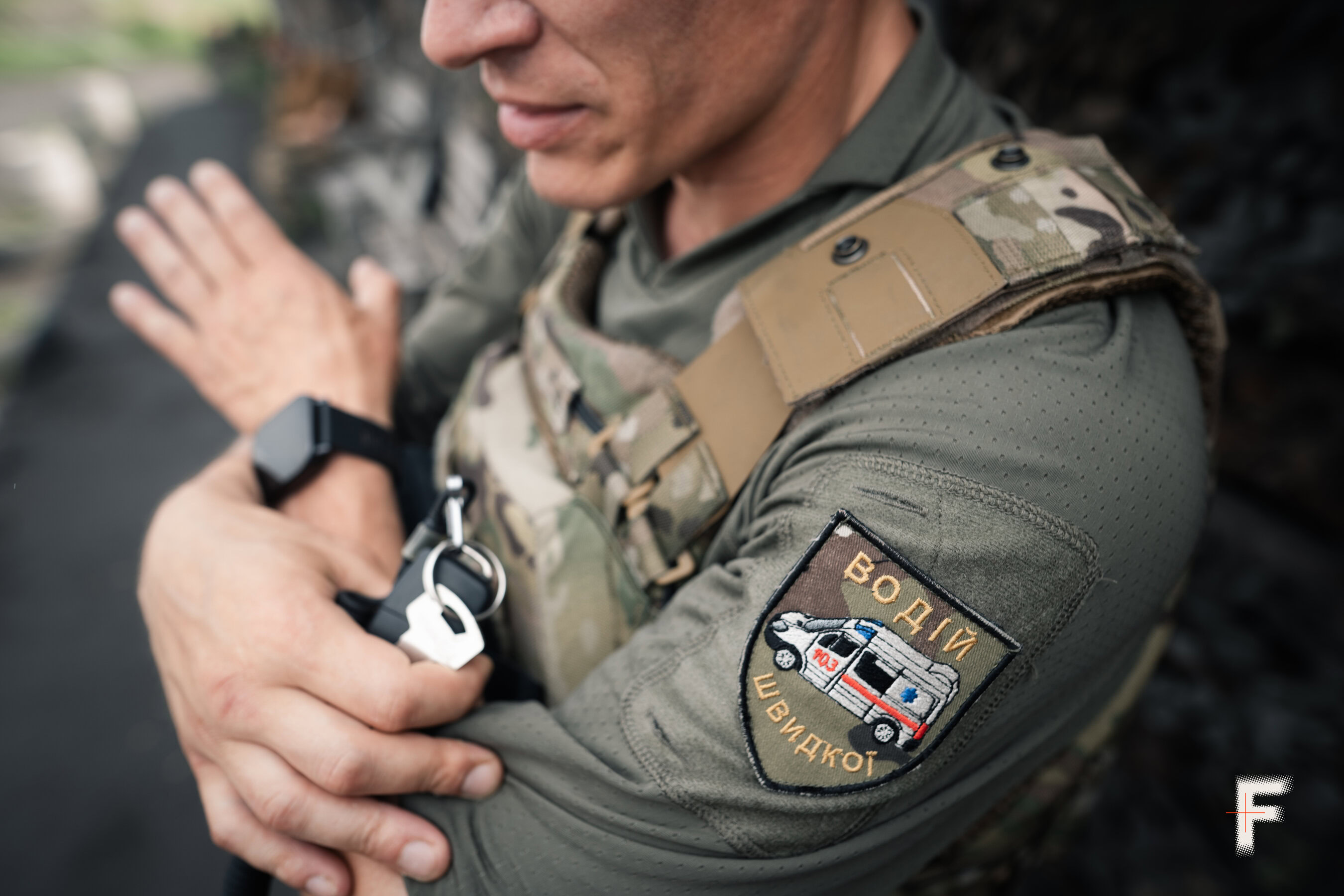
When the evacuation minibus stops near Shliakh Zahysnykiv (Defenders’ Path) canteen, the volunteers are already getting ready. They know the driver, Lauris: he stops by every other day. When he walks in, the volunteers almost immediately hand him a tray with several dishes.
The soldiers Lauris drives are seriously wounded, suffering from shattered or amputated limbs, shrapnel wounds to internal organs, and severe concussions. However, almost every time, they ask him to stop at the canteen located near the kill zone.
Stopping here has become something of a tradition. My crew stops
here every time, even with seriously wounded patients aboard.
It makes the guys feel better to know that people are doing something for them,
The last place before the gray zone where you can eat like you’re at home
Outside, after a hearty lunch, Artem quietly smokes a cigarette. A broad-shouldered soldier, call sign “Maliuk,” says these are his last quiet moments before a hundred-kilometre drive through the kill zone, where enemy drones hunt vehicles like his. Shliakh Zahysnykiv canteen is the last place before the Donetsk region where he can still taste a little bit of home.
Sometimes several vehicles, or a bus carrying dozens of hungry men and women, arrive at the canteen at once. Then the rush fades, leaving up to an hour of calm with only a few soldiers inside. One of them is Yurii, call sign “Prepod.” He is returning to the Pokrovsk front after leave, and he has no idea when he’ll next have a home-cooked meal. That’s why the mess hall is a must-stop on his route.

“You can tell the ladies who cook for us really care. They want us to enjoy every meal, and that kind of dedication is rare. That’s why this canteen means so much to us,” “Prepod” explains.
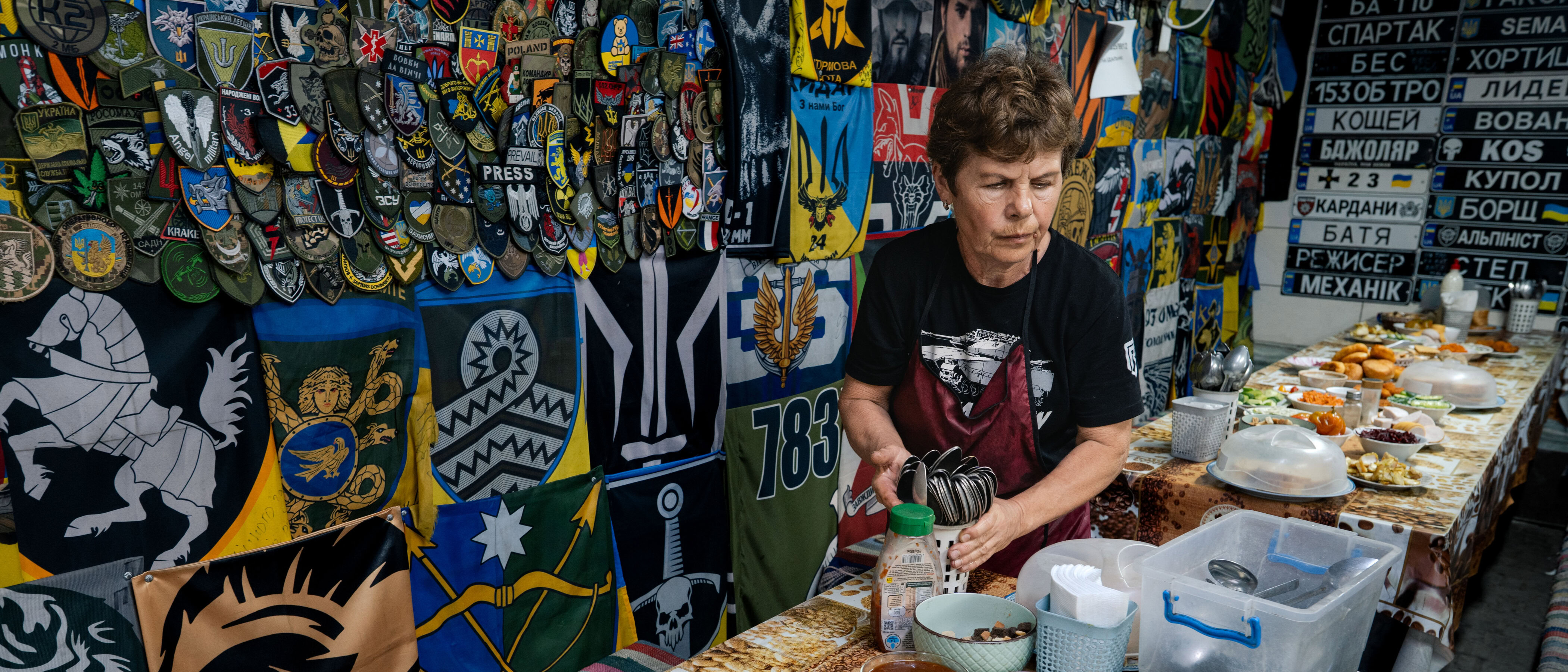
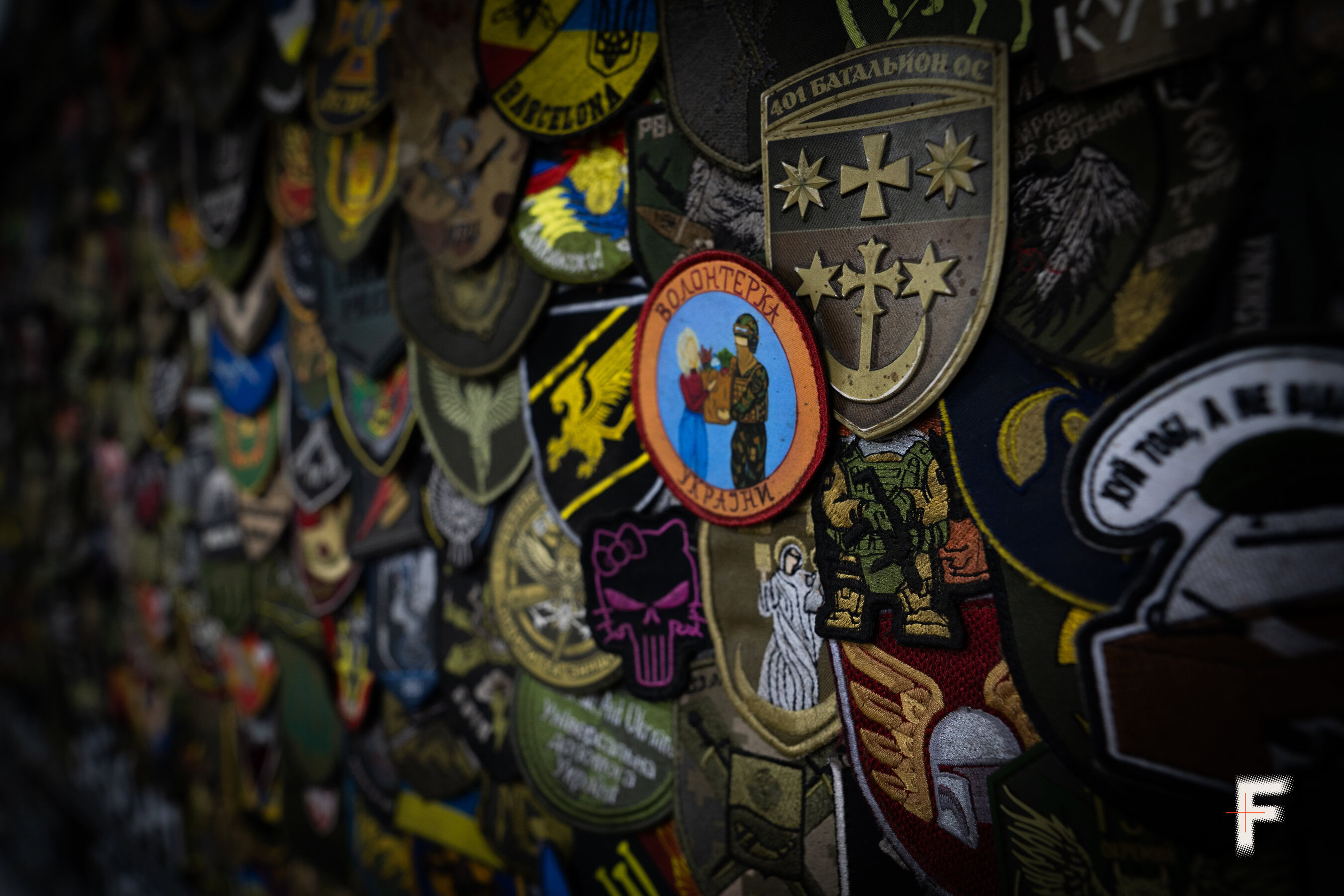
While the man eats lunch, he looks over the unit patches his comrades have left on the wall. Some of them have been here since 2023, when Shliakh Zahysnykiv first opened. Over time, the soldiers began bringing in paintings they’d made at their positions, as well as children’s drawings. The décor came together over the years, all of it contributed by the soldiers themselves.
The canteen is supplied with food by local residents
Shliakh Zahysnykiv free canteen opened in 2023 on an empty patch of land along a highway. At the time, thousands of Ukrainian troops travelled this route daily: deploying to combat zones or returning from duty rotations. There were hardly any roadside cafés where they could warm up and have a meal. Tetiana decided to feed the soldiers. At first, to keep the food hot, she had to carry pots to her neighbors’ homes to reheat them there.
Todayt, the canteen has a modern kitchen, a trailer where volunteers can change or rest. There is even a separate trailer stocked with clean clothes for soldiers.
To earn their trust, we would take a pastry, break it in half,
eat one half ourselves, and give the other half to the guys.
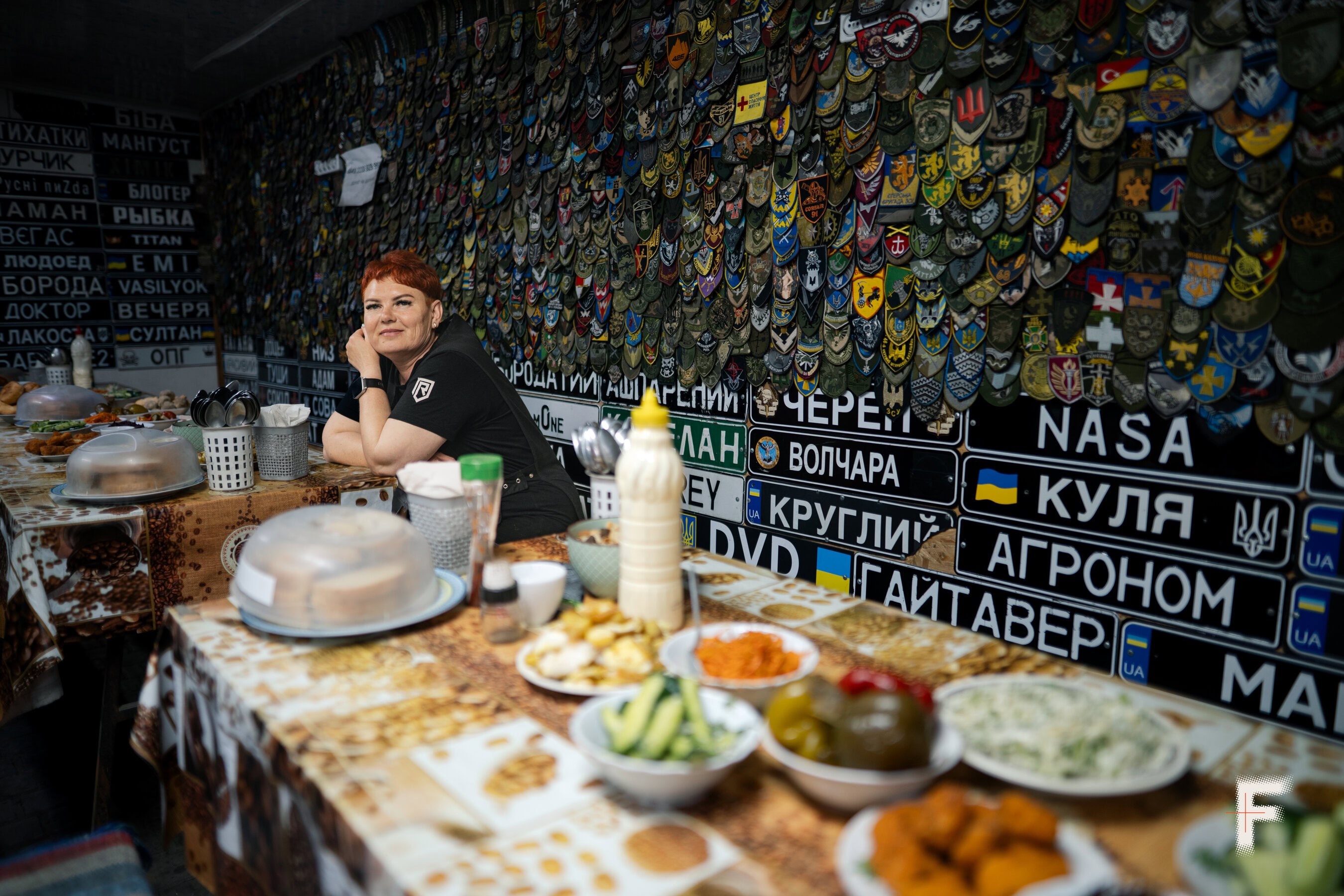
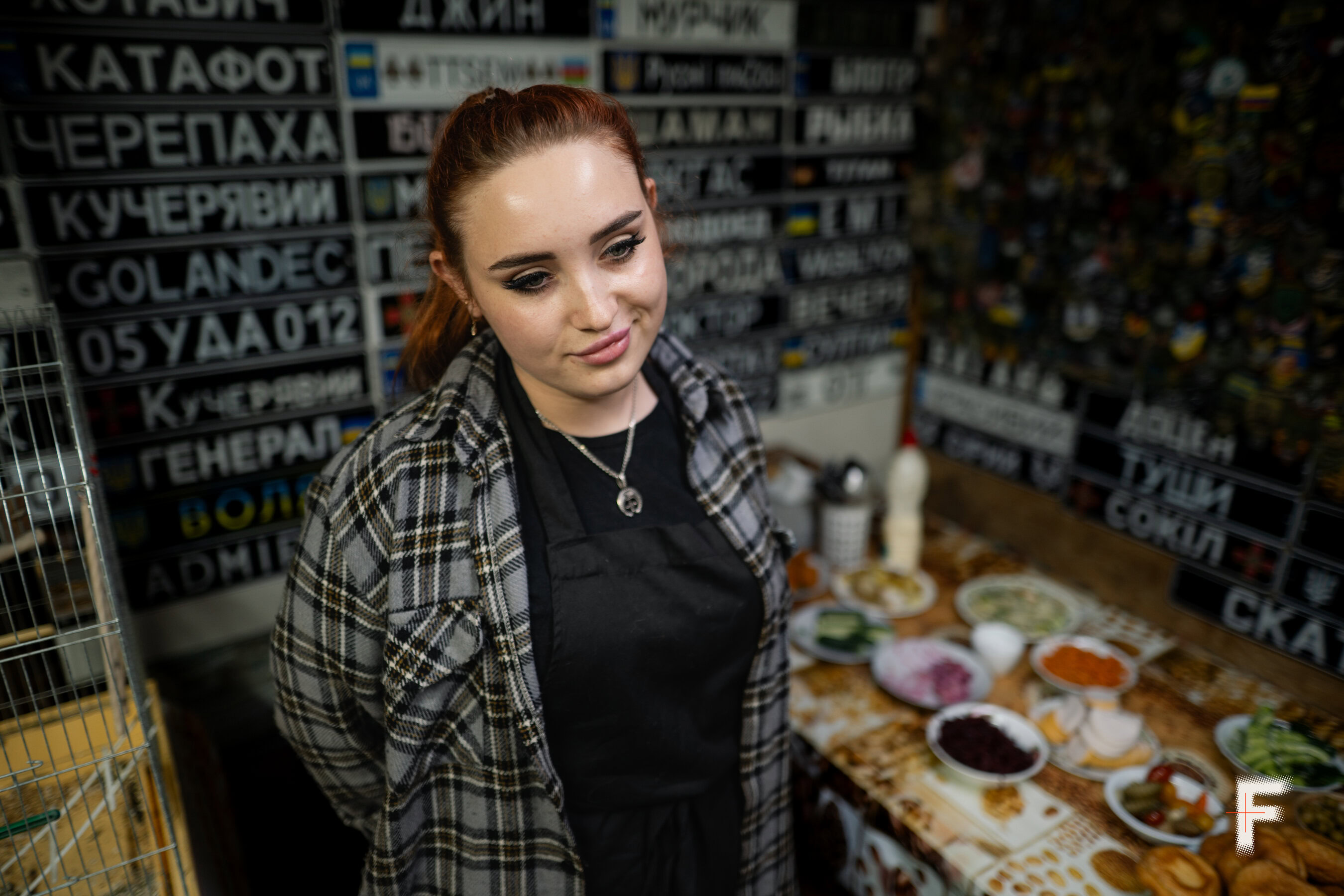
“At first, we only served tea and coffee. Many soldiers were afraid to take anything from us because there had been cases of troops being poisoned. To earn their trust, we would take a pastry, break it in half, eat one half ourselves, and give the other half to the guys. The first full meals we served were borshch and stewed potatoes. We tried serving soups, but the guys hardly ever chose them. After a year or a year and a half, solianka appeared on the menu; it’s just as popular as borshch. As for the main course, the soldiers usually skip porridge and pasta, saying they’ve had enough of them… Potatoes, however, are always a favorite,” the young woman says.
Over the past three years, the cafeteria has fed about one and a half million soldiers.
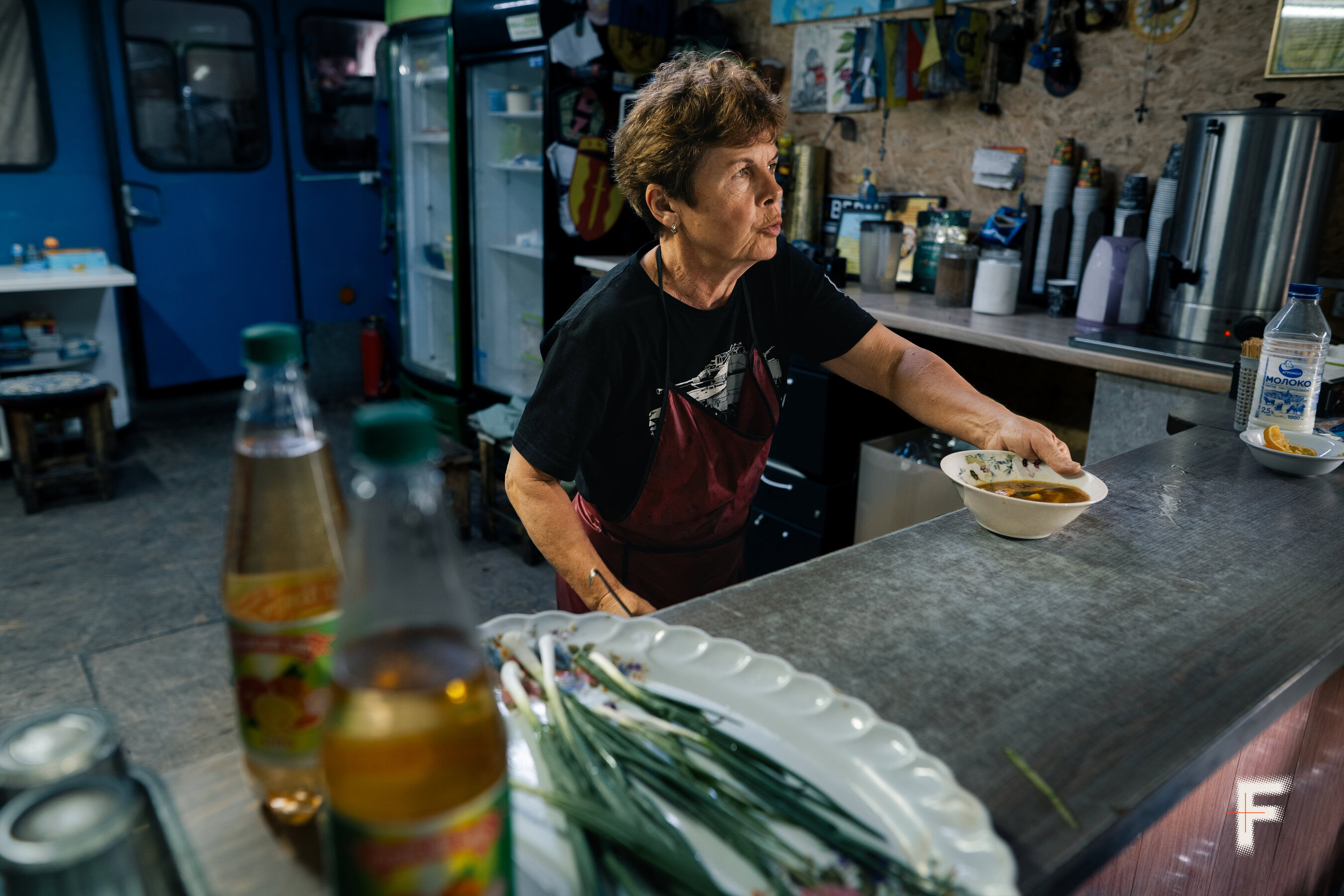
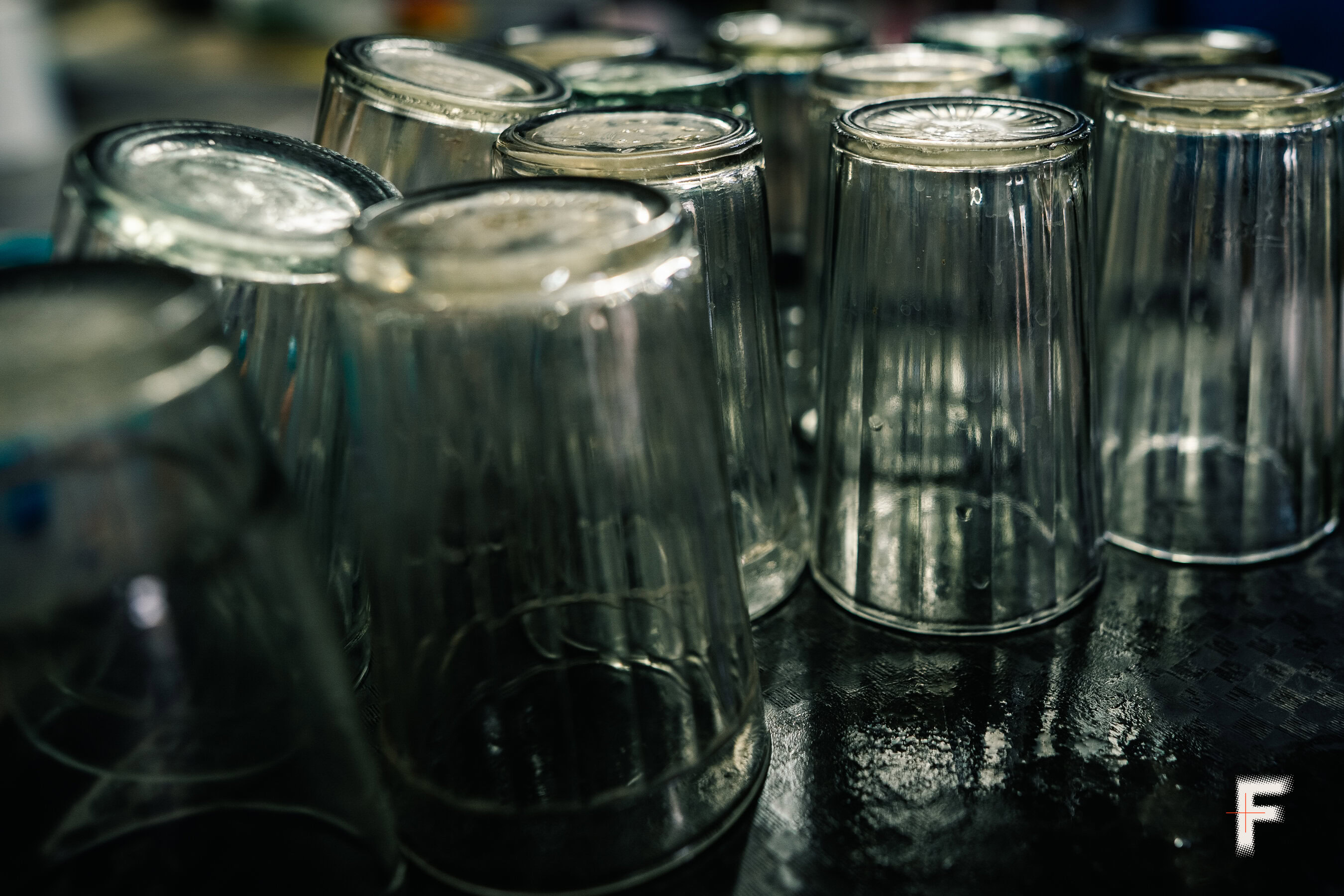
Running the canteen costs more than 30,000 hryvnias a month, with the expenses covered through donations. For example, 15,000 disposable cups cost 6,000-7,000 hryvnias, gloves and cleaning supplies require another 3,000 hryvnias, while spices and seasonings add around 8,000 hryvnias to the monthly expenses.
Friends, neighbors, volunteers, veterans, and the soldiers themselves supply the food. Thanks to them, the canteen has grains, flour, sugar, salt, oil, and sweets.
“We have never been under threat of closure. When things are difficult, we go to people we know and collect donations, even small amounts. The soldiers themselves donate when they stop here. Basically, the soldiers are feeding themselves; we are just the igo-betweens,” the volunteer says.
Every day, volunteers manually chop and cook several hundred kilograms of food
Tetiana hasn’t had a day off in three years. There’s no time to rest because at least six dishes have to be prepared every day. The volunteers spend 13 hours a day in the kitchen. Local women have joined the effort after hearing about the canteen from others in the community. Together, they created a rotating schedule: some take shifts on even-numbered days, others on odd-numbered days. Each of them has a son or a husband at the front.

Iryna is one of the canteen’s regular volunteers. She slices sausage for a salad quickly and methodically, leaving little time for conversation since there are still kilograms of vegetables to prep.. She once had the energy to do even more: frying zucchini with mayonnaise and making pastries. However, each year, cooking becomes more demanding for her.

The kitchen is hot and stuffy, with sweat dripping from the woman’s forehead. But she smiles and says that at least now she can work sitting down.
“Before, there was nothing to sit on. Standing for almost six hours was nearly impossible, so when I asked for a chair, they simply turned a bucket upside down for me. I sat on it thinking it would crack under my weight. One day my husband came to help me, saw the conditions, and made a stool. Then he saw how we were hauling canisters and potatoes and said he’d help. He’s been volunteering here for about three years now, too,” the woman says.
For soldiers only: Civilians are not served, payments are not accepted, no food packed to go
At Shliakh Zahysnykiv, volunteers rarely make exceptions. One example is when a woman has travelled a long distance to meet her loved one, and they happen to reunite at the canteen. If there is extra borshch remaining, they may share some with her.
They also don’t pack food to go here. Previously, they made exceptions to this rule, but now the menu has expanded, as has the number of seats and tables where people can eat. So anyone who arrives hungry can eat and drink right there.
One final rule visitors must follow is to respect the volunteers. Tetiana, the founder of the canteen, has had to call out some soldiers who treated the volunteers as if the volunteers owed them service.

Everyone is equal here. We don’t care about someone’s rank or position.
If we need to give instructions, we give them even to commanders,
and they listen,
As long as the soldiers keep heading to the front, the canteen will keep feeding them
Tetiana, the founder of Shliakh Zahysnykiv canteen, says that despite her own exhaustion and that of the other volunteers, the soldiers themselves remain their main source of motivation.
A wounded soldier still making jokes, still full of energy and determination,
and you realize that those of us in the rear have a lot to learn from them.

“You see a wounded soldier still making jokes, still full of energy and determination, and you realize that those of us in the rear have a lot to learn from them. In moments like these, we understand that we simply cannot give up. However, we don’t force anyone to help or support us. Everyone chooses their own path, and we don’t judge anyone,” the volunteer says.
Although the front line is advancing toward the area where the cafeteria is located, there are no plans to close it due to the danger. Instead, the women are determined to continue, so that soldiers and rescuers have somewhere to stop, catch their breath, and rest before facing ‘the hell” which lies ahead. Tetiana emphasises:
“No one will be taking this place apart. I don’t even want to think about that day. We are standing here for our guys. While they are there, we will be here too.”


***
Hi, we are Alina and Marharyta, the authors of this article. Thank you for reading to the end.
Since 2023, soldiers have often said that civilians are becoming disconnected from the reality of war. Some say people no longer want to hear their stories when they return home on leave, ask fewer questions, and sometimes no longer even wait for them. Volunteer initiatives operating for the front lines and nearby help soldiers keep their faith and resilience. Sometime even a bowl of borshch or a warm “enjoy your meal” is a reminder that they are still cared for and welcomed somewhere.
These volunteer canteens do much more than feed people: they provide a sense of care and support to those who shield the rest of the country from war.
Every story starts with your support. Join the Frontliner community so we can keep up documenting Russia’s war against Ukraine from the front line and the rear.
***