After the tragedy: Life in Vyshneve, where detonations destroyed hundreds of homes
After the tragedy in Vyshneve, you can still smell burning in some places. Utility workers clear away the rubble, while locals cover the windows of undamaged houses with plastic sheeting and wait for compensation. Almost every conversation here begins not with the destroyed buildings, but with memories of the night when a Russian strike triggered hours of ammunition detonations. Locals recall running beneath falling debris, losing their homes and their pets. Now, they are trying to understand why an ammunition depot of such scale was located right next to their homes. Frontliner visited Vyshneve to speak with those affected.

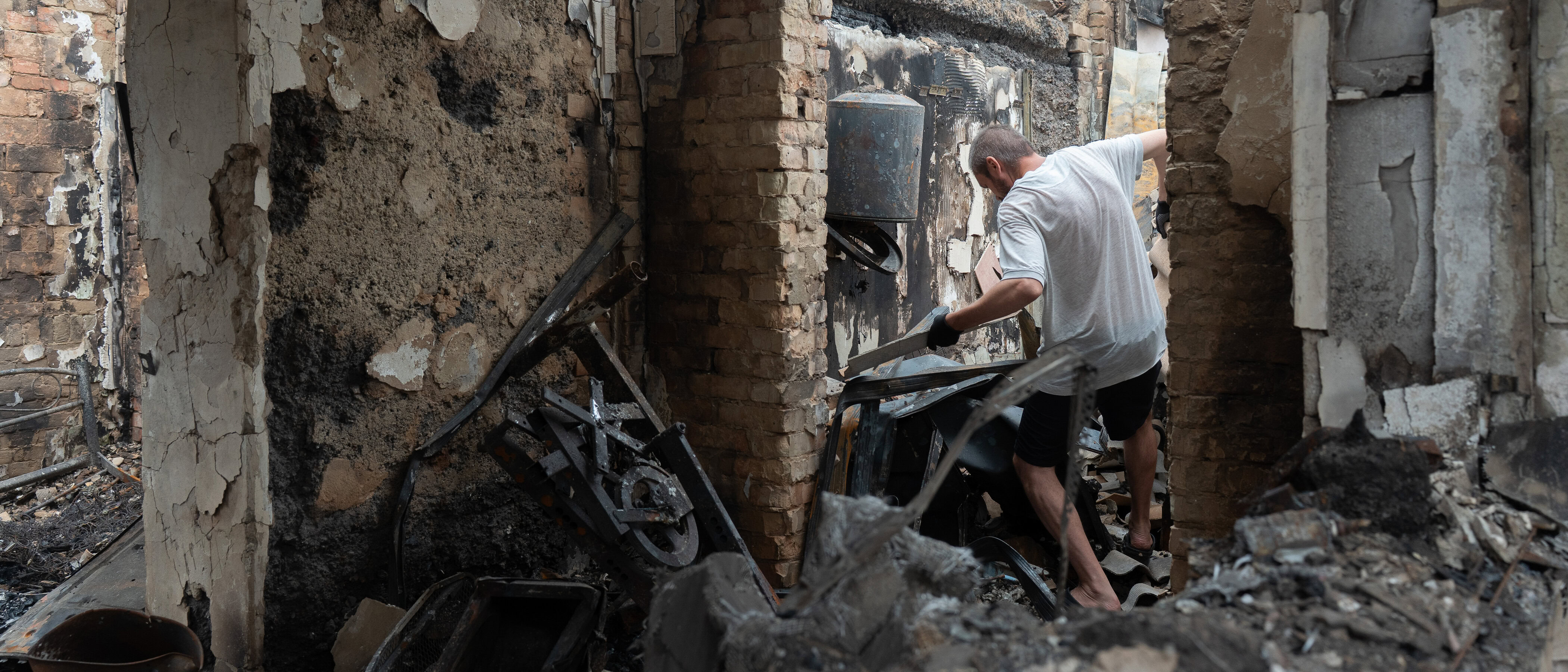
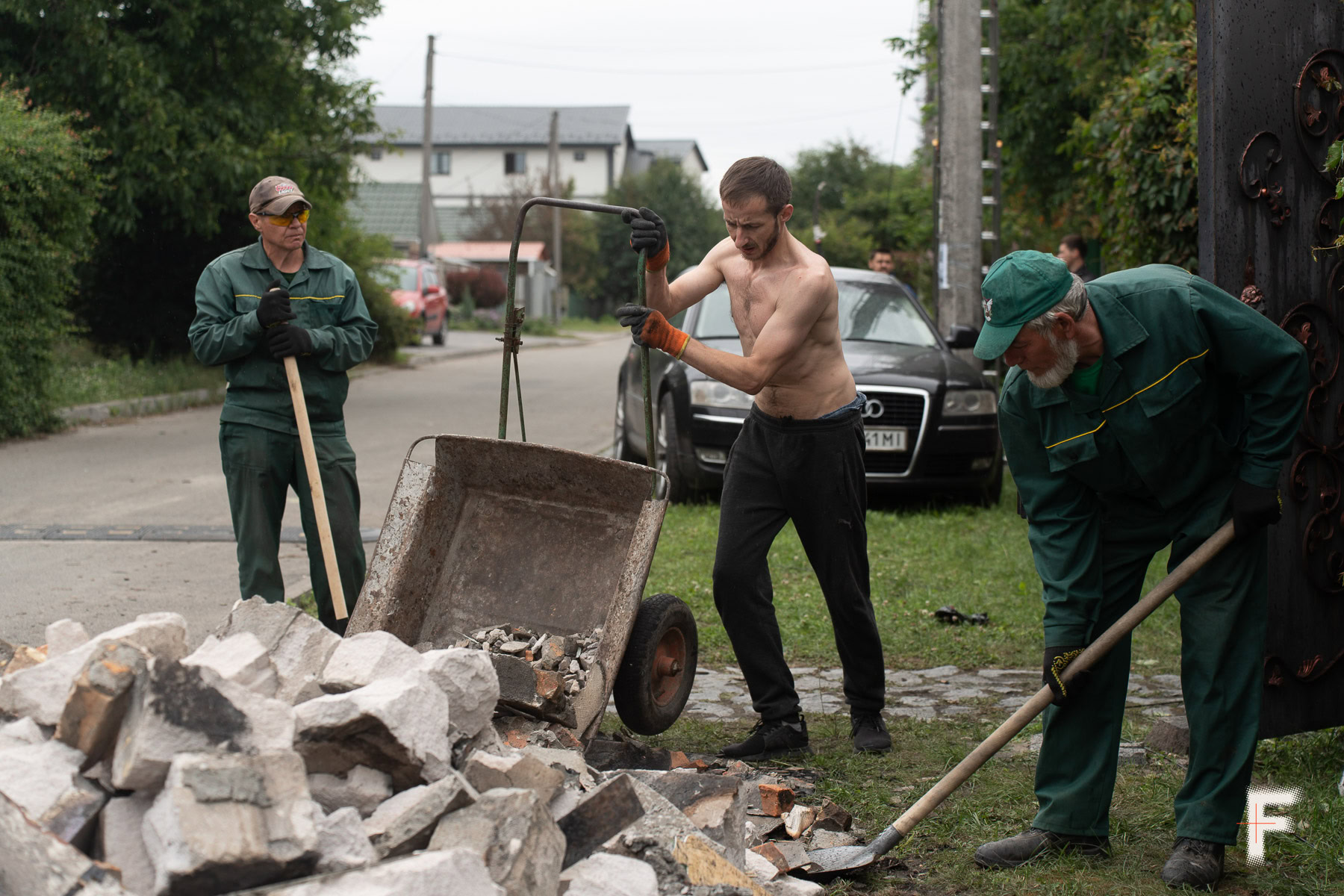
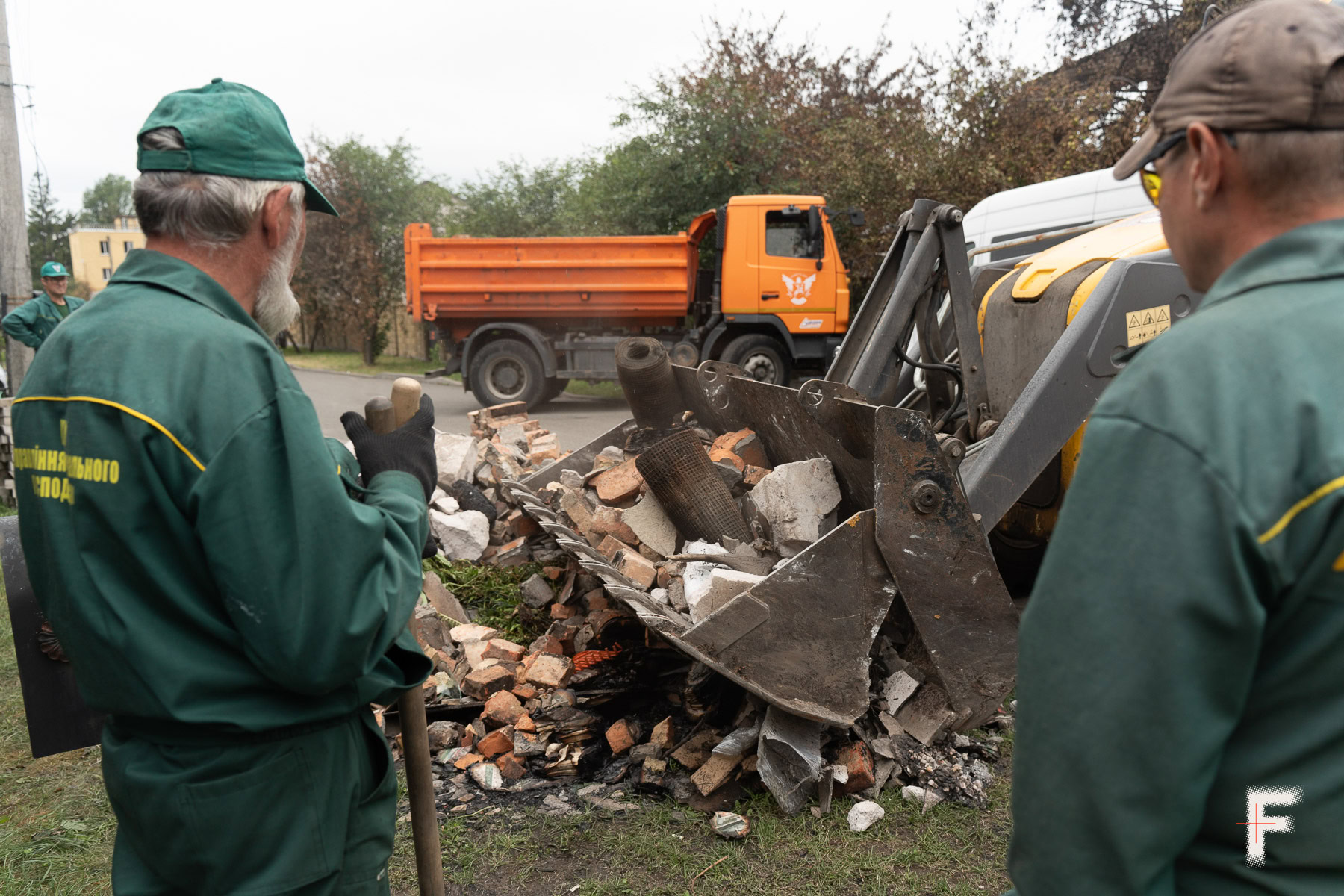
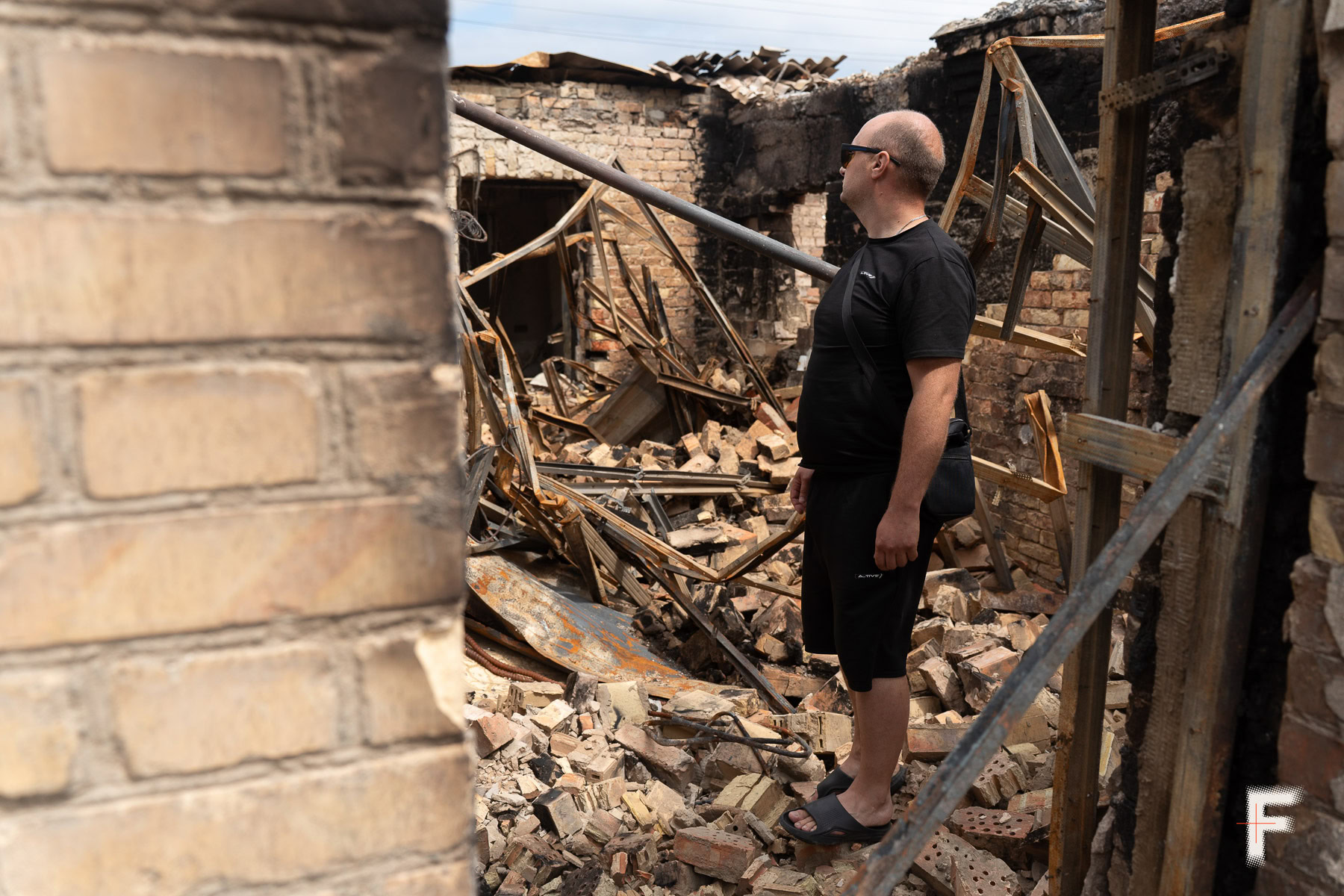
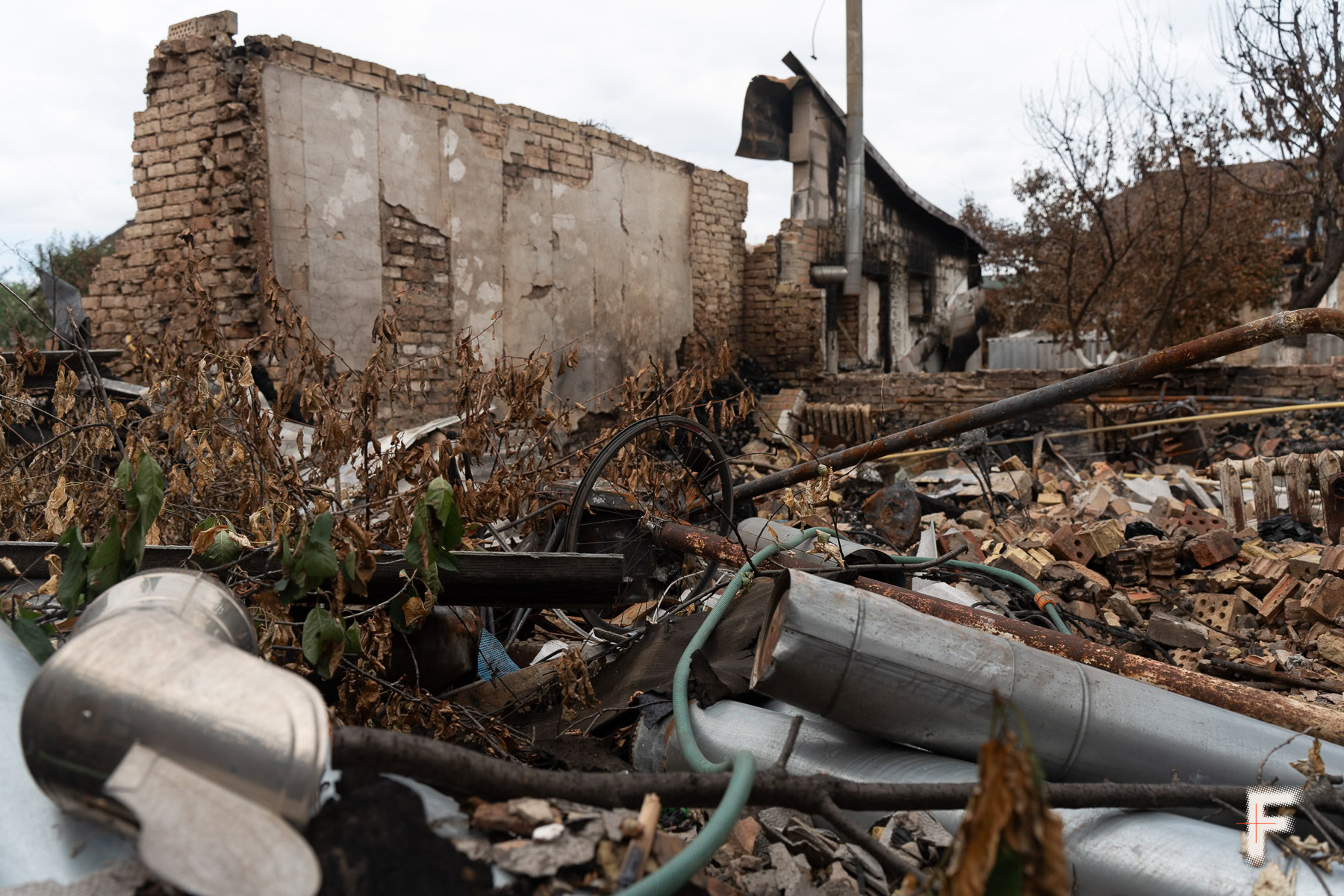
Vyshneve, in the Kyiv region, greets us on a hot, sunny morning. The first signs of the massive explosion caused by a Russian missile strike are the twisted metal rails scattered across the city, scattered from the factory — and windows covered with plastic sheeting. But the closer we get to the site of the tragedy, the fewer homes remain even partially intact, let alone habitable. Utility workers clear away the debris left by the detonation. Where some houses once stood, only charred foundations remain.
-
Utility workers clear away construction debris and bricks left behind by the ammunition detonation on the night of July 6, Vyshneve, Kyiv region, Ukraine, July 13, 2026. (Yurii Bochan/Frontliner)
-
What support did the residents of Vyshneve receive?
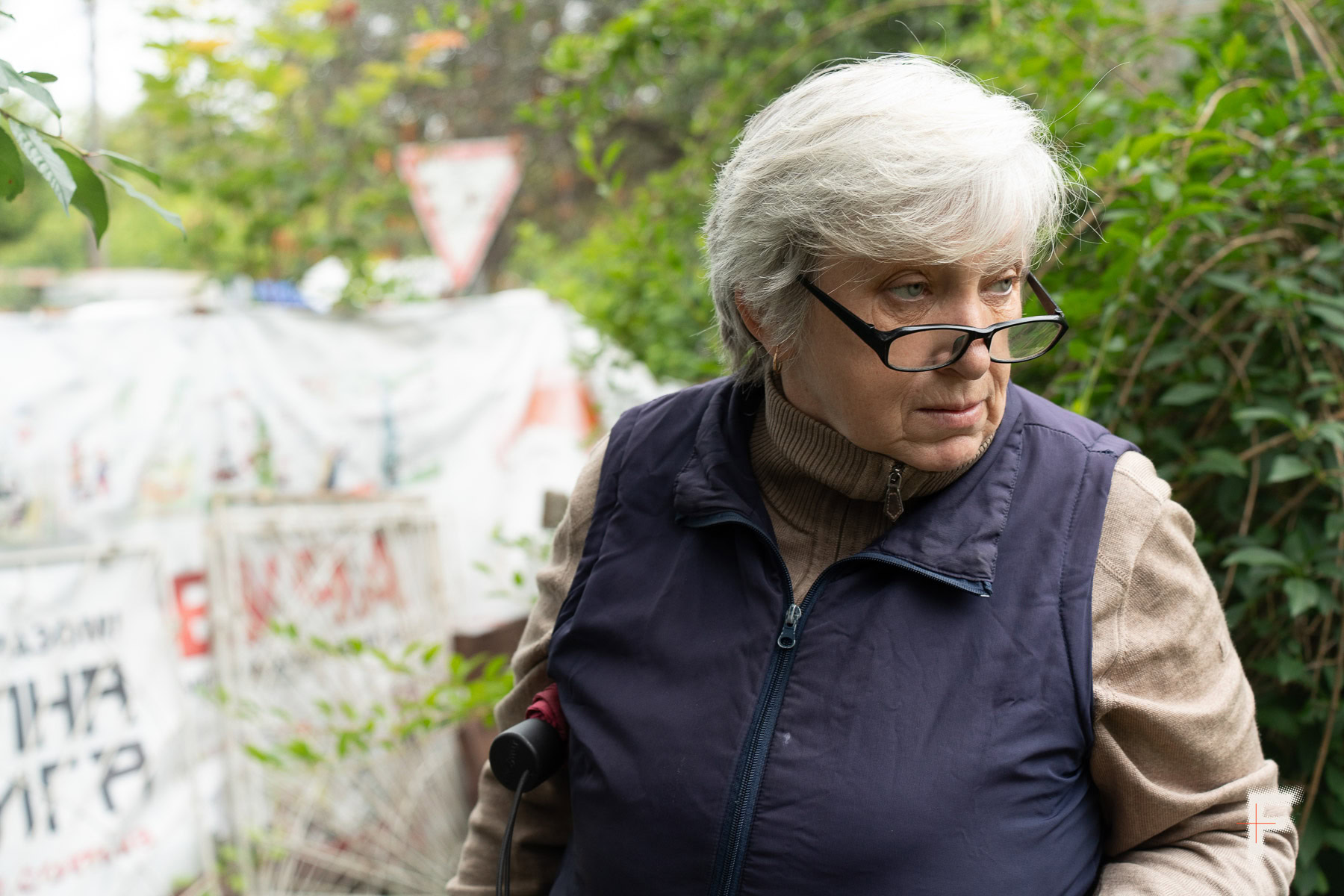
On one of the streets, near a relief headquarters, a group of women is actively discussing who the damage assessment commission has visited and who they haven’t. Locals say the process is being dragged out and the provided building materials are insufficient. Olha Bukhanenko says that the aid received is not even enough for temporary repairs:
“They gave us plastic sheeting and roofing sheets. I told them I needed 60 sheets. At first they wouldn’t give them to me, only giving 10 at a time. You really have to fight to get it,” she says.
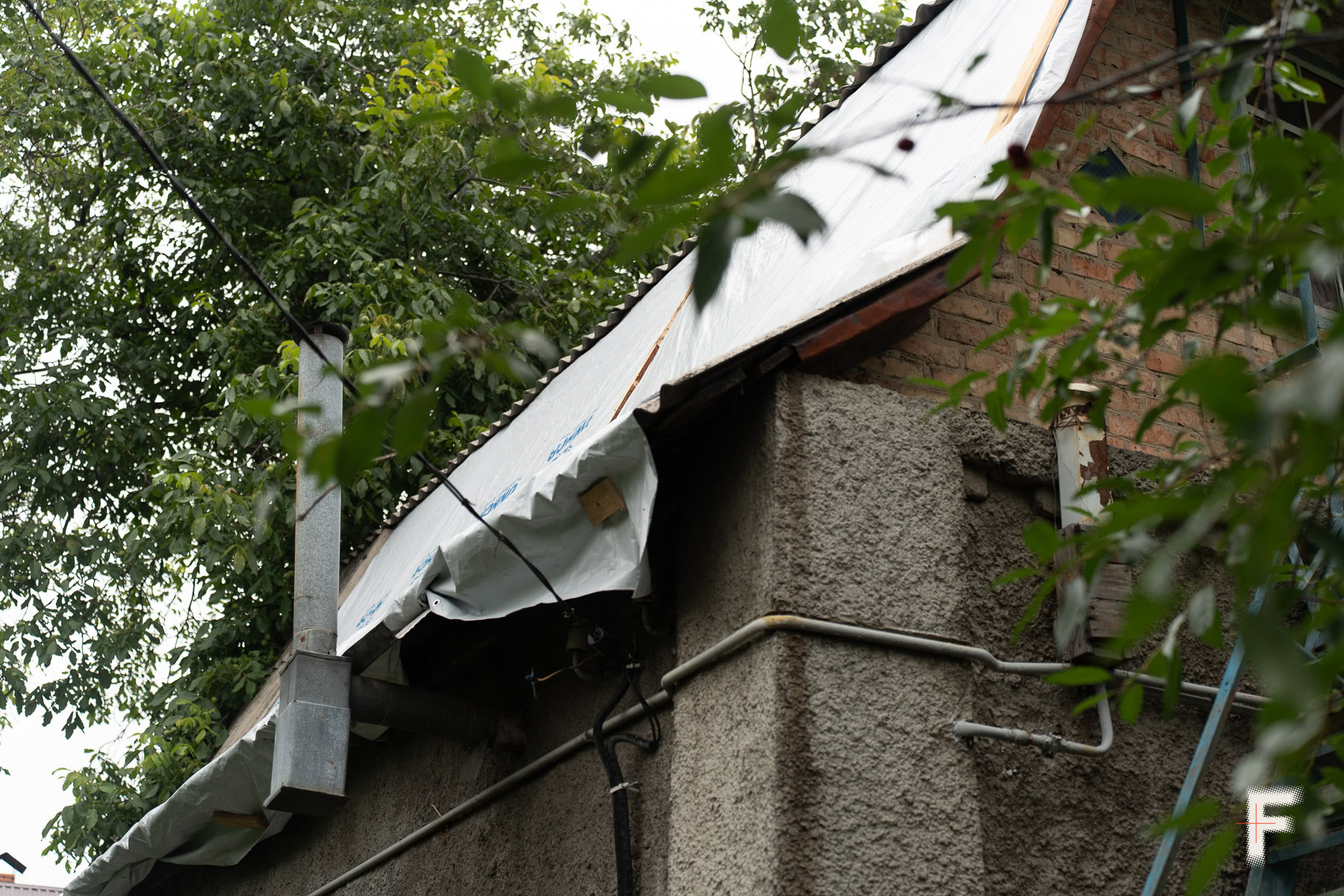
While compensation claims are still being processed and State Emergency Service workers continue their work, neighbors are helping one another. Some bring construction materials, while others clean up yards. For three consecutive hot days, Vladyslav Maliar [Editor’s note: name changed] has been delivering water to people:
“I’m just handing out water to anyone who needs it — residents, workers, anyone. This is already the third time I’ve done it, and the police have been helping me with this. I ride with the police, we load everything up, they bring it here for me, and then I distribute it to the residents,” he says.
The strike and detonation
Mom,
I want to live! Mom.
The scariest part was not the strike itself, but the hours of ammunition detonations that followed. Inna Derevianko [Editor’s note: name changed] was not at home that night, but her daughter and parents were. They hid in the cellar, and when they started to exit, the roof was already on fire and the ceiling was falling on their heads. They had to run down the street under falling debris. They survived, but they couldn’t save the cats; the dog miraculously survived as well.
“Just so you understand, my daughter was screaming right into the phone: ‘Mom, I want to live! Mom, just know that I love you so much. Mommy, know that I love you so much.’ She kept talking to me, we were praying the Lord’s Prayer. I wanted to run over here, but my mom was shouting: ‘Don’t you dare run here, we’re in the cellar for now, don’t you dare run here!’ It was pure terror,” the woman recalls.
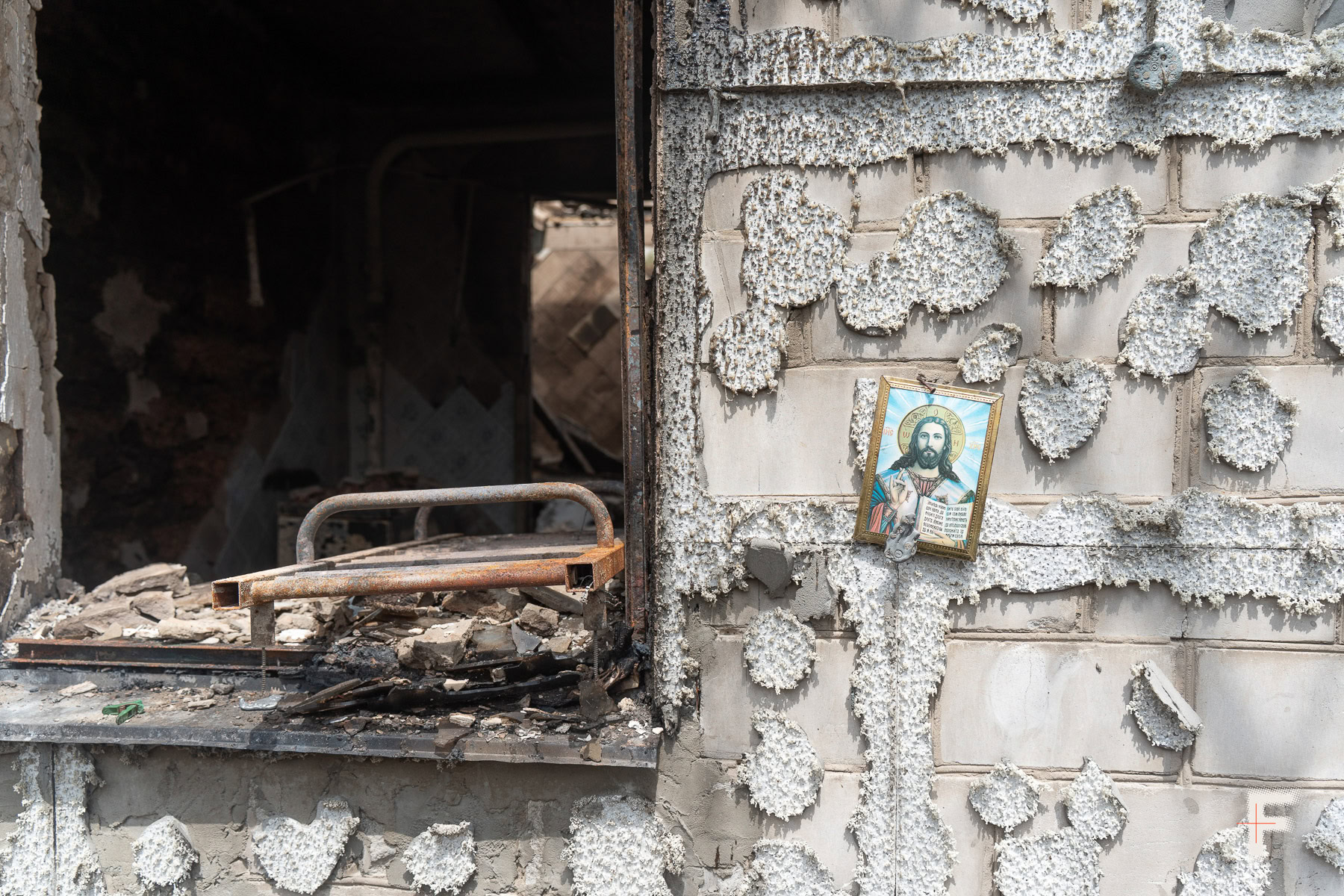
Liudmyla Ishchenko says she woke up to the first explosion. At first, she says, she saw the fire through the window and heard ammunition detonating for several hours. When a massive explosion occurred, the windowpanes and frames in her house were blown out.
So we jumped out, our hair was even singed,
and that was it, we ran…
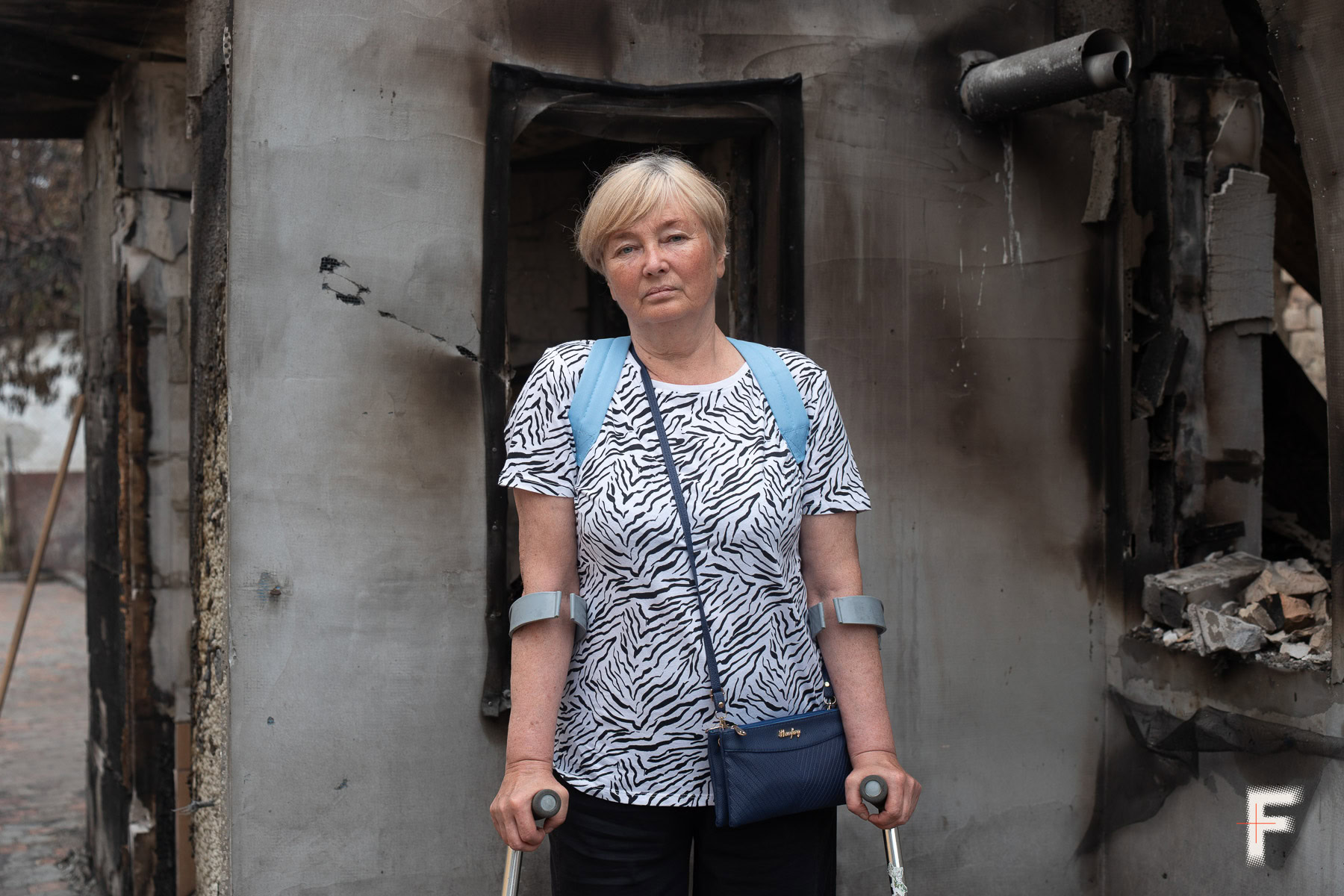
The woman walked across broken glass, put on her prosthetic leg, and grabbed her documents and money. Moments later, fire spread from a neighboring house, engulfing a wooden extension and forcing everyone to flee.
“These fireballs started flying around. Like a comet, with a whole trail behind it… So we jumped out, our hair was even singed, and that was it, we ran… I didn’t even turn around to look at how it was burning or what was burning here. Just to survive, that was the only goal,” the woman recalls.

Ishchenko also reminds us that people lost not only their homes in the fire. Pets remained in the yards, as their owners didn’t have time to get them out during the explosions. Most of them burned to death.
The shelter in Vyshneve
The only equipped shelter in Vushneve’s residential sector was located at the Vizar Machine-Building Plant. That was where an Iskander missile struck, causing a massive detonation. According to locals, 60 to 65 people were inside on the night of the strike. The blast knocked out the lights and bent the doors, leaving residents unsure if the concrete slab would withstand another strike.
Vyshneve residents were only let out of the shelter at 10 a.m., once rescuers managed to clear the exit. From there, they were directed to an evacuation bus, but most people scattered anyway. Nina Shamshura was among those who spent the night in the shelter and chose not to evacuate:
“They told us to get on the bus, but we went to my cousin’s instead — over by the supermarket in the center. She fed us, but then they wouldn’t let us back in here because a secondary detonation had started. Everyone was terrified of another strike, so they didn’t allow people on the street. We had to climb over fences,” the woman says.
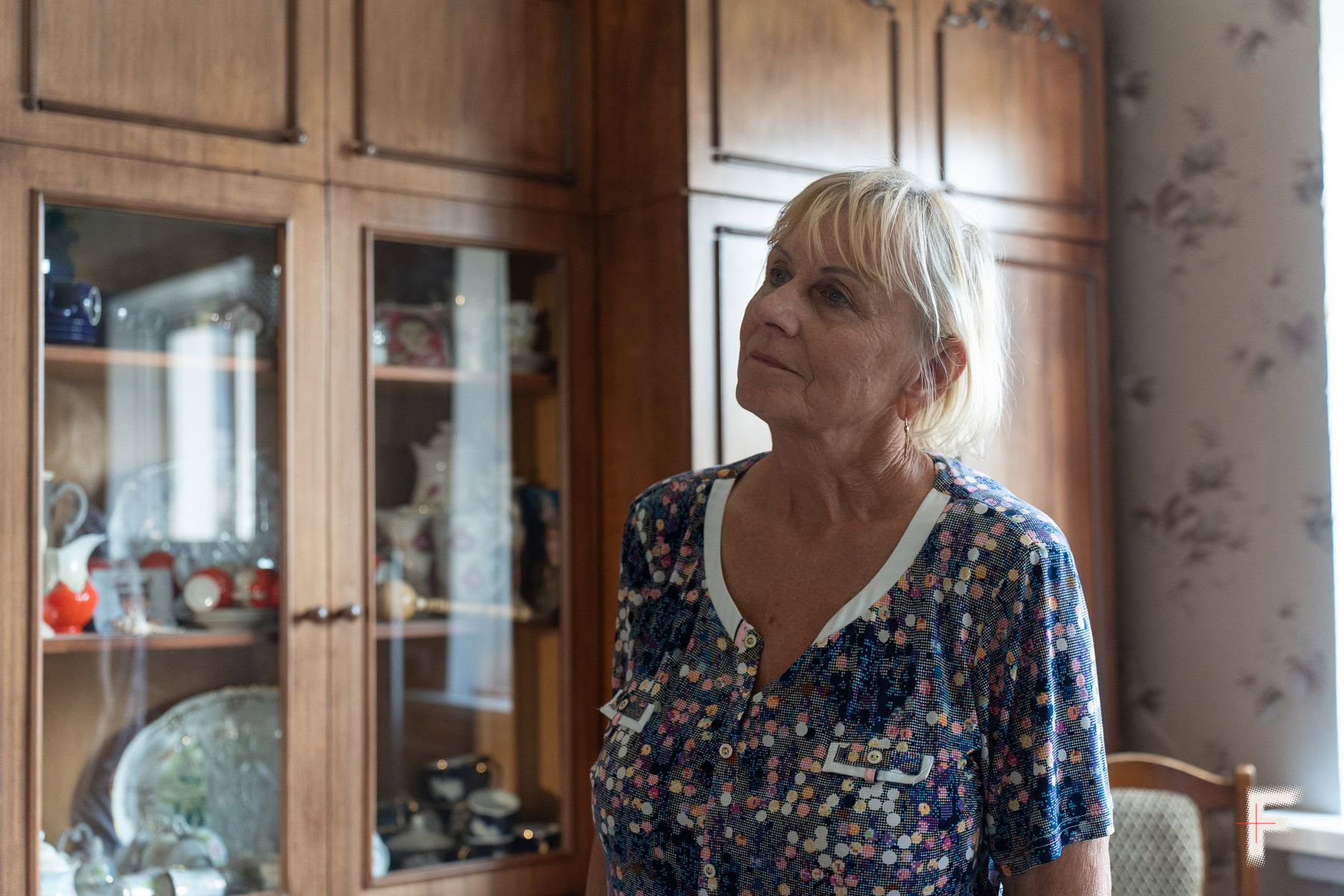
Roman Brovenko [Editor’s note: Name changed] and his family did not go down to the shelter, waiting out the explosions inside a house that no longer exists. The entire family survived. Had they gone down into the cellar, the outcome could have been very different, as a piece of shrapnel flew inside.
“If we had been in there, everyone would have been cut by flying glass at the very least. Someone definitely would’ve been standing right here, looking out, and gotten killed by the shrapnel,” the man says.
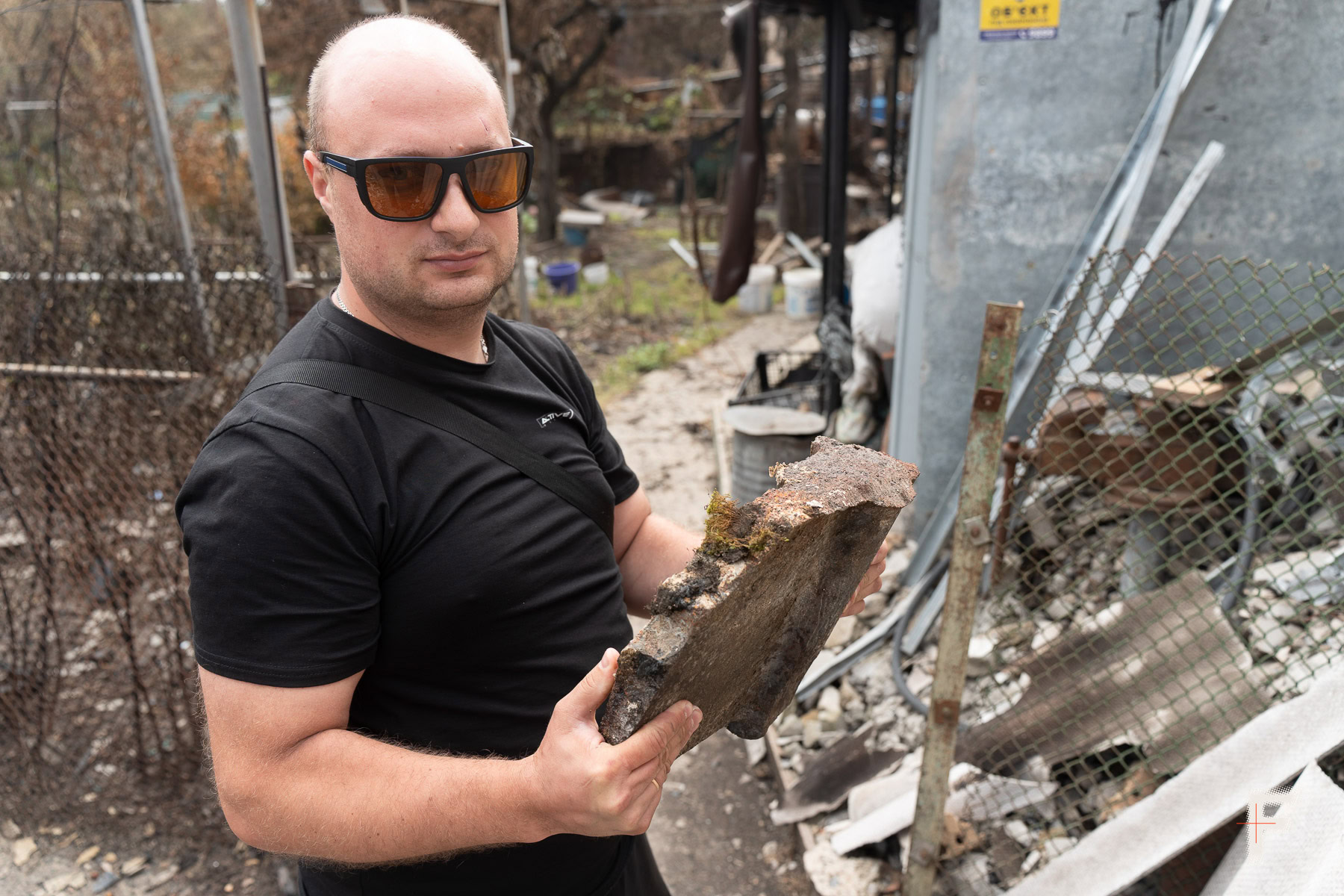
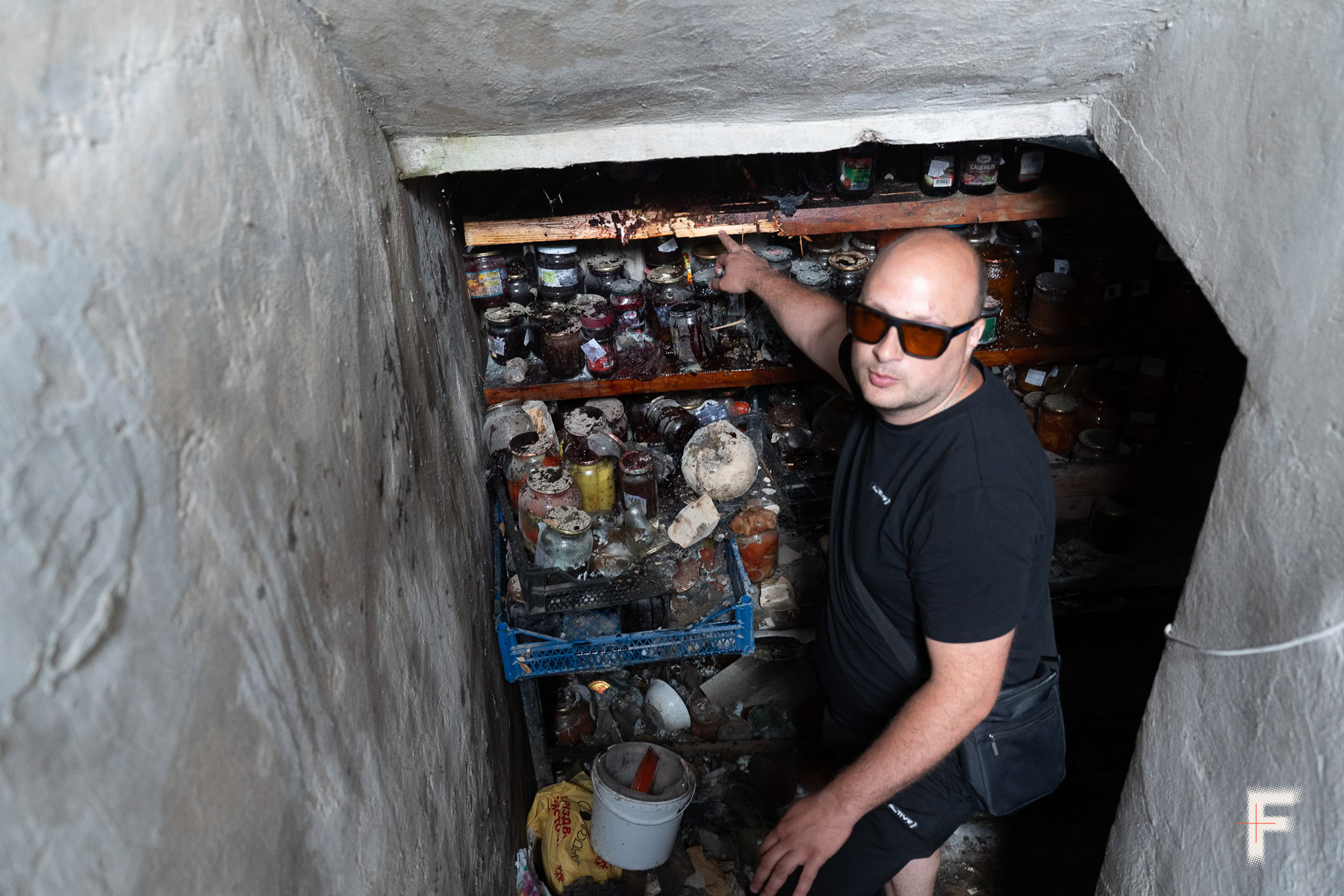
The fragment rests near the blown-out door and weighs about 25 kilograms.
Did Vyshneve residents know about the ammunition depot?
After the explosion, one of the main questions was how an ammunition depot ended up in the middle of a residential area. Officially, the facility operated as a defense plant. The General Staff of the Armed Forces of Ukraine stated that the enterprise where the detonation occurred does not fall under its management and is not subordinate to the Armed Forces.
It’s hard to wrap your head around having
such massive ammunition depots located here.
Vyshneve residents say they had no idea about the scale of the depot. Roman Brovenko [Editor’s note: Name changed] puts it this way:
“We knew it was an Ukroboronprom facility — that was no secret to anyone. We knew what was going on here and what it could, purely theoretically, produce. But it’s hard to wrap your head around having such massive ammunition depots located here. I can understand having a single component in production, but it’s a whole different story when it comes to massive stockpiles of ammunition,” the man ponders.
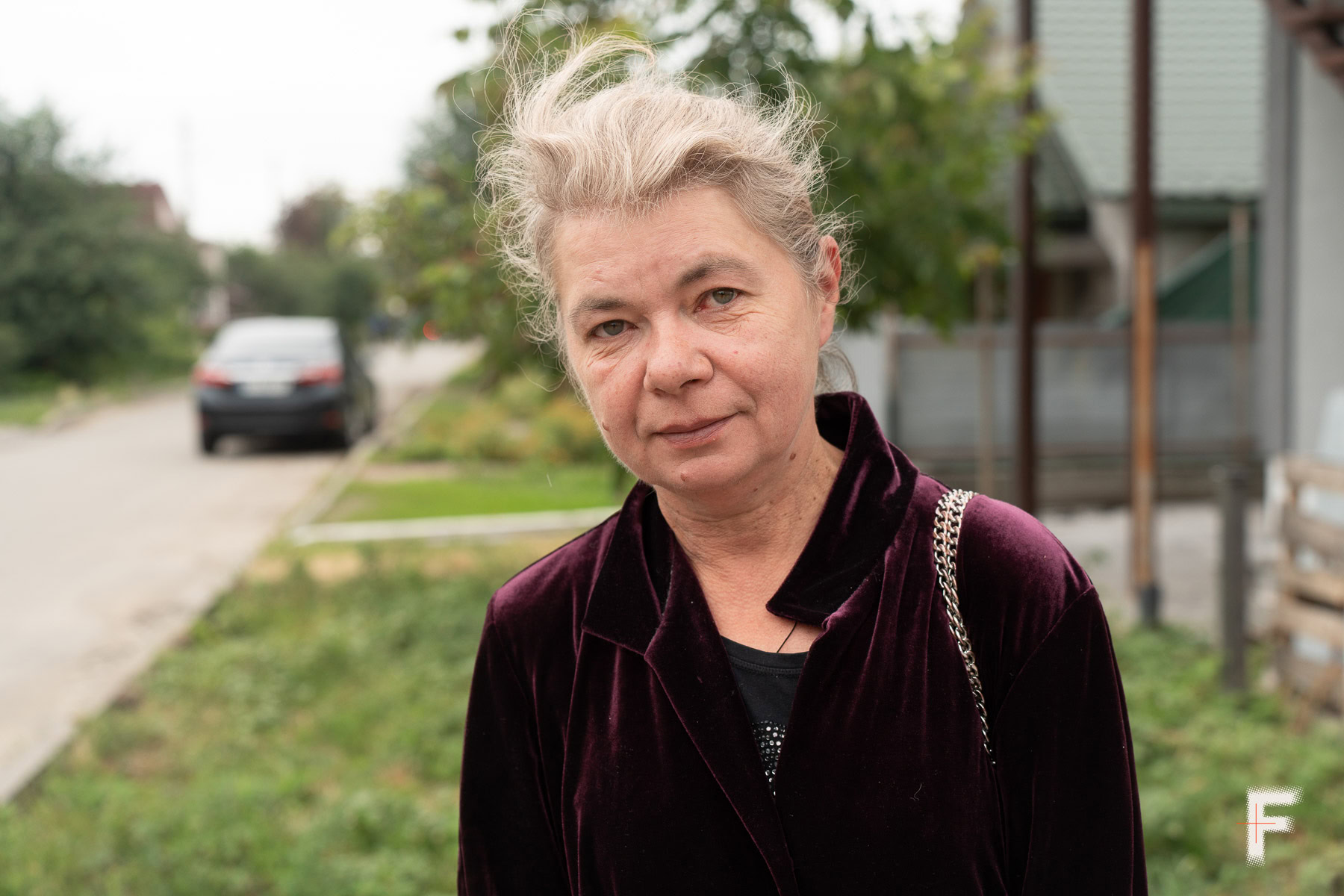
Natalia Blyzniuk confirms that locals had their suspicions about the factory:
“Some people knew, some just guessed. My husband worked there when the factory started out — he’s passed away now. So it was built for that kind of work from the beginning. Then, when Ukraine gained independence, they made it look like they were making pots and gas meters, but people still worked there. And around here, what two people know, everyone else knows too,” she says.
Some locals say that if they had known about the scale of the depot, they would have moved away or appealed to the authorities. After the tragedy, they are trying to rebuild their lives. Among the ashes near his home, Roman Brovenko [Editor’s note: Name changed] points to strawberry sprouts that emerged after the fire. He says they have become a symbol for him that life goes on.
Keep going, to keep our spirits up.
The most important thing is that we survived.

“It’s a moral boost to keep going, to keep our spirits up. The most important thing is that we survived. Losing a home is nothing compared to losing a life. But right now, my biggest concern is making sure this issue is resolved as quickly as possible at both the local and national levels. It’s not just our tragedy — the entire neighborhood was affected,” the man says.
On the night of July 6, 2026, Russia launched a large-scale combined attack on Ukraine, using 68 missiles and 351 drones. In Vyshneve, Kyiv region, a strike triggered a detonation on the grounds of a defense facility. It was this detonation that caused the most severe destruction. According to official data, nine people were killed, dozens were injured, nearly 300 houses were damaged, and about 600 residents were evacuated.
After the tragedy, President Volodymyr Zelenskyy stated that those responsible must be held accountable and announced personnel changes at the joint-stock company Ukrainian Defense Industry. On July 14, the company’s CEO Herman Smetanin, announced the end of his tenure. Meanwhile, a court remanded Ruslan Kuchynskyi, production director of JSC Aviation and Rocket Technology Manufacture, to custody for 60 days without the right to bail.
***
Hi, we are Myroslava and Yurii, the authors of this article. Thank you for reading to the end.
In this report, it was important for me to show not only the scale of the tragedy in Vyshneve, but also how it changed the lives of those who found themselves at its epicenter. While working on this story, I was deeply moved by the stories of the survivors: despite their losses, they continue to support one another and try to rebuild their lives. At the same time, this article raises questions of accountability for decisions whose consequences proved so devastating for local residents. I hope it reminds readers that even when war becomes part of everyday life, the threat does not disappear, and prioritizing your own safety can prove decisive.
Every story starts with your support. Join the Frontliner community so we can keep up documenting Russia’s war against Ukraine from the front line and the rear.
***