Words can wound, too: Ukrainians’ new wartime etiquette
Seemingly ordinary question "How are you?" can now open the door to a story about a death, a draft notice or someone who is missing in action. A joke about draft summonses can land badly next to someone who returns to their unit tomorrow. The war has loaded everyday words with experiences the person you're talking to may know nothing about. Frontliner examined how wartime psychology is reshaping the way Ukrainians talk to one another, and what new rules of politeness it requires.
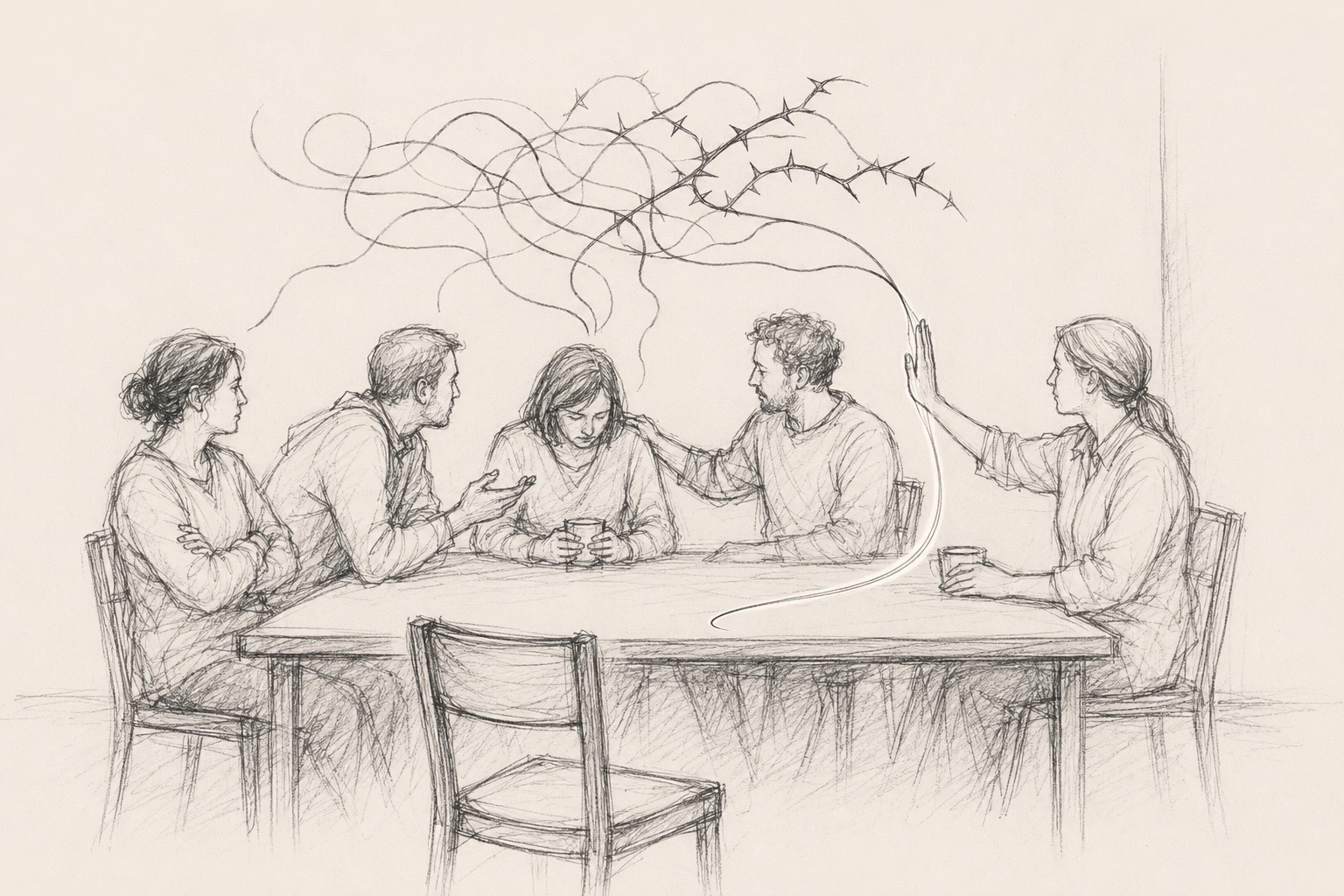
At a single table you might find a soldier home on leave, the relative of a prisoner of war, a displaced person, someone who lived through occupation, and a man of mobilization age. Each hears any conversation about the war through the lens of their own experience. A phrase that sounds ordinary to one person can strike a nerve in another.
In 2026, 38% of surveyed Ukrainians had relatives who had taken part in combat. These respondents were more likely to report constant tension, fatigue that doesn’t lift even after rest, and a need for psychological support, according to a study.
Exhaustion has become a shared emotional background
In the two to four weeks before the survey, 80% of respondents frequently or constantly experienced at least one negative state, such as anxiety, tension, irritability, exhaustion, apathy or a sense of helplessness. More than half, 55%, called exhaustion a normal reaction to current conditions.
Over the course of the year, 49% of respondents said they needed psychological support. Only 13% consulted a professional. Self-help and conversations with loved ones remained the most common coping methods. As a result, everyday conversation has become one of the main places where Ukrainians look for support and risk new trauma.
Enlistment status doesn’t call for a public interrogation
A question can sound like an accusation
Questions such as “Why are you still here?”, “When are you going to enlist?” or “How did you manage to get a deferment?” intrude on private life. Behind the answer could be a health condition, caregiving duties, work at a critical enterprise, prior combat experience, or another circumstance a person has no obligation to discuss.
Appearance, age and civilian clothing reveal nothing about someone’s military service, injuries or the work they do. A conversation about mobilization status should be voluntary and have a clear purpose.
A debate needs boundaries
The mobilization policy, the work of Ukraine’s territorial recruitment centers (TCCs) and legislative decisions can be discussed without judging the people in the room. It helps to separate state policy from any individual’s personal story, which reduces the risk of turning a public debate into a personal trial.
Veteran Hub advises participants in a difficult conversation to agree on ground rules beforehand: listen to one another, don’t interrupt, and don’t make it personal. This keeps the conversation focused on the topic rather than the people having it.
Combat experience belongs to the person who lived it
Curiosity doesn’t entitle anyone to details
Questions like “Did you kill anyone?”, “What was the scariest moment?” or “How many of your guys died?” can force someone to relive traumatic events to satisfy another person’s curiosity. Veteran Hub stresses that military service is only one of a veteran’s many identities. Whether to talk about it or stay silent is that person’s decision alone.
A safe opening sounds like an invitation: “If you ever want to talk, I’m ready to listen.” A change of subject, a short answer or a pause signals a boundary. Repeated questions create pressure.
Respect means ordinary treatment
Overt pity and a constant focus on trauma can strip a veteran of ordinary human status. Ukraine’s Ministry of Veterans Affairs recommends using neutral, respectful language, addressing people by name, and avoiding military slang whose meaning isn’t clear to you.
Help should be offered only after asking first. A person with an injury or amputation decides for themselves whether they need support. Veteran Hub also advises against touching a wheelchair, a prosthetic or other personal equipment without permission.
There’s no “right” response to loss
Grief doesn’t need a ready-made formula
Phrases like “stay strong,” “time heals” or “you need to move on” can come across as a demand to stop grieving sooner. It’s safer to acknowledge the loss directly: “I’m so sorry,” “I’m here for you,” “What can I do for you?”
The mental health program “Ty Yak?” (“How Are You?”) advises listening attentively, not pressuring someone to talk, and asking about a specific need. Practical help might mean bringing food, offering a ride, calling an institution on someone’s behalf, or simply being present.
The person sets the pace of contact
After news of a death, a short written message often leaves the recipient more control, since they can read it and respond when they’re ready. This isn’t a universal rule; the form contact takes should be chosen based on the closeness of the relationship and the family’s wishes.
Relatives of the missing and of prisoners of war live with prolonged uncertainty. Speculation about a loved one’s fate, advice to “prepare for the worst,” and other people’s stories about prisoner exchanges can deepen their anxiety.
Practical guidance: how to speak more carefully
- Before a sensitive question, ask: “Is it OK if I ask you about this?”
- Give the other person room to answer briefly or change the subject.
- Don’t ask about killing, the deaths of fellow soldiers, or the details of an injury.
- Don’t ask why someone has a deferment, an exemption from service, or was found unfit to serve.
- Don’t compare people’s losses, fears or ways of coping with the war.
- Name Russian aggression and Russia’s responsibility directly.
- Avoid military slang whose meaning you don’t know.
- Ask what kind of help is needed before acting on your own.
- During a disagreement, discuss decisions and facts rather than judging the person.
- Allow for pauses, and don’t demand an immediate answer.
Politeness starts with a pause
Silence can also be supportive
A person in crisis often just needs a listener. Advice, judgment and efforts to find a silver lining can wait. The “Ty Yak?” platform recommends asking open-ended questions, listening without interrupting, and voicing your own concern without judgment.
Pausing before responding allows for a simple check: will these words actually help the other person, or are they mainly an outlet for my own emotions? That check matters especially in conversations about mobilization, loss and combat experience.
Caution still leaves room for unfiltered speech
Ukrainians need humor, directness and raw emotions, too. People close to a veteran or someone grieving may joke about their own experience, argue, and use military slang. That doesn’t automatically give others the right to repeat their words.
The war’s new etiquette rests on recognizing another person’s experience, agreeing to have a difficult conversation, and knowing when to stop in time. Sometimes the most human words remain the simplest: “I’m here. Do you want to talk?”