Fewer than 30 million people remain in Ukraine: What that means
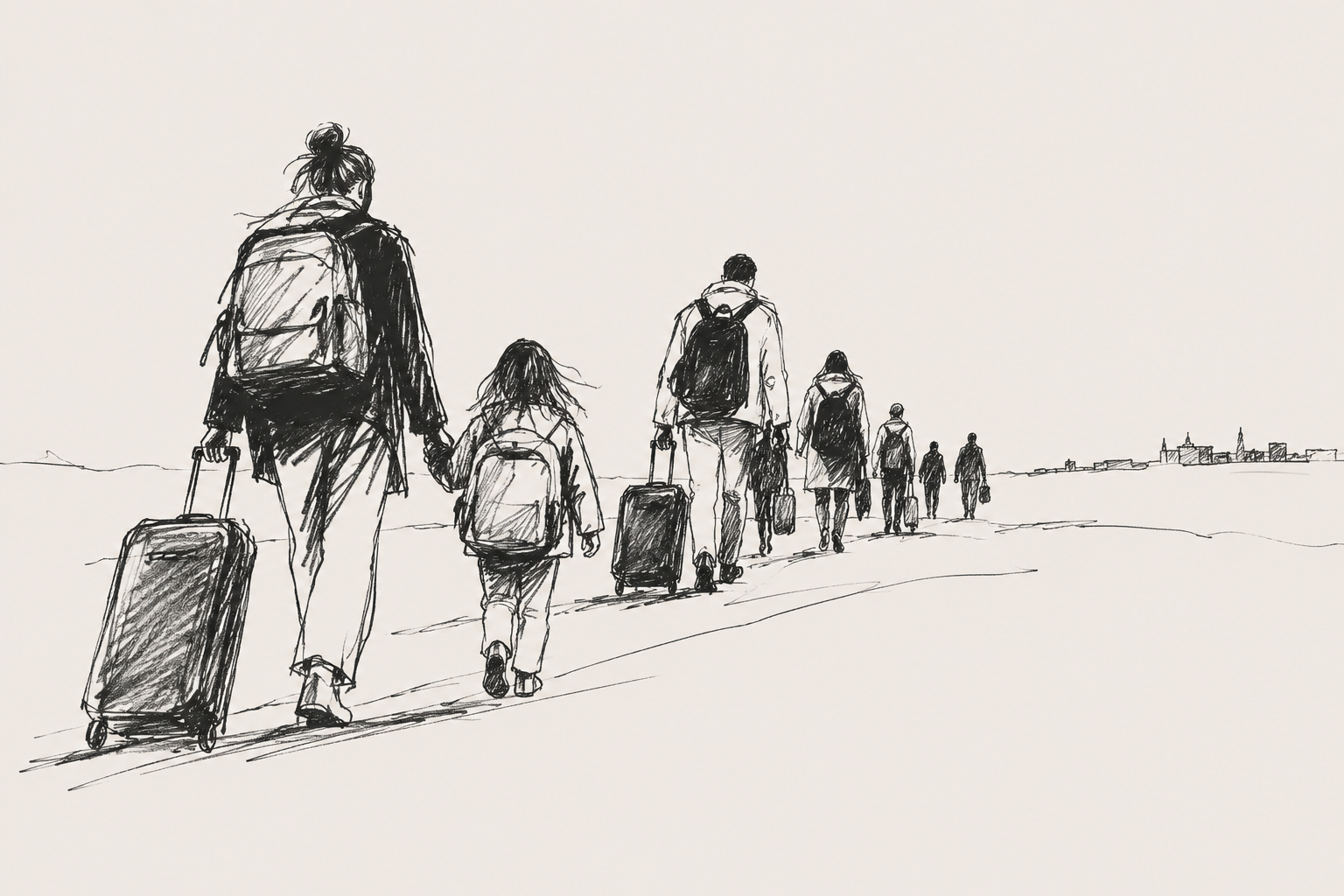
Ukraine continues to lose people, and emigration now has the biggest effect on the decline. In the first half of 2026, the number of residents in government-controlled territory fell by about half a million, to 28.5 million. The war is deepening a demographic crisis whose consequences the economy already feels and which will shape the country’s recovery. Frontliner examined why Ukraine’s population is shrinking, what consequences demographers forecast and what the government plans to do.
Ukraine continues to lose population amid the full-scale war with Russia. The estimate of 28.5 million refers to people living in territory under Ukrainian government control as of mid-2026. It does not include all Ukrainian citizens, such as those abroad or in temporary occupied territories.
The new data was released by Ella Libanova, director of the Institute for Demography and Quality of Life Studies at the National Academy of Sciences of Ukraine, at the Ukrainian Women’s Congress. According to Libanova, the institute has completed its estimate of the population for the first half of 2026. She attributed most of the decline to migration.
The figure remains an estimate. A full census cannot be conducted during wartime. Demographers use alternative sources of information, including mobile operator data. The accuracy of such estimates is limited, so the figure should not be read as the result of a direct count of every resident.
What a shrinking population means for the economy
Fewer workers
A smaller working-age population limits businesses’ ability to hire. These changes could become especially noticeable during reconstruction, when Ukraine will need builders, engineers, health care workers and other specialists.
Employers are already recruiting more older people, and women are taking up jobs once dominated by men. Libanova also forecasts a need for foreign workers. The scale of future labor migration, however, cannot yet be reliably determined.
An aging population and social costs
According to the Ministry of Social Policy’s forecast, by 2030 one in four Ukrainians could be older than 60. Currently, only 13.2% of Ukrainians ages 60 to 70 are employed.
An aging population will increase demand for medical and social services. With fewer workers, it will be harder for the state to secure the revenue needed to fund pensions and other spending. The size of the burden will depend on employment, labor productivity and economic recovery.
How the government plans to halt the demographic decline
Bringing Ukrainians back from abroad
In September 2024, the government approved the Strategy for Ukraine’s Demographic Development Through 2040. The document calls for reducing emigration, encouraging citizens to return, supporting families with children and lowering premature mortality. It gives special attention to housing affordability, safety and employment opportunities.
The government also approved an action plan for 2024-2027. Its measures include support for people after they return, development of social housing, preferential mortgages and rental assistance. The plan sets specific deadlines and names responsible officials. But its approval alone does not show that all the measures have been carried out.
Work, birth rates and future migration
The demographic strategy calls for drawing more people into the labor market, improving conditions for raising children and developing social services. The government views these areas as components of the long-term recovery of the population.
Another risk Libanova points to is a possible departure of men after martial law ends. Some of them may join families already living abroad. She suggests that working conditions, wage levels and the place where families decide to live together will be decisive. This is a forecast scenario, not an established future number of migrants.
Ukraine’s demographic recovery will depend on how long the war lasts, whether forced migrants return and whether people can be given a safe life. The state strategy sets out the work through 2040. How much it will affect the population will depend on whether the planned measures are carried out and on the economy’s development.