
When Ukrainians do not talk about the war, Russians do
Members of the Frontliner team attended the world’s largest journalism festival. Our reporter shares her impressions and reflects on why it is important for Ukrainians to be present at such international events.
The International Journalism Festival is the leading event for the media community. It has been held for twenty consecutive years in the small city of Perugia in central Italy. During just several days, the festival holds roughly two hundred panel discussions which address the most pressing issues for the media community.
Around 50,000 journalists come to Perugia to exchange knowledge, experience, and engage in open dialogue. Among them, I met colleagues from Ukraine. However, in my opinion, there should be more of them.
The reality is, without us, no one will talk about the war in Ukraine, the kill zone, Russian war crimes against Ukrainians, and other important issues. Such discussions simply will not take place if Ukrainians do not initiate them. Therefore, one of the best options is to submit discussion proposals to hundreds of international platforms, such as the International Journalism Festival.
This way, large audiences will hear about the war directly from Ukrainians. In Perugia, I had a flash of insight: I convey the reality of Ukrainians’ lives not only through texts and photographs. Direct, personal interaction works best, as I back up my words with documented stories.
Making it happen is more achievable than it sounds. You need to look for platforms, open calls for the main program, and propose your own topics. The best approach is to collaborate with other media outlets and non-governmental organizations, as this builds the organizers’ trust.
Another issue is how to make an impact on the international audience attending the event. I have repeatedly heard that support for Ukraine is achievable only when it is seen as a strong partner. For instance, international participants are deeply impressed by the development of Ukrainian military technologies, particularly drones. In my opinion, the same approach works with the media. We do not complain about the truly difficult circumstances of our work; instead, we share practical insights from which a journalist from anywhere in the world can learn a lesson and apply it to their own work.
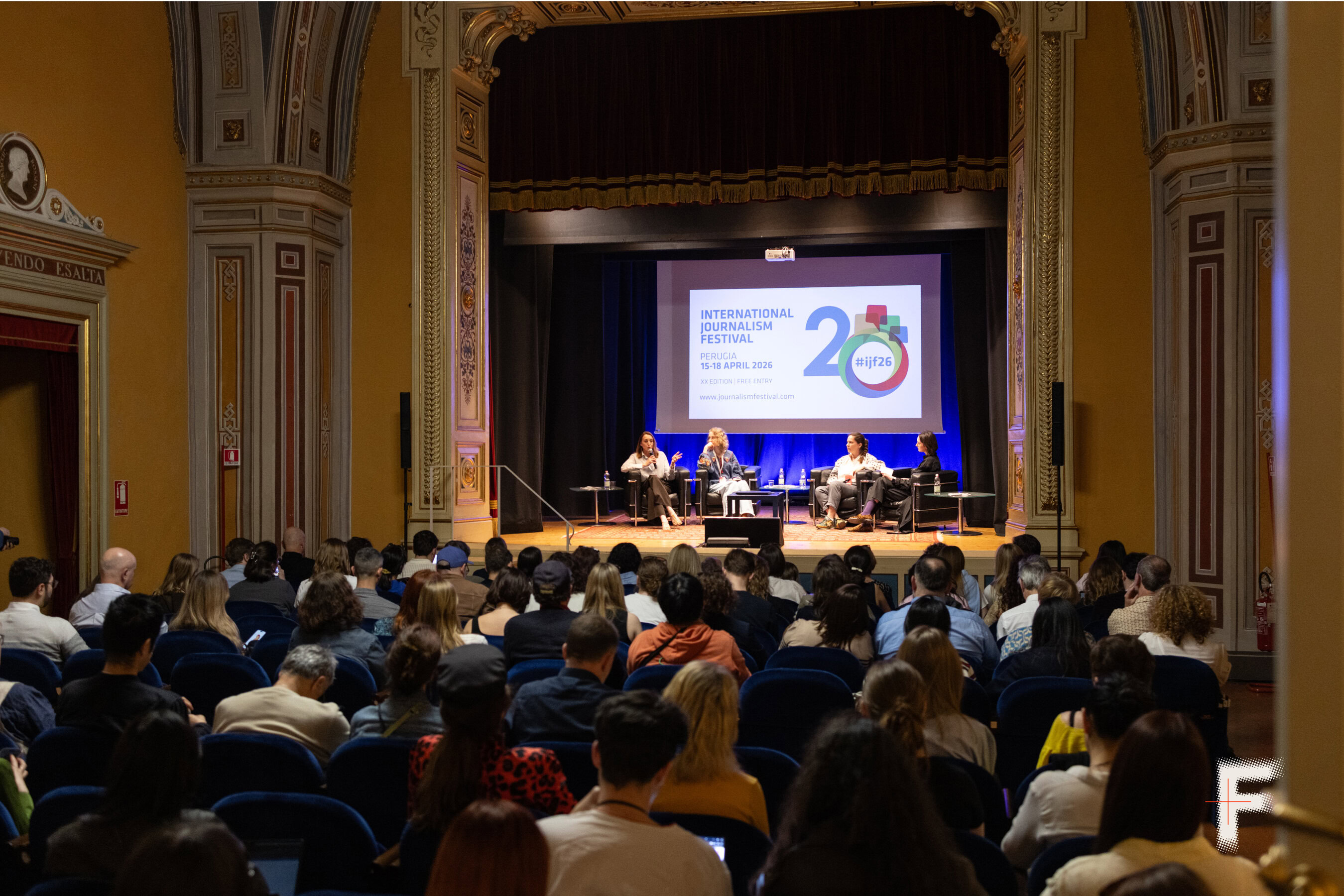
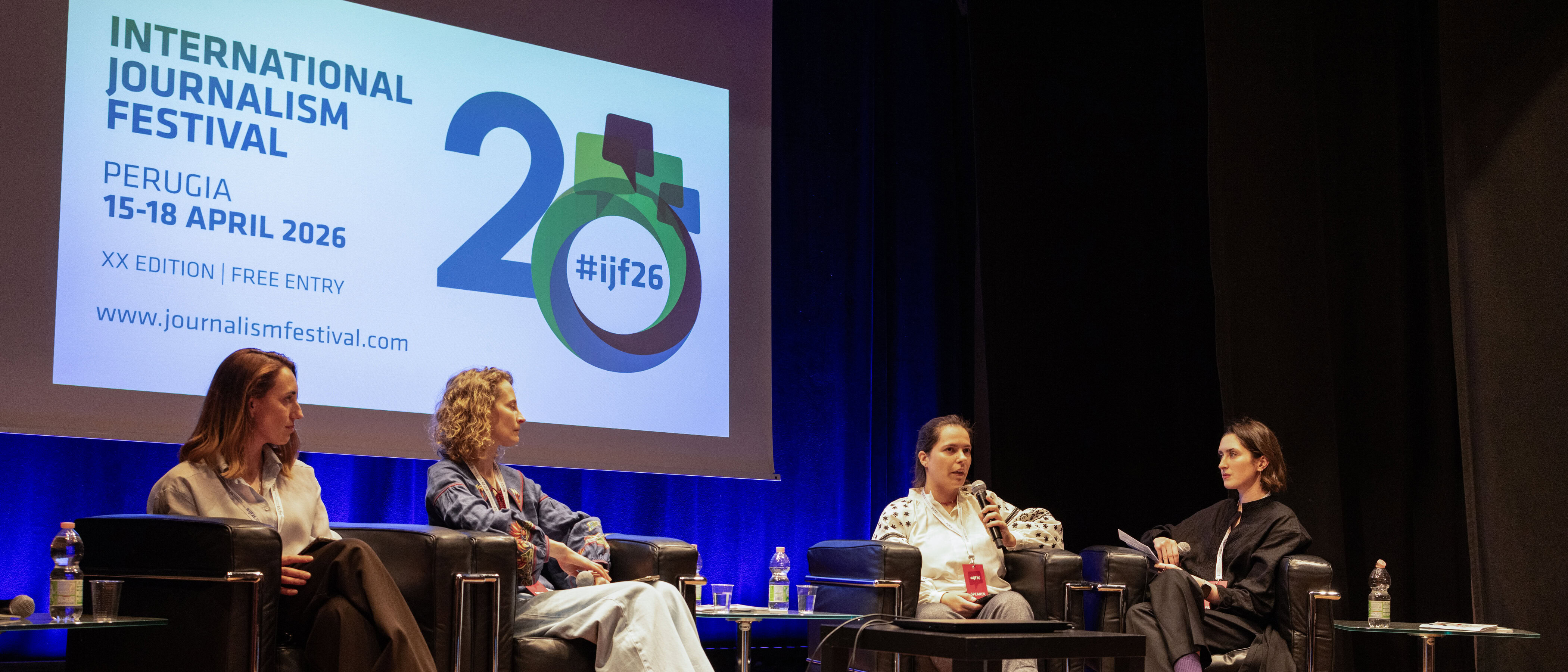
Ukrainian media professionals shared this unique experience in Perugia. Frontliner CEO Yelyzaveta Kovtun, speaking at the panel “Ukrainian journalism under fire: media resilience in the fifth year of full-scale war,” noted that it is currently quite difficult to gain the audience’s attention. But war has many facets. And we are looking for stories that offer hope, for example a couple deciding to have a child, or entrepreneurs launching a business. In the context of war, these are all significant, hope-giving developments.
During this panel, Mariya Frey, a member of the Managing Board of Suspilne, a Ukrainian public broadcast company, described how their regional newsrooms have adapted to shelling and blackouts. For instance, in frontline areas, the team no longer meets at the office; in newsrooms in safer areas, any employee can spend the night, take a shower, and do laundry.
Another panelist, Olga Myrovych, head of the Lviv Media Forum, voiced an important point: the media is also part of the country’s critical infrastructure. After all, during war and other crisis situations, people begin to consume media content constantly. Therefore, their access to accurate information is crucial.
The discussion moderator, Olha Syrotiuk, program coordinator at the European Centre for Press and Media Freedom, explained the context in which Ukrainian media operate. In particular, she noted that covering the front line is becoming increasingly difficult due to the danger posed by drones. She also shared that journalists are handling the workload normally done by two people. Accordingly, the panel was marked by a repeated idea: yes, the work is hard, but we are adapting and exploring new opportunities.
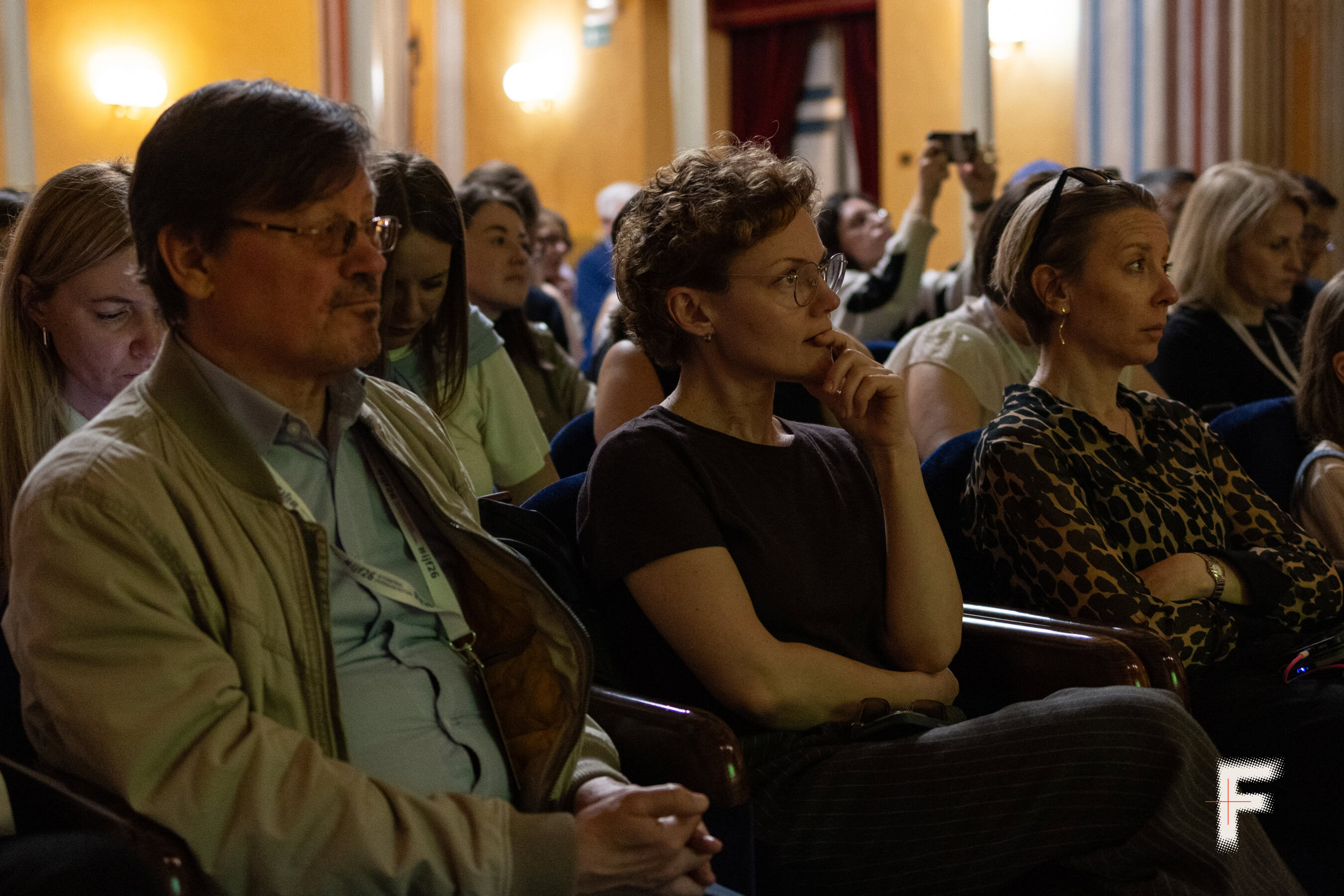
The event filled the venue, with around two hundred attendees. The majority were foreigners; I met people from the US, the EU, Moldova, and Georgia. They did not want to leave even after the panel ended and kept asking the speakers more and more questions.
I would really like to see more discussions about Ukraine at media conferences. Obviously, it is not always possible to find the budget for such trips. However, funding can be sought through travel grants from media organizations and foundations. Additionally, a significant part of the community, namely male journalists, cannot leave the country for understandable reasons. But we must look for opportunities. Because when Ukrainians do not talk about the war, Russians do. They do not give up such an opportunity.

