“I’m paranoid about my own safety”: What happens to people after living under occupation
Ukrainians are fleeing Russian-occupied territories. But even in safety, they continue to experience lingering effects: fear, uncertainty, and distrust. Mentally adapting to a new life can prove even harder than physically escaping the Russian onslaught. These people need professional support. Frontliner gathered stories of those who survived the occupation and spoke with an expert about what lingers in the mind after the escape, and how the journey from merely surviving to truly living begins.
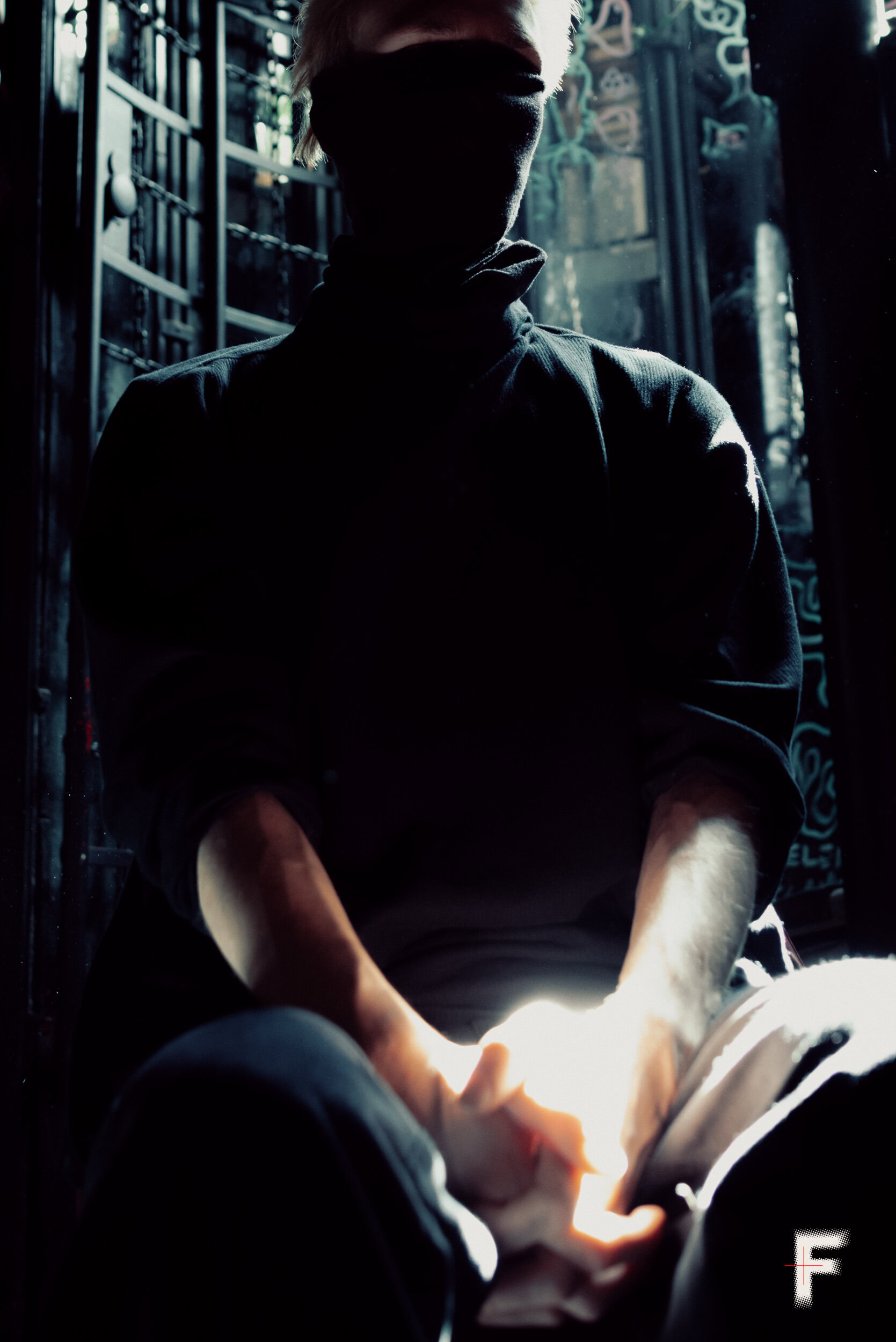
Nestor [name changed for security reasons] hadn’t yet turned 18 when he escaped occupied Mariupol. He spent several years of his life in a city where ruined buildings, loneliness, and a sense of anxiety became everyday reality.
“I realized I had to leave right when all this started,” he says. “Our house was destroyed. There was nothing but constant paranoia and fear.”
Like many teenagers under occupation, Nestor was forced to attend a Russian school. At the same time, he studied online through a Ukrainian school. He didn’t want to lose touch with normal life and planned to apply to a Ukrainian university.
He couldn’t leave on his own because he was a minor, and his parents did not want to leave the city. It was only right before taking the NMT [Ukraine’s national university admissions test] that Nestor put his foot down about leaving.
Eventually, the teen managed to flee Mariupol alongside his mother and sister. The family stayed in Tbilisi for a while before making their way through Georgia to Ukrainian-controlled territory.
“In Tbilisi, I felt complete freedom,” Nestor recalls of his first days after the occupation. “I no longer had to pretend that I was fine with everything. But when I saw a different life where people just live their lives, go for walks, where cities aren’t destroyed, it made me really sad. It felt like hell existed in one place, and paradise in another.”

After leaving, Nestor tried not to dwell on his experiences under occupation and focused on his new life.
“I changed a lot and did everything I could to avoid reminding myself of the past,” he says. “I tried to socialize, and my friends really helped me with that.”
However, the experience still left its mark. During the occupation, Nestor painted pro-Ukrainian graffiti, and he was nearly caught by the occupying forces several times.
“That is why I sometimes get paranoid about my own safety,” he explains. “I still look over my shoulder just to make sure no one is following me.”
For the first few months after leaving, he had nightmares about being back in Mariupol, being chased by the FSB. When asked what “home” means to him now, he pauses for a few seconds before answering.
“For me, home is no longer a place,” Nestor says. “Now, home is the people I love and trust.”
After living in danger for a prolonged period, the mind often continues to expect threats long after reaching a safe environment, explains psychotherapist Yevheniia Ihrunova. She works with military personnel, veterans, civilians who survived occupation, and others coping with the aftermath of psychological trauma.
“A person might continue to monitor the perimeter: looking over their shoulder, avoiding situations that seem unsafe, and constantly expecting a threat,” she says.
According to Ihrunova, this is a normal psychological response to stress and living in a state of constant fear. It does not necessarily mean the person will develop post-traumatic stress disorder (PTSD).
For some, these symptoms gradually fade on their own, while for others, they can develop into PTSD, especially if the person lived in constant fear for a long time or experienced violence. The mind needs time to realize that the threat has truly passed, allowing the person to shift from mere survival to living for tomorrow.
“We return physically first, and then psychologically,” the expert says.
Losing the sense of home
For those fleeing occupation between the ages of 17 and 20, relocating often means more than just changing cities. Along with leaving their homes behind, they have to rebuild their sense of self, their future, and their own safety from scratch.
Tia [name changed for security reasons] was 19 when she fled Makiivka. She grew up under occupation and arrived in Kharkiv in late 2023 without a clear plan or any idea of what to do next. She made the decision to leave entirely on her own. Her family did not support her intention to leave the occupied territory, so she had to prepare for the departure and map out her route herself.
“My departure was chaotic,” Tia recalls. “I didn’t really understand where I was going. And then, I just ended up in Kharkiv.”

A constant sense of internal collapse accompanied her final years in occupied Makiivka. While her peers were thinking about their studies, friends, and the future, she was gradually losing the very foundations her life was built on.
“You get into university and think: this is it, everything’s great, life will just take its course,” Tia explains. “And then you realize that everything holding your life together—family, education, friends—is starting to crumble.”
Before leaving, Tia switched almost entirely to speaking Ukrainian in private conversations. However, doing so was shadowed by fear.
“I was afraid that one day I would step outside and, without even thinking, say something in Ukrainian and get thrown in jail,” she recalls.
The hardest part for Tia was the realization that her years under occupation had destroyed the very idea of safety.
“It’s not just that you lack a safe space around you, but rather this feeling that a safe space will never exist anywhere ever again,” she explains.
After she left, her relief gave way to anxiety. Instead of finding some semblance of “normalcy,” Tia arrived in Kharkiv bearing the scars of war: constant Russian attacks, ruined buildings, and the proximity of the front line.
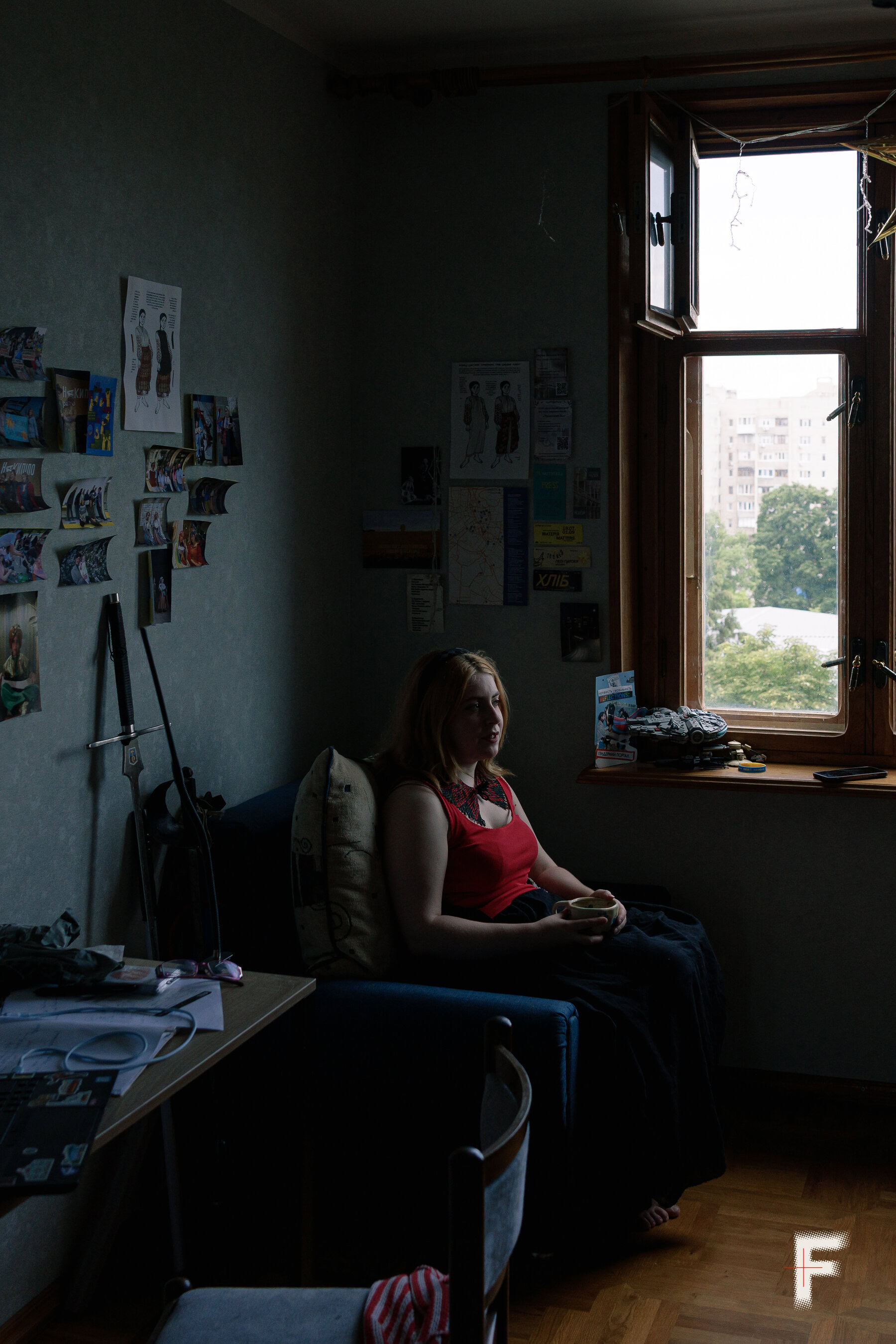
“You think you’re heading to a peaceful city, far away from the occupation,” she says. “And then you realize you are still living right on the edge of the war,” Tia explains.
Her first sense of safety came from small details that most people would find mundane: Ukrainian signs, flags, familiar products in stores, and the logo of Ukrposhta [Ukraine’s national postal service].
“Under occupation, I was constantly searching for any surviving traces of Ukraine. But here, the whole environment was Ukrainian,” she recalls.
However, even after relocating, some habits have lingered. Tia says she still automatically maps out escape routes and studies the city’s infrastructure as if preparing to flee again.
“I memorize routes, where to find water, where fruit trees grow,” she says, “how to cross the city on foot, and where to go in case of a blockade or occupation.”
Tia admits that a part of her is still in Donetsk. She says it’s unlikely she will ever be able to return there and call it home. Yet, at the same time she considers working with de-occupied territories in the future. When asked what home means to her now, she answers briefly.
“Probably nothing,” Tia says. “I don’t feel at home anywhere. It simply doesn’t exist.”
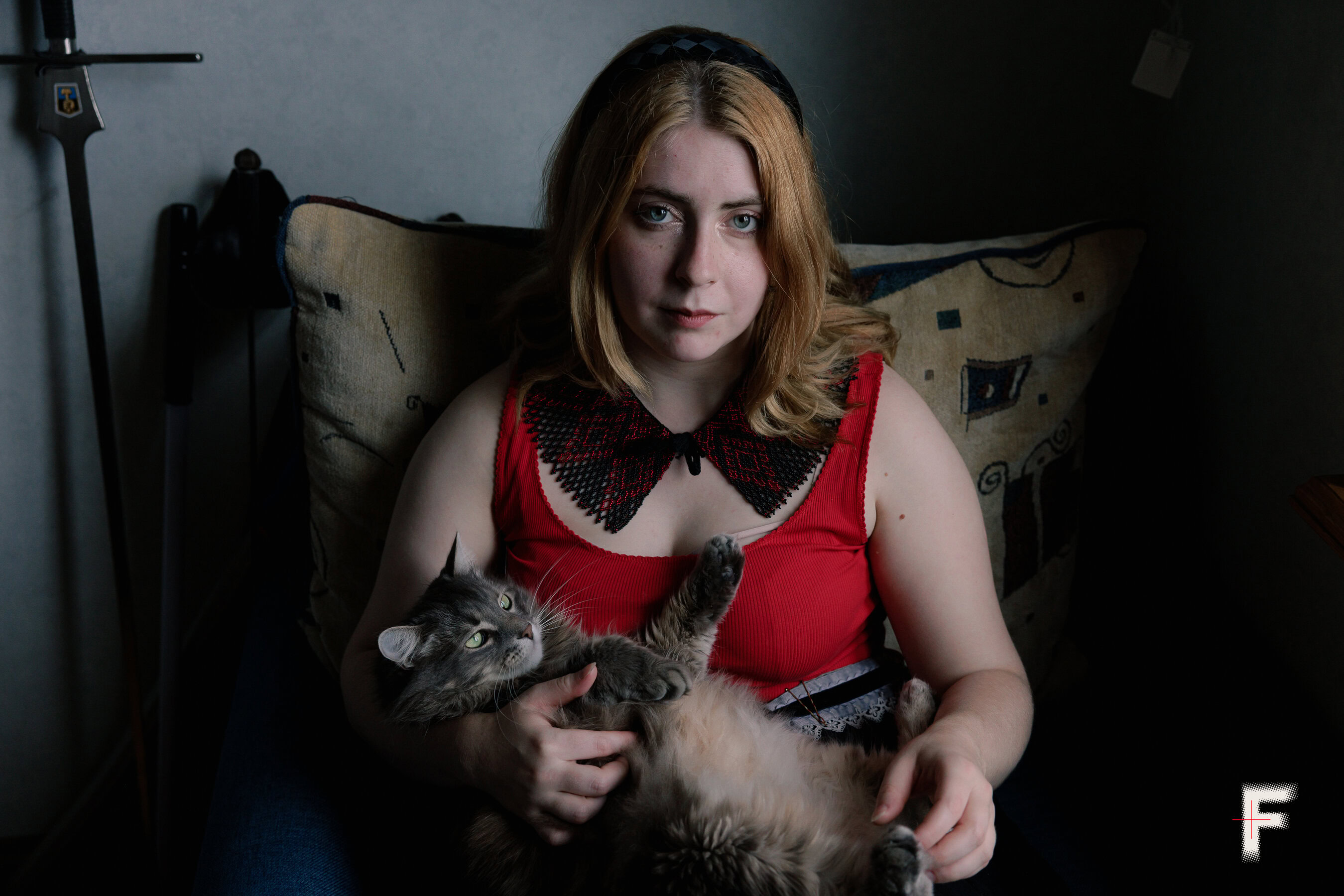
Yevhenia Ihrunova explains that at a young age, the experience of occupation often affects not only a person’s sense of safety but also the formation of their identity itself.
At the same time, according to the expert, a young person’s mind is far more resilient. As a result, adapting to a new environment and processing a traumatic experience can sometimes be easier for them than for older people, whose lives were already fully established before the occupation.
Life without a sense of the future
Before the full-scale invasion, Olena’s life was deeply rooted in Mariupol. It was where she lived, worked, and was surrounded by her family. When Russia launched its full-scale war on February 24, 2022, the city was quickly besieged, leaving its residents trapped. Together with her mother and older daughter, Olena spent over two months in blockaded Mariupol. They were only able to leave on May 10.
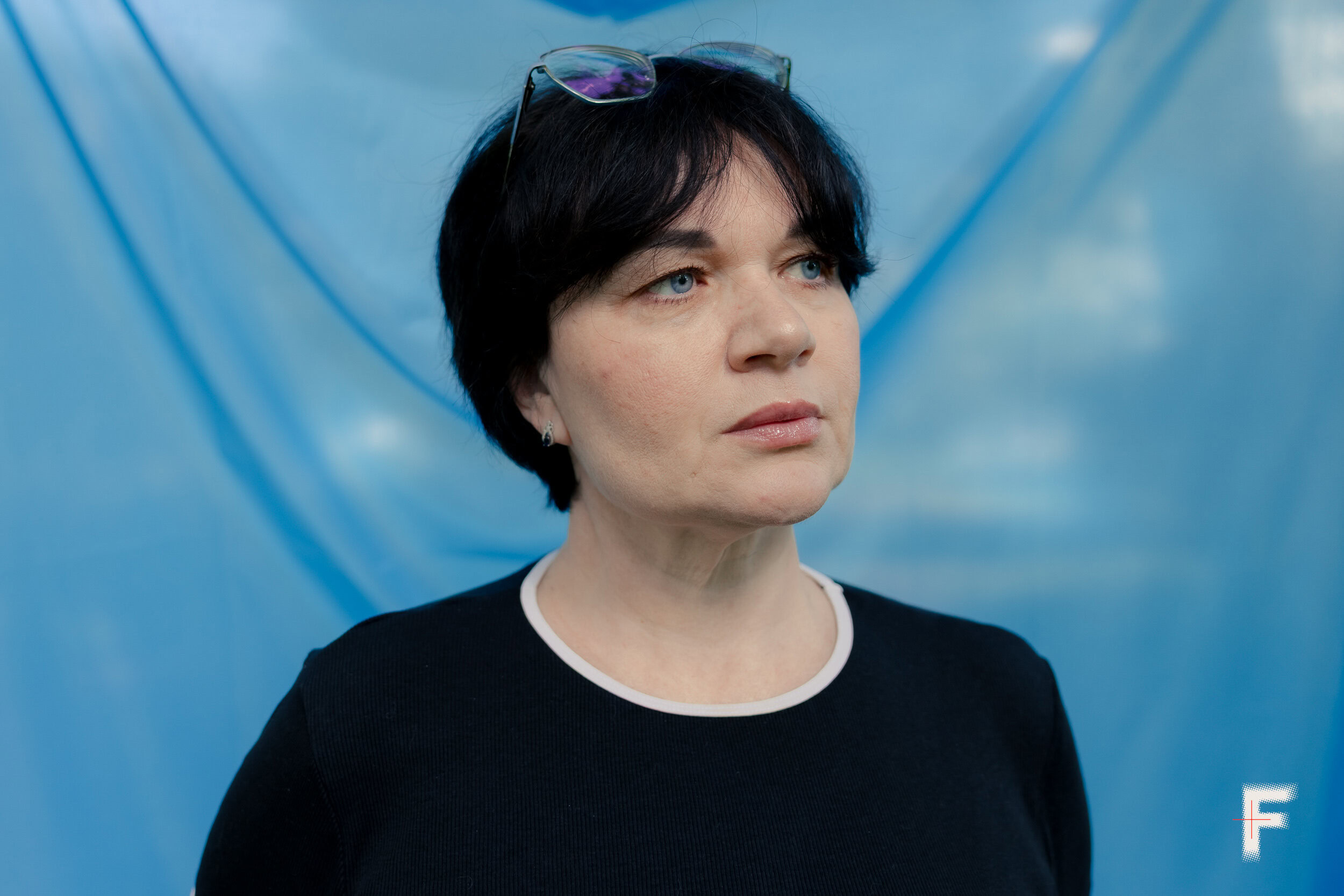
In the very first weeks, the city was cut off from information, severing all ties to the outside world. People lived with no understanding of what was happening beyond the city limits. Along with information, normal daily life quickly vanished. Life gradually narrowed down to basic needs: finding water, food, and a way to stay at least somewhat warm. For the first time in her life, Olena experienced true hunger.
Her experiences left her with new household habits that would have previously seemed unnecessary or strange. For example, she now always keeps two kettles at home: an electric one and a stovetop one. The latter proved invaluable when the electricity went out, and they had to cook food over an open fire with their neighbors.
“I was jealous of the people who could boil water in a kettle, because we had to use a small pot,” Olena says with a smile.
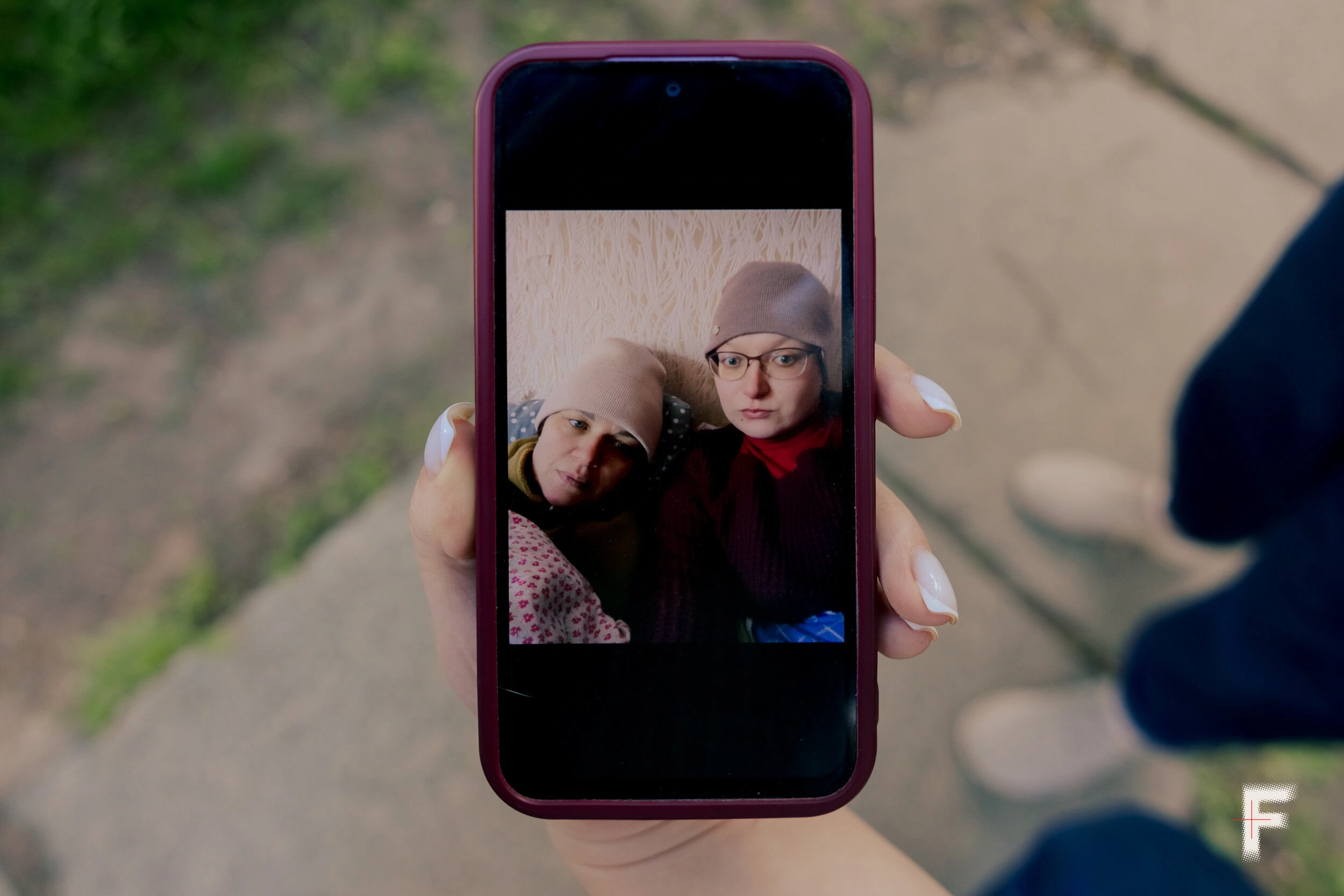
After leaving, the sense of danger didn’t just vanish overnight. Even in Ukrainian-controlled territory, constant Russian attacks made Olena feel for a long time as if the war was simply following her.
Yet, the hardest part turned out to be not the move itself, but losing any sense of what the future held. Before the war, her life was clear and stable: work, home, a professional environment, and the feeling that everything ahead was more or less predictable. In her new life, she had to rethink not only her daily routine but also her own place, her work, and the opportunity to fulfill her potential.
“I don’t see where I’m going next,” she says. “I understand that it will soon get even harder, because I only have four years left until retirement.”
After losing her home, Olena’s loved ones became her ultimate anchor. That is why today, when she thinks of home, she no longer pictures a place, but rather her family.

Ihrunova explains that the experience of living under occupation and sheer survival often stays with people for a long time. Even after reaching safety, they continue to live as if they could lose everything again at any moment.
“After enduring severe deprivation, a person will keep hoarding resources—food, warmth, water, and physical energy—long after the threat is gone,” the expert notes. “The mind gets wired into a ‘just make it through today’ mindset. Yet, there is a vast difference between living in the moment to enjoy life, and simply trying to endure one more day. To recover, we need a baseline sense of security, along with plans and goals that give us the strength to keep moving forward.”
A freedom that takes getting used to
Yuliia, Olena’s daughter, was 32 when she endured the siege of Mariupol alongside her mother. Before the full-scale invasion, she lived on her own. But after the hostilities began, the family decided to gather in one apartment as it was easier that way.
Yuliia recalls that after what they went through, she, just like her mother, developed new habits that remained even after they left.
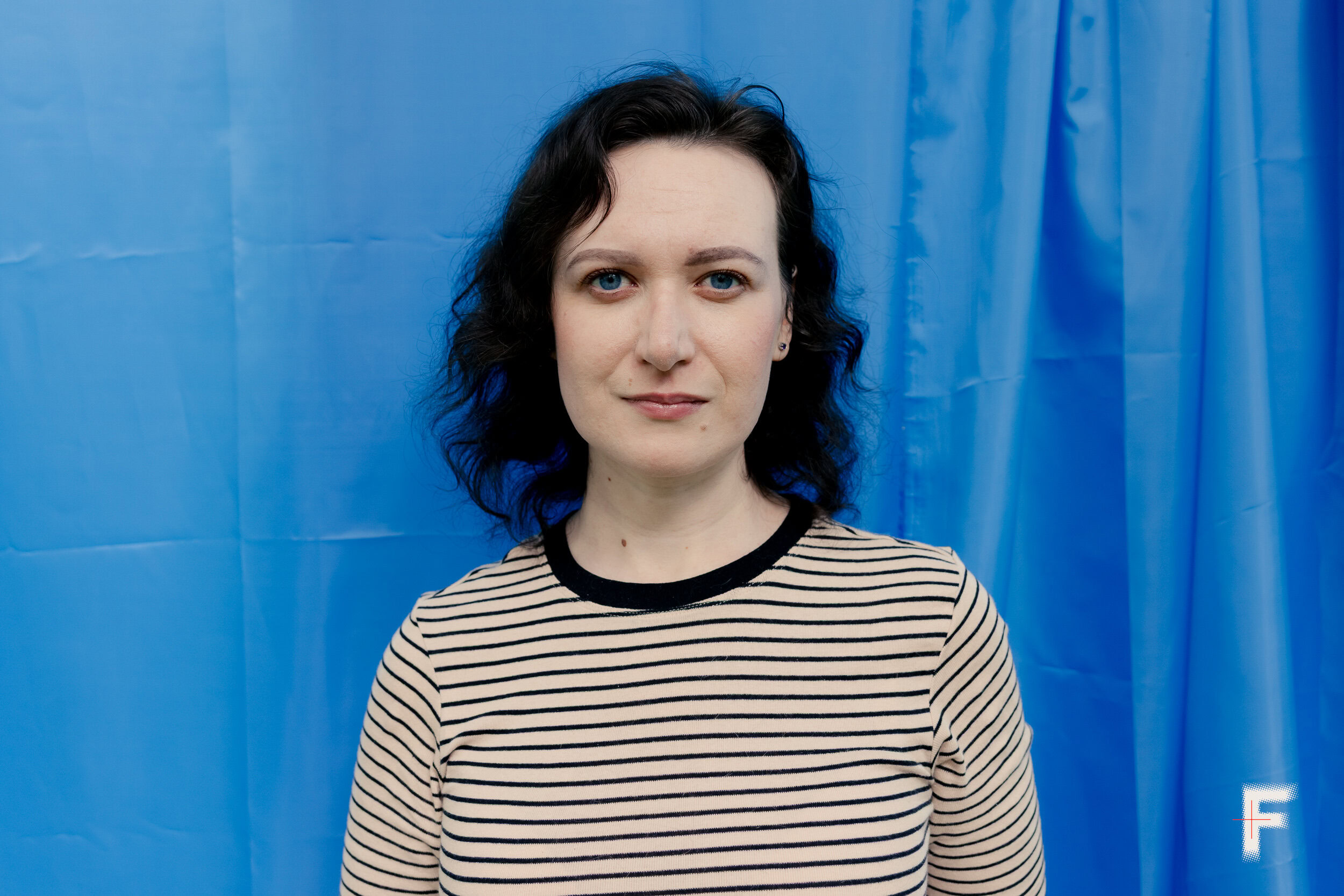
Before the full-scale war, Yuliia hardly ate bread. Now, the smell of fresh baked goods instantly takes her back to Mariupol in the spring of 2022.
“We saw our first bread somewhere around the end of March,” she recalls. “We just came home and ate an entire loaf with butter and salt.”
Her overall relationship with food has also changed: it is now difficult for her to throw away even spoiled products. She says there is a constant internal feeling that there must always be a backup supply of food in the house.
“Even when some food goes bad, and I have to throw it out, it is so difficult for me,” she explains. “I just want it to be there. Because back then, you didn’t know when your next meal would be.”
The biggest relief was the ability to speak freely again, without fear and constant self-monitoring. Prior to 2022, Yuliia actively used Ukrainian. While passing through checkpoints on her way out of Mariupol, she found herself mentally translating Ukrainian terms into Russian to avoid slipping up and giving herself away.
“I stood there trying to remember the Russian word for vytiah [an official extract document],” Yuliia recalls, “so I wouldn’t say it in Ukrainian and get into trouble.”
After leaving Mariupol, most of her colleagues also scattered across different cities in Ukraine. They managed to keep working together remotely, preserving the team that had existed before the full-scale invasion.
Although she realizes she could find another job and earn more, she hasn’t been able to take the plunge and make a change just yet.
“I see people gradually moving on to other jobs,” she says, she admits, “but I just can’t figure out what to change in my life or how to do it.”
Yuliia attributes this not only to a fear of the unknown but also to her attachment to her team. Over the years, her colleagues have become a second family to her, as well as one of her few remaining connections to her pre-war life.
“I guess it’s a thread tying me back home, one of the few that remained,” Yuliia says.
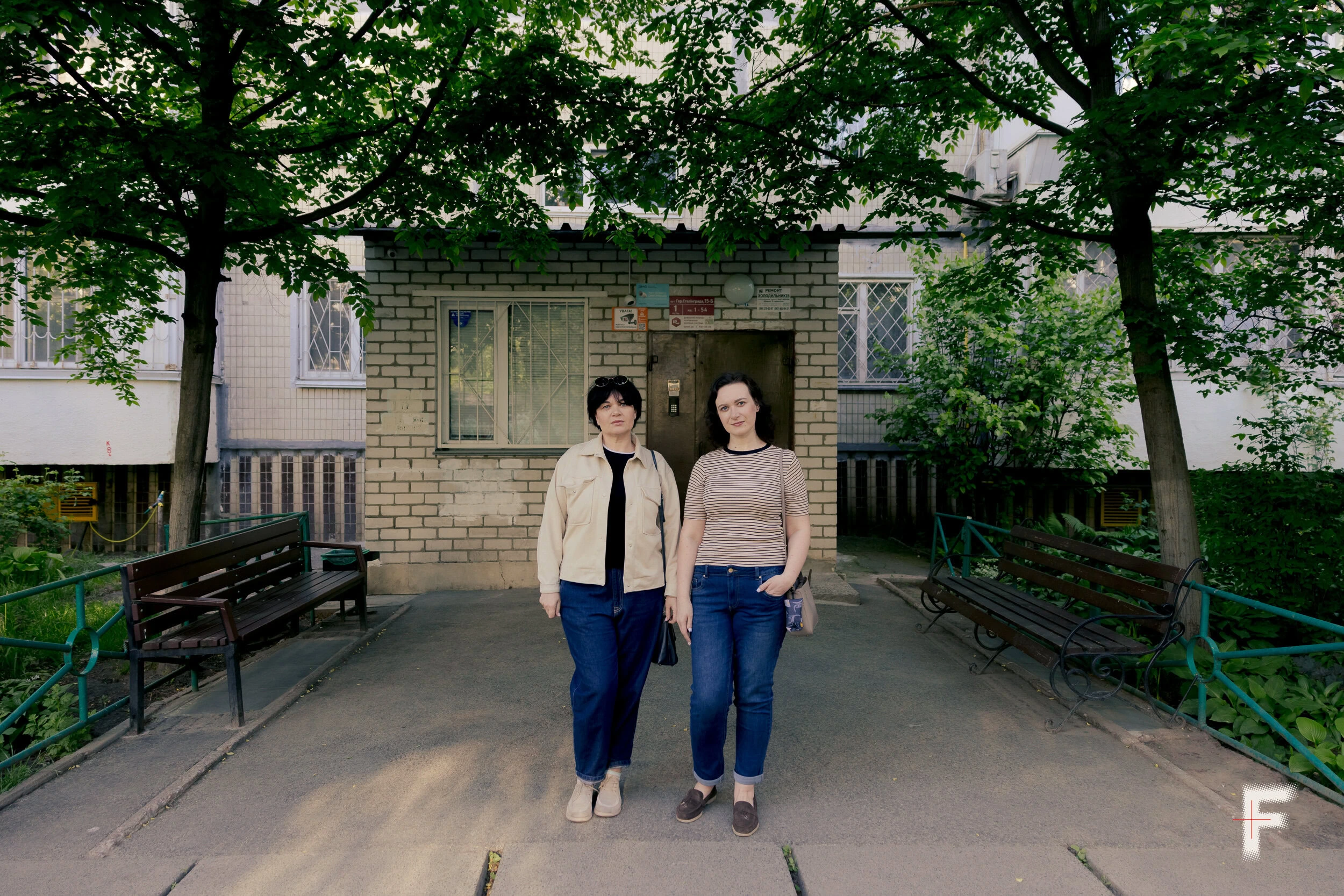
Ihrunova explains that after living under occupation, people often remain in a state of internal confinement for a long time. During prolonged survival, she notes, the mind gets used to adapting rather than making choices.
In such states, the expert says, people often unconsciously hold on to familiar places, people, or jobs, not because they are the best options, but because the mind needs at least some sense of stability and belonging.
“And when we finally reach an environment where we are told, ‘Now you get to choose,’ that, too, can trigger a breakdown,” Ihrunova explains.
How not to get stuck in the past
Ivan was 38 years old when he fled the occupation. Before the full-scale invasion, he lived with his family in Kharkiv. When the intense shelling began, they decided to move to Ivan’s hometown in the Kharkiv region. That is where the family found themselves under occupation.
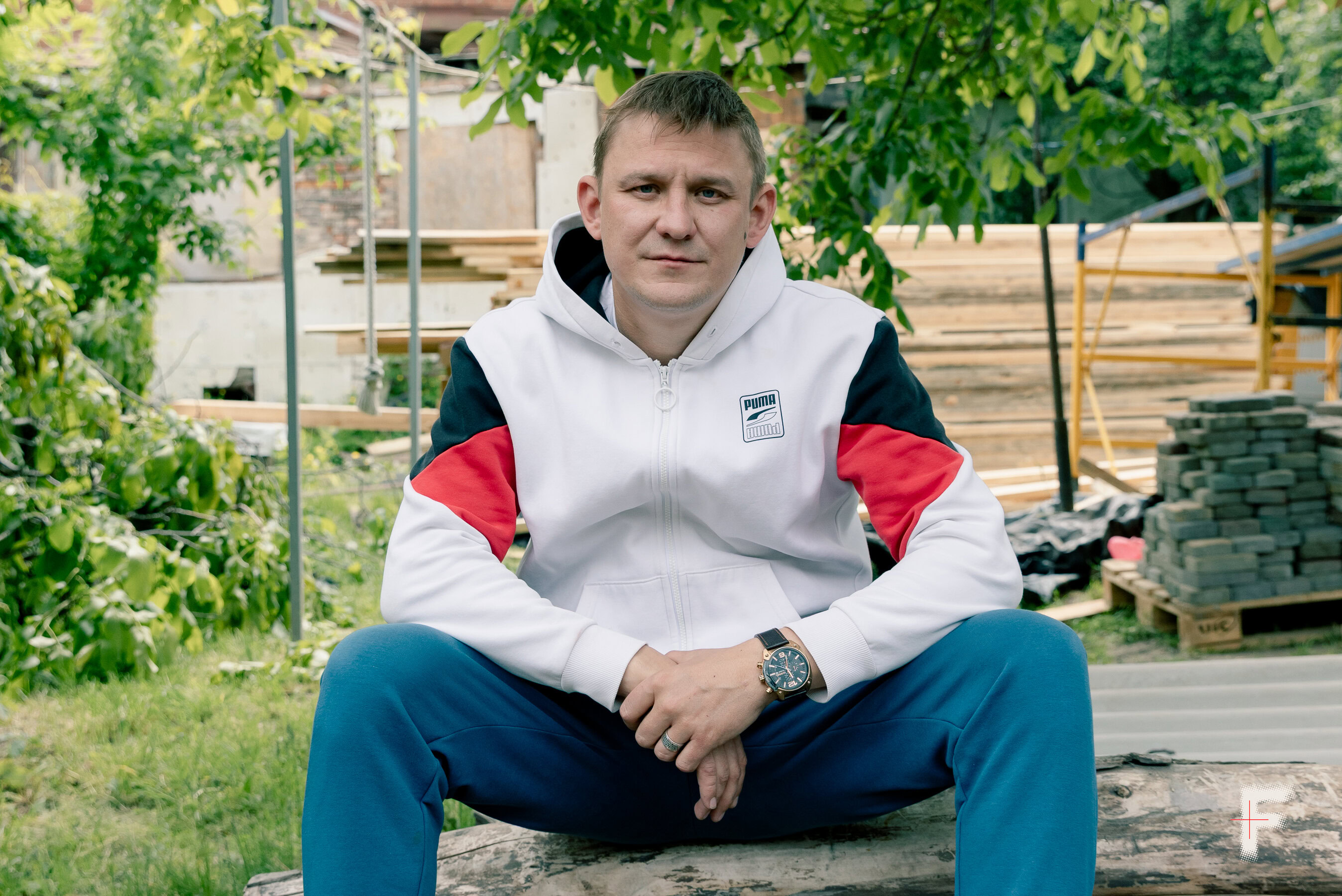
Ivan explains that he couldn’t simply sit back and do nothing. He transported food and water, primarily for the elderly who couldn’t evacuate themselves, and was also involved in evacuations.
In late March 2022, while Ivan was evacuating people from occupied Izium, Russian forces took him captive.
“They wrapped my head in a bedsheet, bound my hands and feet with tape, and threw me into an armored vehicle,” Ivan recalls. “But I knew Balakliia well, so I figured out where they were taking me just by the turns.”
The occupiers were convinced he was a Ukrainian machine gunner, claiming his fingers had “given him away.” They confiscated his phone, documents, and belt, cut the laces out of his sneakers, and threw him down into a basement. Seven other people were already being held there.
“It was cold,” Ivan says. “For eight people, we had half a loaf of bread and a two-liter bottle of water.”
The next day, he was taken in for interrogation. They checked his phone and questioned him about his relatives and any military acquaintances.
“And then they saw that I was involved in evacuations,” Ivan recounts, “and they told me, ‘Get out of here.'”
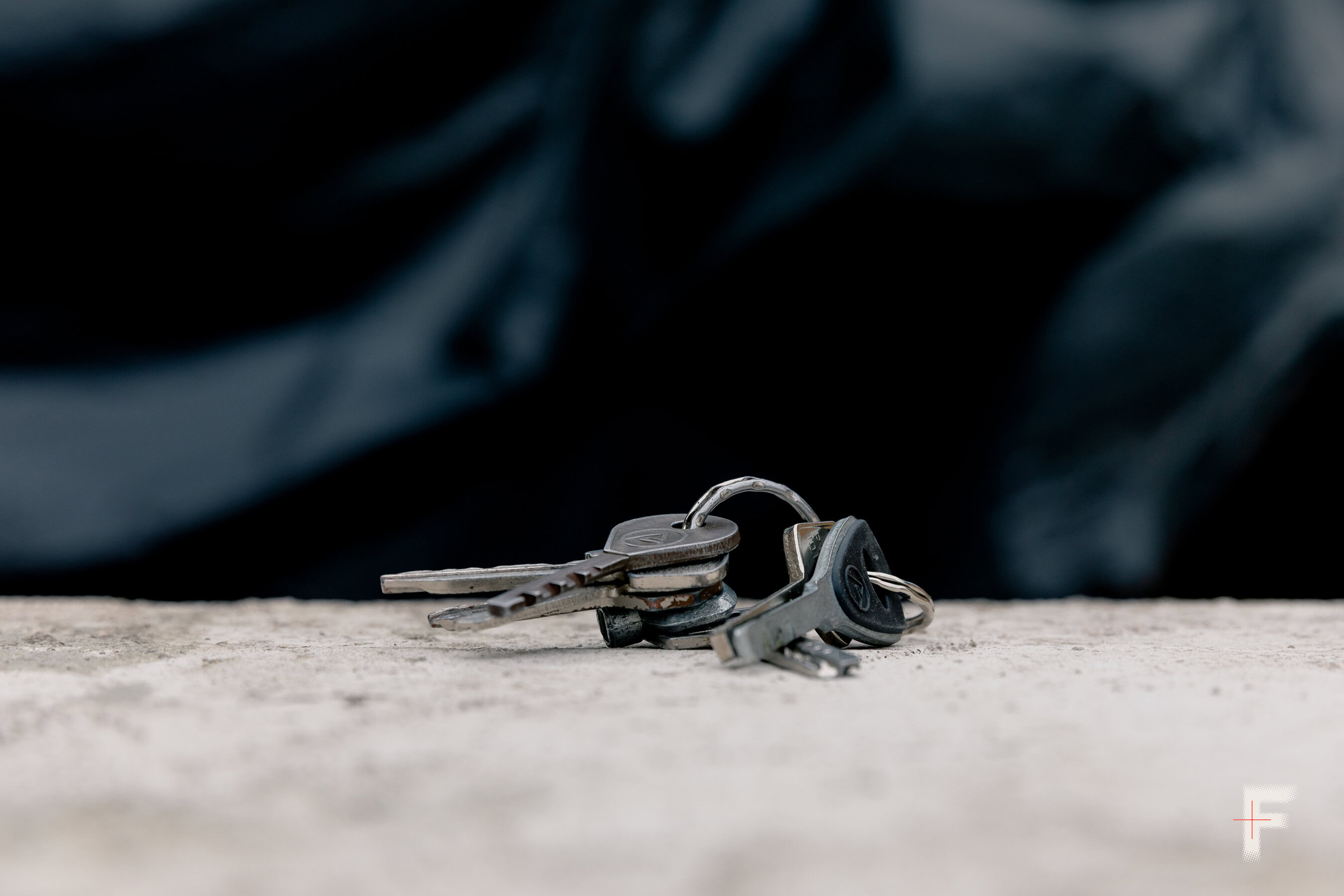
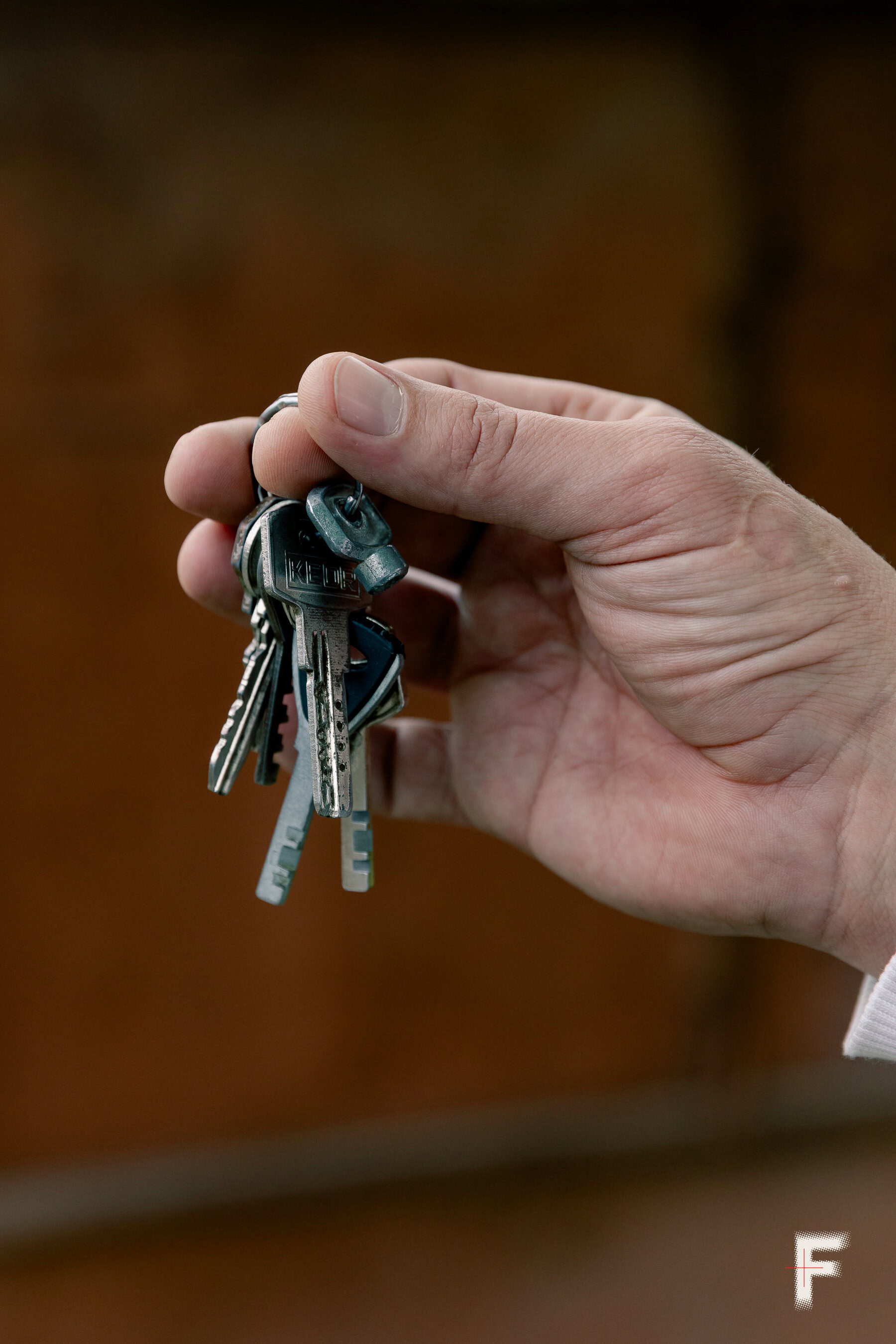
Following this, Ivan and his family immediately fled the occupation. Out of all his belongings, he took only the bare essentials and the keys to his parents’ house.
Ivan went right back to helping others almost immediately. He delivered humanitarian aid, supported the military, and traveled to the Donetsk region.
“Fighting was already raging near Bakhmut back then,” Ivan recalls. “We repaired vehicles for the guys and brought them food.”
He talks about what he endured without an ounce of bitterness. He explains that he simply learned how not to “get stuck” in those memories.
“When you can be thrown face down on the pavement or have a machine gun pressed to your forehead, you begin to appreciate life a whole lot more,” he says. “I made it out alive, and thank God for that.”
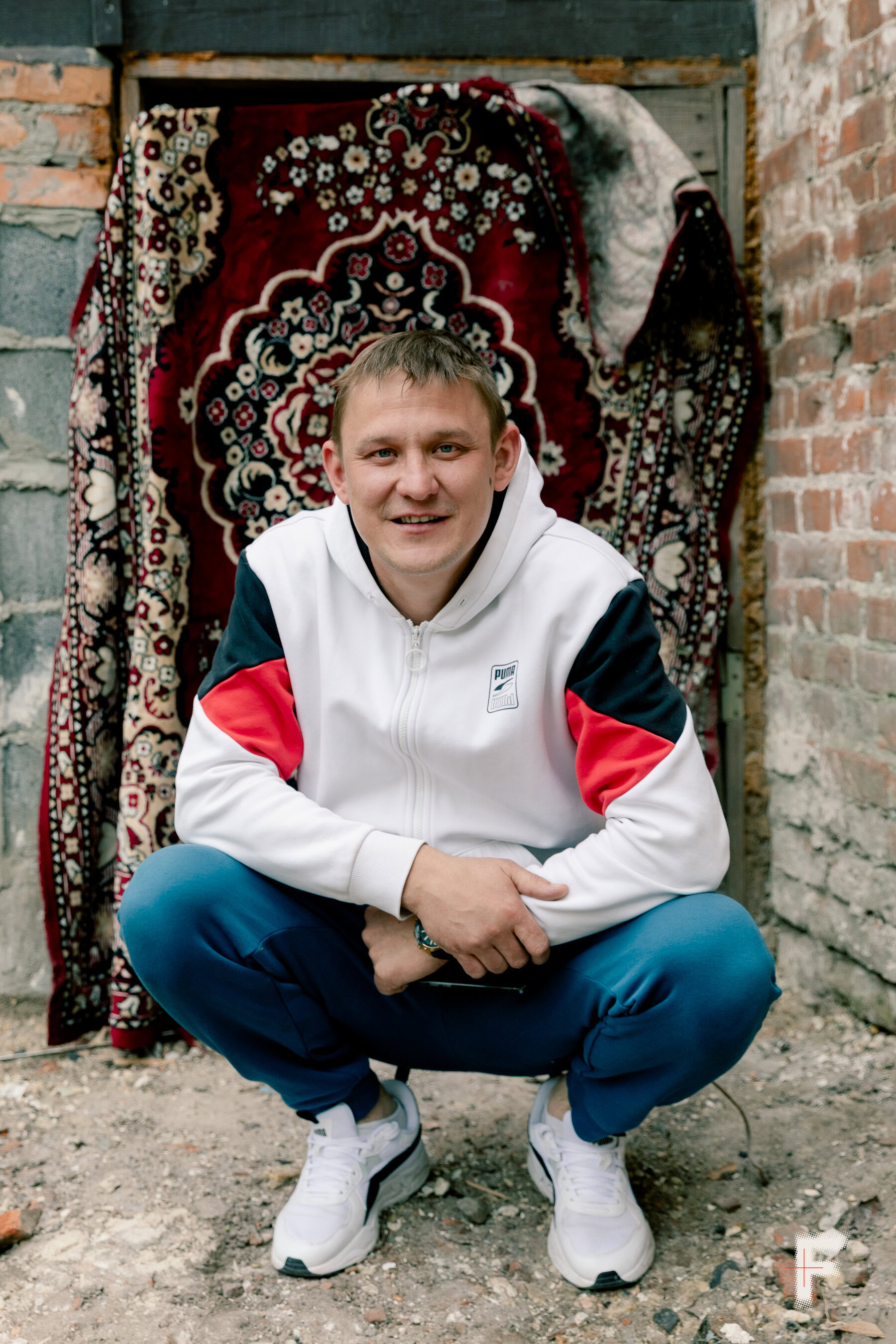
Currently, Ivan and his family live in the Kharkiv region, where he runs his own pub and is raising two boys. He says that what keeps him going the most are his children, his work, and staying constantly active.
“I have two sons,” Ivan explains. “One is 13, the other is four and a half. Work, hitting the gym, just living a normal life—that’s what pulls me through.”
Sometimes, however, the memories still overwhelm him. When that happens, he calls his friends or his kum [a close family friend who is his child’s godfather].
“There are times when you just need to meet up with someone,” Ivan says, smiling. “To look back, talk things out, and have a drink. We’re only human, after all.”
Whether an experience develops into severe trauma depends not only on the events themselves, but also on whether a person manages to regain a sense of control over their life, Ihrunova explains.
Family support, feeling needed, work, and the ability to make independent decisions often help people avoid getting stuck in the past and gradually transition from survival mode back to truly living.
“Psychotherapy is an effective way to overcome fears and anxieties, and to process traumatic events in a healthy way,” the expert emphasizes. “There should be no shame in seeking professional help.”
According to her, all we need in this life is to truly be alive in it. To achieve this, beyond mere physical presence, we need a foundation, joy, social connections, and self-fulfillment. It is all about love—for oneself and for the world. And where there is freedom, the whole world is ours. The choice of what we do with that world, and with ourselves within it, is ultimately ours to make.