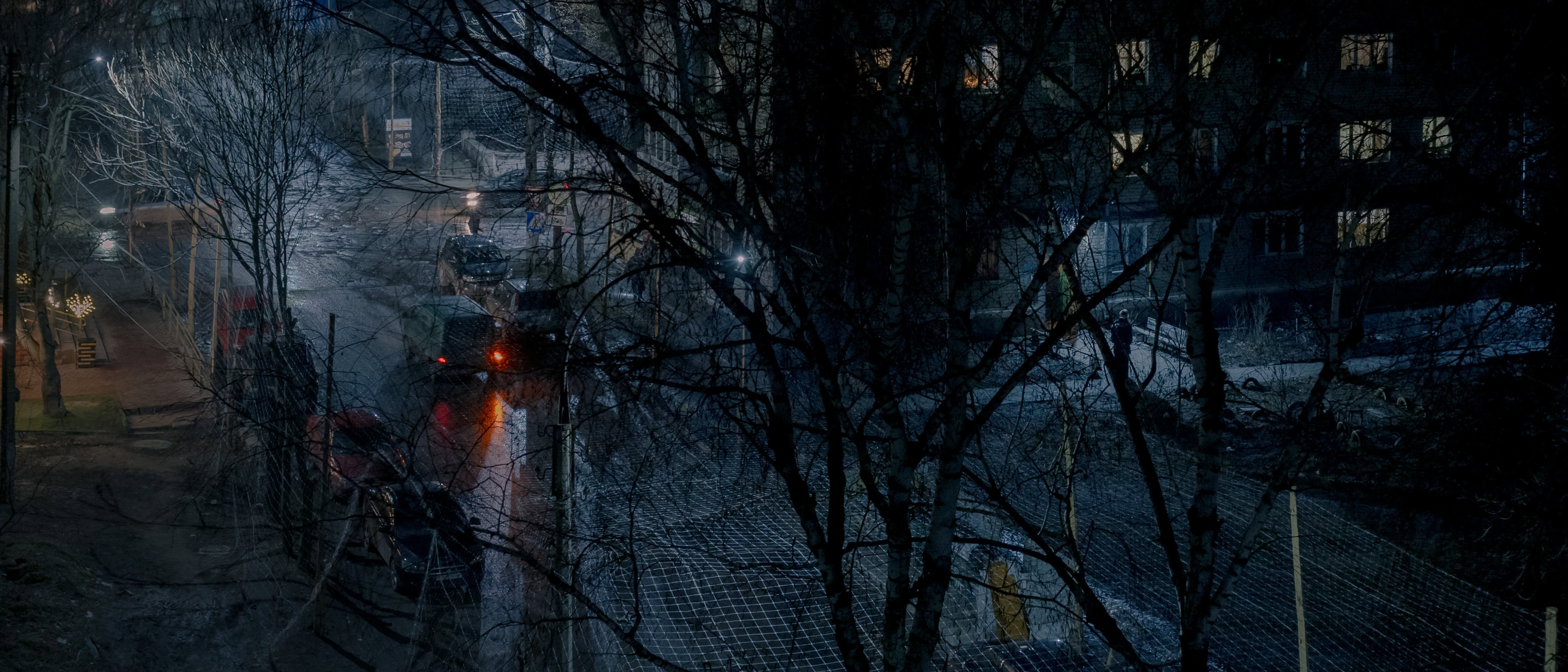
‘We’re used to it, always on alert’: life in Izium, 30 kilometers from the front
Izium in the Kharkiv region remains a key military logistics hub, with a steady flow of troops and heavy equipment passing through the city. High demand has made housing expensive. Kindergarten openings are in short supply, and public spaces are covered with anti-drone nets. Despite this, the city continues to function. Families move here with their children and rent apartments, while some people invest in businesses. Frontliner reporters look at daily life in frontline Izium.
As of March 2026, Izium remains one of the key logistics hubs through which troops and heavy military equipment continuously pass. Despite the destruction left after the city’s occupation in 2022, it continues to serve as a vital rear base, where each repaired rail line or bridge helps keep the eastern front supplied and functioning. With fighting now just 30 kilometers away, large numbers of soldiers are constantly present in the city — some stay for a few days before heading to the front, while others are stationed there for longer periods.
The military’s presence has reshaped daily life in the city. Soldiers rent apartments and shop for clothes and groceries in local stores, becoming the primary customers for many businesses. As a result, demand for rental housing has soared, driving up prices.
Anna Petrychenko works in a small clothing store in central Izium. She moved to the city less than six months ago and says that finding a place to live was one of her biggest challenges.
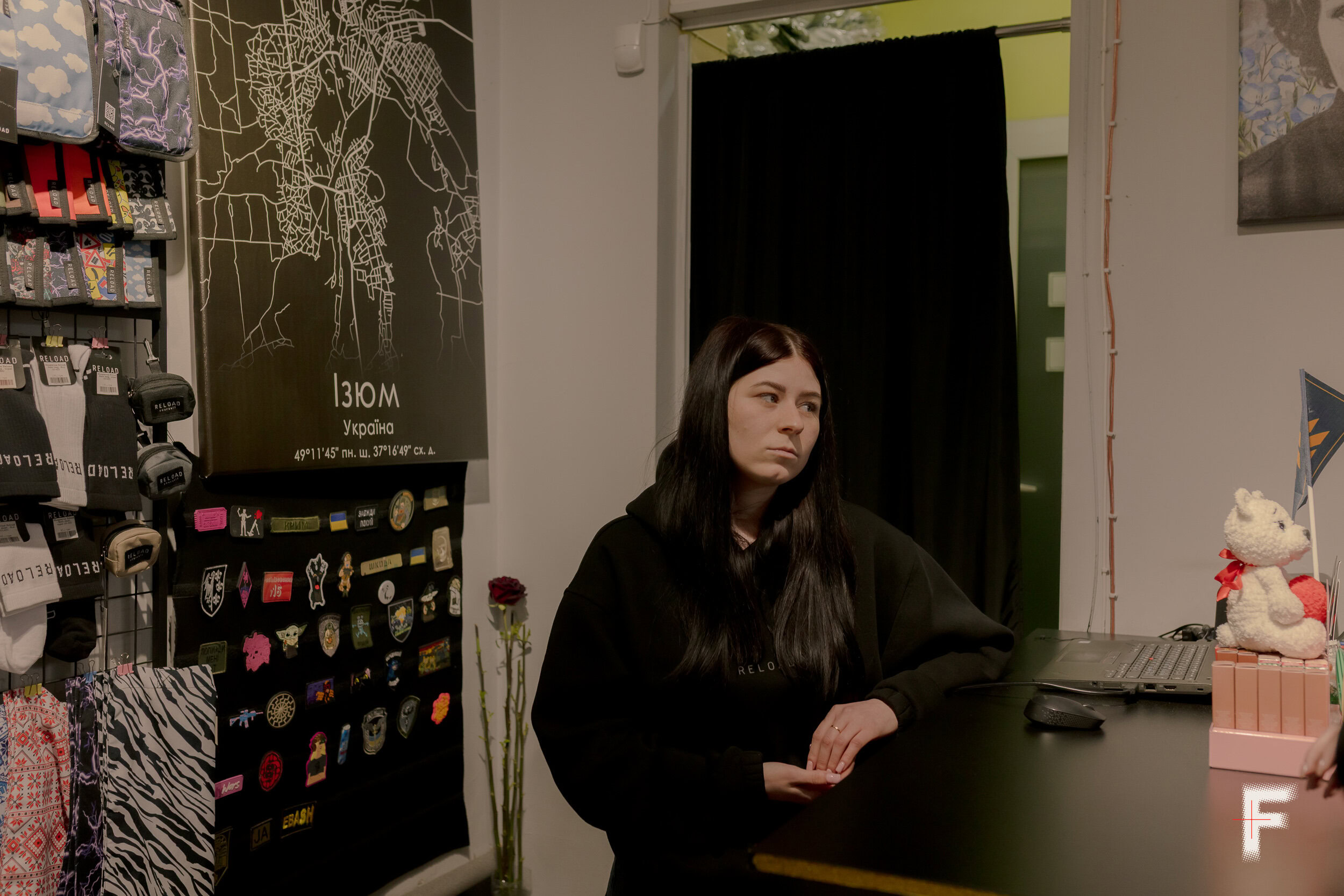
Renting an apartment starts at 15,000 [hryvnias],
and it’s very hard to find one,
For many locals, that’s far beyond what they can afford.
Anna says most of the store’s customers are soldiers or their families:
“They come to buy something for themselves, for their children, or for their wives — sometimes just to talk. The city survives because of them.”
She adds that there are jobs in the city, but opportunities are limited.
“There are no real prospects, unfortunately, because this is a war town. Life is hard. Jobs are scarce, and everyone clings to what they have.”
Salaries are very low, and with prices rising so much,
renting an apartment now can cost more than what someone
earns on minimum wage in a month,
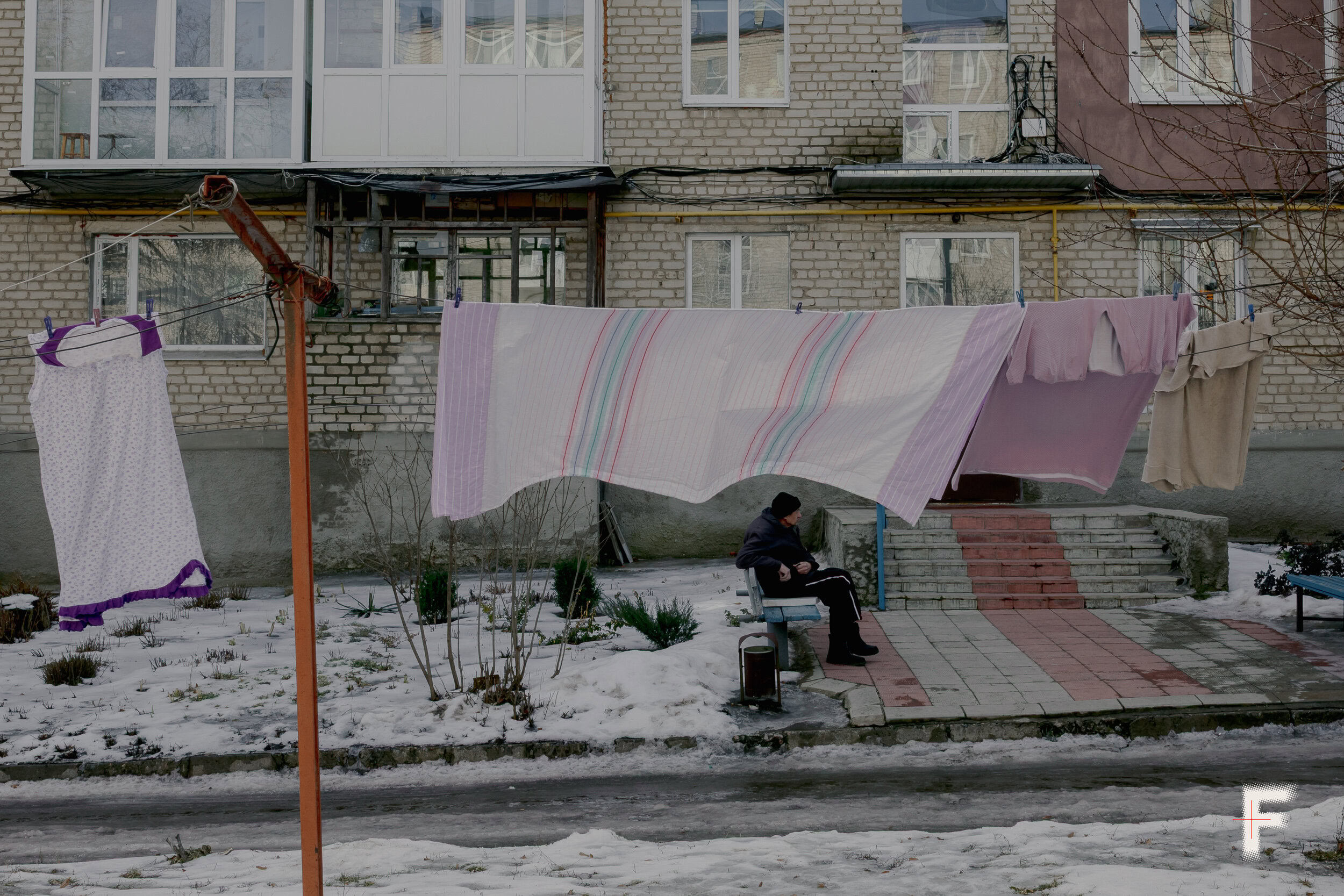
“You get used to everything, and that’s the worst part.”
Over the past year, the front line has moved 20 kilometers closer to Izium, yet the city is not emptying. Small shops are open in the city center, new cafés are appearing, and roads are being repaired. From time to time, explosions break the city’s routine.
Carrying a small bag of groceries on her way home, Izium resident Tetiana Rosynska says shelling in the city has eased, though it hasn’t stopped entirely:
Not that often, but from Friday to Saturday there were two hits.
One here, one there,
Nearly every local has a story from Izium’s occupation, and Tetiana remembers the first months of the full-scale war vividly. She recalls that during that time, the city endured its heaviest shelling.
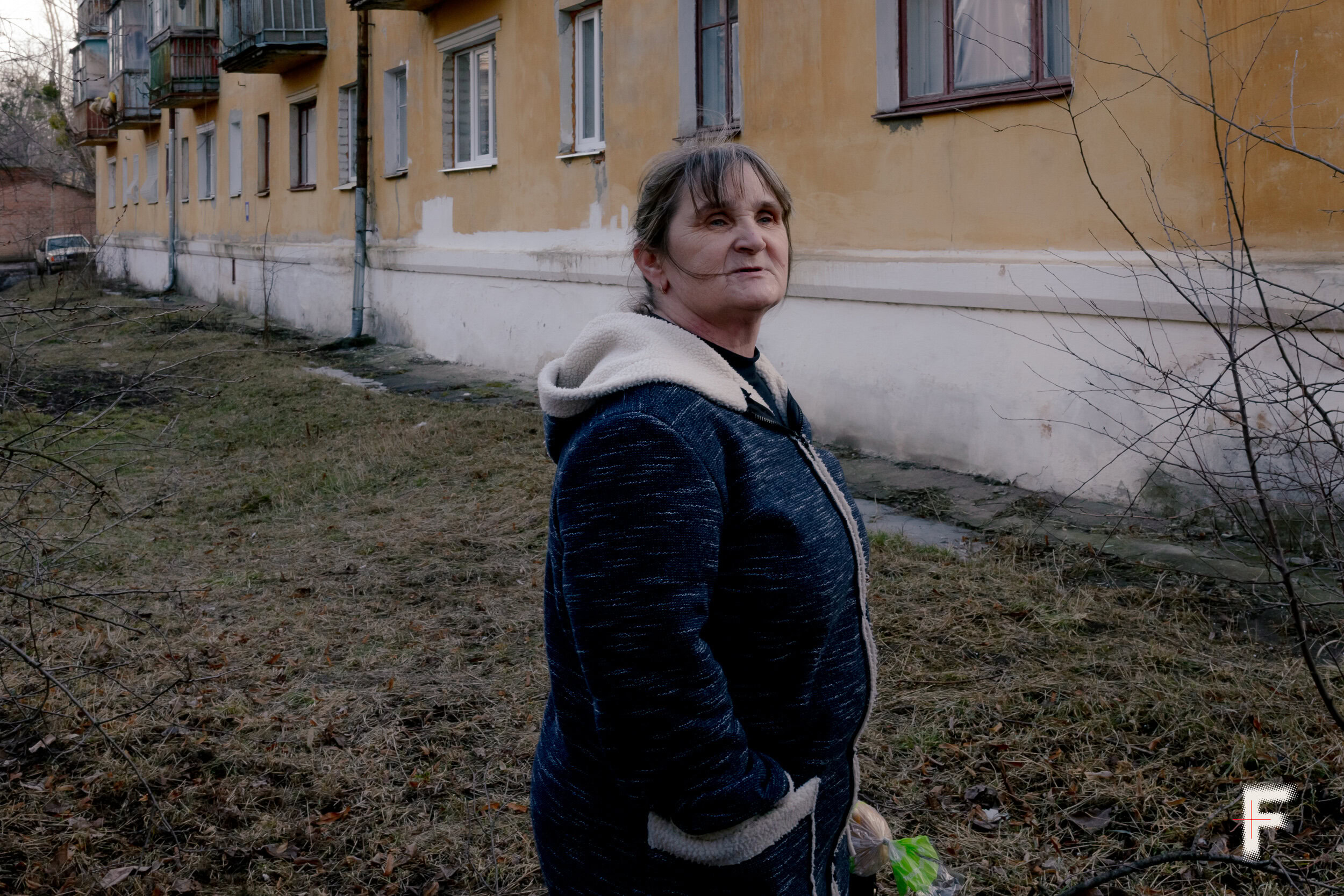
“From 2022 to 2023, I cried all the time. There was a hit right near my house, and everything in the house shook. People ran to the bomb shelter, but I just stayed. I told myself: if this is my fate, then so be it,” she recalls.
Over time, people’s reactions changed. At the start of the full-scale war, residents would talk about every explosion, but now they simply carry on with their lives, Tetiana says.
“You know, we’ve gotten used to it. We’re always on alert. You get used to everything, and that’s the worst part,” she adds.
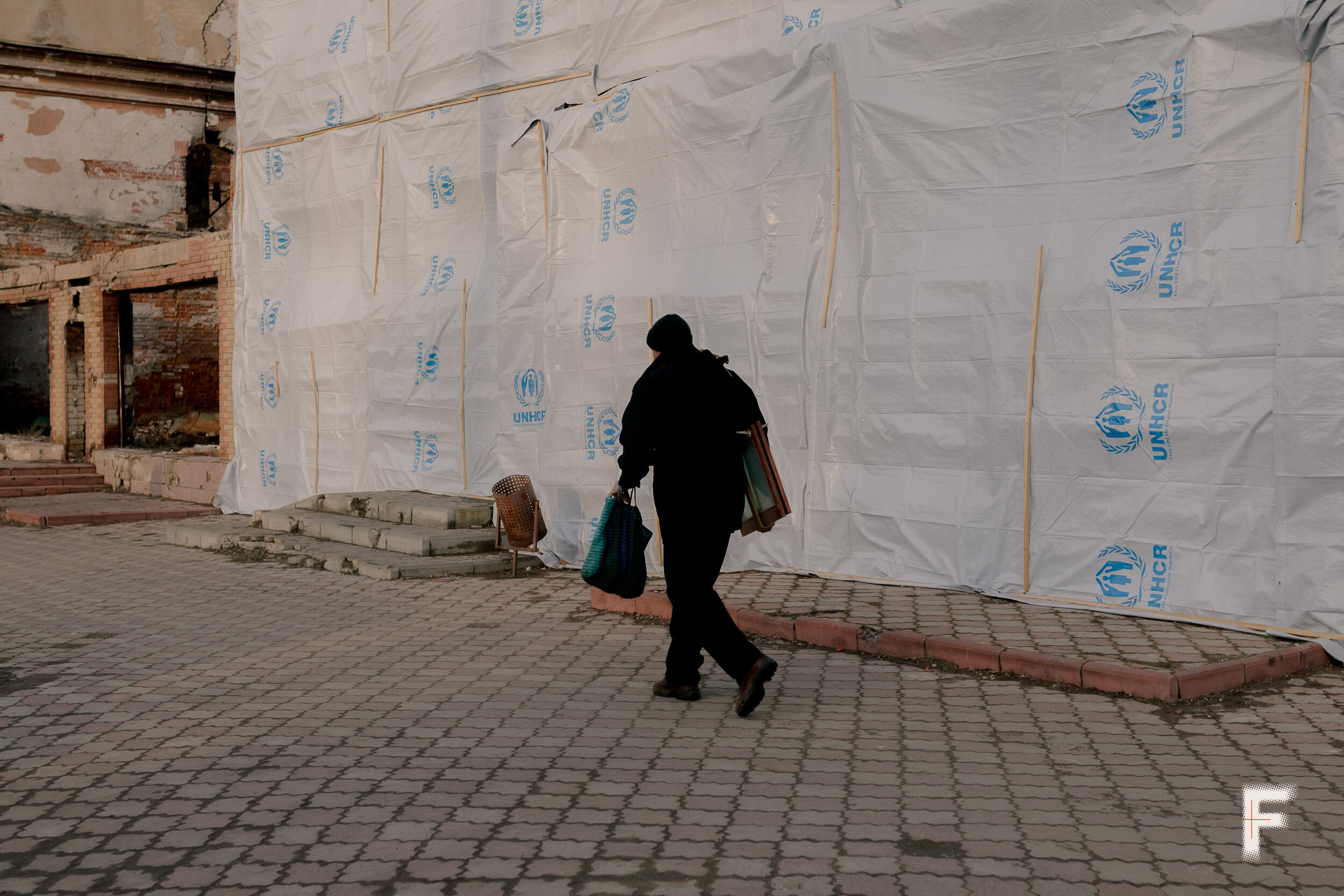
Tetiana believes that getting used to the war is both dangerous and inevitable. Otherwise, she says, it would be impossible to live in a city with the front line so close. That’s why most residents cling to familiar routines, their work, conversations with neighbors, and focusing on everyday tasks.
Sweet taste of frontline Izium
Near the central market, Nadiia Hromytska runs a shop called Rodzynka [“raisin” in Ukrainian]. Regulars stop by: some for coffee, some for cookies, and some just to chat. Nadiia says the city has learned not just to survive, but to live.
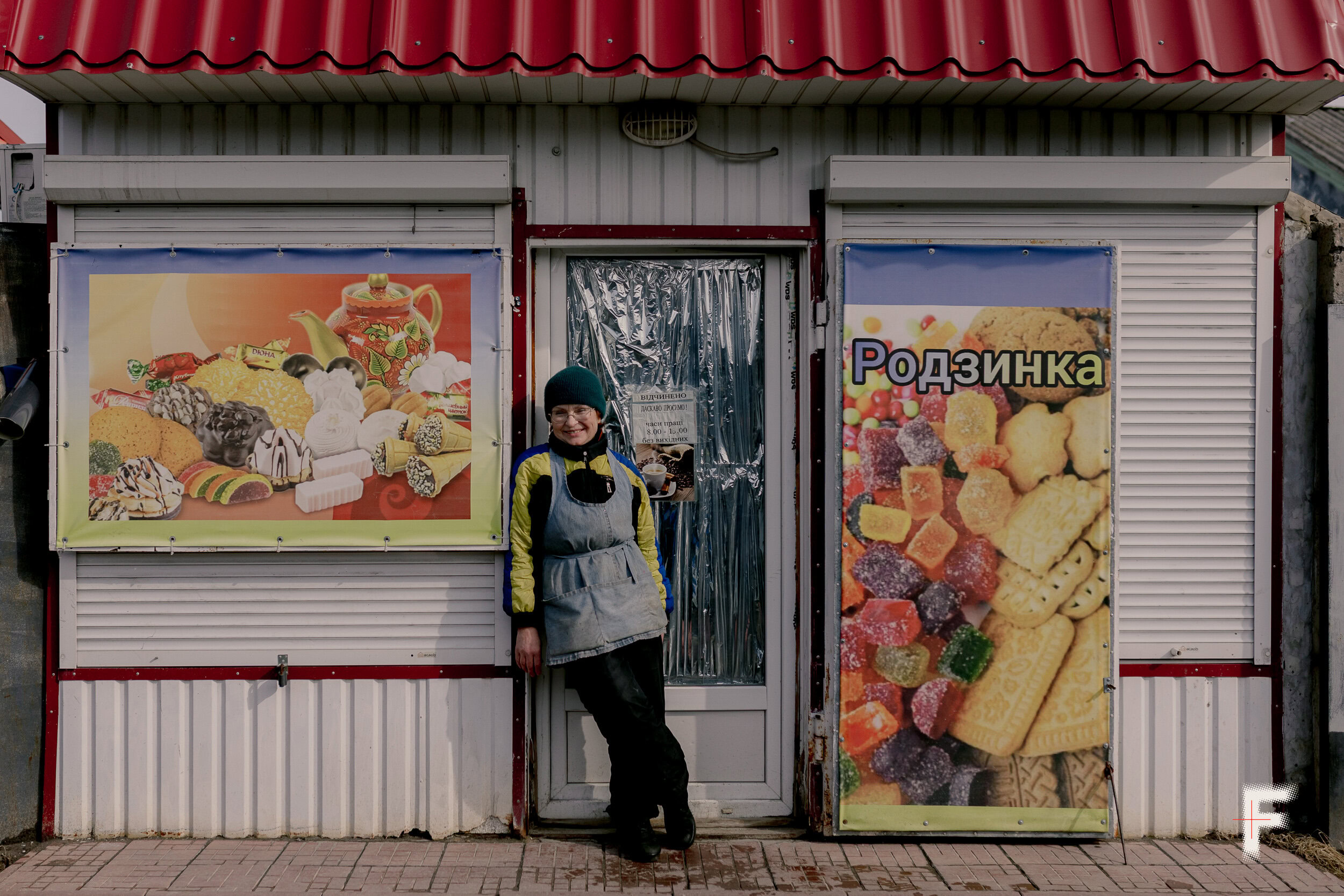
I collect good omens, you know. I thought we were done as
the front line is getting closer and closer.
It is scary, but I focus on the positive signs,
The store owner says that she pays close attention to small details: someone installs internet in a residential neighborhood, someone starts renovations. To her, these are signs that the city will keep going. One such sign was a new payment terminal in her shop.
“The bank gave me this little terminal, which means the bank isn’t afraid to provide it. I also got an EcoFlow [a backup electricity system], because the power often goes out, especially where I live, every single day,” she states.
The electricity goes out, and five minutes later you hear ‘brrr’
and everything’s back up. Everyone keeps working, no one closes up,
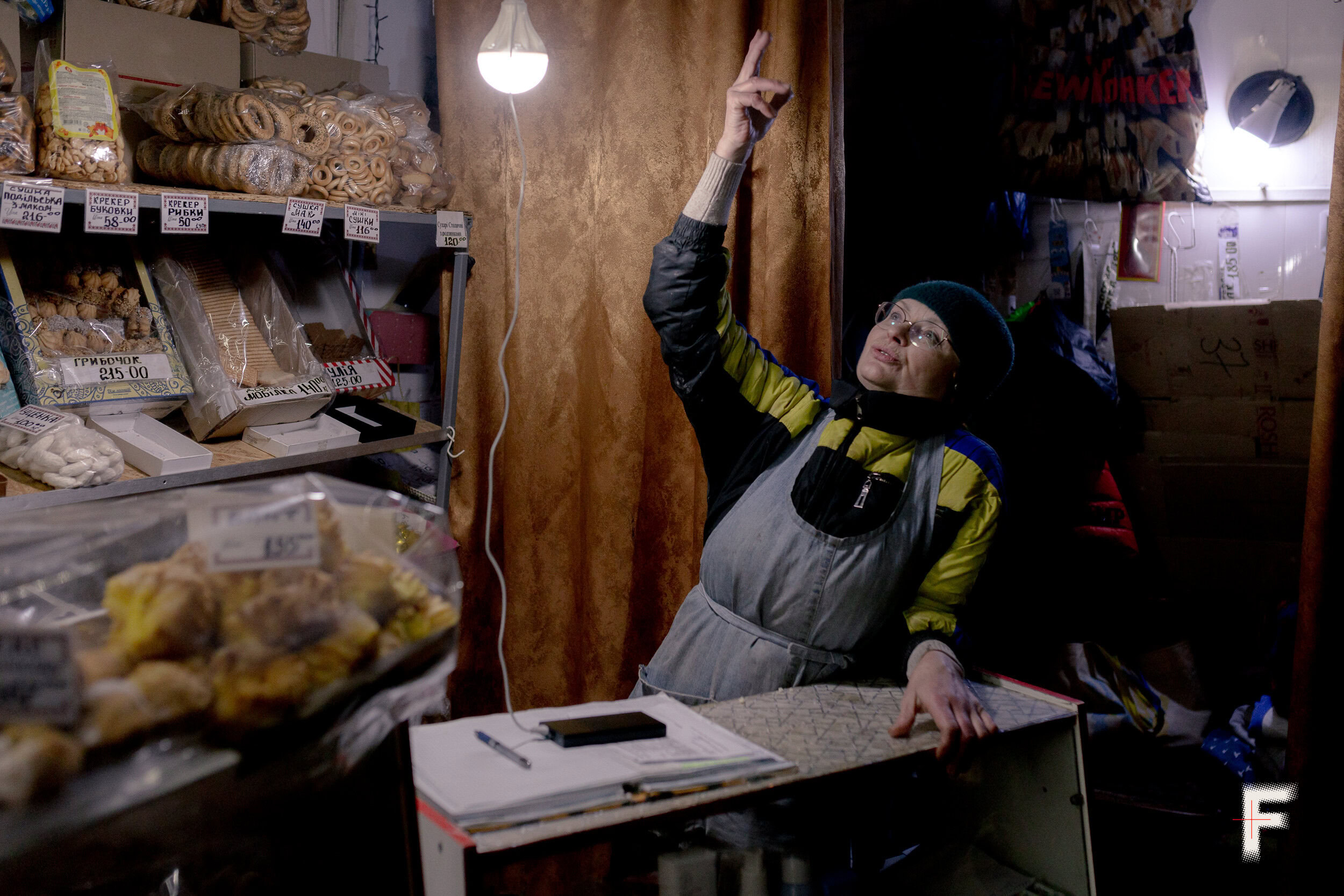
Nadiia always carries a power bank and a small lamp in case of a blackout.
“The Russians can’t stop us. I read somewhere that Ukrainians have bought so many EcoFlows and generators that, in terms of power, it’s roughly like a nuclear plant. The electricity goes out, and five minutes later you hear ‘brrr’ and everything’s back up. Everyone keeps working, no one closes up,” she says.

Life under the “anti-drone corridors”
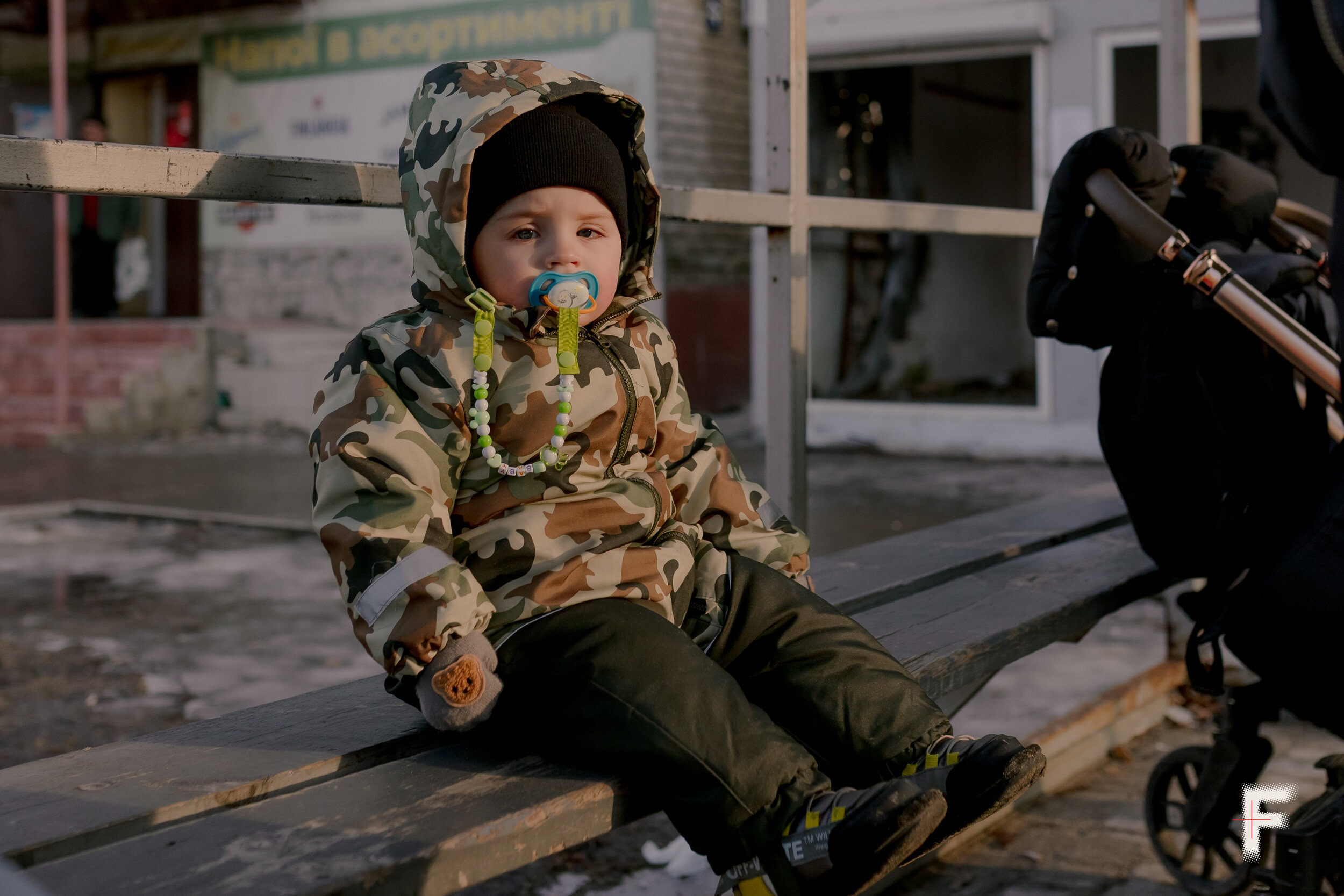
Life in Izium is far from stable. The city still lacks facilities for families with children, and many kindergartens remain closed. Resident Albina Zhornova says parents often have to scramble to find alternatives.
“There are no kindergartens. Maybe one or two, but not in the city center. Where they do exist, it’s too far for me to take my child,” she explains.
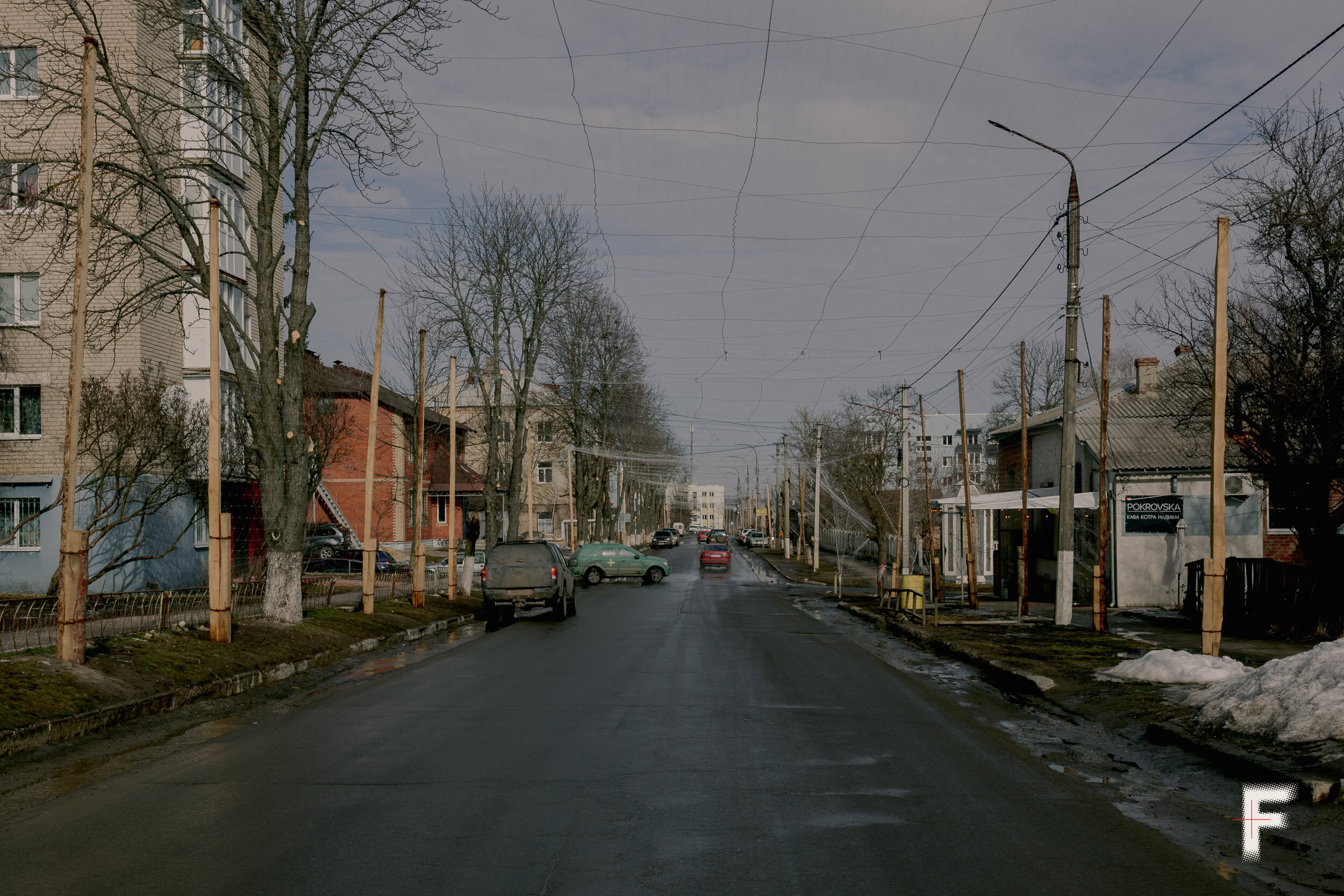
Places to take children for a walk or just to spend time are scarce. Families usually head to the park near the fountains, but only for a few hours at a time. Above them, a web of anti-drone nets stretches across the sky, shielding residential areas and critical infrastructure from drone strikes. Izium became the first city in the Kharkiv region to set up anti-drone corridors, a clear sign that the city is preparing for potential attacks, as the Russian army regularly deploys Molniya and Lancet drones.
-
Anti-drone nets, Izium, Ukraine, March 2, 2026. (Anna Zubenko/Frontliner)

-
-
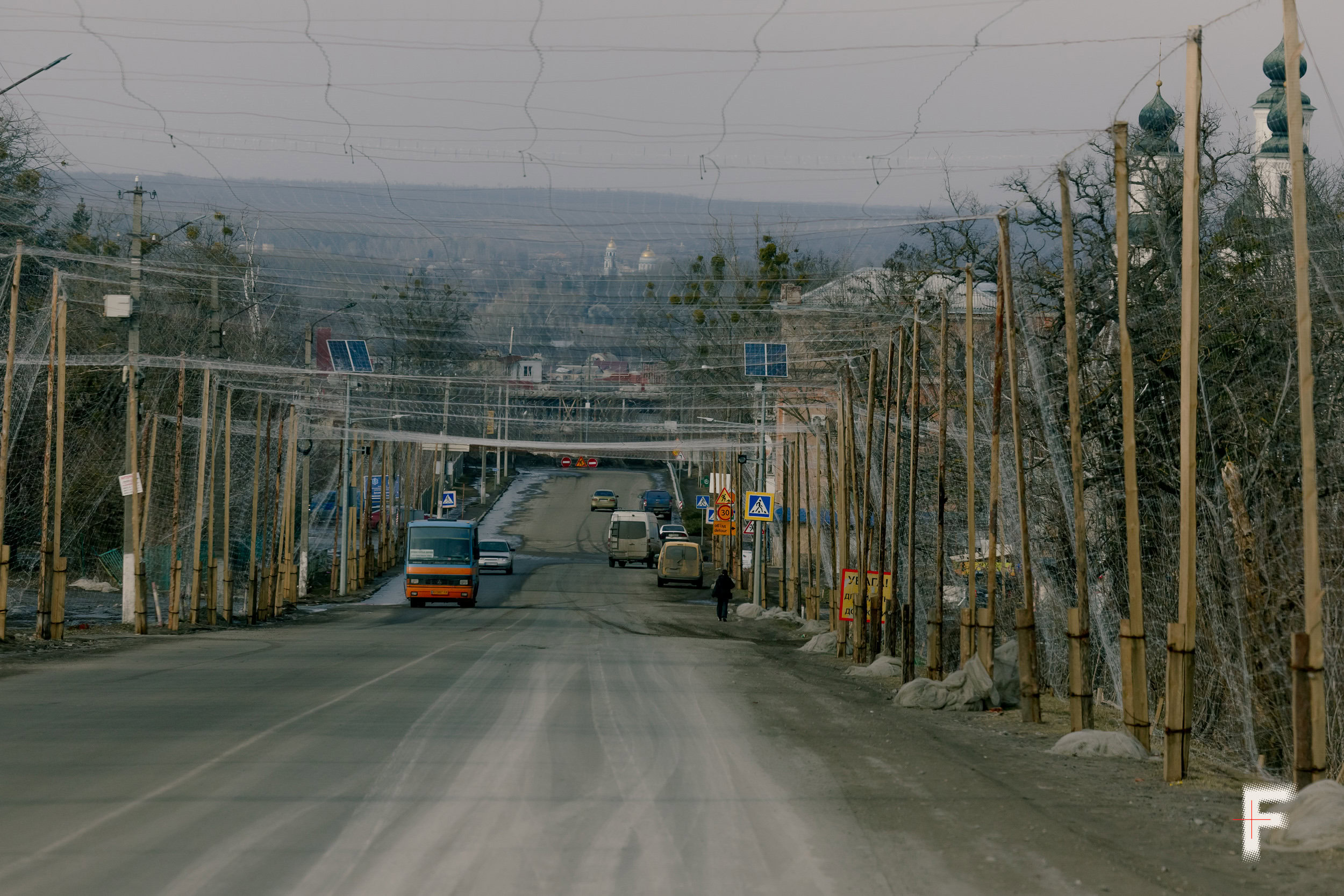
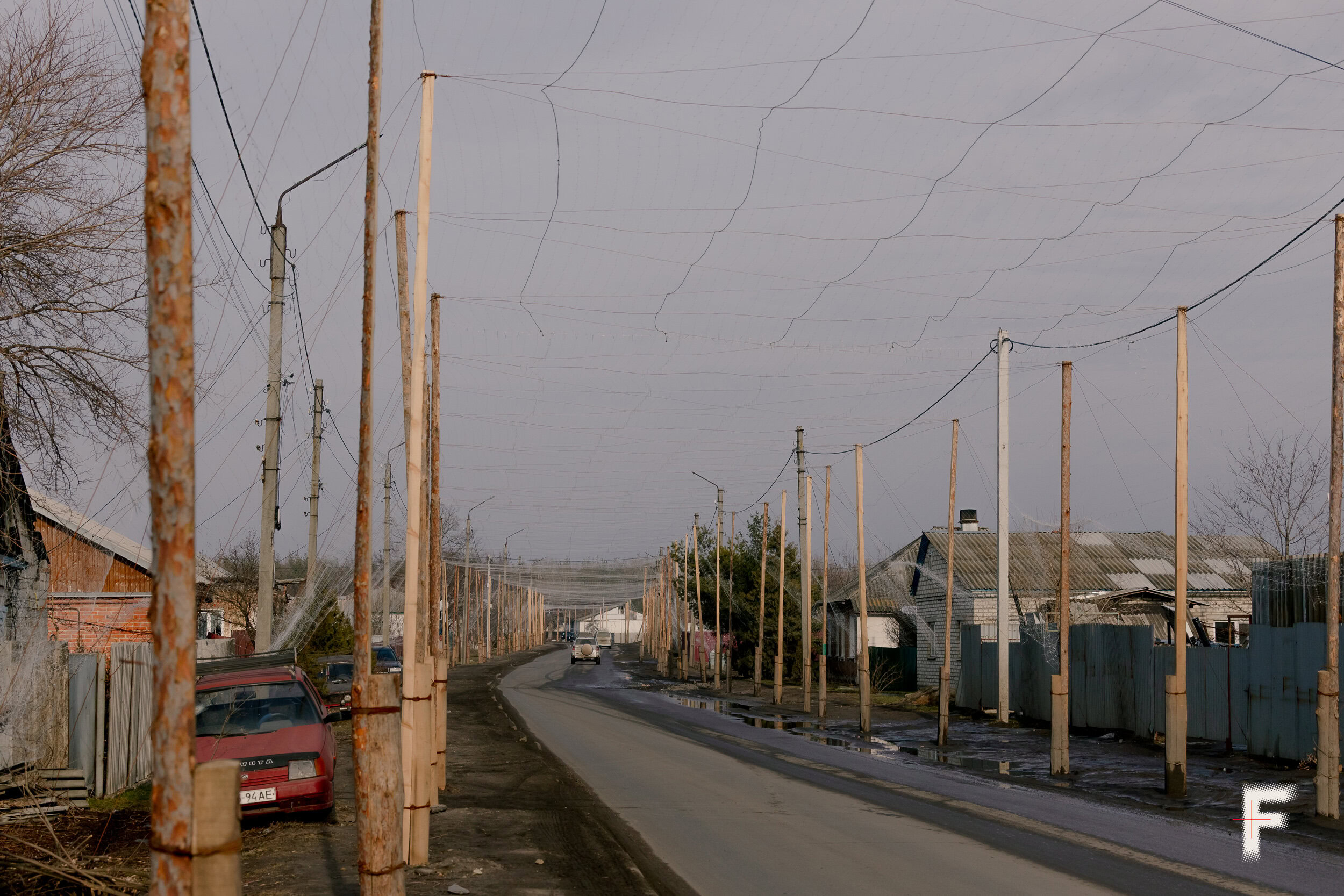

The constant movement of heavy military equipment keeps the roads in a state of disrepair, while repair work lags behind. Despite this, locals try to maintain the city’s usual rhythm. From small shops welcoming customers to home renovations, everything shows that Izium continues to adapt to new conditions while remaining a key strategic crossroads on the eastern front.
***
Hi, we are Ruslana and Anna, the authors of this article. Thank you for reading to the end. Every day, we work in life-threatening environments and report from the front lines and the surrounding areas to document the reality of the Russo-Ukrainian War. To protect the lives of our teammates, Frontliner, in partnership with UA First Aid, is raising funds for 30 first-aid kits for our team. Join the Frontliner community so we can keep telling important stories from the ground.
***
Adapted: Irena Zaburanna