War reporting is like a toxic relationship: you either stay despite everything, or you leave
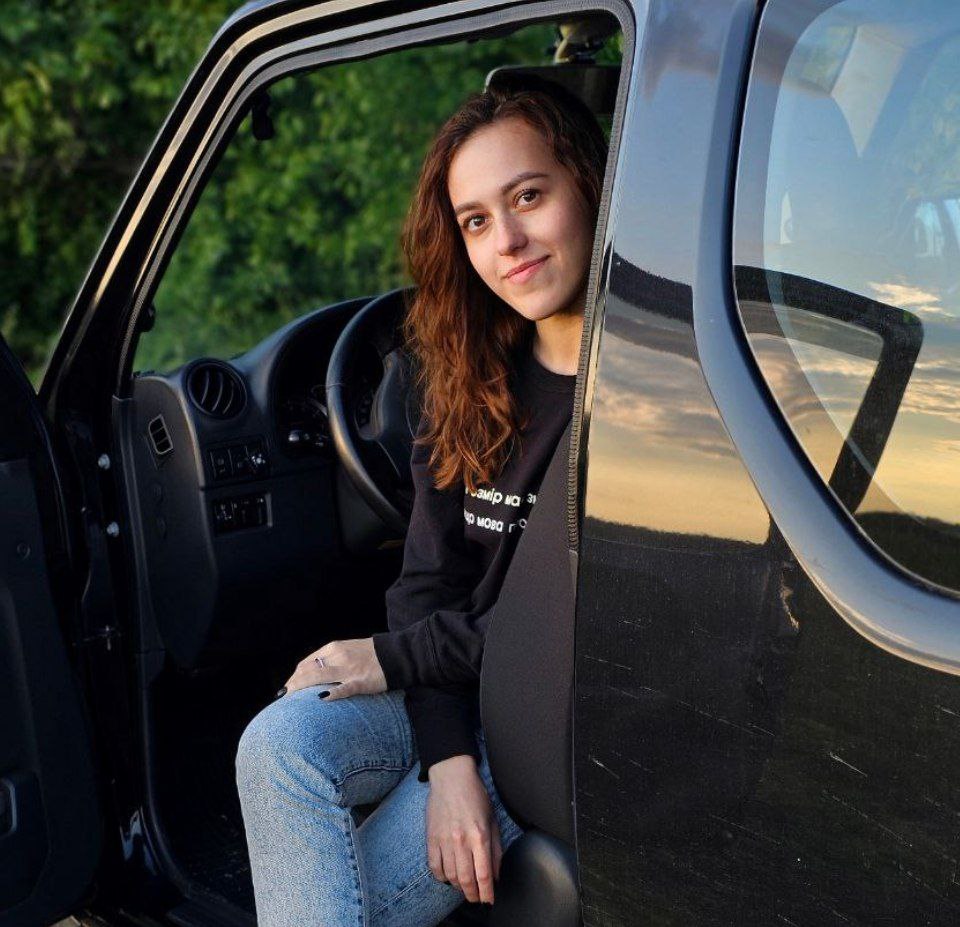
A childhood curiosity about her veteran uncle’s silence grew into a professional mission to reveal the true cost of war, even when that understanding becomes hard to bear. Frontliner reporter Alina Yevych explores what drove her to witness the war firsthand.
I first thought about a future connected to war when I was around seven. I was still a child who had no real sense of what it meant, so I asked my uncle, who had served in conflict zones in the early 2000s, about his experience of the war in Afghanistan. He never shared anything with me and firmly refused to even speak about the ambush he had miraculously survived. I only learned the details from his fellow soldiers after his death.
My uncle Vasia was not proud of that chapter of his military service. He wanted to forget it, and above all hoped I would never witness war firsthand. But in his refusal I realized I wanted to expose its reality: not abstract victories in war, but the real cost of battle.
“They were hardly welcomed back home, because the people who returned were not the same as those who had left. Many came back physically or psychologically scarred, but the greatest loss in Afghanistan was not always limbs. Our soldiers lost their brothers-in-arms, who were their family, their hope, and their constant presence for years.” These are the words I wrote in an essay I submitted to a regional competition in eighth grade. I had heard similar reflections from several Afghanistan war veterans I spoke with while writing it. But I only truly understood their meaning in 2019, when I began working with veterans. That was when I heard, without embellishment, stories of friends losing their brothers-in-arms on the battlefield. And I realized that not everyone is able to recover from that.

I needed to reshape myself to work with people
I had wanted to become a journalist for as long as I can remember. But I didn’t take into account that the job would require me to change completely. In high school, I was shy and reserved, and the prospect of talking to strangers could trigger panic attacks. I didn’t yet know there was a term for it, so to me it was simply a paralyzing fear, to the point that I would rather ride several extra stops than signal the driver to stop the bus.
When in my first university lecture the professor said that journalism is not “school essays,” I realized it would be difficult. I had to overcome my own shyness and learn to become more extroverted.
During my first-year internship in 2018, I decided to attend a farewell ceremony for a fallen veteran. At that time, I had only seen the war and its impact through the news. The atrocities committed by the occupiers brought me to tears, though I had always thought it was standard in television programming to engage viewers through emotion.
But at the ceremony, I began to cry. Even though I didn’t know the soldier who had died or anything about his combat experience, I couldn’t hold myself together when the chaplain spoke. He said that this hero, unknown to me, had died for each of us.
The following year, I began working on war-related stories, mostly with families of the fallen and veterans returning from a virtual hell. That was when I first heard how the memories of those who had witnessed the war truly sounded: broken, muted, painful. Even then, in 2019, soldiers were hurt by the fact that many around them seemed indifferent to the fighting. Donetsk and Luhansk, with their encirclements and deadly cauldrons, felt too far from Kyiv for people to remember them beyond days of mourning. It was then that my motivation for working with the military and in the contact zone began to take shape: to ensure that civilians do not forget that just a few hundred kilometers from their safe homes, the ground is soaked with blood.
A mandatory prerequisite is to be closer to the front line
I was in Kyiv when the full-scale invasion began, publishing the nightly news. I realized that the enemy was trying to kill me and my family when they started bombarding the city.
It was terrifying to watch live as Russian forces pushed forward in kilometer-long columns of armored vehicles. The realization that this had actually happened and that the world was fine with it came in mid-March. Until then, I was convinced that a large, dependable wave of reinforcements from Western countries would arrive any day, stopping families from being killed in their homes. But it never came. The world remained “concerned,” while notices of death began arriving for Ukrainian families every day.
In March, I lost my first friend, who was killed in a firefight. Two days later, another friend, Mykhas, a volunteer soldier, was taken prisoner. To this day, no one knows where he is. There is still a faint hope that he is alive in captivity and will return home in a future exchange. But only friends are waiting for him now, as his parents’ hearts could not endure. Neither of them lived to receive news of whether their son was alive or dead.
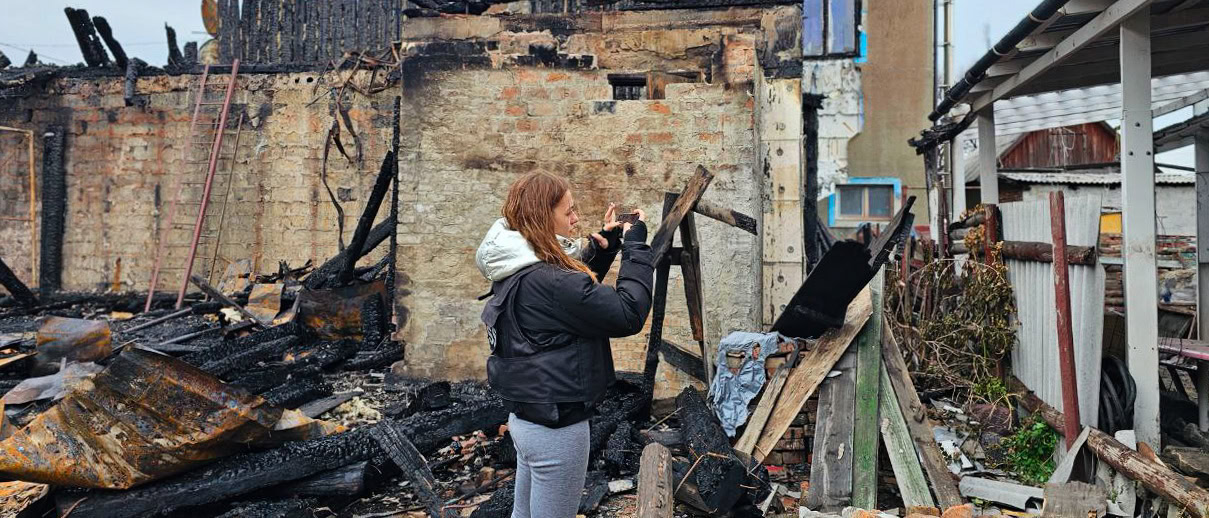
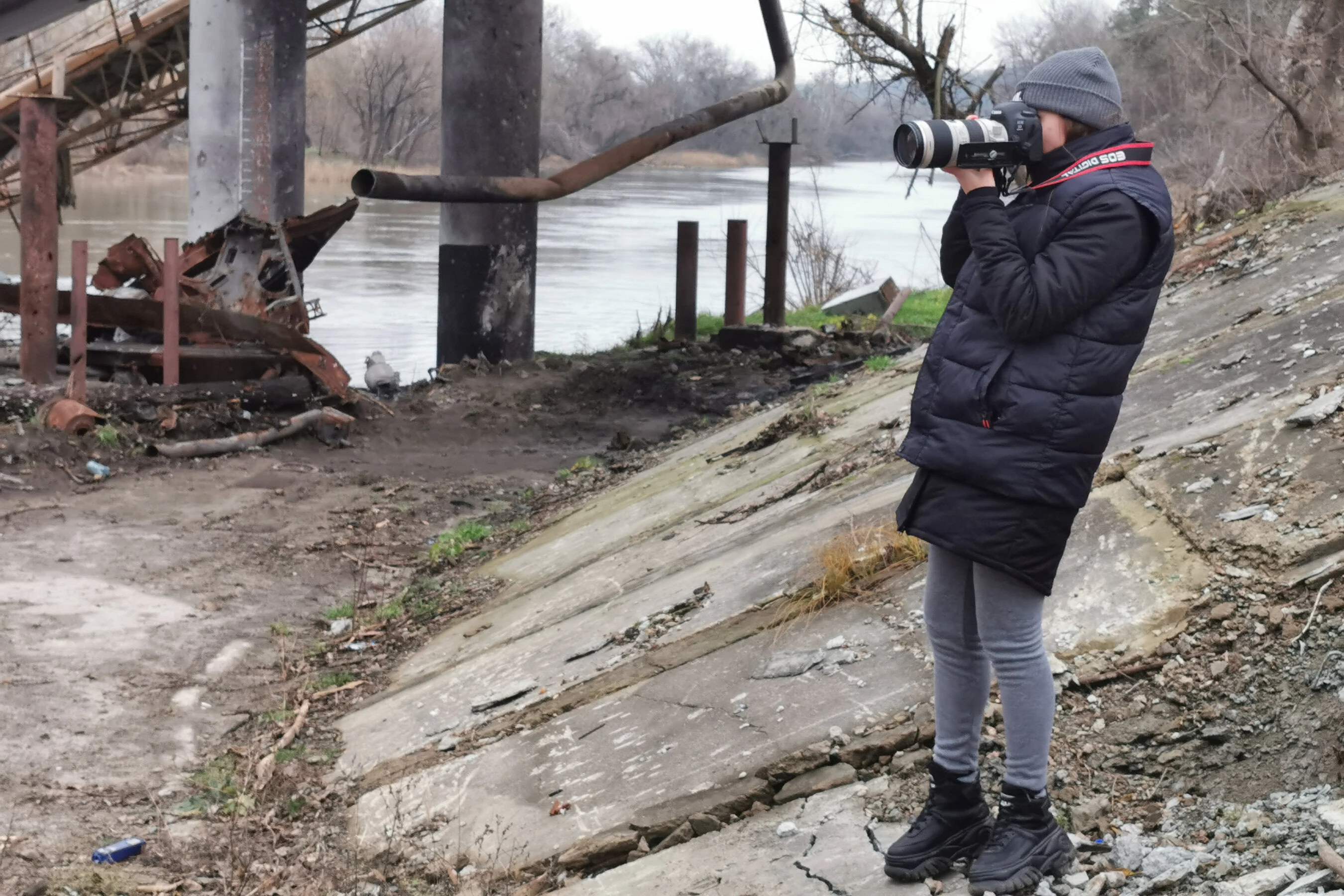
When I was offered a job with a media outlet covering the war in Donetsk in March 2022, I immediately seized the opportunity. It became clear that I could neither stay far from the war nor did I want to. And when I found out that the work would involve being close to the front line and traveling to the line of contact, I knew it was the right path for me. I turned down offers in Kyiv, Cherkasy, and Lviv, packed my things, and moved to Pokrovsk.
I thought I was resilient enough to endure anything that could happen in a frontline area. But the breaking point in my work came in May 2022, when I interviewed a teenage girl who had been raped for a week by occupiers. They threatened that if she resisted, they would do the same to her younger sister. She survived against all odds, and even managed to keep her sanity. Our forces evacuated her from Mariupol, which was not yet fully occupied at the time.
In front of me was a completely calm girl who had survived the worst experience imaginable and was trying to continue living with it. When I returned home, I wasn’t sure I would be able to publish the interview. That was the first time I felt fear about what it would mean if the occupiers came to my home.
It was also then that I realized that if I could not publish that interview, I had no place in war journalism, where every day you meet people who have already seen hell on earth.
It came down to a choice between the pull to be where I could document grief and try to ensure it is not forgotten, and a measured, even detached, journalism far from the front line. It felt like a choice in a toxic relationship: either you stay despite everything that unsettles, drains, and draws you in, or you walk away for good.
I published the interview. It did not contain details that would be too shocking to readers, but even without them it was a harrowing account of what the girl had endured. And if she was able to move on, did I have the right to step back or distance myself? I didn’t think I did. Therefore, the next assignment to the east came earlier than I had originally planned. I moved it forward as much as I could. And over time, I began to live from assignment to assignment.

I want to fully experience the Donetsk region
The Donetsk region is becoming my home. In 2022, I spent five to six months here, but by 2024 I was spending about nine months in the east per year. By 2025, it was ten. Today, I practically live here, with occasional trips to the relatively safer Kharkiv.
The hope that I could somehow change the course of the war was shattered back in 2022. After that, in 2024, I lost faith that the occupiers could be stopped from advancing deeper into the Donetsk region. Last year, the illusion faded that I could bring my family here one day, to show them even a glimpse of where I have lived.
But staying near the front line, living and working here, is my way of recording the high and tragic cost of each day that I am able to wake up at home. Since the beginning of the year, as Russian forces advanced deeper into the region, the risk of being killed in Kramatorsk has almost become equal to the risk of not returning from an assignment. But every day I see the faces of those who face an even higher risk of death. And as long as I can tell their stories, I will continue to pay this price.
***
Hi, I am Alina, the author of this article. Thank you for reading to the end.
Every story starts with your support. Join the Frontliner community so we can keep up documenting Russia’s war against Ukraine from the front line and the rear.
***