War on the environment: how explosions and fires are changing air and water
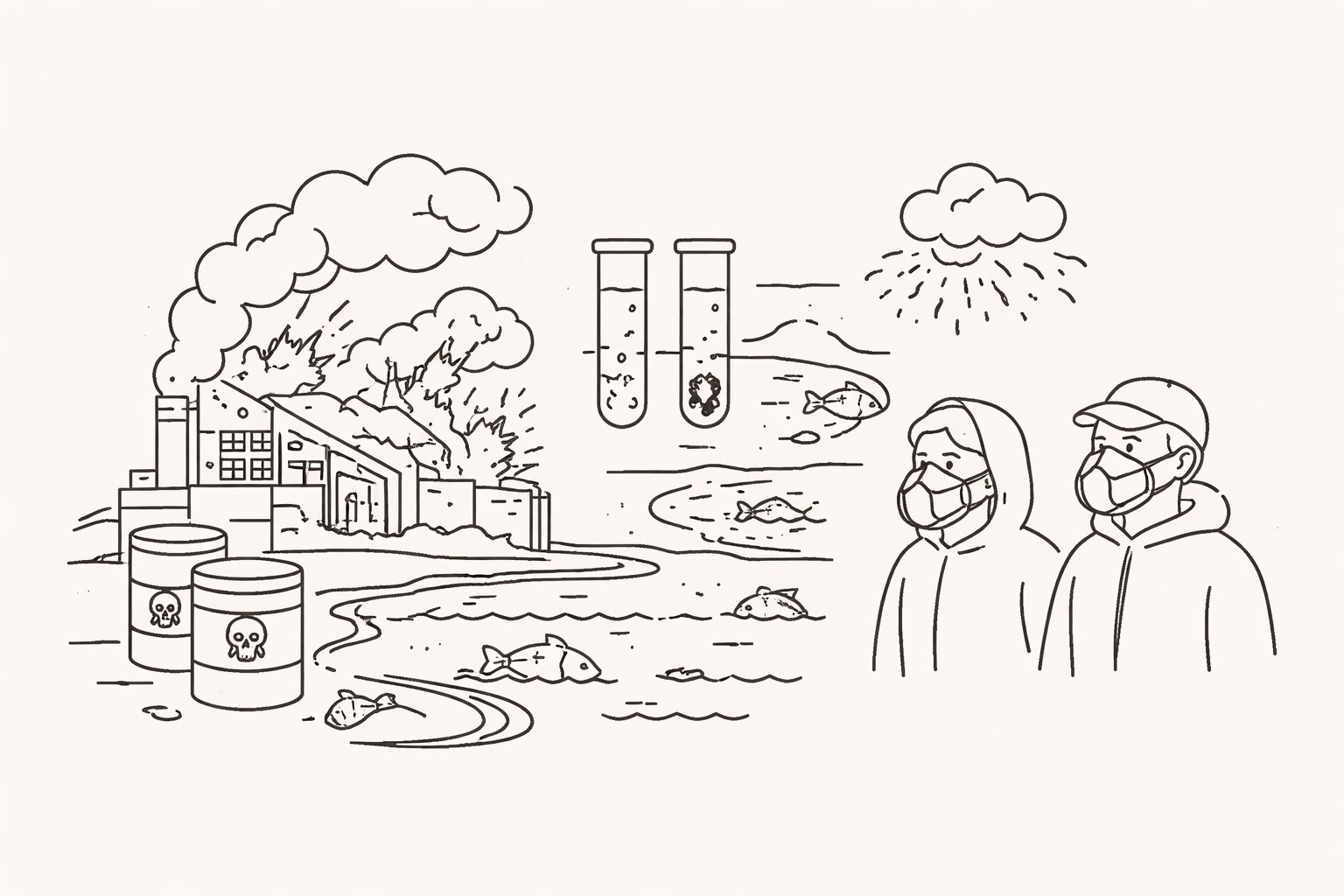
Russia’s war against Ukraine is having long-term environmental consequences. Explosions, fires and the destruction of infrastructure are affecting air and water quality. Some of these changes are immediately visible, while others accumulate and will emerge over time. Frontliner looks at the risks already recorded and what to expect.
Explosions leave behind not only destruction but also chemical compounds. Residues of explosives, heavy metals and combustion byproducts enter soil and water following shelling, munitions detonations and the destruction of military equipment.
Some of these substances gradually dissolve and migrate into groundwater. This creates risks for drinking water sources, especially in areas of active fighting.
What is happening to the air
Shelling and fires sharply degrade air quality. Research by the Ukrainian Hydrometeorological Institute of the National Academy of Sciences found that after missile and drone strikes, concentrations of pollutants in near-surface air increase on average by 100% to 400%, and in some cases by more than 1,000%.
Along with fine particulate matter, nitrogen oxides (NOx), carbon monoxide (CO) and volatile organic compounds are released into the atmosphere. Fires at oil depots and industrial facilities add fuel combustion products, including benzene and polycyclic aromatic hydrocarbons.
Elevated levels of phenol and formaldehyde — toxic substances formed by the burning of synthetic materials, plastics and construction components — have also been recorded in Ukrainian cities. Emissions can spread tens of kilometers from the site of a fire.
How water is changing
Water contamination is primarily linked to explosion byproducts and damaged infrastructure. Residues of explosives, including nitrate- and nitrite-based compounds, as well as heavy metals such as lead, copper and cadmium enter water bodies. These substances leach from fragments of military equipment and munitions and accumulate in water and sediments.
Strikes on oil depots and vehicles also release petroleum products into water. These form a film on the surface of water bodies and disrupt oxygen exchange. Similar processes have been recorded after Russian attacks on infrastructure and fires at fuel storage sites.
Pollution has also been observed in the Black Sea due to fuel leaks, corrosion of naval mines and remnants of munitions. This is accompanied by the accumulation of toxic substances and disruption of ecosystems.
Another risk is damage to sewage and treatment systems. In such cases, untreated wastewater enters rivers and reservoirs, altering chemical composition and increasing bacterial contamination.
Impact on people
Deteriorating air and water quality is already affecting public health in Ukraine. Rising concentrations of fine particulate matter increase the risk of cardiovascular and respiratory diseases. Even short-term spikes of two to three times above normal levels can trigger flare-ups of chronic conditions. Such pollution is dangerous even for healthy individuals and can be critical for children and older people.
Water contamination also has long-term effects. Elevated levels of nitrates and heavy metals can affect the nervous system, liver and kidneys. According to international studies, prolonged consumption of water with high nitrate levels increases the risk of chronic diseases and developmental disorders in children.
Toxic compounds formed during combustion pose an additional threat. Benzene, formaldehyde and polycyclic aromatic hydrocarbons are known carcinogens. Their effects are not always immediate but accumulate over time.
Only after the war ends will Ukraine be able to fully assess the scale of environmental damage caused by the invasion and begin large-scale cleanup of contaminated areas.
***
Frontliner wishes to acknowledge the financial assistance of the European Union though its Frontline and Investigative Reporting project (FAIR Media Ukraine), implemented by Internews International in partnership with the Media Development Foundation (MDF). Frontliner retains full editorial independence and the information provided here does not necessarily reflect the views of the European Union, Internews International or MDF.