Chornobyl on hold: 40 years without solutions and with new threats
She was one of the first to return home after the accident and began a struggle to restore her life. For decades since the Chornobyl accident, Halyna Voloshyna has been trying to prove that Chornobyl is not just an Exclusion Zone, but her home. She shared her story of life in isolation, and a city that never fully recovered, with Frontliner reporters.
Halyna Voloshyna is a self-settler in the Chornobyl Exclusion Zone. After the accident at the fourth power unit on April 26, 1986, her family was among the first to return home. Today, there are approximately 25 self-settlers like her remaining in the Chornobyl Zone. They live in almost complete isolation and nevertheless try to maintain their usual way of life: they raise livestock and grow vegetables. For this reason, the zone’s residents disagree with being labeled “self-settlers,” noting that they are not on someone else’s territory but have returned to their own homes.
We are the original population.
We all once dreamed of returning to our hometown.
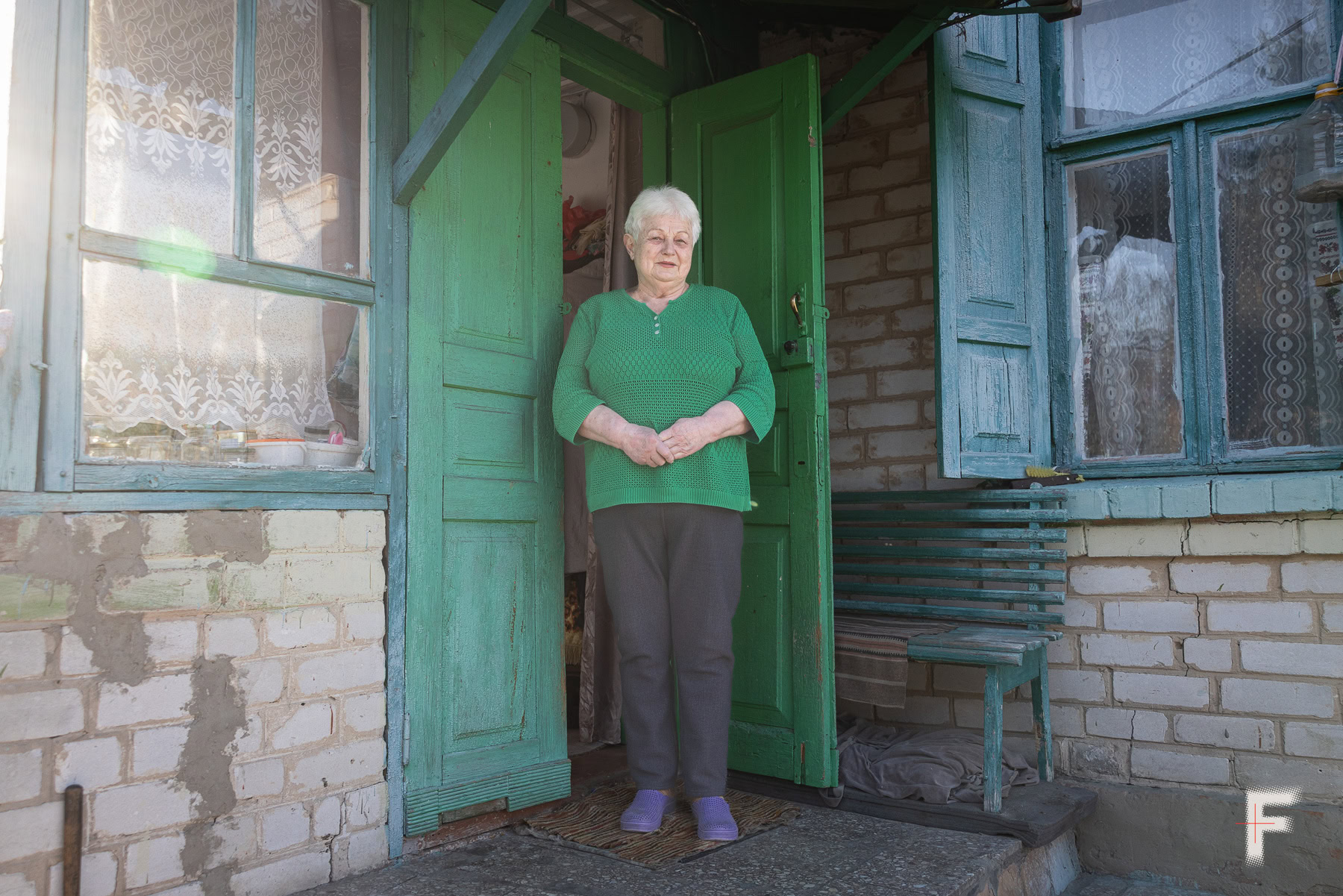
“Self-settlers are those who live in the homes of people who are no longer here, but we are the original population. We all once dreamed of returning to our hometown, we waited and believed, but as you can see, since the accident, it seems no one has even bothered to do anything,” says Halyna Voloshyna, a self-settler in the Chornobyl Exclusion Zone.
Halyna’s sons were still pursuing an education when the Chornobyl accident occurred: the older one was a student at a technical college in another city, and the younger one studied at school in Chornobyl. After the accident, the younger son had to finish school located near the exclusion zone. Later, after completing their education and military service, both returned to Chornobyl, where they now work.
Things are missing from the stores.
We pick mushrooms, go fishing, raise chickens.
During the early years following the accident, there was nothing in the zone: neither stores nor a reliable food supply. The necessities had to be brought in from outside the zone or obtained through acquaintances. Over time, workers were allowed to use cars, which partially simplified daily life, but a functioning infrastructure never emerged.
“Even now, to buy everything we need, we have to leave Chornobyl. Because, first of all, a lot of things are missing from the stores, and second, the prices are skyrocketing. We pick mushrooms, go fishing, raise chickens; to put it simply, we have never gone hungry,” says Halyna.
The woman adds that in all her years living in the exclusion zone, she has never believed that radiation is dangerous, at least not as dangerous as it is described. She is convinced that the threat is either exaggerated or uneven, since in the decades she has lived here, she has not seen the consequences people talk about.
Back in 1993, Halyna, along with other residents, founded the organization “Revival of Chornobyl.” Its goal was not only to enable anyone who wished to return home but also to gradually restore normal life in the city with basic infrastructure, jobs, and opportunities for development. One of the key ideas was to incorporate Chornobyl into the Ivankiv community. Halyna believes this would provide the city with an administrative foundation for development: access to funding, local governance, and the ability to address everyday issues not in isolation but within the community.
“They shut down Chornobyl, fenced it off with barbed wire, and began to scare the whole world with the danger of radiation. Instead of trying to get rid of the radiation… I wonder what the experts have been doing all this time? Why has no one done anything in 40 years? And if no one wants to do anything, why will the authorities not let us, the people who have spent almost our entire lives here, do it?”
Almost none of us are left, so if the authorities and
the zone administration did not hear us before,
it seems they will never hear us now,

After the outbreak of full-scale war and due to the risk of a renewed Russian offensive from the territory of Belarus, the Chornobyl zone has regained its strategic importance. The territory, which for decades remained half-empty and isolated, now increasingly resembles a military facility with a constant presence of forces and control of key routes.
This is precisely where Halyna sees her last hope. She is convinced that if the military continues to serve here after the war ends, Chornobyl will not be forgotten and abandoned again. On the contrary, it could be developed into a military town.
At the same time, due to this increased activity, particularly during the construction of defensive and engineering fortifications, there is a constant movement of radioactive particles. However, according to experts, radiation levels remain under control and do not extend beyond the exclusion zone.
We constantly monitor how
the radiation spots are moving.
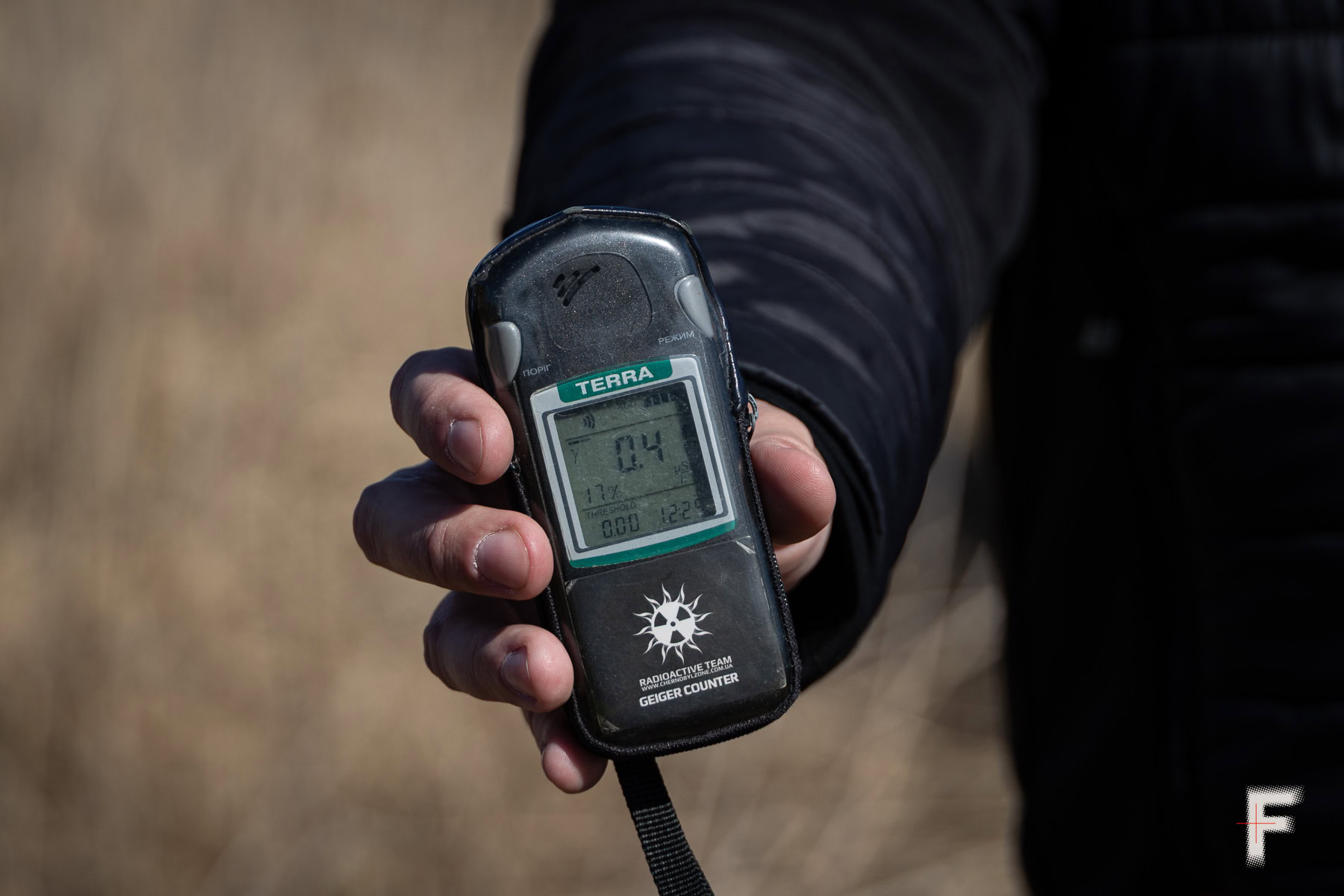
“The exclusion zone was created precisely to ensure that as few people and as little equipment as possible would come here, but given the state of martial law and the experience of an invasion from this direction, there will certainly be many soldiers here and the construction of a defense line. And indeed, all of this together also contributes to an increase in radiation levels. We constantly monitor how the radiation spots are moving. They are small and safe, however, this should not be happening at all,” says Serhii Kirieiev, head of the eco-center.
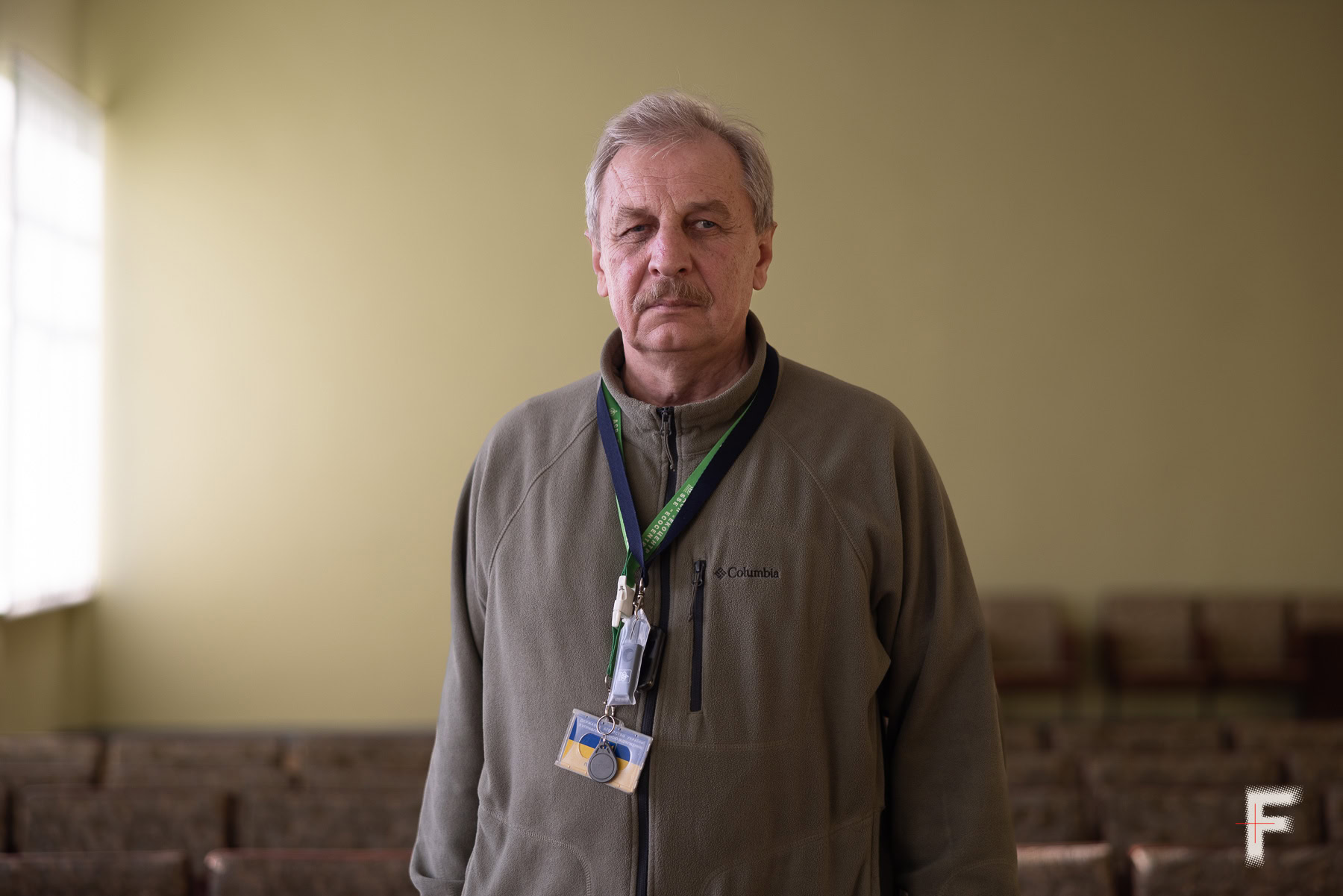
A catastrophe for future generations
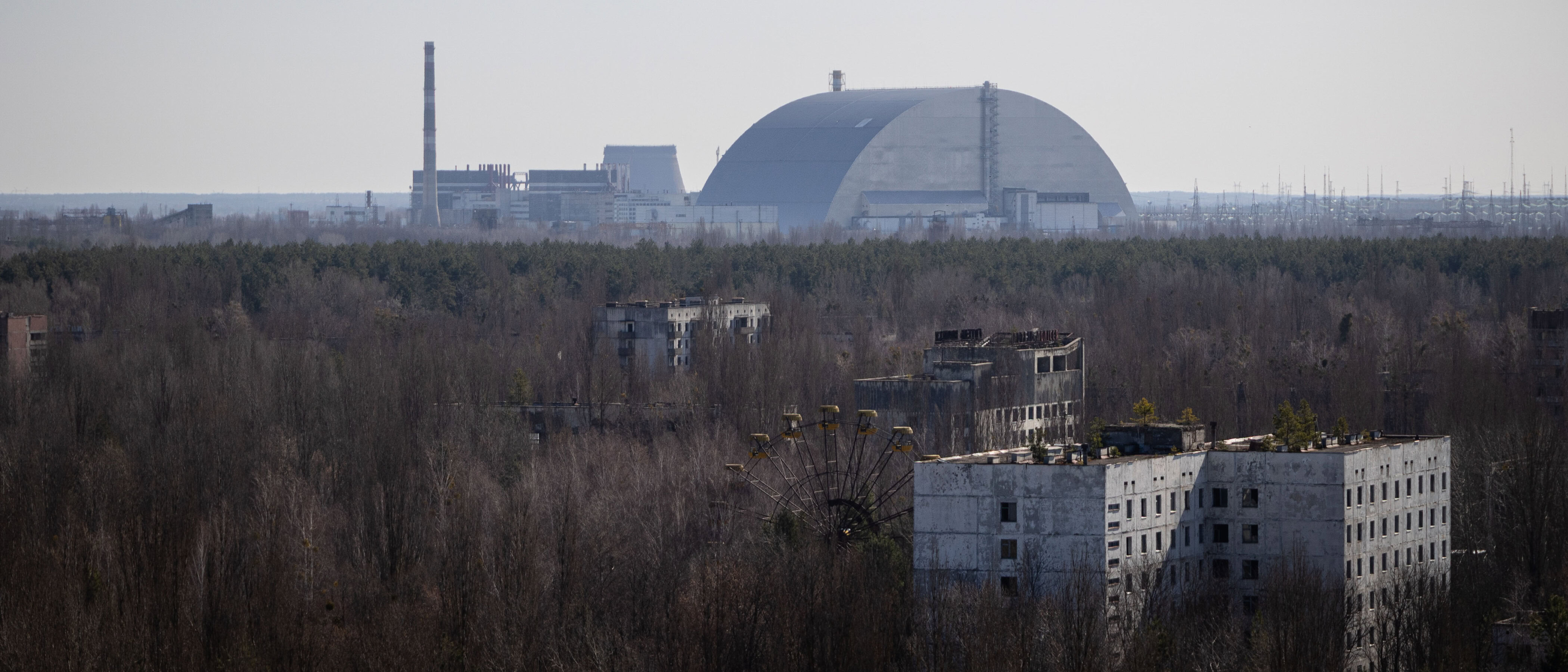
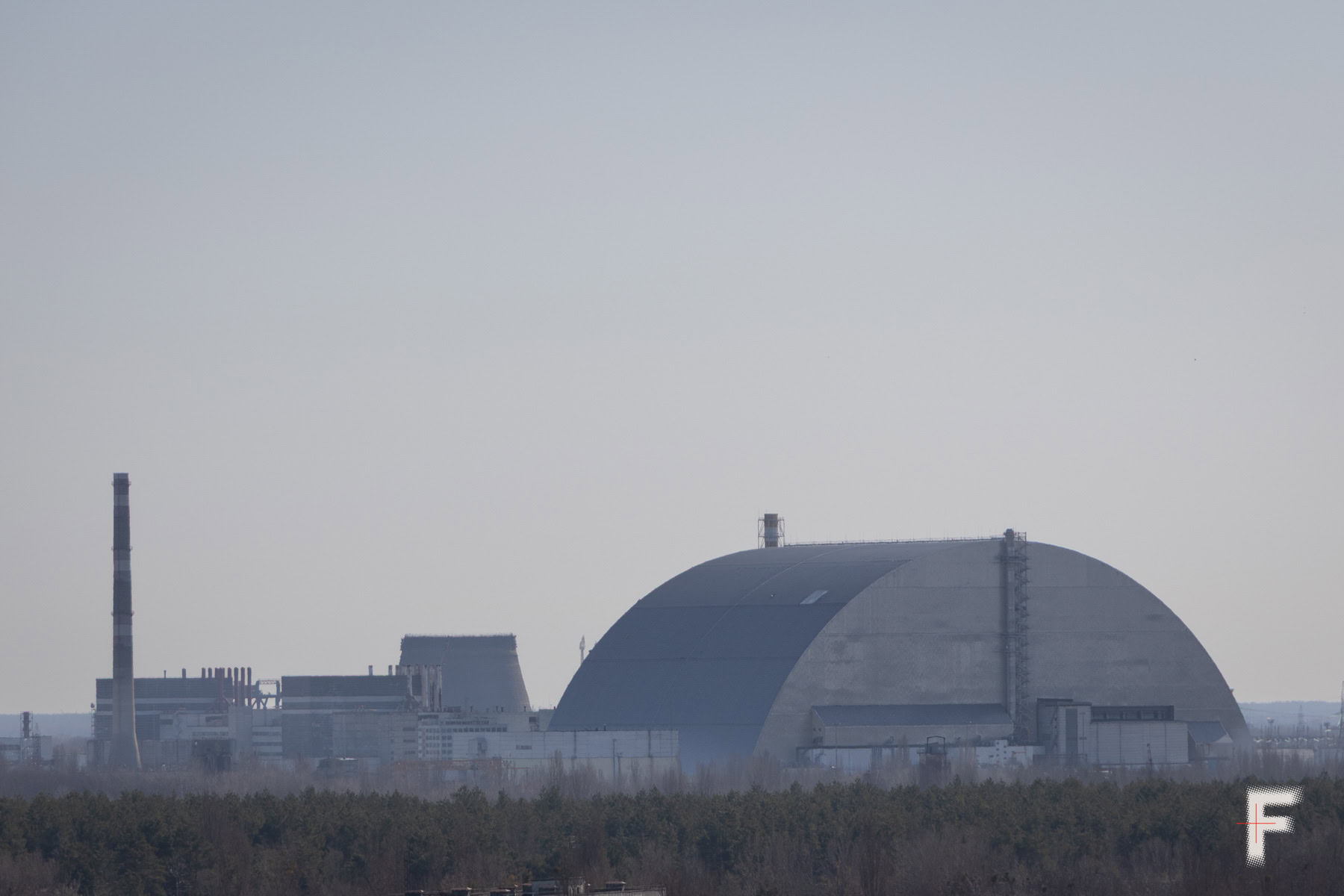
On February 14, 2025, a Russian “Geran-2” combat drone targeted the containment structure, the shelter covering the destroyed fourth power unit of the Chornobyl Nuclear Power Plant. The impact disrupted the containment’s integrity, leading to a fire where the strike occurred. The initial fire was quickly extinguished, but the waterproof membrane of the arch began to smolder inside. It took State Emergency Service workers nearly three weeks to fully extinguish the fire. Currently, there is no threat to the world that radiation could leak out again, but workers of the exclusion zone warn that this may only be a matter of time, posing a potential catastrophe for generations to come.
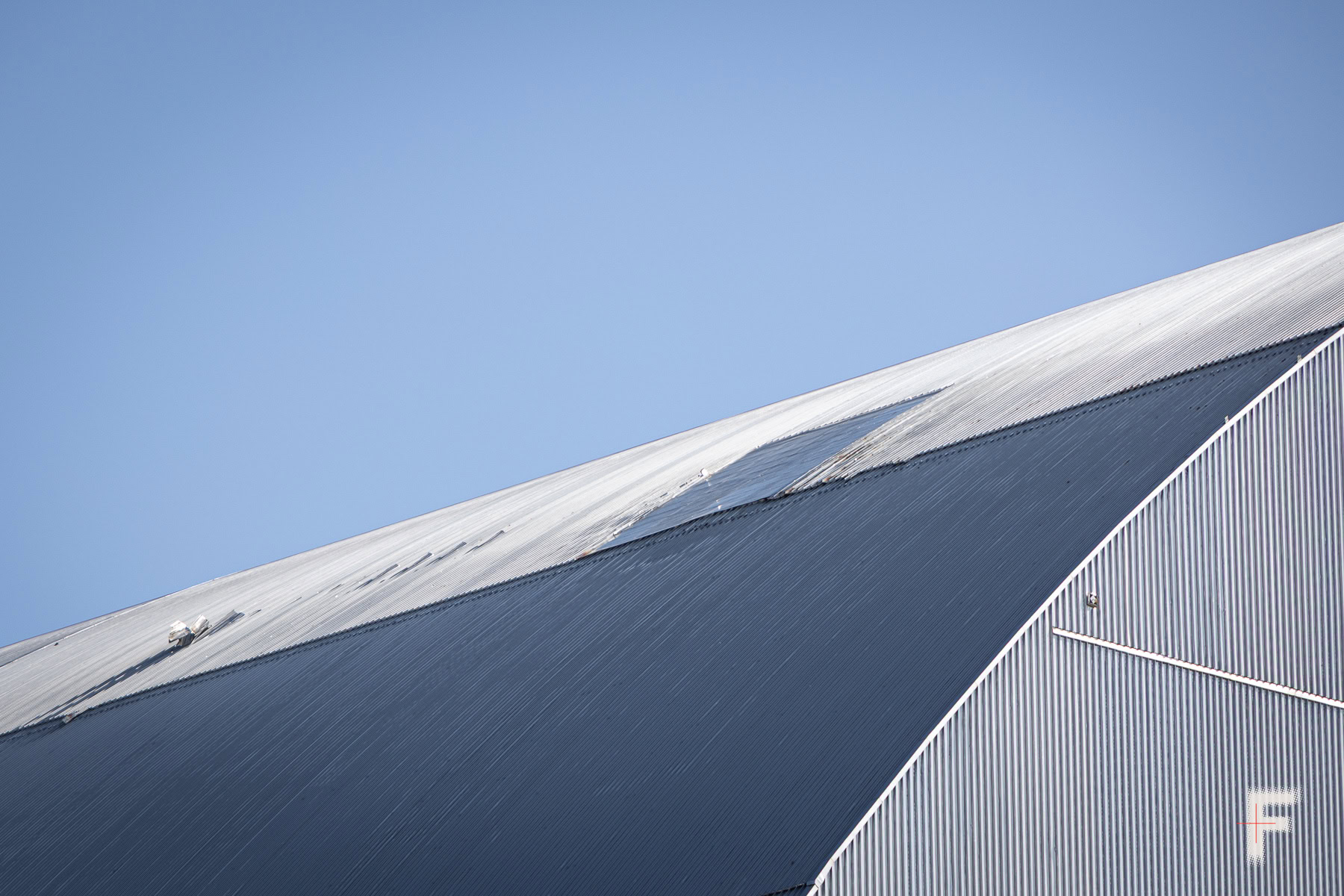
“The large hole caused by the Russian attack has already been covered with a protective patch, but the 300 smaller holes made by State Emergency Service firefighters during the firefighting operation still need to be patched up. The problem is that the structure has already started to rust. There may be no immediate threat to the world in the coming years, and thus this is not currently regarded by other countries as a critical issue.”
But in reality, it looks as though this is a problem
that is being deliberately left for future generations,

4th in the world in terms of nuclear waste
There’s no reason to expect that radiation in the exclusion zone will disappear in the foreseeable future. According to experts, the natural decontamination of the territory will take many thousands of years: while cesium and strontium isotopes decay over decades, plutonium will remain dangerous for millennia. This prolonged isolation increasingly cements Chornobyl’s status as the primary site for nuclear waste management. Serhii Kirieiev, head of the eco-center, emphasizes that the site will continue to serve as a safe storage facility for spent nuclear fuel. This is precisely why a centralized storage facility for spent nuclear fuel from three Ukrainian nuclear power plants: Rivne, Khmelnytskyi, and South Ukraine, was launched here in 2022 to operate for the next 100 years.
We are a nuclear power;
not because we have nuclear weapons.

“We are a nuclear power; not because we have nuclear weapons, but because we rank fourth in the world in terms of the amount of nuclear waste. Therefore, in the future, the waste from all operating nuclear power plants must be stored specifically in the Chornobyl zone. We are still waiting for a decision regarding spent nuclear fuel, as it can be used to power new plants and develop new technologies,” the man explains.
Because of this, especially under martial law, security in the zone has been significantly reinforced. Both people and equipment are being checked, especially those working near nuclear fuel storage facilities. This has reshaped the lives of those interested in the zone beyond formal duties, as informal researchers and ‘stalkers,’ who used to visit frequently, have now nearly lost that opportunity.

Despite reconstruction projects and new challenges in wartime, key issues regarding the exclusion zone remain unresolved. The repair of the damaged containment structure over the fourth power unit and its future use are still awaiting final decisions. Storage facilities are still being filled with spent nuclear fuel, however, a long-term strategy for its management has not been defined. Meanwhile, Chornobyl and the nearby inhabited villages have become a historical symbol remembered primarily on the anniversary of the catastrophe, April 26.
***
Hi, we are Artem and Danylo, the authors of this article. Thank you for reading to the end.
Unfortunately, most people tend to think of this place mainly on the anniversary of the tragedy. After the war broke out, access to the area became restricted, and tourism ceased for those interested in the area. We wanted this article to show what the area is like today, for people who cannot see it with their own eyes, or who have seen it but are now unable to return.
Every story starts with your support. Join the Frontliner community so we can keep up documenting Russia’s war against Ukraine from the front line and the rear.
***