Ukraine’s Defense Forces: Who fights, who commands and how units work together
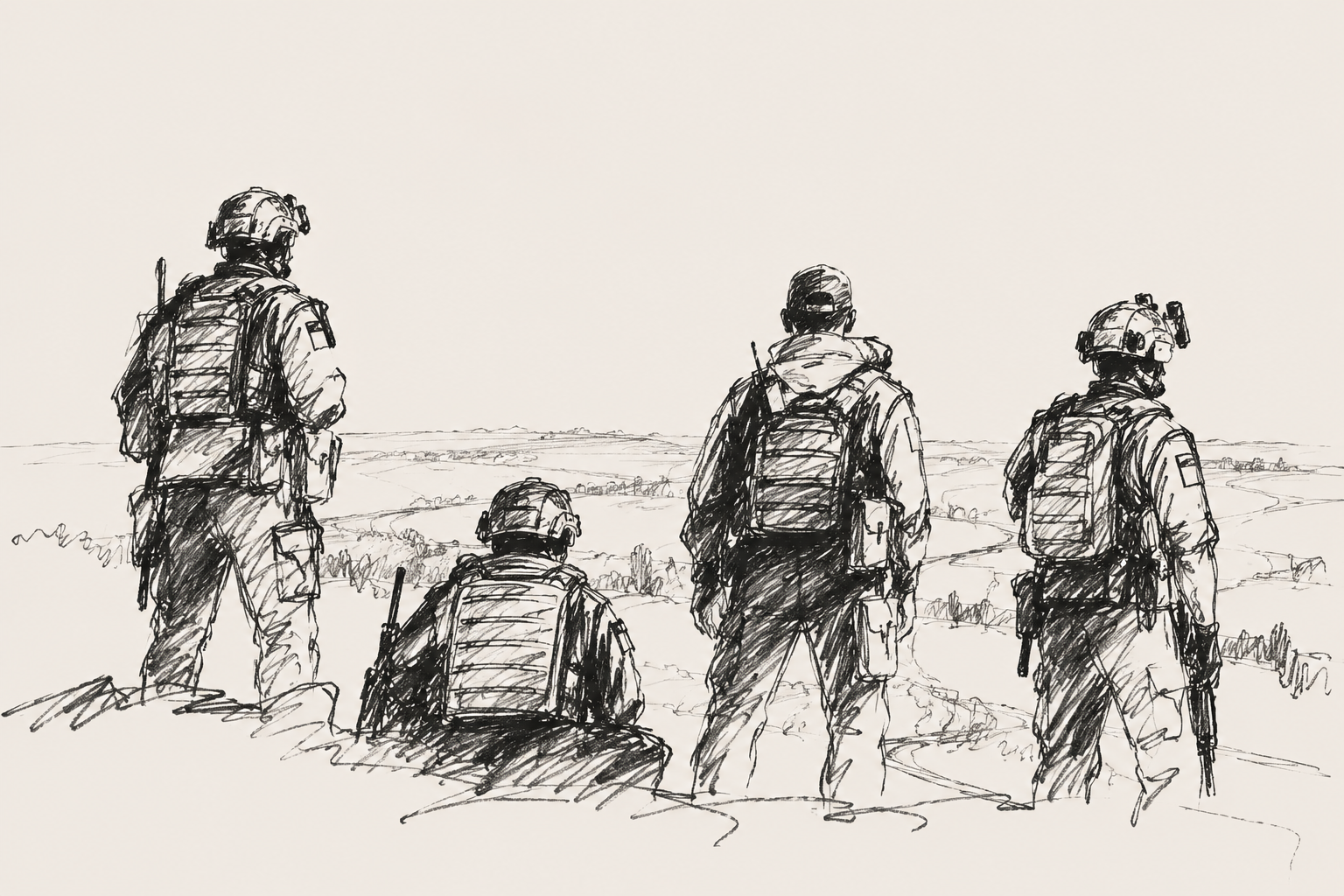
On one sector of the front, an army brigade, National Guard troops, border guards and special forces fight side by side. They belong to different agencies and have their own commands, but they carry out shared combat missions. To make that possible, Ukraine’s Defense Forces rely on a command system that coordinates units with different chains of subordination. Frontliner examined which institutions defend Ukraine, whom they answer to and how they work together.
Ukraine’s Defense Forces include far more formations than the Armed Forces alone. Units of the National Guard, the State Border Guard Service, the Security Service of Ukraine and other bodies take part in combat. Each has powers defined by law, its own governing bodies and its own tasks. During joint operations, their forces and assets can be placed under a single operational command.
The basis for this structure is the Law of Ukraine on National Security. It distinguishes among the security forces, the defense forces, the defense-industrial complex, and citizens and public associations that voluntarily help ensure national security. The Defense Forces include the Armed Forces and other military, law enforcement and intelligence bodies that carry out defense tasks under the law.
Membership in the security and defense sector should be distinguished from direct participation in military operations. Police officers or rescuers, for example, may carry out tasks in wartime while remaining in their own agencies. The nature of a specific task and the legal decisions behind it determine which forces are engaged in defense and who directs their use.
Who makes up Ukraine’s Defense Forces
The Armed Forces: The core of military defense
The Armed Forces are responsible for repelling armed aggression. Their structure includes the Land Forces, the Air Force and the Navy, as well as separate branches and forces. Among them are the Air Assault Forces, the Special Operations Forces, the Territorial Defense Forces, the Unmanned Systems Forces and the Logistics Forces. Their tasks include combat operations, reconnaissance, support and training of troops.
The commander in chief of the Armed Forces exercises direct military leadership. The General Staff plans the state’s defense and coordinates the use of troops. Each branch and separate force has its own command, responsible for training and developing the forces under it. The organizational framework is set by the law on the Armed Forces and by a presidential decree on the commander in chief’s powers.
The National Guard, border guards and other formations
The National Guard of Ukraine is part of the Interior Ministry system. Its personnel carry out combat missions, guard important facilities and help maintain public safety. The State Border Guard Service also belongs to the Interior Ministry system. In wartime, border guards fight at the front, conduct reconnaissance and guard the state border.
The Security Service of Ukraine carries out counterintelligence, counter-sabotage and special operations. The Defense Ministry’s Main Directorate of Intelligence provides military intelligence. The State Special Transport Service is responsible, among other tasks, for restoring and protecting transport infrastructure needed for defense. It is part of the Defense Ministry system and, under martial law, answers to the commander in chief of the Armed Forces.
Who commands the Defense Forces
The president, the Headquarters of the Supreme Commander in Chief and the military command
The president of Ukraine is the supreme commander in chief of the Armed Forces and exercises strategic leadership of the country’s defense. After the full-scale war began, he established the Headquarters of the Supreme Commander in Chief. The body brings together representatives of the military command and the intelligence and security agencies to make and coordinate strategic decisions.
The defense minister is responsible for military-political and administrative leadership within limits set by law. The commander in chief of the Armed Forces directs the troops and the forces of other agencies assigned to him. The General Staff plans how they are used and coordinates the execution of defense tasks. At the operational level, command is exercised by the commanders of the relevant groupings; at the tactical level, by the commanders of military units and subunits.
How subordination works across agencies
The National Guard belongs organizationally to the Interior Ministry, but once a special period begins, it answers to the commander in chief of the Armed Forces for defense tasks, with exceptions provided by law. The State Special Transport Service remains in the Defense Ministry system and, under martial law, also passes to the commander in chief’s military command. The Security Service has its own chain of command and answers to the president.
The system therefore has two linked levels of management. One covers the agency’s ongoing work: personnel, training and logistics. The other determines how specific forces are used during an operation. A unit can follow the orders of a joint grouping’s commander while keeping its organizational affiliation.
How the different formations work together
Unified command during operations
The law allows forces from different agencies to be placed under the command of grouping commanders. Such decisions make it possible to plan combat operations in a defined area and to divide tasks among units according to their capabilities. In particular, the law on the foundations of national resistance sets out how territorial defense forces can be assigned to tasks as part of groupings.
For example, when defending a sector of the front, an army unit may hold positions, border guards may conduct surveillance and intelligence officers may pass on information about enemy movements. This is a simplified scheme that illustrates how functions are divided. Specific subordination and tasks are set by combat orders.
Horizontal links between units
Beyond the chain of orders, joint operations require units to exchange information directly. That includes agreeing on routes, areas of responsibility, fire support, evacuation of the wounded and logistics. Such coordination is especially important where troops from different formations operate side by side.
Horizontal coordination does not give one commander an automatic right to give orders to a unit from another agency. Authority depends on the established command structure and the tasks received. Direct contacts help speed up coordination, while responsibility for conducting the operation rests with the designated command.
In sum, Ukraine’s Defense Forces bring together institutions with different purposes and agency affiliations. Their joint work rests on centralized planning, the transfer of forces to operational control and coordination between units. It is the separation of permanent subordination from the command of combat operations that explains how troops from different agencies can carry out a single mission.