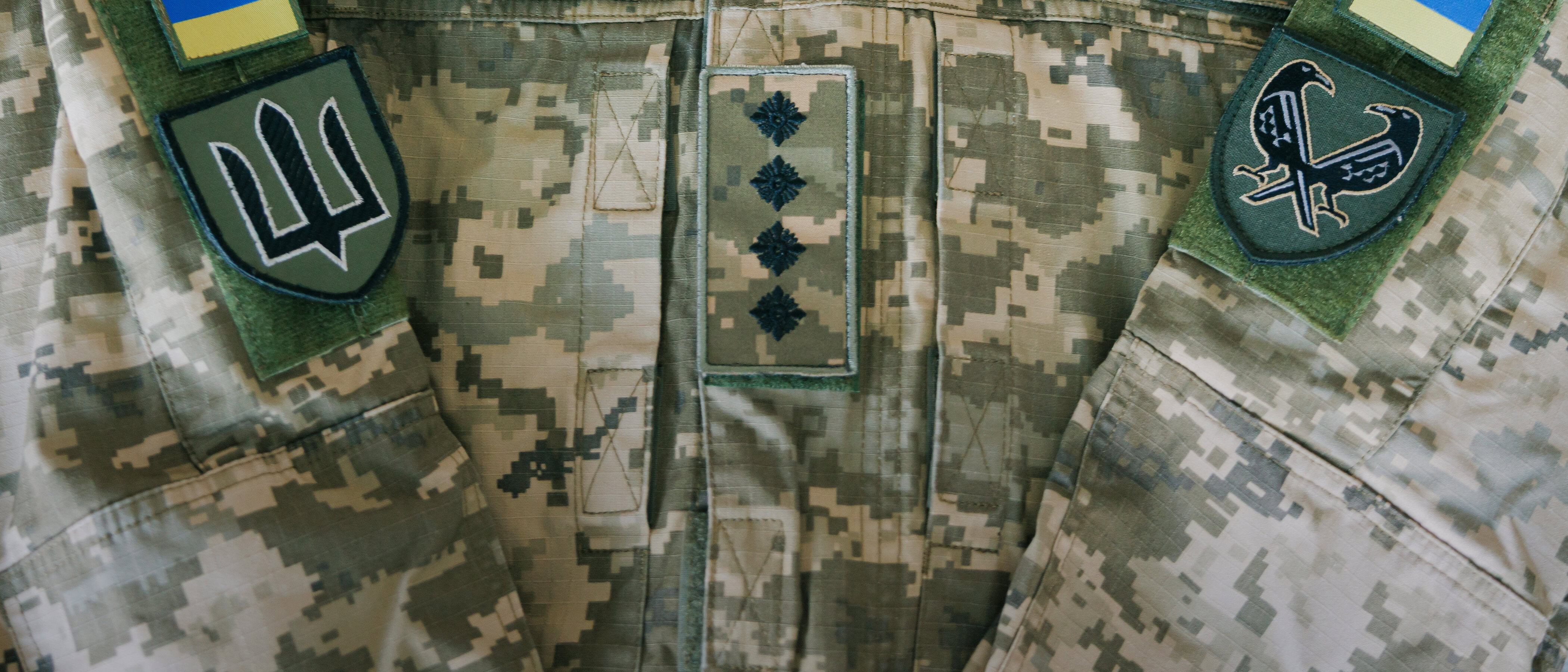
Stars, shoulder boards and ranks: The military hierarchy from recruit to general
Between recruit and general, Ukraine’s modern army system has 20 military ranks. The navy has its own scale, running from recruit and seaman to admiral. In recent years, the ranks of praporshchyk (warrant officer) and colonel general have been abolished, while staff sergeants, master sergeants and brigadier generals have been introduced. Frontliner breaks down who outranks whom in the hierarchy of the Armed Forces of Ukraine (AFU), the Navy and the National Guard, and why a rank should not be confused with a position.
All military ranks in Ukraine fall into two parallel scales: army and shipboard. Army ranks are used in AFU, except for Navy shipboard personnel, and in other military formations, including the National Guard. The law divides them into soldiers, sergeants and petty officers, and officers.
A military rank shows a person’s place in the service hierarchy but does not, by itself, denote a specific position. A major may head a unit or work on a staff, and each established staff position carries a rank designated for it. The law also provides that a military rank, once conferred, is held for life and can be revoked by a court decision.
From recruit to chief master sergeant
The lowest military rank is recruit. Next on the army scale for enlisted personnel come soldier and senior soldier. In the shipboard category, the equivalents are recruit, seaman and senior seaman. In the National Guard, a recruit does not even have a separate insignia on the shoulder boards.
The next step is much longer. The sergeant ladder consists of eight ranks:
junior sergeant → sergeant → senior sergeant → chief sergeant → staff sergeant → master sergeant → senior master sergeant → chief master sergeant.
In the Navy, the equivalents are petty officer 2nd class → petty officer 1st class → chief petty officer → chief ship petty officer → staff petty officer → master petty officer → senior master petty officer → chief master petty officer.
This long ladder is one of the main differences in the modern system. The sergeant corps now has more career levels and a separate chain of command. For example, a brigade’s chief sergeant is the direct superior of its soldiers and sergeants and an adviser to the commander on matters affecting those service members.

Four steps to colonel
The officer hierarchy begins with junior lieutenant. Next come lieutenant, senior lieutenant and captain. These are the junior officer ranks. In the shipboard scale, the first three titles are the same, while the equivalent of captain is captain-lieutenant.
There are only three senior officer ranks: major → lieutenant colonel → colonel. In the Navy, the sequence uses different titles: captain 3rd rank → captain 2nd rank → captain 1st rank. As a result, the “captain” familiar from civilian life and the naval “captain 1st rank” sit at different levels, with the latter equivalent to an army colonel.
Another point matters as well: holding a command position does not automatically confer the corresponding rank. A military unit’s table of organization determines which rank is designated for a given position, and the rank is conferred separately. That is why “commander,” “battalion commander” and “brigade commander” are position titles, or common designations of command posts, not military ranks.
Generals and admirals
The general officer ladder begins above colonel:
brigadier general → major general → lieutenant general → general. Its naval counterpart is commodore → rear admiral → vice admiral → admiral.
As a result, a major general today has two general ranks above it, while a brigadier general has three.
Shoulder boards make it possible to read this sequence without any lettering. A brigadier general wears one star, a major general two, a lieutenant general three and a general four. A different set of insignia applies to senior officers: A major has one star, a lieutenant colonel two and a colonel three.
The highest rank currently in use is general in the army system and admiral in the shipboard system. The old ranks of colonel general and general of the army of Ukraine have been removed from the current scale. People who received those ranks earlier did not lose them, however. Even in 2026, the legislation continues to account for the old ranks when establishing equivalencies.
Why there is no longer a warrant officer
The current system took shape during the 2019–2020 reform. The ranks of praporshchyk (roughly equivalent to warrant officer) and senior praporshchyk were removed from the scale, as were michman and senior michman in the Navy. During the transition, praporshchyks were recertified as staff sergeants and senior praporshchyks as master sergeants.
At the same time, the sergeant ladder was expanded and the top of the officer ladder was restructured. In 2020, the ranks of brigadier general and commodore were introduced, while colonel general and general of the army of Ukraine ceased to be steps in the current system. The new scale is closer in structure to the military rank systems used by NATO countries.
National Guard: Same ranks, different service
The National Guard has no separate rank scale. National Guard service members follow the same army ladder: recruit, soldier, the sergeant ranks, lieutenants, captain, major, lieutenant colonel, colonel and general officer ranks. The Guard’s uniform regulations, updated in 2026, define the insignia for each of these levels separately.
The system works at the highest levels as well. In August 2026, the president promoted Vadym Hladkov, first deputy commander of the National Guard, to major general. He had previously been a brigadier general. It is the same sequence that applies in the army branch of the Armed Forces.
To understand the Ukrainian military hierarchy, therefore, it is enough to remember two scales. The Armed Forces and National Guard use army ranks, while Navy shipboard personnel use their naval equivalents. The position, meanwhile, determines what job a person does with that rank.