The fight against Shaheds: why mobile fire groups need to be modernized
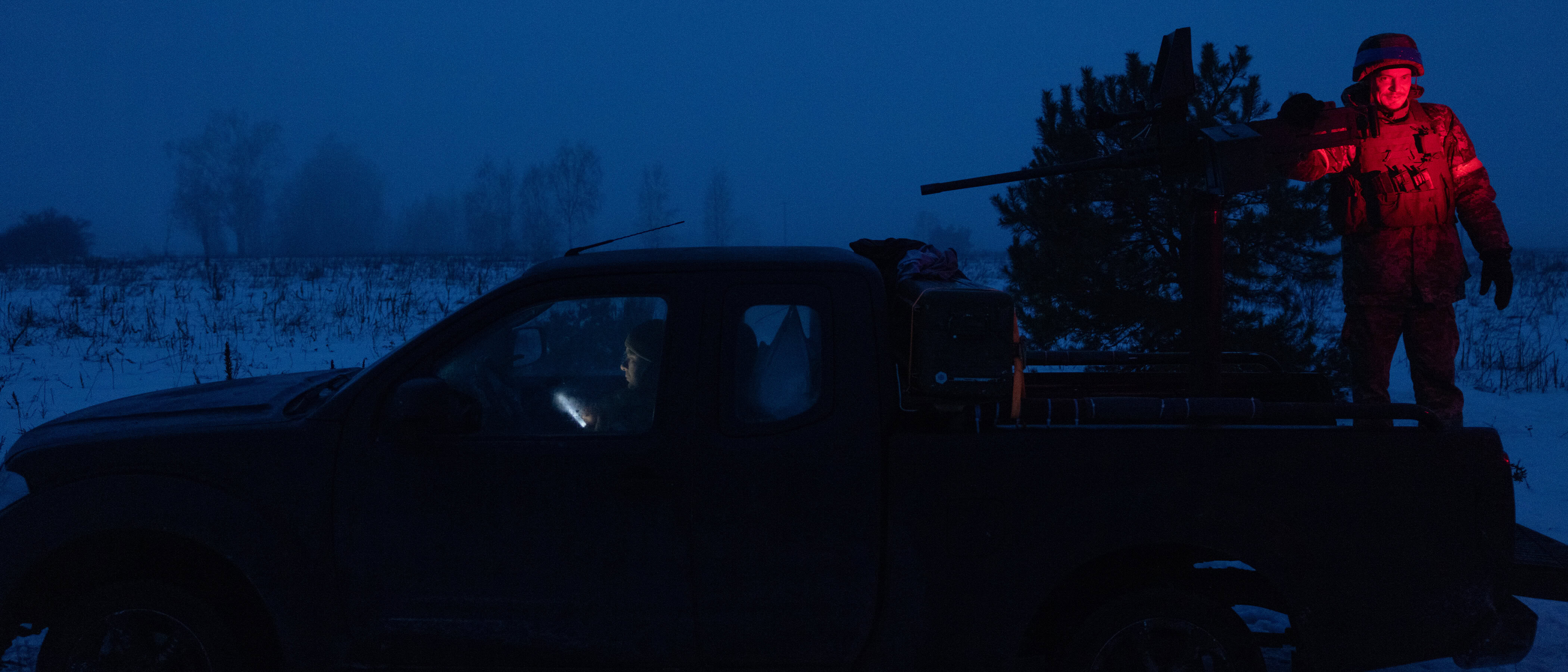
While mobile fire groups (MFGs) scan the darkness, enemy Shahed drones are evolving. They fly at altitudes out of range of machine guns and MANPADS. In some cases, they are nearly invisible to radar and can even target air-defense systems. As a result, crews in pickup trucks armed with machine guns are increasingly reaching a technological ceiling, often forced to observe targets they cannot engage. Frontliner journalists investigated why methods that have worked in recent years are unable to keep up with the pace of Russian attacks, and how the work of mobile fire groups can be improved.
The Russians are upgrading the Shahed drone, adding new navigational systems, secure communications, and changing its construction design and warhead. Meanwhile, Ukrainian mobile fire groups, the main line of defense against drones, remain at virtually the same technological level as when they were created in late 2022. Heavy machine guns are still the main weaponry of most groups, with the American Browning M2 equipped with thermal imaging optics considered the most effective. As for high-speed targets, such as missiles or jet-propelled Shaheds, defenders use Igla or Stinger MANPADS.
We have a slogan:
‘Shoot down everything that flies.’
An enemy beyond reach
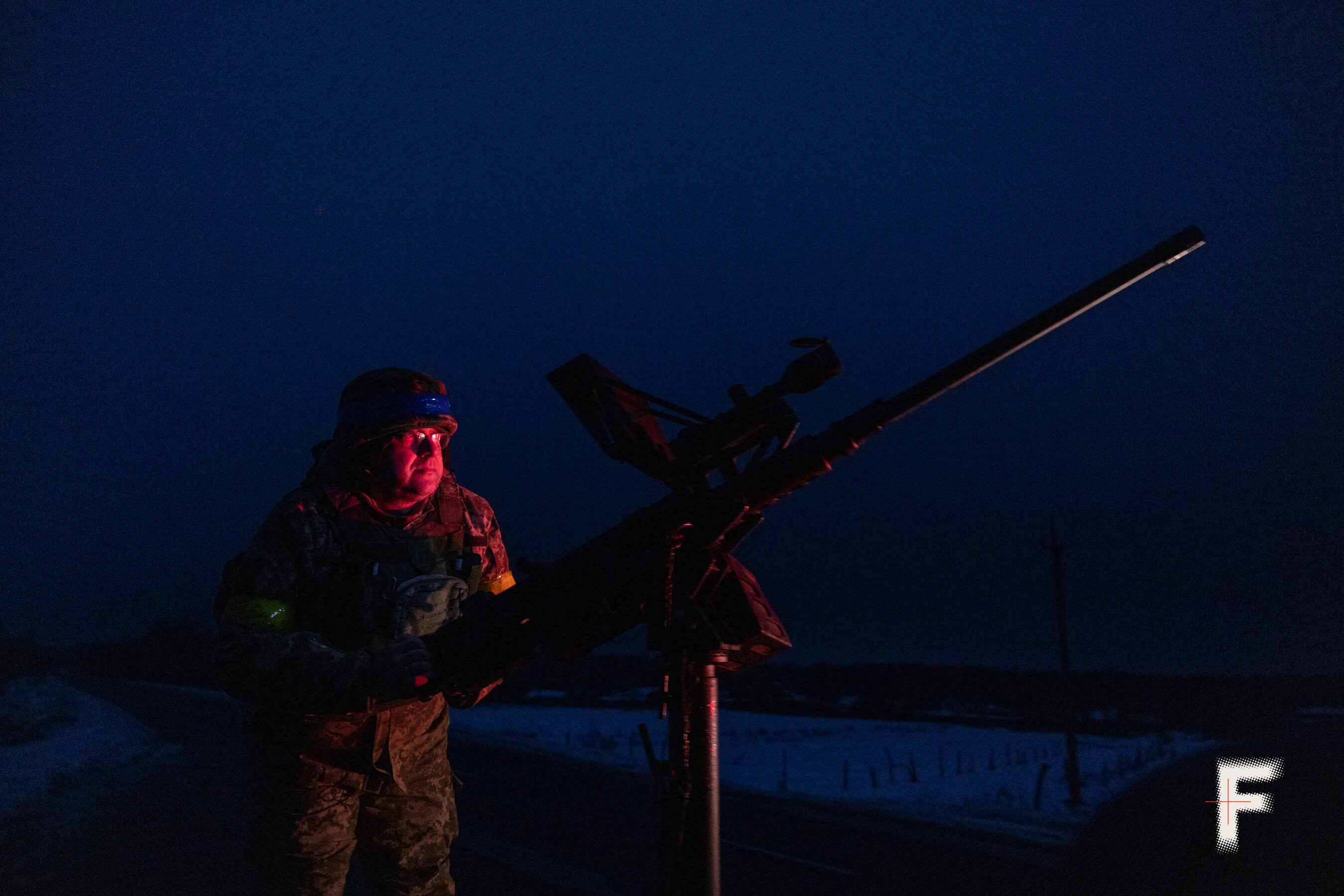
However, the usual methods of mobile fire teams are losing their effectiveness. The enemy is adapting: drones are increasingly flying at altitudes of over 2 kilometers. Machine guns are powerless at such distances, rendering soldiers able to only observe the targets in the sky.
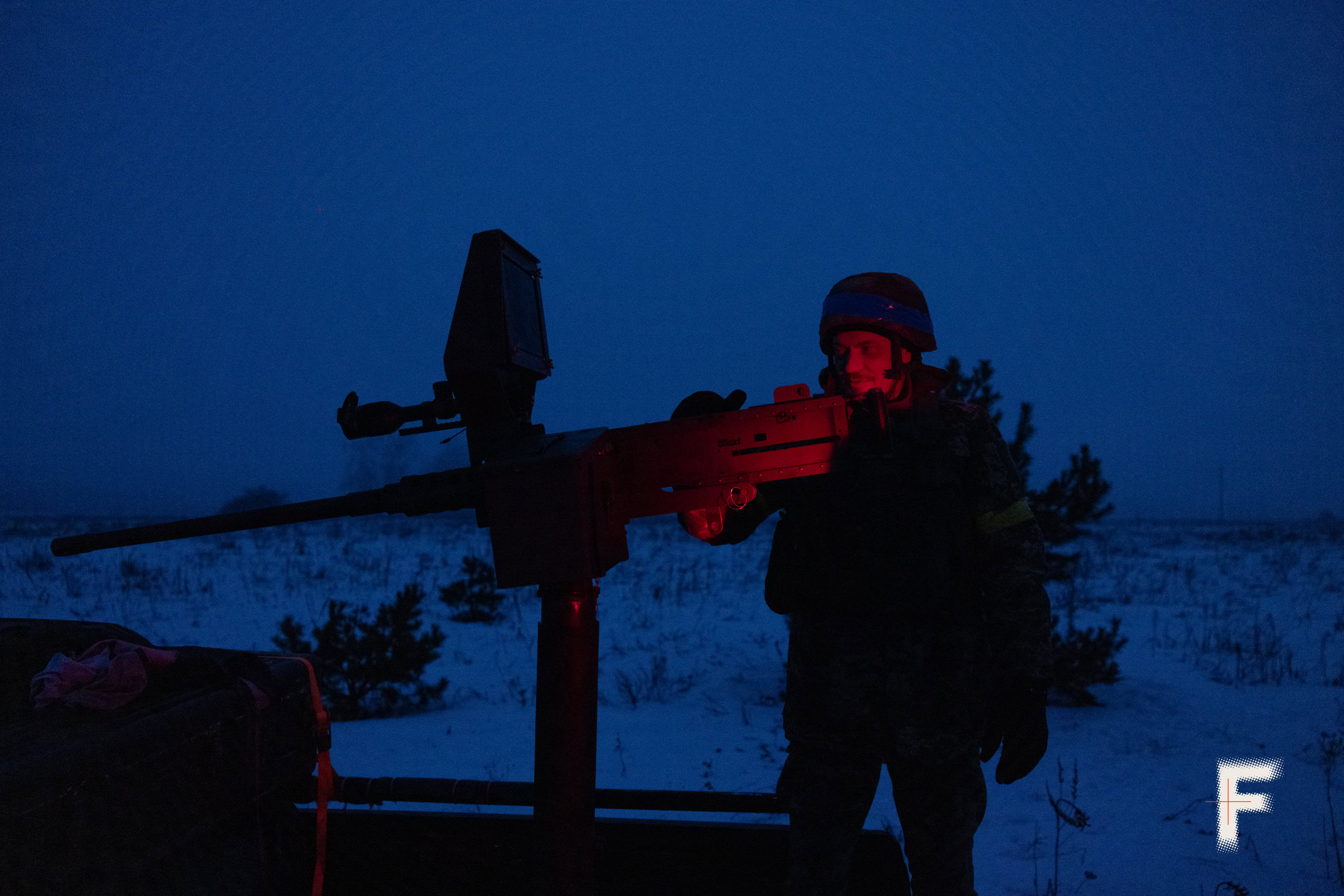
“We have a slogan: ‘Shoot down everything that flies.’ So we work whenever we can, although lately, as soon as they reach our positions, they gain altitude. That’s why we are mobile and constantly changing our positions. However, even if we fail to hit the target, we can provide precise information that no radar can provide, because very often we receive a warning when we already hear it and understand the direction of the attack“, said the commanding officer of the mobile fire group Serhii, call sign “Usach.”
The problem is the lack of a well-coordinated
detection and warning system,

Mobile radars
Still, the information reported from mobile fire group positions has limited practical use. Once a drone can be heard overhead, it is either already inside the strike zone or will exit it within seconds. Such a sequence of operation is more like recording of the path of flight than being a full-fledged element of interception systems.
“During World War II, there were such air observation and warning groups, but nowadays we have modern technological warfare. The problem with drones suddenly appearing in the strike zone of mobile fire groups is the lack of a well-coordinated detection and warning system” says aviation expert, an employee of the National Aviation University, Valerii Romanenko.
According to the expert, the problem cannot be solved by simply increasing the number of pickup trucks monitoring the sky. He says that mobile fire groups should be equipped with compact radars or small radar stations weighing roughly 30 kg. Such equipment transmits the coordinates, speed, and altitude of the target in real time and it can be installed on MFG vehicles.
Anti-drone dome
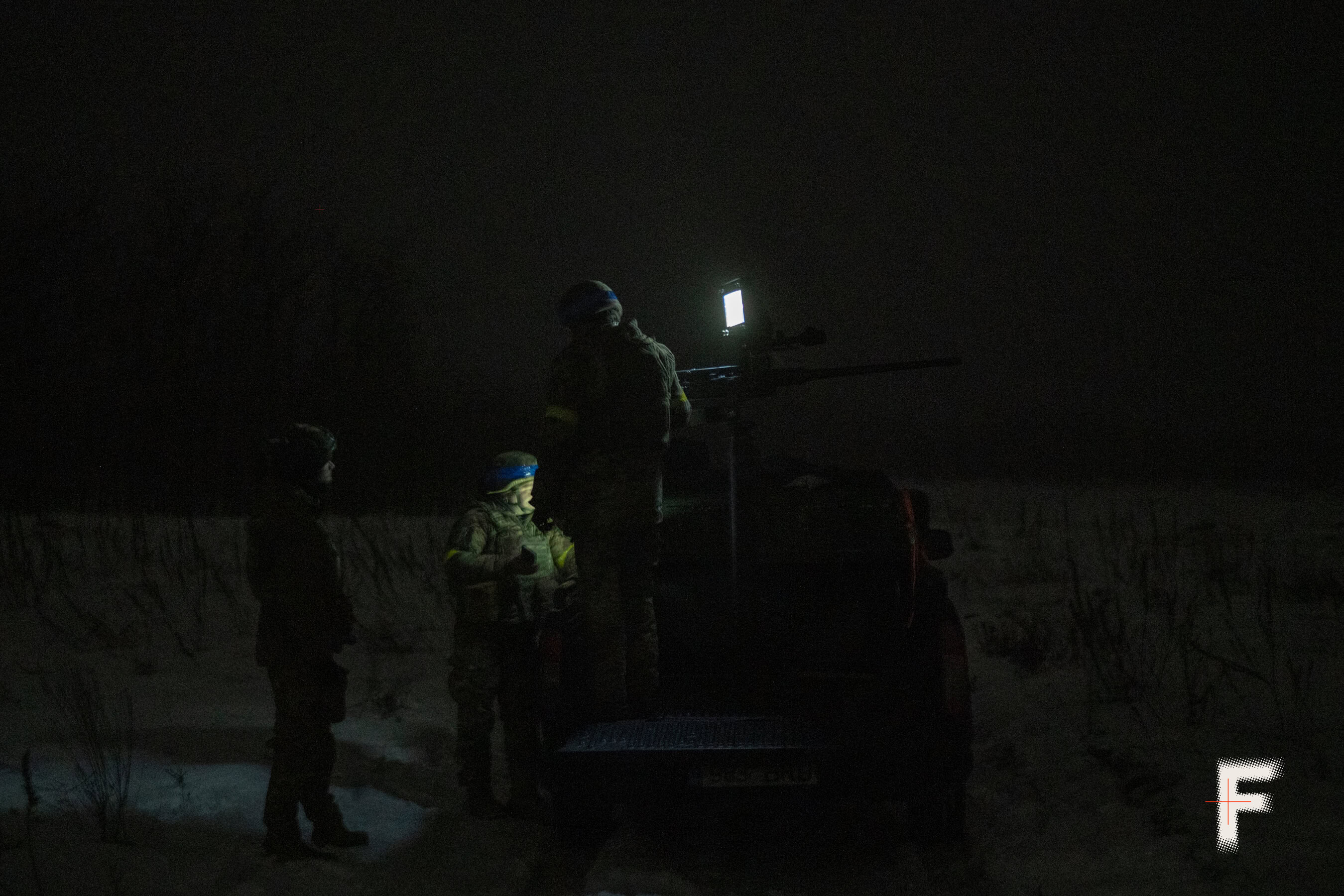
In January 2026, Deputy Prime Minister and Minister of Digital Transformation Mykhailo Fedorov announced the creation of an “anti-drone dome” — a comprehensive protection system against massive drone attacks. As aviation expert Valerii Romanenko explains, this is not a separate installation or a new type of weapon, but the creation of an integrated network for detecting, analyzing, and intercepting air targets. The system has to combine various detection methods: classic radar stations, compact mobile radars, and acoustic sensors into a single information organism. Some of these solutions, such as the Cerberus station, are already in use; they are capable of detecting targets, determining their direction, speed, and altitude, and transmitting this data to an automated control system.
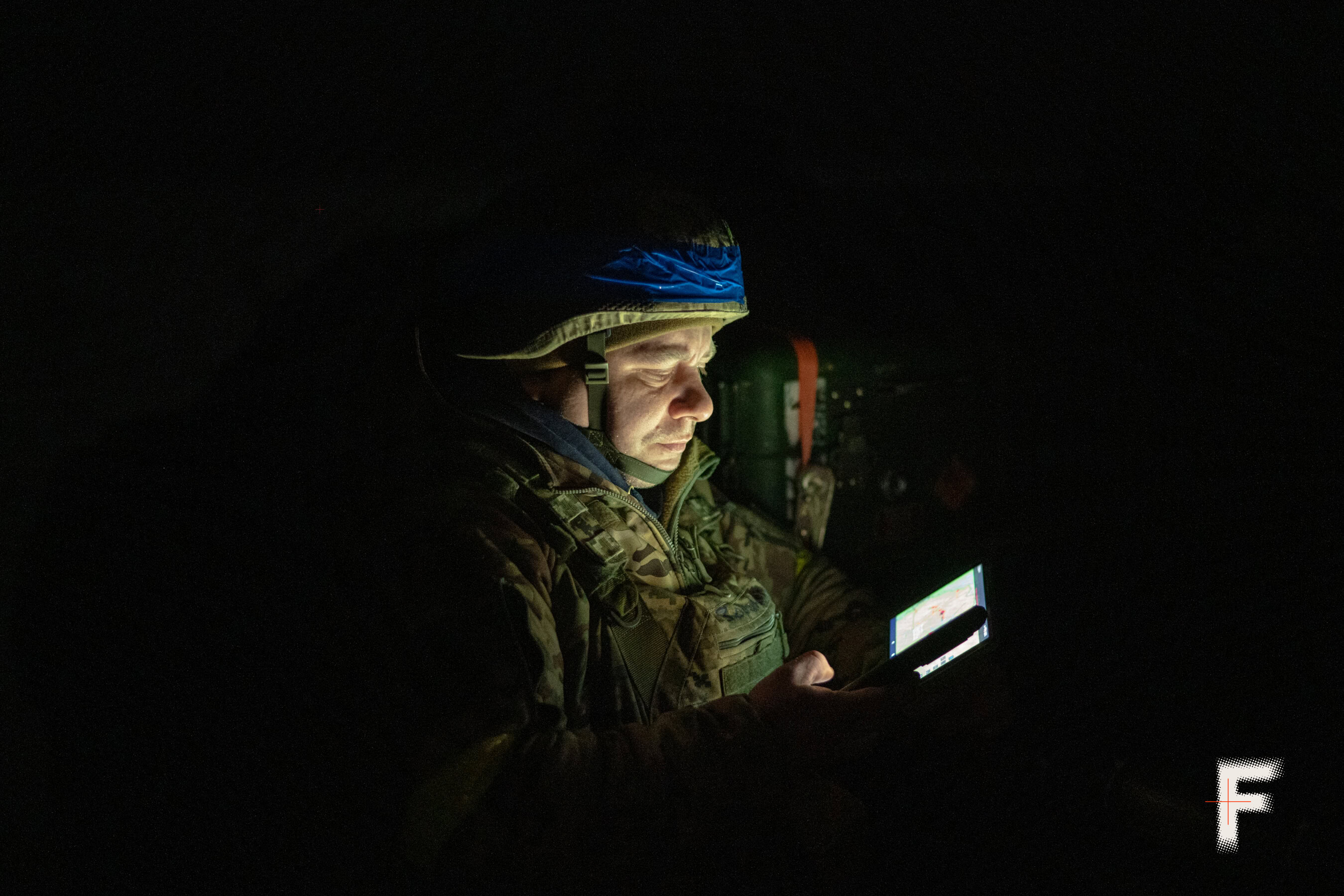
“The fundamental difference from the current model is that the target will not ‘pop up’ suddenly, for example on the tablet screens used by soldiers. It will be tracked from the moment it enters our airspace, and crews will receive data on its azimuth and estimated time of arrival in advance. Then perhaps machine guns will begin to work more effectively,” says aviation expert Valerii Romanenko.
Ground-based anti-drone systems
Romanenko adds that most effective ground-based anti-drone systems include Gepards, Skynex, and Slingers, as well as compact armored-vehicle-mounted systems such as Vampire and Avenger. These systems make it possible to cover critical facilities and destroy drones at low and medium altitudes.
“Right now, we are using everything that can be used against drones. And, as a rule, the weapons from our allies are really effective. So, I don’t understand why we constantly add more checkpoints with pickup trucks and machine guns manned by two or three people. If you can equip four to five people with high-quality weapons, they can defend a large sector or cover a critical facility,” says expert Valerii Romanenko.
-
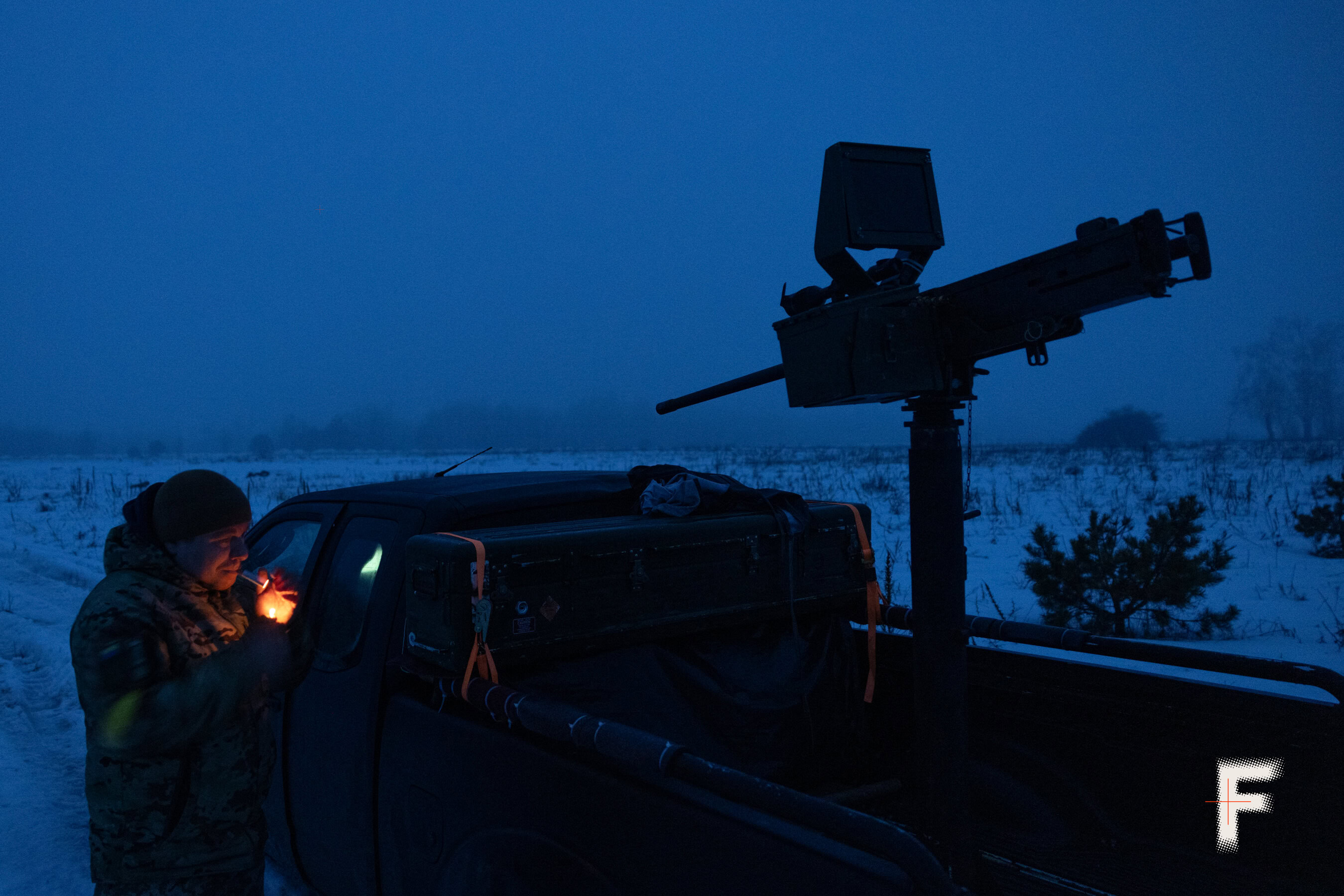
A soldier smokes next to a Browning machine gun during a break after an air raid alarm ended, Chernihiv region, Ukraine, Feb. 13, 2026. (Maksym Kishka/Frontliner)

-
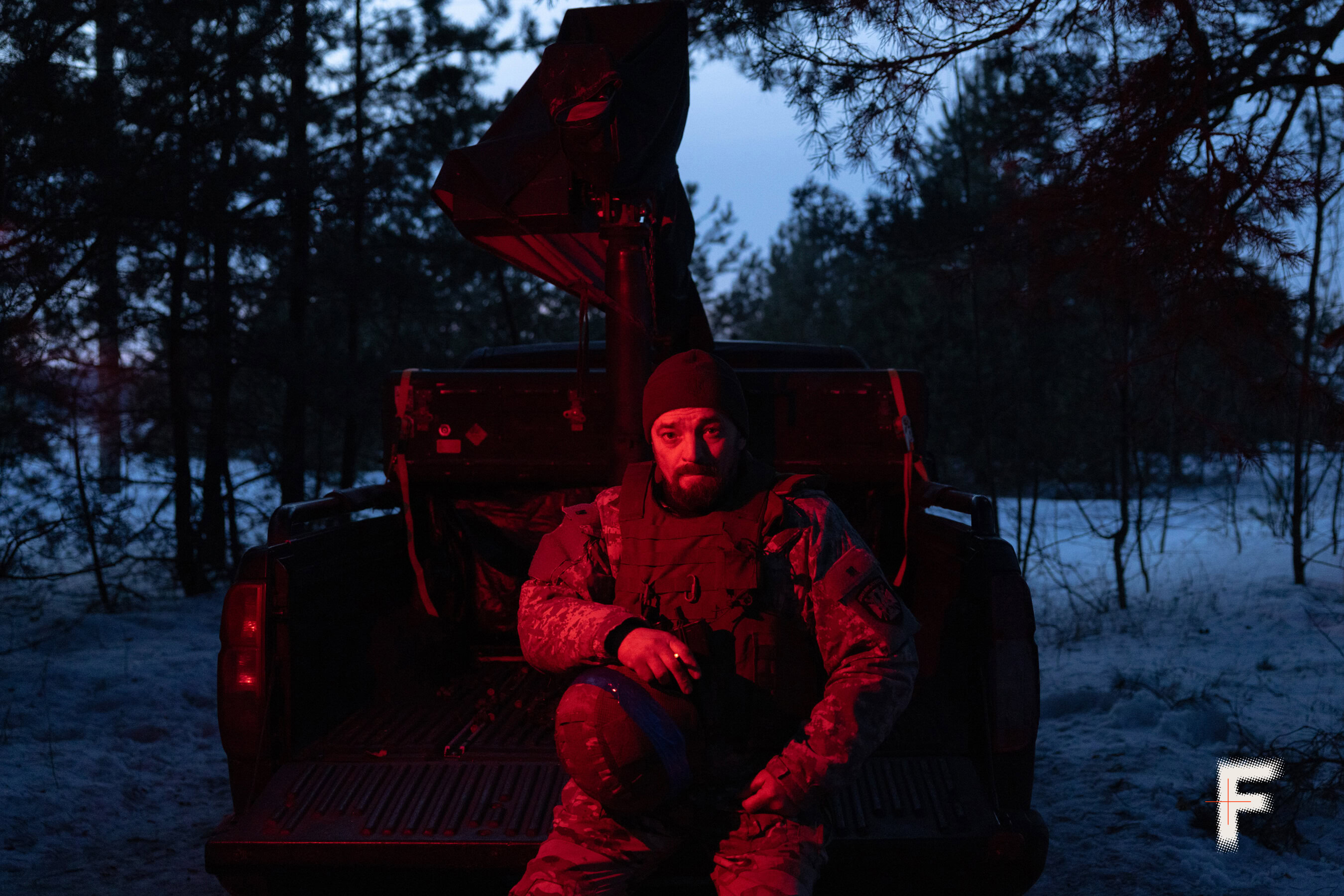
Machine gunner Volodymyr, call sign "Monakh", Chernihiv region, Ukraine, Feb. 13, 2026. (Maksym Kishka/Frontliner)
The most effective weapon against Shahed drones
Adapted light aircraft are another effective tool in combating drones, the expert notes. Light aircraft are capable of conducting surveillance for long periods of time, quickly intercepting and destroying Shahed drones as they approach cities. Helicopters, in turn, have better maneuverability and can shoot down targets at low and medium altitudes. It is also noteworthy that Russian forces have begun to adapt Shahed drones to counter light aircraft, says Volodymyr, call sign “Monakh”, a machine gunner of a mobile fire group.
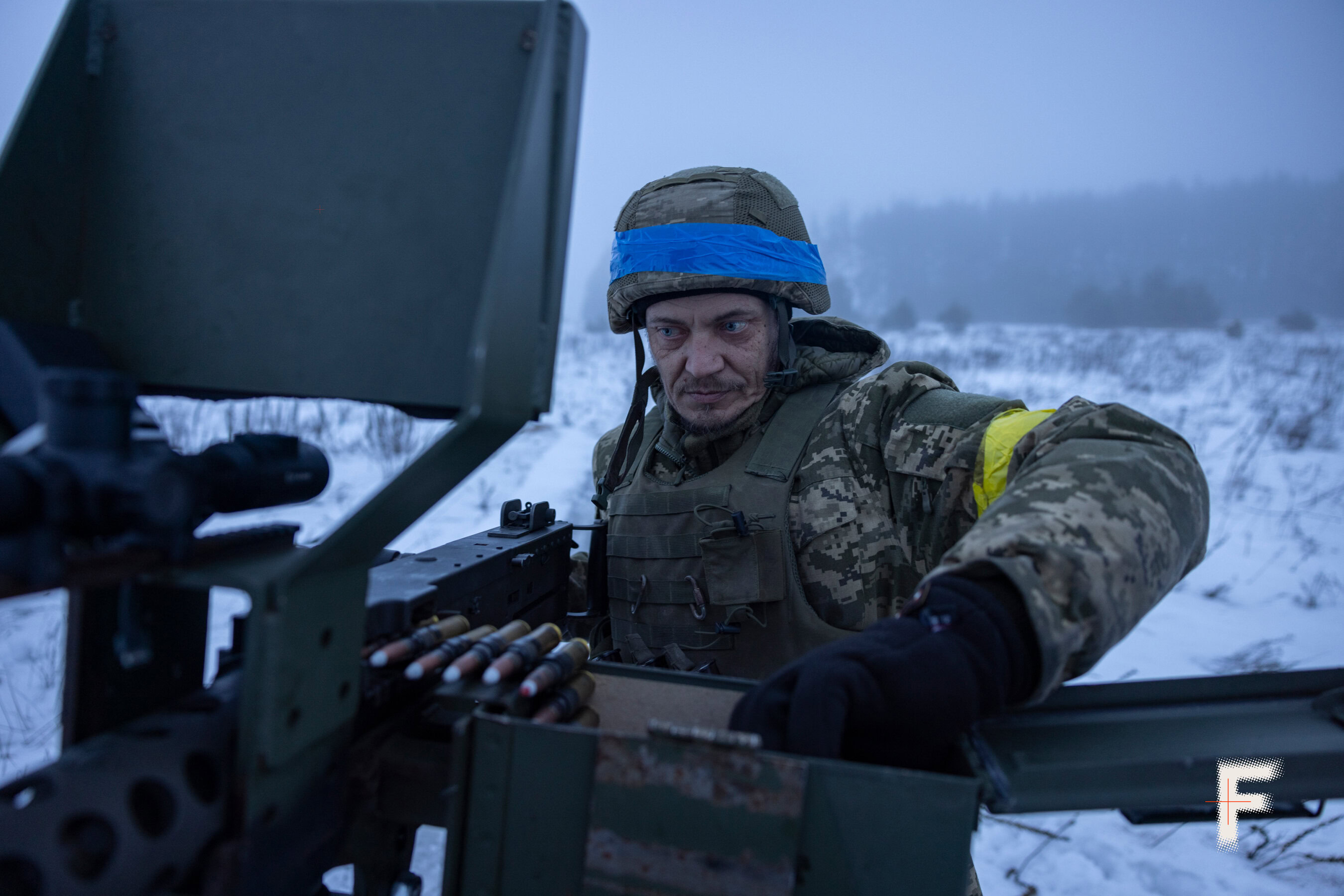
“Once I saw that the Russians had attached an Igla missile to a Shahed drone. It is unclear how it works, whether automatically or whether they fire it when necessary, but it is evident that they have started to devise ways to destroy aircraft. For example, they have been hunting us for a long time, attaching FPV drones or mines to Shahed drones. They often use such tactics on the front line or close to the border,” says the soldier.
Drone versus drone
At the same time, anti-aircraft drones, unmanned interceptors designed to attack Russian Shahed drones, are emerging as a new and rapidly scalable tool. The mass use of anti-aircraft drones began in the fall of 2024, and by March 2025, according to aviation expert Valerii Romanenko, the military had released video evidence of the destruction of more than 2,500 Russian drones of various types thanks to these systems. Ukraine currently employs over fifteen types of anti-aircraft drones, providing coverage across varying altitudes and flight profiles. Accordingly, even the military, including the soldiers of mobile fire groups, recognize that the most effective weapon against modern strike drones is another drone.
Every mobile fire group should
have such drones,
“I can’t make expert conclusions, and I understand that progress doesn’t stand still. And yes, in my opinion, every mobile fire group should have such drones, and it would be desirable for a designated soldier to be responsible for them. But let’s be honest, they won’t leave us without our old friend, the machine gun. For example, in heavy snow or rain, it may be difficult for an anti-aircraft drone to take off,“ says commander of a mobile fire group Serhii, call sign “Usach.”
Against the backdrop of recent Russian massive attacks on Ukrainian critical infrastructure, Ukrainian President Volodymyr Zelenskyy directly stated the need to strengthen air defense systems. However, both the military and experts note that so far there have been no fundamental changes in equipment and operations. Because of this, mobile fire groups continue to operate using old methods, and only with further updates will it be possible to assess how well the system is able to withstand massive enemy attacks.

Text: Artem Derkachov
Photos: Maksym Kishka
Adapted: Irena Zaburanna