The ballistic missile threat: How cities and civilians have changed
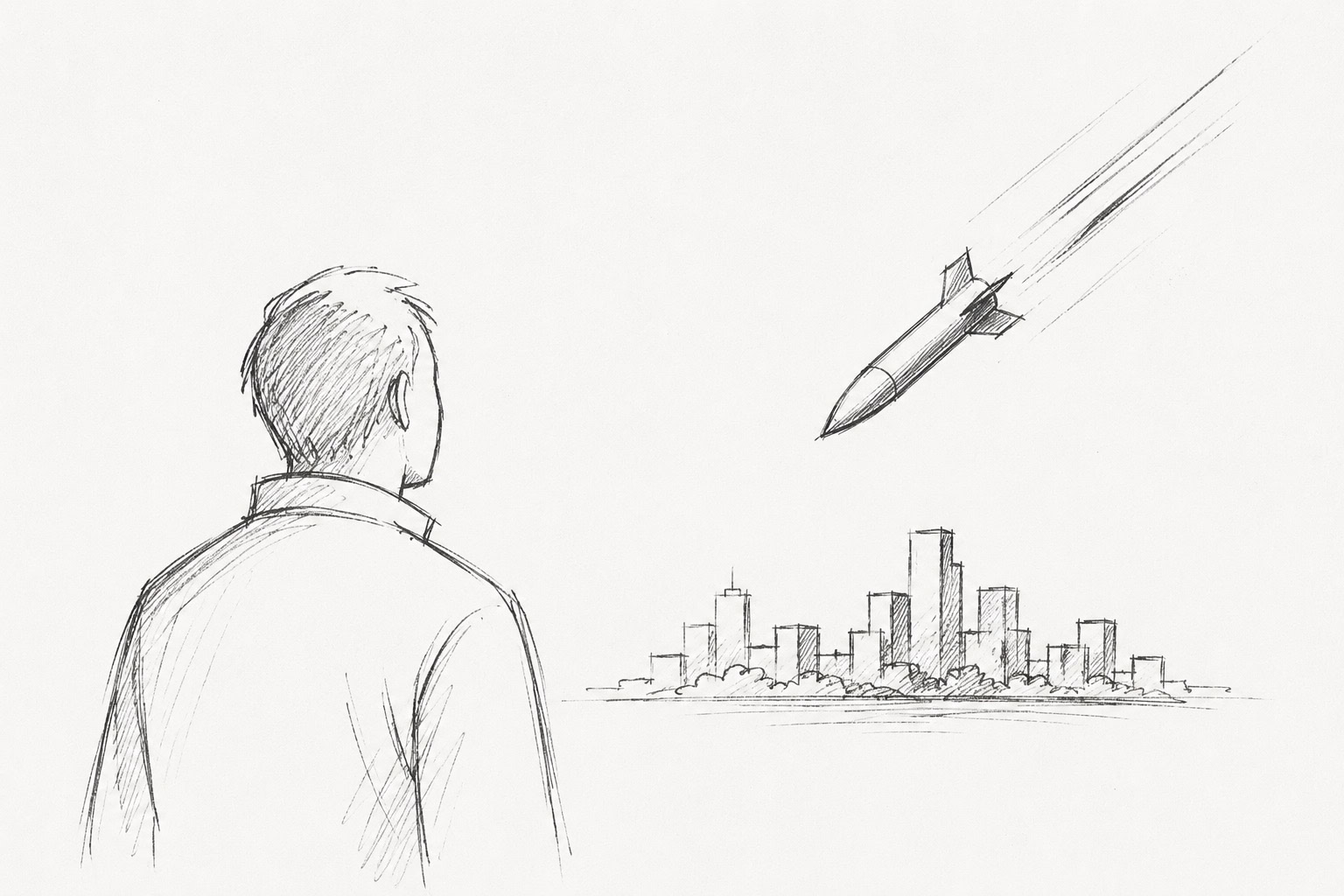
Ballistic missile strikes on Ukrainian cities in 2026 are increasingly unfolding under a scenario in which only minutes, or even seconds, separate the air raid alert from the explosion itself. Since the start of the year, Russia has launched at least 291 ballistic missiles against Ukraine. The old logic of “getting to shelter after the siren” is gradually becoming ineffective, especially for residents of large cities near the border or along likely missile flight paths. At the same time, not only the risks have changed, but also civilian behavior. People are paying closer attention to strike trajectories and the actual time between an alert and impact. Frontliner examines how ballistic missile attacks have reshaped civilian safety in Ukrainian cities in 2026.
Ballistic missiles leave far less reaction time than cruise missiles. In previous years, people often had time after an alert to finish a conversation, gather belongings or descend to a shelter a few minutes later. Today, such delays can become critical, especially in cities where flight times may be measured in only a few minutes.
The issue is not only speed. Ballistic strikes are increasingly targeting densely populated neighborhoods, transportation infrastructure, administrative buildings and places where civilians gather. As a result, even brief periods spent outdoors after an air raid alert have become more dangerous than during the early years of the full-scale war.
A habit that no longer works
Reaction time has shrunk
Over the years, many Ukrainians developed their own routines during air raid alerts. Some relied on the sound of explosions, others monitored Telegram channels or online neighborhood group chats. But in the case of ballistic missiles, those habits are increasingly failing.
Warning systems do not always provide enough time before impact. In some cases, alerts sound almost simultaneously with explosions. Against the backdrop of at least 291 reported cases of ballistic missile use against Ukraine since the beginning of 2026, according to calculations by Militarnyi, preparedness before an alert is becoming more important than reacting after it begins.
Urban life has changed
Because of the ballistic missile threat, Ukrainian cities are gradually changing their rhythm. People increasingly choose cafés located underground, check for nearby shelters at work and at home, and pay attention to the “two-wall rule” even in public spaces.
Businesses, schools, hospitals and offices are also being forced to adapt to the reality of immediate danger. In many cases, even several minutes needed for evacuation may now be too long.
How civilians are adapting
- not waiting for repeated warnings after an air raid siren;
- knowing the nearest shelter near home, work and regular travel routes in advance;
- avoiding long stays near administrative buildings, transportation hubs and crowded places during alerts;
- keeping phones, documents and essential items within quick reach;
- considering ballistic missile risks when planning travel across the city.
Safety is becoming part of daily life
Constant readiness instead of panic
Ukrainians are gradually adapting to a new reality in which safety has become part of daily routine. This involves not only shelters and sirens, but also a broader shift in how people move through urban space. More civilians now assess their surroundings in terms of risk and reaction time.
That does not necessarily mean living in constant panic. In many cases, clear habits and automatic responses help reduce risks during attacks. But a large part of the population still operates according to the safety logic of 2022 and 2023, when civilians generally had more time to react.
War is reshaping cities
The ballistic missile threat is gradually influencing not only human behavior but also the structure of cities themselves. Underground schools, shelters inside shopping centers, relocating services to lower floors and changing urban logistics are becoming long-term consequences of the war.
In 2026, civilian safety in Ukrainian cities depends not only on reacting quickly after an alert. Increasingly, survival depends on preparedness, automatic habits and understanding that the margin for error has become much smaller.