
Getting used to war: Ukrainians are no longer reacting to danger
Air raid sirens no longer bring cities to a halt the way they did during the first years of Russia’s full-scale war. More Ukrainians now sleep through nighttime attacks, ignore alerts, or postpone going to shelters “for a few more minutes.” War has gradually turned constant danger into part of everyday life, while psychological adaptation has become a survival mechanism. But in 2026, that adaptation is becoming a separate threat of its own, Frontliner reports.
The first months of Russia’s full-scale invasion of Ukraine were marked by constant “fight-or-flight” response. People reacted to nearly every siren, followed the news around the clock and tried to maintain a sense of control through information. But years of living under attacks have exhausted the nervous system. A constant state of alert cannot be sustained indefinitely, so the mind has begun conserving its resources.
Therefore, many Ukrainians have their fear gradually replaced by fatigue. Mental health studies confirm this trend: anxiety levels remain high, but the acute emotional response to war is weakening.
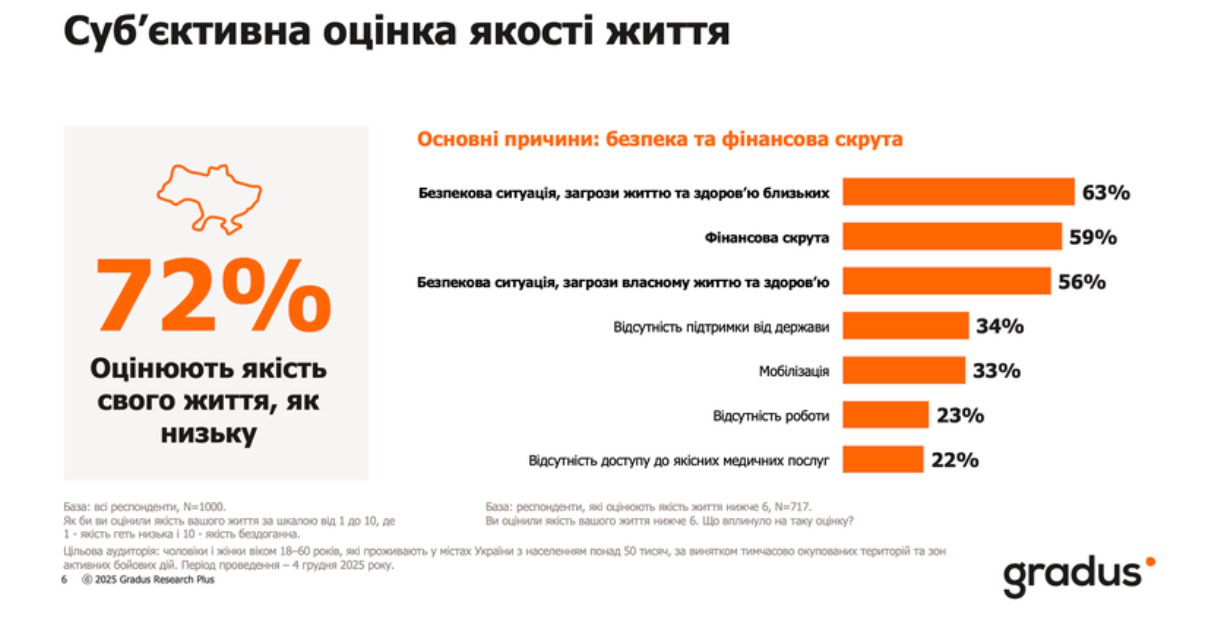
This adaptation partly helps people continue living. Ukrainians return to work, plan daily routines, take children to school and try not to let constant fear destroy daily routines.. The problem is that psychological resilience is increasingly accompanied by dangerous desensitization to risk
When sirens become background noise
In many cities, air raid sirens sound so frequently that some people no longer perceive them as a real threat, which is especially evident in regions where alerts can last for hours. People become accustomed to the fact that most alarms end without explosions nearby, and the brain gradually lowers its level of response.
The problem is worsened by the overwhelming flow of information. Ukrainians have spent years living in a nonstop stream of reports about missiles, drones, deaths and destruction. Constant exposure to such news is emotionally exhausting, so some people deliberately distance themselves from wartime content.
In practice, this looks like ordinary daily behavior: people remain in cafés during alerts, continue standing near windows after explosions or return home immediately after the all-clear without considering the risk of secondary strikes. War begins to feel “normal,” even though the danger never disappears.
Fatigue is reshaping society
Mental exhaustion is gradually affecting not only individual reactions but the behavior of society as a whole. News of shelling that once caused shock is increasingly perceived as part of the daily information flow. People are still empathetic, but their emotional responses are degenerating.
This does not necessarily mean indifference. Rather, it reflects a psychological defense mechanism. No one can live for years in a constant state of fear without consequences for the nervous system. Millions of Ukrainians already require psychological support because of the accumulated stress of war.

At the same time, delayed exhaustion is taking shape. Many people continue functioning through survival mode, but the psychological consequences accumulate over years. Over time, this can manifest as apathy, sleep disorders, aggression, emotional numbness or a loss of motivation.
How not to lose awareness of danger
There is a critically important balance between panic and complete indifference. That balance helps people maintain the ability to respond appropriately to risks.
- do not ignore air raid sirens, even after years of war;
- limit nonstop consumption of distressing news;
- maintain basic sleep and rest routines;
- talk openly about exhaustion instead of hiding it;
- seek psychological help when necessary.
In 2026, Ukraine continues to live through a prolonged war in which adaptation has become essential for survival. But getting used to danger has limits, and beyond that point it begins to work against people rather than protect them.
***
Frontliner wishes to acknowledge the financial assistance of the European Union though its Frontline and Investigative Reporting project (FAIR Media Ukraine), implemented by Internews International in partnership with the Media Development Foundation (MDF). Frontliner retains full editorial independence and the information provided here does not necessarily reflect the views of the European Union, Internews International or MDF.