
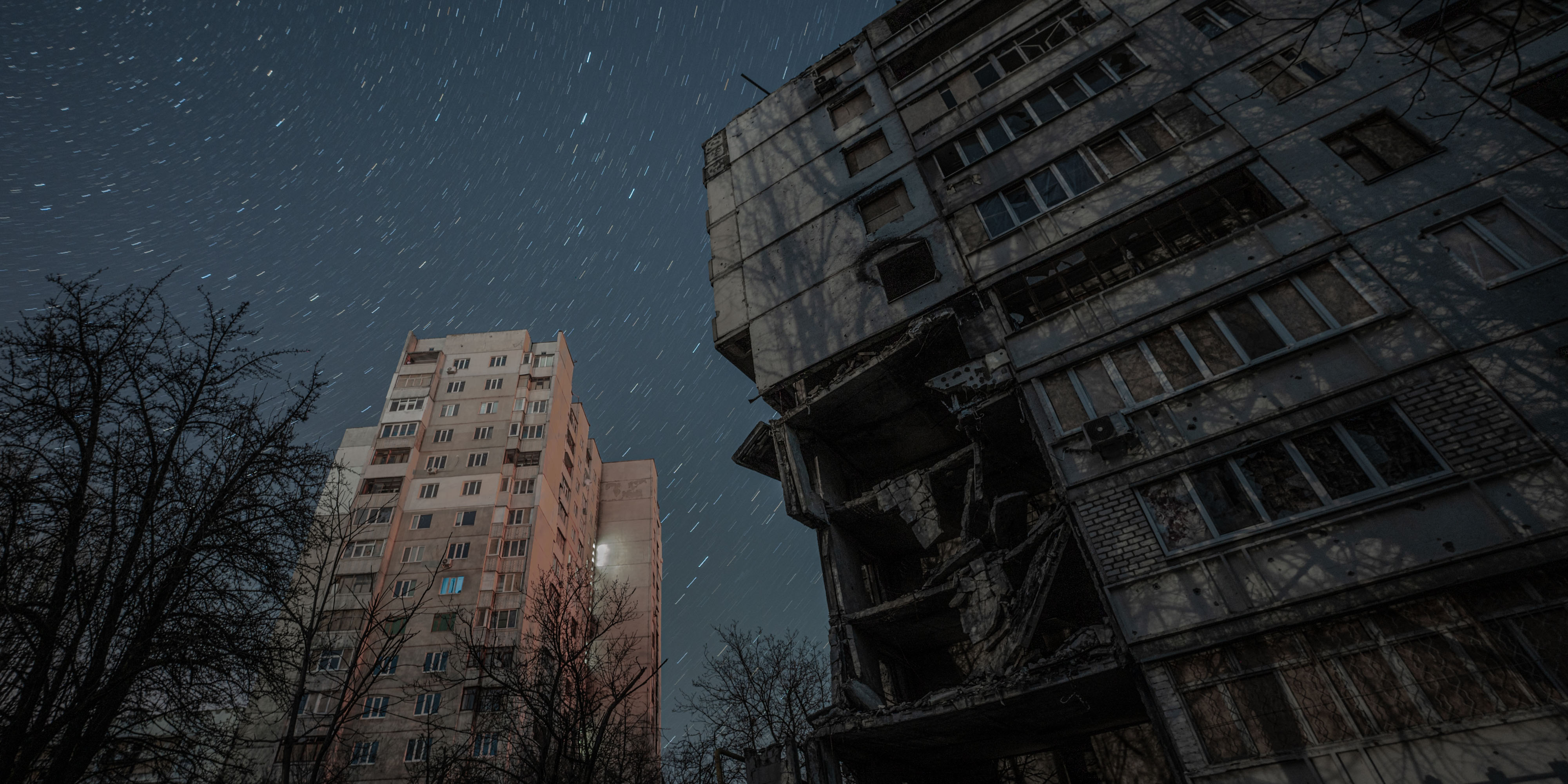
Kharkiv — a city in the east, a city on the edge
Kharkiv is changing its face under the pressure of war: once a city of students and industrial plants, it has become a frontline fortress learning to live under constant shelling.
Kharkiv is changing its face under the pressure of war: once a city of students and industrial plants, it has become a frontline fortress learning to live under constant shelling.

They consider themselves lucky – those who are living out their days with care and under a roof. Across Ukraine, shelters for people with disabilities and pensioners are overflowing. With each year of war, the situation worsens.

Artist Valentyna Huk decorates the streets of Kharkiv with mosaics she has created herself. Today, six patterns made from the debris of windows that did not withstand Russian shelling hang on the city's buildings. Valentyna spends several weeks of painstaking work on each one, starting with searching for pieces of glass in the ruins and ending with assembling them into unusual “puzzles.” The artist showed Frontliner how sharp shards become “loud” street art under her delicate fingers.

Doctors in frontline Kharkiv report a shortage of blood for transfusions and are calling on residents to donate. The deficit could impact wounded soldiers on the front lines and civilians injured in daily shelling. The city's Blood Service supplies not only local hospitals but also frontline areas in the region. Since January 2025, it has also been providing blood to medical facilities in the Sumy region, according to Blood Service representative Valentyna Taran.

Ukraine is set export up to 42 million tons of grain this year, despite facing another Russian offensive and a prolonged drought. Yet, its farmers are determined to work despite the new the threat of occupation. Ukraine is one of the top global agricultural powerhouses. According to the UN, the harvested grain fed more […]

Kharkiv has been switching to its new life underground for almost two years of Russia’s full-scale war. Concerts, performances, and even school classes are held in basements and subway stations. Kharkiv children also get extracurricular education underground. Young dancers of the Happy Childhood dance ensemble, who used to watch the Freedom Square from their ballet halls before the war, moved to the basement.