Russia targets Kyiv’s bridges: How strikes cut the capital’s links across the Dnipro
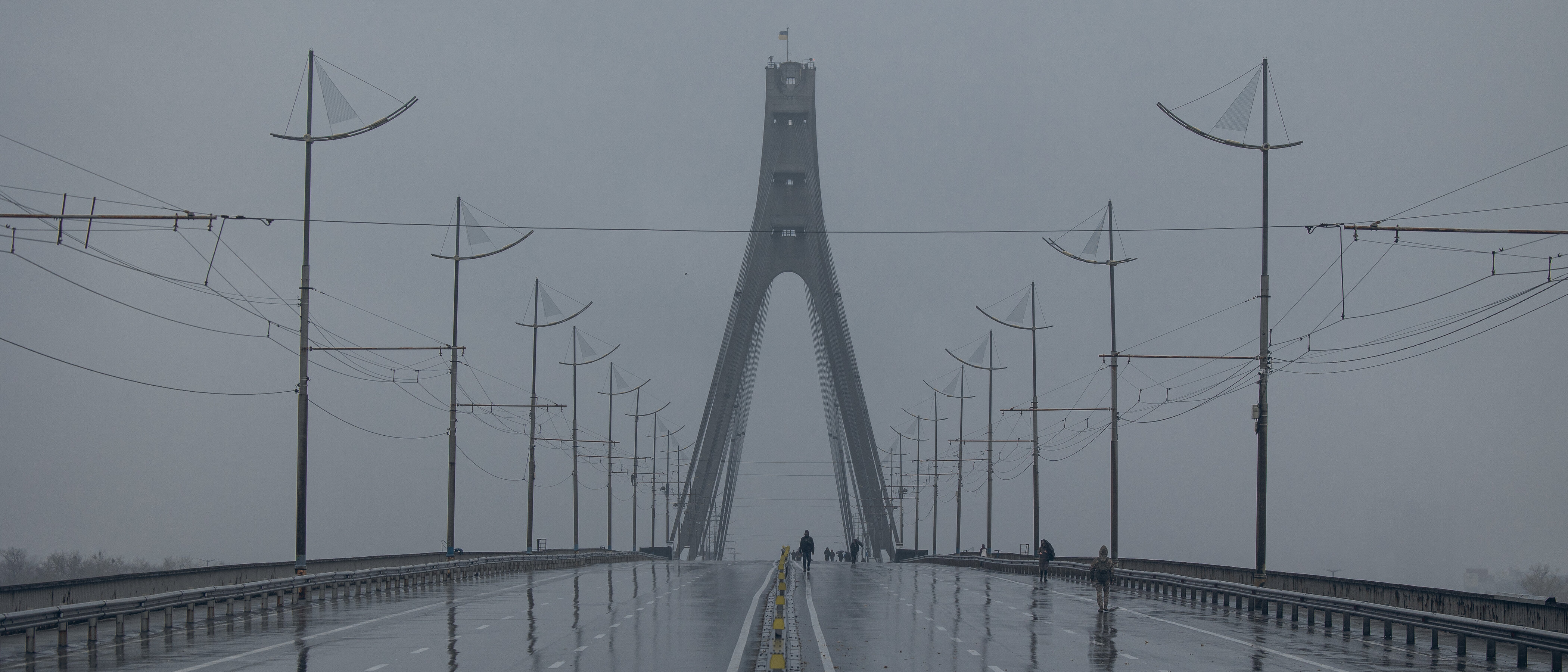
Russian drones and ballistic missiles repeatedly struck Kyiv's Pivdennyi (South) and Pivnichnyi (North) bridges throughout October and November 2026. The strikes damaged bridge structures, road surfaces and metro infrastructure. Because of the attacks, traffic between the banks of the Dnipro River was restricted, public transit was rerouted and city authorities looked for ways to preserve transit links. In the meantime, Ukraine’s government decided to build backup crossings. Frontliner has reconstructed the timeline of the attacks on Kyiv's bridges and their aftermath.
October 1-4: Start of the attacks on Pivdennyi and Pivnichnyi bridges
On October 1, Russian forces attacked Pivdennyi Bridge. First, two drones struck near its support structure. Later, another strike hit the road surface. In total, there were three strikes that day.
Kyiv Mayor Vitali Klitschko wrote that the strikes damaged a bridge pier, a guardrail, the road surface and the metro’s protective concrete barrier. Experts began inspecting the structure, while surface public transit and metro service across the bridge were halted.
On October 2, Russian forces struck Pivdennyi Bridge again. After the strike, car and metro train traffic was halted. Traffic was also restricted on other crossings across the Dnipro River: on Metro Bridge, vehicles were allowed to use only one lane from the left bank to the right bank, while on Paton Bridge, traffic from the right bank to the left bank was banned entirely.

That same day, the Kyiv Defense Council addressed traffic safety on the bridges. The discussion included the military, law enforcement, State Emergency Service representatives and municipal services. The possibility of restoring service on the green metro line during air raid alerts was considered separately. To do so, the city awaited an expert assessment of Pivdennyi Bridge’s condition.
On October 3, Russian forces attacked Pivnichnyi Bridge. The strike damaged the road surface and trolleybus overhead power lines. Traffic from the left bank to the right bank was suspended. Two people were wounded: medics treated one at the scene, and the other was hospitalized, Klitschko said.
Due to the damage to the overhead lines, the routes of trolleybuses 29, 30, 31 and 47 were changed. They were split into separate routes on the left and right banks. Service for buses 21, 73, 101 and 114 was also temporarily altered.
That same day, city authorities announced changes to bridge traffic rules during air raid alerts. Under the new rules, traffic could cross Pivdennyi Bridge from the left bank to the right bank without restriction, while traffic in the reverse direction could resume 15 minutes after an alert began. Traffic remained unrestricted on Pivnichnyi, Metro, Darnytskyi and Paton bridges.
Amid the attacks, Mykola Kalashnyk, minister of restoration, infrastructure and transport, told Ukrainian public broadcaster Suspilne about plans to build backup crossings over the Dnipro River. The plans involved earthen causeways with pontoon crossings intended to provide at least half the traffic capacity of the existing bridges.

On October 4, Russian forces struck Pivnichnyi Bridge again, this time hitting the road surface. Two people were wounded, and one of them was hospitalized. During repairs, three traffic lanes were open from the left bank to the right bank and one lane in the reverse direction.
That same day, train service resumed on the aboveground section of the green metro line during lower-threat (yellow-level) air raid alerts. In the event of a high threat (red-level), service along this section was to be suspended, splitting the line into two separate routes: Syrets to Vydubychi and Osokorky to Chervonyi Khutir.
October 5-21: Pause between attacks and preparation of alternative crossings
Following the October 1-4 attacks, Russian forces did not launch any new strikes on the capital’s bridges for 17 days. At the same time, the city continued to assess the damage, repair infrastructure and look for ways to ensure transport links between the banks of the Dnipro River.
Separately, preparations for the backup crossings project continued. On October 15, the government adopted a resolution to build combined water crossings across the Dnipro and access roads to them. The locations were to be determined by the military and approved by the Kyiv City Military Administration, among others.
October 22-30: Repeated strikes on Pivdennyi Bridge
On October 22, Klitschko reported that Russian forces had attacked Pivdennyi Bridge again. The attack damaged part of the metro infrastructure. Service on the green metro line was split into two sections: Syrets to Vydubychi and Osokorky to Chervonyi Khutir.
Car traffic on Pivdennyi Bridge was also completely suspended due to the threat of further strikes. Police initially restricted the right-to-left direction, but later closed both.. Buses 22 and 91 were temporarily rerouted via Darnytskyi Bridge. To compensate for the traffic restrictions, the city increased the number of buses on these routes.

On October 24, after crews repaired the damage from the strike, train service on the green metro line was restored between Vydubychi and Slavutych stations. The line resumed operating as usual.
On October 26, the Kyiv City State Administration announced planned repair work on Pivdennyi Bridge. From October 27 to November 1, traffic across the bridge was to be partially restricted: work was scheduled in the third lane and part of the second, with vehicles using the first lane.
However, on October 27, Russian forces struck Pivdennyi Bridge again. The strike also damaged metro infrastructure. Traffic across the bridge was closed, and trains between Osokorky and Chervonyi Khutir stations were temporarily suspended. The city added more buses providing transit connections between the left and right banks.
That same day, the capital’s Defense Council held a meeting. Among other matters, participants discussed building combined water crossings across the Dnipro River and additional technical solutions to protect bridge structures.
On October 30, traffic across Pivdennyi Bridge partially resumed. Following a technical inspection and findings from the National Institute for Infrastructure Development, vehicles weighing up to 10 tons were allowed to use one lane from the left bank to the right bank. Starting at 5 p.m. that same day, one lane was also opened in the reverse direction.
Meanwhile, the bridge’s damaged structures, including those supporting metro operations, required further repairs. To carry passengers, the city increased the number of buses on replacement routes to 17 and launched two new ones: bus route 3M between Osokorky and Vydubychi metro stations and trolleybus route 48 between Lisova metro station and Kurenivka train station.
That same day, Klitschko wrote that the city was looking for funding to implement the alternative crossings project. He said Ukraine’s government recommended that Kyiv allocate 1 billion hryvnias from the city budget for the project. Under preliminary plans, the first crossings were expected to open in early 2027.
October 28 to November 6: 10 days without attacks
Following the October 27 strike on Pivdennyi Bridge, Russian forces did not attack the Kyiv’s bridges for 10 days. The city continued working to restore transport links and prepare backup crossings.
On November 5, Klitschko announced that Kyiv had found 1 billion hryvnias, which it planned to transfer to state agencies to implement the project for combined water crossings across the Dnipro River. The allocation still had to be formally approved.
November 7-8: Attack on Pivnichnyi Bridge
On November 7, Russian forces attacked Pivnichnyi Bridge again. Traffic across the bridge was suspended in both directions, while experts began examining the damage.

The strike damaged the road surface, trolleybus overhead lines and a power line. The blast wave also damaged five trucks parked near the bridge.
On November 8, following a technical inspection of the structure, traffic partially resumed. From the left bank to the right bank, one lane was open for public transit only. In the reverse direction, two lanes were opened for public transit and passenger cars. Buses resumed operating across the bridge.
November 16-17: Ballistic missile strikes on both bridges
After eight days without attacks, Russian forces struck Pivnichnyi and Pivdennyi bridges simultaneously overnight into November 17. Ukrainian President Volodymyr Zelenskyy said Russian forces fired three ballistic missiles at Pivnichnyi Bridge and four at Pivdennyi Bridge.
On November 17, experts began inspecting both structures to determine the extent of the damage and whether traffic could be restored. At the time of the inspection, traffic across the bridges remained closed.

Because of the damage from the attack, the city also adjusted public transit. After electric transit service was gradually restored, trams and trolleybuses returned to their regular routes. Meanwhile, temporary buses continued operating between the right and left banks to compensate for changes in metro service.
On the same day, city authorities reported the partial restoration of traffic on Pivdennyi Bridge. Following the inspection’s findings, the National Institute for Infrastructure Development allowed temporary passage in one lane from the left bank to the right bank at controlled intervals. The limits allow vehicles weighing up to 10 tons and public transit with a total weight of up to 18 tons.
Traffic in the reverse direction remained closed due to damage to that section of the bridge. Experts continue to assess the technical condition of the structures and their load-bearing capacity, while municipal services deal with the aftermath of the attack.