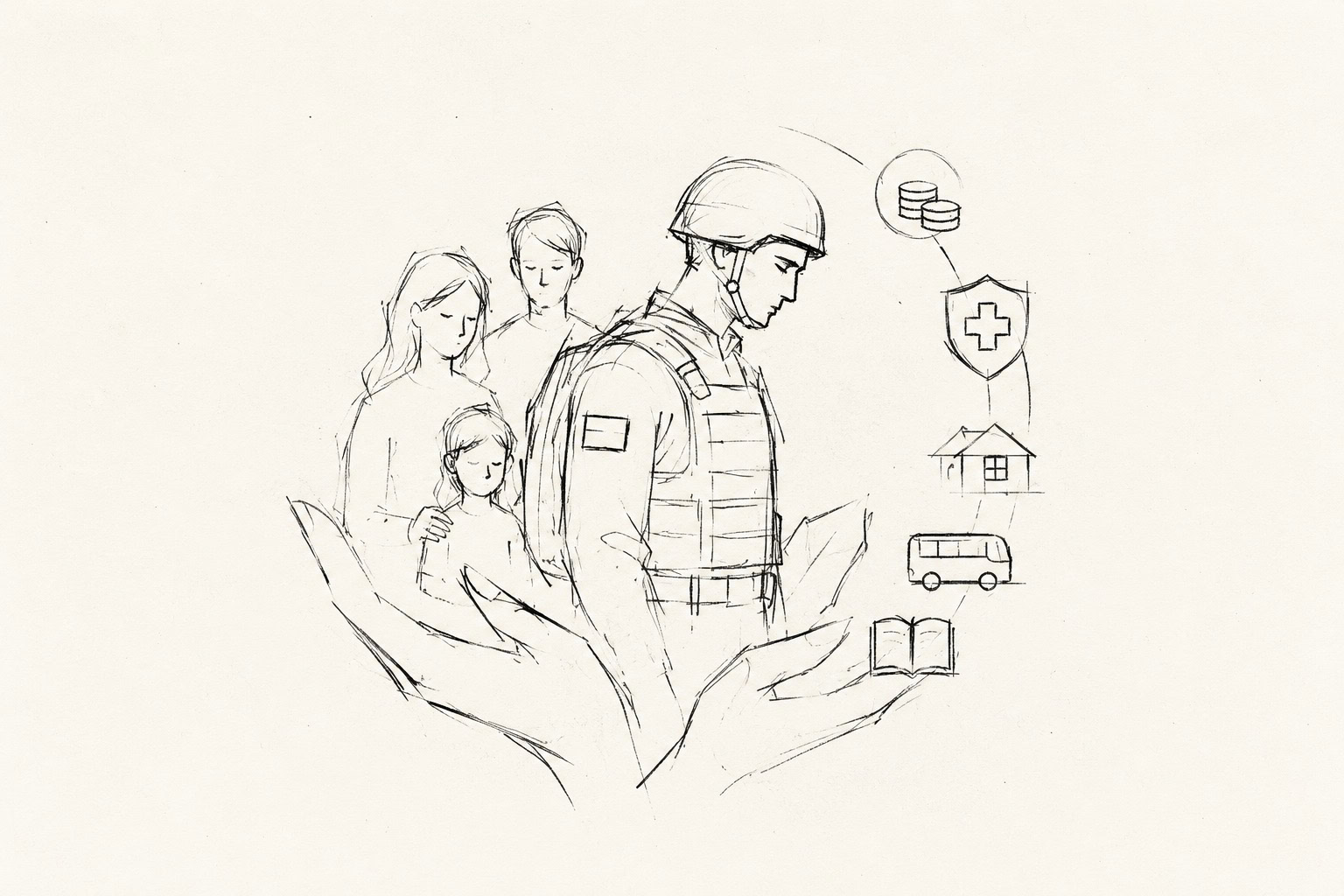
Social support for service members: Payments, benefits and compensation
The war has transformed the lives of Ukraine's hundreds of thousands of service members and their families. Military service is years of risk, injuries, health problems and struggles to return to civilian life. Financial assistance, compensation, medical care and social benefits have become increasingly vital, often providing a crucial source of stability for military families. Frontliner examines what support is available to service members and veterans in 2026.
Ukraine’s system of social support for military personnel has expanded significantly since the start of the full-scale war. Some payments have increased, as new veteran support programs have been introduced. Additional compensation is now available for wounded service members and the families of those killed in action.
At the same time, the system remains complex. Many forms of assistance depend on official documentation, legal status, medical evaluations and government decisions. As a result, service members and their families often face lengthy administrative procedures.
What financial support service members receive
Salaries and combat bonuses
The amount of financial support depends on a soldier’s rank, place of service and participation in combat operations. In addition to regular military pay, personnel may receive extra compensation for serving in combat zones, carrying out special assignments or participating in military operations.
Additional incentives are also available to wounded service members and those undergoing treatment or rehabilitation. Military pay is generally maintained during periods of medical treatment.
Compensation for families of the fallen and missing
The Ukrainian government provides one-time payments to the families of service members killed in action. Separate mechanisms also exist for families of personnel who are missing in action or held in captivity.
These cases are often among the most complicated. Families may need to complete lengthy verification procedures, gather documents and wait for decisions from multiple government agencies. Some families spend months waiting for full access to available support.
Benefits and medical care
Medical treatment and rehabilitation
Service members and veterans are entitled to free treatment in military and public medical facilities. Ukraine continues to expand programs for physical and psychological rehabilitation for people recovering from injuries, amputations and other consequences of war.
Since 2022, demand for long-term treatment and mental health support has increased sharply. Veteran care is gradually becoming a distinct area within Ukraine’s healthcare system.
Benefits for service members and veterans
Social support extends beyond direct financial assistance. Service members and veterans may qualify for discounts on utility bills, transportation benefits, educational support, rehabilitation programs and housing assistance.
Some programs are administered by national institutions, while others are managed by local governments. As a result, available support can vary depending on a person’s status, place of residence and the resources of local communities.
What makes accessing support complicated
Bureaucracy after service
For many veterans, one of the most exhausting challenges is navigating paperwork. Medical evaluations, injury verification, disability assessments and obtaining veteran status can take months.
The process can be especially difficult for people recovering from severe injuries and for families of fallen service members. Many procedures still involve extensive paperwork and long waiting periods.
Ukraine’s veteran support system is still evolving
Ukraine is effectively building a new veteran support system amid the war. The number of people requiring medical care, rehabilitation, housing assistance and employment support continues to grow.
As the government expands available programs, demand on the system is increasing as well. In many cases, access to support depends on a person’s ability to navigate complex administrative procedures.
What service members and families should do
- keep copies of all medical records and official documents;
- document injuries and periods of military service;
- verify that medical commission records are accurate;
- do not delay applying for veteran or disability status;
- check whether local veteran support programs are available;
- seek legal assistance if payments are delayed;
- monitor application deadlines and processing timelines;
- use government and veteran support hotlines when needed.
Ukraine’s system of social protection for service members continues to evolve alongside the war. But even the largest government programs don’t function seamlessly. Accessing payments, benefits and compensation often requires persistence and careful attention to papers.
For many service members and veterans, understanding their rights and keeping records in order has become nearly as important as the support itself.
Service members and their families can seek assistance with veteran status applications, benefits, compensation and legal issues through the Ministry of Veterans Affairs of Ukraine, the national veteran hotline (1528), and the Ukrainian Veteran Fund, which provides information, counseling and psychological support.