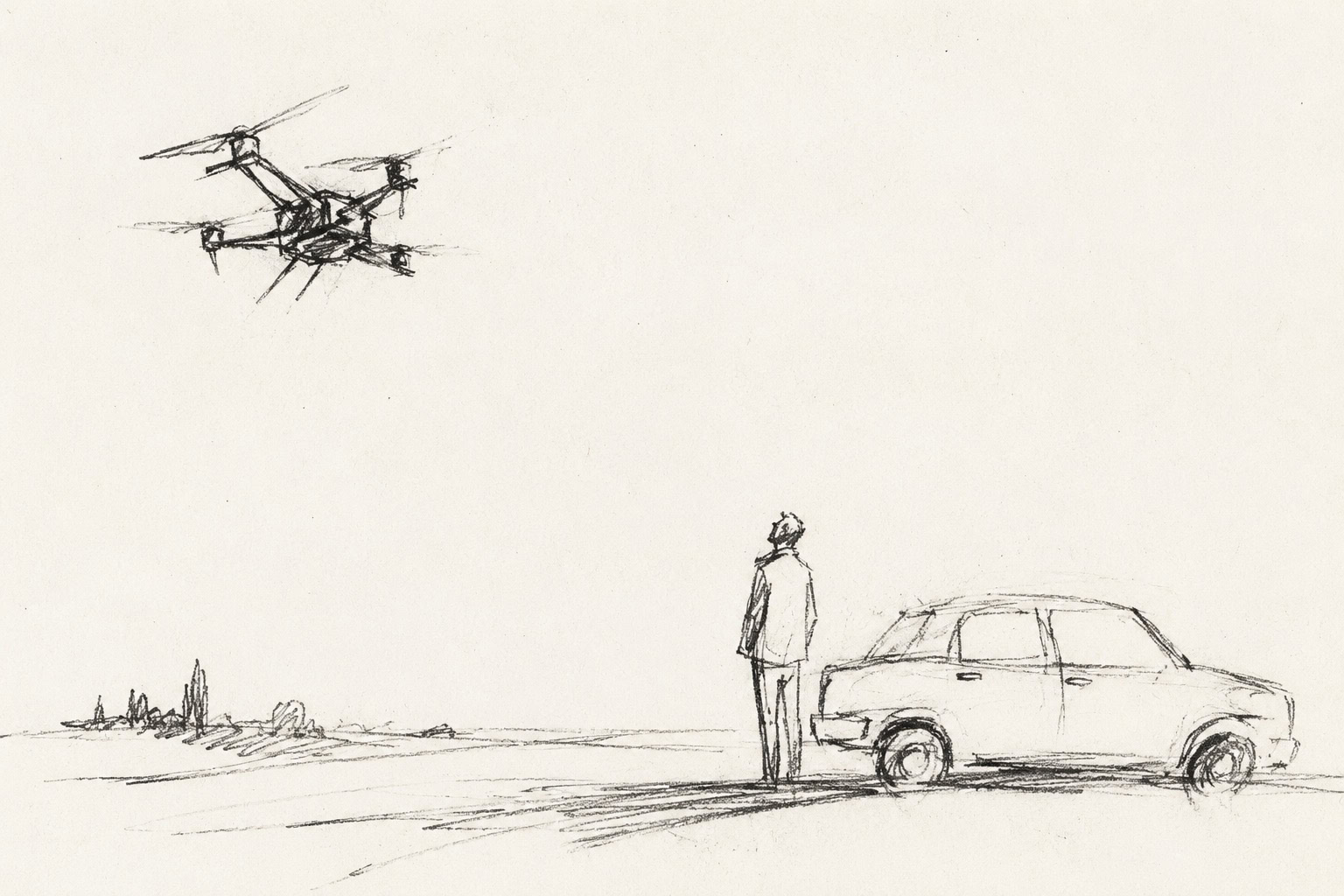
FPV drones in the rear: Ukrainians learn to live with a new threat
FPV drones are increasingly appearing far from active combat zones, creating new risks for civilians in areas once considered relatively safe. According to U.N. data, short-range drones accounted for 27% of civilian deaths and 30% of civilian injuries in Ukraine in January 2025. The sound of a tiny drone has become as alarming to Ukrainians as an air raid siren. Frontliner examines how FPV drones are changing civilian behavior and what people should know about staying safe.
Just a few years ago, FPV drones were largely associated with the front line. The spread of low-cost drones, longer flight ranges and their growing use in combat have increasingly blurred the distinction between front-line and rear areas. Therefore, even residents of major cities are paying closer attention not only to air raid alerts but also to unfamiliar sounds in the sky.
This shift is especially noticeable on highways and in open areas. Many people now view road travel, roadside stops, gas stations and recreation outside cities differently. Open spaces no longer feel entirely safe.
Open spaces no longer feel safe
Roads and vehicles have become high-risk areas
According to the UN report, short-range drone attacks were the leading cause of civilian deaths and injuries in Ukraine in January 2025. Majority of those attacks targeted civilian vehicles, people traveling on roads and passengers using public transportation.
The trend is gradually changing driver behavior, even in regions far from active fighting. Ukrainians are becoming less likely to stop randomly on open roads, more cautious around clusters of vehicles and more likely to limit the time they spend outside built-up areas.
Cities live under constant vigilance
Air raid alerts are no longer the only warning sign people pay attention to. In many cities, residents react to the sound of engines overhead, particularly during the evening and overnight hours.
The sense of safety once associated with rear areas has diminished. Even in regions far from the front, the war feels close. The constant expectation of danger leads to fatigue and psychological strain.
How the war is changing civilian behavior
Ukrainians are living with a backup plan
After years of war, many people assess risks almost automatically, even in routine situations. Before traveling, they check their phone batteries, identify nearby shelters and consider alternative routes.
FPV drones reinforce that mindset. Because these drones often fly at low altitude and move quickly, there is frequently little time to react. Civilians increasingly rely on awareness and the habit of rapidly assessing their surroundings.
Being cautious as part of daily routine
Even short trips and outdoor activities are now approached differently. People are spending less time in exposed areas, avoiding swarms of vehicles when possible and paying closer attention to security warnings.
That does not mean abandoning normal life. But the war is gradually making caution a routine part of everyday behavior for many civilians.
How can civilians stay safe
- avoid remaining in open areas during air raid alerts;
- avoid rows of vehicles near military infrastructure;
- do not stop unnecessarily on open highways;
- pay attention to concerning sounds above;
- move closer to buildings or shelters whenever possible;
- do not post videos of drone flights or air defense operations in real time;
- avoid photographing strike sites immediately after attacks;
- when traveling outside urban areas, plan routes in advance and identify potential places of shelter.
Why the threat Is likely to grow
Drones are becoming a mass weapon of destruction
FPV drones are no longer a niche technology used only on the front line. They are relatively inexpensive, fast and suitable for large-scale deployment. Their role in the war is therefore likely to continue expanding.
At the same time, drones are being used for more than attacks. They also play a role in reconnaissance, fire correction and psychological pressure on civilians.
Ukrainians are adapting to a new reality
Completely eliminating this threat is not possible. As with missile attacks, society is gradually adapting to new wartime risks.
FPV drones are affecting civilians too. Ukrainians increasingly find themselves assessing shelters, travel routes and exposed areas even during routine trips around town. Awareness and quick decision-making are becoming part of everyday life in a country at war.