‘One eye for your mother and the other for yourself’: A former beauty professional restores veterans’ faces
She gave up everything to learn how to restore the faces of wounded soldiers. Taisiia Yarova is an exoprosthetics specialist who transforms complex medical devices into art. A former international beauty championship judge, beauty salon owner in Kryvyi Rih, and dental technician, she now hand-crafts exoprostheses, adapting them to each veteran’s personality, from perfect realism to unique “black eyes.” Frontliner reporters found out why a successful businesswoman chose to work with such severe injuries.
Taisiia Yarova first considered fundamentally changing her career at the very beginning of the full-scale invasion. However, the turning point came when she received news of the death of her nephew, Vladyslav Malysh, a soldier with the call-sign “Thor” who was killed on December 8, 2023.
Following this, Taisiia decided to dedicate herself to a cause that helps those affected by the war. She initially studied exoprosthetics on her own, researching specialized videos and information on materials, manufacturing techniques, and methodologies. Simultaneously, she consulted with instructors from abroad and drew on her previous skills in sculpture and decorative arts. Later, she underwent training with specialists from the USA, Sweden, and Israel.
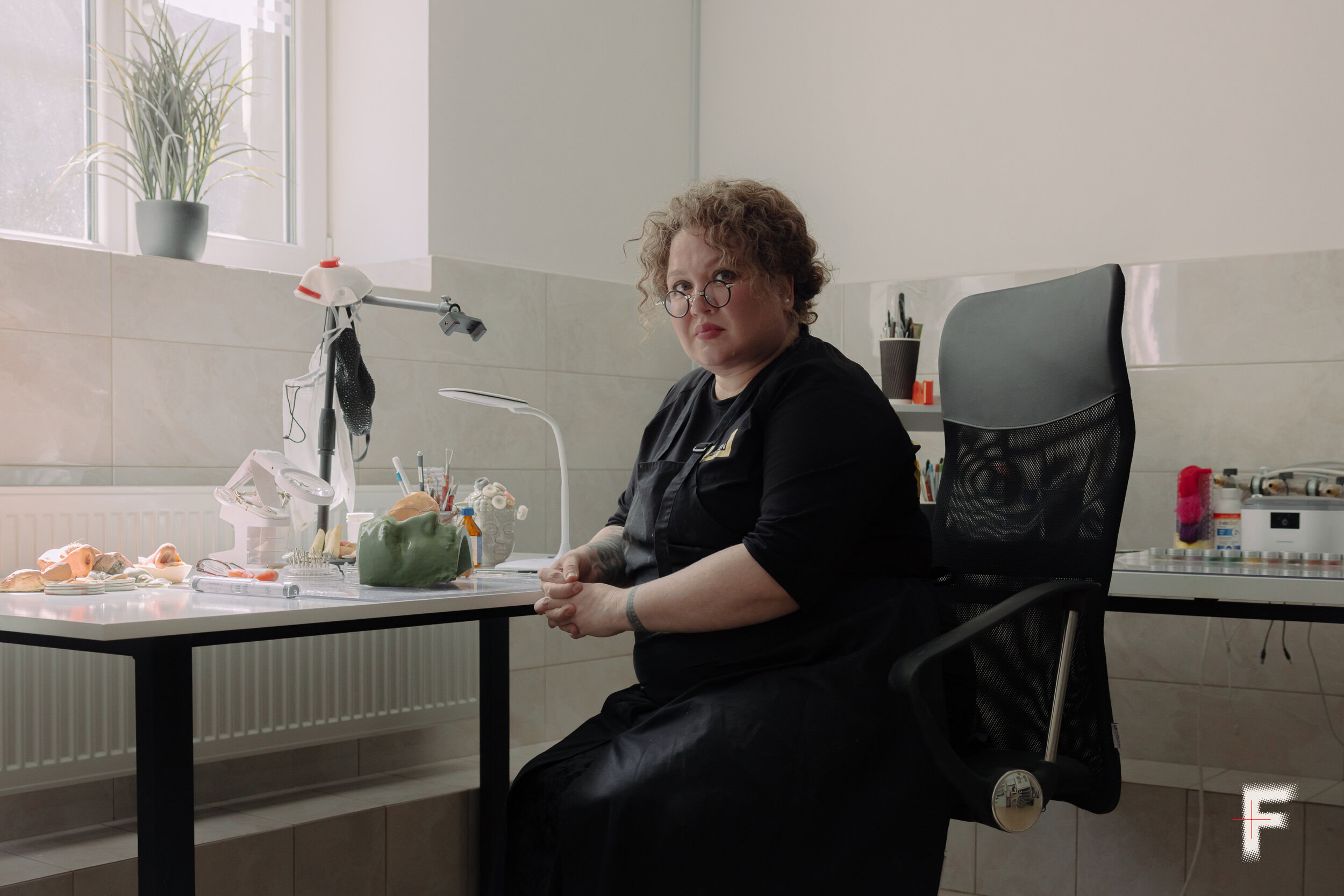
Exoprosthetics training
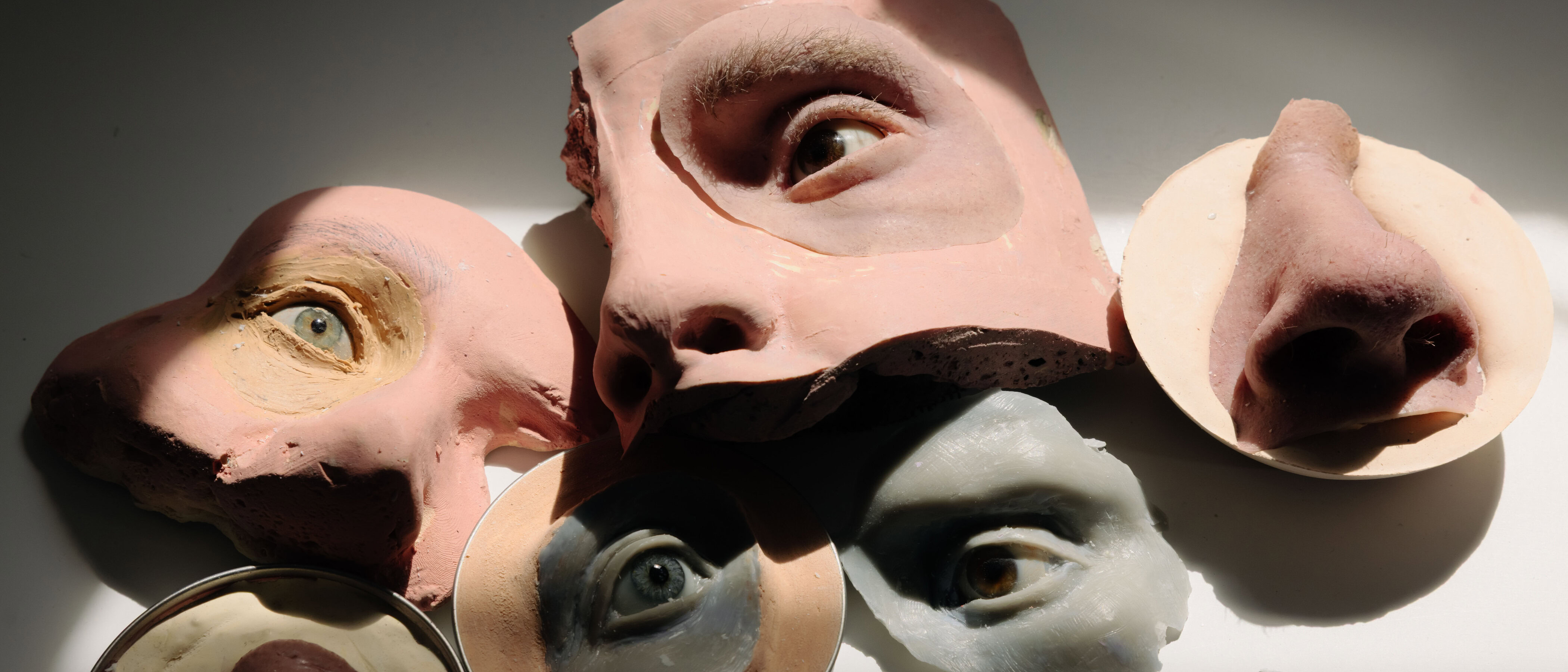
Taisiia explains that working with faces disfigured by war requires both art and medical backgrounds, and she is now pursuing a technical degree in bioengineering. She refuses to turn the creation of prostheses into an assembly line on principle. Despite using 3D scanning and printing, she hand-crafts every piece: from the wax mold to the meticulously detailed wrinkles, skin texture, and iris color.
A face represents veterans’ right to a normal life in society,
so they are not stared at on the street,

“I want these works to remain alive. Alive for the living, because living without a face is impossible. Many don’t consider this vital, yet it is more than medicine. It’s psychological functionality. A face represents veterans’ right to a normal life in society, so they are not stared at on the street. There is art, and there is craft, and I wanted to do more than just learn how to make prostheses. My mission is to return their smiles and self-confidence,” says Taisiia Yarova, an exoprosthetics specialist at the Unbroken National Rehabilitation Center.
The beginning of facial prosthetics in Ukraine
Taisiia joined the Unbroken National Rehabilitation Center only a few months ago. The small office, which today houses polymers, pigments, dental materials, and wax molds for future prostheses, did not appear overnight. Initially, as she recalls, other departments shared their furniture and equipment with her. Even so, the waiting list for patients began to grow almost immediately. Among those currently undergoing prosthetic treatment at the center is Valerii Nikolaiev, a soldier from the 80th Air Assault Brigade. He was wounded in March 2025 in the Kursk region during his group’s withdrawal from their positions. According to the soldier, four men came under fire from an automatic grenade launcher. Valerii was leading the group and essentially shielded the others from the blast with his own body.
I was told it is possible to do
a sort of ‘cosmetic repair’ on my face,
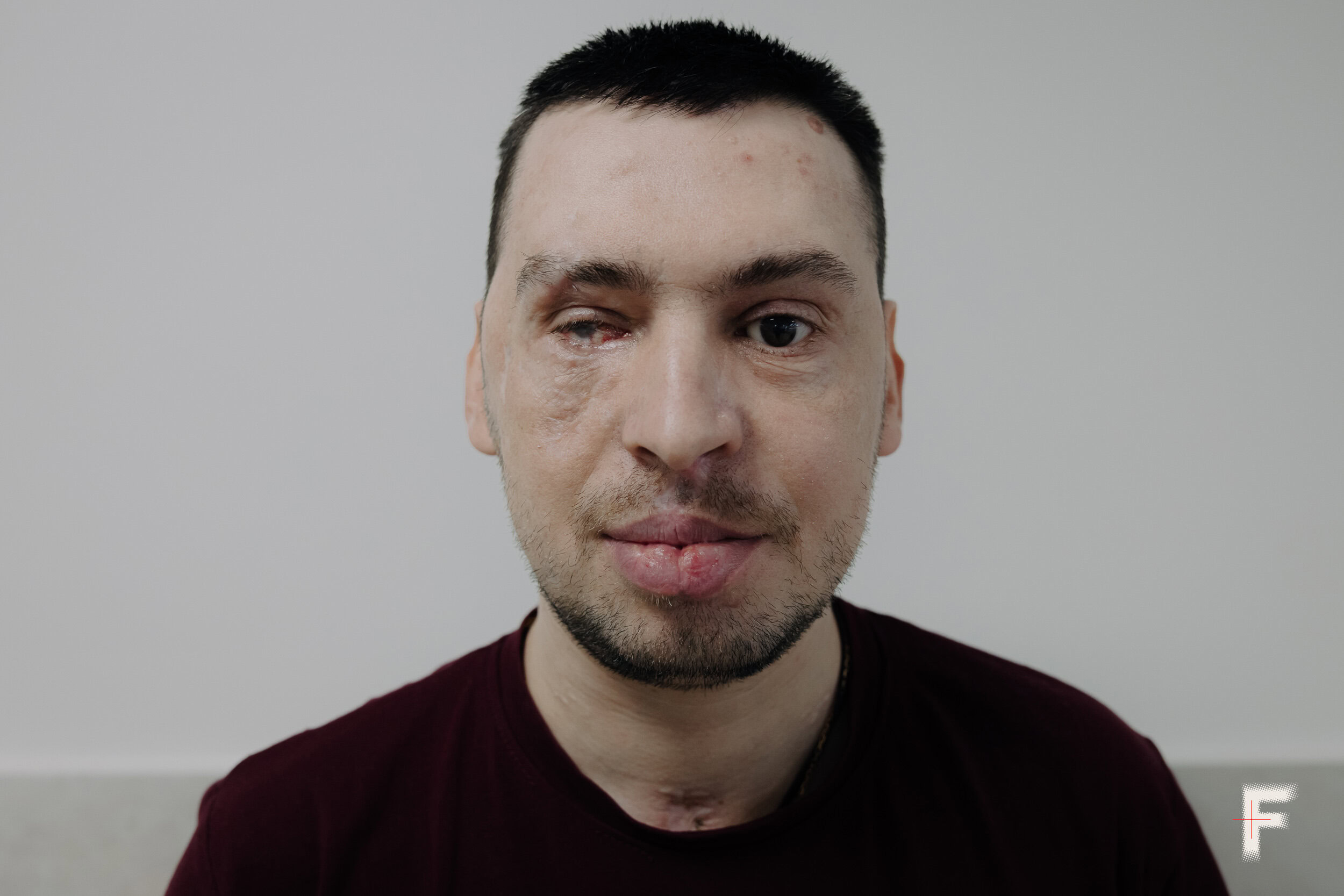
“Essentially, I shielded the guys and took the brunt of the shrapnel. I completely lost my sight. I thank God I’m alive and that my arms and legs are intact. The guys pulled me out, and then came endless surgeries. Now I’m undergoing rehabilitation at the center, and I was told it is possible to do a sort of ‘cosmetic repair’ on my face. That is how I met Taisiia,” says Valerii Nikolaiev, a veteran of the Russo-Ukrainian war.
Prosthetics at the Unbroken Center is free of charge for soldiers and war victims; the center covers the costs itself. Civilian patients pay for treatment themselves. Even though the majority of patients are currently soldiers, civilians who struggled for years to find such a specialist in Ukraine are also turning to Taisiia. One such patient is 45-year-old Viktoriia Frolova. She lost her eye in childhood to retinoblastoma, which is a malignant tumor of the retina. Viktoriia’s first prostheses were made in Moscow, a city she visited for decades. Since the full-scale invasion began, this is no longer possible, and her old prosthesis, which she had used for over ten years, began to break down.
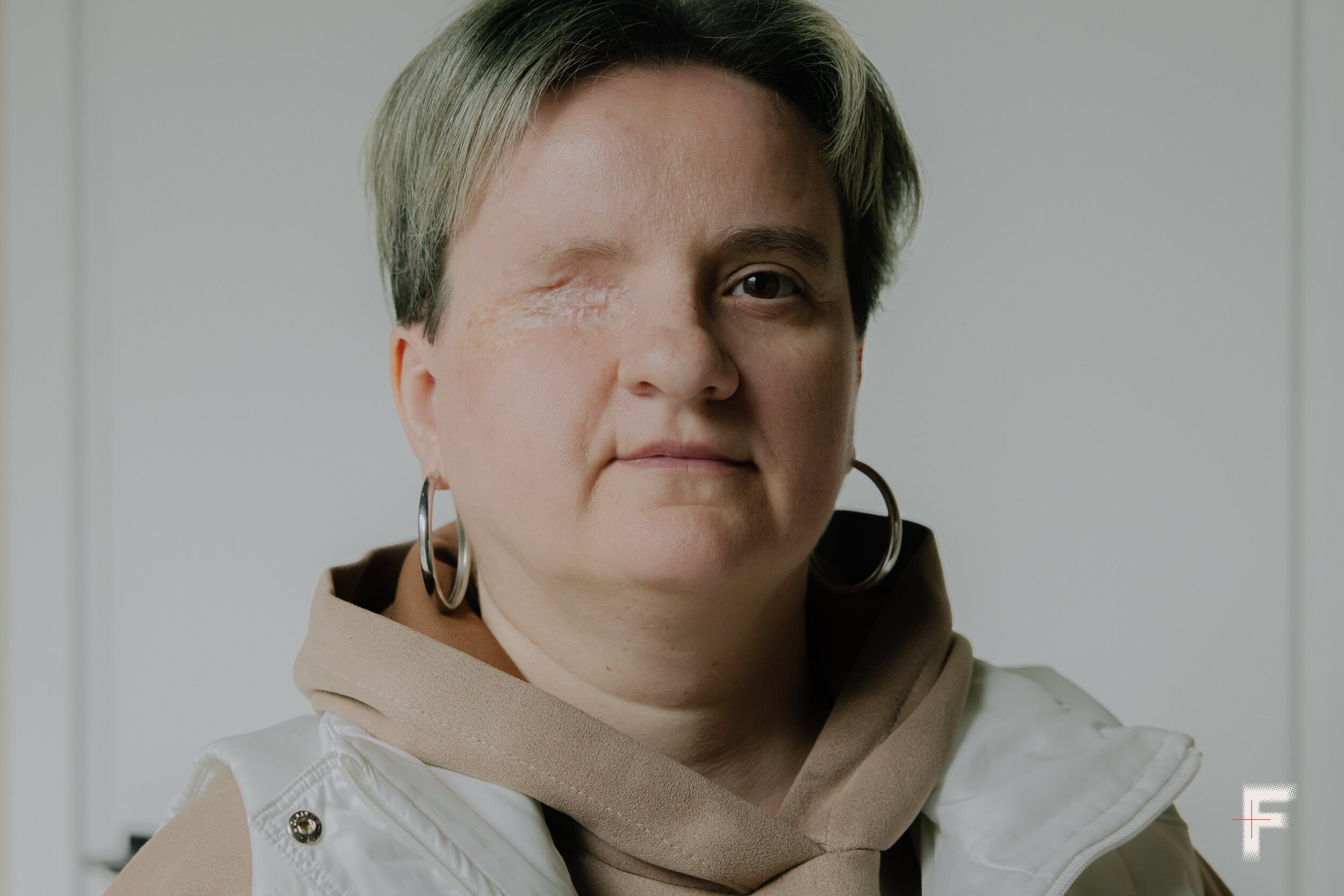
“First of all, the prosthesis did not look good, and secondly, it was many years old. At the same time, complications developed gradually, including inflammation and bone degradation in the eye socket. I had surgery, and the question arose again of where to get a beautiful prosthesis. After all, it’s my face, and I work with people constantly. Finding a place that simply makes an artificial eye is not difficult, but finding somewhere that makes it aesthetically pleasing turned out to be nearly impossible,” says patient Viktoriia Frolova.

Taisiia’s work resembles jewelry making or fine art, while she herself describes it as a combination of medicine, technology, and psychological rehabilitation. Her creations include silicone prostheses for faces, ears, noses, and even fingers. Every piece is essentially hand-crafted. Initially, the patient’s face or the affected area is scanned, then Taisiia creates a wax model to replicate skin texture, wrinkles, and the smallest details. Finally, the piece is cast in medical-grade silicone or other materials.

How long does it take to make a prosthesis?
It generally takes two to three days to produce a single ocular prosthesis. More complex work, such as noses, ears, or large overlays, can take several weeks. The timeline includes not only the craft itself but also technical stages: polymerization, mold making, fittings, and adjustments.

Taisiia says there has been a high demand for finger prosthetics recently, especially among soldiers returning to civilian life who want to feel comfortable in public again.
“The soldiers start categorizing their injuries as more or less significant, saying that someone else lost a leg while they are just missing a finger. But you cannot think like that. Anything that prevents you from living and functioning fully must be addressed as effectively as possible,” Taisiia explains.

Even the loss of a single phalanx can become a psychological burden for someone working with children, clients, or those who are constantly among people. One of her patients is a teacher who, after being demobilized, wanted a finger prosthesis before returning to school so that the children would not be distracted by his injury. However, Taisiia notes that even in such a traumatic field, her patients maintain their sense of humor, especially servicemen. Instead of making a prosthesis as inconspicuous as possible, some choose to highlight their new appearance. Most often, they ask for black eyes: nearly entirely dark, “alien-like” prosthetics with a glossy sheen.

Everyone wants black eyes, so I always suggest making
one for your mother and the other for yourself.
Some people like it, others don’t.
But if it makes a person feel better, then why not?
Shortage of personnel and materials
Despite high patient demand, exoprosthetics in Ukraine still lack systematic government support. There is no specialized training for such professionals, and the field itself has not been prioritized for years. According to Taisiia, exoprostheses are not viewed as a necessity because they do not directly save lives. As a result, she must now not only share her expertise with colleagues but also actively seek out individuals willing to learn the profession from scratch, all to scale up operations and help more patients.


In addition to the staff shortage, Taisiia faces a lack of materials. Most of the supplies used in exoprosthetics, including medical-grade silicones, specialized adhesives, and pigments, are simply not manufactured in Ukraine. She orders nearly everything she needs from the United States, but this process has its own difficulties: some materials are not only expensive but also require certification for medical use. To partially address this issue, Taisiia has begun a master’s research project aimed at finding a more affordable and durable alternative to medical-grade silicone.

***
Hi, we are Artem and Anna, the authors of this article. Thank you for reading to the end.
For those who have suffered facial injuries as a result of war, this is a chance to feel confident again and return to normal lives. I hope this material will help people with doubts to find answers to important questions and dare to take the first steps.
Every story starts with your support. Join the Frontliner community so we can keep up documenting Russia’s war against Ukraine from the front line and the rear.
***