Inside an explosives lab: How drone operators make their own munitions
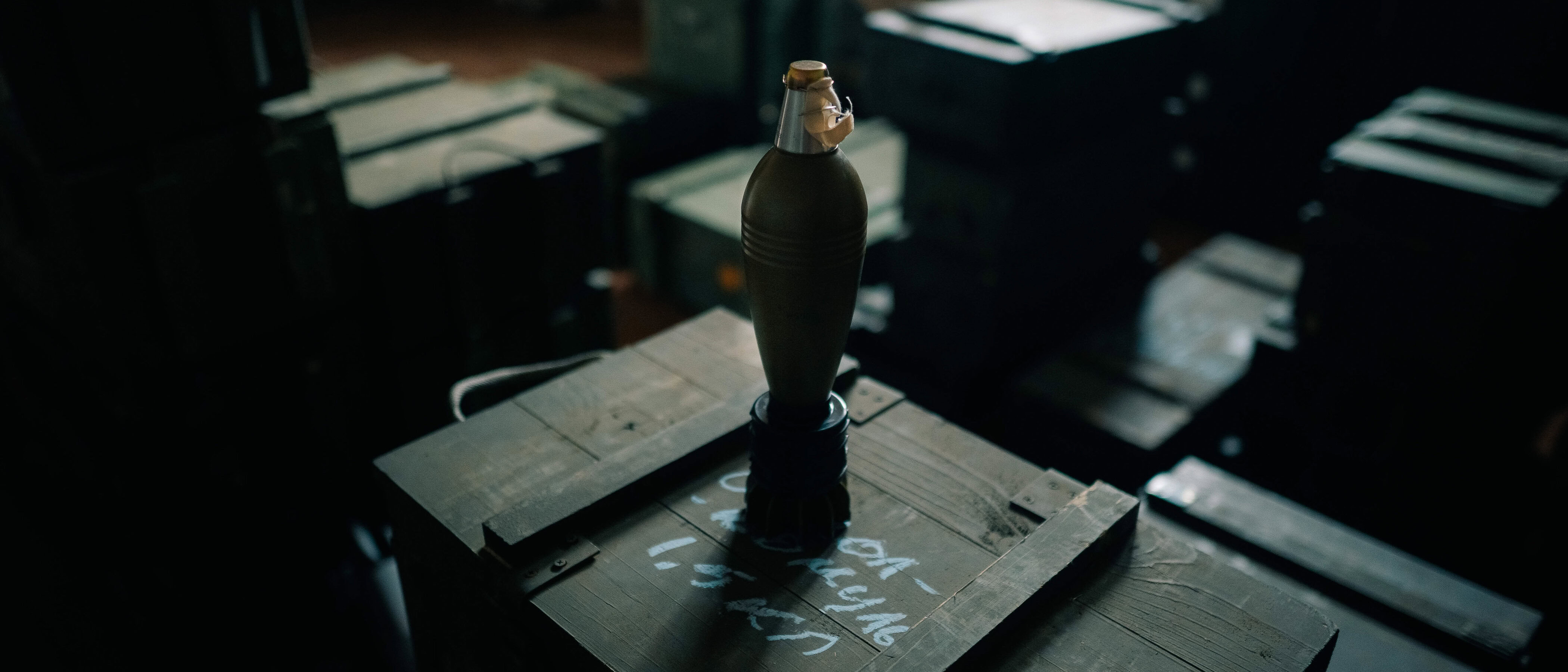
Roughly 80% of the drone-dropped munitions the Taifun special purpose unit uses to eliminate occupying forces are homemade, crafted in their own laboratory. Most of the factory ammunition sent to the brigade is also modified here. To do this, they sometimes have to repurpose mines and artillery shells from the 1970s. The soldiers explained to Frontliner reporters exactly what can be made from these materials.
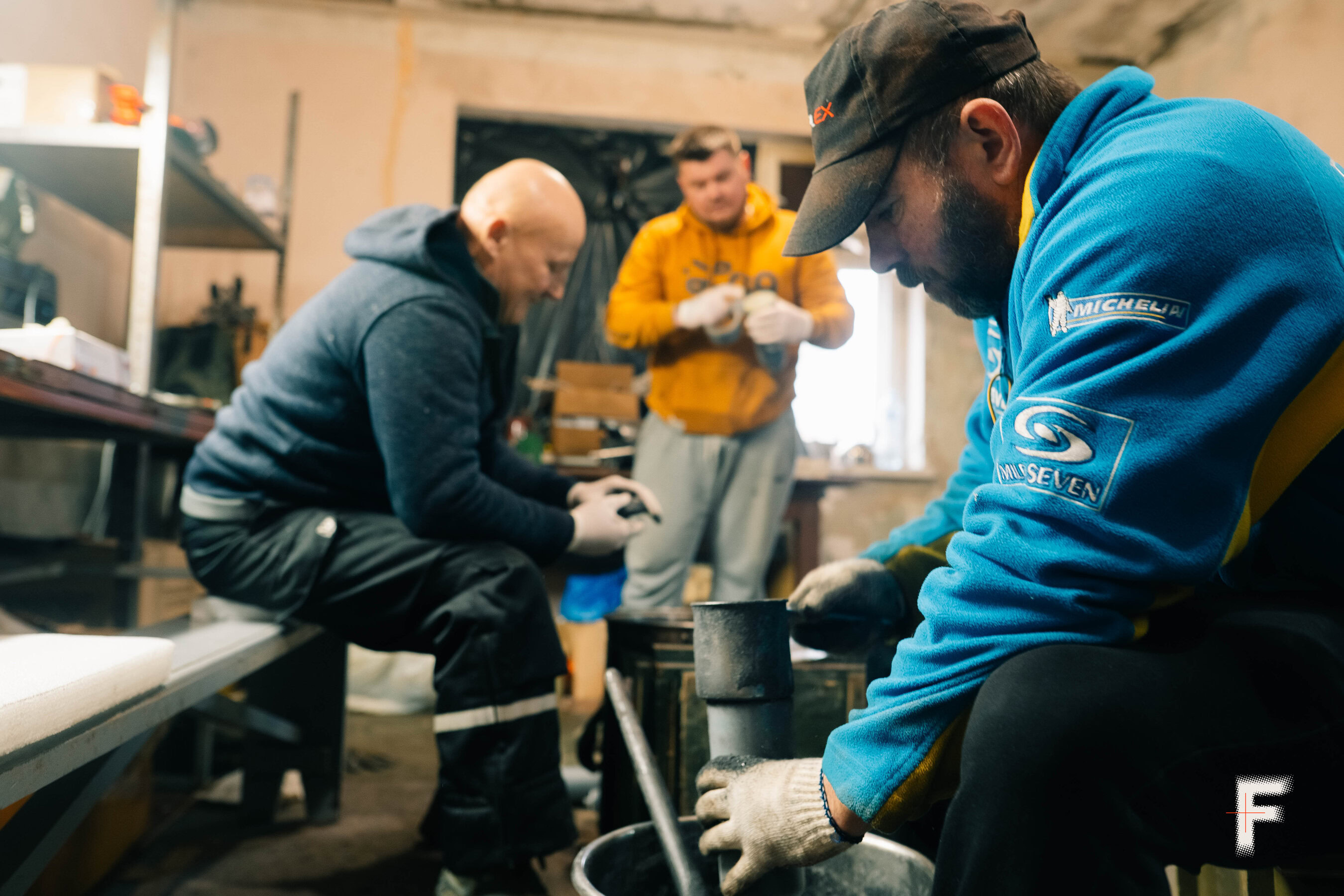
In the middle of the room, a fighter with the call sign “Lieshyi” strikes a 10-kilogram anti-tank mine with a hammer. To prevent it from detonating, he taps carefully along the edges. This is a routine practice for Lieshyi, who dismantles dozens of munitions a day. Once the mine is split in two, he empties the explosive powder into a bucket. Next door, his fellow soldiers transfer the mixture into plastic cylinders that will be attached to drones.
When the Russians abandon their positions,
they leave behind a lot of material for us to repurpose.
The Taifun unit’s laboratory is packed with explosives. The material sits inside intact mines and fills metal bowls resting between halved anti-tank and artillery shells. While some brigades use these heavy munitions to bomb light enemy armor, not all units possess drones capable of lifting such weight. Because of this, these heavy munitions act as donors for lighter and more in-demand shells: drone drops modified to be both lighter and more lethal.

Improvised munitions capable of leveling buildings
Most of the drone-dropped munitions for the Taifun unit are manufactured in laboratories near the front line. Ukraine has tons of explosives stored inside Soviet-era mines. To utilize this material, soldiers must dismantle old shells that are otherwise useless in a drone war. By mixing in additional substances, these smaller, modified munitions now inflict the same destructive power as bombs that are one to two kilograms heavier.
The munitions weigh from 1 to 20 kilograms. For heavy drones, for example, they produce high-explosive, loitering, fragmentation, and thermobaric munitions. Some of the bombs dropped by these UAVs have a blast radius of up to 100 meters. Meanwhile, fiber-optic drones use shaped-charge explosives that weigh less than a kilogram but can pierce one and a half to two centimeters of armor.
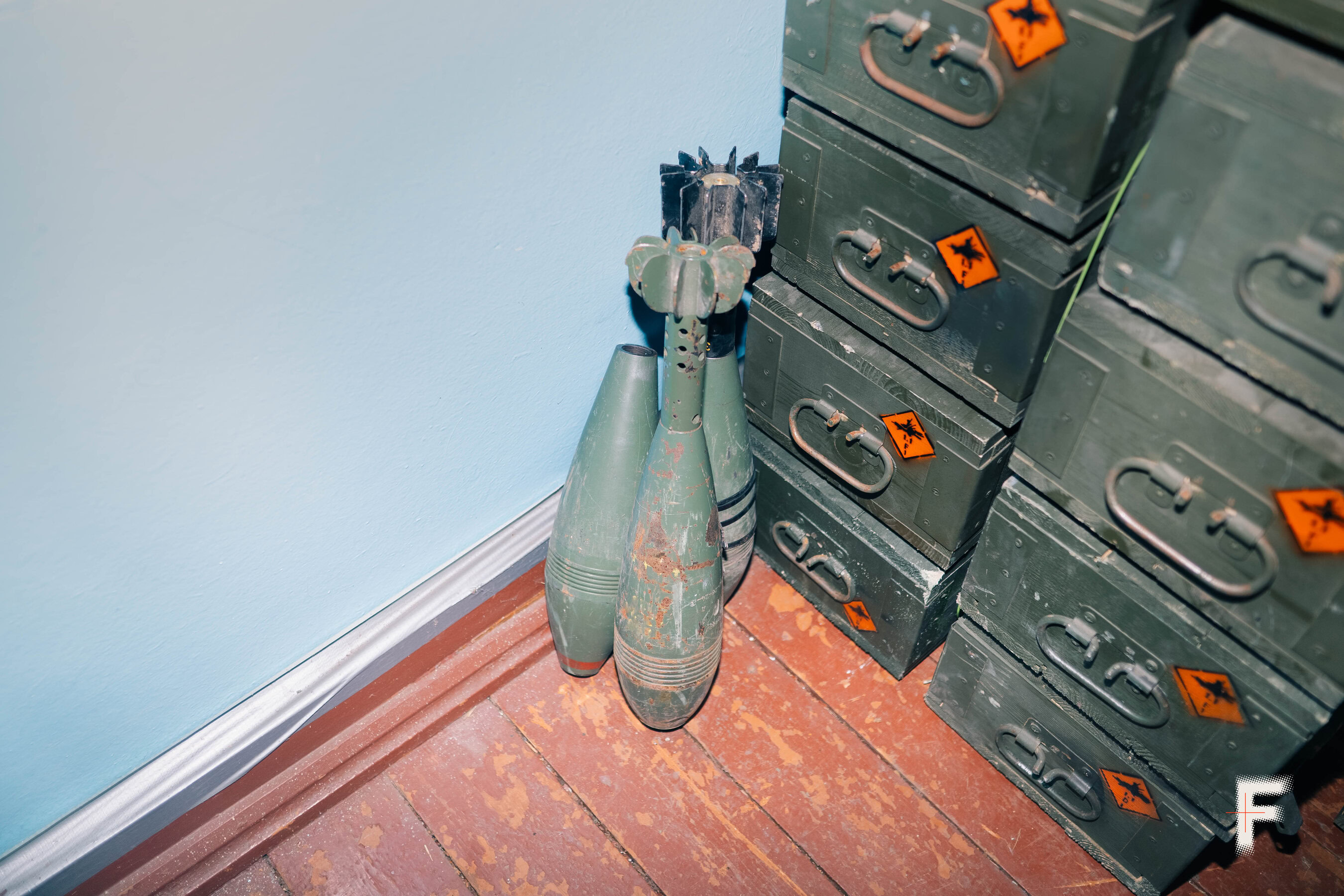
“You can get four shaped charges out of a single anti-tank mine. The powder we extract from TM mines will still detonate after 10 or even 30 years, as long as the ordnance was stored in proper conditions. This mixture does not degrade, and it does not spoil,” Lieshyi explains.
These improvised explosives are on par with factory-made ammunition in terms of quality. Access to the manufacturing process is highly restricted. Only fighters who have successfully passed sapper training are allowed to handle production. They gain access to the laboratory only after finishing this coursework and gaining extensive practical experience.
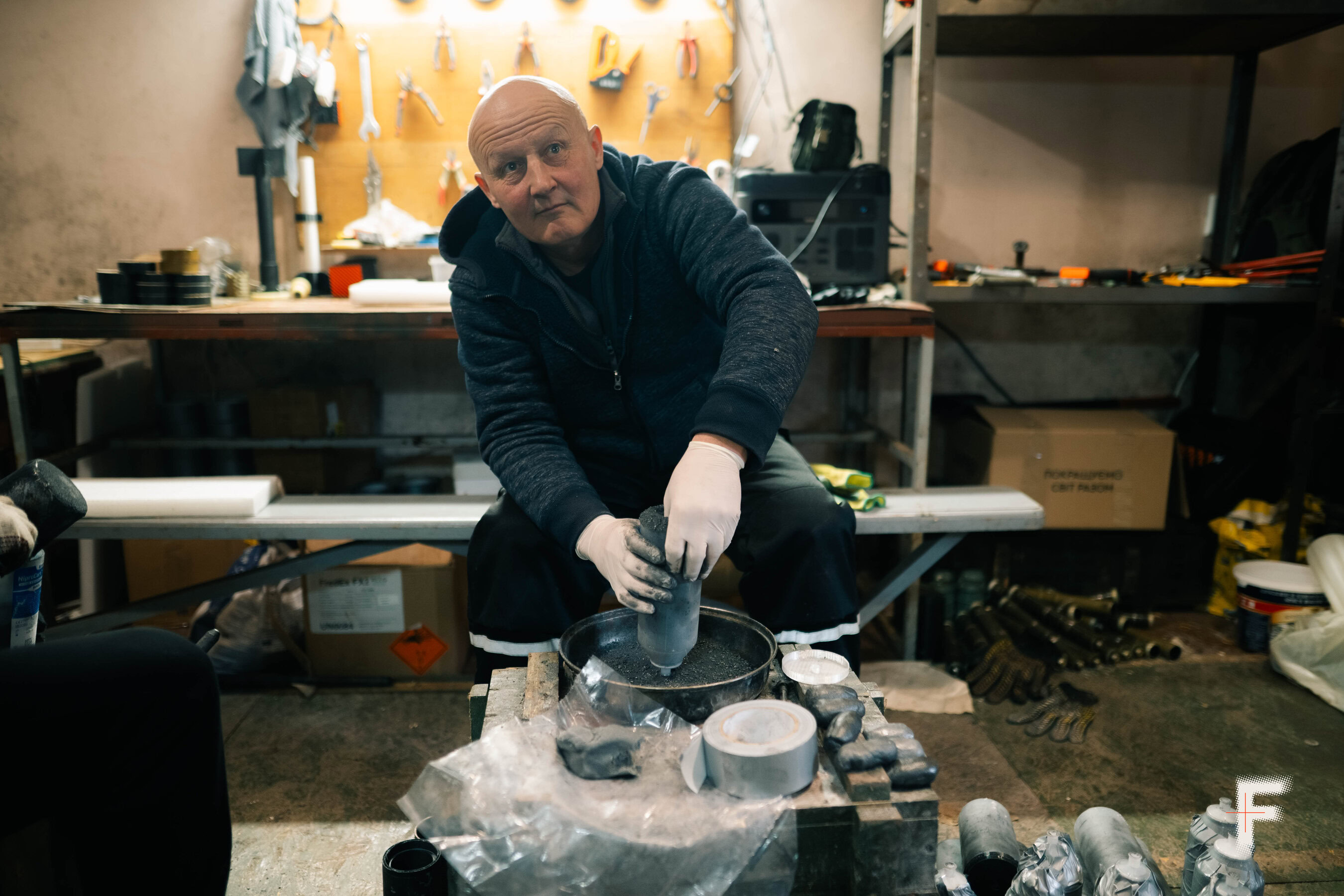
Lieshyi has been working as a sapper since the days of the Anti-Terrorist Operation. Most of his fellow soldiers currently working in the explosives lab also have previous experience with TNT. Some used to be sappers, while others served in the infantry and endured heavy combat. They piloted drones before eventually learning to make the bombs themselves.
We are surrounded by tons of explosives.
You cannot work with this kind of material without trust,

“The guys train for two and a half months. Then come the hands-on practice and exams. Even after the exams, commanders will spend many sleepless nights with them until they are completely certain the guys won’t blow up themselves and the lab. When the work begins, a newcomer is placed under the strict supervision of his fellow soldiers. A fighter is considered ready only when he can relax during his shift.” Lieshyi says.
Printing drone drops amid a filament shortage
The process of upgrading ammunition is sometimes slowed down by a shortage of 3D-printed casings. The explosive mixture needs to be poured into a specific container that guarantees detonation, survives the rigors of transport, and accurately strikes its target. Meeting this daily need requires hard-to-find filament, the same material used to manufacture drone components and other ammunition, says a fighter going by the call sign “Artyst.”
-
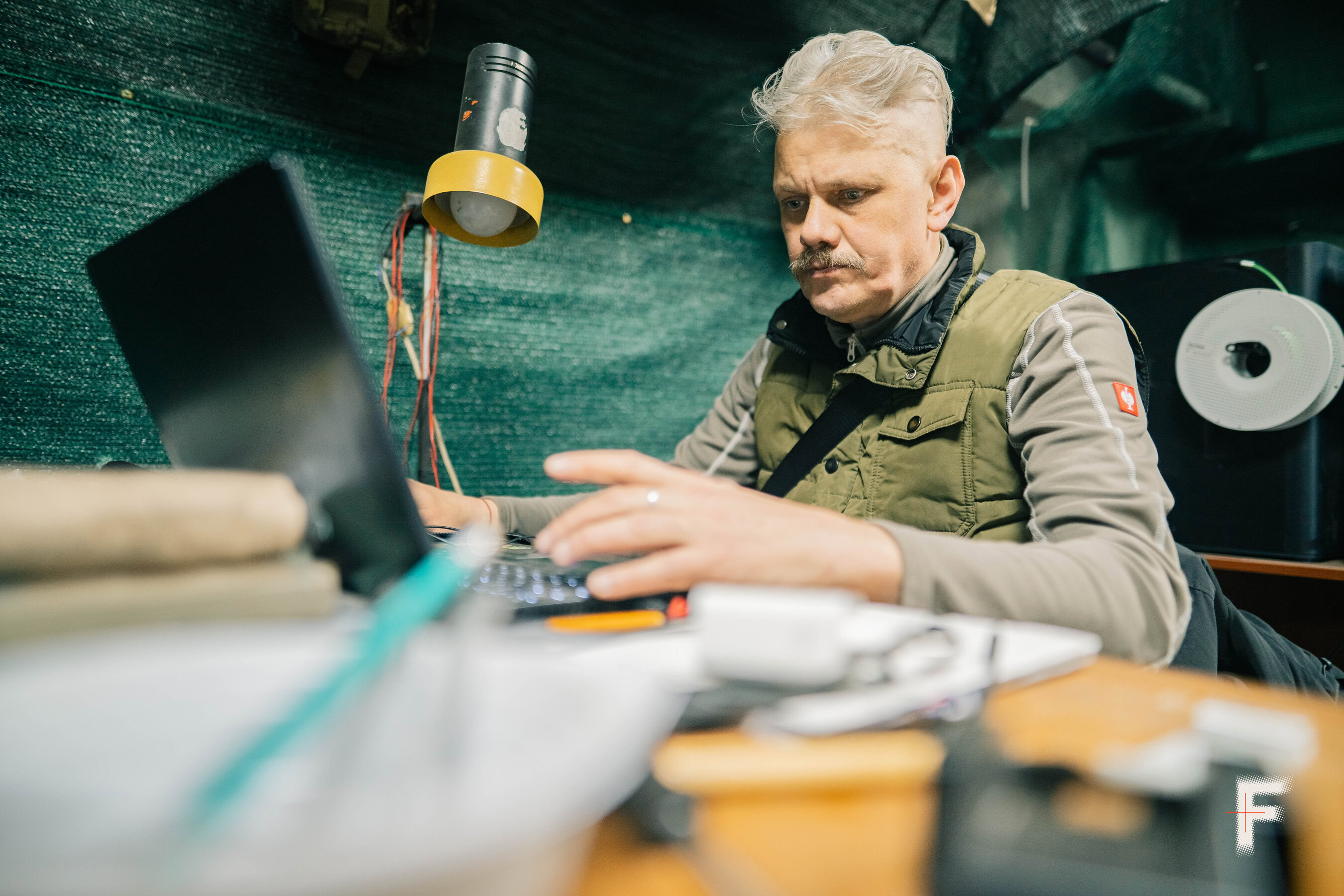
A serviceman with the call sign "Artyst" from the Taifun special purpose unit of the National Guard of Ukraine is at work, Kharkiv region, Ukraine, March 18, 2026. (Marharyta Fal/Frontliner)
-
A serviceman with the call sign "Artyst" from the Taifun special purpose unit of the National Guard of Ukraine is at work, Kharkiv region, Ukraine, March 18, 2026. (Marharyta Fal/Frontliner)
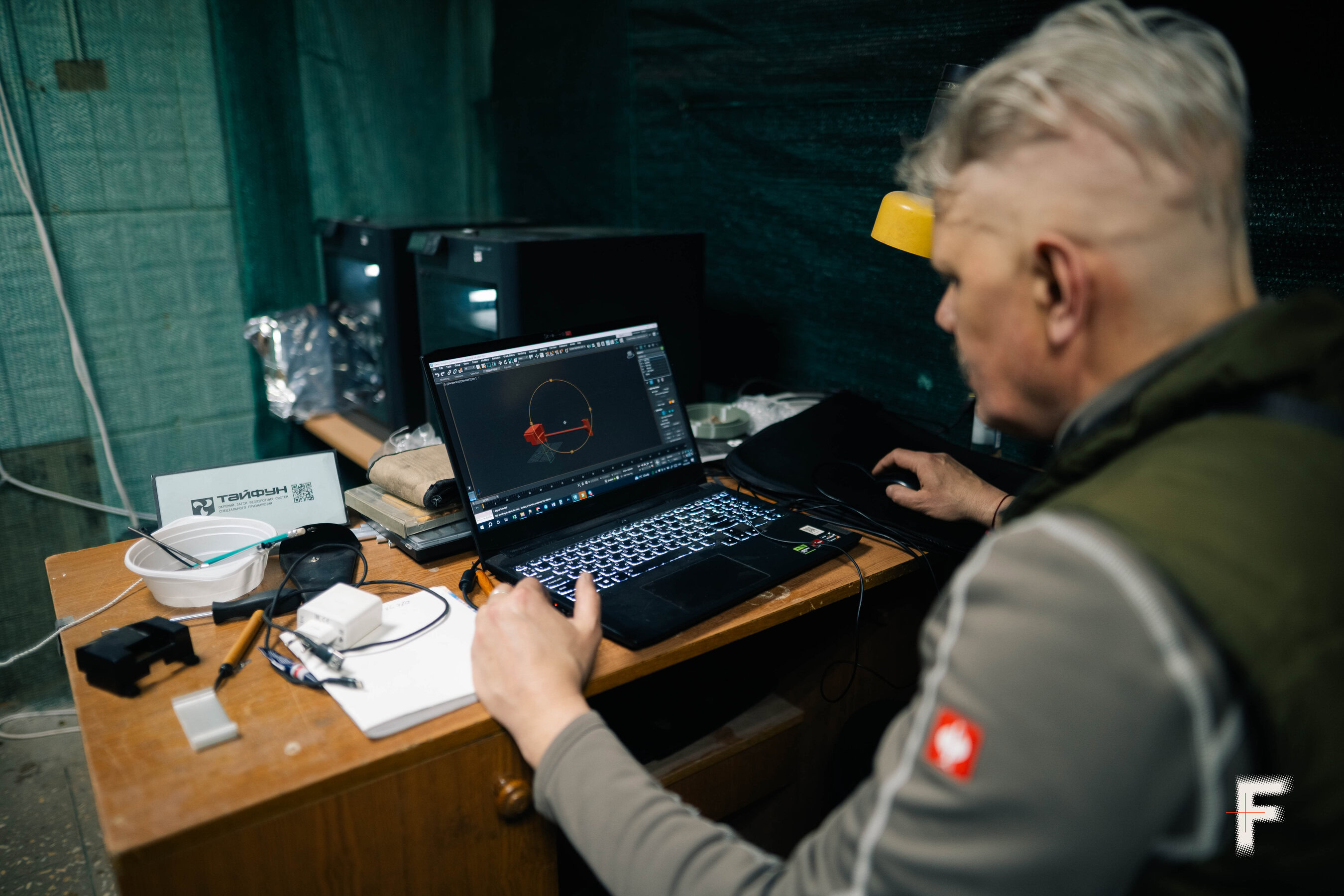
“To create an effective shape for the munitions, we designed them from scratch,” the serviceman explains. “We borrowed some concepts from our colleagues and modified them for our own purposes. However, not a single item was left unchanged. Sometimes, you would never guess what they originally looked like. For example, the tail fins have evolved significantly. Initially, the drops were made based on a ‘hit or miss’ principle. Later, we attached tail fins to help generate centrifugal force. Now, they fall with precision and aren’t blown off course. But the designs vary, and the amount of material used is not the same.“

The soldiers working on these designs travel to the testing ranges themselves to see if any further adjustments are needed. They maintain round-the-clock communication with the drone operators, meaning the explosives manufacturing and 3D printing does not stop even at night.

***
Hi, we are Alina and Marharyta, the authors of this article. Thank you for reading to the end.
Since 2014, Ukraine has been fighting the occupying forces primarily with their own weapons. The percentage of “homemade” explosives on the front line is both staggering and alarming, as without these munitions, the troops would have nothing left to fight with. This reality is telling. The Defense Forces have no choice but to rely entirely on themselves, despite the promising statements made by international partners, the Ukrainian government, and arms manufacturers.
Every story starts with your support. Join the Frontliner community so we can keep up documenting Russia’s war against Ukraine from the front line and the rear.
***