
Hunting Russian logistics: Inside Ukraine’s middle-strike operations
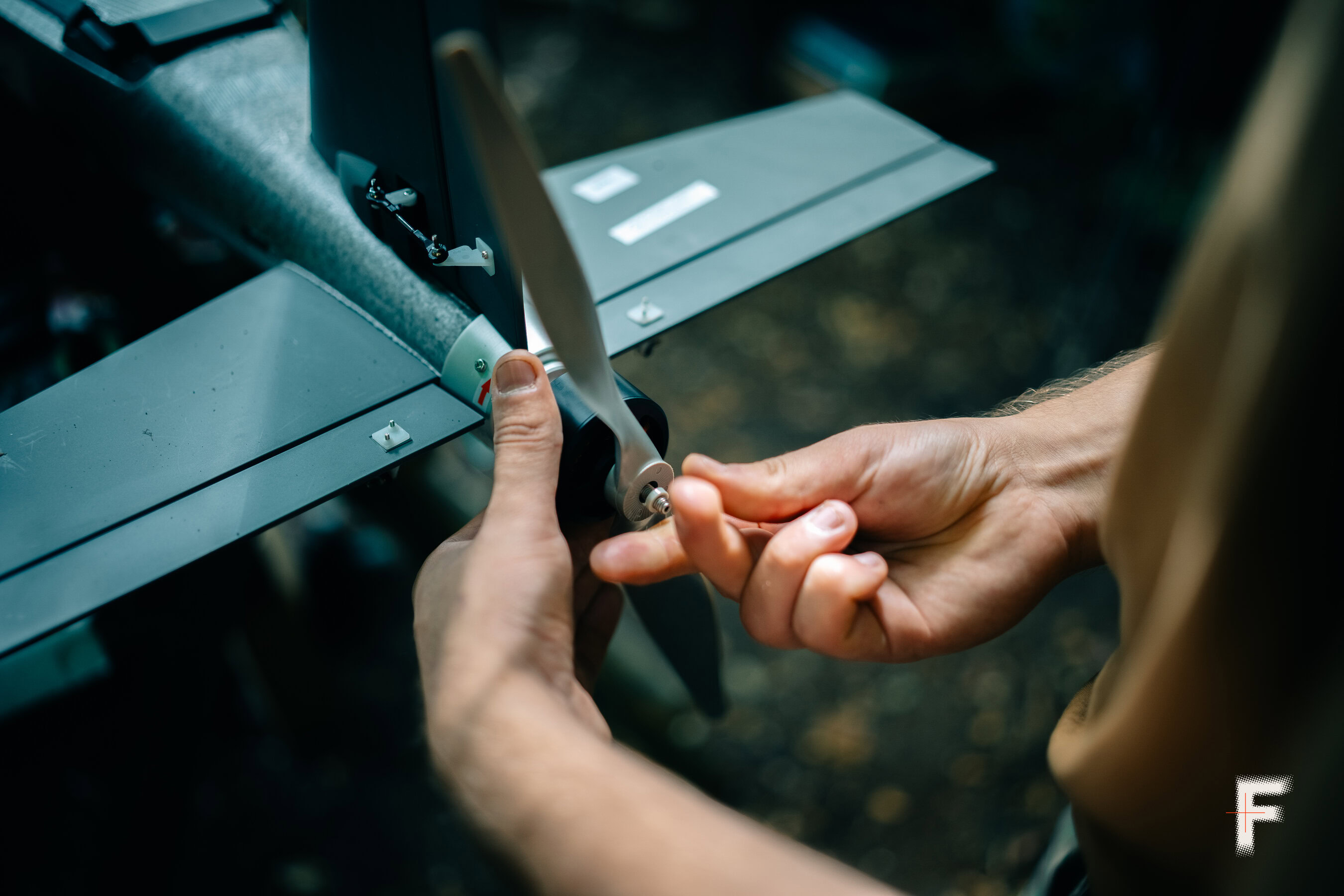
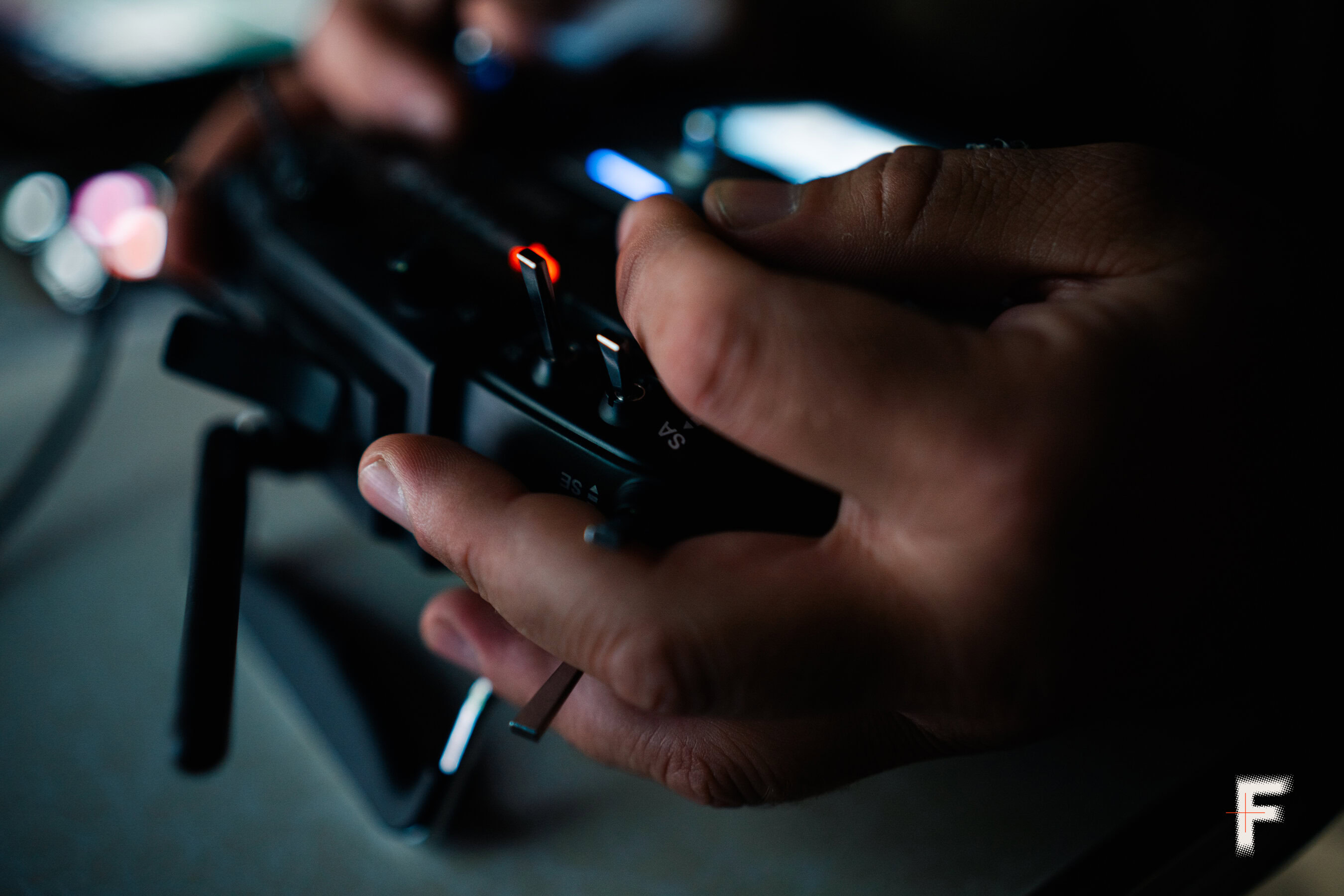
Hundreds of kilometers from the Russian rear, three Spartan Brigade soldiers arm a US-made Hornet kamikaze strike drone. They quickly move it onto a pneumatic catapult and report that it is ready for launch. Loaded with explosives, the drone takes off at high speed and heads deep into enemy territory. An hour later, the Hornet strikes a truck 150 kilometers from the line of contact. Frontliner reporters saw firsthand how Spartan Brigade soldiers conduct middle-strike operations against Russian forces.

The term “middle-strike operation” has been increasingly used in Ukraine since 2025. It refers to drone strikes conducted to an operational depth of tens to hundreds of kilometers.
Ukrainian units have been developing this capability amid the emergence of Russian strike UAVs capable of operating far from the front line, including Lancets, Molniyas and Gerberas. These Russian drones are used to engage Ukrainian equipment, positions and logistics.
-
Strike UAV, Donetsk region, Ukraine, July 11, 2026. (Marharyta Fal/Frontliner)
-
Black Sky Battalion soldier prepares a strike UAV, Donetsk region, Ukraine, July 11, 2026. (Marharyta Fal/Frontliner)

-
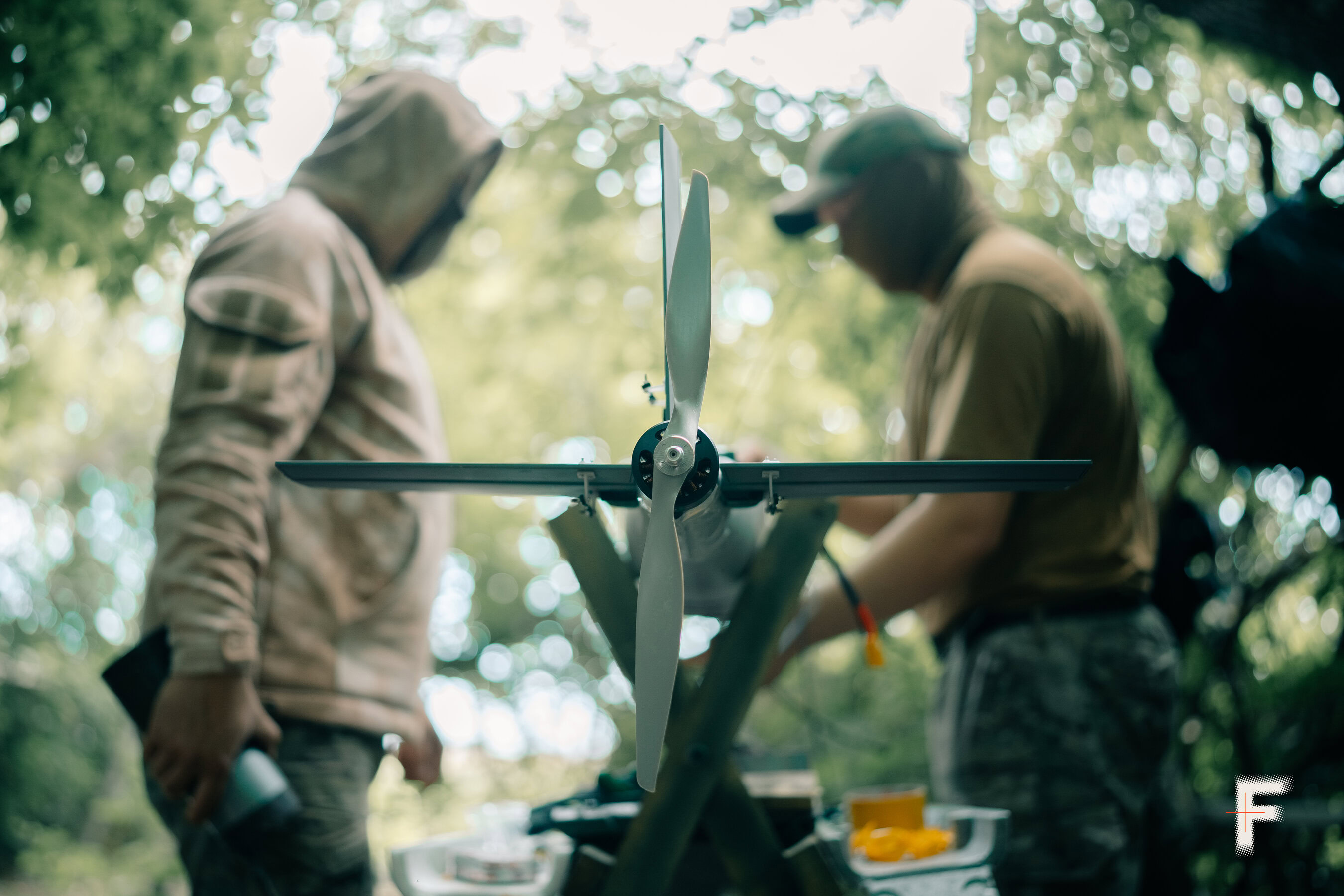
Black Sky Battalion soldiers prepare a strike UAV, Donetsk region, Ukraine, July 11, 2026. (Marharyta Fal/Frontliner)
Middle-strike drones, in turn, engage targets deep in the rear, including air defense systems, command posts, warehouses, repair facilities, airfields and transport. Ukraine’s Ministry of Defense defines the operational depth of middle-strikes at approximately 30 to 200 kilometers. In 2026, the capability began to be systematically scaled up across the armed forces.
According to Ukrainian soldiers, logistics was identified as the priority target for strikes in 2025-2026: pickup trucks, fuel tankers and heavy trucks carrying ammunition, fuel or personnel.
We have seen them use
mobile fire teams to escort trucks,

“War is about tempo. If we hit their logistics 150 kilometers deep, they (Russians – ed.) run into difficulties bringing forward ammunition, people, fuel, water and food. The vehicles could be destroyed, which forces them to change their travel times. That takes people away from other tasks. We have seen them use mobile fire teams to escort trucks, with one or two vehicles assigned to each convoy. Each mobile fire team consists of three or four personnel. This means those people are not participating in assaults, operating drones or otherwise engaged in combat operations,” says “Thor,” commander of the strike UAV section of Black Sky Battalion, 3rd Spartan Brigade of the National Guard of Ukraine.
Speed, range and artificial intelligence
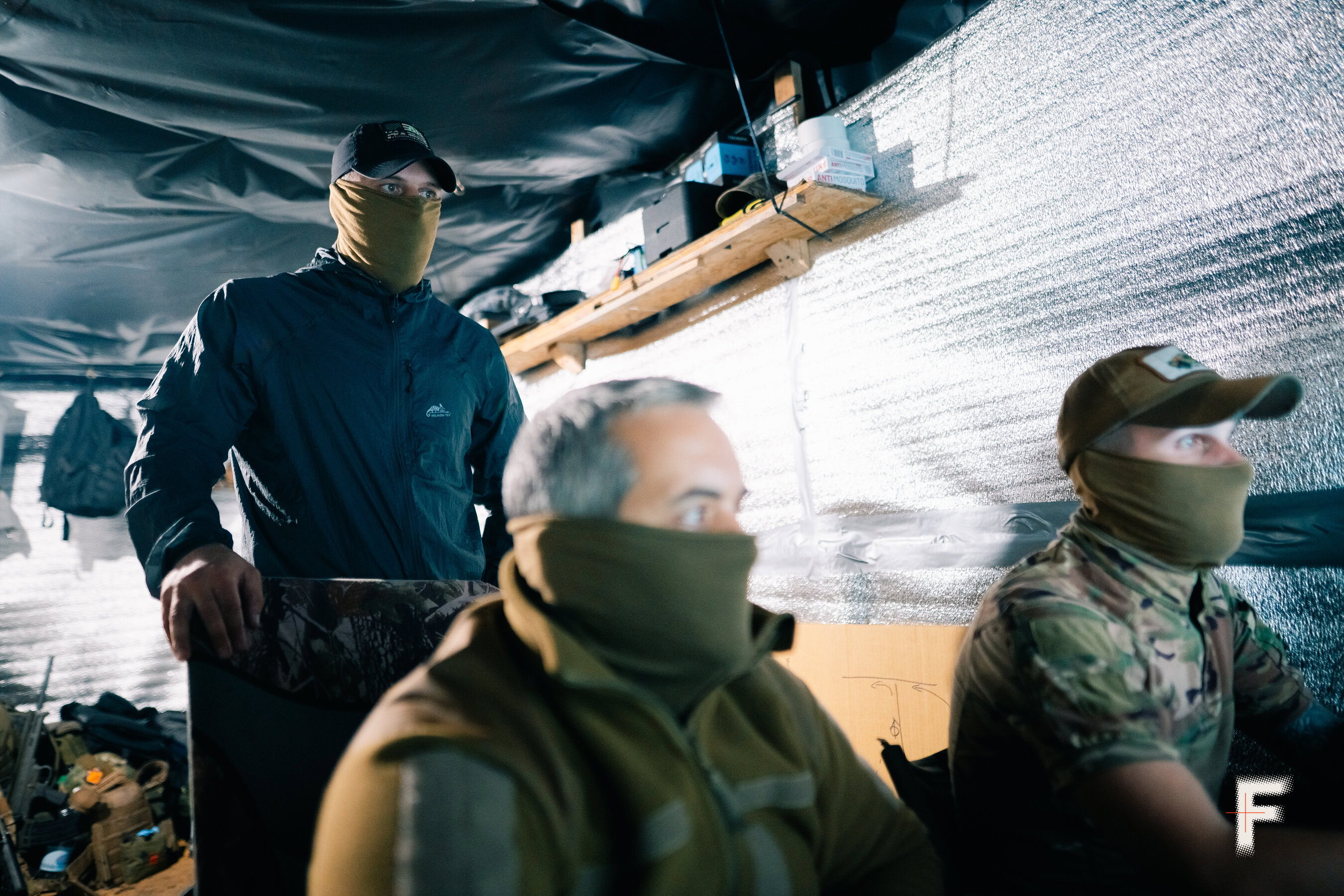
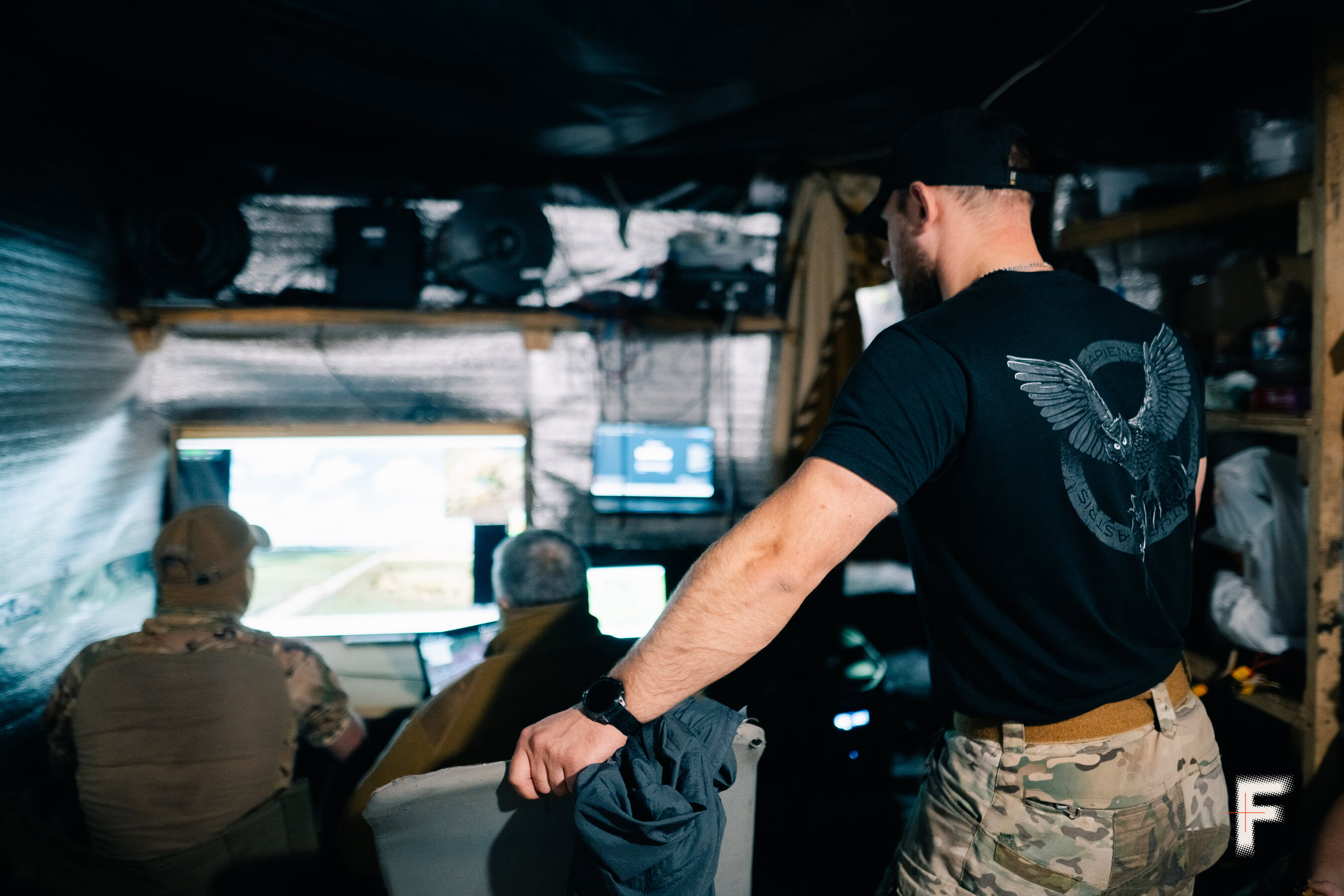
Inside the dugout, two soldiers, the drone operator and navigator, sit at a computer, guiding the drone toward its target. The platoon commander, call sign “Cherry”, supervises their work. The drone operators cover the distance to the enemy’s rear in just 40 minutes.
-
Soldiers of the Black Sky Battalion, 3rd Spartan Brigade of the National Guard of Ukraine, including “Cherry,” “Fizruk,” and “Thor,” Donetsk region, Ukraine, July 11, 2026. (Marharyta Fal/Frontliner)
-
Black Sky Battalion soldiers conduct a flight mission, Donetsk region, Ukraine, July 11, 2026. (Marharyta Fal/Frontliner)
Speed is one of the Hornet drone’s key advantages. Its engine allows the drone to cruise at 100-120 kilometers per hour, reaching up to 200 kilometers per hour when diving onto a target.
“For operations at this range, it is important for the drone to be fast, have sufficient range and be able to carry the required payload. The Hornet lets us strike targets deep in the operational rear while retaining enough flight time to search for them. That is important because we don’t always fly straight to a specific target. Sometimes we first have to locate it along the route, carry out additional reconnaissance, and only then decide whether to strike it,” says “Thor.”

The landscape on the monitor changes from fields and tree lines to highways. Equipped with artificial intelligence, the drone is programmed to detect and strike large trucks. Vehicles appear on the screen, numbered and outlined in red. The silence in the dugout is broken by a conversation between the soldiers.
“Do you see the target?”
“Target acquired.”
“Try to attack. ‘Thor’, be ready to call it off if needed.”
A soldier with the call sign “Fizruk” operates the Hornet. He reports over the radio: “Convoy, convoy.”
“We’ll have to abort. They (trucks – ed.) are moving around the corner,” says “Cherry.” A minute later, the platoon commander gives the order to make a second approach and engage the target. All eyes are glued to the screen. Every second matters. Over the radio, they are told to hurry.
“Go, go in before it turns back. Yeah, yeah, yeah, go. Sha-la-lai coming up. This is going to be a good one. Come on, just a little more! Yes! Perfect!” the commander says, voice raised.

A moment later, the drone strikes the truck.
“We flew along the Starobesheve–Donetsk highway. The highest-priority target is a fuel tanker because it is carrying fuel, which is a logistics issue. The biggest problem is the bends in the road, particularly where there are trees. When a truck turns, the drone loses sight of it. We then call an abort and wait for the target to come back into view,” says “Fizruk,” the drone operator.
One drone, two trucks
The Black Sky Battalion has been conducting middle-strike operations since spring 2026. All of the unit’s drone operators are experienced, with each having accumulated at least 500 hours of flight time on other drones. According to platoon commander “Cherry,” one of the important criteria for pilots is that they should be a little adventurous.

We had a situation where we managed to strike two trucks
with a single drone. In other words, we flew against the laws of physics,
and we succeeded. Sometimes, taking risks is unavoidable.
Rear-area training lasts up to two weeks. However, pilots acquire
their main operational skills once they are deployed at their positions.
As more experienced brothers-in-arms, we train and mentor them,
and we analyze every flight,

From Mariupol to Donetsk
UAV crews repeatedly try to penetrate as deep into the enemy’s rear as possible. Their missions are not limited to striking targets. They also involve conducting reconnaissance and identifying the locations of strategically important sites. “Cherry” says they have reached the temporarily occupied Donetsk and Mariupol on multiple occasions.
“In the port of Mariupol, we struck a boat. In reality, pilots who fly regularly become more experienced with every sortie. That boat was a stationary target. Striking a stationary target isn’t particularly difficult if you fly regularly. That time, we had set out to look for a truck. After spending some time in the air and reaching the outskirts of Mariupol, we decided to fly to the port instead. We spotted a boat, carried out additional reconnaissance, and struck it within five minutes. As for Donetsk, we have flown as far as the Donetsk circus building, Donbas Arena and Lenin Avenue,” the serviceman says.

The Russians are being forced
to change their routes.
Military personnel describe middle-strike operations as a “ticking time bomb.” Unlike deep strikes against oil refineries and major industrial facilities in Russia, hitting individual trucks does not deliver an immediate result. But over time, these strikes disrupt the enemy’s ability to bring ammunition and fuel forward, slowing the advance of Russian troops.
“When we monitor the highways, we see that the number of vehicles traveling along them keeps decreasing. The Russians are being forced to change their routes. There’s another important factor: fuel shortages are being reported both in Russia and in the occupied territories. I assume that the decline in traffic is partly a result of the fuel shortage as well. But we shouldn’t fool ourselves. Yes, we are striking their logistics, but they still manage to find alternative supply routes for fuel and provisions to reach the front line. Fortunately, there are units like ours, working alongside us. We are trying to cut off that middle link between the refinery and the delivery of fuel and supplies to the frontline positions,” says “Thor.”

Throughout July and August, crews of the Black Sky Battalion struck an enemy boat in Mariupol, along with 20 light vehicles and 20 trucks.
***
This story is about how rapidly the Ukrainian military is developing its technological capabilities in modern warfare and how these capabilities are having an impact on the course of the war far beyond the battlefield.
A year ago, middle-strike operations were only beginning to develop, and little information was available about them. Initially, strikes were recorded at distances of several dozen kilometers. The operational range gradually increased. As of August 2026, middle-strike drone operators can reach the temporarily occupied cities of Donetsk and Mariupol (150-200 kilometers into the enemy’s rear – ed.) and strike targets that slow the advance of Russian forces, disrupt their logistics and disrupt rear supply routes. The military does not disclose all the details of what these drones, including the Hornet, are equipped with. But the further this capability develops, the more intriguing the drone’s “insides” become.
Every story starts with your support. Join the Frontliner community so we can keep up documenting Russia’s war against Ukraine from the front line and the rear.
***