Detained for dissent: how young Crimeans were forced to flee the temporarily occupied peninsula
In temporarily occupied Crimea, Russian security forces routinely pursue residents for their pro-Ukrainian stance, fabricating charges, exerting pressure, intimidating families and restricting their freedom of movement. Despite this, a generation of young Ukrainians is choosing resistance over submission and life under the Russian flag. Dmytro Haievskyi was held for a month in pre-trial detention (SIZO) without explanation. Polina Kustariova spent years watching everything Ukrainian pushed out, before fleeing in secret. Artem Zvenyhorodskyi travelled 3,000 kilometres just to hear the Ukrainian national anthem for the first time at a railway station. Frontliner traces their stories which expose how the occupation system punishes dissent and turns returning home into an ordeal.
They come from different cities across Crimea, but share a single, defining reality: experience of life under occupation where a pro-Ukrainian stance carries consequences. Long before they reached Ukraine, they stayed in touch online and agreed that they would meet together in Kyiv. For one of them, Dmytro, the journey home began with an arrest.
“I was standing there in my slippers, wearing shorts, getting ready for breakfast,” he recalls of his last morning at home in March 2024. Two police officers entered his house and without any explanation led him straight to a car. He was then taken to the Simferopol pre-trial detention center (SIZO) and charged with the allegedly “illegal” purchase of a ticket to leave Crimea, an offense defined under the rules imposed by the Russian occupation authorities.
Then just 20 years old, Dmytro spent one month and three days in a cell. He shared it with former fighters from the Wagner private military company who had been convicted of serious crimes. One had been imprisoned for killing a civilian. Another for stealing fuel.
“I thought I would die there if they found out what my case was about,” he says. The formal pretext for his detention was the allegedly “illegal” purchase of a ticket. At the same time, according to Dmytro, security officers suspected him of “treason”.
Fleeing a pro-Russian environment
He lived in the town of Novofedorivka, near Yevpatoria, for more than 10 years after the occupation began. He recalls how, in 2014, Russian symbols started to appear in schools across the peninsula. Along with his classmates, he was required to learn the Russian national anthem, while Ukrainian television channels disappeared from the airwaves.
Expressing views that did not align with those of the occupation authorities was discouraged. So Dmytro kept silent.
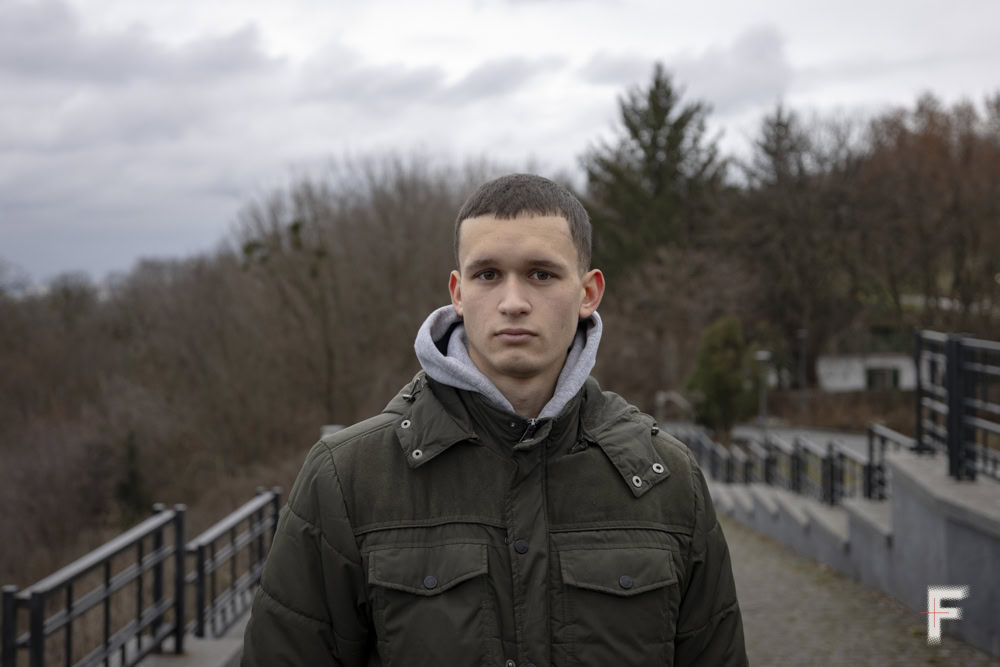
“I had no Ukrainians around me. Everyone was pro-Russian. They joked that Russia was expanding. I didn’t meet anyone who had an opinion of their own,” the young man says.
Yet that environment did not prevent him from developing a pro-Ukrainian civic stance. After reaching adulthood, Dmytro says, he passed information about the movement of Russian troops to the Ukrainian side and spoke out against the forced conscription of local residents into military service. For this, he was branded a “traitor”.
After finding no evidence of a crime, investigators placed the Crimean man under house arrest. He realised there might be no better moment to escape. At night, he cut off the electronic ankle tag and fled without saying goodbye to his family. His route took him through Mariupol, Moscow, Belarus and Armenia, and as far as Moldova. There, his journey stalled: without a document permitting his return to Ukraine, Moldovan border guards refused him entry after seeing his Russian passport.
According to Dmytro, none of the consulates he approached in different countries offered assistance. He was told that being born in Crimea and having parents who are Ukrainian citizens did not entitle him to a certificate for return to Ukraine. With no help forthcoming from state institutions, he began contacting Ukrainian servicemen directly, asking for support in getting back to Ukraine. One of those who responded was Bohdan Krotevych, who passed the case to Ihor Klymenko, Ukraine’s Minister of Internal Affairs. Within days, Dmytro was recounting his story to a Ukrainian consul in Turkey. Eventually, he returned to Kyiv.
[Translator’s note: a certificate for return to Ukraine is a temporary travel document issued by Ukrainian consulates to allow citizens without valid passports to enter Ukraine.]
To stay was to submit
Dmytro’s story is not unique. Twenty-year-old Polina also grew up in Crimea and lived there for almost 12 years after the occupation began. During that time, she moved between four cities — Kerch, Yalta, Simferopol and Sevastopol — and came to realise that any sense of home had already disappeared for her back in 2014. She remembers the change of flags and the street protests in Kerch.
From then on, she lived in an environment where everything Ukrainian was systematically pushed out. For a long time, she tried to learn the Ukrainian language on her own. In literature classes, she spoke about Ukrainian poetry; in history lessons, she argued for the preservation and promotion of Ukrainian culture.
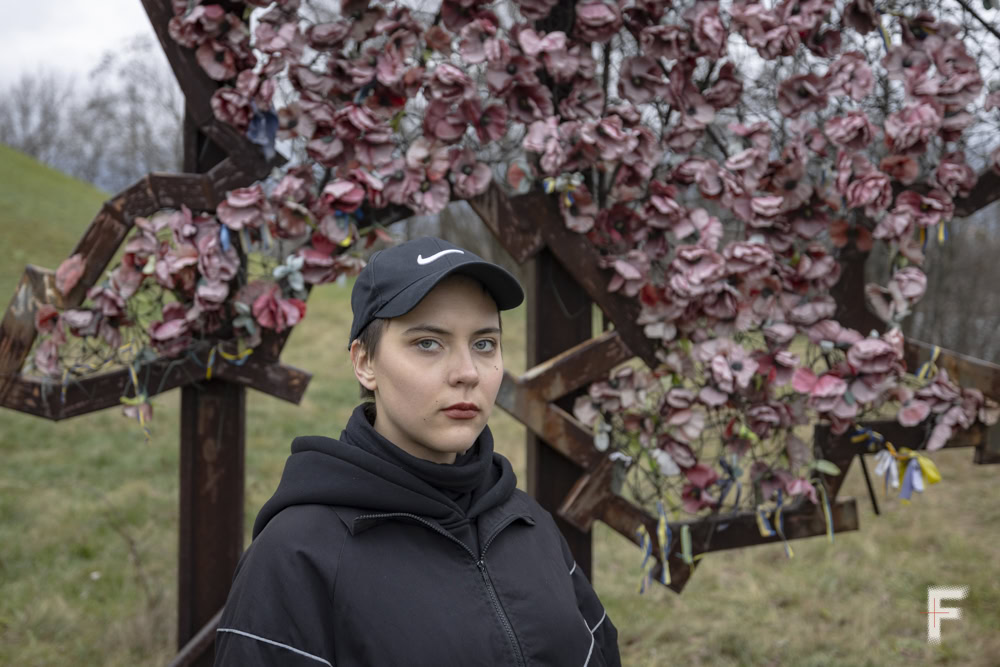
“I have never questioned which country I belong to, or which country I consider my homeland,” Polina says, reflecting on what shaped her civic position.
Even so, she understood that under occupation she had no power to change anything. Staying would have meant accepting the actions of an authority appointed by Moscow. She therefore waited until she came of age before leaving Crimea in secret, without telling her parents. She says they hold pro-Russian views and would not have supported her decision.
“Travelling via Belarus was too risky. And when you live in Crimea,” she adds wryly, “you do not put much faith in promises of humanitarian corridors.” She decided instead to travel to Kazakhstan, carrying an expired Russian passport and a Ukrainian birth certificate.
What followed was an appeal to the Ukrainian consulate. She admits she was effectively treated there as a Russian citizen. She had to wait two months for a Certificate to return: archives were inaccessible and her records could not be found. For several months, Polina sought alternative routes — through volunteers, the Office of the President of Ukraine in Crimea and the ombudsman. Only after appeals to the Ministry of Justice and the Ministry of Foreign Affairs was her identity confirmed and a document issued allowing her to return to Ukraine. The journey home took almost two months: Kazakhstan, Turkey, Moldova and only then Ukraine. Polina arrived in Kyiv in December 2025.
“I sent my mum a photo from Maidan and said: ‘Mum, I’m in Ukraine, you can start panicking now,’” she recalls.
Hearing Ukraine’s anthem for the first time
From the age of five, Artem lived in Sevastopol. Russia occupied Crimea when he was seven. Since then, he says, his entire life has felt imposed on him and not his own. Born in Zaporizhzhia, he nevertheless spent most of his life on the peninsula, growing up under Russian propaganda, restrictions on freedom of speech and pressure within the school system.
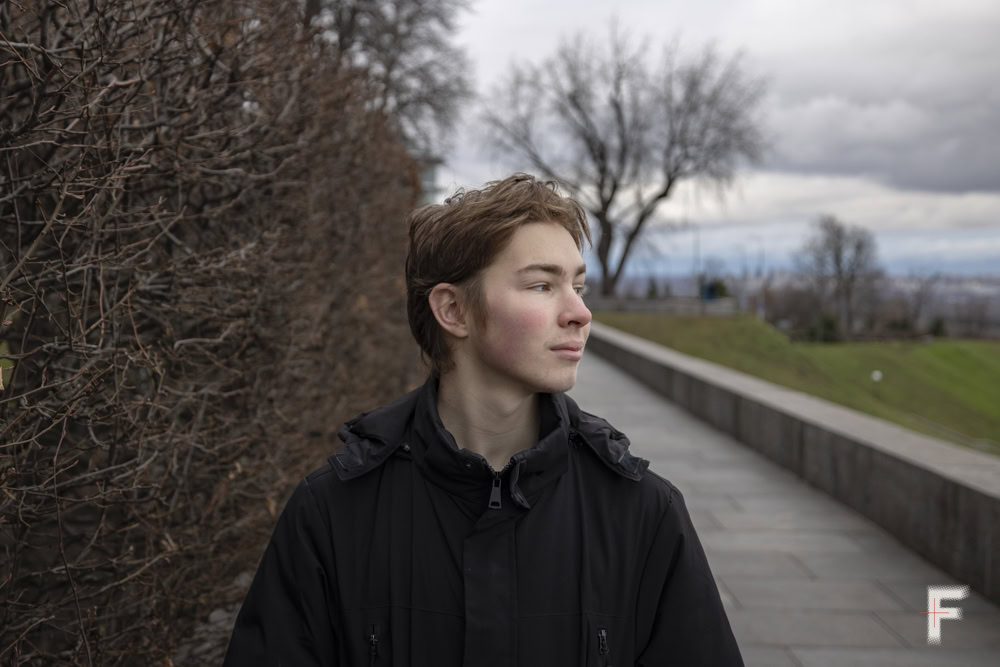
“I didn’t understand what was happening, but I felt that everything I was used to had suddenly become alien,” he says.
At school, the Ukrainian language was gradually marginalized, history lessons were rewritten, and any display of support for Ukraine became grounds for pressure. Artem recalls one of the first confrontations:
“I shouted ‘Slava Ukraini!’ in the schoolyard. After that, I was sent to see a psychologist and given a long explanation of why I must not do that.”
[Translator’s note: “Slava Ukraini” (Glory to Ukraine) is a national slogan that has been treated by Russian authorities as a political provocation.]
Despite this, Artem tried to remain true to himself, maintaining an interest in Ukrainian culture and history. But he understood that being openly pro-Ukrainian in Crimea carried risk. After finishing ninth grade, he enrolled at a college to study IT, although his ambition had been to become a journalist.
“I knew I would never become a journalist in Crimea or in Russia. I saw journalists with alternative views being jailed, and it frightened me. I studied only to obtain a qualification. A Russian diploma means nothing to me, it’s toilet paper,” the young man says.
The turning point came with a draft notice for the Russian army. Despite his health problems, the Russian occupation authorities declared him fit for service. After receiving the summons, he realised he could no longer remain in Crimea.
Soon afterwards, Artem found Ukrainian volunteers who helped plan a route to Kyiv via Belarus. On 30 September, he left Sevastopol, officially travelling to Rostov, but in reality heading for Ukraine. Artem was more fortunate than many: in Belarus, he obtained a Ukrainian Certificate to return and crossed the border the same day. He recalls hearing the Ukrainian national anthem for the first time in his life at Kyiv’s railway station:
“It was seven in the morning. We were standing at the station when I heard music. I stepped outside. It was the Ukrainian anthem. It was the first time I had ever heard it played in public. I couldn’t believe it was happening to me.”
After returning
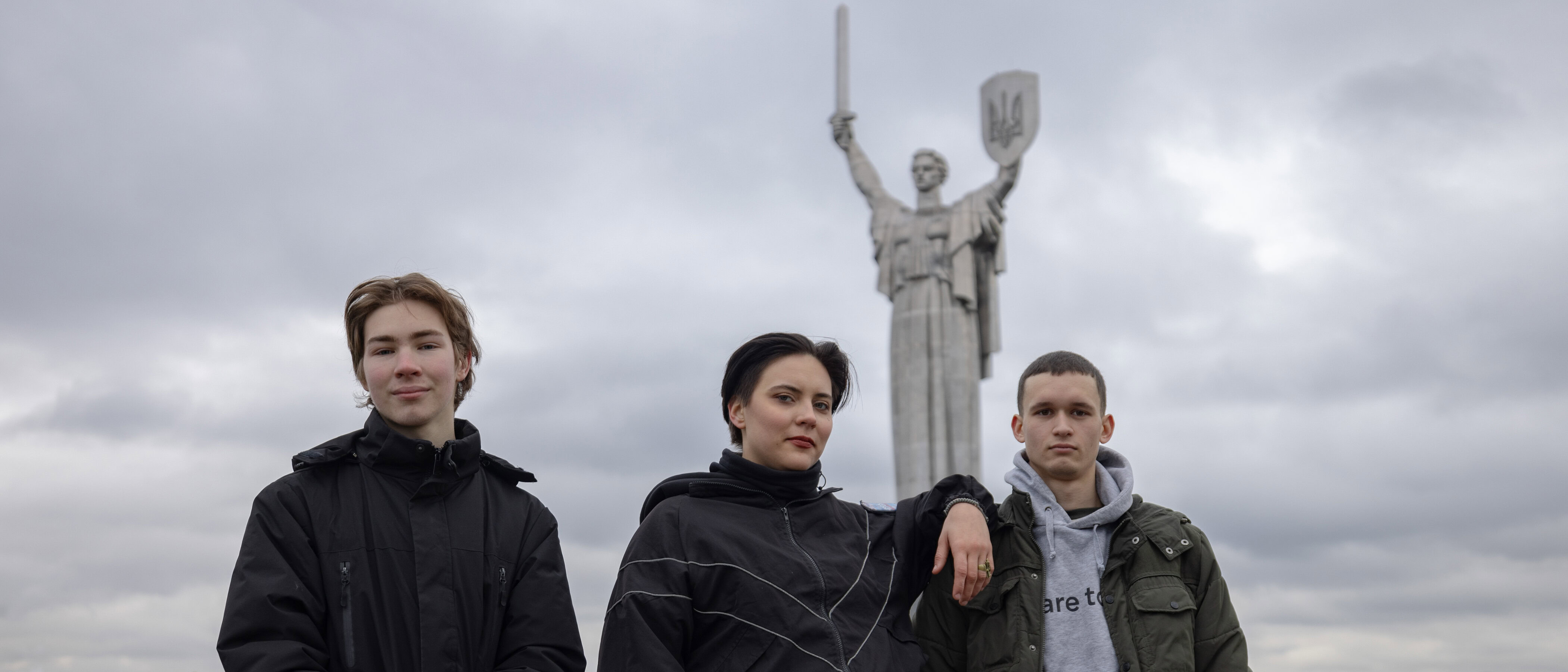
Each of them sought a way home — to Ukraine — at different points in their lives, travelling thousands of kilometres. In December 2025, the three friends met for the first time in the capital city. They chose a symbolic location, near the Motherland Monument.
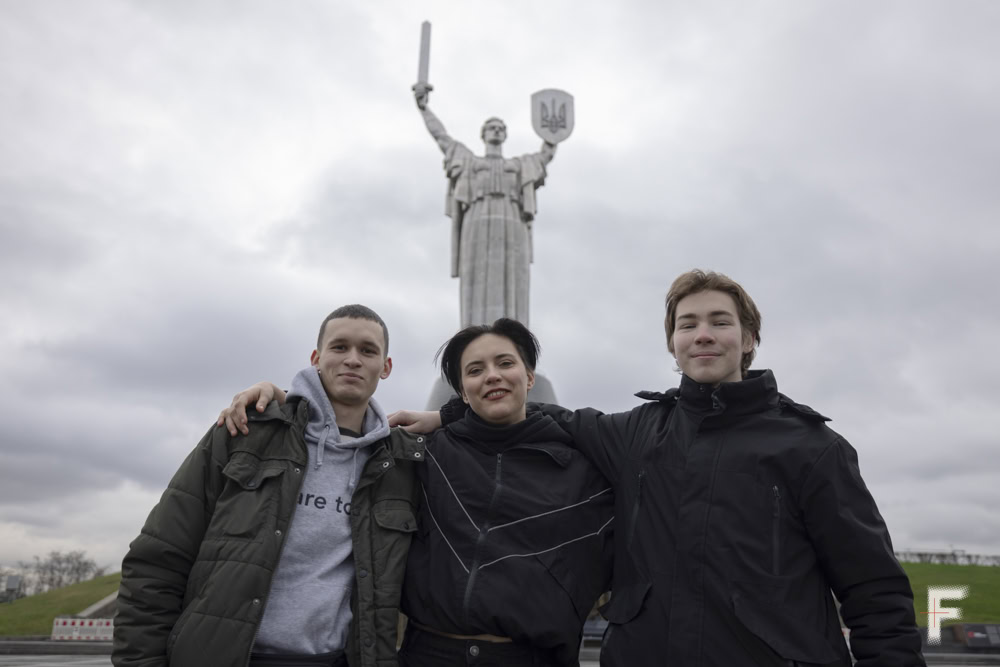
Here, they share their plans for the future. Two of them intend to join the armed forces. Dmytro hopes to move to Odesa.
“It’s very similar to Crimea. There’s the sea, and I miss the sea. I haven’t seen it for two years,” he says, adding that he plans to train as a drone pilot. He has already bought an FPV simulator to practise on his own.
Polina trains at the gym every day. She says her immediate goal is to be admitted to basic military training, so that she can be ‘on an equal footing with men’.
“I have good health and strength, and there is nothing I stand to lose. And no one would lose anything if something were to happen to me,” Polina says, explaining her motivation. “What matters most to me is that our country continues to exist after the war ends. I want us to secure our right to exist by force, not by giving up territory.”
Artem, meanwhile, hopes to enroll at university and find work. His journalistic ambitions have not faded. He helps to disseminate information about the difficulties people face when leaving temporarily occupied territories and seeks to draw the attention of the Ukrainian authorities to these issues. He does not rule out the possibility of entering politics.
All three have now received Ukrainian passports and are officially citizens of Ukraine.
Text: Ruslana Sushko
Photos: Maksym Kishka
Adapted: Myroslava Andrusyk