The pressure of war: how Ukraine’s system of psychological support for children works
The war in Ukraine has created a large-scale child mental health crisis. As of 2026, millions of children are living under chronic stress, while demand for psychological support continues to grow. The state and international organizations are building a support system, but it remains uneven and overstretched. Frontliner examines how the system works and where its weaknesses remain.
The need for psychological assistance has become widespread. According to research findings, at least 6% of households in 2026 directly identify severe stress, anxiety or fear as one of the main problems affecting the family. For children, psychosocial support is now considered a basic need alongside education and assistance for children with disabilities.
Humanitarian organizations estimate that millions of children will require support in 2026. UNICEF plans to reach around 725,000 children through broader aid programs targeting 4.3 million people.
What effects of war are being recorded
Psychological trauma has a cumulative effect. Children are coping with the loss of homes, separation from relatives and life under shelling. These experiences create long-term reactions that do not disappear after relocation or a return to school.
The most common problems include anxiety disorders, sleep disruption, behavioral regression among younger children and emotional instability among teenagers. A separate group includes children who experienced occupation or deportation. They often display deeper trauma responses requiring specialized care.
Which programs are working
Ukraine has developed a multi-level support system. The key government initiative is the “How Are You?” program, designed to integrate mental health services into healthcare, education and social services. The initiative aims to provide access to support through family doctors, schools and social workers.
International programs are operating alongside it. UNICEF’s “Spilno” initiative, for example, has created a network of child-friendly spaces across 20 regions where children can receive psychosocial support in a safe environment. In 2025, UNICEF reached around 2.5 million children through different forms of assistance.
Ukrainian NGOs also play a major role. Voices of Children, for example, has provided support to more than 137,000 children and parents, including tens of thousands who received psychological assistance specifically. The organization operates through support centers, mobile teams and online consultations.
What support looks like in practice
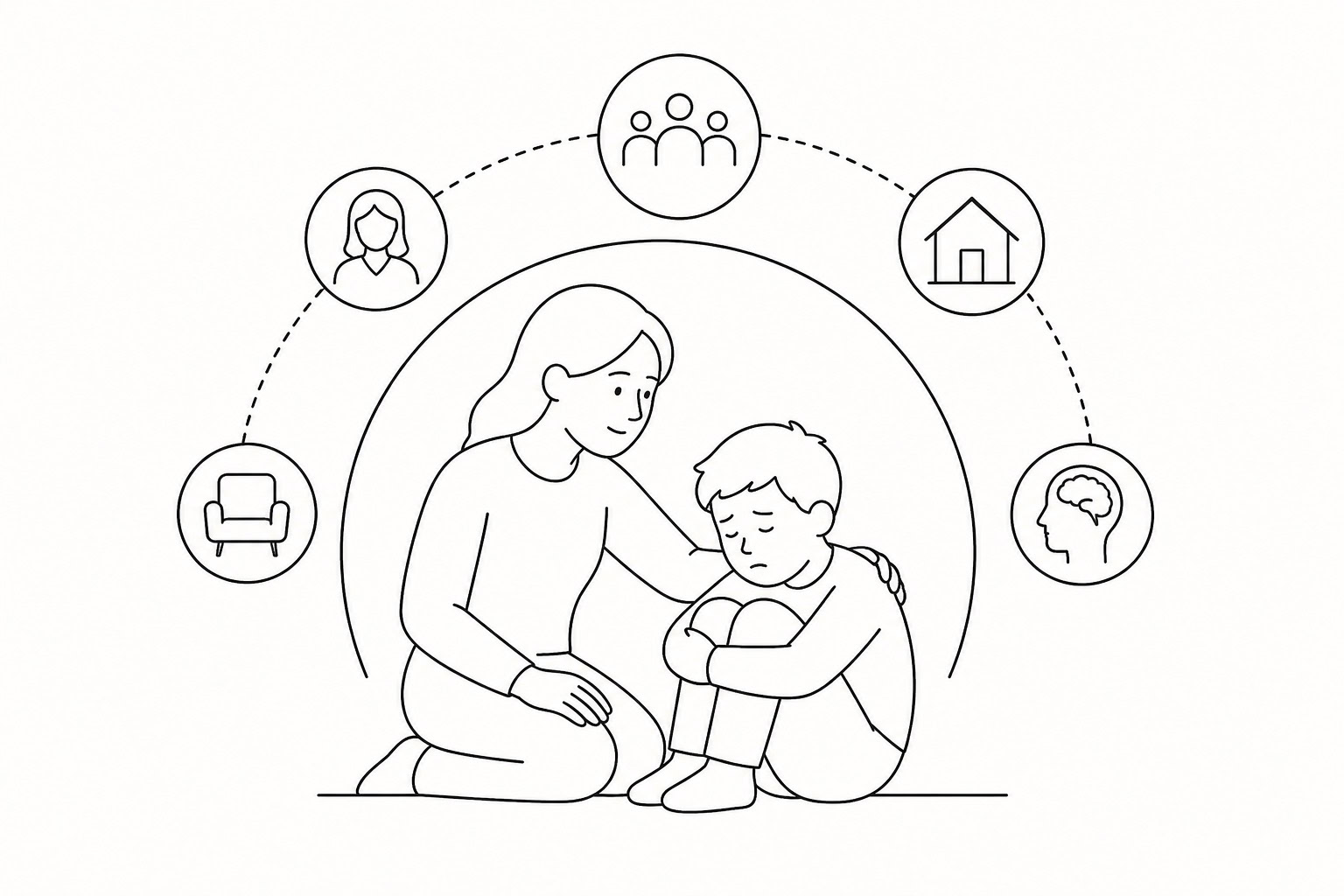
- Individual consultations with psychologists and psychotherapists
- Group therapy and peer-support programs
- Services delivered through schools and child-friendly spaces
- Mobile teams working in frontline communities
- Online consultations for children and parents
These formats allow organizations to reach children even in remote or dangerous regions.
The system remains overwhelmed
Despite the scale of current programs, access to support remains uneven. Frontline regions and smaller communities continue to face shortages of specialists. Some children remain entirely outside the reach of the system.
Another major challenge is the long-term nature of trauma. Psychological consequences may emerge years later. Many existing programs focus on short-term interventions, while the situation requires sustained support over many years.
Ukraine has already laid the foundation for a nationwide child mental health support system, but it still falls short of the scale of the crisis.