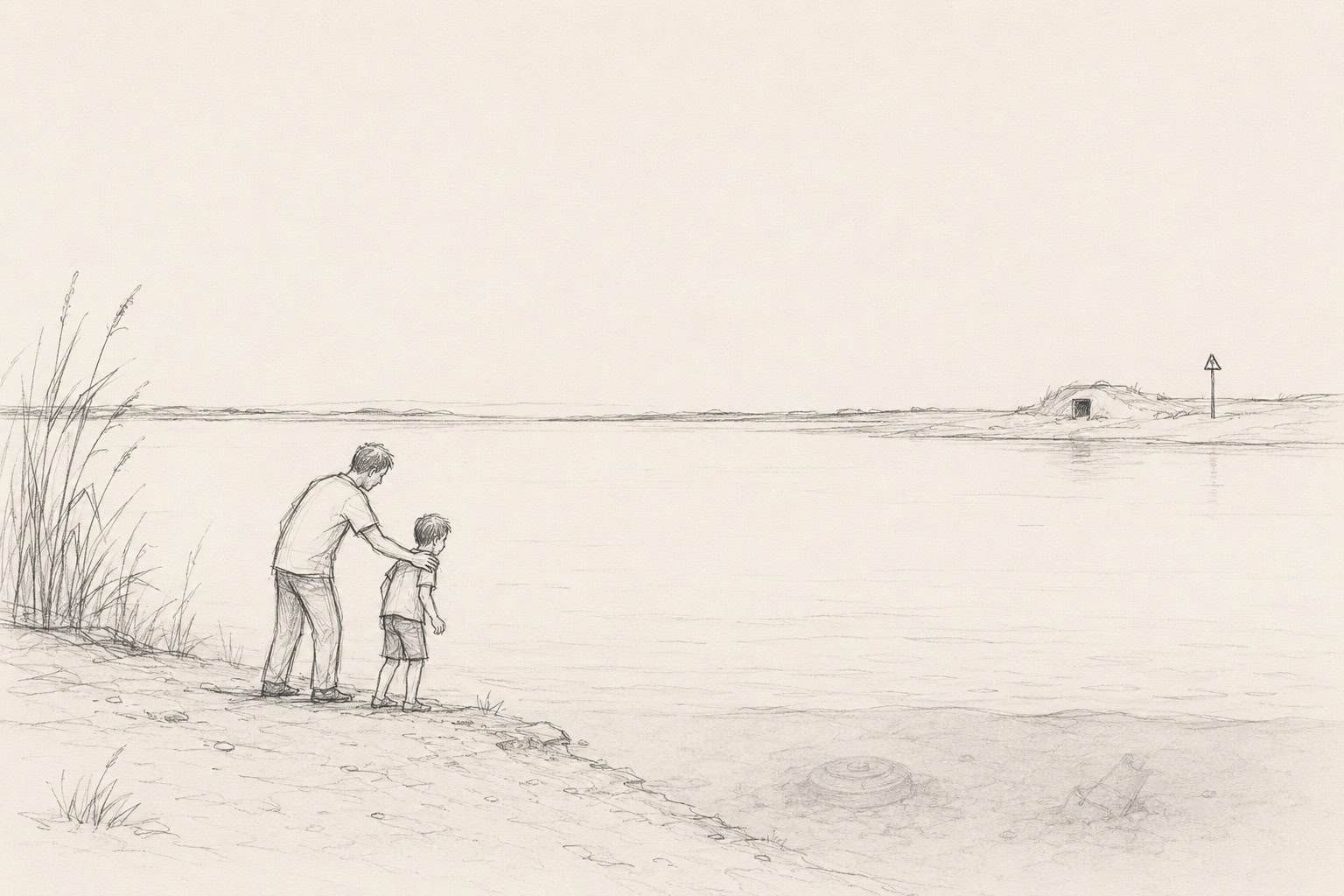
Water that hides the war: How to vacation more safely
A mine in the water doesn't come with a warning sign. A piece of missile debris can be lying among the stones, and a river that looks clear can carry a dangerous level of bacteria. During the war, a safe trip to a lake requires checking not just the weather but also local authorities' permission, water-test results and the site's own history. Frontliner has compiled the key rules for safely enjoying Ukraine's bodies of water.
Ukraine has no single, blanket permit for summer recreation near water. Decisions are made by local and military administrations based on mining, shelling, whether the bottom can be surveyed, and whether lifeguard posts can be organized. In Donetsk, Zaporizhzhia, Kharkiv and Kherson regions, recreational zones at bodies of water were not opened in 2026 because of the military threat.
An official beach must pass an inspection, but its status needs to be confirmed before every trip. A permit can change after shelling, the discovery of unexploded ordnance, a decline in water quality or another emergency. An open café, boat rentals and the presence of other people do not confirm anything.
Danger on the shore and underwater
Mines don’t stop at the roadside
The State Emergency Service (DSNS) prohibits visiting bodies of water in areas where combat has occurred or is ongoing. Mines, grenades, cluster munition submunitions and unexploded shells can remain in reeds, in mud, on the shore and underwater. Currents, flooding or changes in water level can move a dangerous object to a different spot.
Even a cleared area requires caution. Demining reduces risk within defined boundaries and does not make a neighboring tree line, an unmanaged shore or a path through the reeds safe. DSNS advises using verified routes and not going beyond signs, tape and improvised warnings.
Debris doesn’t become a souvenir
After strikes near bodies of water, fragments of missiles, drones and cluster munitions can remain. There is no way to determine from its appearance whether a found object is safe. It should not be picked up, moved, doused with water or covered with sand.
Upon spotting a suspicious object, a person should retreat along the same path, warn others nearby and call 101 or 102. Photographing it up close or marking it yourself means approaching it again and creating a new risk.
Water may seem clean
Lab results matter more than color
Of 85 samples taken June 18-24, 2026, at official beaches across Ukraine, five, or 5.9%, did not meet microbiological standards. Deviations were found, among other places, at individual beaches in Zhytomyr and Rivne regions.
These figures change over the course of the summer. The condition of a body of water is affected by heat, heavy rain, runoff, accidents and damage to infrastructure. A good test result from yesterday is not a permit for the whole season, and water meeting laboratory standards does not override a wartime swimming ban.
When to avoid going to the water
The smell of fuel or chemicals, a mass die-off of fish, unexplained stains, foam of unknown origin, or a sharp change in water color are reasons to leave the shore and notify local authorities. An algae bloom is also not always just an unpleasant sight: some cyanobacteria release toxins that can cause skin irritation and allergic or gastrointestinal symptoms.
After swimming, a person should see a doctor if a rash, vomiting, diarrhea, abdominal pain or fever develops. Dehydration develops especially quickly in children. Water from an open body of water should not be swallowed, used to wash food or used for cooking.
A child near the water
Supervision within arm’s reach
An adult’s presence on the beach doesn’t by itself mean the child is being supervised. DSNS advises staying no more than 1 to 1.5 meters from a child so as to be able to intervene in time. A phone, a conversation or dozing off on the shore can cost the seconds that may not be available in the water.
A child who cannot swim should not go in deeper than waist level. An inflatable ring, armbands and a pool float do not replace a life jacket and an adult: they can flip over or be carried off by a current.
Rules need to be explained in advance
Children should be told directly that unfamiliar metal and plastic objects must not be picked up, hit with a stick, thrown into the water or brought to an adult. Upon finding such an object, a child should stop, retrace their steps and call an adult.
A separate rule applies to air-raid alerts. A child should know whom to go to a shelter with, where the shelter is located, and why belongings are left behind on the beach. It’s best to walk the route right after arriving, rather than waiting for the siren.
A practical checklist before swimming
- Confirm the site is officially open. Look for notices from the hromada, regional military administration or city military administration.
- Check recent water test results. Data is published by the Public Health Center and regional disease control centers.
- Confirm whether the bottom has been surveyed. Swimming at an unmanaged beach, a quarry or a flooded crater is dangerous.
- Do not visit bodies of water in combat-affected areas. A site’s popularity among locals is not proof of safety.
- Examine the path to the shore. Do not leave a verified road for reeds, a tree line or abandoned structures.
- Locate a shelter. During an alert, get out of the water and head there without waiting to see whether there will be an explosion.
- Keep children close by. For a young child, a safe distance is one from which you can grab them instantly.
- Do not touch suspicious objects. Retreat along the same route and call 101 or 102.
- Skip swimming if there’s an unusual smell, color, foam or dead fish.
- Do not drink alcohol near the water and do not dive in an unfamiliar spot.
A safe shoreline starts before the trip
An official beach reduces the number of unknowns
A verified location provides a lifeguard post, a surveyed bottom, water-quality monitoring and defined rules. It does not eliminate air attacks and does not guarantee the situation won’t change after a storm or shelling. That is why the check needs to be current.
Deciding not to go is also a decision
If there is no official permit, no current water data or no clear route to a shelter, the trip should be postponed. During the war, caution near a body of water doesn’t ruin the summer. It leaves open the chance to wait for the next opportunity.