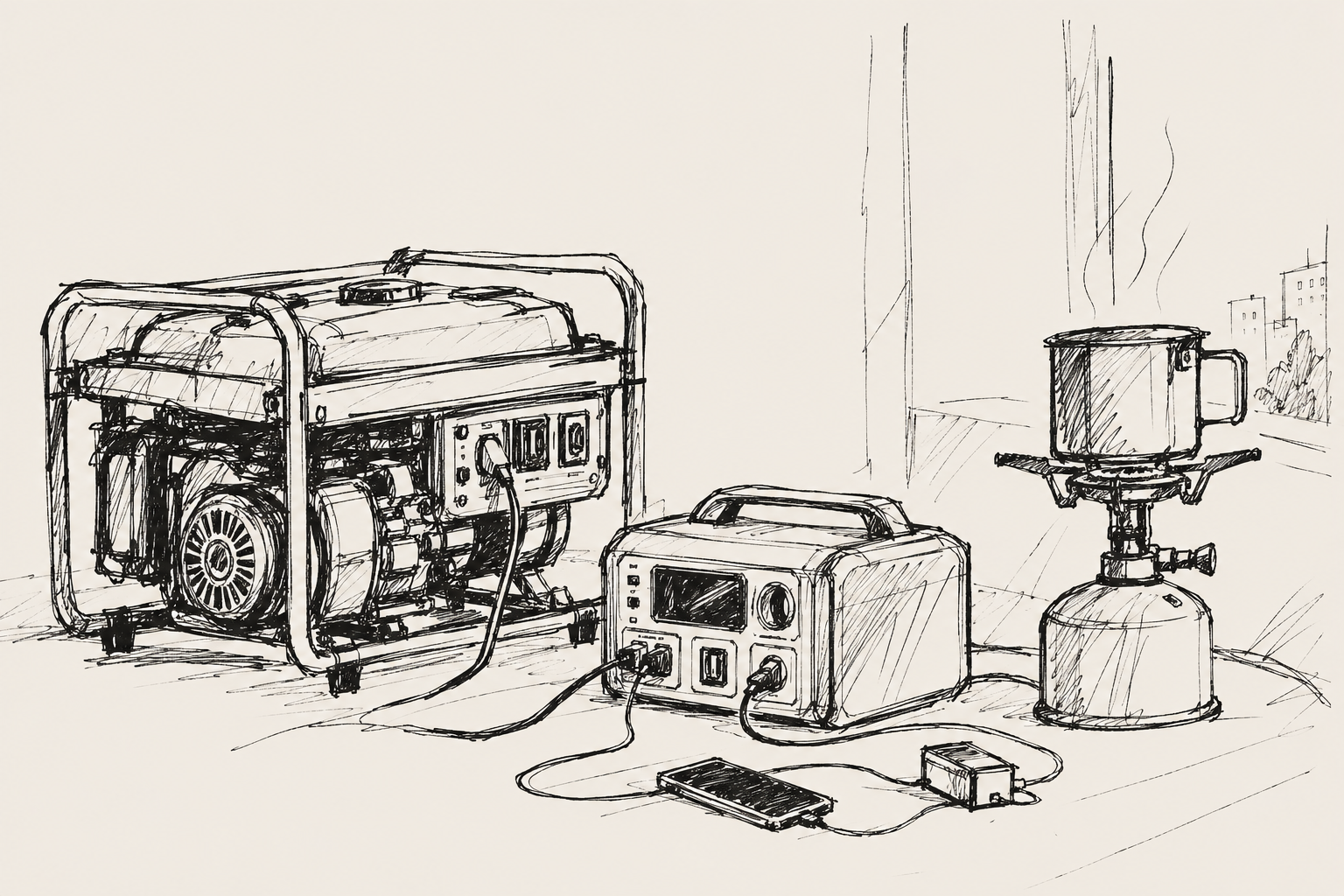
Generator, power station, camp stove: How to avoid fires and poisoning
During power outages, generators, portable power stations and camp stoves help households get by, but mistakes in using them can lead to fires or poisoning. Carbon monoxide has no odor, and dangerous concentrations can build up unnoticed. The U.S. Consumer Product Safety Commission recommends placing a generator at least about 6 meters from a home. Frontliner explains where backup power sources can be placed, how to avoid overloading an electrical system and what to do at the first signs of danger.
A generator produces electricity by running an internal combustion engine. A power station stores electricity in a battery, and an inverter converts the direct current into alternating current for household appliances. A camp stove uses an open flame. These differences shape the safety rules: Some devices pose a risk of poisoning from combustion products, while others pose a risk of battery overheating, short circuits or wiring fires.
The strictest restriction applies to gasoline, diesel and gas generators. Their engines emit carbon monoxide, which can cause fatal poisoning. According to the U.S. Consumer Product Safety Commission, a generator should be operated outdoors, well away from doors, windows and vents. An open window or a powerful fan does not make indoor use safe.
Why generators don’t belong in apartments or on balconies
Where to set it up
A generator must not be used in an apartment, on a balcony, in a basement or in a garage. This also applies to glassed-in loggias and add-on structures. Exhaust fumes can enter neighboring homes through windows and ventilation systems. The State Emergency Service (DSNS) recommends placing generators at least 6 meters (about 20 feet) from buildings, windows and doors. The exhaust should be directed away from living spaces.
Place the generator on a stable, dry surface and protect it from precipitation as the manufacturer’s instructions direct. Refueling a running generator is dangerous: Fuel that spills onto hot engine parts can ignite. Before adding fuel, turn the device off and let it cool.
How to connect it to a home
The most dangerous mistake is feeding power from a generator through a regular outlet. Doing so can send voltage back into the external grid and endanger electricians repairing the line. It also risks damaging equipment and starting a fire.
Powering a home’s electrical system requires special transfer switch equipment that prevents the home from being connected to the generator and the external grid at the same time. A qualified electrician must install it. Individual appliances can be plugged directly into the generator using undamaged cables of the appropriate gauge and load rating.
Power station safety: How to prevent overheating
Where to place it
A power station has no internal combustion engine, so it can be used in an apartment as the manufacturer’s instructions allow. The main risks are battery faults, overheating, damaged cables and exceeding the rated power.
Place the device on a hard, level surface and keep its ventilation openings clear. Do not cover it with clothing or put it near a radiator, curtains or a bed. Charging should be monitored, especially when the station is under a heavy load.
Signs of a malfunction
Unusually intense heat, a deformed casing, a strange smell, hissing or smoke can indicate battery damage. If any of these occur, stop using the station. If smoke or flames appear, evacuate and call rescuers at 101.
Homemade systems built from batteries and inverters require special attention. Component compatibility, proper fuses, short-circuit protection and wiring suited to the load are all important. Installation of any system connected to a home’s electrical network should be left to an electrician. Connecting an inverter to an apartment outlet with a homemade cable that has two plugs is dangerous.
Using a camp stove indoors: Risks of fire and poisoning
When a camp stoves can be used
Camp stoves are designed mainly for outdoor use. DSNS allows indoor use only as a last resort, with adequate ventilation and in accordance with the instructions, because of the risk of carbon monoxide buildup. For an ordinary camp stove, the outdoors is safer.
If a manufacturer expressly permits using a tabletop gas stove indoors, ventilation, constant supervision and a stable, noncombustible surface are required. Do not heat the canister, place cookware over it that reflects heat onto the canister, or use it to heat a room.
How to handle a gas canister
Before use, check the canister, connections and seals. Using damaged equipment is prohibited. After cooking, turn off the burner, let it cool and detach the canister if the design and instructions allow.
If you smell gas, hear hissing or notice the canister heating up, stop using it. If you suspect a leak, do not light a flame or switch on electrical appliances. Move people out of the danger zone and call the emergency gas service at 104.
How many devices you can connect without overloading the circuit
Power and capacity are different measures
A power station’s casing usually lists two specifications: power in watts (W) and battery capacity in watt-hours (Wh). The first determines which appliances can run at the same time. The second shows the energy reserve, which determines how long the station can run.
For example, a station with a 1,000-watt output is not designed to power appliances whose combined consumption exceeds that figure. Some refrigerators, pumps and power tools briefly draw more at startup than during normal operation. It is therefore important to check the station’s or inverter’s peak power rating as well.
Why extension cords are dangerous
Plugging several high-power appliances into one extension cord can overheat the contacts and wires. Damaged cables, outlets with loose contacts and extension cords daisy-chained together are especially dangerous. The load rating of every element in the circuit must be taken into account.
After power is restored, turn on heavy appliances gradually. This helps avoid a sudden large load on household wiring. If an outlet heats up, sparks or gives off the smell of melting insulation, stop using it.
Carbon monoxide poisoning: How to recognize the signs
Carbon monoxide forms when fuel burns incompletely. A person cannot detect it by smell or color. The first signs of poisoning can include headache, dizziness, nausea, weakness and confusion. At high concentrations, loss of consciousness and death are possible.
If symptoms appear while a generator, camp stove or other fuel-burning device is running, get to fresh air immediately and call an ambulance at 103. Do not return to the affected space until specialists have checked it.
For added protection, install a standalone carbon monoxide detector that works during power outages. Place detectors on every level of the home and near sleeping areas. A detector does not replace the rules for safely using fuel-burning devices.
The main rule during a blackout is to account for the limits of each specific device. A generator needs a safe place outdoors, a battery station needs proper charging and ventilation, and a camp stove needs a watched flame and suitable conditions. Checking the instructions, the condition of the equipment and the permitted load helps reduce the risk of fire and poisoning.