
How Russia’s approach to using AI in the war against Ukraine has changed
On March 16, 2022, Russian hackers broke into a Ukrainian television channel's broadcast and aired a fake video of Ukrainian President Volodymyr Zelenskyy calling on troops to lay down their weapons. The video was made using AI-based deepfake technology, making it the first known instance of Russia using AI in its war against Ukraine. And although the generated video was extremely low quality, and the psyop itself had little real impact on Ukrainians, within three years artificial intelligence was partially integrated into strike drones attacking Ukrainian cities. How the enemy's approach to using AI in the war against Ukraine has changed, who Russia's invisible allies are, and whether human intelligence can keep pace with artificial intelligence: Frontliner reports in a new investigation.
2022: Drones are human-operated; AI is nearly absent on the front line. Artificial intelligence is used in information warfare: creating and spreading fake text, photos, and videos.
2023: Russia claims to have added AI elements to upgraded versions of the ZALA Lancet-3 drone, though there’s no real confirmation beyond promotional videos and Russian media reports. Drones are still flown manually. AI, however, starts taking over the processing of data gathered through aerial reconnaissance, using machine vision to automatically identify types of weaponry and generate a list of coordinates for further strikes. The decision still rests with humans, but data collection and analysis have now shifted to the machine.
2024: peak year for AI-driven disinformation. The most notable deception campaign was Doppelgänger, a network of fake websites imitating outlets like Bild, The Guardian, and RBC-Ukraine. Through these mirror sites, Russia spread its own false narratives. The editorial teams behind them used generative AI to mass-produce text and images. US Cyber Command exposed the campaign in 2024. Investigators also uncovered a bot farm of roughly 1,000 X (Twitter) accounts, which AI used to mimic real American users’ profiles in order to spread pro-Russian narratives and influence American public opinion. The operation ran from 2022 to 2024 and was directed by the FSB.
Meanwhile, the first AI modules for target recognition and terminal guidance begin appearing and come into widespread use in Russian drones attacking Ukraine. AI is now involved in actual combat operations.
2025: a turning point, as AI moves from the information space onto the battlefield itself. On June 19, 2025, the first Shahed drone equipped with a camera, an AI module, and a radio control system was confirmed in combat. That October, on the Pokrovsk front, Armed Forces of Ukraine intercepted a V2U, an autonomous AI-powered strike drone that independently identifies and selects targets.
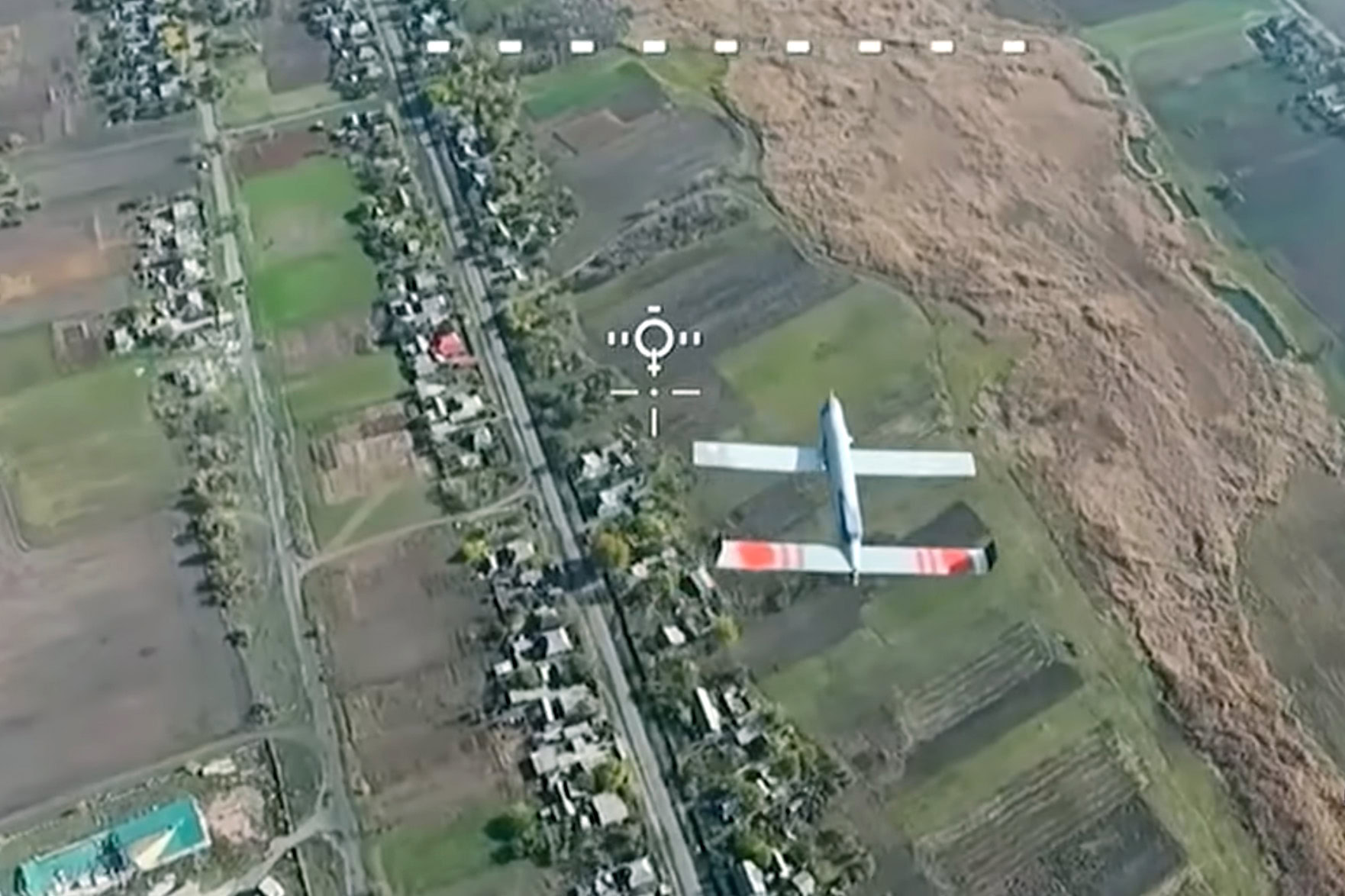
2026: Russia unveils a new machine-vision drone, the Geran-4, which detects and strikes targets on its own. In April, the US-based Center for Strategic and International Studies reported that Russia is using applied AI to build a drone ecosystem, combining decentralized innovation, commercial technology, and state coordination to accelerate combat autonomy. At the core of this ecosystem is the same V2U drone intercepted by Ukraine’s Forces near Pokrovsk. Even in adverse conditions, its current base configuration allows it to operate independently, select targets for strikes, and coordinate activity across dozens of drones. These are all signs of an autonomous “swarm”-type system that can be AI-coordinated.
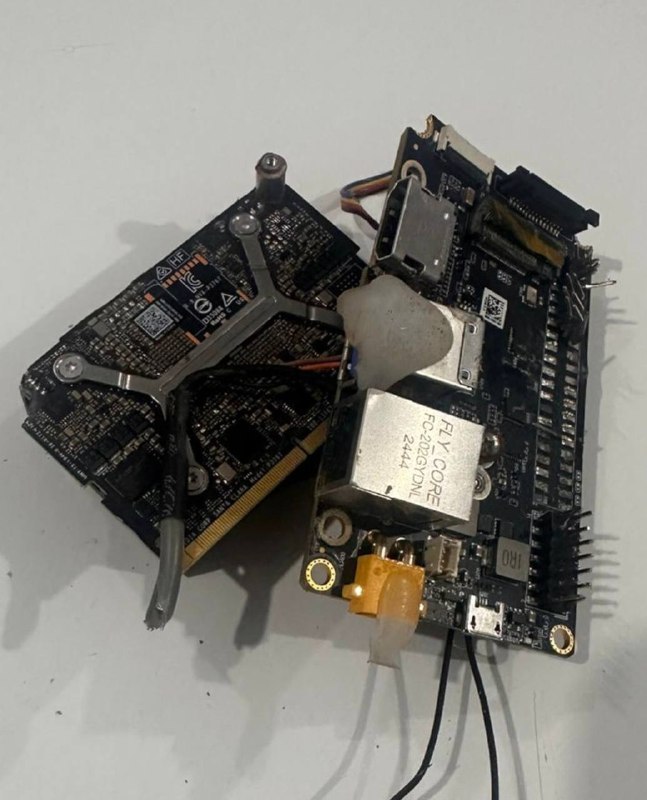
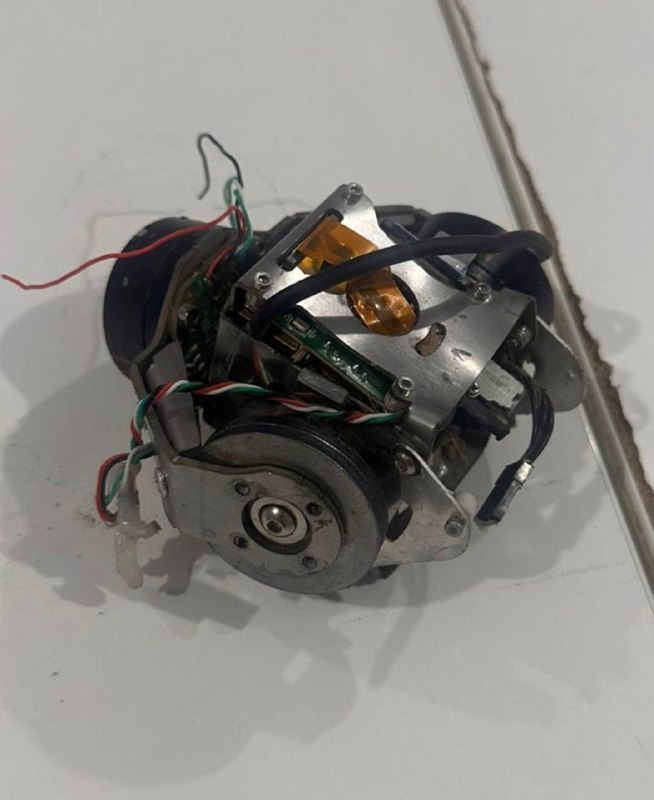
In four years, AI has evolved from generating fake content and bot farms for influence operations to autonomous drone swarms that carry out strikes without any human involvement. What will happen in the next four years? Given that machines can already choose and strike targets on their own, how far-fetched is a machine uprising against humans?
What artificial intelligence is and how it’s made
Artificial intelligence isn’t manufactured in factories or grown in fields. Building it starts with collecting large volumes of relevant data and sorting it into categories. Developers then write a program based on mathematical algorithms and build a neural network to process that data. The algorithms search for patterns in the data, which let them propose solutions or draw conclusions. Feed enough tank photos into a neural network, and it learns to recognize and target tanks on its own.
Show a system photos of a specific person, and machine vision lets it search for and target that individual. Computer vision and natural language processing are the two core technologies behind Russia’s AI use in the war against Ukraine.
The core “fuel” that powers artificial intelligence is human capital to build and train the system, hardware to provide the computing power for processing large datasets, and electricity. Since Russia can’t claim strong intellectual or engineering capabilities in this field, and yet needs a path to victory now, Kirill Dmitriev, head of the Russian Direct Investment Fund (RDIF), said in May that thanks to gas-to-electricity conversion technology, Russia will have the lowest electricity costs in the world for AI computing power. How a country that hasn’t managed to establish nail production in 35 years will suddenly manage to “produce” artificial intelligence remains unclear. It will be especially interesting to hear how that plan holds up, given that Ukrainian drones are already systematically striking substations and power plants in Russian-occupied territories.
How AI has changed the war
The greatest gain from AI use in the Russo-Ukrainian war is speed. Content and deepfakes are created so quickly and at such scale that people can no longer keep up, sorting real reports from a flood of generated lies. Automated data analysis identifies targets and plans operations within seconds, offering commanders ready-made solutions in near real time. What once took dozens of man-hours, a machine now does in seconds, and, more recently, it makes strike decisions on its own.
This dynamic fits the concept of “hyperwar,” first described by retired US Marine Corps General John Allen and AI specialist Amir Hussain. They argue that the decision-making cycle in warfare (observe, orient, decide, act) is accelerating to the point where the human mind can no longer keep up, at which point AI risks slipping out of human control. Already today, Russian drone swarms are attacking Ukraine, which defends itself with AI-based interceptor drones. During an attack, Russian drones adjust their task algorithms based on weather conditions, Ukrainian air defense activity, and other factors, while Ukrainian interceptor drones just as autonomously make decisions in response to the changing behavior of the attacking Russian drones. In this kind of duel, humans are reduced to observers.
Russia and China’s cooperation
In 2024, the US produced 40 “notable” AI models, China 15, and Europe just 3, according to Stanford’s AI institute. Russia didn’t appear in the ranking at all. Open-source AI models and off-the-shelf commercial components have lowered the barrier to adopting and refining the technology. Yet even with the technology now far more widely accessible, Russia still isn’t capable of innovating in this field. Russia’s national AI strategy through 2030 acknowledges shortages in both chips and skilled personnel. As a result, Russia has turned to a strong ally: China.
China supplies Russia with components, technology, and expertise. In return, Russia has become a testing ground for Chinese technology in a real war against Ukraine. Meanwhile, the most dangerous factor in this war is still people and their decisions, which don’t fit neatly into algorithms or machine prediction.