‘Walking is fastest’: How Kyiv residents cross the river after attacks on Dnipro bridges
In Kyiv, the usual routes between the left and right banks of the Dnipro River have changed. Some residents have switched from driving to public transportation, while others walk across the bridges. The Russian army struck the Ukrainian capital with missiles, damaging three bridge crossings. Because of lane closures and other restrictions now in place, the trip to work, school or home has become longer and harder for many residents. Frontliner reports on how Kyiv residents are adapting and how the capital’s bridges are operating after the attacks.
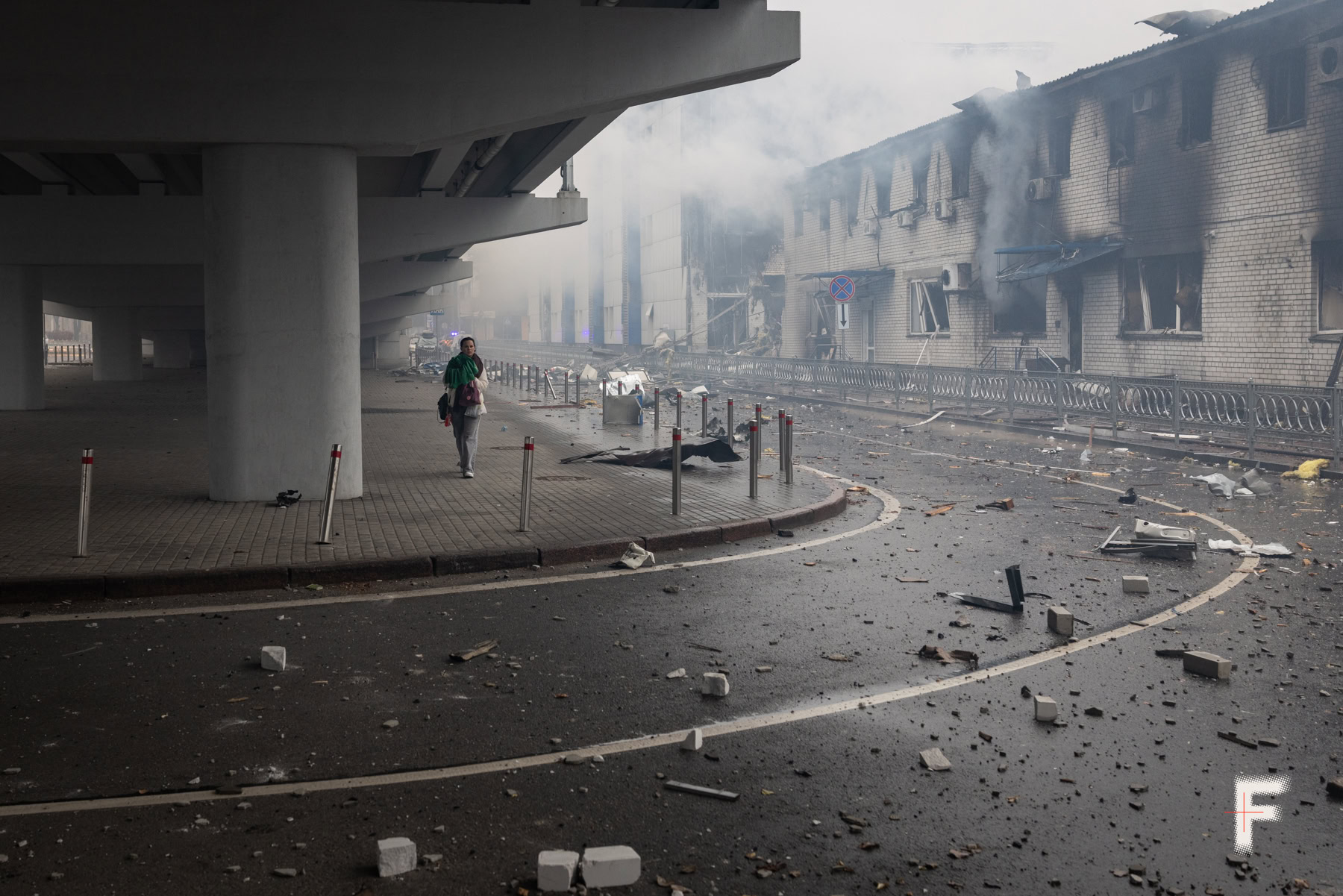
On the night of Nov. 20, 2026, Russia attacked Kyiv with missiles. Infrastructure and several bridge crossings over the Dnipro River were hit. Damage was recorded on the Podilsko-Voskresenskyi, Darnytskyi and Pivdennyi (South) bridges. As a result, getting between the capital’s left and right banks has become harder.
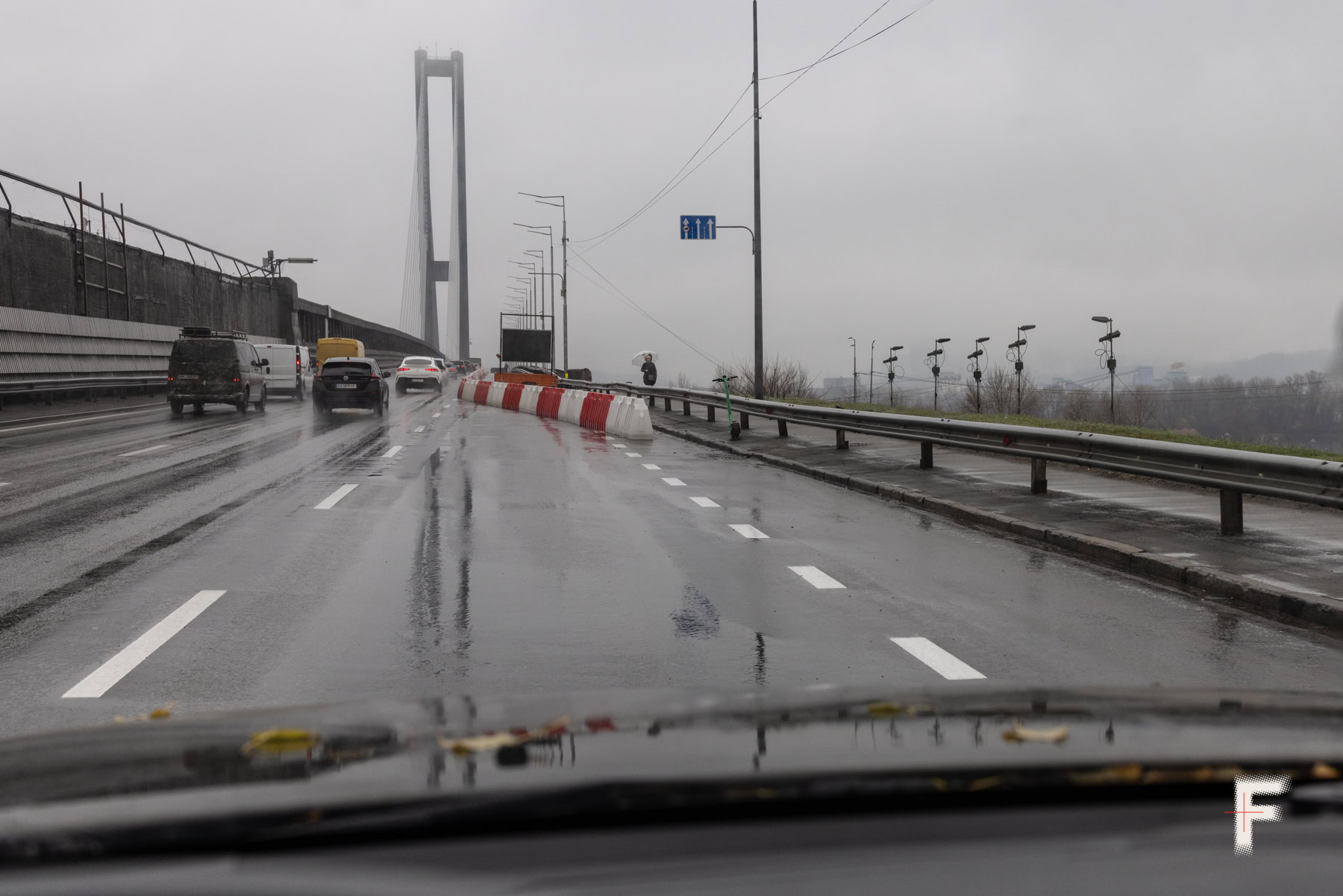
‘Walking is fastest’: How Kyiv residents cross the Pivdennyi Bridge
Limits on bridge traffic directly affect how people get around the city every day. Those who live on one bank of the Dnipro and work or study on the other feel it most. Many have had to change how they travel and now cover the distance on foot.
Sofiia, a ballet dancer, lives on the left bank and works on the right. Today she rides an electric scooter up onto the bridge to get to the other side. She says that since the metro crossing closed, she has been walking across the Pivdennyi Bridge regularly. On foot, it usually takes her 30 to 40 minutes. Her record is 20. By scooter, the trip takes just 15 minutes.
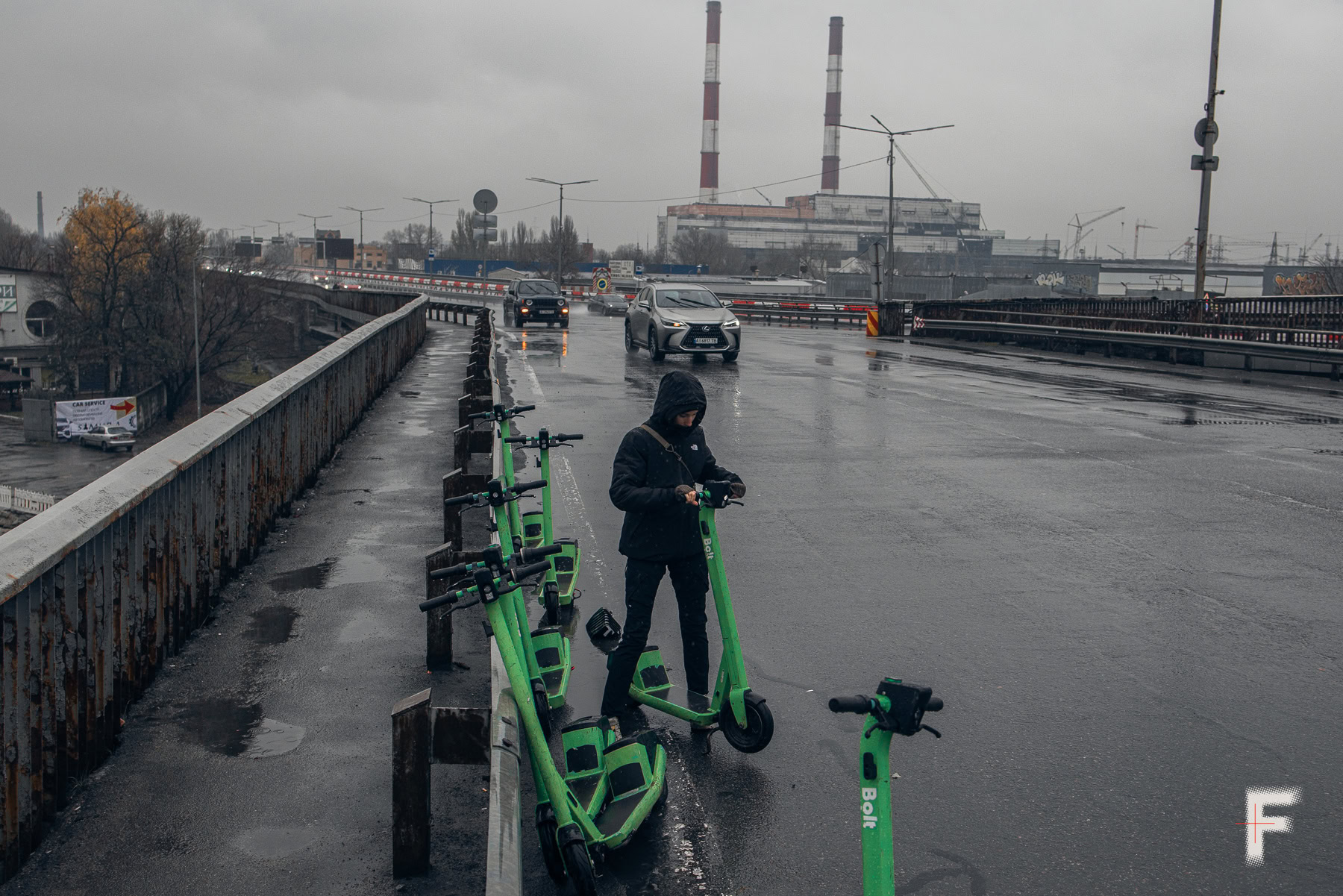
“It’s the best and fastest way to get around right now. If you take a bus or drive, you can get stuck in traffic,” Sofiia says.
Despite the difficult commute, she has no plans to move closer to work. She likes her neighborhood and hopes the government will find a way to keep the two banks reliably connected.
Larysa Savushkina, 70, was walking across the same bridge today. She says the buses to the other bank are often packed, so this time she decided not to wait. She doesn’t cross the river often, and the walk is a chance to get her daily steps in.
“There were a lot of people, so I decided to walk. And I’m still making it on time,” Larysa says.
‘There’s simply no alternative’: How people get across the Pivnichnyi Bridge after strikes
The Pivnichnyi Bridge has different rules. Public transportation and emergency and service vehicles use the far right lane in both directions. Private cars are banned.
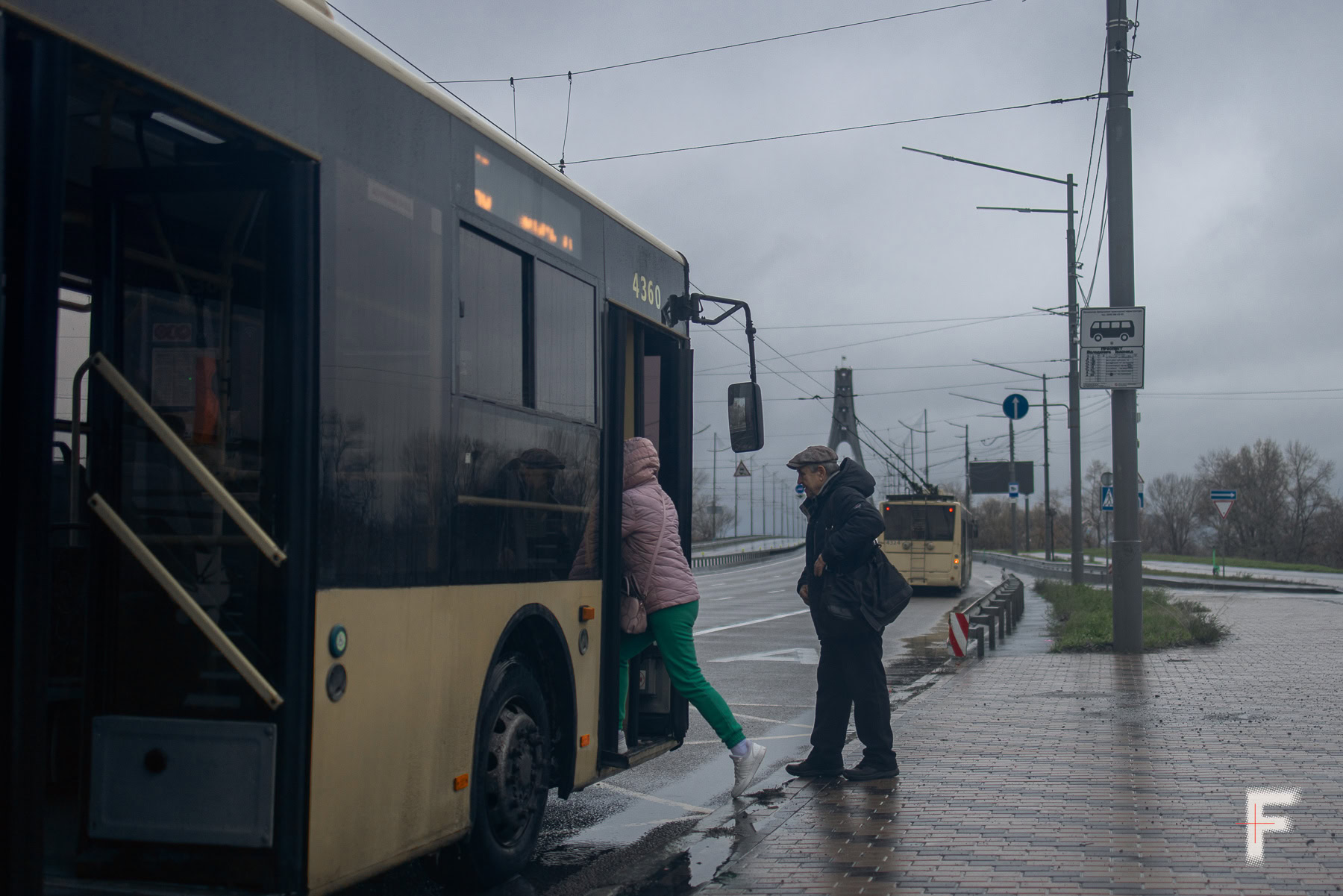
Viktoriia Zhyhailo lives on Kyiv’s left bank. She owns a car, but the limits on car traffic have forced her onto public transportation. Today she is waiting at a stop on the Pivnichnyi Bridge, trying to get home from work.
She says closures on some bridge crossings are putting more pressure on the other bridges. People in the big residential areas feel it most, since many of them commute to work or school across the river every day.

It just so happens that people who live on the left bank work on the right.
And sometimes people who live on the right work on the left. That’s life.
What can you do? People commute to school too, and that’s that,
She says the commute is especially hard for people in Troieshchyna, a big residential district with few other routes. That pushes extra traffic onto the other bridges.
“This district is really big. There’s simply no alternative. And everything goes through those far bridges. And those bridges always have plenty of their own traffic. And now they’ve got this whole district on top of that,” she says.
For now, Viktoriia says, the reversible lane on the Paton Bridge is helping a lot, and there are fewer traffic jams there. But if traffic between the banks comes to a complete halt, she is thinking about moving to the right bank.
“We’ll move to the right bank. What else can we do? I understand our government will find some way to get goods to the left bank. But people have to work. How would we pay for all that food on the left bank if there’s no work and no paycheck on the right?” Viktoriia says.

How Kyiv’s bridges are operating
As of Nov. 20, 2026, the bridges over the Dnipro were operating under these rules:
- Pivdennyi Bridge: Cars up to 10 metric tons and public transportation up to 18 metric tons may cross at regulated intervals. From the left bank to the right only.
- Pivnichnyi Bridge: Public transportation and emergency and service vehicles may use the far right lane in both directions. Passenger cars and through truck traffic are banned.
- Podilskyi bridge crossing: Reopened after partial damage.
- Darnytskyi Bridge: Operating normally.
- Metro Bridge: Operating normally. No trucks permitted.
- Paton Bridge: Reversible traffic, from the left bank to the right from 6 a.m. to 4 p.m., and from the right bank to the left from 4 p.m. to midnight. No trucks permitted.

With travel between the banks disrupted, Kyiv Mayor Vitali Klitschko urged city residents not to drive unless necessary. He also asked businesses and other institutions to switch employees to remote work where possible.
According to the Kyiv City State Administration, traffic from the right bank to the left was temporarily shut down on the Podilskyi bridge crossing and has since resumed. The Darnytskyi Bridge kept operating as usual. Some other crossings remain restricted.