From the Faculty of History to human stories: Why journalism?
Journalism allows you to look behind the scenes of various occupations and into the lives of people you likely would never have met if it were not for the job. It introduces you to fascinating people and with every new story makes you explore a unique world of its own. A Frontliner journalist shares how a childhood dream evolved into a profession.
Sometimes I ask myself: am I doing what truly matters? But then there are moments when I need no explanations or questions. I feel a pure sense of joy when I share a story about an incredible person or initiative — when I can reveal someone or something truly significant. At times, I become so absorbed in my work that it feels like a lifeline in this brutal reality. It is as if journalism itself might one day help me change the world. At least, it will certainly change mine.
The very first article in a worn-out folder of documents
I am from a small village in the Ivano-Fankivsk region. Nowhere else in the world do I feel as good as I do back home. We did not have a journalism club or anything like that in my school. But I still remember how, during literature classes, my teacher would give me a moment to shine; I would simply talk about a book I had read for the curriculum, its plot, and what had impressed me most. Even back then, I loved telling stories, writing school essays, and reading books.
When I decided to try my hand at journalism in the 10th grade, my parents were incredibly supportive. My mother and I went to the local district newspaper, where I pitched several article ideas. The editors agreed, and that’s how I got my first real experience. I remember that my very first article was about my perception of the Revolution of Dignity.
Looking back, I do not understand how, at the age of 15, I came up with the idea of writing about events which I had not personally witnessed. When my geography teacher brought the newspaper to school to show my classmates, I felt almost embarrassed. That was the kind of “journalist” I was: one who did not actually want anyone to read her work.
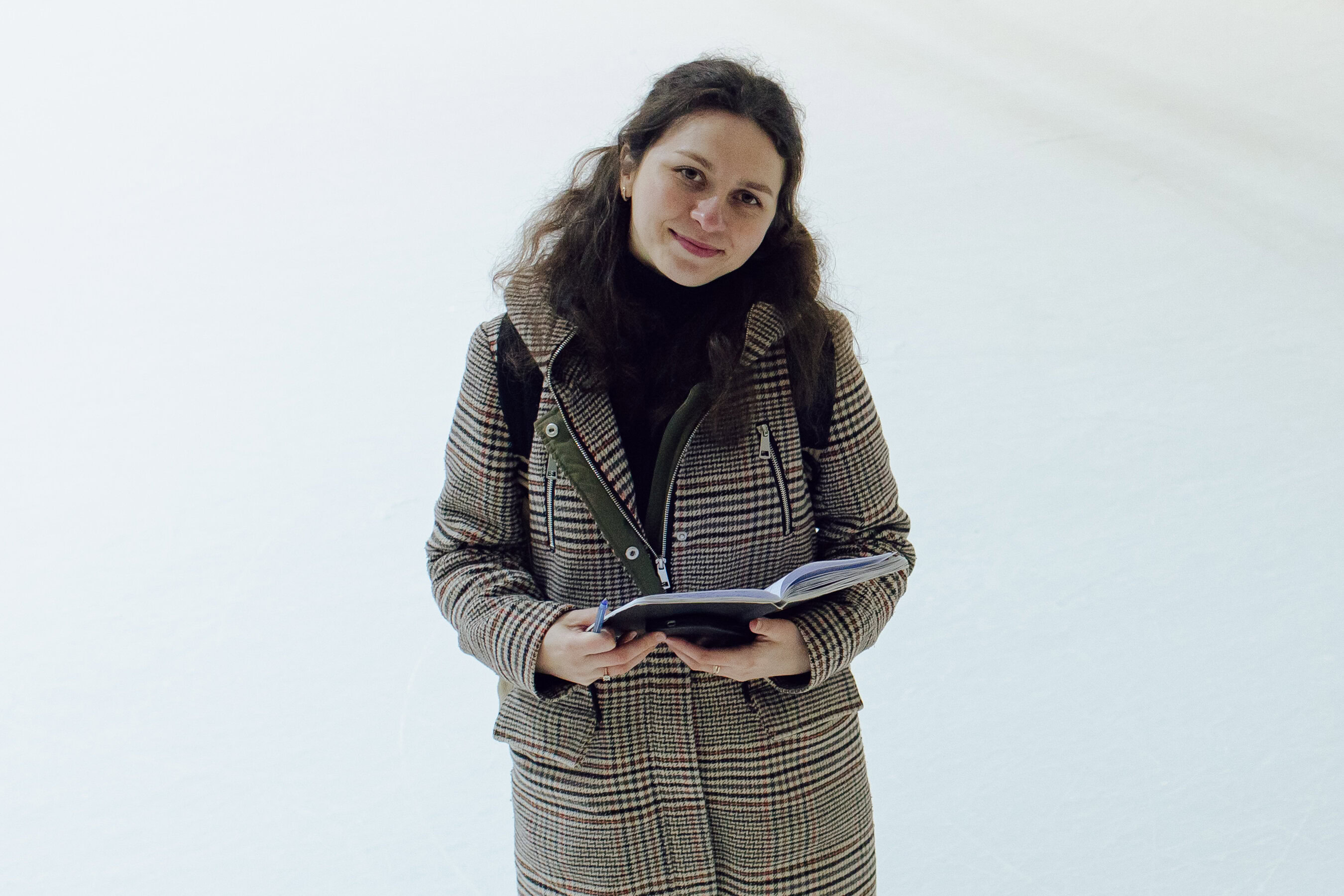
Today, those stories seem so childish to me, yet that newspaper, dating back more than a decade, is still stored in a folder of important documents.
Journalism or History?
After school, I enrolled in the Faculty of History at Ivan Franko National University of Lviv. I was fascinated by history throughout high school, but the turning point was a piece of advice from an acquaintance of my father’s friend who worked in the media. She told me that a person with any education can become a journalist. But I would not become a historian with a degree in Journalism.
I did take the creative entrance exam for the journalism department, but I chose history in the end. My EIT scores [External Independent Testing] earned me a state-funded education, and I just felt it was the right decision. I still do not really understand how one can consciously choose a career in their final year of school. Back then, it felt like the most decisive choice of my life.
After my first year, I chose the Department of Archaeology. This profession seemed very romantic, with life in tents during excavations and the excitement of every pottery shard found. And of course, there were the jokes from older students about the people whose bones are excavated coming to visit our camp at night. Quite romantic, right?
The Faculty of History gave me a great deal: first and foremost, a solid education and wonderful people. There were plenty of discussions, conferences, lectures, new acquaintances, and part-time student jobs. I also had thoughts about working in the media, but I never acted on them. I was worried by my lack of a journalism degree.
My Master’s studies coincided with the COVID-19 pandemic. I returned to my village and tried my hand at oral history, traveling through the Ivano-Frankivsk region to record the stories of those who witnessed the events of the last century. I was amazed by how these elderly people maintained their positivity and love for life after everything they had been through. There were women who had spent their entire youth in exile, and others who had lived through World War ll. I distinctly remember hearing one phrase from many of them: “You can survive anything, as long as there is no war.”
From the Faculty of History to stories and texts
Heart-to-heart talks with people you had not known before and the responsibility of finding the right approach to preserve their testimonies had a profound impact on me. Learning about people’s stories and their unique worlds was fascinating, and instead of feeling tired, I felt a sense of inspiration from these conversations.
Then, I finally decided to try my hand at journalism and started contributing to a youth media outlet. The topics were focused on things that interested young people; the fees were tiny, but I had enough time to study journalism on my own. I learned the basics of writing, media literacy, and how to work with sensitive topics. That is how I completed several online courses and developed a habit of constantly looking for interesting and useful opportunities to learn something new.
In 2023, I joined a program for aspiring journalists at the Media Development Foundation. This training introduced me to reportage as a genre and helped me believe in myself even more.
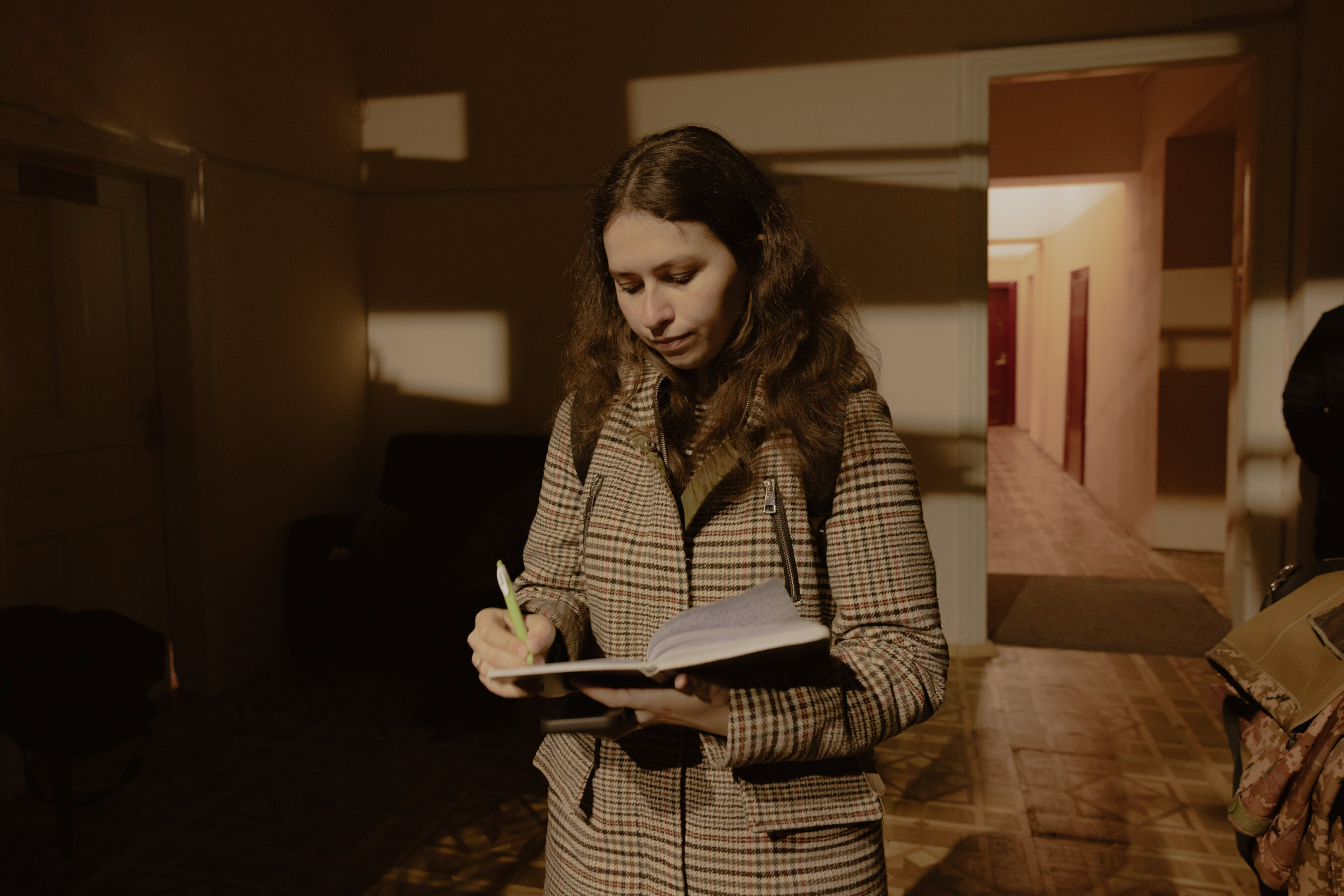
Over the past few years in journalism, I have been freelancing for local and national media. My main focus is on human stories, which allow me to discover a new world every time. For a few days, I delve into genealogy, writing about a researcher who traced 13 generations of her ancestors on her own. Then, the next day, I explore inclusion in Lviv or tell the stories of soldiers who started businesses to support their units. I also write about an adaptive archery coach who lost her father in the war and now uses sports to help herself and veterans heal their emotional wounds.
I always hope that those who read these stories find an example to follow, or at least a spark of inspiration.
Conveying the themes of war with more depth
In the fall of 2025, I attended the Donbas Media Forum, where Andriy Dubchak spoke about Frontliner’s work and the team that risks their lives every day to document the Russo-Ukrainian War. That winter, I saw an application form for reporters. By early spring, I joined Frontliner since I wanted to focus on meaningful war-related topics through profound stories that truly matter.
My first article here was about Father Taras Mykhalchuk, the rector of the Garrison Church of Saints Peter and Paul in Lviv, who performs funeral services for fallen soldiers every day. This reportage was meant to show a person who constantly absorbs both individual and collective grief. It was crucial to focus on the detail — the priest’s behavior, where he looked, how he held his hands, and the words he spoke.
It is difficult to document anything during such an event. The challenge is not only to record the funeral rite as a tragedy, but also to highlight the perspective of the person who stands at the epicenter of this grief every day. I wanted to understand how it affects him and what helps him endure it. For Father Taras, it is his faith, his loved ones, and Lucky, a 50-kilogram dog from the frontline territories, who now shares the priest’s home.
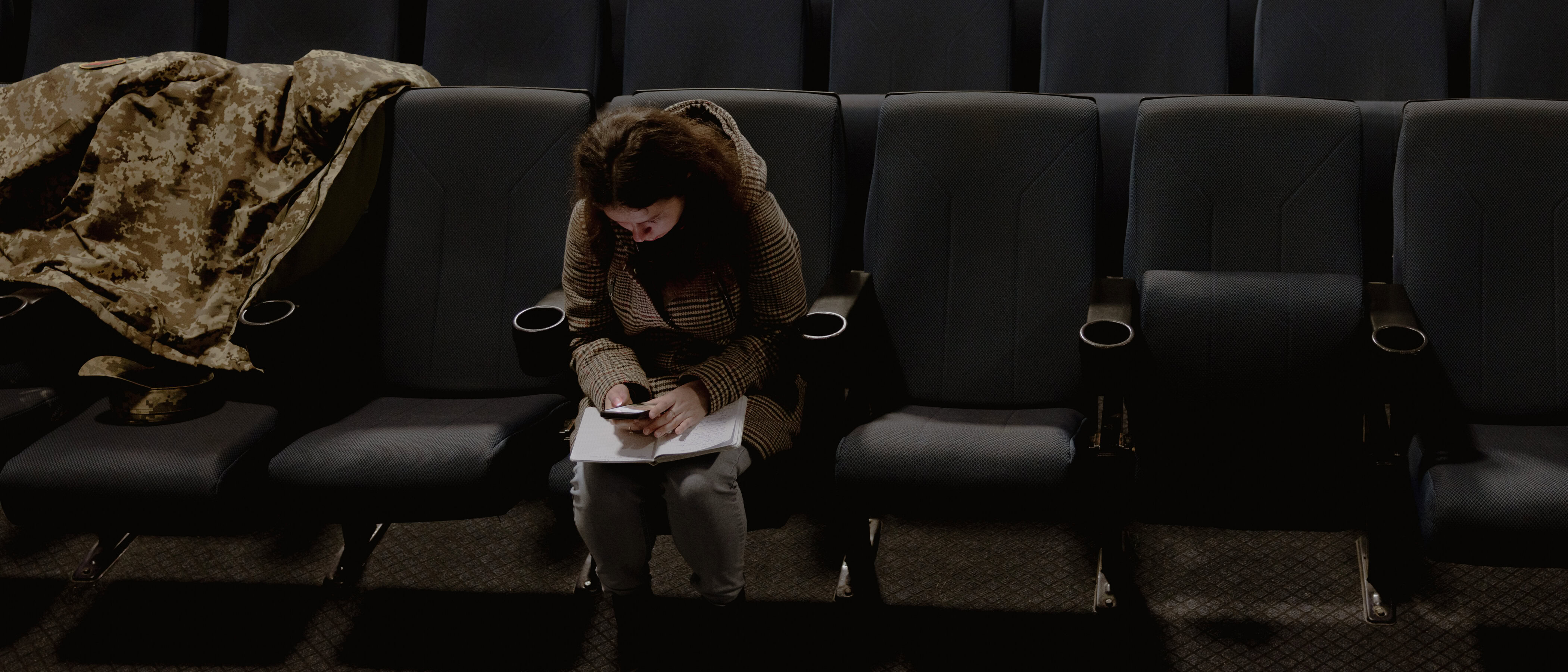
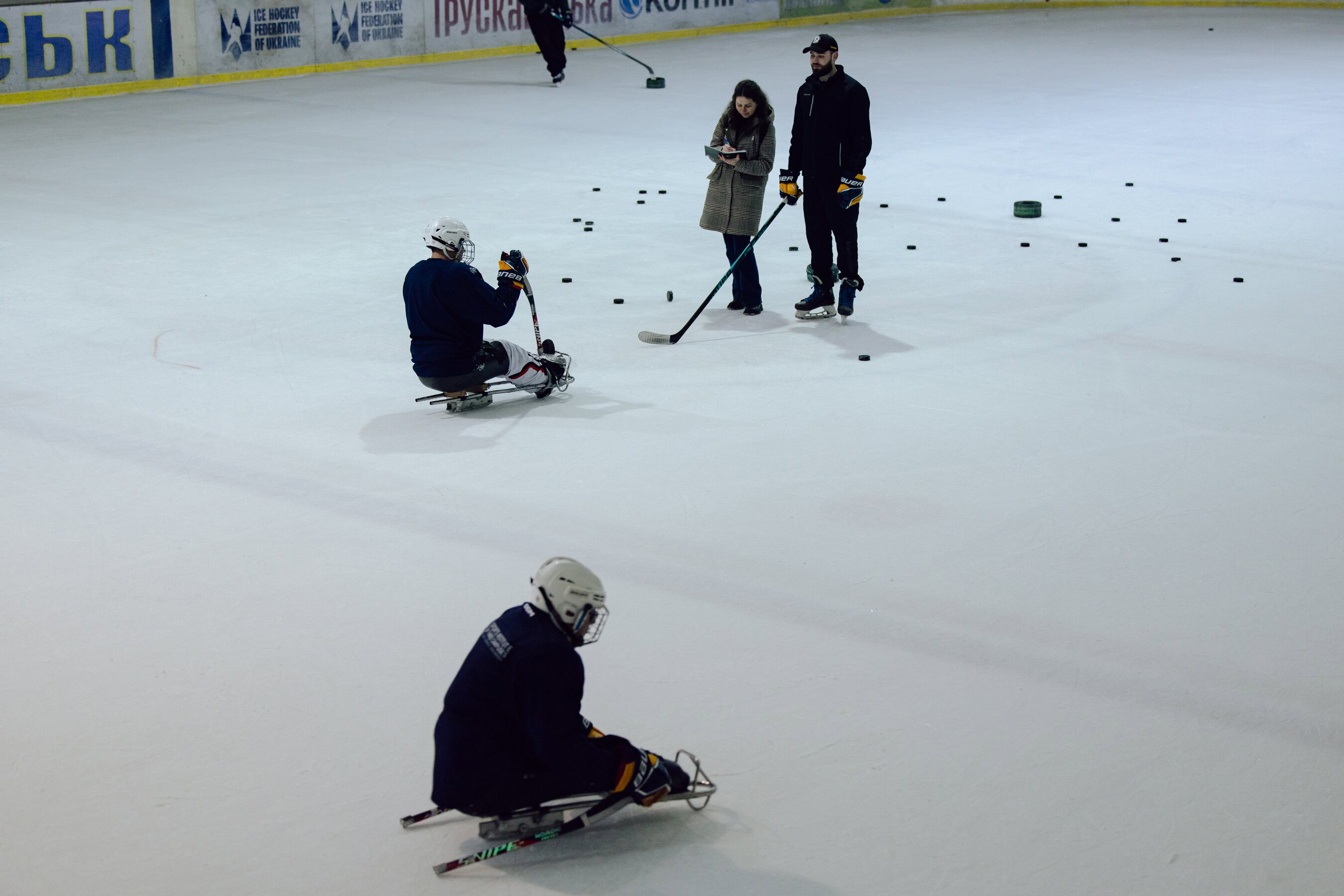
In March, I prepared a report about sledge hockey players with amputations who train at the ice arena three times a week. They left their prostheses in the stands and moved into specialized sleds. While the coach skated around handing out pucks and giving instructions, photographer Anna Zubenko and I ran after them in our shoes to capture every important detail, dialogue, and joke. It was fitting that I jotted everything down in a notebook with the inscription “Achieve, No Matter What”. This phrase describes them perfectly, strong people who, after being wounded, refuse to let despair conquer them and are now conquering the ice instead. People like that truly impress me.
Is journalism truly a calling?
To be honest, I do not know. It used to be easier for me. I could easily write to an editorial office I liked and was not afraid to follow up if my letter got lost. I found interesting stories effortlessly; I saw them on every corner. Now, for me, this job is more about searching for new layers of meaning and a desire to write profound stories.
I often spend a long time on a single paragraph to make it look exactly the way I want. At the same time, I am still afraid that I will put in a lot of effort, only for it to look as if I did not even try.
But I would not be honest if I said everything is exactly as I dreamed or imagined. Working with people is exhausting and their struggles easily lodge themselves in my mind long after I turn off the recorder or return from a meeting.
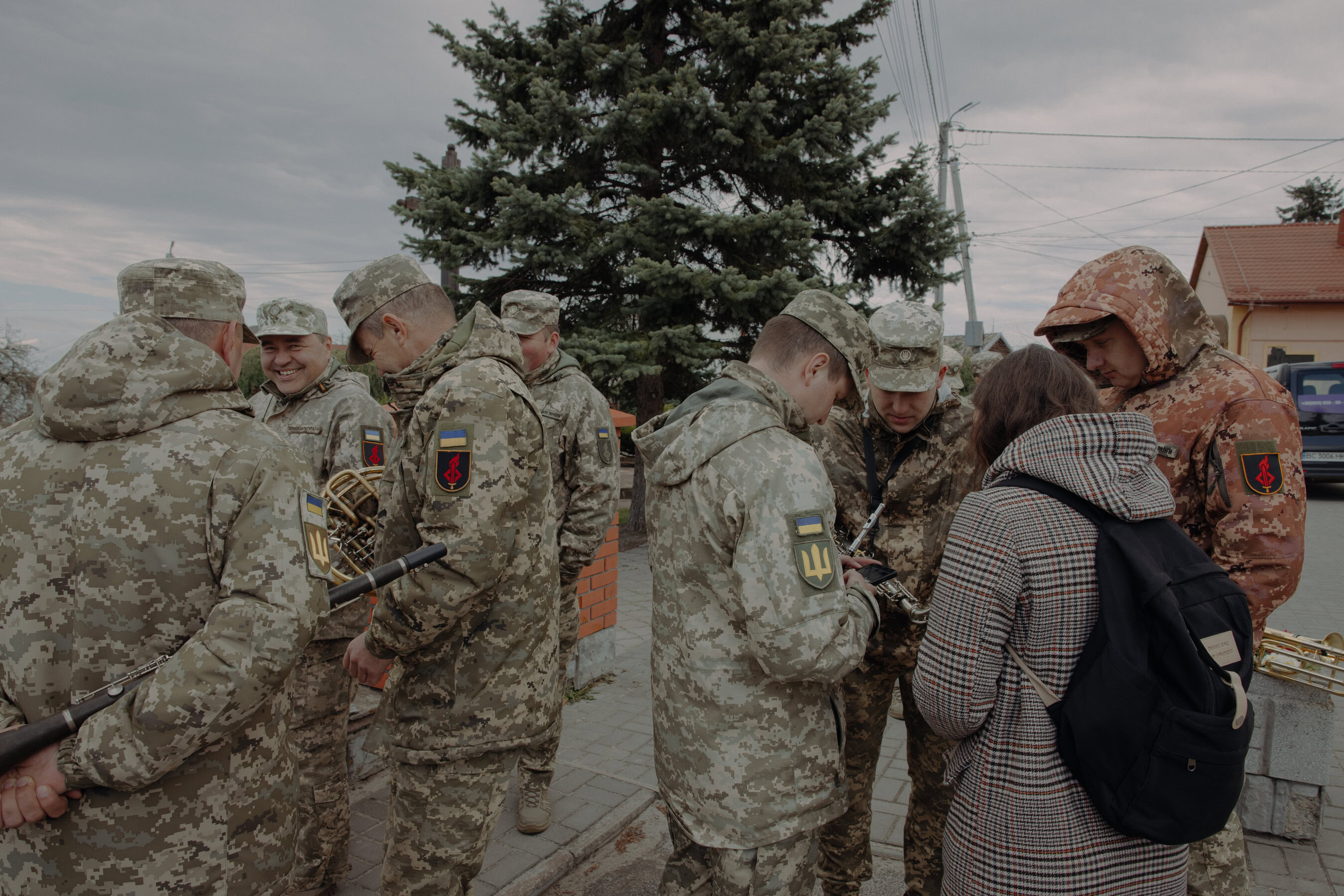
Recently, while working on a story about a military orchestra, a soldier told me that I should not take everything so close to heart. He said that if you process every horror happening right now, it becomes too much to bear. But I don’t exactly have “thick skin” yet, which is why I often feel discouraged.
Yet my work is very creative. It requires a constant search for ideas, thinking about how to build a narrative, and striving to explore new fields. I love this process of piecing together puzzles — observing colors, sounds, and contrasts. I enjoy paying attention to details that can reveal something significant to the story.
Journalism allows you to be a guest in someone else’s life. Sometimes you are welcomed with open arms; other times, you are kept at the threshold. Even from there, you must observe what is happening inside that “home” and find the right way to tell the story. Regardless of circumstances, there are always people whose values or work are truly inspiring. Perhaps that is why I am in journalism, because there are so many people like that all around us, and their stories deserve to be told.
***
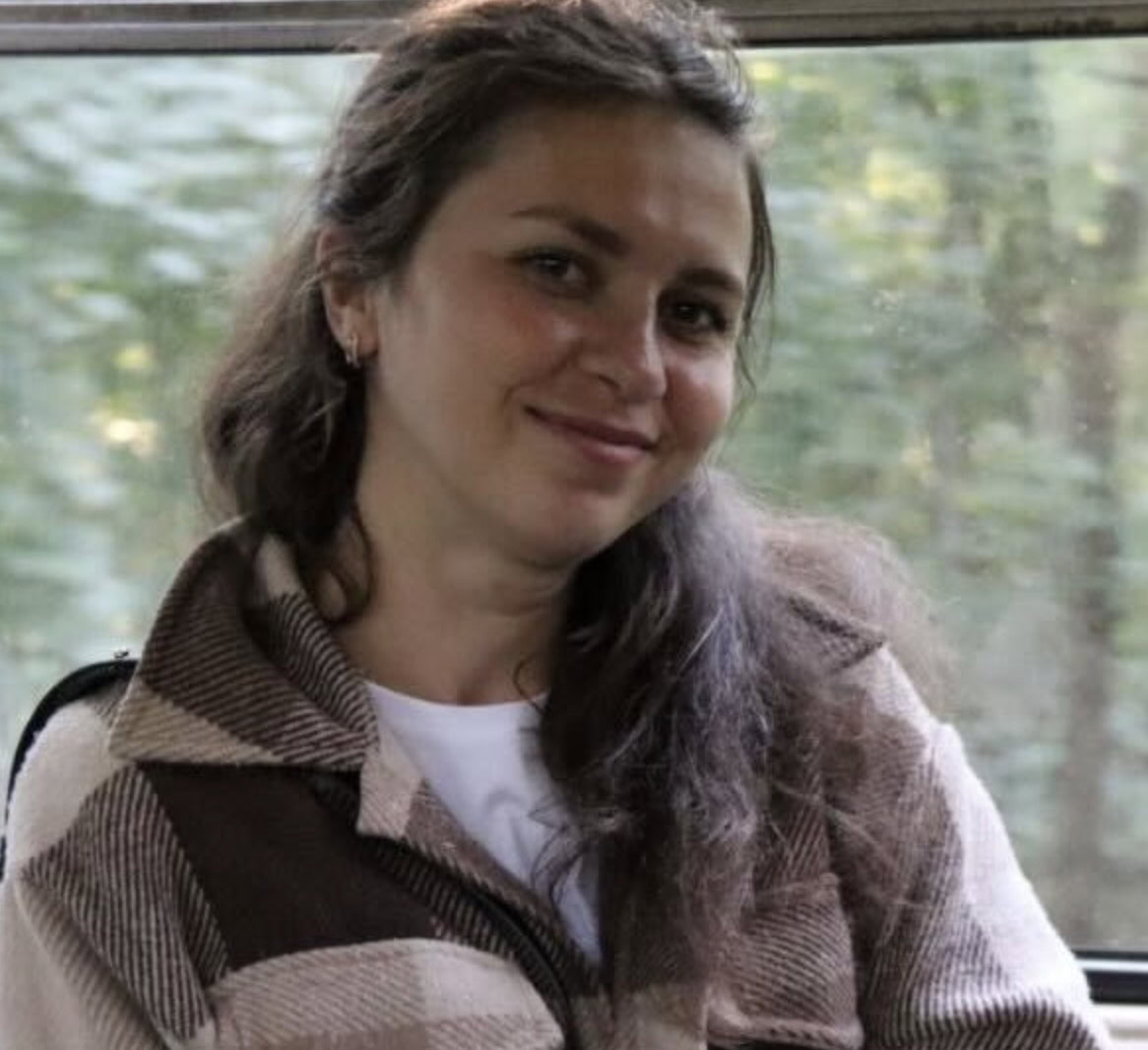
Hi, I am Mariia, the author of this article. Thank you for reading to the end. Every story starts with your support. Join the Frontliner community so we can keep up documenting Russia’s war against Ukraine from the front line and the rear.
***