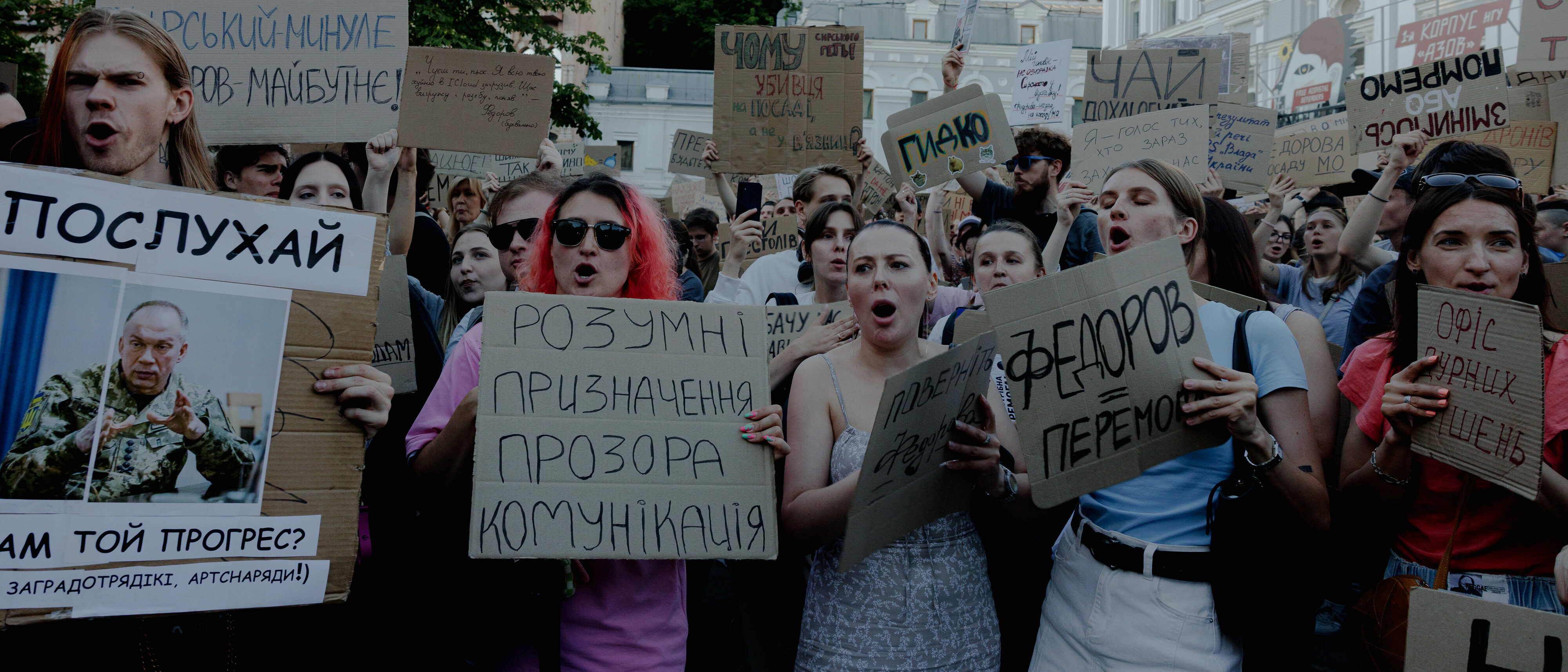
Fedorov out, Drapatyi in: A timeline of the protests
President Volodymyr Zelenskyy named Mykhailo Drapatyi commander-in-chief of the Armed Forces of Ukraine during his evening address. This came on the sixth day of protests that began after the dismissal of Ukraine's Defense Minister Mykhailo Fedorov. Protesters initially demanded Fedorov's reinstatement. Later, they added a call for the resignation of Commander-in-Chief Oleksandr Syrskyi. Frontliner has compiled a timeline of events.
July 12-15: The start of the Cabinet reshuffle
On July 12, 2026, Volodymyr Zelenskyy announced an overhaul of the Cabinet of Ministers. On July 13, Prime Minister Yuliia Svyrydenko submitted her resignation, and the Verkhovna Rada approved it the next day. The government began operating in an acting capacity pending the formation of a new Cabinet.
On July 15, the president said he had not yet decided whether he would nominate Mykhailo Fedorov as defense minister. After meeting with Zelenskyy, Fedorov confirmed he was leaving the ministry, published a report on his work and thanked his team. Among his achievements, he cited the development of drone production, the missile program and international military support.
July 16: The first wave of protests
At 9:01 a.m. on July 16, ahead of the Verkhovna Rada’s vote on the new Cabinet, people in Kyiv and several other cities took to the streets in peaceful protests, demanding Fedorov’s reinstatement. Russo-Ukrainian War veteran Dmytro Koziatynskyi called for the protests, which took place in Kyiv, Odesa, Dnipro, Kryvyi Rih, Lviv, Cherkasy, Mykolaiv, Kharkiv, Ivano-Frankivsk and Sumy. In Sumy, people gathered in the central square despite a Russian guided aerial bomb strike on the city’s outskirts earlier that morning.
That same day, at a briefing, Fedorov said an ongoing conflict had existed between him and Commander-in-Chief Oleksandr Syrskyi, who he claimed had blocked some of the Defense Ministry’s initiatives. Syrskyi responded only by thanking Fedorov for his work and wishing him well, saying he hoped he would remain “on Team Ukraine.”
That evening, thousands gathered at Ivan Franko Square in Kyiv. Dmytro Koziatynskyi called on Ukrainians to return the following evening for another round of peaceful protests.
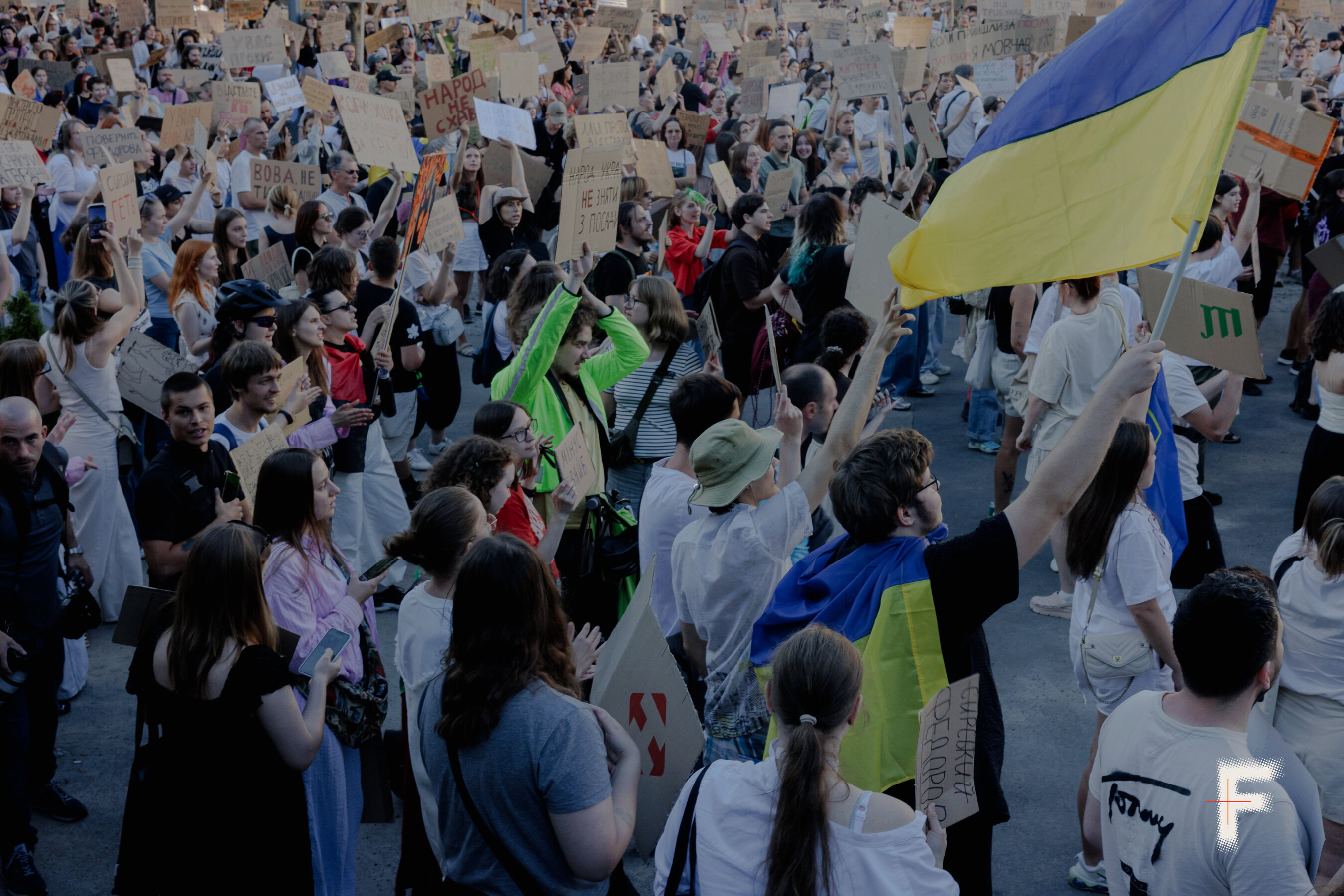
July 17: Protesters add Syrskyi’s resignation to their demands
On the second day of protests, in addition to Fedorov’s reinstatement to the Defense Ministry, people began demanding Oleksandr Syrskyi’s resignation. Protests took place in Kyiv, Poltava, Mykolaiv, Lutsk, Sumy and other cities. In the capital, according to media reports, thousands of people again gathered in the square and on nearby streets.
Military personnel began posting on social media about possible pressure from the command over their public criticism of the commander-in-chief.
That same day, Zelenskyy started a series of meetings with military commanders, saying he wanted to hear their assessment of the situation in the army.
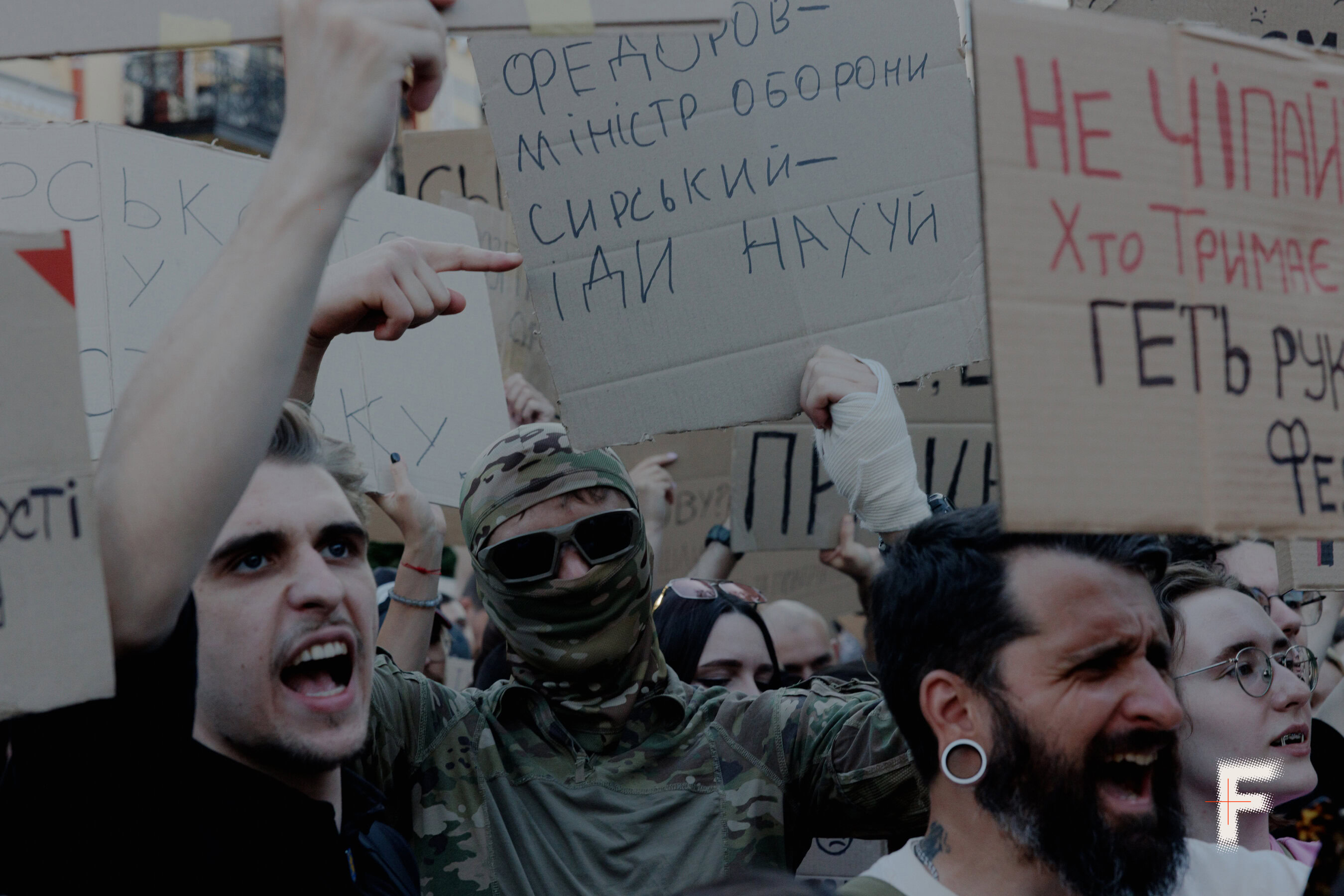
July 18-19: Protesters stand firm
On July 18, peaceful protests continued in Odesa, Lviv, Lutsk, Dnipro, Cherkasy, Zhytomyr, Vinnytsia, Chernivtsi, Rivne, Ivano-Frankivsk, Kharkiv, Zaporizhzhia and other cities. Eyewitnesses said participant numbers showed no sign of decline.
During this period, new reports appeared on social media about alleged pressure on military personnel, including demands to record video statements in support of Syrskyi.
The president continued talks with military leadership and said he had held separate conversations with both Mykhailo Fedorov and Oleksandr Syrskyi.
On July 19, protests entered their fourth day. In addition to Kyiv, Kharkiv, Odesa, Lviv, Kamianske, Dnipro, Vinnytsia, Kremenchuk and Ivano-Frankivsk joined the protests, among other cities. At the same time, some military personnel publicly voiced their support for Syrskyi.

July 20: Resignation rumors
On July 20, Dmytro Koziatynskyi called for symbolic protests and said the demonstrations could become indefinite if no personnel decisions were made by July 24, 2026. Throughout the day, several media outlets reported that Oleksandr Syrskyi had allegedly resigned. The General Staff of the Armed Forces of Ukraine later denied the reports.
The president continued his meetings with military commanders that day. Syrskyi also published a column in which he denied any personal conflict with Fedorov, outlined his position on reforms and called for a focus on the war.

July 21: A resolution
The president continued talks with military commanders, while protesters remained on the streets.
After nearly a week of protests, officials announced a change in leadership at the top of the Armed Forces of Ukraine, marking the end of one of the largest peaceful protest movements in Ukraine since the start of the full-scale war.
Zelenskyy thanked Oleksandr Syrskyi for his work, including the defense of Kyiv, the Kharkiv counteroffensive and Kursk operations, saying he had already discussed the format of their future service and the transfer of duties with Syrskyi and Chief of the General Staff Andrii Hnatov. He also said he had offered former Defense Minister Fedorov a position focused on developing the country’s technological capacity.
Zelenskyy added that all personnel decisions would be formalized on July 22, 2026, saying the changes were meant to strengthen the Ukrainian military and create better conditions for the country’s continued defense.