ʼI will not send my children to a Russian school’: families escaping occupied Kherson region
Families from the left bank of the Kherson region managed to flee to territory controlled by Ukraine after spending four years under Russian occupation. Searched children's closets, forced militarization of schools, threats to take away children, and so-called gifts in the form of combat grenades: these are the stories told by people who survived the Russian occupation and witnessed the war crimes of the aggressor country. Their stories are presented by Frontliner reporters.
Tetiana (name was changed for security reasons — ed.) lived under occupation for four years on the left bank of the Kherson region with her husband and two daughters. They lived in a small village near the Dnipro with their garden opening directly onto the riverbank.
However, after the arrival of Russian forces, the area ceased to be safe; they announced that they would mine the riverbank.
Russian military vehicles started to appear in the village, and soon searches began regularly. Soldiers entered homes armed and inspected everything in sight: opening cupboards, peering into the oven, turning things upside down.
“It is very scary when they open your underwear drawer and start rummaging through it with their hands,” Tetiana says.
The woman feared most for her children. Her daughters are now 11 and 13 years old, and they spent the entire occupation period in constant fear. Tetiana hardly ever let them leave the house alone. She was especially worried about the older one:
“The Russian soldiers showed particular interest in teenage girls. They lived in the house facing ours and they would stare at them over the fence, which caused great anxiety. I was afraid my child might be raped.”
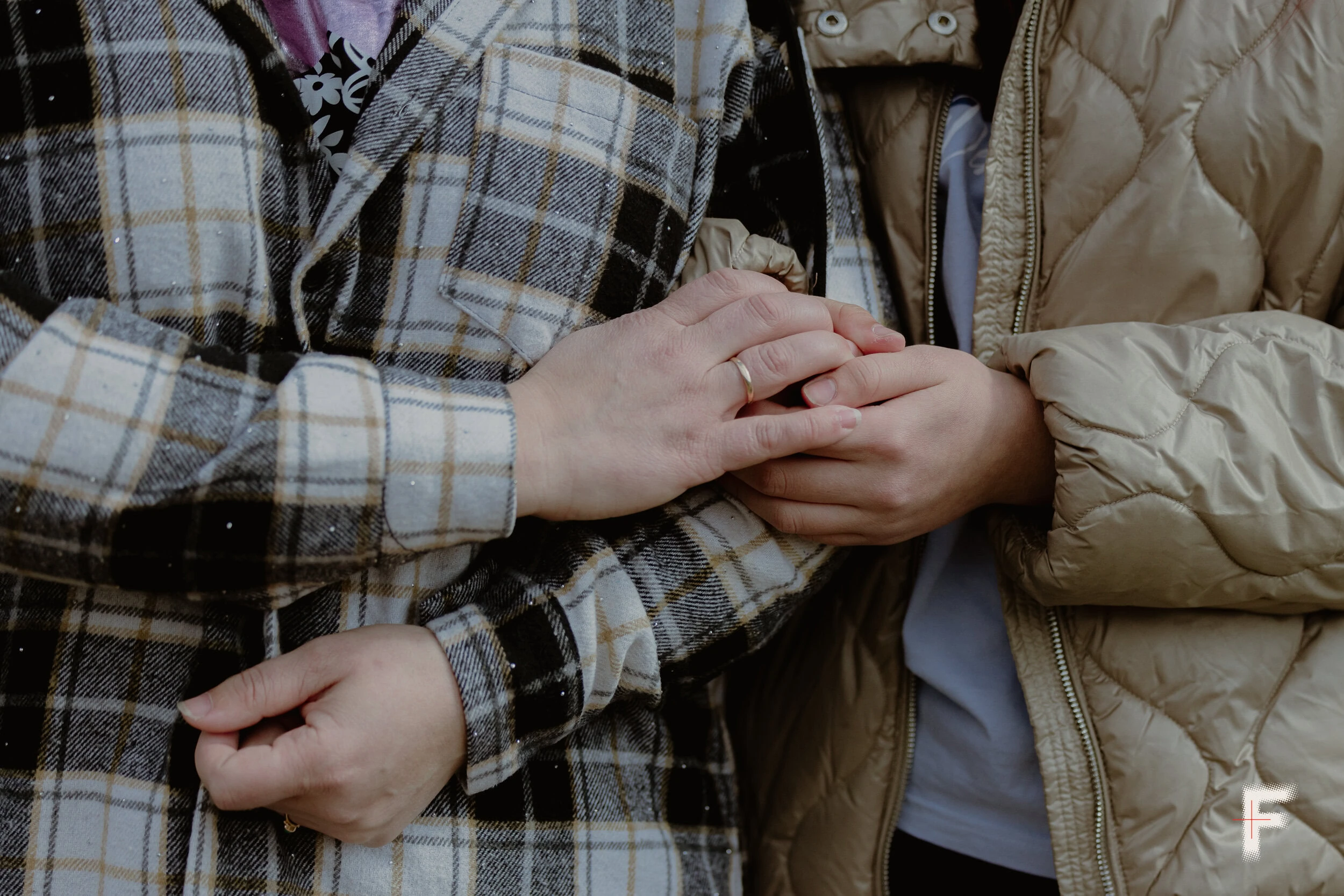
Tetiana says that her children have been studying online at a Ukrainian school during the entire period of occupation. It was not easy: classes were held quietly, with headphones on, so no one would hear.
Traveling between villages was also risky. To visit relatives they had to pass through checkpoints where they were constantly inspected.
“They stopped us and said: ‘You have Ukrainian passports; we will not let you through. Get Russian ones,’” Tetiana recalls.
Her husband was interrogated repeatedly because he was suspected of having ties to the Armed Forces of Ukraine. Once, the situation became particularly dangerous.
“The Russian man seemed out of control and started harassing people. Then he grabbed his rifle, racked the bolt, took out a round and said, ‘Here you go, a small gift for you.’ Then we opened the trunk, and he took out a grenade and put it in, saying, ‘Another gift.’ We said that we have children; we do not need that,” says Tetiana.
Apart from that, it was dangerous just to be on the street in the village. Soldiers drove their vehicles at high speeds, sometimes while under the influence of alcohol.
“There were cases where they ran people over,” she says.
Therefore, the family tried not to leave the house if possible.
Tetiana finally decided to leave in January 2026 after she began to face direct pressure regarding her children. She was summoned and told that her daughters had to enroll in a Russian school. Otherwise, they might take the children away and send them to a boarding school. For Tetiana, this was the breaking point.
“I came home and said: that is it, we are packing up and leaving. I will not send my children to a Russian school,” she says.
‘Are you 18 years old? Go fight’
A constant sense of fear had become an everyday reality for Viktoriia (name was changed for security reasons — ed.) and her family. They lived in the village of Prymorske in the Kherson region and had long tried to hold on to their home. But with each passing month, staying there became more unbearable. They were most afraid for their children, especially their eldest son, Oleh (name changed for security reasons — ed.). When he turned 18, he went to the Russian military enlistment office with a certificate stating that he was still in secondary school, but there he was told:
“Are you 18 years old? How long can you keep studying? Go fight!”
Oleh enrolled in university to get a deferment. But he was forced to comply with Russian rules and ideology. He had to wave the Russian flag at public events and take part in propaganda trips to Moscow in order to be treated “equally” and be allowed to continue his studies. Participation in these events was rewarded with promises that students’ credits would be marked as passed. But there was no guarantee that his studies would save him from the army. Oleh saw students being taken away right in the middle of classes. The military enlistment office classified him as A1, indicating fitness for service across all service branches, despite his back problems, muscle disorders, and severe flat feet. Fear was a constant companion, because under the new Russian legislation, the deferment might not work, and he would end up in the trenches fighting against Ukraine.
The situation at secondary school was no less difficult, says Viktoriia. She recalls how, from the very first days of the occupation, Russian soldiers entered the school and immediately declared that everything was different now and that it was best to keep one’s thoughts and opinions to oneself. Her middle son, Andrii (name changed for security reasons — ed.), told her about this.
“When they forced them to jump with flags, shouting ‘Russia is our home’ and ‘Putin is our father’— he tried to avoid all these events as much as he could. And in geography class, the teacher played a video about how ‘Ukraine bombed Donbas,’” says Viktoriia.
In addition, a pro-Russian curriculum was introduced. Viktoriia learned from her son that during so-called family studies class, children were told that girl students should give birth to many children in the future, while boys should go to the front.
Even the kindergarten was not safe. Parents were not allowed to enter the premises, as they were only permitted to hand over their child at the entrance under the supervision of security. Parents had no idea what was happening inside. Yet the administration demanded funds for propaganda events, says Viktoriia. She was forced to pay for costumes, but instead of outfits appropriate for children, the kindergarten administration bought Soviet military uniforms for the children.

“They photographed everyone in these uniforms, staging a pompous display glorifying the army. And then in the photos, all the children had empty eyes,” the mother recalls.
But there was nothing Viktoriia could do about it. One day, her daughter came home and said that if her mother scolded her, they would “call the police and put her in a cage.” After that, the woman stopped taking her daughter to kindergarten.
At the same time, large-scale mobilization began. All the men in the village of Prymorske received draft notices and threats of fines of 30,000 rubles. Then the family decided to leave. This decision was forced and urgent, because staying meant risking the lives and futures of their children.
The family is safe now, but what they went through still takes its toll. Viktoriia says she is most looking forward to the moment when her little daughter can grow up in peace and speak Ukrainian freely for the first time without fear.
Trying to make a living under occupation
Anatolii Kraskov, a resident of Tavriisk in the Kherson region, did not immediately realize how much his life had changed. He continued to work during the first days of the full-scale invasion. Helicopters flew overhead, but he went to work because he had to support his children, his older daughter Mariia and little Mykhailo.
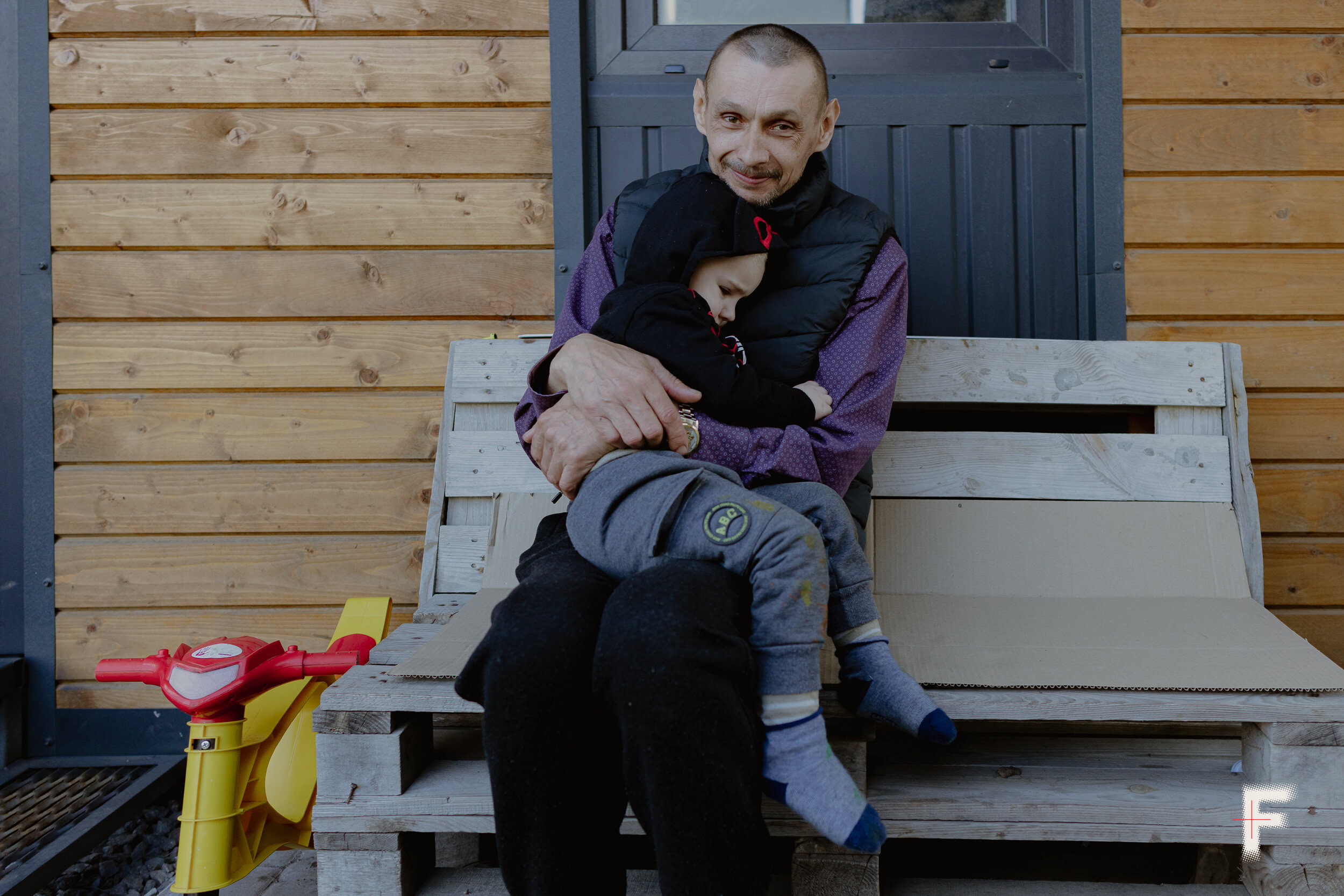
At the same time, Anatolii helped his elderly neighbors who lived alone. He carried groceries for them from the market: several kilograms in his backpack and more in bags in his hands, walking several kilometers. He says he simply could not do otherwise because he knew these people and understood that they had no one else to turn to.
Eventually, things became more difficult with both food and money. The occupying authorities came to power. He took whatever work he could find to make some money, but he firmly refused to work for the occupying authorities, even though he was offered such work more than once.
“I had no choice; I had to earn a living somehow. I was offered a job as a roofer in Simferopol, so I accepted. I saw a great deal of fear among people as they were unable to speak up. They walk around in some kind of Soviet-style military uniform. They march there. Well, it was like I’d ended up in the Soviet Union,” says Anatolii.

Upon returning to Tavriisk, the man noticed that stricter restrictions had been imposed in the city: “They searched us very thoroughly. They could strip us down to our underwear, checking everything: phones, tattoos,” Anatolii says.
Once, Russian soldiers grabbed him and took him out into a field.
“They beat me almost all night. They asked where the Ukrainian Armed Forces were, who was in contact with them,” he recalls.
Anatolii said nothing because he truly did not know the answers. He had deliberately cut off all ties because he understood it was dangerous. It was especially hard for Anatolii after his wife’s death. The children were left without a mother, and the man was granted only temporary custody.
“They started hinting that they might take the children away. I understood: if I stay, I might lose them,” says Anatolii.

His fear for his children was reinforced by the fact that howitzers were set up nearby, so at night the children would tremble with every shot. He decided to leave and set off for Ukraine on September 15, 2025.
The journey was difficult: “We traveled for two days; I did not sleep. I kept thinking they might not let us through. I had a pack of anti-anxiety pills and took them the whole way.”
Now the family is safe. Anatolii says the children are slowly recovering from what they’ve been through: “My son stopped speaking at all after his mother died. But here he started talking again. Masha is cheerful again, she greets people, smiles. They feel free.”
Life in the shelter
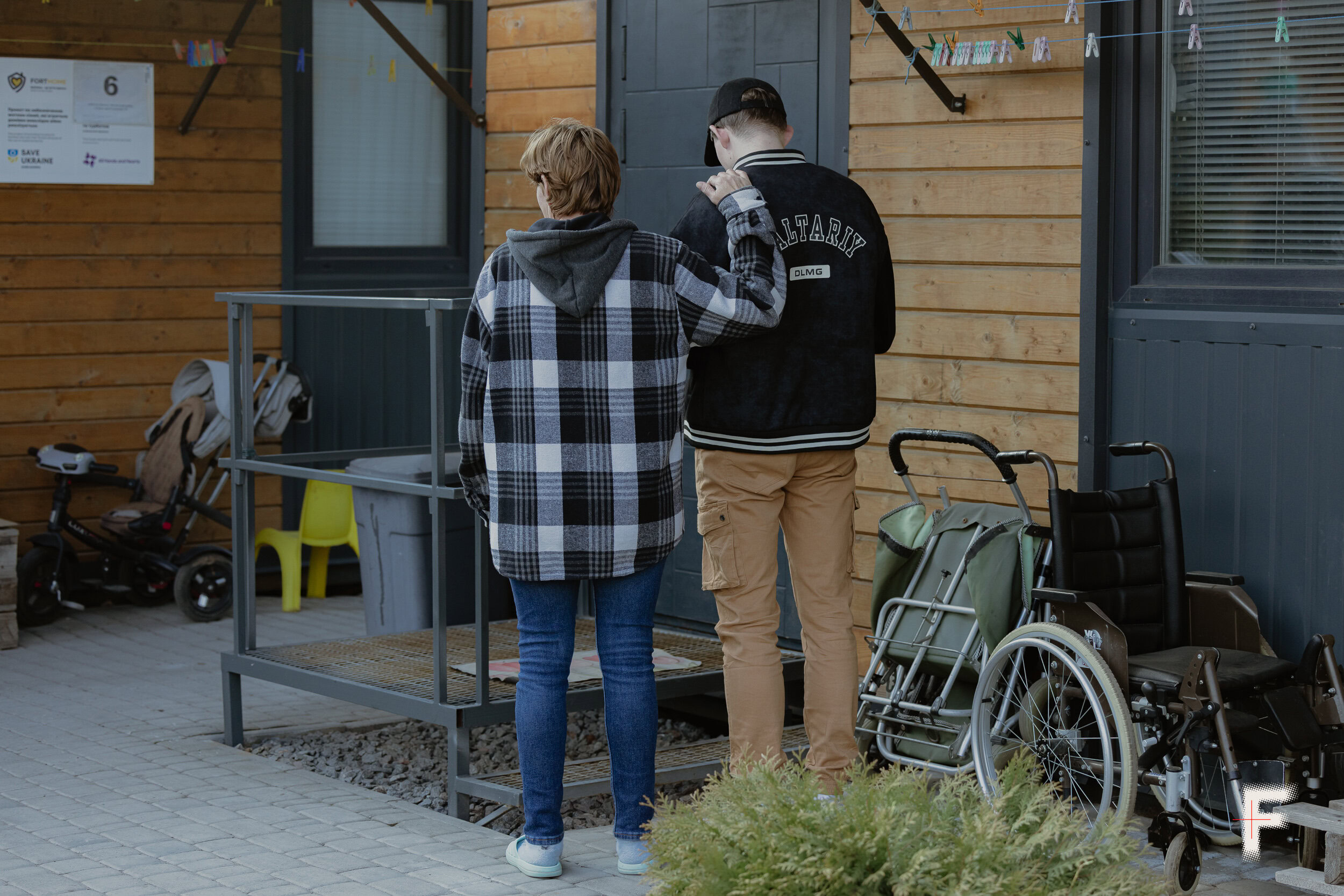
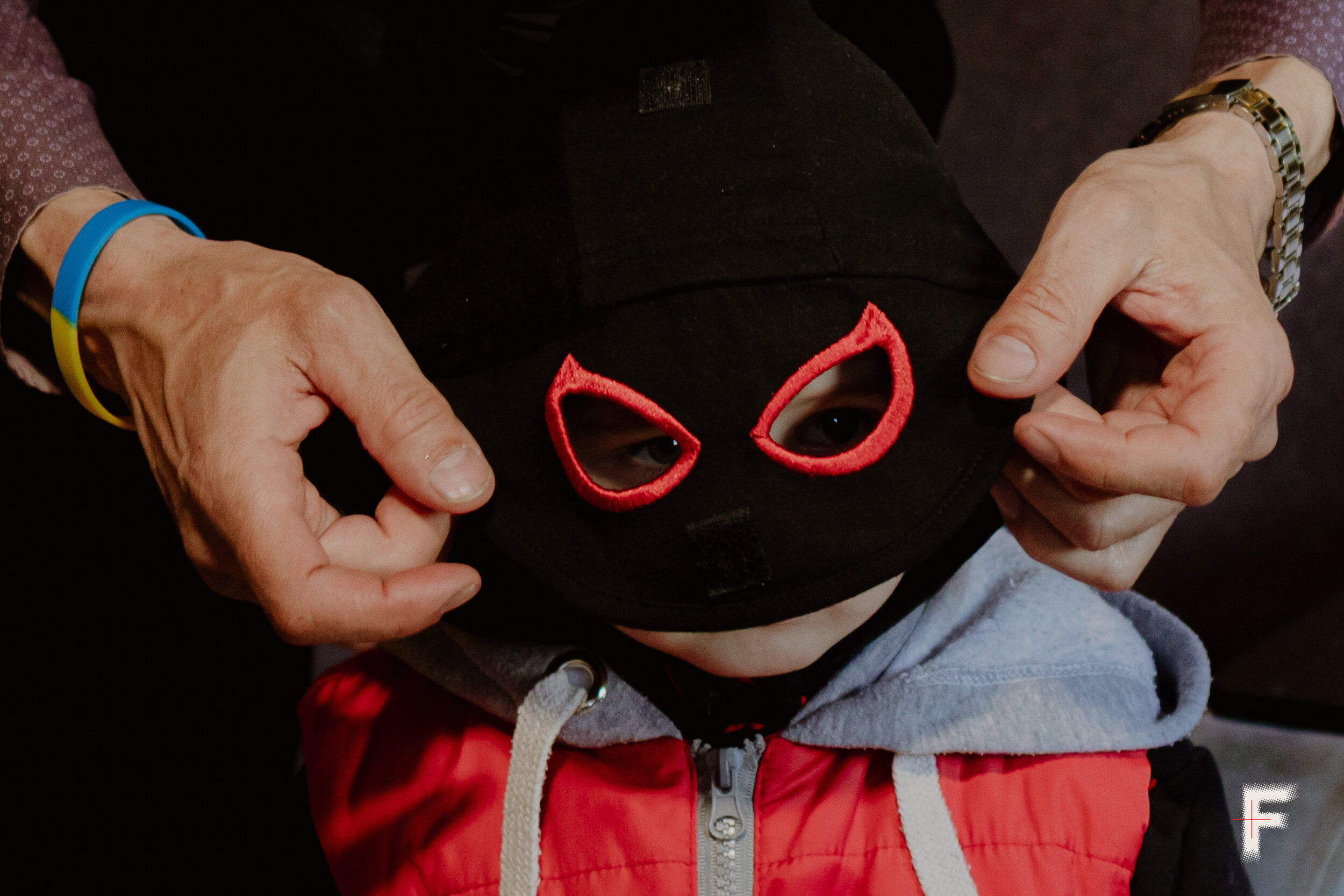
After all they had experienced, they gathered in one location. This is a shelter of the charitable foundation Save Ukraine, currently home to families who escaped from occupied territories. For these people, this is not just temporary housing, but a space where, after a long time, they finally feel safe.
They are helped here to restore their documents, receive financial support, and get humanitarian aid. Families undergo medical examinations, receive basic medical care, and are provided with basic necessities.
There is a special focus on their psychological well-being. Psychologists, art therapists, and other specialists work with the children, helping them gradually overcome their state of constant fear. A number of children arrive in a state of fear and isolation; some cannot speak. Through communication and structured activities, they gradually begin to open up and rediscover life.
Adults receive support not just to get through this time, but to rebuild their lives: they are helped to find employment, acquire new skills, and find a place to live. Support does not end immediately after evacuation. People continue to be cared for until they can support themselves.
On average, families stay here from a few months to half a year, but it all depends on their situation. Tetiana and her daughters do not plan to leave the shelter yet. She says that right now, the most important thing is to recover psychologically.
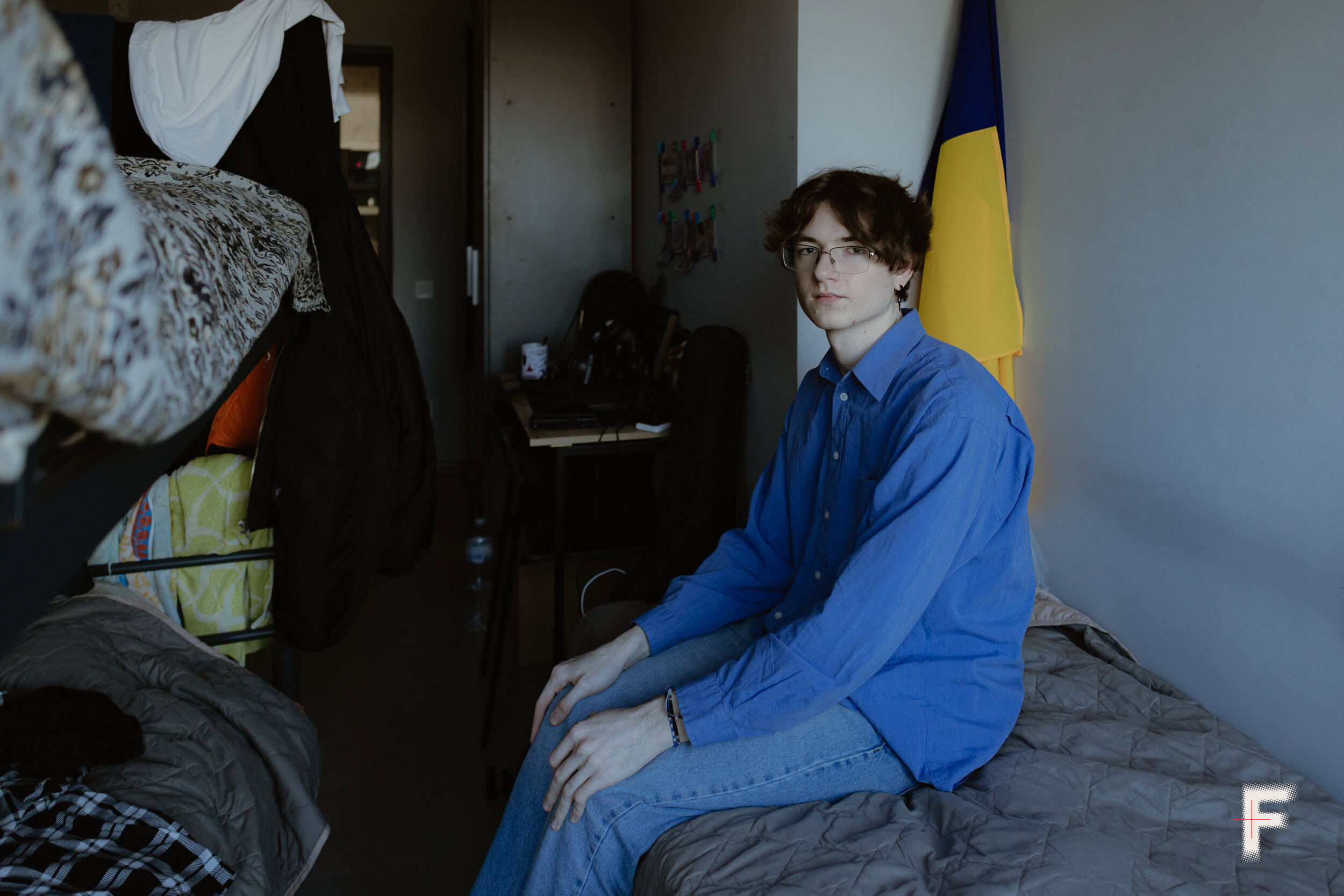
Oleh has wanted to be a soldier since childhood, so he plans to join the Ukrainian military in the near future.
And Anatolii has decided that after what he’s been through, he wants to help others:
“I do not want to sit around doing nothing. I want to deliver aid and evacuate people. I do not want to get paid for it. My dream is just to help people.”

***
Hi, we are Ruslana and Anna, the authors of this article. Thank you for reading to the end.
We can not ignore the experiences of people living in the temporarily occupied territories.It is paramount to document Russia’s war crimes and speak openly about them. Such stories show what people face under occupation: fear for their children, threats and constant surveillance. For them, attempting to flee to territory controlled by Ukraine is not simply a decision, but a way to save themselves and their children.
Every story starts with your support. Join the Frontliner community so we can keep up documenting Russia’s war against Ukraine from the front line and the rear.
***