Combatant status in Ukraine: who qualifies, what Is promised and what actually works out
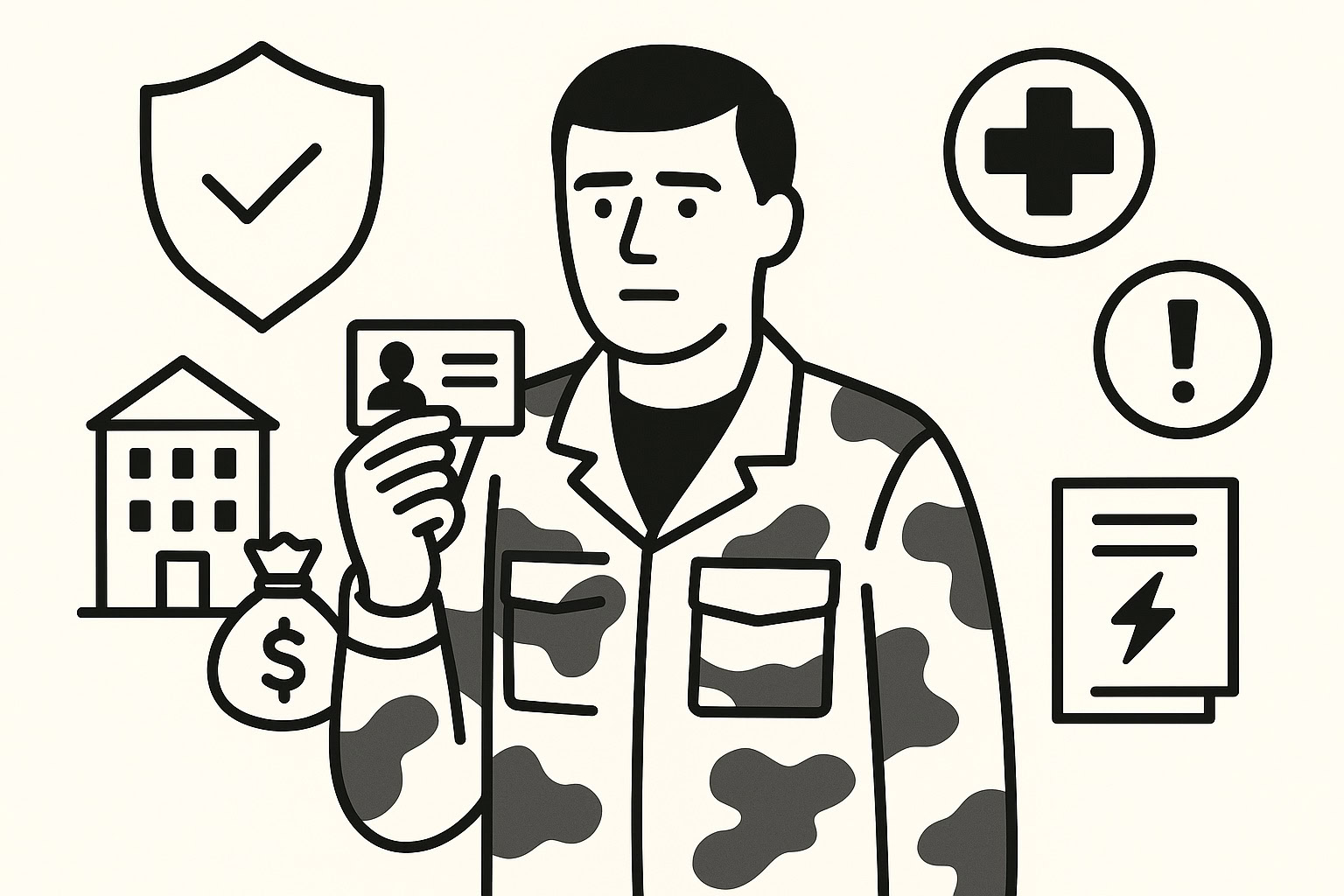
Russia’s full-scale war has sharply increased the number of people eligible for combatant status. Along with the designation, the state promises a wide range of social guarantees, such as utility discounts, or priority access to housing. At the same time, the system for granting this status is changing and becoming more digitized, while the implementation of these promises often depends on the financial capacity of local communities. Frontliner examines what the combatant ID really means, how many people already have it and why the status doesn’t always translate into actual benefits.
Who qualifies for combatant status?
The main document defining veteran categories is the law “On the Status of War Veterans and Guarantees of Their Social Protection.” Combatants include service members and others who directly took part in combat or supported combat operations in active war zones. This covers the Armed Forces, the National Guard, the State Border Guard Service, the Security Service, Interior Ministry forces, other security agencies, and volunteer formations officially integrated into the defense sector.
Separate procedures apply to volunteers who fought in volunteer units before they were incorporated into official structures, as well as to those injured while performing combat missions during martial law. For these categories, documentation proving participation in combat, medical records, and sworn statements from service members who already hold combatant status play a key role.
Since 2024, Ukraine has begun shifting to a more automated model. Information on combat participation must be entered into the Unified State Register of Veterans, after which status is assigned without additional office visits. If the information was not submitted to the register, the service member or their representative must still gather paper records and seek a decision from review commissions.
How many people in Ukraine hold combatant status?
More than 1 million soldiers who served after 2014 already hold the status. Public estimates from the Veterans Affairs Ministry and analysts increasingly point to a projection: after the war, Ukraine may have 5 million to 6 million people who will be considered veterans or family members of veterans. This would mean that one in three or four Ukrainian families will have a direct connection to veteran status.
The exact number of combatants changes daily, influenced by ongoing casualties, rotations, and the granting of status retroactively, like to volunteers or those whose records took years to collect. The trend is clear: every new mobilization decision and each additional year of war means tens of thousands of new combatants.
What the status promises: benefits and guarantees
Combatant status is not only an ID card and a badge. It includes a package of benefits defined in law and regulations. Key benefits include discounted housing and utility payments, free or subsidized medical care, access to rehabilitation and sanatorium treatment, and priority service at medical and social institutions.
The list also covers educational advantages (state-funded seats, scholarships, free tuition for some categories), employment support, priority access to land plots, and participation in housing programs. Some benefits are gradually being monetized: for example, compensation for utilities or public transportation may be paid through the Pension Fund rather than provided as an on-the-spot discount.
While the law sets the framework, the actual level of support often depends on local budgets, participation in state programs, and the effectiveness of local veteran services. As a result, two veterans with identical status may have very different access to benefits depending on the region.
Does the state truly guarantee all benefits?
Formally, combatants’ rights are protected by law, and the state declares support for defenders. But in practice, funding shortages hinder housing programs, sanatorium queues can last years, and some local governments cannot finance the full scope of benefits.
Not all communities have trained specialists in veteran affairs, and not all regions operate dedicated “one-stop” veteran service centers. The transition to digital IDs in the Diia app improves document access but does not solve funding gaps or regional inequalities.
Ultimately, combatant status does not guarantee immediate access to all promised benefits. It provides a legal basis to claim them and defend one’s rights, but the quality of support depends on how quickly the state adapts its social system to the scale of the veteran population.
How to obtain combatant status: a short guide
Details vary depending on where and when a person served, but the general process is:
- Collect service records. Orders assigning combat missions, certificates from the military unit, combat logs, and medical documents for injuries (if applicable).
- Entry into the Unified Veterans Register. Authorized personnel must submit a service member’s data to the register; under new rules, this should happen automatically within a few days of starting a combat assignment.
- Submit an application if automation fails. A service member, veteran, or representative may apply to Defense Ministry or Veterans Affairs commissions through administrative service centers, online services, or by mail, attaching copies of all supporting documents.
- Commission review and registry update.After review, a decision is made. Once entered into the register, a person can receive a digital veteran ID in Diia and, if desired, a paper document and badge.
- Appeal in case of denial. A denial can be challenged by submitting additional evidence or going to court. Veteran and human rights organizations often assist with legal support.
War is turning combatant status into one of Ukraine’s key social markers for decades to come. For the state, it is a test of whether gratitude to service members is backed by real support, from healthcare and rehabilitation to housing and employment. For veterans, it is a tool to demand the fulfillment of these commitments. And whether Ukraine becomes a country where defenders truly feel supported will depend on how consistently and honestly this system works.
Adapted: Kateryna Saienko
***
Frontliner wishes to acknowledge the financial assistance of the European Union though its Frontline and Investigative Reporting project (FAIR Media Ukraine), implemented by Internews International in partnership with the Media Development Foundation (MDF). Frontliner retains full editorial independence and the information provided here does not necessarily reflect the views of the European Union, Internews International or MDF.