After service, people reevaluate their values: Career consultants for veterans
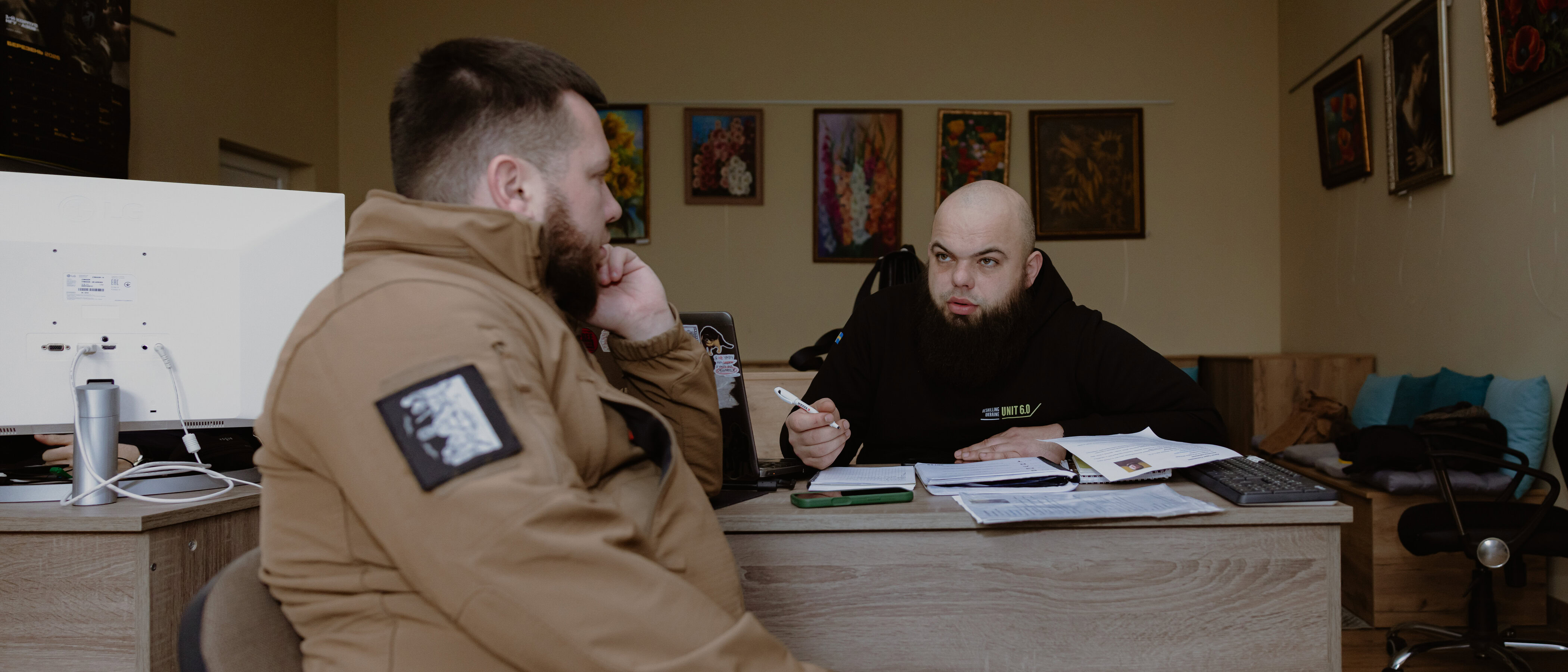
Two veterans met for an informal yet professional meeting with a single goal but different roles — one is trying to find his place in civilian life, while the other helps because he has been down that road himself. During these sessions, Dmytro Ilin assesses both the person and their military service skills that may now be useful. Most importantly, in this new profession, he feels “among his own.” Frontliner tells the story of how this veteran discovered his calling as a career counselor.
Before the full-scale invasion, Dmytro Ilin from Lviv worked in the internal audit department of a jewelry store chain. His next business trip was scheduled for February 24, 2022. But on that day, Dmytro went to the military enlistment office and joined the 103rd Territorial Defense Brigade.
After two months of training, his battalion was deployed to Donbas. In May 2022, in Bilohorivka, Donetsk region, he and his comrades were hit by an airstrike. He underwent treatment and later returned to service near Sloviansk. By then, Dmytro was already having trouble sleeping, and his PTSD was worsening, so he returned home and began long-term treatment. Meanwhile, Dmytro’s comrades took part in the Kharkiv counteroffensive.
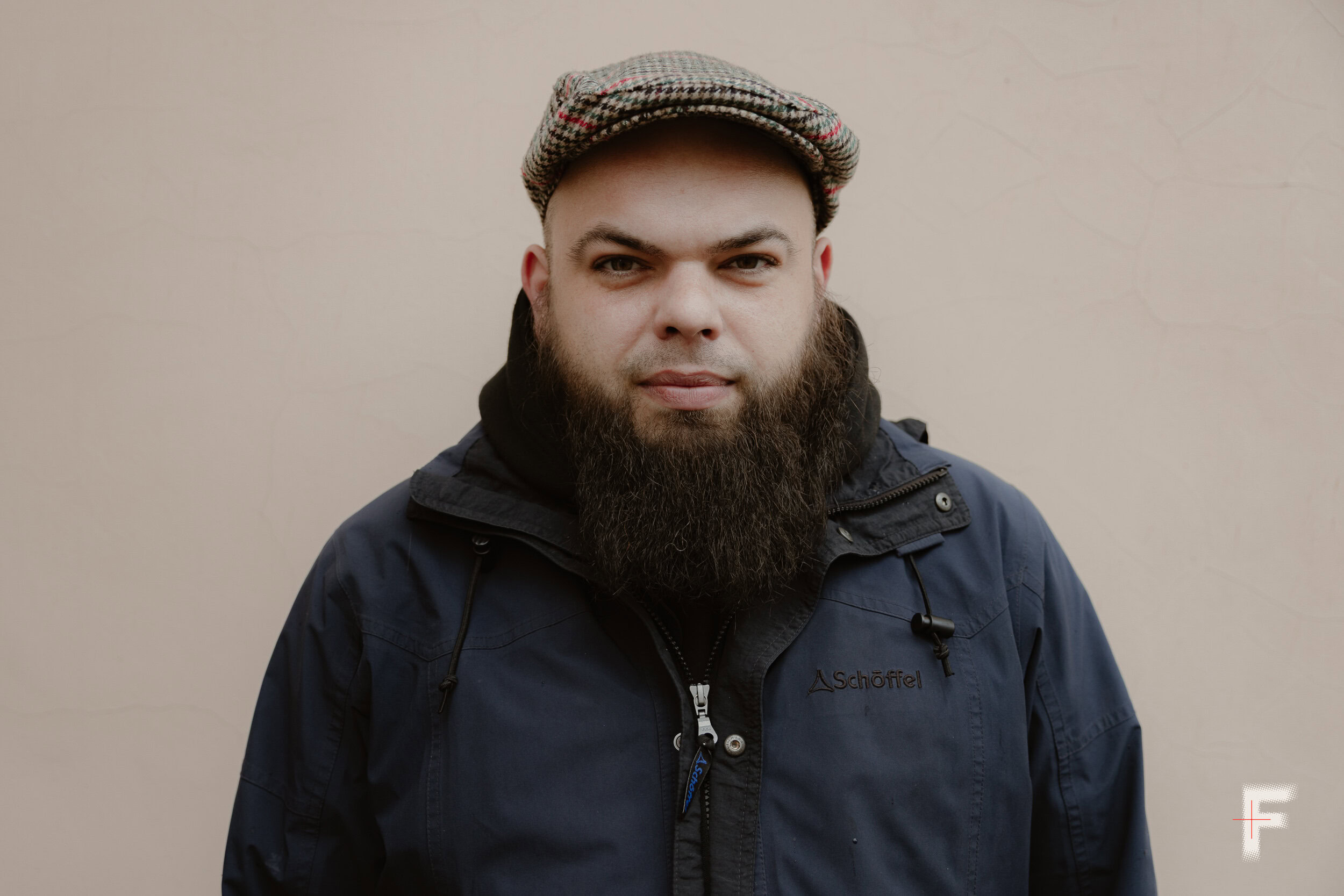
Dmytro underwent treatment and rehabilitation, and in the spring of 2023, he was discharged from service for health reasons. During his rehabilitation, he searched for himself in new fields; he tried to join the “Veteran’s Assistant” state program and ran a furniture business with a friend, but he wanted to be involved in working with veterans. He often advised others on where to receive quality treatment, undergo therapy, or access other services.
The “peer-to-peer” approach
Last year, Dmytro met a veteran who told him about the UNIT 6.0 program by the Reskilling Ukraine project. Later, he applied for a free “Career counselor for veterans” course and completed the training.
Dmytro says he felt he was being given attention here and appreciated the influence of the environment. The instructors were also veterans or had extensive experience working with them, so for the first time in a long time, he felt comfortable:
“I felt a genuine interest in learning. Scientists call it post-traumatic growth; the studies gave me energy and motivation. I reevaluated my own worth.”
After the training, he started an internship at Superhumans, where he held consultations with servicemembers who had severe injuries.
“For the first time in my life, I felt that there was a job I really liked. Even though for me, it’s more like a service than a job. I was worried about whether I could become a proper specialist for them,” Dmytro says.
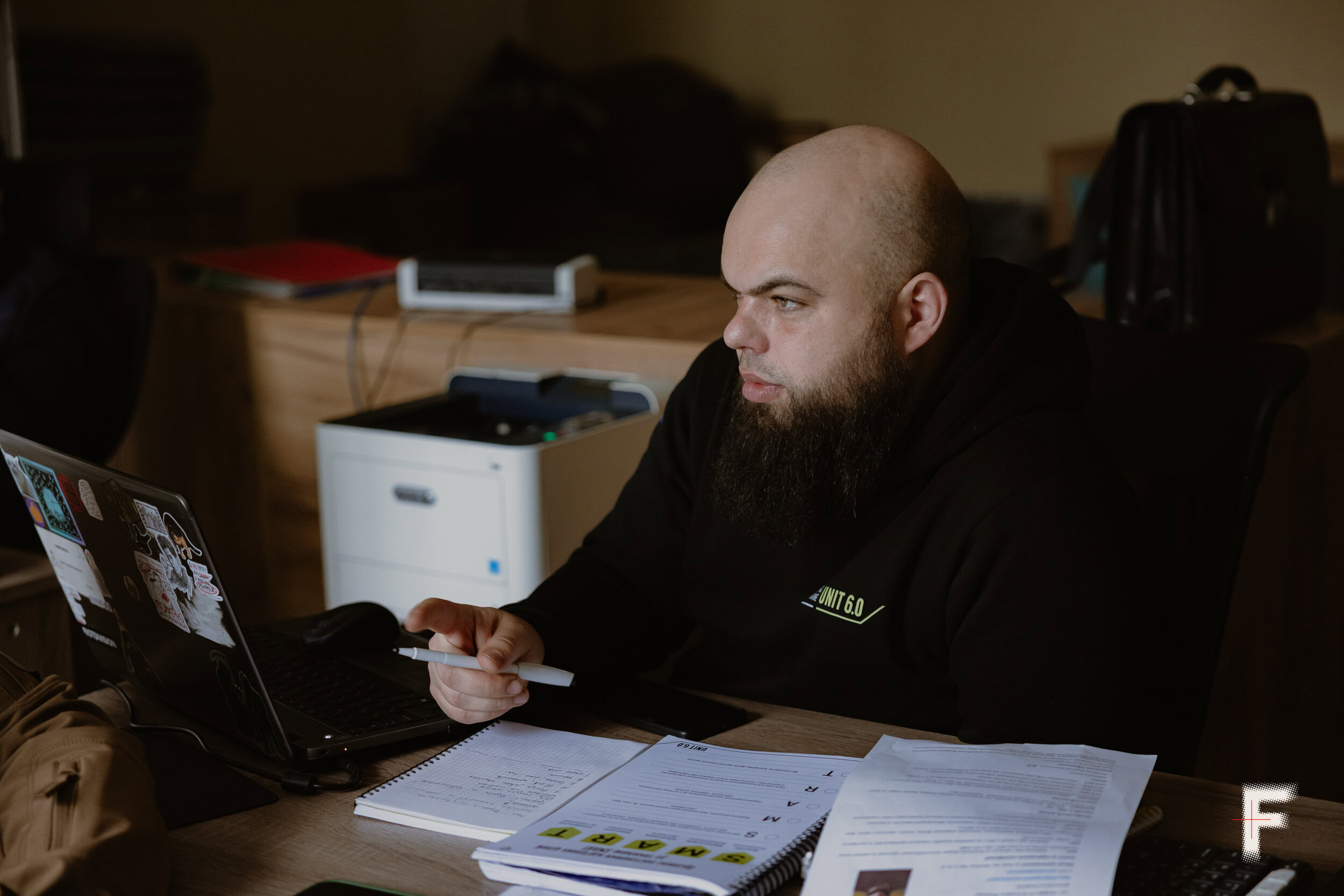
But the worries vanished after the very first consultation. Veterans were open to communication and could trust Dmytro; the “peer-to-peer” principle was working. In conversations between veterans, there are no questions like “Where were you?” or “When will the war end?” The participants understand each other’s experiences.
How does a career consultation take place?
After completing his training and internship, Dmytro Ilin received a state-recognized certificate as a “Career counselor and veteran adaptation specialist.” For several months, he sought employment in private and non-governmental organizations, as he wanted to work in veteran adaptation. Dmytro says he often received no response from potential employers. This was deeply discouraging, so he sought out other activities: he enrolled in a dramaturgy course at the “Veterans’ Theater” in Lviv, continued attending therapy, and stayed active in sports. In December of last year, he began collaborating as a counselor with the UNIT 6.0 program.
Dmytro emphasized that a career consultation is not a single meeting where a person finds a job and that’s the end of it. It is a much longer process of assessing individuals, the skills they acquired during their service, and the labor market where those skills might be useful.
First, you fill out an application and specify your goals for the collaboration with a counselor — whether it is finding a job, learning a new profession, starting a new business, or determining what to do next.
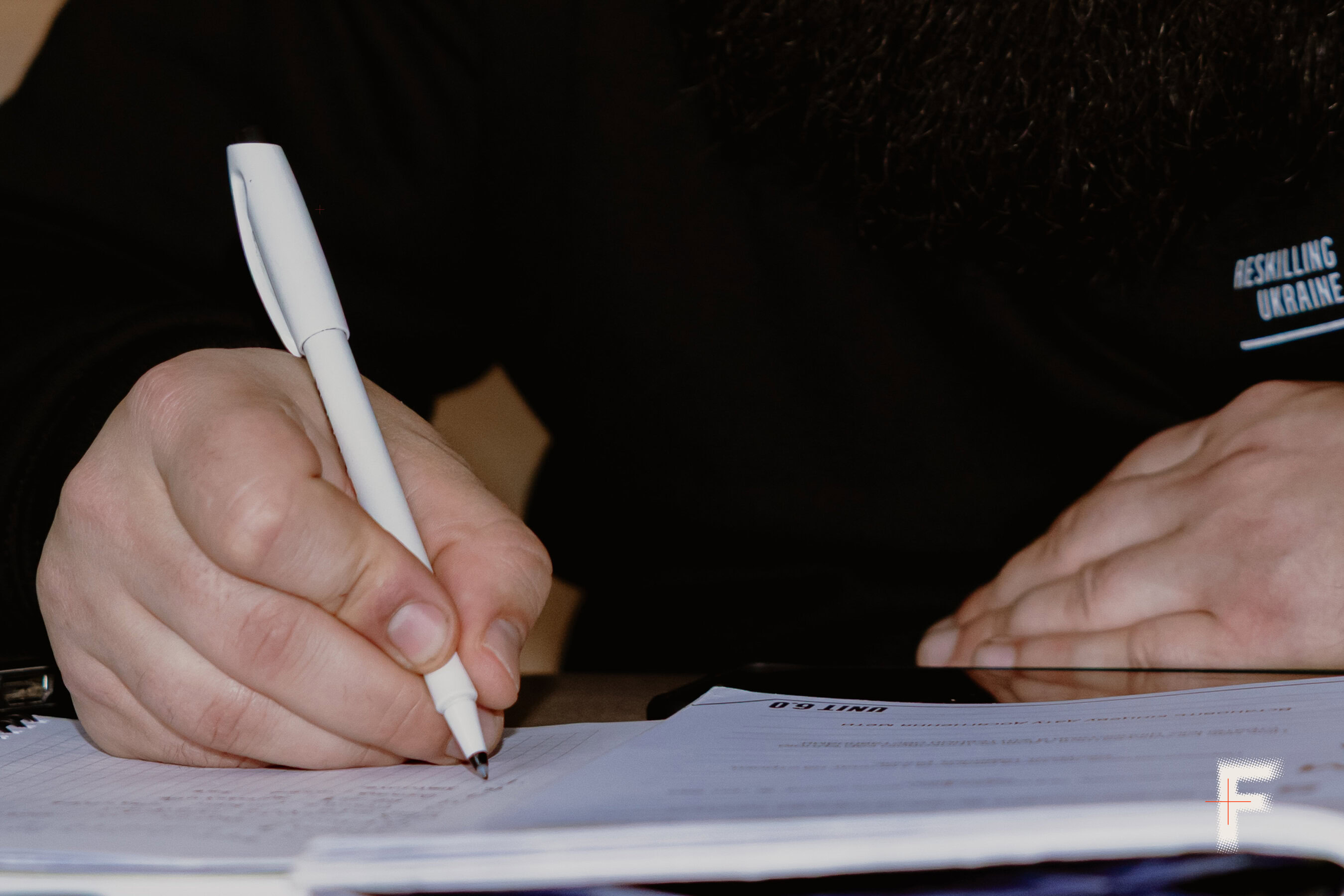
Based on Dmytro’s experience, veterans unsure how to move forward are the ones who reach out. Together, they explore job search platforms and work on their CVs. The primary goal is to determine further steps.
The veteran shares that while career consultations are popular among civilians, this service is new for veterans. He believes this work could suit veterans returning to civilian life who want to continue serving others — particularly former service members. It requires well-developed empathy, discipline, and the ability to think outside the box to consider career development options that had not previously crossed their minds.
“It is also important not to play the ‘savior’ because if you do everything for the veteran, he may lose his motivation. My job is to show them the possibilities and provide guidance. I cannot say which is better to choose — programming or the defense industry. I only help them see the opportunities. I can also suggest connections for other interesting activities,” Dmytro says.
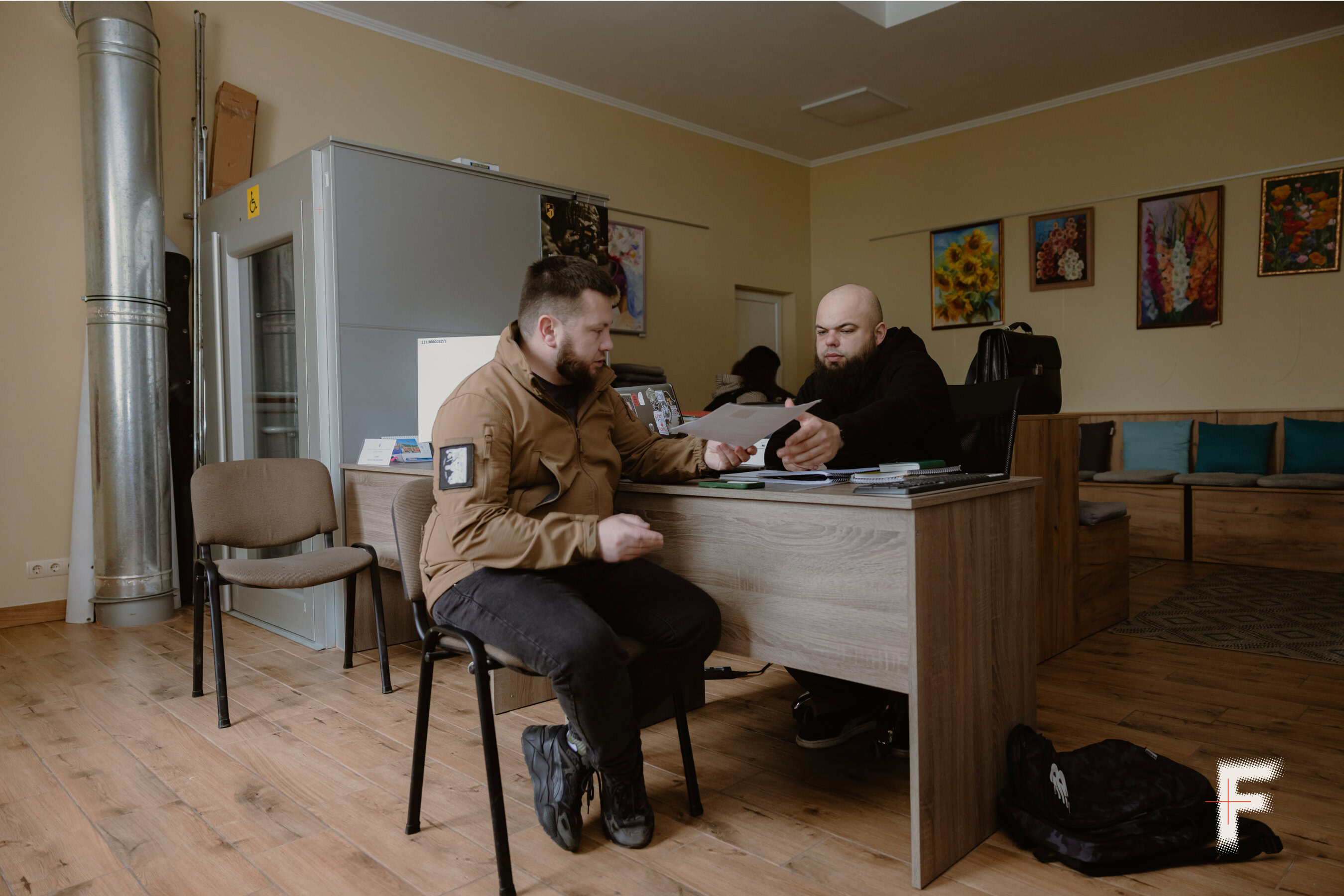
“I know his path, and he understands mine, so it’s easier to trust him”
Taras Lahno, who came to Dmytro Ilin for a consultation, served in the 125th Territorial Defense Brigade. In 2024, his unit’s position was attacked by Russian guided bombs. Taras spent two years undergoing treatment and rehabilitation before returning to serve in a rear unit. In early 2026, he was granted disability status and discharged from the military for health reasons. He has only just begun his transition to civilian life. Taras says he reached out to a career counselor to understand himself better and find a path he truly wants to pursue.
“I am interested in finding my place in society, as well as communicating with Dmytro because he understands my journey. I also want to support him as he starts his new endeavors,” Taras Lahno says.
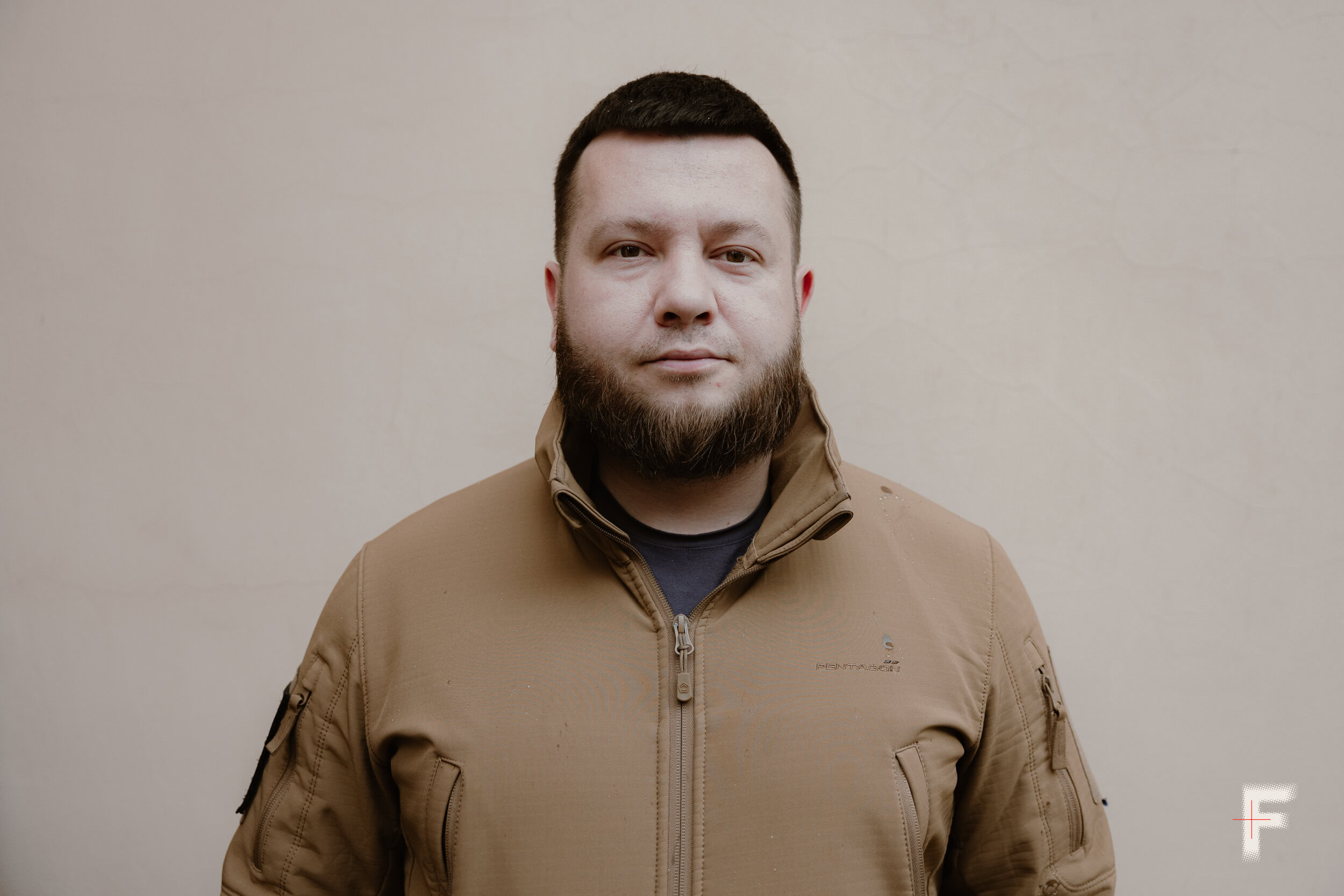
Before his military service, Taras worked in sales. Now, however, he is interested in art and has begun working with a pottery wheel. His younger sister works as a pastry chef, so his ideas for future development include opening his own creative space or a family confectionery. In addition to starting a business, the veteran plans to master video editing and is currently looking for courses to enroll in.
“I find it easier to trust Dmytro, and I also like the atmosphere of our meetings. It is so informal and friendly; I don’t feel any pressure here. The shared veteran experience brings people together,” Taras Lahno notes.
After the consultation, Dmytro and Taras go out for a smoke break. Later, they will have coffee in the office, chat about personal topics, and say goodbye until their next meeting.

Opportunities for veterans returning to civilian life
Currently, Dmytro Ilin works as a project manager for veteran policies within the Lviv agglomeration. He continues his work as a career counselor for veterans, undergoes therapy, maintains his interest in theater, and stays active in sports — specifically participating in group swimming sessions with other veterans. It is within these veteran communities that he feels “among his own,” and he advises former soldiers returning to civilian life to seek out the company of fellow veterans.
Dmytro conducted the consultation with Taras Lahno at the Veteran’s House office in Lviv. Veterans and soldiers can access legal, psychological, and social services here free of charge. The center hosts support groups for families of those missing in action, while lawyers and psychologists travel to local communities and hospitals to provide consultations for veterans, soldiers, and their families.
Thanks to the Veteran’s House, veterans and soldiers can participate in free recovery retreats and sightseeing trips. You can reach them by phone at 098 519 8920 or contact them via social media.

The UNIT 6.0 program by the Reskilling Ukraine project, where Dmytro Ilin completed his training, has launched a new intake for its “Career counselor” course. The program will last from May 25 to June 19 in western Ukraine. If you are a veteran who was discharged from service more than six months ago, you are eligible to apply. Applicants should be prepared to work with people, be proficient in MS Office, and preferably have a university degree.
What does the program consist of?
– Career guidance and career planning
– Employment and HR tools
– Veteran adaptation to civilian employment
“A consultation only highlights opportunities; everything else is up to a veteran. When I started the training, I wasn’t sure what I wanted to do in civilian life. Now, I have found my calling in communicating with people who have shared my experiences. I see understanding in their eyes, and that is what matters most,” concludes career counselor Dmytro Ilin.
***
Hi, we are Mariia and Anna, the authors of this article. Thank you for reading to the end.
After returning from service, veterans must readjust to civilian life and often look for new jobs. A career counselor can help by assessing the person and their military service skills that may now be useful. When a career counselor is also a veteran who has gone through the adaptation process, the “peer-to-peer” principle applies, which enhances cooperation. Reaching out to a counselor can be a solution for veterans who don’t know what to do next.
Every story starts with your support. Join the Frontliner community so we can keep up documenting Russia’s war against Ukraine from the front line and the rear.
***