A life full of love: How veteran Olha Benda embraced motherhood a second time after losing a limb
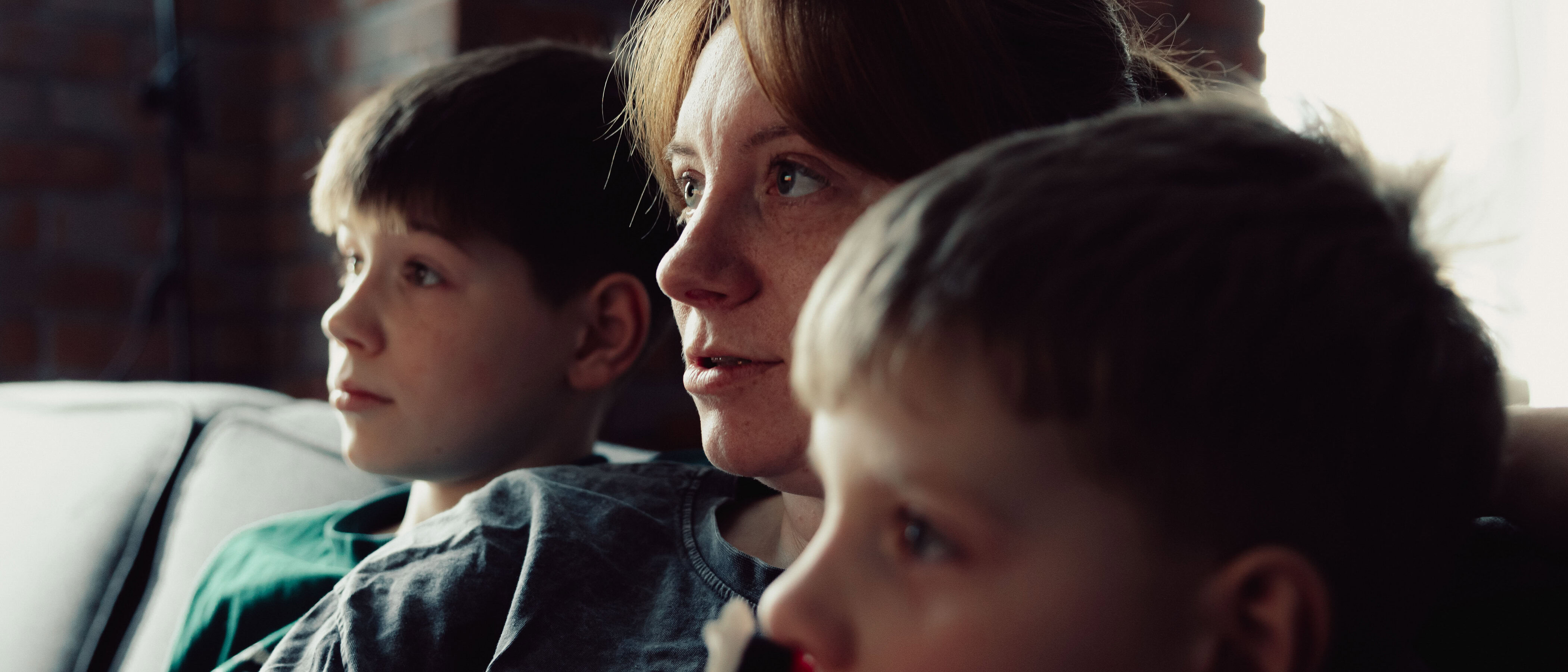
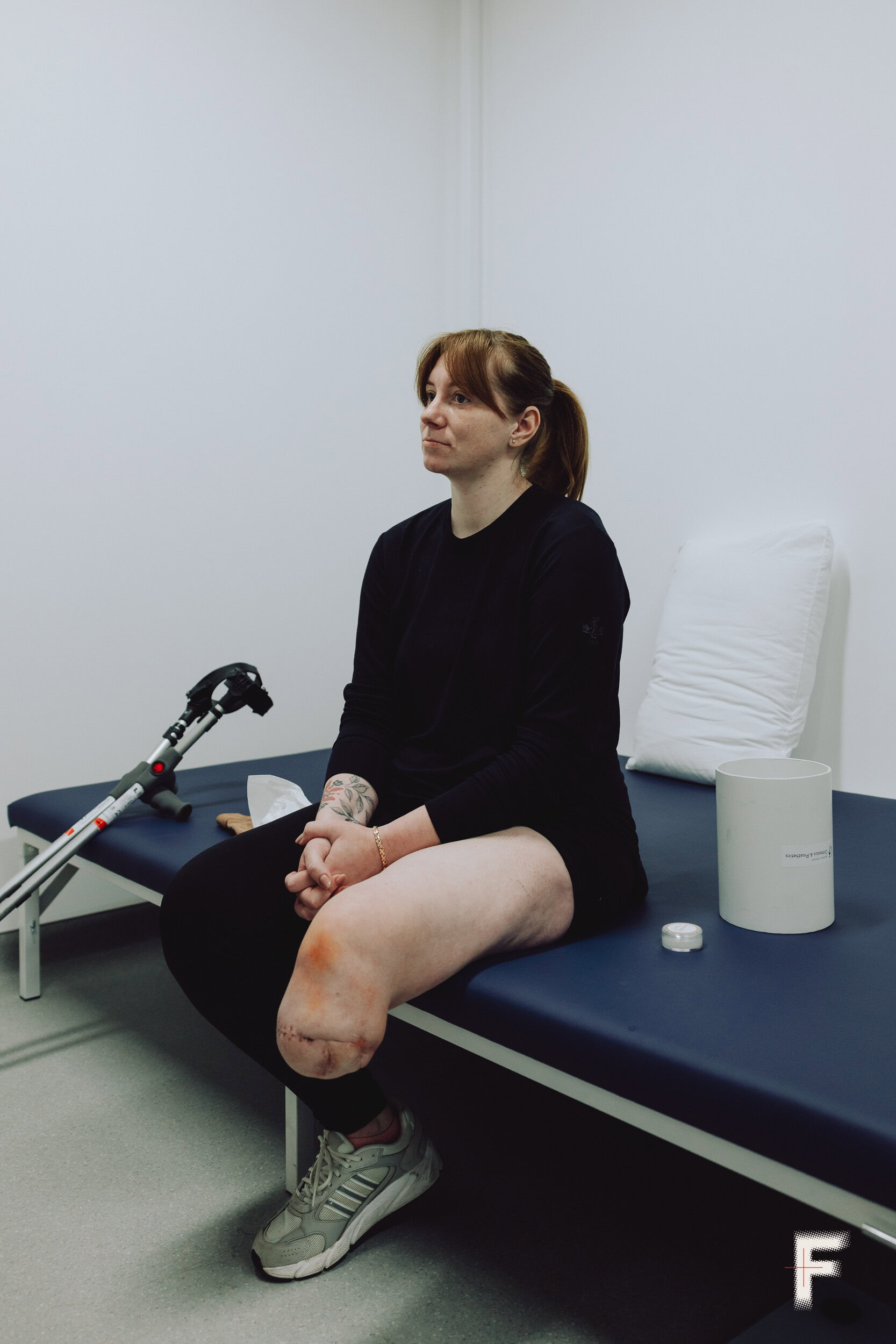
Veteran Olha Benda’s story is living proof of what a life with a prosthesis can be. Currently she is the first captain of Ukraine's Women's Amputee Football National Team, and also a sports administrator and a mother to two boys. Benda lost her leg at the front in 2017, well before the full-scale invasion began. Yet she notes that her biggest worry right now isn't the daily reality of her amputation, but rather a growing sense that veterans are being divided based on when they went to war. Frontliner reporters explore her story in detail.
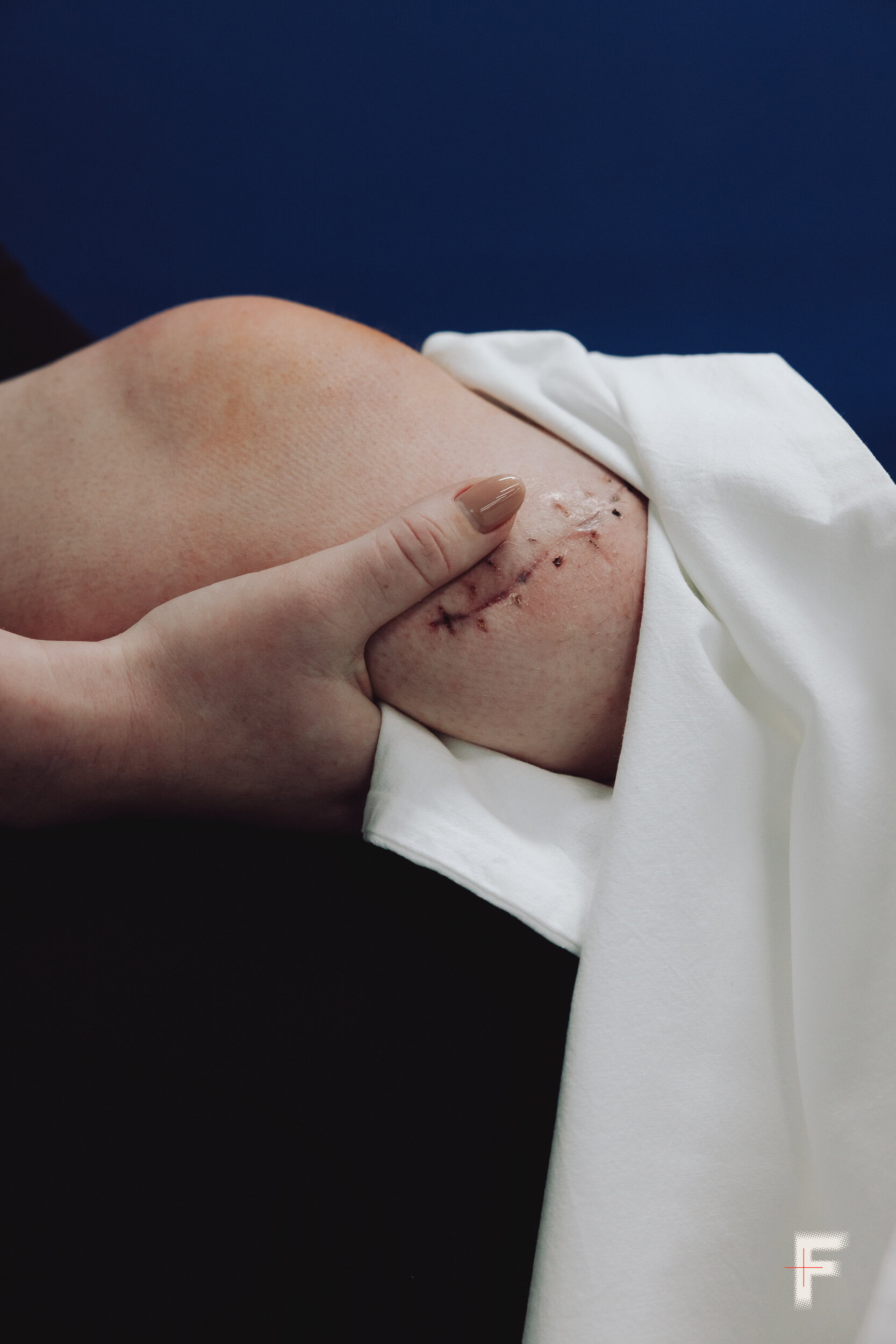
Olha is currently recovering from recent surgeries on her leg. The veteran underwent two operations in which doctors removed a surgical thread left in her residual limb eight years ago, as well as neuromas that had caused her pain for years. As a result, she has had to put her training on hold and return to rehabilitation.
I was competing against men
because there were simply no women in my category,
Sports have always been a significant part of her life, Olha says. In school, she participated in track and field, later taking up CrossFit. Even after her amputation, she refused to give up her active lifestyle and tried out for the Invictus Games.
At the time, it was one of the few opportunities for veterans to compete at the international level. Olha completed the training but encountered a lack of gender division in the scoring system.
This meant that regardless of how well women performed individually, they automatically lost in the overall rankings. As a result, Olha did not make the team. After this, she decided to stop going to tryouts. For her, having a level playing field was just as important as the sport itself.
The Invictus Games eventually changed their rules to take gender into account. However, the veteran had already made up her mind and had no desire to return to that format.
Instead, she found her calling in amputee football. It was there, she says, that she experienced not just competition, but a true sense of teamwork and support for the first time. Over time, Olha became the first captain of the Ukrainian Women’s Amputee Football National Team.

“Mentally and emotionally, I wasn’t ready for it at the time,” she admits. “When they announced that I was the captain, it was a mix of pride and a tremendous weight of responsibility.”
Olha is the only veteran on the team; the rest are civilian women. The captain believes it is harder for them because they do not have the same support network that the military personnel receive. Because of this, she helps the women adapt.
“The team is very important to me,” Olha says. “There has to be mutual support and equal opportunities. Without that, there is no point in participating.”

It was important for me to find a woman
who had already gone through a pregnancy with a prosthesis,
Being a mother with an amputation
Sports are not the only thing keeping Olha active. Back in 2019, leading up to her second pregnancy, she purposefully set out to learn about the realities of motherhood after an amputation. She emphasizes that she never viewed getting pregnant while relying on a prosthetic limb as a problem. However, at the time, she was one of the few public veterans with such an experience
However, the veteran chose a different direction from the women she had spoken with. Most of them shared that the physical strain during their final months of pregnancy forced them to rely on a wheelchair or crutches. Olha was uncompromising on this issue.
“I am young, strong and independent,” she recalls. “I said I wanted to spend my whole pregnancy on my feet with my prosthesis. It was extremely difficult, though, because I had to walk up to the sixth floor every day.”

Mark will just press a Lego block against his leg and say,
‘I have a prosthesis too’,
In 2020, she gave birth to her younger son, Mark. Today, her children see her prosthesis as nothing out of the ordinary. To them, their mother is not a person with a disability, but someone who is constantly on the move and gets everything done.

How love became an anchor
Her husband, Oleksii Benda, helped her through the rehabilitation period following her injury and later supported her transition to motherhood with a prosthesis. He took on a share of the household chores and became Olha’s main source of support.
“No one made any promises to anyone,”
I called him from the hospital
and told him my leg was gone.
He just replied, ‘I know, I’m already on my way.’
While Olha was recovering in the Pokrovsk hospital, her husband was already reaching out to foundations in the U.S., researching different types of prosthetic feet and exploring state-provided prosthetics programs. His confidence became Olha’s greatest source of comfort. She emphasizes that the amputation had virtually no impact on their marriage.
“I realized that he wasn’t going to leave me,” she explains. “He didn’t love me for a specific reason, but simply for who I am. It wasn’t about the physical body. To him, I remained exactly the same person I had always been. It is just that now, instead of a leg, I have a prosthesis.”
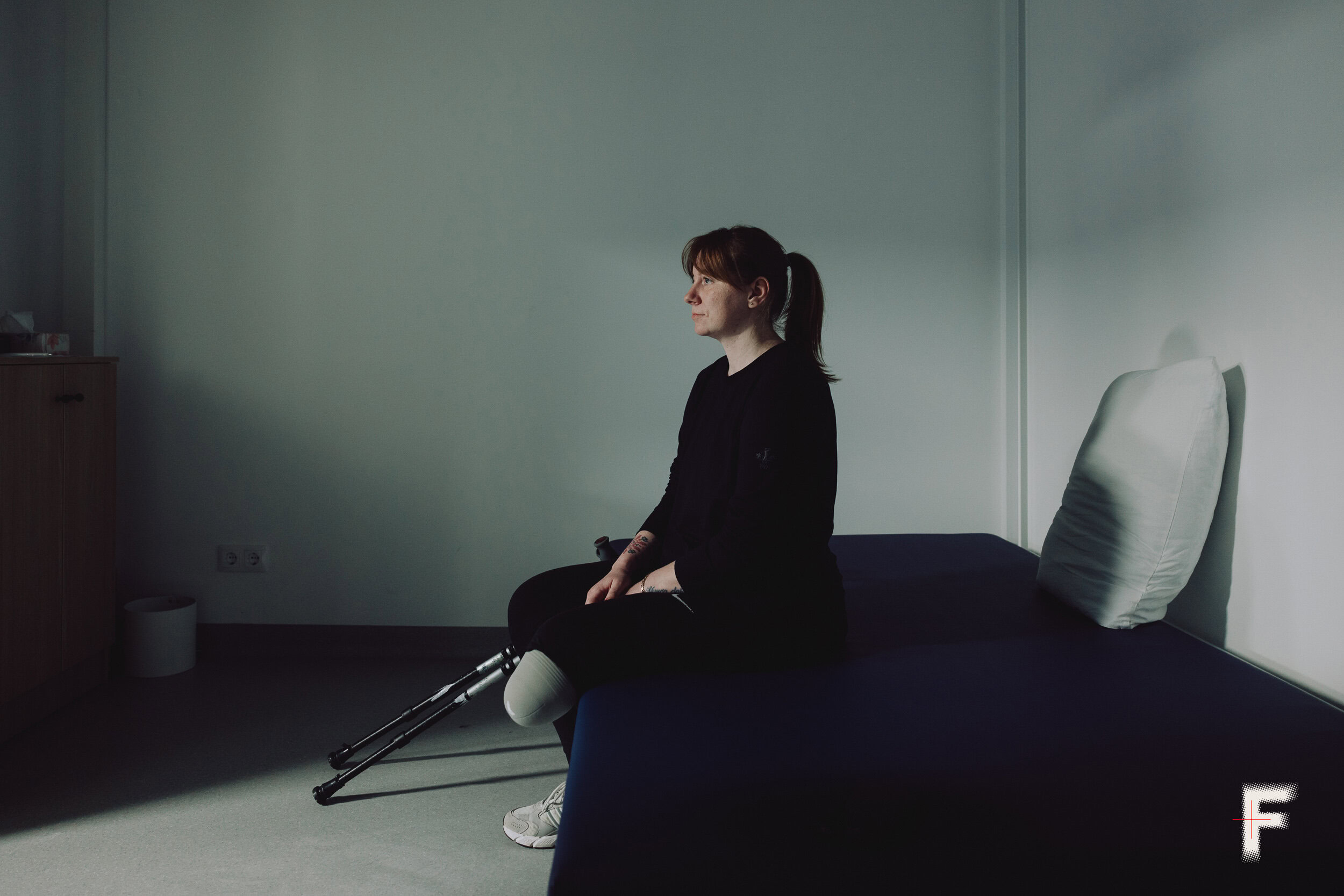
At the start of the full-scale invasion, Olha’s husband returned to military service. In January 2023, following battles near Bakhmut, all communication was lost. Oleksii went missing in action. Olha says this marked the beginning of severe depression for her.
“Emotionally, it was incredibly difficult,” she says. “I didn’t want to talk to anyone. Somehow, everything just felt so numb.”
At that time, little Mark became her new anchor. The child barely remembers his father. Mark was only 13 months old when the full-scale war began. Today, he knows his father only from photographs and understands that the search for him is ongoing.

I smiled for the first time only nine months
after my husband went missing,
Did they shoot at Ukrainian troops in 2017?
Her older son, Dmytro, was only 18 months old when Olha was wounded. Since 2016, she had been serving as a cook in the 72nd Mechanized Brigade named after the Black Zaporozhians. She says her decision to join the military was intuitive.
“Many people ask how I could leave my child,” Olha recalls. “But back then, it felt like if everyone did their part, it would all be over quickly.”
On May 14, 2017, shelling began near Avdiivka. Olha was asleep when an enemy shell exploded next to the building where the military personnel were staying. The blast wave blew out the windows and doors, throwing her to the floor. The shell embedded itself in the ground just 20 centimeters from her leg.
“It was terrifying and yet somehow incredibly beautiful. The ground rose up as if in slow motion,” Olha says, describing the moment of the second explosion right before she blacked out.
When she came to, her brothers-in-arms were already by her side applying a tourniquet. However, they struggled to do it quickly. Olha’s injury had deeply shocked the men.
“I was the only female soldier in the unit, so they were accustomed to seeing me in the kitchen, rather than in a pool of blood,” she notes.

While Olha waited for evacuation, her comrades tried to hide the true extent of her injury. They turned away so she would not see the fear or shock in their eyes over what had happened to her. Looking at her blood-soaked pants, Olha believed until the last moment that it was just a minor wound. Reality only caught up with her inside the evacuation vehicle.
“When they put me in the medevac, my left foot was covered in blood. It felt hot, and I was so hot,” Olha recalls. “I asked the nurse to adjust my leg because I was afraid to move it. She walked over, dramatically pulled back the blanket and said:
What leg?
You don’t have a leg.
Back in 2017, it was rare to see people with prosthetics out on the streets. Therefore, the veteran had never really thought about what her future would hold.
ATO/JFO veterans receive less support
Today, Olha says her greatest concern is not the challenge of living with a prosthesis, but rather the feeling of division among veterans. According to her, those wounded during the ATO/JFO period and those injured after 2022 are perceived differently.
“Sometimes people ask, ‘Were there actually shootings back then?’ or ‘Why did you go there? No one sent you,'” Olha says. “It is infuriating. I volunteered because I wanted our country to stay united.”

This division is also evident when it comes to state aid and charitable foundations. Olha recalls a foundation that, she says, denied her rehabilitation support simply because she was wounded in 2017 rather than during the full-scale war. There is also a gap in funding. The state provides a smaller budget for civilians and ATO veterans compared to the new programs available for those injured recently.
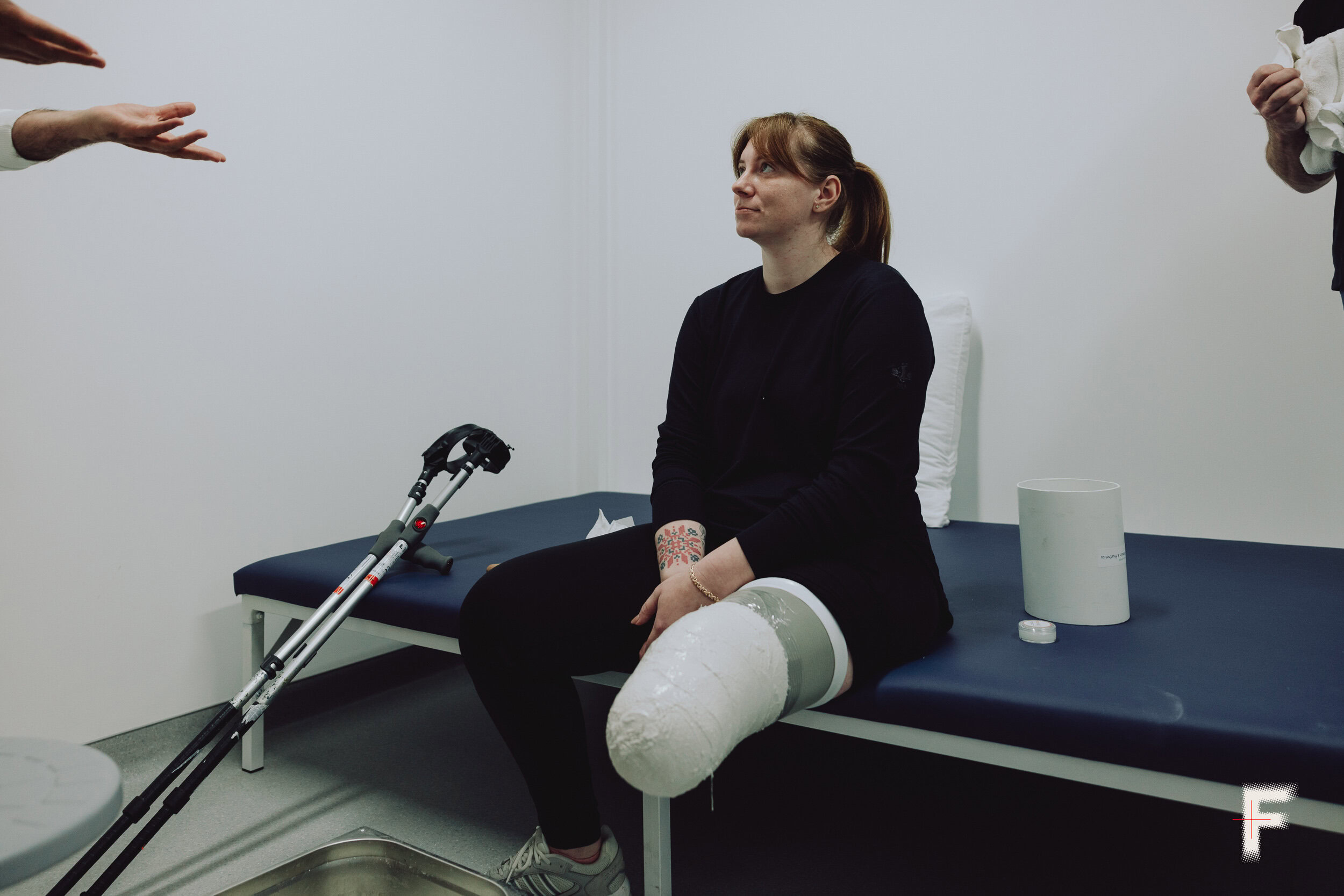
“It hurts me,” the veteran emphasizes. “No one should devalue the fact that we stepped up back when the war hadn’t yet reached every home.”
Olha also recalls being accused of fighting in the ATO “for good money.” She had to defend herself, pointing out that the pay was far from ample — in 2017, she earned 3,000 hryvnias a month.
Veteran Olha Benda emphasizes that she would not change her decision to join the military in 2016. That was when she met her future husband and the people who became her second family.
***
Olha Benda’s story shatters the stereotype that living with a prosthetic limb puts a person’s life on hold. It highlights not only the injury itself but also the journey of adaptation through sports, motherhood, rehabilitation and a return to routine. Narratives like this help change the public perception of individuals with prosthetics, proving that losing a limb does not mean losing one’s identity, goals or opportunities.
Every story starts with your support. Join the Frontliner community so we can keep up documenting Russia’s war against Ukraine from the front line and the rear.
***