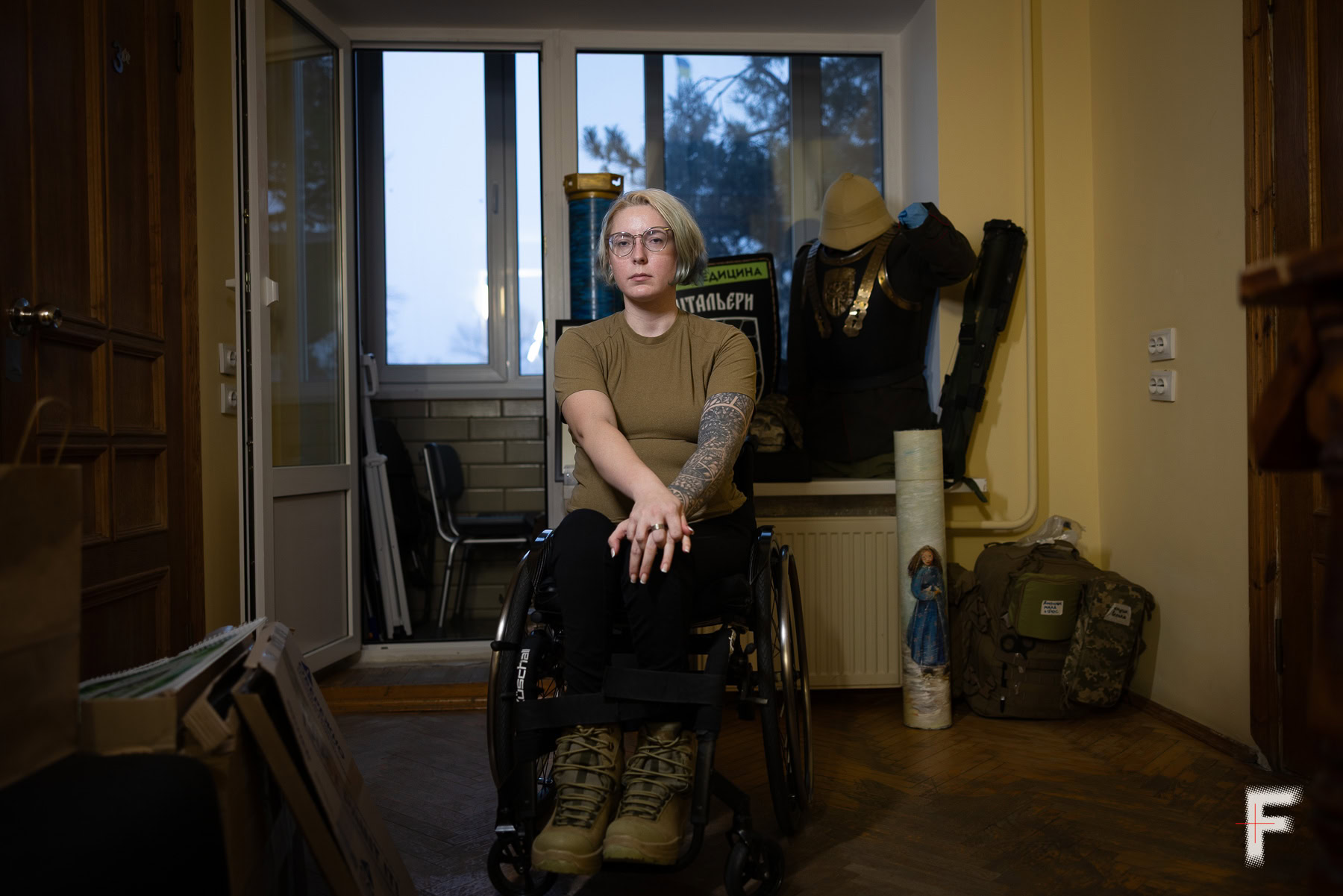
“Our strength lies in mobility and independence”: Yana Zinkevych on changes in the Hospitallers’ work
The threat posed by enemy drones has made reaching wounded soldiers nearly impossible. Donations to support the work and equipment of the Hospitallers are declining sharply, as is the number of men serving in the medical battalion, since no exemption from mobilization is in place. Frontliner spoke with Yana Zinkevych, the founder of the Hospitallers, about these and other challenges facing volunteers under current conditions.
Frontliner: In April, reports emerged that your base was destroyed in a Russian attack. Has it been restored?
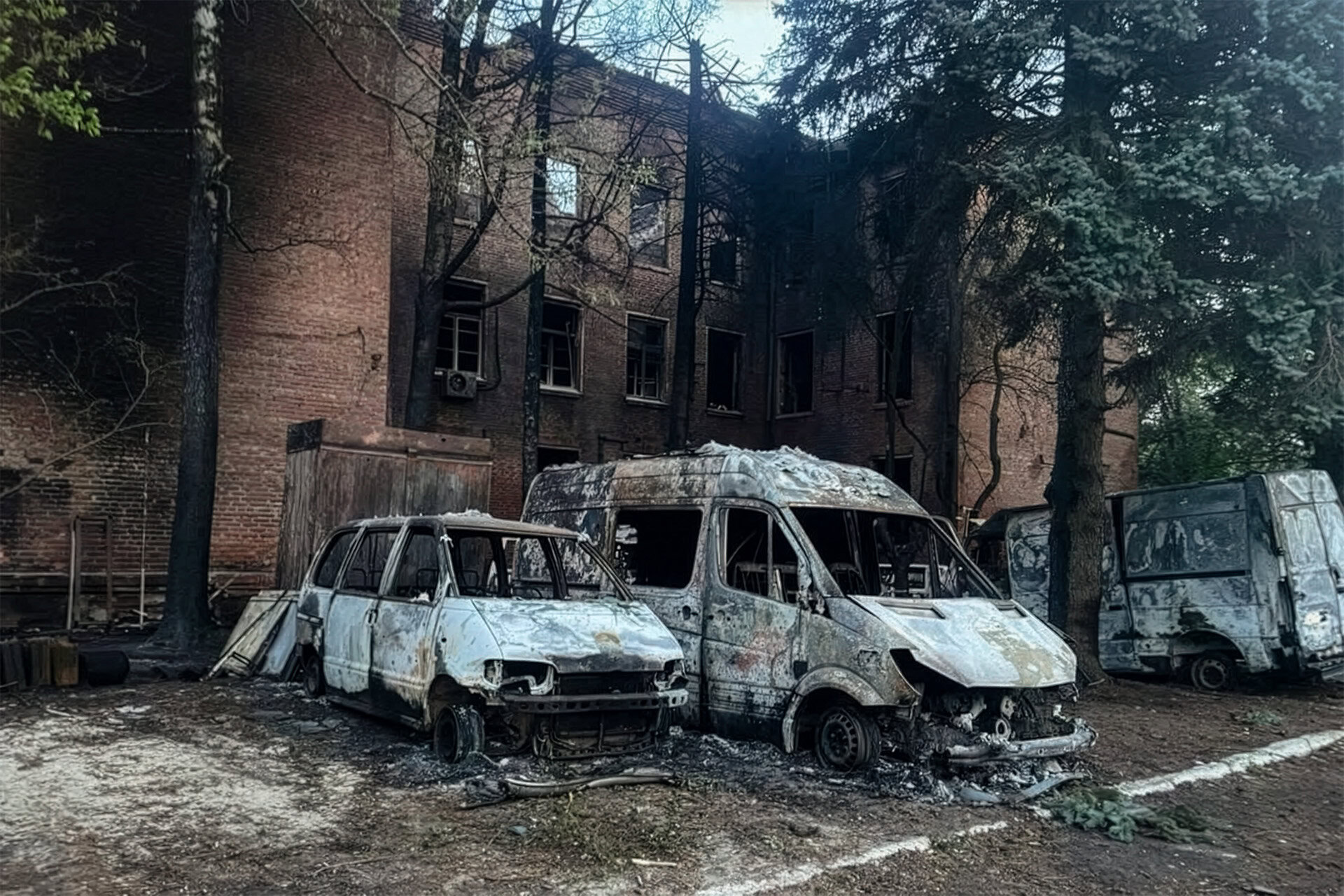
Yana Zinkevych: On April 25, 2025, the city of Pavlohrad came under fire, and we were hit. We were the direct target of two Shahed drones. Unfortunately, this was bound to happen sooner or later, because we had been based there since 2015. We lived there permanently, and everyone in Pavlohrad knew where we were. Military personnel frequently stayed there as well; we never turned anyone away. In effect, it functioned as a logistics hub.
For the six months leading up to the strike, we operated much more cautiously, fully aware of the risks. Whenever an air raid alert was issued, we left the premises and stayed outside the base perimeter.
Importantly, no one was injured in the attack. We also managed to save our animals. There were small kittens on the ground floor that were scheduled to be sterilized. But the reality is that everything was completely destroyed. Because of the extreme heat, firefighters could not enter the building for more than a day. Everything burned, including all of our property. We had moved much of our equipment to other locations in advance. Even so, 4,000 tourniquets were destroyed — fortunately, only part of what we had — along with sleeping mats, sleeping bags, body armor, ballistic plates and much more.
Frontliner: Does the battalion have many such bases?
Yana: Right now, we have two main bases. One was in Pavlohrad, and the other is in Kyiv region. I won’t disclose the exact location. At this point, only the Kyiv-region base is running.
We recently launched a fundraising campaign for a new base in the eastern region, and we have already raised 17.9 million hryvnias. We plan to purchase a new base soon, at a cost of 24.5 million hryvnias. It is a very large site, 4.6 hectares of land and about 6,000 square meters of buildings.
Frontliner: The Hospitallers have been operating for more than 10 years. How much has your work changed since the start of Russia’s full-scale invasion, and where does it stand today?
Yana: The longer the war goes on, the more dangerous our work becomes. Back in 2022, it was largely an artillery war, with older weapons. Today, far more advanced weapons have made the situation much more dangerous, including FPV drones and various fixed-wing drones. These threats force us to spend significant resources on electronic warfare systems, drone detectors, net launchers, protective nets, pumps and other equipment. All of this is essential for keeping our crews safe and for ensuring effective evacuations.
Frontliner: Do you still operate on the front line?
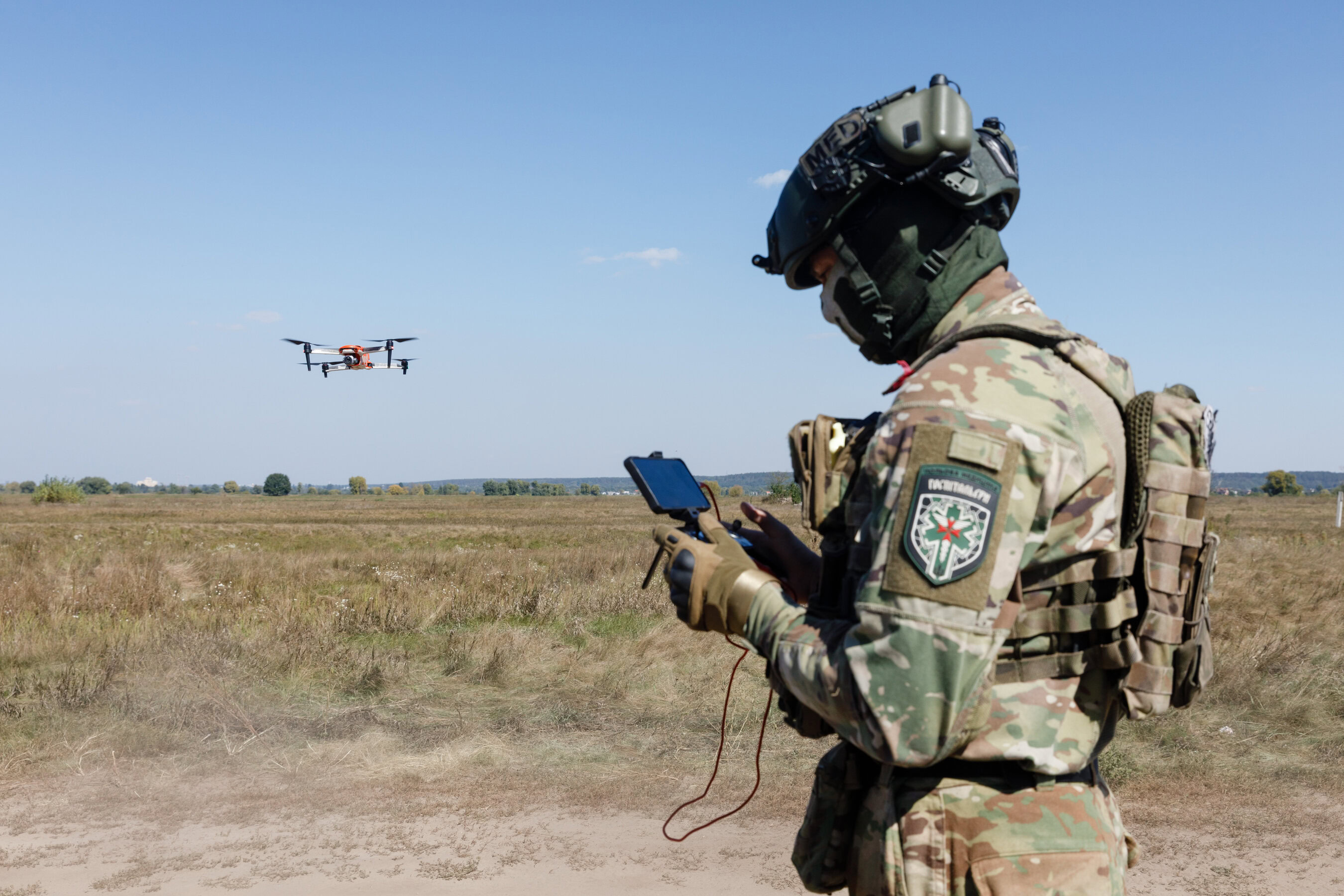
Yana: Yes. We provide casevac — casualty evacuation by nonmedical transport — as well as medevac, run stabilization points, and transport patients between stabilization points and hospitals. In other words, we work across the entire evacuation chain. That said, there is no longer that kind of uncomplicated evacuations using only armored vehicles, as there was earlier. In some cases, frontline evacuations now take place on foot, on ATVs, or using unmanned ground vehicles. We operate across all sections of the front. When fighting extended into the Kursk sector, we were active there as well, primarily working in coordination with the Main Intelligence Directorate and the Special Operations Forces.
Frontliner: Who makes up a crew?
Yana: Depending on the stage of evacuation and the specific unit, each crew typically includes a medic, a paramedic, a driver and a person responsible for security. That role isn’t just an armed guard. It’s someone who monitors electronic warfare systems, drone detectors and, overall, coordinates operational actions if an enemy drone approaches.
Frontliner: Why haven’t the Hospitallers become part of Ukraine’s Armed Forces? Were there plans to do so?
Yana: There are no such plans at the moment. Of course, we’ve received many proposals. But it’s important to understand that remaining a volunteer unit gives us maximum independence. It allows us to act quickly and respond exactly when and where we’re needed. If the situation on a particular section of the front deteriorates, we aren’t tied to a single location. We can shift slightly, start working with one unit or another, and adapt as the situation changes.
Frontliner: Compared with medics in Ukraine’s Armed Forces, what do the Hospitallers do better? And what are the shortcomings that still need to be addressed in the military’s medical services?
Yana: First of all, the Hospitallers have some of the best logistical support possible. We provide our people with everything they need — from basic items like underwear to boots, hearing protection, sleeping mats, sleeping bags, body armor and helmets. In short, everything required for living conditions, personal care and vehicle maintenance is issued through our warehouses. For us, it’s essential that everyone receives exactly what they need.
If you compare this with army logistics, the difference is significant. What was issued back in 2014 — for example, the old ‘Dubok’ camouflage — has since become the baseline standard. Today, soldiers are issued both winter and summer uniforms, body armor and helmets. And fortunately, the equipment is generally of good quality, so there’s no real need to buy additional gear. Thanks to decent salaries, service members can also afford to purchase anything extra they may need.
Even so, there are still ongoing costs that weigh on all units. Not everything can be provided by the state or by volunteers, and in many cases people still have to chip in themselves. As for how our volunteers are treated, they know they will always receive everything they need for daily living. That’s why there is sometimes a certain amount of envy from other units; we simply try to provide as much as possible, to the fullest extent we can.
Frontliner: What do the Hospitallers represent for the army today? Are you still needed?
Yana: I believe we are still needed, but of course our role is much smaller now than it was during the earlier phases of the war, including the Anti-Terrorist Operation and the Joint Forces Operation. First and foremost, the Hospitallers today provide support to the units that specifically need us.
While we no longer operate as broadly as we did during those earlier periods, we still cover a significant stretch of the front. And as long as we have the strength, the resources and the capacity, we will keep working to the very end. And when, with some luck, victory comes, our resources and our people will be able to contribute to rebuilding the country — through rehabilitation programs, training initiatives and other vital areas.
Frontliner: How many people are currently working with the battalion?
Yana: On average, around 500 to 600 people are involved at any given time. These are people who are actively engaged, but not all at once — some work at the beginning of the month, some toward the end, and some in the following month. If you look at the numbers over the course of a year, we usually have about 500 to 700 active participants.
Frontliner: Are there still many people who want to join?
Yana: Back in 2022, we had a waiting list of several hundred people who wanted to join. Over time, those numbers dropped, largely because many people went on to join the military. Even so, we still see volunteers who are not subject to mobilization, for example, people over 60 or under 25. Some cannot serve for medical reasons, while others deliberately choose us as their first experience. They rotate with us as they prepare for possible future service or mobilization. About 25% of our volunteers are medics. Most of the rest do not have medical training, though that isn’t always required. Right now, our biggest challenge is drivers, and that’s where we face the most difficulty, because many drivers, including some of ours, have already been mobilized.
Frontliner: How does the selection process work? What does someone need to do to join you?
Yana: To join our unit, candidates generally need to complete seven to 14 days of training. Some of the courses are for medics, while others are for drivers, paramedics and people responsible for security. After successfully passing an exam and completing a simulation, they become eligible to join the battalion. They start with an internship, and a decision on full membership is made after that.
Frontliner: And once someone joins the unit, under what terms do they work with you?
Yana: Everyone in the battalion is a volunteer. This is unpaid work, done voluntarily, both inside Ukraine and, when needed, abroad. Roles vary: some people work at the base, while others serve as combat medics or paramedics on the front line. Each person decides for themselves what role they take on and at what stage they are involved.
Frontliner: Are there any payments, for example if someone gets injured?
Yana: Yes. We have an internal insurance system. If a person is killed, their family receives 1 million hryvnias in assistance. In cases of disability, the amount depends on the level — 100,000, 300,000 or 500,000 hryvnias. For minor injuries or concussions, payments range from 25,000 to 100,000 hryvnias.
The insurance covers not only combat injuries, but also injuries sustained while people are on duty, for example, in traffic accidents, equipment-related incidents or other emergency situations. We don’t distinguish between combat and noncombat injuries; people receive support based on how serious the injury is.
Beyond financial assistance, we arrange treatment at the private Dobrobut Medical Network clinic, both inpatient and outpatient. We also work with the Modrychi Rehabilitation Center and the Klevan Hospital, where people go through rehabilitation after serious injuries, ranging from two weeks to several months.
Frontliner: Why do people still join you, given that they could become combat medics in Ukraine’s Armed Forces, receive a salary and benefits?
Yana: There are probably a few different reasons. The first group includes people who are preparing to join the armed forces or other branches of the defense forces. They’re looking for a way to gain hands-on experience in a unit over a relatively short period of time, for example, up to three months.
The second group consists of people who are exempt from mobilization because of their civilian jobs but feel that this level of contribution isn’t enough for them. They’re not satisfied with being only financial supporters of the armed forces. They want to be personally involved and to work directly on the front line. That’s why they join our unit — or others like it — and take part in combat operations.
Frontliner: What motivates people to join the Hospitallers today? Has that motivation changed since the period of Ukraine’s Anti-Terrorist Operation in eastern Ukraine?
Yana: The motivation is pretty much the same for everyone. It comes down to our slogan and our core belief: ‘for every life.’ We help not only soldiers, but also civilians and even animals. We believe that even in war, humanity has to be preserved. That principle applies to all people and all animals who have been affected, and everyone deserves the help they need.
Frontliner: You’ve said that fewer trained medics are joining your unit than before. Given that people without medical education are legally restricted, for example, from administering injections, has anything changed in that regard?
Yana: No, nothing has changed. Procedures like infusion therapy, blood transfusions and medication are handled strictly by trained medics — that’s a hard rule for us. But at the very first stage of evacuation — for example, during casualty evacuation — medics aren’t always present. Using them there isn’t always the best use of limited resources.
Training a medic takes years: six years of education, several more in internship, and then additional hands-on training. It’s a long and demanding process. By comparison, a paramedic can be trained in a matter of weeks or a month. That’s why casualty evacuation is usually carried out by drivers and paramedics.
Frontliner: You don’t receive any funding from the state. How do you finance your work?
Yana: Everything we have comes entirely from donations. They come from Ukrainians and foreign donors, especially from the Ukrainian diaspora. Last year, the average donation was about 1,000 hryvnias per person. Now, it’s closer to 50 to 100 hryvnias. But it’s those small contributions that really add up to meaningful amounts. Right now, we’re getting by, not easily, and sometimes just barely, but we’re covering our expenses. It’s a bit easier during periods when we don’t take losses.
It’s also important to keep in mind that we have more than 80 staff members who keep the battalion running. That’s a large team, and paying their salaries means we constantly need funding just to cover basic operating costs. We also run an internal winter support program. This isn’t about cash handouts or anything like that — it’s practical, hand-on support for the families of those who were killed. In total, we support 115 families: 35 from our battalion and 80 across the Ukrainian Volunteer Army.
We’ve provided different kinds of help — generators for some families, EcoFlow power stations for others, heaters, firewood, and other essentials. The goal is to help them get through the winter with heat and electricity — not just this winter, but the next ones as well. Fortunately, last year we were able to support a large number of families in this way.
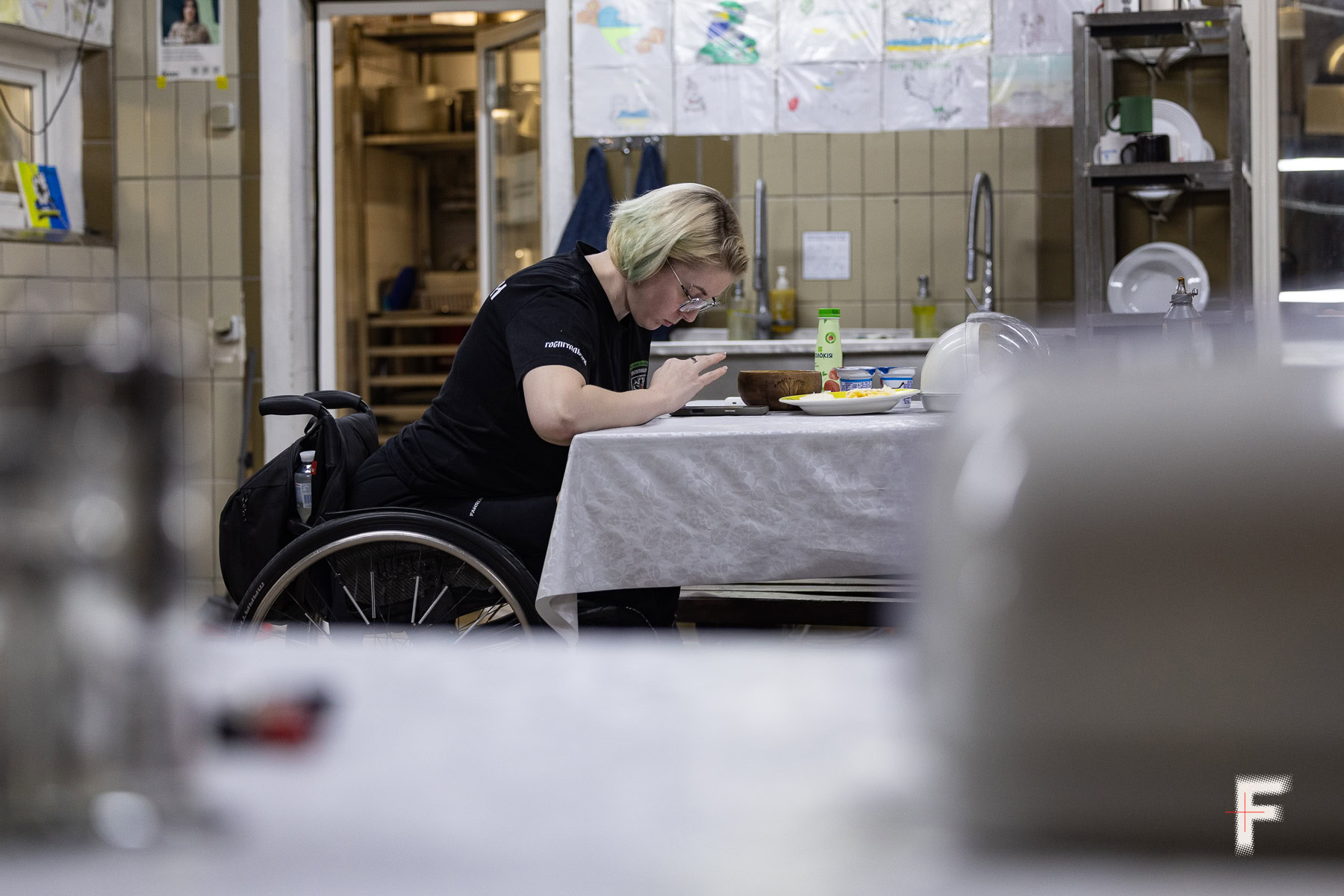
Frontliner: Are the Hospitallers a target for the enemy?
Yana: It’s not just us. All medics are targets. The enemy doesn’t follow international rules and deliberately goes after medics and commanders, because taking them out can destabilize a unit and cause the greatest physical and psychological damage.
That’s why, when our men and women head out on missions to provide aid and carry out evacuations, no one knows if they’ll come back alive. No one knows how a mission will end. And still, every person knowingly accepts that risk.
Frontliner: How high is the risk that Hospitallers’ medics could be taken captive?
Yana: Unfortunately, the risk is quite high. So far, eight of our people have been taken captive. One of them is still being held, at least, that’s what we believe. Four other of our people are listed as missing.
Frontliner: Do you train soldiers to provide first aid to themselves and their fellow service members? And with so many drones along the front line, does it now take longer for casualty evacuation teams to reach the wounded than it did before?
Yana: Absolutely. Over the years, we’ve trained more than 20,000 service members. That includes self-aid, helping fellow soldiers, and training specifically for combat medics. We tailor our programs to different roles and different stages of care.
Frontliner: How would you describe the biggest challenges the Hospitallers are facing right now?
Yana: Our biggest challenges are pretty much the same as those facing the armed forces overall. Russian offensives are intense, and the pace of the war keeps changing. We’re often trying to catch up with Russia, especially when it comes to new tactics and new weapons. That makes it hard to respond quickly. Even when we take the initiative and start fundraising for new, effective electronic warfare systems, there’s still a delay — both in getting approved and in raising the money. And delays are exactly what we can’t afford.
Frontliner: Do you plan to focus not only on evacuation, but also on rehabilitation and recovery for service members?
Yana: Yes. We want to start building a rehabilitation project, and realistically, that’s something we could begin within the next couple of years.
We’re already looking for a place where we could buy a facility and get it off the ground, but it will take serious investment.
I expect I’ll begin a dedicated fundraising effort specifically for this purpose, and hope people will step in to support it. From there, we’ll see what’s possible — how big the center can be and what it will focus on.
Our priorities are clear from the start: people with musculoskeletal injuries, spinal injuries and traumatic brain injuries — the most severe cases.
Frontliner: What challenges do you see when it comes to rehabilitation?
Yana: There are a lot of challenges. The biggest one is that Ukraine just doesn’t have enough rehabilitation centers. The need is huge. We’ve already started sending people to universities and specialized training programs, people who could eventually work with us or at other rehab centers.
But training those specialists takes years, not months, and building that kind of capacity requires real resources.
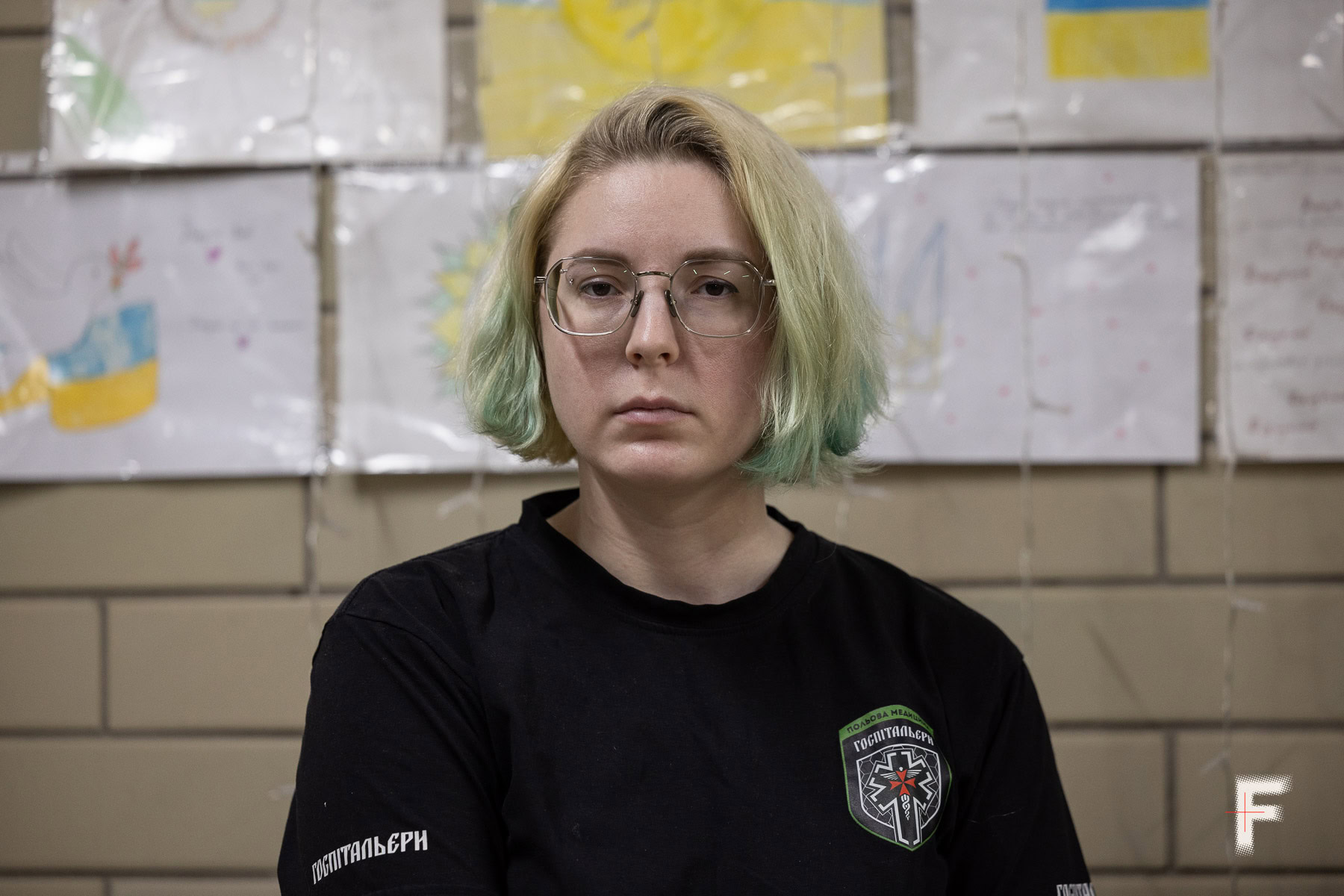
Frontliner: What are the main challenges for you personally right now?
Yana: I think the main challenge right now is survival — my own, and that of as many others as possible.
For me, that’s really what it comes down to.
Adapted: Myroslava Andrusyk