Women after service: how female veterans return to civilian life
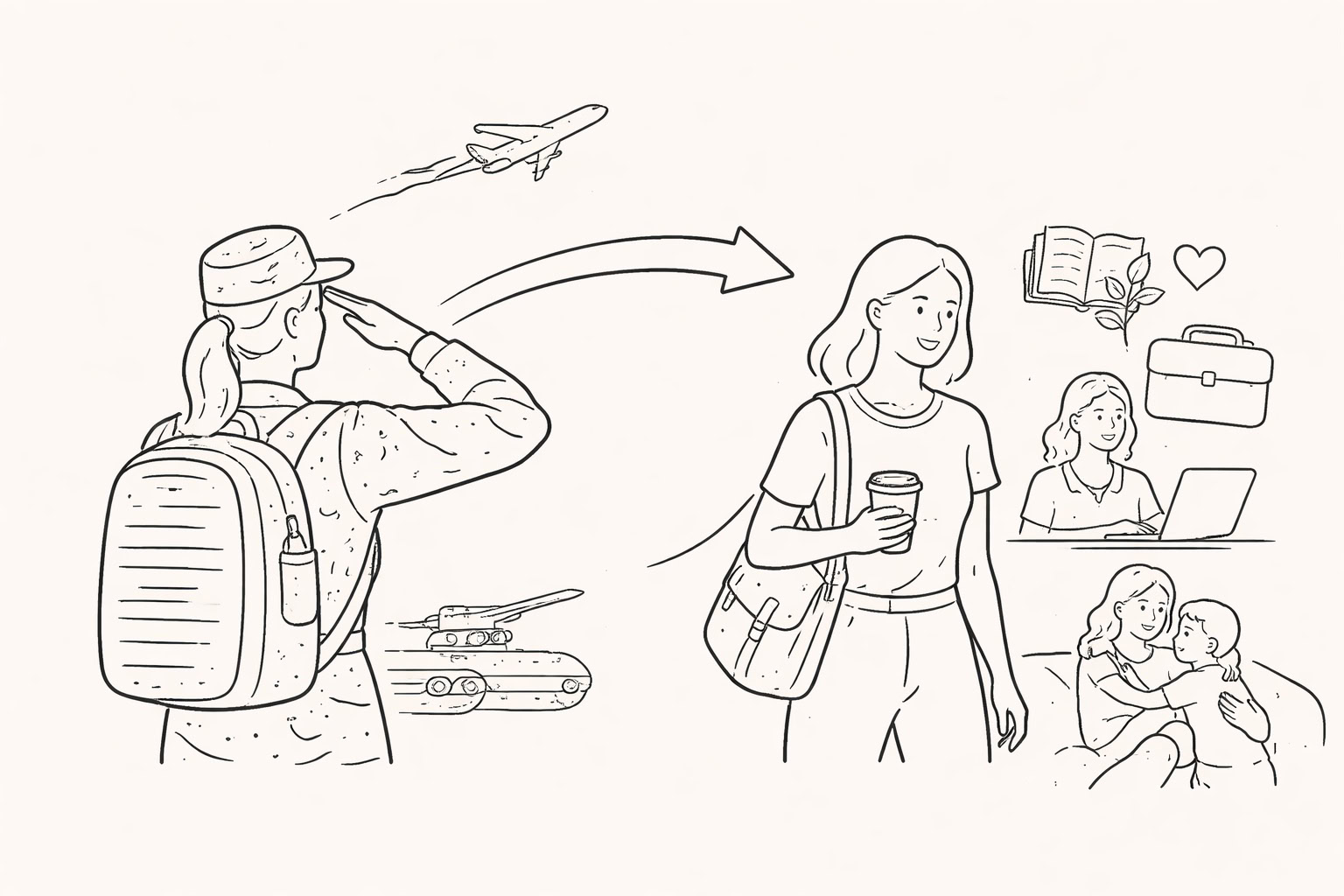
The number of women serving in the military has increased during the full-scale war, driving rising demand for post-service reintegration. This involves not only physical recovery, but also returning to civilian life, employment and family. The support system is expanding, but demand is growing faster, Frontliner reports.
As of 2026, tens of thousands of women serve in Ukraine’s defense sector. Some are already transitioning back to civilian life, forming a new group of veterans with distinct needs. In many cases, they face more complex social challenges than men.
The issue also affects families. Partners, children and parents undergo their own adjustment, meaning support systems must extend beyond veterans themselves.
Key challenges
After returning, women face a combination of factors: the psychological effects of war, difficulties finding work and shifting social roles. Some return to communities with little experience interacting with military personnel.
Medical issues are also common, including injuries, chronic conditions and the effects of stress, as well as impacts on reproductive health.
In 2025-2026, more specialized approaches have begun to emerge. Reintegration programs increasingly account for gender-specific needs. Dedicated support groups for women are being developed, along with programs for military families.
Psychological support is expanding, combining individual therapy, group sessions and social reintegration programs. Returning to work or retraining has become a key component.
Reintegration programs
The support system operates on several levels. The state provides basic services, while civil society organizations offer additional programs:
- State rehabilitation through the veterans policy system and medical institutions.
- Psychological support programs for service members and their families.
- Education and grant programs for retraining.
- Civil society initiatives supporting veteran entrepreneurship.
- Specialized programs for women veterans and their families.
Ukraine’s Ministry for Veterans Affairs coordinates part of these efforts, while international partners and charities play a significant role.
However, demand for support continues to outpace available resources. The number of women veterans is increasing alongside the duration of the war, as is the number of families in need. Some services are not available in all regions, with the greatest access concentrated in major cities.
As a result, the reintegration system requires expansion, including more programs, greater specialization and a stronger role for local communities and nongovernmental initiatives.
***
Frontliner wishes to acknowledge the financial assistance of the European Union though its Frontline and Investigative Reporting project (FAIR Media Ukraine), implemented by Internews International in partnership with the Media Development Foundation (MDF). Frontliner retains full editorial independence and the information provided here does not necessarily reflect the views of the European Union, Internews International or MDF.