“We don’t need ‘Rexes’”: why young people join the army even without favorable contracts
The average age of servicemembers in the Armed Forces of Ukraine is over 40. The army is aging, but lawmakers are working to change that. The conscription age was lowered from 27 to 25, and in early 2025, favorable contracts were offered to recruits aged 18 to 24. It is still too early to judge the success of these reforms. However, certain units have managed to effectively attract young people into their ranks. Frontliner explores why young people are joining the military and how they are introducing new technologies.
Certain units of the Ukrainian Defense Forces have successfully attracted young people to the military – sometimes even without offering special incentives. In the National Guard (NGU), the average age of a servicemember is 30, according to Interior Minister Ihor Klymenko last year. This is confirmed by several NGU units, including Azov, Rubizh, and Khartiia. In these units, young recruits join the infantry, unmanned systems, and artillery divisions.
One area where young people are in high demand is ground robotic systems (GRS). In the 2nd Corps of the Khartiia Brigade, these systems have become a key advantage. Young Khartiia members design machines that deliver equipment and food to hard-to-reach positions and evacuate the wounded, all while the operator controls the robot remotely.
It’s real work that you perform virtually,
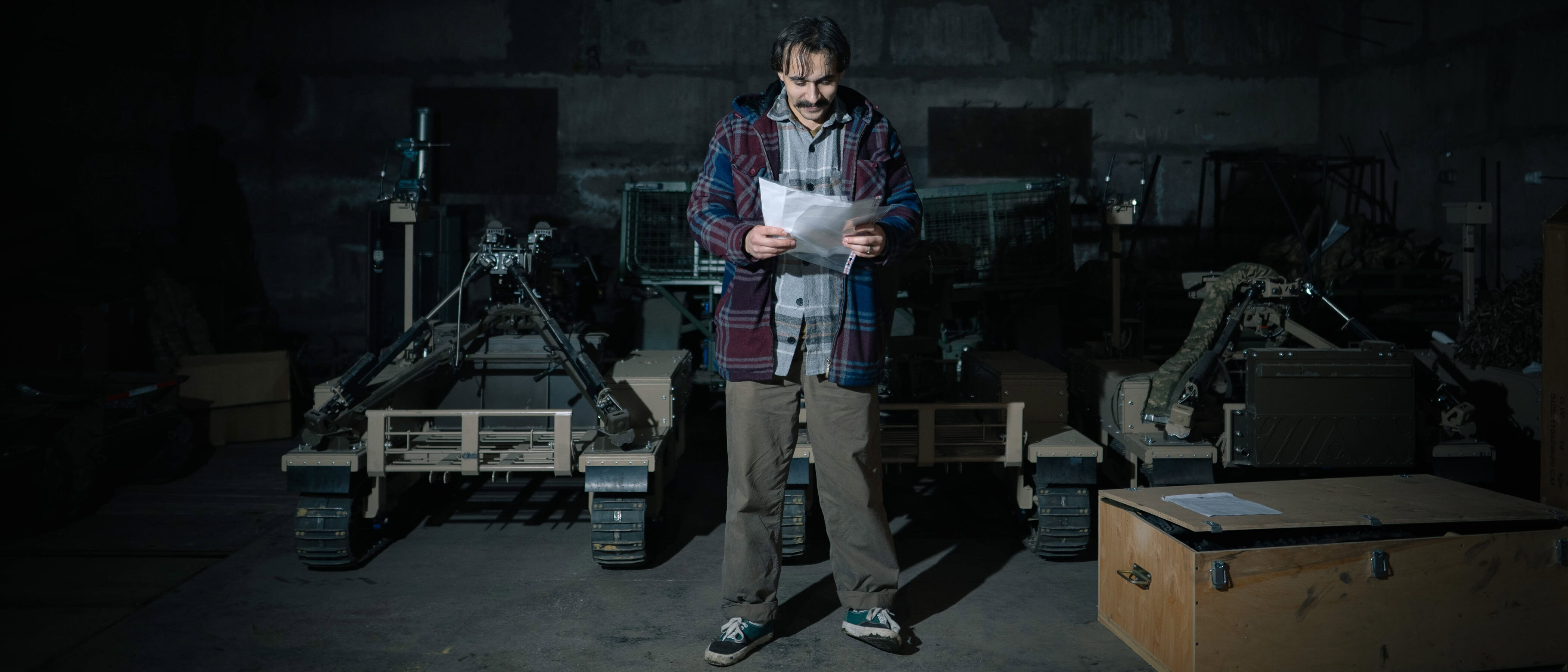
“It’s real work that you perform virtually,” explains the platoon commander of the logistics GRS in the special-purpose GRS company of the LAVA battalion, callsign Happy. He seems like someone who stepped straight out of a future battlefield. Yet across much of the front, robotic operations have become routine, and their role keeps expanding.
A 23-year-old takes command of a ground robotic systems platoon
‘Happy’ is 23 years old. He earned the rank of lieutenant after graduating from the National Guard Academy of Ukraine. Last year, he signed a contract with Khartiia and soon faced a challenge: leading the unit’s first GRS platoon. Like a classic startup, he started with just three people. Today, the platoon has grown into a full team, continuously supplying Khartiia with robotic systems.
We don’t need ‘Rexes.’ We need people who are engineers, mechanics,
and programmers,

According to ‘Happy’, young people are best suited to building and operating GRS. Growing up in a digital world, they quickly master complex systems even without formal technical training. Once the domain of a small circle of enthusiasts, robotics has drawn in more people during the war.
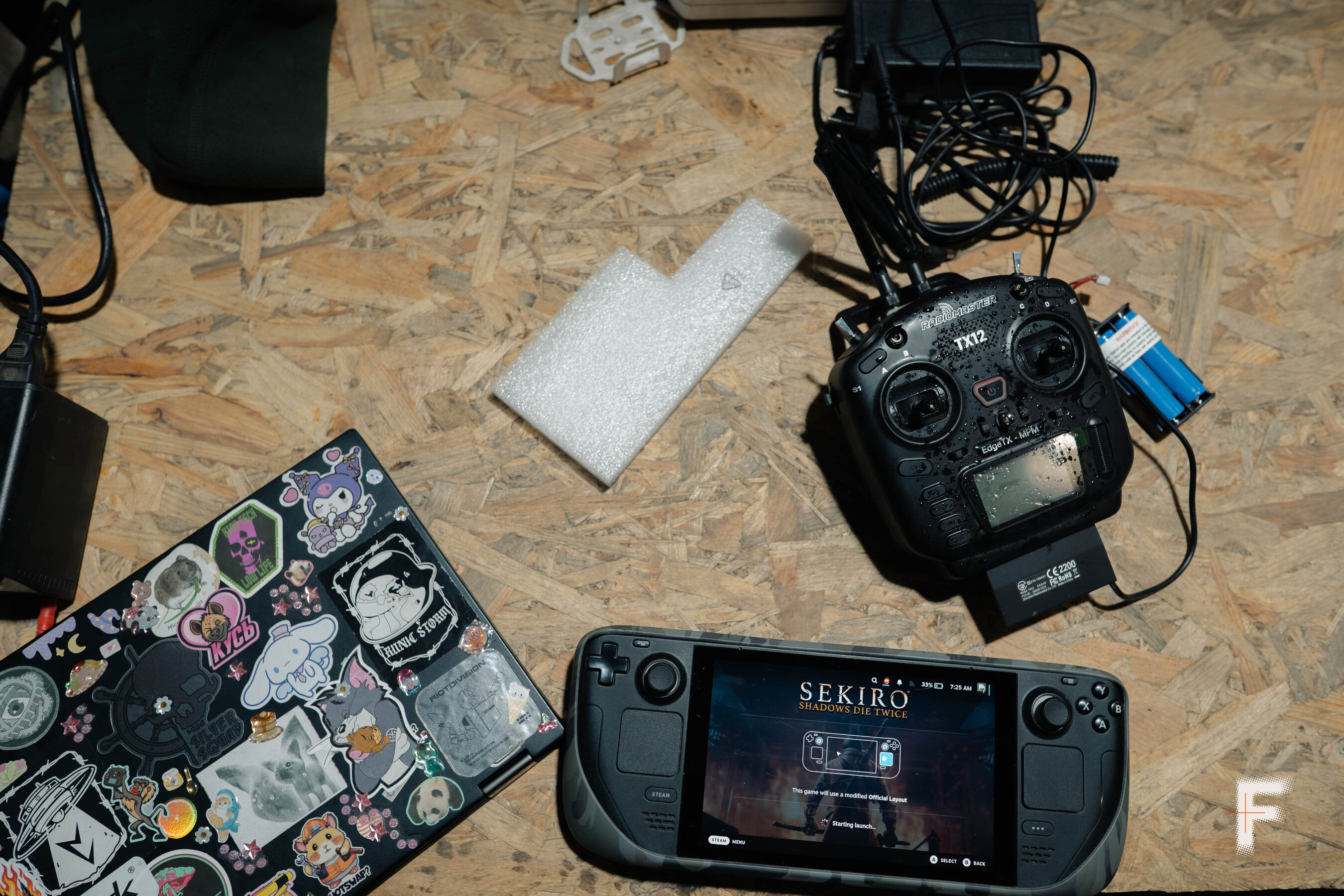
The platoon handles a wide range of tasks – from soldering and programming to operating robots – carried out by 21-year-old ‘Jess’ and 25-year-old ‘Nike’. ‘Jess’, the only woman in the GRS platoon, has been serving for nearly a year. ‘Nike’ joined the army long before the “18-24” contract was introduced. After fighting in intense battles in 2022, he has only recently found his new role.
[Translator’s note: The Contract 18-24 program offers young people aged 18 to 24 the opportunity to join the army on a short-term contract.]
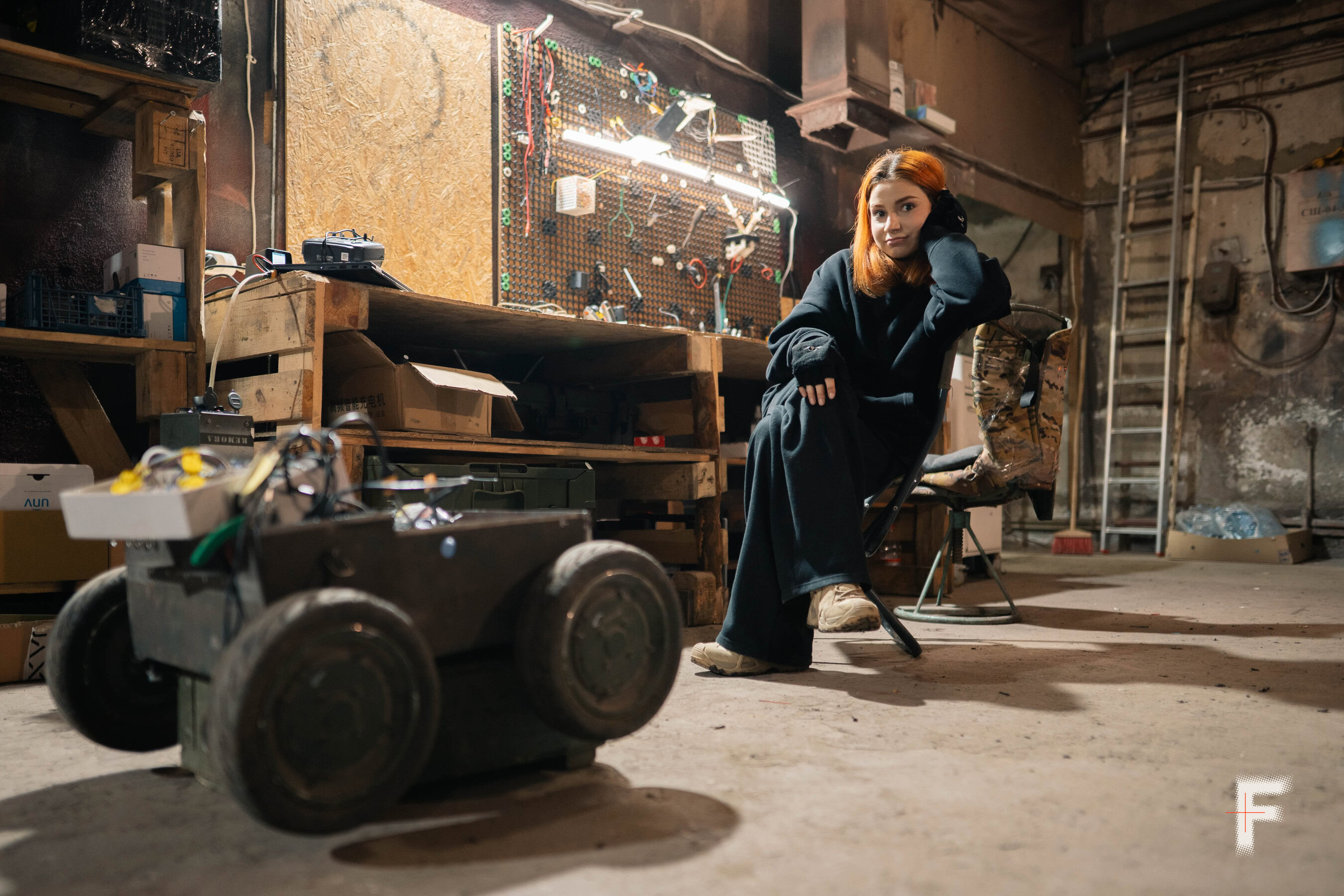
On the street, they could easily be mistaken for civilians. ‘Happy’ looks like he could be a skater: plaid shirt, sneakers, and a curled mustache. He describes himself as a “zoomer with old firmware.” ‘Jess’, who considers herself a typical Gen Z, wears hoodies and baggy pants, her look broken only by beige regulation boots. ‘Nike’ sticks to a tactical style, though even that is common among civilians these days. All three listen to the same music, play the same games, and watch the same shows as their peers.
So what sets them apart? The answer is obvious: service in the army. They cite patriotism as their motivation, but that worldview is shared by many who remain civilians. But understanding what drives this courageous choice is far more complex.
The only woman in the unit
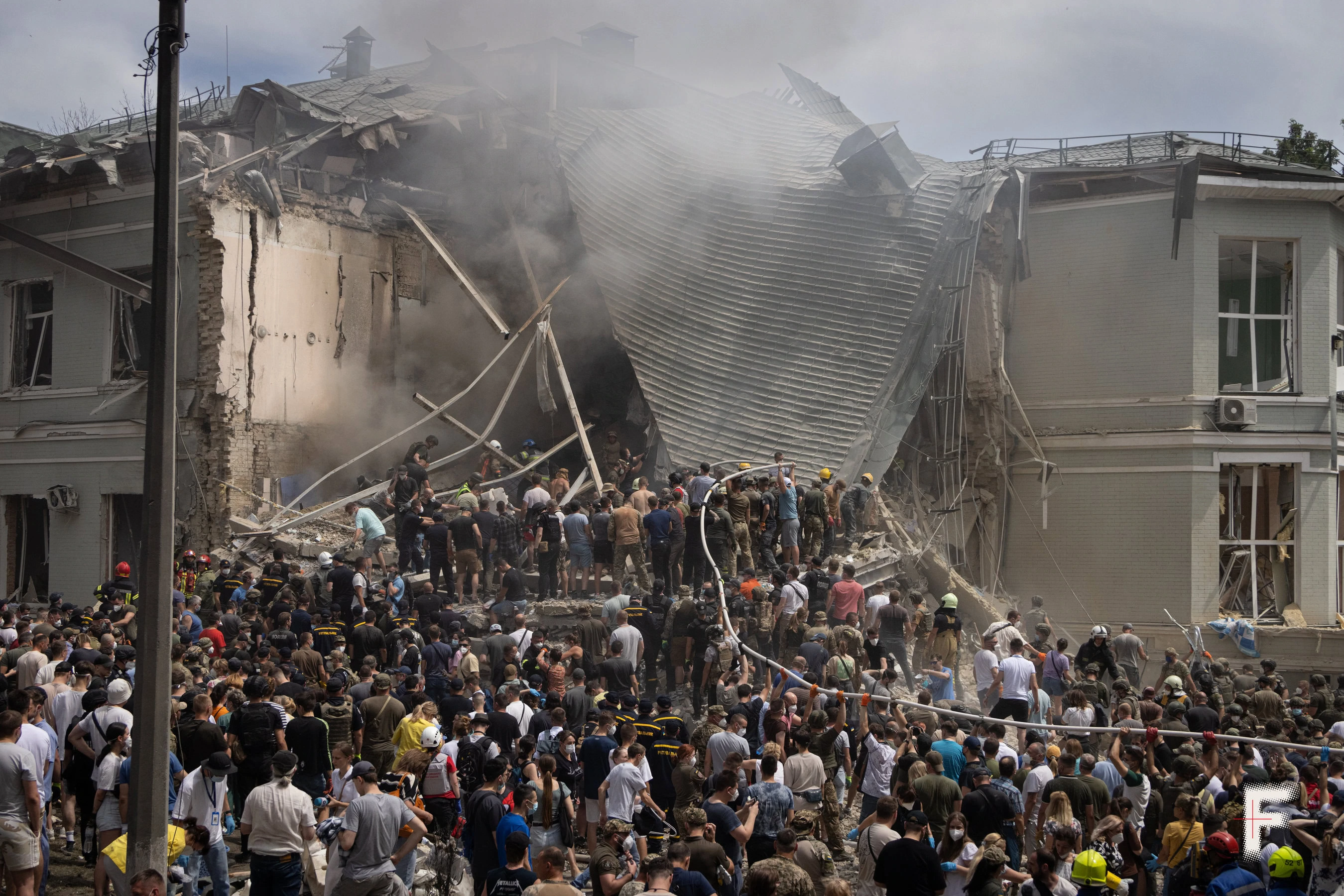
‘Jess’ began reaching out to the contact offices of military units after a Russian missile hit the Okhmatdyt children’s hospital in July 2024. Before the tragedy, she was an active member of the youth organization Centuria, participating in events and aiding the army. This patriotic community played a key role in shaping her sense of national belonging.
I didn’t want to be part of Russia.
“I knew I didn’t want to be part of Russia. That’s not who I am. I will never give up the fact that I am Ukrainian,” ‘Jess’ shares.
On the day of the attack, she went with friends from Centuria to help clear the rubble of the destroyed hospital. That was when she finally understood she could no longer stay in civilian life.
But joining the army proved difficult: recruiters kept turning her down. ‘Jess’ had a medical degree and insisted she could serve in a medical company – but even that failed to persuade them.
“It wasn’t so important to me exactly where I would serve. The main thing was to be effective,” ‘Jess’ explains, adding, “Preferably, in a volunteer unit.”
Her efforts to join the army didn’t succeed, but she started looking into various units. It was then that she found a video about Khartiia’s ground robotic systems, ‘Jess’ recalls.
“When I saw this box on wheels, I immediately recognized its great potential,” she says with excitement.
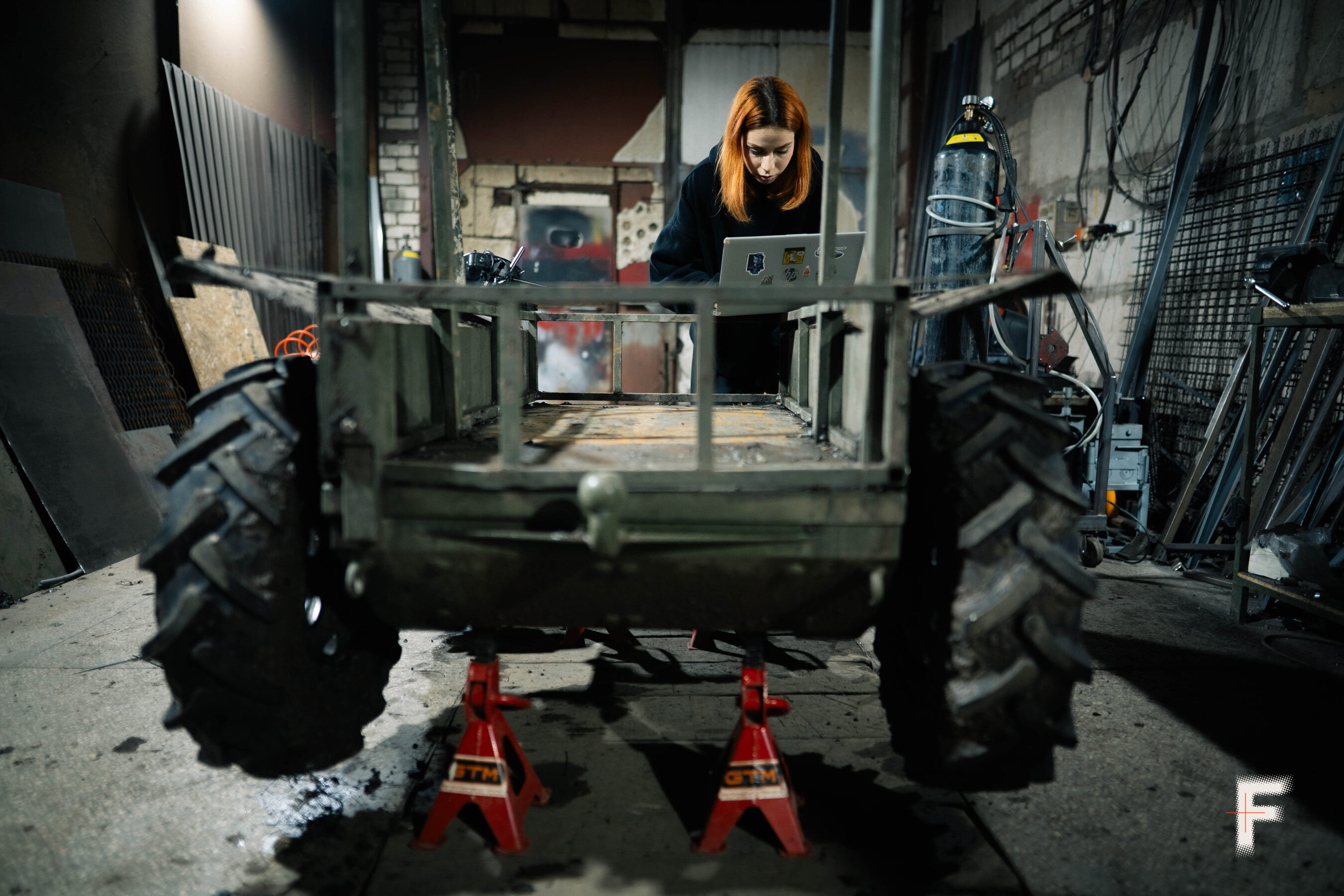
Later, ‘Jess’ turned to the NGU recruitment center. They asked her, “Where do you want to be mobilized?” “To Khartiia,” she replied. Finally, her efforts were successful. She hadn’t dared to share her decision to serve with her mother, who only learned of it from ‘Jess’s’ brother while she was training in the winter of 2024. ‘Jess’ says her mother has come to accept it, though she still needs frequent reassurance.
From the very start, ‘Jess’ had an advantage: she had been fascinated by computers since childhood. She was reprogramming gadgets, playing video games, and reinstalling operating systems. In the GRS workshop, she quickly made up for any gaps in her knowledge.
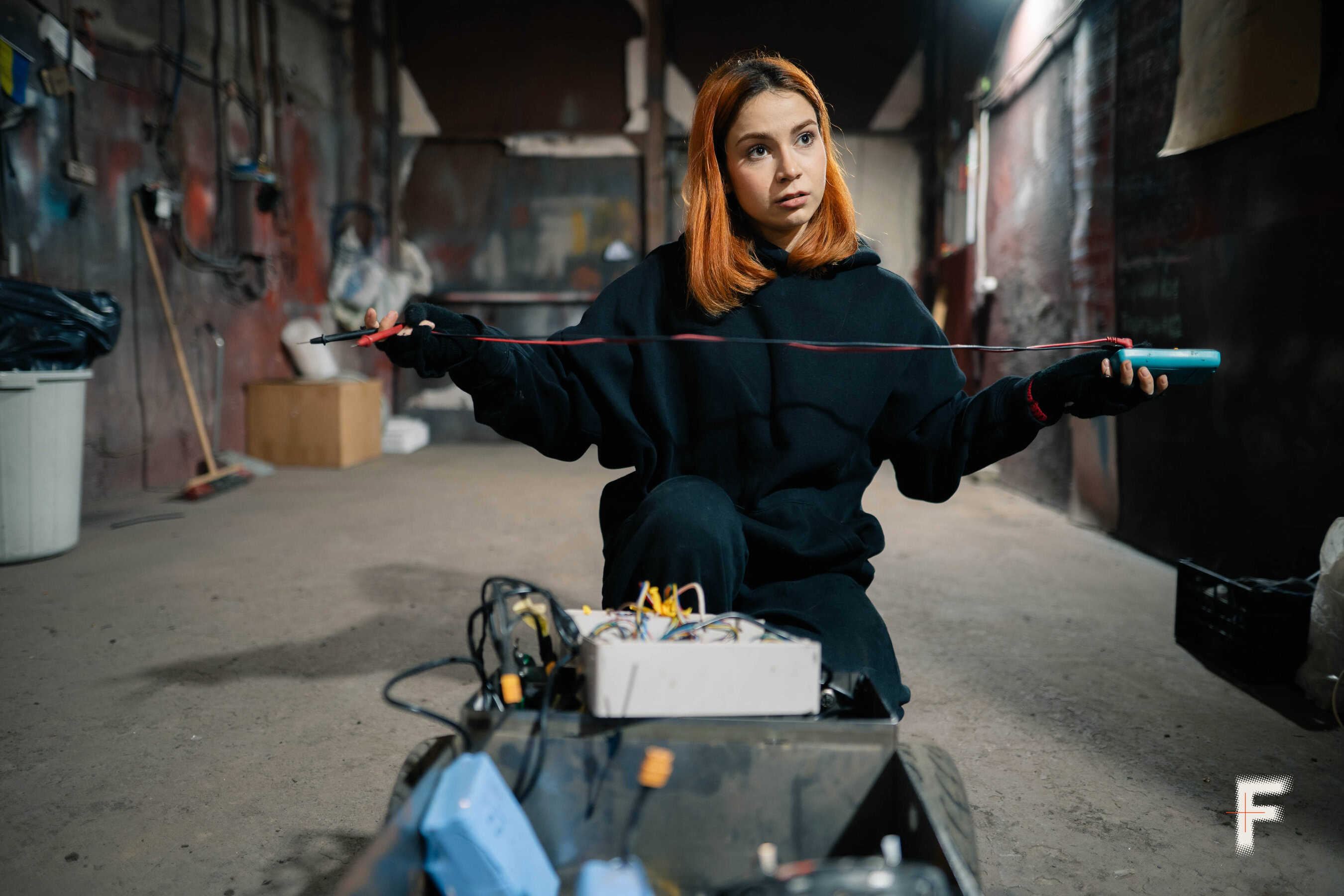
Her callsign is inspired by Jessie, the inventor from the video game Brawl Stars. Like her namesake, she builds gadgets from whatever is at hand. She also shares the character’s red hair and striking dark eyes.
Becoming himself in the army
‘Nike’ wears a balaclava, leaving only his blue eyes visible. Around his eyes, there isn’t a wrinkle, but his gaze is weary. Before the full-scale war, he never imagined himself as a soldier: he was pursuing a career in graphic design and spent his free time dancing at raves in Kharkiv to electronic music. Yet, he feels, it was only in the army that he truly became himself.

On the eve of the full-scale war, he was 22. From then on, he started preparing to go to the front, certain he would one day relieve other fighters. By summer 2022, ‘Nike’ was already joining his first assaults.
“There was no debate in my mind about going. I had seen civilians killed and injustice unfold,” ‘Nike’ shares. Despite being so young, he began living under the constant shadow of death. Every day on the frontlines, he had to ask himself: Am I ready to keep fighting? Though he avoided physical injuries, he faced deep psychological challenges, ‘Nike’ explains.
Every one of my comrades is either dead, discharged,
or held captive,
‘Nike’s’ jacket bears a patch that reads: “This heart is under the protection of my wife.” The young man found support in love, and later in his new role at work. Recently, he became a squad leader in the GRS platoon.
A new role after three years of assaults
‘Nike’ remembers a scene from years ago: two soldiers dragging a cart overloaded with ammunition. Now, ground robotic systems handle much of the logistical work, which Nike sees as revolutionary.

“I find this work rewarding. After all, who better than me understands how the guys appreciate even the simplest things – an energy drink or a cable?” – he shares.
He says that every new recruit faces infantry training if they enter the army with no prior skills or knowledge. That’s why he advises gaining as many skills as possible, including soldering and welding.
‘Nike’ advises: “Your ability to contribute in the army depends on the skills you bring.”
Democratic approach to leadership
Soldiers of all ages serve in the GRS platoon, some twice the commander’s age. ‘Happy’ selects personnel not on formal grounds, but for their ability to think in sync and execute tasks effectively.
That’s why everyone has a role in the workshop. During training, ‘Happy’ sometimes encountered outdated management methods that demotivated both him and his friends. In his own unit, he decided to take a more flexible approach: trusting those who truly have expertise in a given area, regardless of rank.
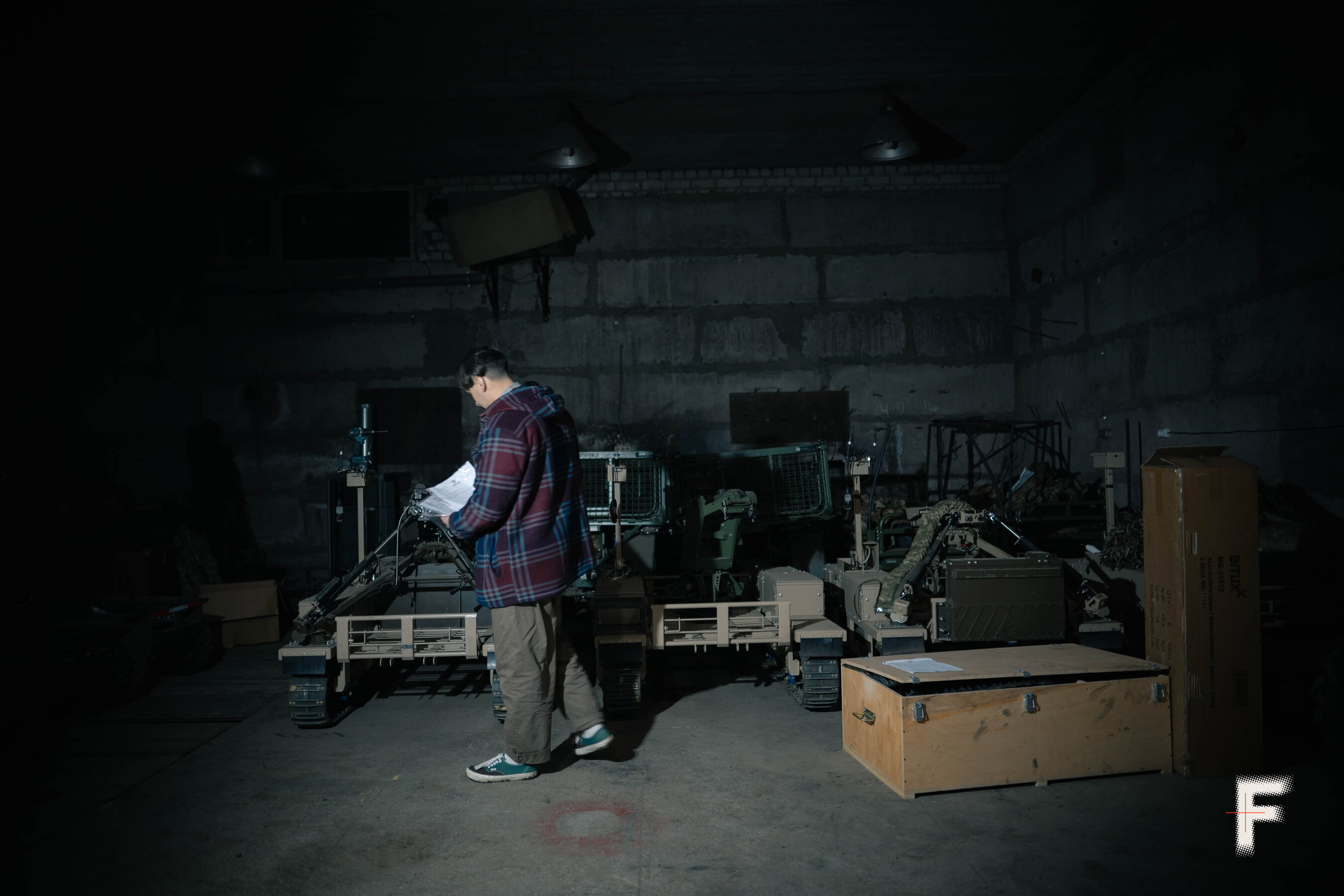
‘Happy’ acknowledges he isn’t a specialist in software or mechanics. He therefore assigned the positions of chief engineer and lead operator to those with the expertise, even if their military rank is just soldier. In their fields, they make decisions and take responsibility for the results.
Members of the unit say this model generally works. Anyone can propose an idea – it’s discussed in group meetings, tested in practice, and refined. Yet the final decision always rests with the commander.
“Taking responsibility is something I embrace – it’s just my routine,” says the platoon commander.
Many in the unit share a strong sense of responsibility – perhaps this drove ‘Jess’ and ‘Nike’ to serve. They clearly understood their role in a war that has changed dramatically over the past year. Its course shows that the army needs young people – their bold and creative ideas can counter an enemy that outnumbers them.

Text: Diana Deliurman
Photos: Marharyta Fal
Adapted: Irena Zaburanna